Many retired Calif. execs still in high-pay state jobs

By Jon Ortiz, Sacramento Bee

Despite the Brown administration’s edict last year to sweep out nearly all retirees from the state workforce, more than two dozen departments still use them to fill some of the highest-paying positions in government, according to state data reviewed by the Bee.

The numbers in an internal Department of Human Resources report show a total of 75 retirees in 26 departments held “career executive assignments” in February. The positions pay the retirees from $45 per hour to $75 per hour on top of their pensions.

More than a third of those retired-annuitant executive positions were in the Department of Corrections and Rehabilitation.

Scott Carney, administrative services director at the Department of Corrections, said using retirees at the executive level injects much-needed skill and experience into the department as it navigates a massive court-ordered downsizing, reorganizes its system of 33 prisons and shepherds a new generation of leaders.

“They have unique skill sets,” Carney said.

Retired state employees are not allowed to work more than half-time hours in a given fiscal year and still draw their pensions.

Critics contend that limitation alone suggests retirees brought back as career executives couldn’t be taking on the workload and responsibility to justify such a high pay rate. They say the practice breeds cronyism under the guise of filling crucial positions because the state has failed to adequately address a leadership vacuum.

The state correctional officers union, the Bureau of State Audits and several former human resources managers interviewed question whether these high-level retired annuitants are doing the work that goes with the title and the pay. How, they wonder, can a part-time or intermittent employee hold such a high-level title?

“The current setup is wildly inappropriate,” said JeVaughn Baker, spokesman for California’s state correctional officers union. “If these are mission-critical management positions, then they should be filled by full-time people invested in the long-term success of the department.”

The Department of Corrections in February accounted for 28 of the 75 retirees on the state’s roster of career executives. Most held the title chief deputy administrator, which pays $59.12 per hour – up to $56,755 annually if they work the maximum 960 hours allowed.

Full-time employees with that title are salaried deputy wardens at a prison. Retirees at that level in corrections may serve in various roles, from mentors for up-and-coming wardens to managing special projects or testifying in court cases.

“These people are in functions critical for savings and safety,” Carney said.

That distinction is key in light of the 2012-13 budget that Gov. Jerry Brown signed last year.

The measure reflected an agreement the governor reached with the state’s biggest union that required that departments ax all but the most essential of the 5,800 or so “retired annuitants” who drew $110 million in pay from the state in 2011-12, on top of their pensions.

Service Employees International Union Local 1000 said the retirees take jobs that should go to unionized full-time workers and block upward mobility. The local accepted a year of furloughs in exchange for purging annuitants in state service during that same period.

“Only those that have been deemed critical to the department’s core mission will be retained,” Brown’s budget summary said.

By January this year, the state still employed 3,940 annuitants.

The administration exempted retirees whose termination would create a void that disrupts state business to the point of failure, cause the state to lose funding or put public safety or health at risk.

Departments decide what that means. The California Department of Human Resources, which handles personnel matters for the governor, conducts a handful of agency audits each year, said department spokeswoman Pat McConahay, but it hasn’t required proof that all have followed the budget mandate.

“That would be micromanaging,” she said.

McConahay didn’t have specifics for which departments had been audited or how many retired annuitant rehires the Human Resources Department found violated the budget mandate.

The career executive jobs pay salaries from $6,200 to $13,400 per month. Many carry policy-making and leadership duties that affect hundreds or thousands of people. Creating a new career executive position requires the approval of two state agencies.

“You’d be hard-pressed to find someone at those levels who is stupid or lazy,” said former Department of Finance Director Mike Genest, who retired as a CEA 4, the second-to-highest tier.

The state is struggling to fill those upper-level positions. Baby boomers who make up the bulk of the state’s leadership are retiring and taking their experience with them. Years of furloughs, slashed budgets and stagnant pay hastened their exit.

The pool of relatively young retired leaders can make bringing them back an attractive option, because they draw no benefits and have no civil-service or union protections – but do have years of knowledge and experience.

Genest said departments save money by bringing back retired executives but that plugging them into such important positions is “inherently a second-best solution. What you really need is a career person who will stay there year in and year out.”

Retired annuitants don’t need the work and aren’t as accountable as regular full-time employees, he said, and the here-today-gone-tomorrow nature of their appointments blunts their authority.

“You need folks in those (CEA) jobs who people are afraid of,” Genest said. “Fiscally, retirees are great, they’re a money saver. For management, maybe not.”

Roughly 120 of the state’s 150 agencies, departments, commissions and boards have no retired annuitants in career executive assignments.

Those that do must bring retirees back to a position – and pay – equal to or lower than the one they left. Under Brown’s budget, those jobs have to be mission critical, but each department applies that standard differently, since their missions vary.

The Human Resources Department, for example, brought back retiree Rayvella Zentner as a CEA 4 earning $57.34 per hour – the hourly rate for a salaried employee at the same level – to update the state’s moribund recruiting and retention programs.

Zentner, whose monthly pension is $7,150 before taxes, held a full-time career executive position a few years ago as head of a newly minted Human Resources modernization program. “HR Mod” ceased to exist and its 30 positions were eliminated in a massive government reorganization last year.

Technically, that meant the position Zentner held was eliminated as well.

But the program’s goals still exist. So after another manager moved on, Human Resources Director Julie Chapman brought Zentner back. She has focused on overhauling the state personnel system and “mentoring staff so they can take over these critical duties,” department spokeswoman McConahay said.

Zentner is training a full-time employee recently hired to take over the job in the near future, McConahay said.

Some retirees have held top-level state jobs for years.

The chief counsel for the California Unemployment Insurance Appeals Board, Ralph Hilton III, retired in 2009 and draws a $9,041 pension each month.

He kept the chief counsel title he has held since 2001, preparing arguments for cases that go to court and dispensing legal advice to the board for $73.15 per hour, up to a maximum $70,224 per year.

Bob Dresser, whom the governor appointed as board chairman in 2011, said he considered replacing Hilton with a full-time employee two years ago.

But the department was in disarray, he said, having fallen well below federal standards for turning around unemployment benefits appeals in a timely manner.

“My thought was that he has so much institutional knowledge and that to train someone in that kind of chaotic situation … it would have taken me months,” Dresser said. “In my view, he’s mission critical.”

Now that the board is emerging from federal oversight to improve its performance, Dresser said he plans to hire a full-time chief counsel.

Hilton could stay on, Dresser said, “but only as a full-time employee.”

Like Hilton, retiree Diane Cummins brings years of experience and expertise to her $60.21-per-hour executive position at the Department of Finance. Her state pension pays another $12,709 gross per month.

Finance Department spokesman H.D. Palmer said that Cummins played a role in developing the plan to downsize the state’s prison population, and has held high-level positions working for Democratic as well as Republican leaders.

And although she’s paid only up to the 960-hour annual maximum for retired annuitants, Cummins “has been working in the office on a full-time basis since her return, … so it’s essentially one dollar of pay for two dollars’ worth of work,” Palmer said.

“I’d make the strong argument that the state’s return for her services is definitely higher than two-to-one.”

The Department of Developmental Services had nine retirees listed as career executives, including an acting executive director at the Sonoma Developmental Center, a statewide system education administrator, policy advisers and a management investigator.

Spokeswoman Nancy Lungren said the department deemed the employees “mission critical under the criteria established by the governor’s order,” but did not elaborate.

State oversight of those determinations is so thin that State Auditor Elaine Howle in 2011 urged a sweeping review of retirees holding leadership titles and suggested that in some instances they were overpaid.

“(I)t appears that some retired annuitants did not return to the same position,” Howle said in a letter to Brown, “yet may have been or are being paid at the same rate as when they were employed in the leadership position.”

Leaving the “mission critical” decisions to departments opens the opportunity for abuse, said Norma Suave, who retired last year after a 36-year state career in labor relations and human resources.

“Anytime you delegate this stuff out, you need to have a strong audit function,” Suave said. “But with retired-annuitant CEAs, right now it’s a fox guarding the henhouse.”




El Dorado keeping ’13 roadwork to a minimum

Publisher’s note: This is one of a few stories about construction planned for the Lake Tahoe Basin this summer.

By Kathryn Reed

El Dorado County planners are busy plotting what will be happening in the basin for the next few years. And while improvements to roads and bike trails could happen this year, 2014 will be super busy when at least six projects are expected to go in the ground.

For this building season, which officially starts May 1, things are still a bit up in the air.

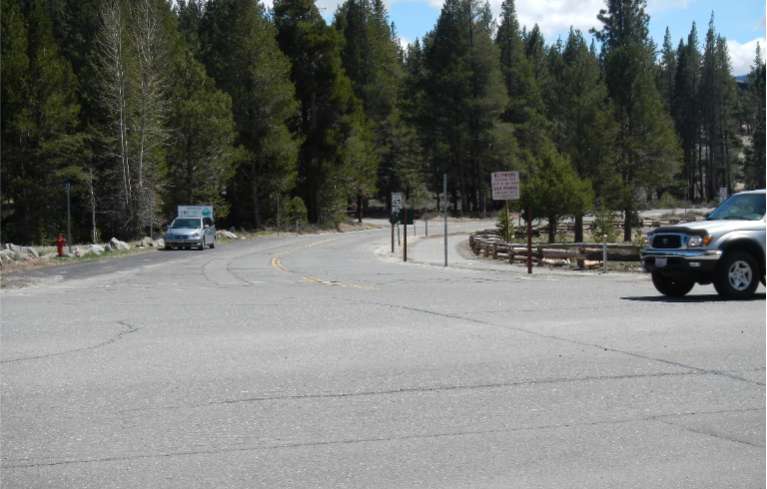
The county is nearing completion to acquire the right-of-way on Sawmill Road to be able to finish the bike trail so it connects with the bridge at Highway 50 that takes cyclists into Meyers. All the environmental documents are in place.

The intersection of Sawmill Road and Lake Tahoe Boulevard will be upgraded by the end of 2015. Photos/LTN

The intersection of Sawmill Road and Lake Tahoe Boulevard will be upgraded by the end of 2015. Photos/LTN

If everything comes together as the county wants, it’s possible finishing that segment of trail could begin this summer. Right now the trail meanders close to the northern side of Sawmill from Lake Tahoe Boulevard halfway down the street before it dead ends.

Connecting Sawmill to a future path on Lake Tahoe Boulevard has an outside chance of beginning late in the season. That trail will roughly follow the U.S. Forest Service dirt path that starts at Viking Way and goes into the Upper Truckee neighborhood.

This is part of a larger project to narrow Lake Tahoe Boulevard. Comments on the CEQA documents for the roadwork are being taken until April 24.

“The plans are nearly done for the bike trail portion. The plan is to split that job into two where the road improvements happen separate from the class 1 bike paths,” Brendan Ferry, senior planner with the El Dorado County Department of Transportation, told Lake Tahoe News. “We are focusing on the bike portion. That is the most important piece as we see it.”

The trail will be built to American Association of State Highway Transportation Officials (AASHTO) standards, which means 10-feet wide, plus 2-foot shoulders, meeting American with Disabilities Act requirements and limitations on the grade.

It will connect riders with the class 2 bike trail at the top of Clearview Drive.

The trail sign to the left indicates where one end of the new paved bike trail will go, with the STHS sign to the right.

The trail sign to the left indicates where one end of the new paved bike trail will go, with the STHS sign to the right.

A crosswalk will be installed at Viking Way-D Street so cyclists can more safely connect with the trail on the other side of the street that leads into the city limits along Lake Tahoe Boulevard.

Lake Tahoe Boulevard was built decades ago with the anticipation of larger subdivisions being developed that would require that much asphalt. Those are off the books and now the roadway is more than what is needed, according to numerous traffic studies.

“There used to be a river running through that corridor. Now it’s a large roadway,” Ferry said.

Downsizing Lake Tahoe Boulevard from Sawmill to about Tahoe Mountain Road from four lanes to two will remove pavement in a stream environmental zone and make travel safer, Ferry said.

“A single lane with a guard rail will be safer,” Ferry said in regards to the sharp curve on the road.

The road will be restriped, pavement removed and improvements made to the intersection at Sawmill and Lake Tahoe Boulevard.

During construction one lane of travel will always be open, Ferry said.

Based on the various funding sources for the project, the work must be done by 2015 or the county would have to forfeit those dollars.

Other projects for 2013:

• One of the first items on the list is to finish the Christmas Valley Erosion control project.

• Boulder Mountain will be paved. This will likely start in July.

• An erosion control project in Montgomery Estates is slated to begin at the end of August.


Plans in the works to upgrade Children’s Memorial

The log in the middle of South Lake Tahoe that honors the children from this area who have died is rotting. There is a movement afoot to replace it and make changes to the Children’s Memorial at the corner of Highway 50 and Wildwood Avenue.

Kenny Curtzwiler, whose son died in 2010, would like to turn the site into a memorial park. He is working with a group to get this done by Aug. 9 – the date his son died.

The memorial now honors 240 children. It has existed since 1994. The 1991 car accident that claimed Sue Hrbacek’s son and two of his friends was the inspiration to get the memorial built.

While the city is all for replacing the log, to do more than that requires formal proposals that the Curtzwiler group has not brought to staff or council. The land is public property.

There is a movement to make the Children's Memorial more of a park. Photo/LTN

There is a movement to make the Children’s Memorial more of a park. Photo/LTN

A public works contract might be required.

“There is no project proposed other than to replace the log,” City Manager Nancy Kerry told the council this month.

The discussion came up as the council members formally became the board of directors of Great Ideas for Tahoe. GIFT was formed in 2001 by the city’s Parks and Recreation Department as a way to accept money from people who wanted to give money to a specific entity or create a memorial. With changes to that department, it was time to change the leadership.

The GIFT fund may become the vehicle to collect money for the children’s memorial so people would have a means to write a check that would be tax deductible.

More info about memorial park is online.

— Lake Tahoe News staff report


Power shortages possible in California this summer

By Naureen S. Malik and Lynn Doan, Bloomberg

California may face the biggest regional power shortages in more than a decade this summer, sending wholesale prices higher, as idled nuclear reactors and low hydroelectric output cut generating capacity.

The California Independent System Operator Corp. said last month that managing the state grid, especially in parts of Southern California, will prove “difficult” because the system will be operating without Edison International’s San Onofre nuclear power plant and two natural gas-fired units, while hydroelectric output will be at a three-year low.

The nuclear plant, California’s single largest source of base-load power, accounts for 3.7 percent of the state’s capacity.

Lake of snow in the Sierra this winter, as evidenced by the March snow survey, will impact hydro-electric power in California. Photo/LTN file

Lake of snow in the Sierra this winter, as evidenced during the March snow survey, will impact hydropower in California. Photo/LTN file

Southern California wholesale electricity for July through September already is at the highest price for this season since 2008 on the expectation of a shift to costlier, more volatile fossil fuels. A strain on the grid could lead to power failures reminiscent of the state’s worst energy crisis in 2000 and 2001, when generation shortfalls and market manipulation by traders at companies including Enron Corp. sent prices to record highs and triggered blackouts that affected millions of customers.

“California may see the biggest test since Enron manipulated the market,” said Stephen Schork, president of Schork Group, an energy consulting group in Villanova, Pa.

“If you have a reactor down and you don’t have as much hydro, your fuel for air conditioning is going to have to come from gas.”

Electricity at Southern California’s SP15 hub for July through September rose $1.40, or 2.3 percent, to $61.25 per megawatt-hour this week, a five-year seasonal high.

Electricity at the SP15 hub for next-day delivery has averaged $49.70 per megawatt-hour this year through Thursday on the Intercontinental Exchange, the most for the period in five years. Northern California’s NP15 hub has averaged $41.99 this year, the most since 2010.

The shutdown of the San Onofre reactors boosted prices at the southern hub to an average premium of $7.81 per megawatt-hour over the northern hub, the most in 12 years. The five-year average is 95.6 cents.

Abundant hydroelectric generation made up for the lost nuclear output in the Los Angeles basin last year, said Michael Blaha, the principal analyst of North American power at Wood Mackenzie in Houston.

“There is always a threat of brownouts and blackouts, and I think it’s higher this summer because of San Onofre being out and you’re not putting hydro into the basin,” he said.

Final snowpack measurements, which are used to predict the output at hydropower dams, will be 45 to 50 percent of normal, according to Maurice Roos, chief hydrologist with the state’s Department of Water Resources in Sacramento. Only six years in the past 60 have been that low, he said.

Low water levels in the Pacific Northwest may also cut electricity exports to California this summer, according to the Bonneville Power Administration, a federal agency that manages Columbia River basin power supplies.

Transmission lines across the Oregon-California border have a combined capacity of 7,500 megawatts.

The snow-water equivalent in the region was 89 percent of normal this week, the lowest level for the time of the year since 2010, U.S. Agriculture Department data show.

Unless there is a surge in precipitation in April through June, the amount of water available for hydro in the Pacific Northwest will be lower than it has been in the past two years, said Doug Johnson, a spokesman for the BPA in Portland, Ore. Water levels exceeded historical norms by 30 percent in 2011 and 20 percent last year, he said.

California, with a population of 38 million, struggled with similar hydropower shortages during the electricity crisis of 2000 and 2001.

The state, the world’s ninth-largest economy, was also dealing with unplanned power-plant shutdowns, a natural-gas pipeline rupture, unseasonably high temperatures and price manipulation by Enron and other companies.

The shortages prompted regulators to overhaul state energy policy, which now requires utilities to show they’ve contracted enough power to meet demand.


Complexity of South Shore water issue growing

By Kathryn Reed

While a definite solution has not been decided upon, most of the talk at last week’s South Tahoe Public Utility District meeting centered on having an intertie be the solution to the water issue for the T.J. Maxx building.

That building at the Y is owned by the Garfinkles and is serviced by Lukins Brothers Water. But the water pressure is not sufficient to put out a fire so STPUD’s help is needed.

A temporary solution was found last fall, but a permanent one is still being negotiated.

For decades there has been a link between two the water companies so water can flow back and forth as needed. But that valve must be manually turned. This has been done less than a half dozen times in the last 30 years, according to Lukins.

Water pressure have yet to be resolved at the T.J. Maxx building in South Lake Tahoe. Photo/LTN file

Water pressure issues have yet to be resolved at the T.J. Maxx building in South Lake Tahoe. Photo/LTN file

What is being proposed is an automatic valve or pressure trip device. This would allow water to flow into Lukins’ 8-inch pipe if the pressure got to a predesignated point.

Danny and Jennifer Lukins, the father-daughter duo who run the company, said they are waiting to hear from the state Public Utilities Commission as to the cost of the connection fee that could be passed on to ratepayers. STPUD would require a fee of about $150,000.

Before South Tahoe PUD says yes to the pressure valve, they want confirmation from the city fire chief about what is required. When the store opened it was Lake Valley’s chief who signed off on the paperwork.

While it’s state regulations that dictate fire flow, fire chiefs and marshals interpret things differently. South Tahoe PUD therefore likes things in writing because its jurisdiction involves more than one fire agency.

Another issue brought up at the April 18 meeting was whether the Gardner Mountain tank could keep enough pressure to service STPUD customers in the event Lukins needs water.

Another piece of the puzzle is now that the Chateau project near state line is likely to go forward, at least in small phases starting this summer, water is an issue there. STPUD had an agreement with Lakeside Water Company, but that needs to be reworked. The water intended for that area from STPUD has been flowing down Highway 50 and used near the Y.

The other thing STPUD needs to figure out is what type of contract to come up with because nothing like what Lukins is asking for — just emergency supply water services — exists.

More talking is planned, with no date for a resolution.

Another factor in all of this is that the Garfinkles have people interested in leasing the building next to T.J. Maxx, but no contracts can be signed because the building doesn’t have an adequate supply of water to fight a fire.


5 backcountry snowboarders die in Colorado

By Electa Draper, Denver Post

Five backcountry snowboarders are confirmed dead in Colorado’s deadliest avalanche since 1962.

The avalanche at Loveland Pass on Highway 6 struck between 1 and 2:30, the Clear Creek County Sheriff’s Office announced late Saturday afternoon.

The sheriff’s office said there was one confirmed survivor.

Sheriff Don Krueger said the avalanche occurred near the Loveland Ski Area, but outside its boundaries.

“I believe that at this point in time everyone is accounted for, but I’m not sure,” Krueger said.

He said the survivor was up and walking around. No information has been released about the five victims. It was unclear whether they were still buried.

Colorado Avalanche Information Center forecaster Spencer Logan said there have been weak layers in Colorado’s snowpack since early January, and forecasters have said they’re seeing the worst avalanche danger in 30 years.

A snowboarder was killed in an avalanche Thursday in Avalanche Bowl south of Vail Pass. He was making runs with two friends after they were dropped off at the top of the bowl by a friend with a snowmobile.

“Our last series of storms made them more active again,” he said. “Over the last week and a half, that area got over 18 inches of snow, so if you melted that that would be 2 inches of water, so that is a heavy load.”

Highway 6 at Loveland Pass, elevation 11,990 feet, was closed by the Colorado Department of Transportation as many skiers were headed home from nearby Arapahoe Basin ski resort.

Lisa Clarke Devore, who was headed back to Denver from the resort, told the Associated Press she saw a fire truck and ambulance on the pass, as well two search dogs headed into the area of the slide. She says she saw several ambulances, including one towing snowmobiles, driving toward the pass.

U.S. avalanche deaths climbed steeply around 1990 to an average of around 24 a year as new gear became available for backcountry travel. Until then, avalanches rarely claimed more than a handful of lives each season in records going back to 1950.

In 1962, seven people were killed when an avalanche buried residences.


Youngster makes false statements to law enforcement

A South Lake Tahoe 9-year-old girl was not accosted last week as has been reported by some news outlets in South Lake Tahoe.

“We did more follow-up today and it was unfounded,” El Dorado County sheriff’s Sgt. Matt Underhill told Lake Tahoe News.

There were doubts all along about the girl’s story being completely accurate, which is why according to Underhill, the school district was never notified.

“Without calling her untruthful, her imagination played into it,” Underhill said of what the youth reported.

Then her story changed and never could be verified.

— Lake Tahoe News staff report


EPA: California not complying with Clean Water Act

By Matt Weiser, Sacramento Bee

California today was declared to be out of compliance with the federal Clean Water Act because it is sitting on $455 million that should be spent to improve local drinking water systems.

The U.S. Environmental Protection Agency submitted the notice after years of fruitless efforts to get the state to document its spending under the program, said Jared Blumenfeld, regional administrator for the agency.

The program is administered on behalf of the EPA by the California Department of Public Health, using funds allocated by Congress. Typically the money is used by cities, counties and other local agencies to improve drinking water treatment systems, usually to remove harmful chemicals or seek a cleaner supply.

“We certainly hear from communities that they need the money and they are not being able to access it,” Blumenfeld said. “The facts speak for themselves. The money is not going out the door as quickly as it should be.”

Blumenfeld said the problem is not unique to California, but the scope of the problem is far larger in California than elsewhere. As an example, he noted the second largest similar problem exists in Texas, which sits on $310 million in Clean Water Act funds. But Texas has provided the EPA with a satisfactory accounting of its spending under the program, unlike California.

A second problem, Blumenfeld said, is that when California does spend the money, it often chooses projects that are not “shovel ready.” So the money is allocated for a project, but it remains parked for years.

“If you had reprogrammed (the money) more effectively, there could be short-term projects that are ready now that could already be funded, as opposed to funding projects that are not ready to start,” he said.

The Department of Public Health did not respond immediately to a request for comment.

The EPA is giving the state 60 days to submit a corrective action plan. If the state does not or the plan is not acceptable, the EPA may suspend payments to the state under the program.


Ski resorts would sue USFS for water rights

By Anne Knowles

Only a handful of people showed up for a local open house conducted this week by the U.S. Forest Service to get feedback on its controversial stance on water rights for ski resorts.

The Thursday afternoon meeting in the Forest Service office in South Lake Tahoe followed earlier and similarly attended meetings this week in Denver and Salt Lake City. A fourth open house is scheduled next week in Washington, D.C.

The water rights issue came to a head last year in Colorado after the National Ski Areas Association filed suit against the federal agency, saying that a clause in its permits to operate ski resorts on Forest Service land resulted in an unconstitutional seizure of property.

Heavenly's robust snowmaking requires several acre-feet of water each year. Photo/LTN file

Heavenly’s robust snowmaking requires several acre-feet of water each year. Photo/LTN file

The clause requires that water rights acquired by the business to operate the ski resort to be held in the name of the United States.

“The industry says water rights are a state issue and a significant asset,” Jim Pena, associate deputy chief with the Forest Service, told Lake Tahoe News at the open house. “We see it as an issue of permit compliance.”

In December, the U.S. District Court in Colorado decided the case and threw out clauses included in 2011 and 2012 permits, saying the Forest Service failed to follow administrative procedure while developing them, which requires a public comment process.

Those permit clauses follow a series of evolving provisions starting in 1982 that have resulted in a mishmash of water rights – 168 owned by the ski resort operators, 65 owned by the Forest Service and 10 owned jointly — throughout the 116 Western ski resorts located on Forest Service land.

The issue is most significant in Colorado where 22 ski resorts own 112 water rights. In California, 25 resorts own three water rights, the Forest Service owns 14 and one is jointly owned. In Nevada, there are three resorts with one right each owned by the ski resorts and Forest Service, according to the USFS.

So the Forest Service is now trying to follow procedure and craft a new clause that would still require water rights to be placed under Forest Service control because the agency says it’s important to keep the water connected to the land.

“Our objective is to find a way to make sure that the water is available through the life of the permit,” said Pena. “The local community is dependent on the ski area and we want to make sure they are viable.”

The agency’s concern is if ski resorts change hands or go bankrupt, the water rights, which can be sold separately and may not be available for future operators.

The NSAA says those concerns can be addressed without transferring water rights to the government.

“First, the ski area can be required for any future project to demonstrate it has sufficient water or will obtain sufficient water,” said Geraldine Link, director of public policy for the Lakewood, Colo., association. “Second, upon sale, the current owner would offer an option that water rights would go to the buyer.”

The option, the exact details of which is to be determined, would provide that the resort buyer have the first shot at buying the seller’s water rights at fair market value. In the case of a bankruptcy or liquidation of the business, the option would be offered first to the local community or government and if it declined then to the USFS.

“That’s the way to keep water with ski resort without taking property,” said Link.

The ski resorts, which are affected in varying ways, are standing with the NSAA.

“We’ve been following the lead of the NSAA,” said John Rice, general manager at Sierra-at-Tahoe, which is located on Forest Service land. “It isn’t a big issue for us. We have the right for recreational use and for fire protection and domestic use. We have three wells. … We don’t have much of a snowmaking operation so it’s just not much of an issue here.”

Representatives from Vail Resorts and Squaw-Alpine did not return phone calls.

The USFS is taking public comment now via email at skiareawaterrights@fs.fed.us. The agency plans to publish a proposed clause in the Federal Register in August, followed by a 60-day public comment period. A final clause will be published in February 2014 and included in permits thereafter.

“I’m optimistic we’ll craft a proposal that’s different and clear and easy to implement,” said Pena.

But if it still requires water rights to be acquired in the name of the United States, the industry won’t be happy.

“If the Forest Service issues a clause that requires giving up water rights, the association will challenge it in court,” said Link.


Both Boston bombing suspects in custody

By Katharine Q. Seely, William K. Rashbaum and Michael Cooper, New York Times

BOSTON — The teenage suspect in the marathon bombings, whose flight from the police after a furious gunfight early Friday morning sparked an intense manhunt that virtually shut down the entire Boston metropolitan area all day, was taken into custody Friday night after the police found him hiding in a boat in the backyard of a house in Watertown, Mass., a senior law enforcement official said.

Two law enforcement officials said that the suspect, Dzhokhar A. Tsarnaev, 19, was found in a boat parked behind a house there. It was not immediately clear what condition he was in.

A police officer at the scene said that the man was covered in blood when he was captured. An ambulance was already there. The Boston Police Department announced on Twitter: “Suspect in custody. Officers sweeping the area.”

Police officers guard the entrance to Franklin Street where there was an active crime scene search for the suspect in the Boston Marathon bombings. Photo/Matt Rourke/Associated Press

Police guard the entrance to Franklin Street where there was an active search for the suspect in the Boston Marathon bombings. Photo/Matt Rourke/Associated Press

And Mayor Thomas M. Menino posted, “We got him.”

As around 30 law enforcement officers — wearing helmets — walked away from the scene of what had been a tense standoff only minutes earlier, neighbors who had gathered on an adjacent street applauded and shouted, “Thank you! Thank you!”

The apparent discovery of Dzhokhar Tsarnaev came just over 26 hours after the FBI circulated pictures of him and his brother and called them suspects in Monday’s bombings, which killed three people and wounded more than 170. The case unfolded quickly — and lethally — after that. Law-enforcement officials said that within hours of the release of the pictures, the two men shot and killed a campus police officer at the Massachusetts Institute of Technology, carjacked a sport utility vehicle, and led police on a chase, tossing several pipe bombs from their vehicle.

Then, early Friday morning, the men got into a pitched gun battle with the police in Watertown in which more than 200 rounds were fired, and a transit police officer was critically wounded. When the shootout ended one of the suspects, Tamerlan Tsarnaev, 26, a former boxer, had been shot and fatally wounded. He was wearing explosives when he was killed, several law enforcement officials said. But his younger brother, Dzhokhar Tsarnaev, managed to escape — running over his brother as he sped away, the officials said.

The disappearance of Dzhokhar Tsarnaev, and fears that he could be armed with more explosives, set off one of the most intense manhunts in recent memory. Swat teams and Humvees rolled through quiet residential streets. Military helicopters hovered overhead. Bomb squads were called to several locations. And Boston — New England’s largest city — was essentially shut down.

Transit service was suspended all day. Classes at Harvard University, the Massachusetts Institute of Technology, Boston University and other area colleges were canceled. Amtrak canceled service into Boston. The Red Sox game at Fenway Park was postponed, as was a concert at Symphony Hall. Gov. Deval Patrick of Massachusetts urged residents to stay behind locked doors all day — not lifting the request until shortly after 6pm, when transit service in the shaken, seemingly deserted region was finally restored.

As the hundreds of police officers fanned out across New England looking for Dzhokhar Tsarnaev, investigators tried to piece together a fuller picture of the two brothers, to determine more about the bombing at the Boston marathon.

The older brother, Tamerlan Tsarnaev, was interviewed by the FBI in 2011 when a foreign government asked the bureau to determine whether he had extremist ties, according to a senior law enforcement official. The government knew that he was planning to travel there and was afraid that he might be a risk, the official said.

The official would not say which government made the request, but his father said that he had traveled to Russia in 2012.

“They had something on him and were concerned about him and him traveling to their region,” said the official. The F.B.I. conducted a review, examining Web sites that he had visited, trying to determine whether he was spending time with extremists and ultimately interviewing him. The FBI concluded that he was not a threat. “We didn’t find anything on him that was derogatory,” the official said.

Now officials are scrutinizing that trip, to see if he might have met with extremists while abroad.

The rapid developments began Thursday night, when the two men, of Chechen background, are believed to have fatally shot a Massachusetts Institute of Technology police officer, Sean Collier, 26, in his patrol car, the Middlesex County district attorney’s office said. Soon after that, a man was carjacked nearby by two armed men; when he was released he told investigators that the men who took his vehicle said they were responsible for marathon bombings, a law enforcement official said. The police went off in search of his car, and a frenzied chase began.

The police and the suspects traded gunfire and “explosive devices were reportedly thrown” from the car by the suspects, the district attorney’s office said. A transit police officer, Richard H. Donohue, was shot and critically wounded. After a pitched gun battle with the police, the older brother, Tamerlan Tsarnaev, was fatally shot; the younger brother, Dzhokhar, managed to get away.

One law enforcement official said Dzhokhar Tsarnaev was wounded, and two other officials said the authorities had tracked him at some point during the manhunt by his blood trail.

An uncle of the men, Ruslan Tsarni, who lives in Montgomery Village, Md., told reporters that he was ashamed of their actions, bitterly calling them “losers” and sternly denouncing the bombings. And he urged the surviving brother to turn himself into the authorities.

“I say Dzhokhar, if you’re alive, turn yourself in and ask for forgiveness,” said Tsarni, who said that his family had been estranged from theirs, and that their father, who recently moved back to Russia, had worked “fixing cars” in America.

Tsarni said that the family had moved to Cambridge in 2003 from Kyrgyzstan.

For much of Friday a virtual army of heavily armed law enforcement officers went through houses in Watertown, outside of Boston, one by one in a search for Dzhokhar Tsarnaev. The police had blocked off a 20-block residential area and emphatically urged people there to stay inside their homes and not answer their doors.

The Boston police commissioner, Edward Davis, said, “We believe this to be a man who’s come here to kill people, and we need to get him in custody.”

In Washington, as well as in the Boston area, law enforcement and counterterrorism officials were struggling to determine whether the two brothers had any accomplices still at large and whether they had any connections to foreign or domestic terrorist organizations. One law enforcement official said that the FBI and police were seeking “a number of people with whom we would like to speak in furtherance of the investigation.” Asked if any were suspected accomplices or co-conspirators, the official would say only that investigators were “not ready to classify anyone yet.”

Several law-enforcement officials, asked about the tactics apparently employed by the brothers, said that despite the devastation they are suspected of causing at the marathon, the death of one police officer and grievous wounding of another, their planning appeared, at least at this point, to be flawed. “They didn’t practice tradecraft,” said one official, a veteran counterterrorism investigator who has been briefed on the case. “Listen, I just don’t understand how anybody could do something like that and basically go home and expect that they wouldn’t get caught.”

As the manhunt grew in intensity, law enforcement officials throughout New England tried to chase down leads. After the authorities in Boston notified transit police officials that there was a possibility that Dzhokhar Tsarnaev had boarded the last Amtrak train from Boston bound for New York City early Friday, the train was searched between stations in Connecticut, according to an official with knowledge of the matter. Investigators reviewed video surveillance footage from the stations in Providence, R.I., New Haven and New London, Conn., to make sure that he had not gotten off the train before it was stopped.

The last place he was seen was Watertown, where the two men got into a pitched gun battle with the police.

During that exchange, a transit police officer was shot and critically wounded. The injured officer, identified as Richard H. Donohue, was taken to Mount Auburn Hospital, where he was listed in critical condition Friday morning.

When he arrived at the hospital, the officer had nearly bled to death from a gunshot wound to his right leg, said a person familiar with his treatment. The hospital’s trauma team gave him a blood transfusion and cardiopulmonary resuscitation, and got his blood pressure back up, but he was still on a ventilator, the person said.

A Watertown resident, Andrew Kitzenberg, 29, said he had looked out his third-floor window to see two young men of slight build in jackets engaged in “constant gunfire” with police officers. A police S.U.V. “drove towards the shooters,” he said, and was shot at until it was severely damaged. It rolled out of control, Mr. Kitzenberg said, and crashed into two cars in his driveway.

The two shooters, he said, had a large, unwieldy bomb that he said looked “like a pressure cooker.”

“They lit it, still in the middle of the gunfire, and threw it,” he said. “But it went 20 yards at most.” It exploded, he said, and one man ran toward the gathered police officers. He was tackled, but it was not clear if he was shot, Kitzenberg said.

The explosions, said another resident, Loretta Kehayias, 65, “lit up the whole house.” She said, “I screamed. I’ve never seen anything like this, never, never, never.”

Meanwhile, Kitzenberg said the other man got back into his car, turned it toward officers and “put the pedal to the metal.” The car “went right through the cops, broke right through and continued west.”

The two men left “a few backpacks right by the car, and there is a bomb robot out there now,” he said.

Tamerlan Tsarnaev was critically injured with multiple gunshot wounds and taken to Beth Israel Deaconess hospital in Boston, where he was pronounced dead at 1:35am, officials said.