Non-locals deciding what is best for Tahoe

By Kathryn Reed

Politics vs. policy. Silver State vs. Golden State. Environment vs. economics. Control vs. compromise. Locals vs. outsiders.

Pick a battle. Pick a side. That’s what lawmakers in Sacramento and Carson City are doing. The prize – control of Lake Tahoe. The winners – hard to say. The losers – likely the people who call Lake Tahoe home.

Bills floating in the California and Nevada legislatures could dictate the future of Lake Tahoe, with the locals having less of a say in what goes on.

“I hope leadership and statesmanship will prevail over brinkmanship. Withdrawal is not in anyone’s interest,” Steve Teshara told Lake Tahoe News. He heads Sustainable Community Advocates and represents a number of clients in the basin.
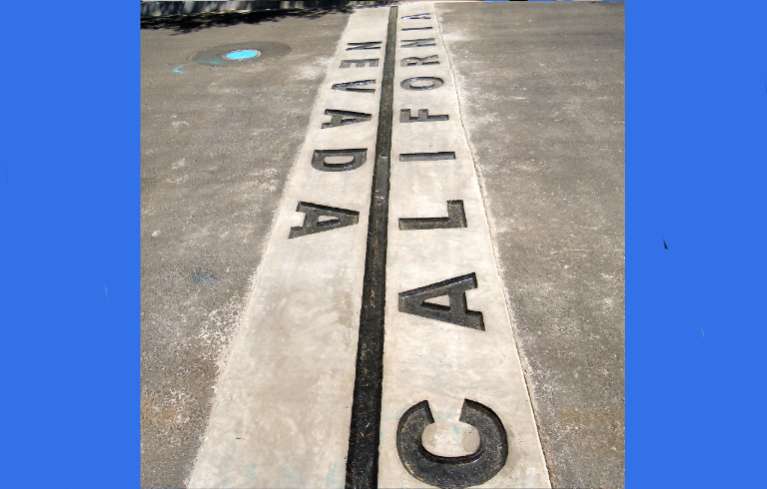
The state line is evident at Van Sickle Bi-state Park, but the environment doesn't come with a line. Photo/LTN

The state line is evident at Van Sickle Bi-state Park, but the environment doesn’t come with a line. Photo/LTN

Teshara does not want either state to withdraw from the bi-state Compact that created the Tahoe Regional Planning Agency. But both states are threatening to do just that.

Nevada threw the first volley with Senate Bill 271. As originally written, it would have meant pulling out of the Compact by 2015 and returning matters at the lake to the Nevada Tahoe Regional Planning Agency, which still exists. It came with some other threats/mandates to California, too, like changing the voting structure of the Governing Board.

What SB271 ultimately did was get both states to start to talk about the region. It inspired both governors to be at the August 2012 annual environmental summit. It spurred the TRPA’s updated Regional Plan to be finalized and then adopted in December 2012.

Many thought SB271 would be repealed.

Senate Bill 229 has been introduced to do just that. But Gov. Brian Sandoval has vowed to veto it, saying he wants to see how the Sierra Club’s lawsuit against the Regional Plan shakes out and if California will compromise on some other issues. (The Senate on April 22 approved SB229 on an 11-10 vote. It now goes to the Assembly.)

Winding its ways through the halls of Sacramento is Senate Bill 630 that is authored by Sens. Fran Pavley, D-Agoura Hills, and Sen. President Pro Tem Darrel Steinberg, D-Sacramento.

(It moved to a state of suspension on April 22, which happens when a bill costs more than $100,000 to implement. Appropriations will study the fiscal implications.)

Pavley, in a statement provided to Lake Tahoe News, said, “I am pleased by the Nevada Senate’s vote to remain a part of the Tahoe Regional Planning Agency, but it’s important that we continue with a backup plan to protect Lake Tahoe until a bi-state agreement is reached.”

The question to her was: “What do you hope to accomplish with SB630?”

Without being allowed to speak with the senator directly it’s not known why she thinks a bi-state agreement doesn’t exist, when in fact it does. Nor could she be asked to actually answer the question.

Components of SB630

The bill when first introduced earlier this year was intended to provide California with a contingency plan if Nevada were to withdraw from the Compact. It would re-establish the California Tahoe Regional Planning Agency, which was dissolved in favor of the bi-state TRPA.

But then came amendments that have local representatives coming unglued.

The CTRPA board would be made up of nine people – all appointed by the governor of California, with approval by the Senate. One person would come from South Lake Tahoe, one from either El Dorado or Placer counties.

“We oppose that because the city should be able to maintain the right to self-governance,” South Lake Tahoe City Manager Nancy Kerry said.

As it stands now, all three local jurisdictions have a representative on the TRPA board. While that person does not have to be an elected official, such as Placer County has done with Larry Sevinson, it is the elected body that appoints the person.

Kerry was in Sacramento earlier this month with three councilmembers, Teshara and Carl Hasty of Tahoe Transportation District to speak out against SB630.

“First of all, it disenfranchises local governments and the people they represent,” Teshara said of the bill. “I lived here in the days with CTRPA in place. They didn’t solve any environmental problems. They irritated people and that is putting it mildly. This version of CTRPA would be more Draconian because it basically goes back to the old adage that local government and local people cannot be stewards of Lake Tahoe.”

Teshara went on to say, “I have said 630 creates Lake Tahoe on the California side as a ward of the state. Look at what the state has done. State Parks is a ward of the state and look how well they’ve done with that. It’s a very dark future for Lake Tahoe.”

LTN posed this question to Pavley: “Why would you want to create a government body where the locals don’t have a voice?”

Her response: “Local residents should have a say, which is why my bill includes a county supervisor and a member of the South Lake Tahoe City Council the governing body. I would [be] willing to include more local voices in the process, but it is also important to include input from other stakeholders.”

Again, there was no opportunity for follow-up questions.

But the Governing Board today has outside reps who are appointed by leaders in the two state Capitols. The latest appointment is by Steinberg, co-author of SB630, who named attorney Bill Yeates. (Yeates won’t be at today’s TRPA Governing Board meeting and has not said when he will actually be able to attend his first meeting.) Yeates has done extensive work for the Sierra Club, the same group suing the TRPA over the Regional Plan.

Steinberg’s office was asked why this appointment was made and why the senator likes SB630. No answers were provided.

State Sen. Ted Gaines, R-Rocklin, represents Lake Tahoe in California. He didn’t mince words when talking to Lake Tahoe News about his opposition to SB630. And he for years has been a staunch critic of TRPA.

“I’m in opposition because it’s a power grab by state government,” Gaines said. “It takes away local power and puts it in the hands of bureaucracies. I would argue we are in a much better situation in terms of the status quo than in terms of what SB630 would offer.”

He doesn’t like that the bill would give more power to the California Tahoe Conservancy.

(Pavley chairs the Senate Committee on Natural Resources. Bill Craven, consultant to that committee, did not return Lake Tahoe News’ call. Todd Ferrara, deputy secretary for external affairs for California Natural Resources, sits on the CTC board as Secretary John Laird’s representative. Ferrara did not return a phone call, either.)

Gaines said he has been speaking with his counterparts in Nevada and that he sees compromise as being possible. He said not to compromise is “unacceptable.”

“We ought to be looking at what is the best for the community at large, not what is best for a narrow special interest,” Gaines said. “We need to change the matrix of how TRPA functions. You’ve got to get cooler minds who will prevail on both sides of the border and political spectrum.”

Another amendment to SB630 is that is has California withdrawing from the Compact on Jan. 1, 2014.

Pavley’s office was asked why this was going to happen when Nevada has a trigger date of 2015. No answer was provided.

South Shore attorney Lew Feldman wrote a letter to Pavley opposing her bill as amended. He wrote, “While it is evident California has taken offense at Nevada’s adoption of SB271, SB630 punishes Californians by diminishing democratic representation without local voice, reducing incentives to redevelop the plethora of blight, jeopardizing TRPA’s attainment of thresholds, and eroding the region’s ability to compete for much needed dollars for regional transportation solutions and water quality projects necessary to meet the recently adopted (by both states) total maximum daily load requirements.”

SB630 as amended would prevent any redevelopment or development from occurring, would require a whole new Regional Plan or the like to be created. It would potentially mean the loss of federal money and would cost California possibly millions of dollars to start things from scratch.

Darcy Goodman Collins, executive director of the League to Save Lake Tahoe, was at the April 9 hearing in support of the bill. She deferred comment to the No. 2 in charge of the conservation group.

“Our team has spent dozens of hours at the Nevada Legislature this year advocating to overturn SB271 because we believe a unified bi-state agency is the best thing for Lake Tahoe. At the same time, we are supporting SB630 because California must have a backup plan in case the Compact dissolves,” Jesse Patterson, the League’s deputy director, said.

Dan Siegel has long been a supporter of the League and Sierra Club, often sitting with their reps at TRPA meetings, as well as eating lunch with them during breaks at those meeting.

Siegel is a supervising deputy attorney general for California.

At the April 26, 2012, TRPA meeting that dealt with the Regional Plan update, Siegel said, “I believe the draft has serious legal defects.” In particular he took issue with delegating authority to local jurisdictions, coverage rules, and the allowance of new development.

While today he is toeing the company line, so to speak, since he is not actually the attorney general, he is not showing his true colors. Those were more on display earlier this month at the Senate hearing where he was cozy with the League and the lobbyist from the Sierra Club who was in attendance.

This week he told LTN, “We support (SB630) in concept. We have no position on the details at this point. We only support it as a backup plan. We strongly support the bi-state Compact between California and Nevada. We feel that is the best approach to protect Lake Tahoe.”

Siegel added that he hopes SB630 never takes effect, that instead Nevada takes SB271 off the table.

But people who spoke to LTN off the record said Siegel’s comments after this month’s hearing were disturbing. In the halls of the Capitol he was not parroting his department’s stance, but instead that of conservation groups.

Siegel has been a party to lawsuits against TRPA.

TRPA reps opted to watch this month’s hearing from their offices.

“The agency is officially neutral on the two states’ legislation. We remain committed to the partners of both states,” Julie Regan, who handles external affairs for the bi-state regulatory agency, told Lake Tahoe News. “We believe the health of the lake is best with a functioning bi-state Compact.”

The future

Some say what is going on is all political gamesmanship with the people of Lake Tahoe as the muted pawns.

Others call it a power grab.

Today Sandoval will be in Sacramento to discuss a variety of matters with Gov. Jerry Brown. Those in the know have told Lake Tahoe News that Lake Tahoe and the bills swirling around the two legislatures are now on the agenda for the states’ leaders.

Another issue Nevada has is all the litigation that goes on at the lake. Legislators would like some sort of criteria in place that if all sides are at the bargaining table when a resolution is agreed to, then a lawsuit is not an option.

“If you have the Sierra Club at the table and they are negotiating and all parties are working together to achieve a solution, that decision should stand and you don’t get a second bite at the apple with litigation,” Gaines said. “That is working in bad faith.”

While regional government such as TRPA has often been criticized, the general consensus is that today it is the correct structure of governance.

Teshara equated the situation to an old married couple – that it’s time the two states renew their vows.

It’s too soon to know if the August environmental summit will delve into today’s issues. By then Nevada legislators should have adjourned for two years and the California delegates should be on their long summer recess.

Sen. Harry Reid, D-Nev., is the host of this year’s summit and he gets to set the agenda. It’s possible a compromise to today’s issues could be showcased at the event. And if there is no resolution in four months, it could be swept under the table.

Those who were asked to look into their crystal balls did not see clarity – at least when it comes to Lake Tahoe politics.

Sting snares unlicensed contractors in El Dorado County

By Cathy Locke, Sacramento Bee

Eleven people have been accused of contracting without a license following an undercover sting operation Saturday at a house in El Dorado Hills.

The operation was conducted by the Contractors State License Board’s Statewide Investigative Fraud Team with assistance from the El Dorado County District Attorney’s Office and the Department of Consumer Affairs Division of Investigation. Of the 11 alleged offenders netted in Saturday’ sting, three had a record of previous citations, according to a Contractors State License Board news release.

The suspects were found through advertisements in local pamphlets, on Craigslist and from business cards posted on bulletin boards at local business, officials said. Undercover CSLB investigators solicited bids for exterior painting, landscaping, tree removal and fence replacement.

In addition to allegations of contracting without a license, 10 of the 11 suspects in Saturday’s sting also are accused of illegal advertising. State law requires that contractors include their license number in all print, broadcast and online advertisements. Those without a license can advertise as long as the ad states that they are not state-licensed contractors, and the combined total of a project’s labor and materials costs is less than $500.

Receiving notices to appear in El Dorado Superior Court regarding illegal contracting charges are Brandon Michael Blubaugh of Cameron Park, painting and decorating; Thomas Domenic Harris of Mountain Ranch, tree service; Miguel Angel Mota Carrera of Carmichael, landscaping; Brent Byron Hylton of Cameron Park, painting and decorating; Marty Fredrick Koulax of Auburn, tree service; Macario Ramirez Cortez of Placerville, tree service; Chin Maui Padilla of Somerset, tree service; Byron Rickey Ford of Rancho Cordova, fencing; Alan Wayne Winter of Sacramento, cabinet, millwork and finish cabinetry; Richard Alejander Larsen Jr. of Sacramento, painting and decorating; and Jonathan Alexander Tyler of Sacramento, painting and decorating.

The Contractors State License Board conducts sting operations statewide in an effort to protect consumers, help level the playing field for legitimate contractors and to curb the underground economy, according to the news release.

Before hiring anyone to work on their property, consumers are advised to:

• Ask to see a contractor’s license and photo ID to verify identity.

• Check the license number on the CSLB’s website at www.cslb.ca.gov or www.CheckTheLicenseFirst.com to make sure the license is in good standing and that employees are covered by workers’ compensation insurance.

• Don’t pay more than 10 percent or $1,000, whichever is less, as a down payment. Exceptions exist for about two dozen licensees who carry special bonds to protect consumers, and these exceptions are noted on CSLB’s website.


Cops: Woman loses paycheck at casino, makes up crime

A South Lake Tahoe woman who gambled away her entire paycheck lied about it, but deputies quickly figured out the truth.

The 42-year-old woman, whose name is not being published because she has not been charged with a crime, was found in the trunk of Mercedes Benz this morning. An employee at Zephyr Cove Lodge heard pounding from the trunk, found the keys in the ignition and was able to free the woman.

When Douglas County sheriff’s deputies first arrived about 8 Tuesday morning she told them she had been gambling at Lakeside Inn and Casino on Monday night and left with approximately $1,500 in cash. As she was walking back to her vehicle someone knocked her out by striking her over the head with an unknown object.

As the investigation went on April 23, the woman admitted to deputies she made up the story because she was afraid to tell her husband she had gambled away her entire paycheck.

— Lake Tahoe News staff report


Felon behind bars on weapons, abuse charges

A South Lake Tahoe man was booked into jail on several felonies today and a 12-gauge shotgun, .270-caliber rifle, 9mm handgun with high capacity magazines, and drug paraphernalia are in an evidence locker.

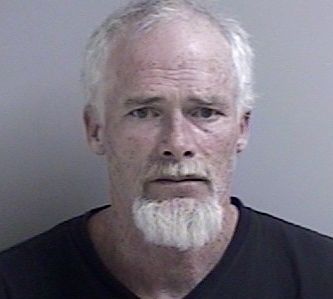
Anthony Corbin

Anthony Corbin

The city’s SWAT team was used to execute the search warrant in the 2400 block of William Avenue on April 23 because of perceived violent threat of the suspect, 46-year-old Anthony Corbin. He is a member of the South Lake Tahoe Brotherhood Motorcycle Club. Corbin is an ex-felon with a violent criminal history, and he unlawfully possessed several firearms and high capacity magazines, officers said.

These weapons were confiscated April 23 from a South Lake Tahoe residence. Photos/Provided

These weapons were confiscated April 23 from a South Lake Tahoe residence. Photos/Provided

In mid-March officers identified Corbin as the suspect who severely beat a 34-year-old South Lake Tahoe man. The victim was left with significant injuries, including several broken bones. Officers said Corbin had another altercation with the same victim on Monday.

“During this encounter Corbin’s 49-year-old wife was present. Corbin allegedly drew a knife, threatened to kill the man, and then attempted to attack the male victim,” police Lt. Brian Williams said in a press release. “Corbin’s wife stood between them in an effort to intervene. Corbin battered his wife to get her away from him. The male victim was able to get away to safety.”

The woman called police. She has since been placed in a safe location.

Corbin was arrested on charges of being an ex-felon in possession of firearms and ammunition, assault with a deadly weapon, making criminal terrorist threats, battery with serious bodily injury and domestic violence.

This is the second Brotherhood member to be arrested in a month. Ryan Marino was arrested in March.

— Lake Tahoe News staff report


Nevada on path to repeal gay marriage ban

By Anjeanette Damon, Las Vegas Sun

CARSON CITY — Following more than an hour of riveting and personal floor speeches — during which one state senator publicly announced for the first time he is gay — the Nevada Senate voted 12-9 to begin the process of repealing the gay marriage ban from the state Constitution.

Only one Republican, Sen. Ben Kieckhefer, joined with Democrats to vote in favor of Senate Joint Resolution 13, which would repeal the ban on gay marriage and replace it with a requirement that the state recognize all marriages regardless of gender.

The late night vote came after more than an hour of emotional floor debate, during which opponents of the measure decried efforts to label them as “insensitive and unenlightened,” and supporters argued marriage equality should be extended to all regardless of gender.

In a particularly emotional moment, Sen. Kelvin Atkinson, D-North Las Vegas, publicly declared for the first time that he is gay.

“I’m black. I’m gay,” Atkinson said in a trembling voice after describing his father’s interracial re-marriage that would have been banned earlier in American history. “I know this is the first time many of you have heard me say that I am a black, gay male.”

Atkinson went on to rebut the argument that gay marriage threatens any other definition of marriage.

“If this hurts your marriage, then your marriage was in trouble in the first place,” he said.

Both Democrats and Republicans sought to balance religious convictions with their stance on public policy. Both came down on different sides of the issue.

“I don’t know if I’ll be allowed in church on Sunday,” said Sen. Ruben Kihuen, a Catholic, who said his “more progressive” girlfriend often berated him for resisting gay marriage rights. He ultimately voted in favor of SJR13.

Sen. Justin Jones, a Mormon, said he sees his gay brother-in-law each Sunday at church and couldn’t bring himself to vote against extending him marriage rights despite a threat from one of the earliest proponents of the gay marriage ban.

“I would rather lose an election than look my brother-in-law in the eye every Sunday and tell him he doesn’t have the same rights as I do,” Jones said.

Sen. Joe Hardy, also a Mormon, took a different tact, saying marriage is “ordained of God” and that such relationships “perpetuate beyond the grave.”

“I do not believe this measure will strengthen the family as the fundamental unit of society,” he said.

Sen. Mark Hutchison, also a Mormon, decried efforts to paint those who oppose gay marriage as intolerant.

“Until about a year ago this was the view of the president of the United States,” Hutchison said of President Obama’s initial opposition to gay marriage on religious grounds. “I do not recall his supporters labeling him as intolerant, or insensitive or hypocritical or unenlightened. He had a different view than others.”

Republicans largely objected to a late amendment to SJR13, which would require not just the repeal of the gay marriage ban, but also inserting into the constitution a requirement that the state recognize such unions.

“Process is important,” said Senate Minority Leader Michael Roberson, who supported the original version of SJR13, which simply repealed the ban. “The better course of action was and is to pass the original SJR13.”

Kieckhefer, who uttered not a word on the Senate floor, was the only senator to buck his caucus on the vote.

In 2000 and again in 2002, Nevada voters approved a constitutional amendment defining marriage as between a man and woman. Proponents of SJR13 note a shift in public opinion away from that sentiment.

If SJR13 passes, the Legislature would have to approve it again in 2015. The measure would then be placed on the 2016 ballot.

“This is a vote to let the people vote for equality,” said Sen. Pat Spearman, D-North Las Vegas.


SF launches probe into Nevada patient-busing

By Phillip Reese, Sacramento Bee

San Francisco City Attorney Dennis Herrera on Monday announced a formal investigation into whether the State of Nevada improperly “dumped” psychiatric patients to his city and across California.

In a letter to the director of Nevada’s Department of Health and Human Services sent this morning, Herrera demands that the state turn over documents related to its aggressive practice in recent years of discharging mental patients to Greyhound buses and transporting them across the country.

The letter, copied to Nevada Gov. Brian Sandoval and Nevada Attorney General Catherine Cortez Masto, cites a Bee investigation detailing how the Rawson-Neal Psychiatric Hospital in Las Vegas bused roughly 1,500 patients to other cities and states from July 1, 2008 through early March 2013.

A Bee examination of Greyhound bus receipts found Rawson-Neal bused 500 patients to California during that period; roughly 30 of them were transferred to San Francisco.

One of the patient’s clients, James Flavy Coy Brown, recently turned up suicidal and confused at a Sacramento homeless services complex after he was discharged via Greyhound to Sacramento, with no prepartion for his housing, care or treatment.

The director of San Francisco’s Behavioral Health Services department told the Bee earlier this month that at least two other Rawson-Neal patients had arrived in San Francisco in the last year “without a plan, without a relative.”

“Assuming the reports are true, Nevada’s practice of psychiatric ‘patient dumping’ is shockingly inhumane and illegal,” Herrera said in a statement. “We intend to investigate these reports thoroughly, and I am inviting input from providers of services to San Francisco’s homeless, who may be willing to volunteer evidence and testimony to assist the city in a potential civil action. ”

Herrera said the city will seek compensation from Nevada if it determines that “patient dumping” has resulted in the improper transfer of patients to San Francisco.

“We’re prepared to litigate aggressively on behalf of San Francisco and its taxpayers to recover whatever costs or damages we’re able to identify,” he said. “I also intend to pursue injunctive relief, including monitoring of the offending medical facilities, to send a strong message to any other state or locality that would consider similarly irresponsible public health practices.”

Several other agencies are also examining Rawson-Neal’s transfer policies.

A spokeswoman for the Joint Commission, which evaluates and certifies hospitals across the country, said last week that the organization is “aware of complaints around the discharge issue” at Rawson-Neal Psychiatric Hospital in Las Vegas, and is gathering information to determine whether a special on-site survey is warranted.

The U.S. Centers for Medicare and Medicaid Services, a federal watchdog agency, also is reviewing Rawson-Neal’s discharge practices. Spokesman Jack Cheevers said the agency asked Nevada’s health division to assist in a probe. Violations could result in a loss of critical federal funding.

The city of Los Angeles is gathering information to see if an investigation is warranted, officials there said.


Vail Resorts ends season with strong numbers

By Mark Harden, Denver Business Journal

With a boost from ample late-season snow, Vail Resorts said today that skier visits at its seven mountain resorts in Lake Tahoe and Colorado rose 5.5 percent for the 2012-13 ski season through April 14 over its results the previous season.

That marked a distinct improvement from the company’s numbers earlier in the season. Through January, skier visits at Vail Resorts ski areas were up 2.9 percent from the same period a year earlier.

Also, lift ticket revenue — including the applicable portion of season pass revenue — was up 10.2 percent at the seven ski and snowboard areas this season.

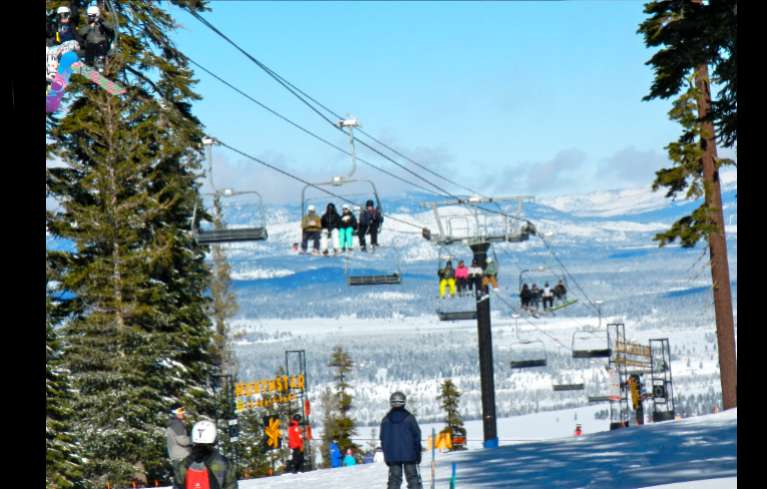
Early snow helped California resorts like Northstar, while snow in Colorado prolonged the season there. Photo/LTN file

Early snow helped California resorts like Northstar, while snow in Colorado prolonged the season there. Photo/LTN file

The figures apply to Colorado’s Vail, Beaver Creek, Breckenridge and Keystone resorts and Heavenly, Northstar and Kirkwood resorts in the Lake Tahoe area.

Kirkwood was included although Vail Resorts closed on its purchase of the resort last April.

But the numbers do not include the company’s newly acquired Afton Alps resort in Minnesota and Mount Brighton in Michigan, which it bought last December.

The 2012-13 figures are through April 14 and do not include numbers from the April 19-21 period. Vail and Breckenridge were among the Colorado resorts that temporarily reopened over that period because of heavy April snow.

Other season-to-season comparisons released by Vail Resorts on April 22: Dining revenue rose 13.1 percent, ski school revenue was up 11.6 percent, and retail/rental revenue climbed 8.9 percent from the same point of last season.

Rob Katz, Vail Resorts CEO, said the company is “very pleased with the strong results this season. The growth in skier visitation continued to accelerate through Spring Break and the Easter holiday which contributed to our double-digit growth in lift ticket, dining and ski school revenues compared to the same period last year, offset by somewhat slower momentum at our Tahoe resorts and our retail business.”


Douglas County plane crash victims identified

Updated April 22, 2013:

The victims of the small plane crash that was located in Douglas County on April 18 have been identified as Cory Paul Marble, 30, of Reno and Brittney Calane Hocking-Cangemi, 21, of Gardnerville.

NTSB is still investigating the crash.

—–

MINDEN — Rescuers looking for a small plane that went missing after departing from North Las Vegas say they’ve found wreckage about 20 miles southeast of the Minden-Tahoe Airport.

Douglas County deputies say they found the wreckage of a Cessna 182 Thursday afternoon in the Pinenut Mountains. Officials haven’t yet confirmed whether the two bodies found at the scene belong to 30-year-old missing Reno pilot Cory Marble and his 21-year-old girlfriend from Minden.

An FAA spokesman says the plane departed from the North Las Vegas Airport Sunday evening and was last detected 78 miles southeast of Reno.

The pilot’s mother says her son was returning from a weekend business trip to southern Nevada.

Kay Lynn Marble says her son is an Eagle Scout and professional pilot with an air ambulance company.

— Associated Press


Internet sales may soon be taxed

By Jia Lynn Yang, Washington Post

The days of tax-free online shopping could finally be numbered.

The Senate is planning to vote on a bill as soon as this week that would give states the authority to collect sales taxes on all Internet purchases, handing local governments as much as $11 billion per year in added revenue that they are legally owed — but that hasn’t been paid to them for years.

Since before the dawn of Internet shopping, the basic rule was that as long as a retailer didn’t have a physical presence in the state where the consumer was shopping, the company wouldn’t have to collect a sales tax. Technically, shoppers are supposed to track these purchases and then pay the taxes owed in their annual tax filings. Few people, however, do this or are even aware of it.

The result: Online retailers have been able to undercut the prices of their non-Internet competitors for years. Over time, shoppers learned that they could browse products in the aisles of a Best Buy, only to click “purchase” on their smartphones for a tax-free deal from an Internet retailer.

As states have become more strapped for cash since the recession, local officials have fought back. New York passed an “Amazon tax” in 2008 that forced the giant online retailer to collect sales taxes from shoppers who live in the state, even though Amazon didn’t have a brick-and-mortar presence there.

Others followed suit. Nine states require Amazon to collect sales taxes, including California, Pennsylvania and Texas.

The bill introduced by Sen. Mike Enzi, R-Wyo., called the Marketplace Fairness Act, would grant all states the power to collect taxes from out-of-state vendors selling goods to their residents.

States are so eager to see the funds that some have already passed legislation that counts on Congress approving the new law.

The Maryland state legislature passed a measure this year that raises the gas tax to help pay for transportation projects. The bill calls for raising the gas tax even more — unless Congress passes some version of the Marketplace Fairness Act.

Likewise, Virginia passed a transportation funding bill that relies on money from a tax on Internet sales.

Enzi’s bill technically would not add a new tax liability because these purchases are already supposed to be taxed. It also would not require states to collect the money; it would simply give them the authority. Companies with out-of-state revenue of less than $1 million would be exempt from the provision.

The measure appears likely to win a filibuster-proof majority in the Senate because members approved the idea in March in a 75 to 24 symbolic vote.

Support does not fall along partisan lines, according to those who have followed the debate. A number of senators in both parties are former governors who understand the fiscal woes of local governments.

But there remains some resistance. Sen. Max Baucus, D-Mont., chairman of the Finance Committee, opposes the bill because he argues that it would force businesses to keep track of far too many different tax codes. (Montana does not have a sales tax.)

Observers say there may also be some Republican House members who balk at the idea of the government collecting more revenue. Grover Norquist, founder of Americans for Tax Reform, which is influential among Republicans, has raised concerns about the new bill, saying it essentially adds a new tax to consumers.

The legislation also seeks to simplify the process by helping states make their tax laws more uniform. Enzi argues that there’s a way to make the process easier for retailers so that the added work of collecting the tax doesn’t become a costly burden.

A spokesman for Enzi pointed to the senator’s recent comments on the floor of the Senate.

“Do not let the critics get away with saying this kind of simplification cannot be done,” Enzi said in March. “The different tax rates and jurisdictions are no problem for today’s software programs.”

Enzi’s bill is garnering strong support from brick-and-mortar retailers.

“The Marketplace Fairness Act is a commonsense piece of legislation necessary to modernize our federal and state understanding of sales tax laws so that they can keep current with real-world changes in the marketplace,” said David French, senior vice president for government relations at the National Retail Federation, in a letter to members of the Senate last week.

The NRF represents companies such as Wal-Mart, which have lobbied for years to get a law like the one proposed by Enzi.


Nevada’s new money not necessarily good news

By Andrew Doughman, Las Vegas Sun

CARSON CITY — Gov. Brian Sandoval might not be Santa Claus, but he does know how to give mysterious gifts.

This month, he found $25 million for education programs and even released a handy slogan: “Increasing funds for education without raising taxes: Check.”

The next day, he said he found yet another $25 million for health programs for the state’s most vulnerable populations. Then, he announced $12 million more for eliminating furloughs for state workers by mid-2015.

How, exactly, did those presents end up under Nevada’s Christmas tree?

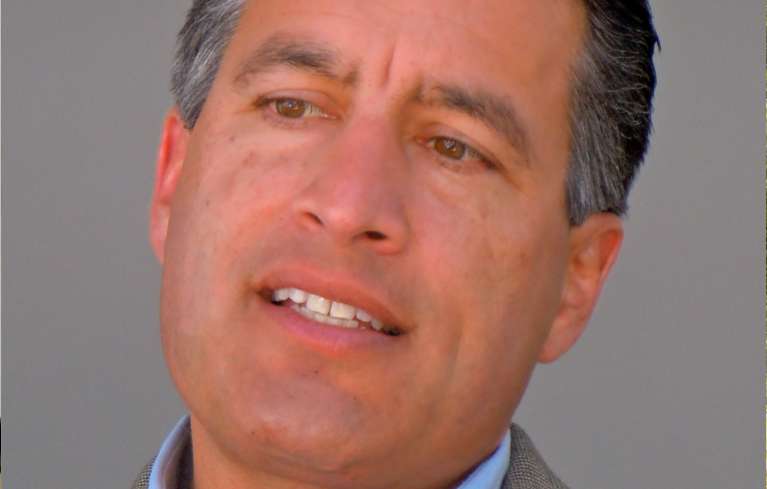
Gov. Brian Sandoval has money to spend. Photo/LTN file

Gov. Brian Sandoval has money to spend. Photo/LTN file

The majority of the money comes from regular state accounting adjustments, and it’s not necessarily good news. Nevada gets a portion of this new money because the federal government now projects the average American’s income will grow faster than the average Nevadan’s income.

While Democrats have called for more education spending this year, Sandoval said during his address to the Legislature that his budget will grow with the economy.

“We cannot cut our way out, we cannot tax our way out, we can only grow our way out,” he said.

But in this case, economic growth isn’t fueling increases to the budget.

Besides getting more federal money because it’s getting poorer than other states, Nevada also is benefiting from revisions to the number of state residents enrolled in government health programs and a nationwide trend in lower-than-projected health care costs.

“Those are both pretty standard adjustments we’d make,” said Jeff Mohlenkamp, the state’s budget director. “They just happen to be working in our favor right now.”

The governor did bargain one large concession from the federal government. His office negotiated with federal officials to get an extra $17.6 million as part of the state’s expansion of Medicaid, a part of President Obama’s health care overhaul law.

“It’s a large win for the state,” Mohlenkamp said.

Besides these accounting adjustments, Mohlenkamp said there are at least three other major adjustments the state will make before it finalizes its budget in June.

Some of these will reflect the state of the economy.

“I feel good,” Mohlenkamp said. “I’d be surprised if it went down significantly.”

Democrats welcomed the new money for the budget, saying the Republican governor is putting money toward good programs.

But Sandoval’s budget still isn’t big enough to mollify calls from Democrats to spend more for education and health programs that were reduced in the past few recession-era budgets.

“We should be spending more on all-day kindergarten, and we should be spending more on (English-language learners),” said Assemblywoman Maggie Carlton, D-Las Vegas, the chairwoman of the Assembly’s Ways and Means committee, which manages spending bills at the Legislature. “This is basically a scratch in restoration of all the cuts that have happened. This is a nice little baby step forward.”

Overall, the governor has added $77.7 million to the $6.5 billion general fund budget he has proposed, including $25 million for expanding English-language learner and full-day kindergarten programs.

The budget office is banking $11.4 million, hedging against further adjustments to the budget.

“It’s prudent not to spend every dime until we know what we’re up against,” Mohlenkamp said.

The final total dollar amount available won’t be known until May 1, when a bipartisan panel of economists charged with making the state’s official revenue forecasts, the Economic Forum, meets.

Some conservative-minded Republicans privately grumbled that all $77.7 million should be used to help replace budget gimmicks and tax increase extensions that Sandoval is using in his proposed budget.

Sen. Debbie Smith, D-Reno, has called for more education spending from her perch at the head of the powerful Senate Finance Committee. She was pleased with Sandoval’s amendment.

“He is funding our priorities,” she said. “That said, we will have to wait until after the Economic Forum plays out.”