2 people die in single-car wreck on Hwy. 50

By KCRA-TV

Two people died and another suffered serious injuries Friday in a crash on Highway 50, the California Highway Patrol said.

All the victims are young adults — likely in their late teenage years to mid-20s, a Placerville CHP officer told KCRA 3.

Police are still working to confirm their identities.

Only one car was involved in the wreck, which took place on the eastbound side of the highway, just east of the Red Hawk Parkway over-crossing.

The driver of a 1996 Toyota Corolla drifted into the center median, tried to get back on the roadway, then overcorrected and lost control of the car — smashing into a rocky outcropping, the CHP said.

The vehicle rolled and came to a rest on the highway, according to police.

Two women and one man were inside.

Emergency crews airlifted the female driver to Mercy San Juan, where she died.

A male passenger riding in the back of the car wasn’t wearing his seat belt, police said. He was ejected from the Corolla and declared dead at the crash scene.

An ambulance took another female passenger to the UC Davis Medical Center to be treated for serious injuries, the CHP said.

Both women were buckled in, police added.

The wreck closed eastbound Highway 50 at Shingle Springs for a short time. All lanes were blocked just after 11:15am.

No further details were released.


Motorcycle deaths decline in Calif., increase in U.S.

By Tony Bizjak, Sacramento Bee

Motorcycle deaths rose nationally in 2012, a study found, and the culprits may have been warmer weather and economic changes.

Notably, though, California motorcycle fatality numbers were slightly down.

The Governors Highway Safety Association is estimating motorcycle deaths topped 5,000 across the country last year, a 9 percent increase from the previous year, in part because better weather lengthened the motorcycling seasons in many states, and also because higher gas prices prompted more people to drive motorcycles.

“With the economy improving in 2012 and further strengthening in 2013, more people have disposable income for purchasing and riding motorcycles,” the report concludes. “At the same time, high gas prices may cause more individuals to choose fuel-efficient vehicles like motorcycles as their preferred mode of transportation.”

California was among the handful of states were motorcycle fatalities dropped from the previous year. During the first nine months of 2012, the months for which data were available, the number of motorcycle deaths in California dropped slightly from 321 to 318.

Officials credited increased awareness campaigns in California as part of the reason. Highway officials last year launched an aggressive “share the road” campaign aimed at making car drivers more aware of motorcyclists.

The report notes that only 19 states have helmet laws that apply to all riders, down from 26 in 1997.


Kirkwood in no hurry to be more than it is

By Jessie Marchesseau

KIRKWOOD – When Vail Resorts bought Kirkwood in April 2012, the company did not get all of Kirkwood. What the Colorado-based company bought were the rights to run the actual ski resort, the associated restaurants and retail, and the overnight lodging. Kirkwood Mountain Development retained all real estate development rights.

What this means for Kirkwood is there is one entity, Vail Resorts, completely focused on improving the skiing experience. While the other one, Kirkwood Mountain Development, is completely focused on the real estate side of things. If each of these entities can allocate 100 percent of its time and money to its respective area of expertise, Kirkwood, in theory, should reap the benefits.
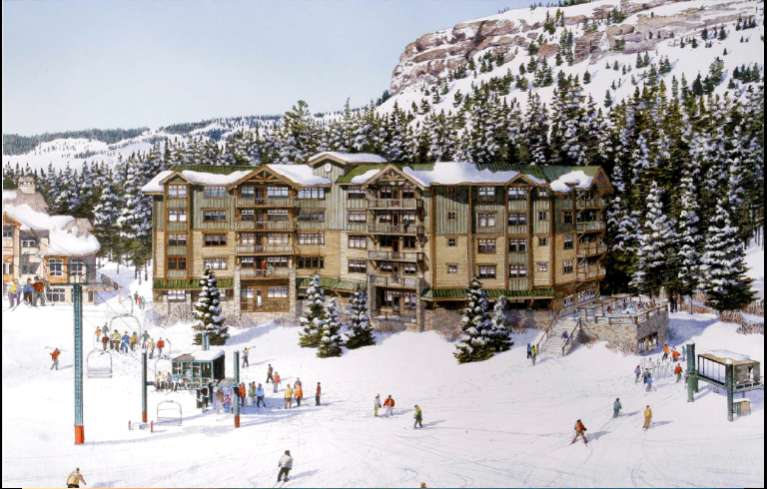
Rendering of Expedition Lodge, the project in the center of the village at base of Chair 11 currently soliciting investors to develop the project.

This is a rendering of Expedition Lodge, the project in the center of the village at base of Chair 11.

With April being the one-year anniversary of Vail’s involvement with Kirkwood, here are a few highlights of what changes The Wood has seen so far, and what is coming up from both sides.

In real estate

This season, Kirkwood has seen an upswing in real estate that nearly rivals 2006. The average transaction price is up more than 35 percent from last season. Nate Whaley, managing broker for Kirkwood Mountain Realty and president of Kirkwood Resort Development, said he is seeing an increase in real estate demand especially in the high-end. Two $1 million-plus homes have sold this year, one of them the fourth highest sale in Kirkwood history.

Whaley attributes this partly to improvements in the economy as a whole, and partly to people seeing the success of other Vail resorts such as Northstar and its nearby Martis Camp development. Buyers see an opportunity to own at what is already a great mountain, and, under Vail’s direction, stands to become a world-class resort.

So is Kirkwood going to turn into another Northstar?

“No,” Whaley tells Lake Tahoe News. “Kirkwood is a very different experience from Northstar. The mountain is very different, and the village experience is very different. It will always be a much more intimate village than Northstar.”

This increased demand is not driving any immediate real estate development either. KMD has had a Mountain Master Development Plan in place for years, including a complete redevelopment of the Red Cliffs area and the new Expedition Lodge at the base of Chair 11. However, they have few building plans in the very near future. Currently, just one project is in the pipeline that could start as early as the end of this summer or summer 2014.

What that project is, well, they aren’t saying at this time.

Regardless of Vail’s involvement, Kirkwood will still max out at 1,400 residential units, about half of which are already built. That number was reaffirmed in 2003, but was set long before then. All of the remaining development at Kirkwood will be what Whaley calls “right in Times Square,” meaning it will be ski in, ski out slated for the base of the mountain.

As far as commercial development, a lot of skiers are anticipating the “tent” at Timber Creek coming down and a more permanent structure taking its place. This is entirely up to Vail, as they own the development rights for that area. However, there are currently no plans for that happening. Many assume the empty foundation sitting next door to the temporary building is the unfinished attempt at a lodge. In reality, that foundation is the beginning of 67-unit condominium project by a private developer.

Real estate in a place like Kirkwood is closely tied to mountain operations. If a new lodge goes in at Timber Creek, chances are, residences will too.

On the mountain

Vail Resorts recently announced it would be spending a record amount of money on ski resort improvements for the 2013-14 season: $140 million across all of its resorts. How much of that money is Kirkwood getting? They won’t say.

What they will say is Kirkwood will not be seeing any new chairlifts or new lodges just yet. Kirkwood Vice President and General Manager Casey Blann said Vail is still feeling Kirkwood out, learning how the mountain works and what it needs. A few things were obvious right off the bat: snow safety, customer service, food and bathrooms.

These four items received most of the attention this last year and will continue to eat up most of the capital improvement dollars for next season. These types of changes are not as sexy as new chairlifts, and new visitors may not even notice the changes, but long-time passholders will, and have.

“It’s been fun to have those folks that were fearful and turn them into supporters,” Blann told Lake Tahoe News.

Time and again Kirkwood locals noted the lifts opening on time this year, even on storm days. They also noticed shorter lift lines and more on-mountain security.

“There were less crowds,” commented Doug Severn, who has been skiing and driving a snowcat at Kirkwood for more than a decade, “but that’s not good either. They scared everybody away!”

The two security guards at the bottom of Chair 6 on closing day did look like they might arrest someone at any moment.

Snow safety, on the other hand, is less visible to the public. A new avalanche bomb launching device makes shooting the bombs faster and more accurate, allowing ski patrol to open areas for skiing quicker on storm days. Also helping chairlifts open earlier will be the new patrol shack/snowcat garage at the top of Chair 10.

While this may not seem important to the average skier, Severn calls this plan “brilliant.”

“It’s one of the best things Kirkwood could do for itself. The reason they can’t get 10 open is they don’t have a working cat up there,” he said.

Currently, Blann explained, during storm cycles, a ski patroller will spend the night in the patrol shack at the top of Chair 10, getting up every few hours to start up the snow cat and clear the snow away from the top of the lift. The problem is, the cat gets frozen, full of snow and breaks down. If the top of the chair is not clear, other patrollers cannot get up there in the morning to start snow safety measures. A working cat equals an open Chair 10.

In addition to the new structure at the top of 10 for next season, Vail will be putting in a new bar in the Mountain Club plaza, adding more bathrooms, increasing food and beverage options, and expanding the Expedition Kirkwood program with a new snowcat for backcountry tours.

When asked what changes they would like to see for next season, Kirkwood skiers requested everything from new chairlifts and the opening of the Cirque to cheaper food and paved parking lots.

For South Lake Tahoe resident and Kirkwood skier and snowskater Ryan Palmer, the answer is simple: “Doughnuts.”

—-

This is a map from 2007 that has some of Kirkwood’s future plans on it, though some of the items are already in the ground.


Cause of Truckee fire ruled ‘suspicious’

Truckee officials are calling the April 11 fire at the C.B. White House “suspicious” in nature.

Officials are hoping the public can help with the investigation by providing information if they saw anyone near the 1874 Victorian mansion before the fire erupted.

The fire caused extensive damage to the restaurant at the back of the building. But no further details about how it started have been released.

Anyone with information, should call Detective Arnie Lopez at (530) 550.2336.

— Lake Tahoe News staff report


Profits down at El Dorado Savings Bank

By Mark Glover, Sacramento Bee

Placerville-based El Dorado Savings Bank reported a quarterly profit of $1.66 million for the three months ended March 31.

That was a 22 percent decrease from a profit of $2.13 million in the first quarter of 2012.

“The drop in earnings is the result of the low- interest-rate environment that has persisted now for over four years,” said Thomas Meuser, chairman and CEO. “Our higher-rate loans and investments continue to pay off, and the funds are reinvested at the current low rates, which puts pressure on our profit margin.”

Total assets as of March 31 were $1.83 billion, up from $1.76 billion in the year-ago period.

The bank operates 32 branches in California and three in Northern Nevada.


Bid docs force STPUD to delay water line work

Publisher’s note: This is one of a few stories about construction planned for the Lake Tahoe Basin this summer.

By Kathryn Reed

Inadequate bids are forcing the state streets water project in South Lake Tahoe to be delayed for what will probably be at least until 2014.

While it’s possible the South Tahoe Public Utility District board and staff could decide to do some of the work this building season, it’s doubtful. At a meeting last week the board agreed with staff that it was best to reject all bids. (Board member Kelly Sheehan was absent.)

Two of the three bids did not adequately comply with the disadvantaged business enterprises clause that requires the general contractor to contact a certain class of subcontractor. It doesn’t say they have to hire them, just reach out to see if they could do the work.

stpudThe third bid was $1 million higher than the other two.

“In all of our bid documents its says we reserve right to withdraw the bid. That is basically what happened,” South Tahoe PUD spokesman Dennis Cocking told Lake Tahoe News after the meeting.

It is possible STPUD crews could work on some of the area this summer, but that is dependent on where crews are needed for everyday work.

With the city pushing back its overlay project in this area to probably 2015, the water district is not feeling the pressure to get its work done this season.

What will be done at some point is putting in a 12-inch water line down Tahoe Keys Boulevard. The side streets – known as the state streets because most are named after a state – are to have 8- and 10-inch water lines installed. Most of what is in the ground is 6-inch lines.

Hydrants will also be installed at 500-foot intervals for better fire protection.

Where there are dead-end lines, those will be converted to loops. When the South Shore was full of tiny water districts the norm was to cap a water line. Now standard practice is to have the system loop, which provides for better water quality.

One aspect of the project that was included in the bid documents was work on Pioneer Trail. That is still going to be done this summer, but now by district employees.

“We knew we couldn’t go out to bid again and get it done this year,” Cocking said.

Timing is critical to replace that undersized water line before the city begins its sidewalk project in the same location.

It’s likely water will be shut off for a time in that area. Water customers will be notified 24 hours in advance.


Nevada reverses policy on busing mental patients unescorted

By Andrew Doughman and Cy Ryan, Las Vegas Sun

CARSON CITY — Nevada’s health department on Wednesday reversed its practice of sending patients discharged from state psychiatric hospitals alone on bus trips out of Nevada.

Gov. Brian Sandoval’s spokeswoman said today that the state will now require escorts to accompany patients who are bused out of state.

“We made a decision to formalize the policy,” Mary-Sarah Kinner, Sandoval’s spokeswoman, said. “This is part of the new strengthened procedures.”

The Rawson Neal psychiatric hospital in Las Vegas has come under fire in recent months for sending 1,500 discharged mental health patients on unescorted, one-way bus journeys to other states. The health department has said most of these trips involve transportation home for patients visiting Las Vegas from other states.

Last week, health department officials said that most patients didn’t need escorts.

“When a patient is discharged, they are considered safe,” said Tracey Green, Nevada state health officer, during an interview last Friday. “So really that wouldn’t require the need for an escort. When we look at best standards for care, I think that the safety is really what is supported by the fact that the client is considered safe when they’re discharged from our hospitals.”

Prior to the April 24 announcement, medical personnel made the decision on whether the patient needed a state-provided escort.

Patients discharged from the psychiatric hospital have conditions that run the gamut from “acute intoxication” to “schizophrenia,” Green said. Each patient might require a different level of supervision after being discharged.

“So really our policy is to ensure that the system appropriate for our client is set up,” Green said of the prior practice.

Green said policy changes happen periodically, but in this case the media stories about this particular policy drove the change.

“Our policy stands that it has been the determination of need, but at this time we are erring on the side of caution,” she said. “Given the events in the media, we have determined it’s better to err on the side of caution.”

The change from discretionary option to mandatory practice allows for a number of chaperones to accompany a discharged patient: state mental health staff, family members of a family-designee, domestic partners, legal guardians, or “other appropriate caregivers,” said Mary Woods, Nevada Department of Health and Human Services spokeswoman.

Woods said she did not have an estimate of what this new policy would cost the state.

The policy change comes on the heels of a review of 1,500 patients shipped out of state from Rawson-Neal, finding five or six cases in which the hospital’s discharge policy was not followed.

Mike Willden, director of the state Department of Health and Human Services, said earlier today that officials were considering whether to continue sending discharged patients by bus out of state, to scrap the policy or require a chaperone to accompany the patient.

Shortly before the announcement, Willden was seen waiting for a meeting in the lobby of the governor’s office.

The health department did not disclose what in the review led to the requirement for a chaperone.

“It’s just a part of strengthening our policy,” Woods said.

The initial review found that the majority of patients involved were not considered a “threat to themselves or to others” and expressed a desire to return to their families, friends or to an out-of-state treatment facility.

Two staff members at the Rawson-Neal Psychiatric Hospital were disciplined, but Willden refused to say if they were higher-echelon officials or what penalty they faced.

The review of the 1,500 cases — prompted by a series of stories in the Sacramento Bee — was completed at midnight Tuesday. The Bee first broke the story of Nevada patients being put on a buses and sent to other states, prompting officials in California to call for an investigation.

The policy governing how patients in Nevada are discharged out of state has since been tightened. Now, two physicians instead of one must sign a discharge, and the hospital administrator must approve the decision.


LTCC has momentum to alter tuition rates

By Kathryn Reed

Lake Tahoe Community College officials have one week to come up with ideas that would satisfy the state Senate Committee on Education’s concerns regarding the college’s quest to allow some Nevada students to pay tuition at California rates.

The first hearing before the senate committee was April 24, with a return trip to Sacramento planned for May 1.

“I am encouraged that the Senate Committee on Education is willing to work with me on this important issue and will look forward to exploring legislative and non-legislative options for extending in-state tuition costs to all Lake Tahoe Community College District students in the Lake Tahoe Basin,” state Sen. Ted Gaines, R-Rocklin, told Lake Tahoe News. “I will do all I can to work on a bipartisan basis to satisfy my colleagues’ concerns when Senate Bill 329 is up for a vote next week.”

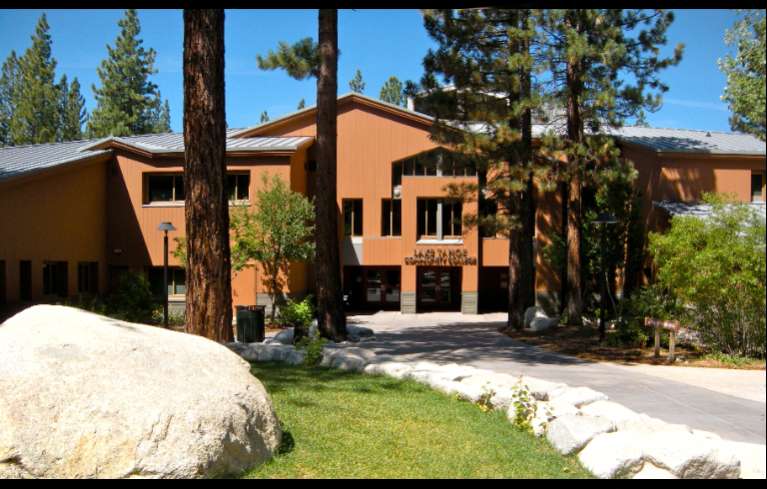
Lake Tahoe Community College would like to create a good neighbor tuition policy for Nevadans at Lake Tahoe. Photo/LTN file

Lake Tahoe Community College would like to create a good neighbor tuition policy for Nevadans at Lake Tahoe. Photo/LTN file

Gaines authored the legislation.

This all came about when in June 2011 Nevada’s board of regents rescinded the good neighbor policy that allowed some California students not to pay out of state tuition. They did this because it was determined it was costing Nevada $6 million a year.

California then said no discounts for Nevada students.

A full-time student at LTCC pays about $1,370 a year, while a non-California resident pays $7,600 for that same education. While it’s normal for all institutions to charge more for out-of-state or foreign students, the problem comes when colleges are in border towns like South Lake Tahoe.

The state line is 3.2 miles from LTCC and Whittell High School in Zephyr Cove is about eight miles away. For an area that keeps touting itself as one community, one economy, the varied education expenses for the local college contradict those beliefs.

“They understand Tahoe is a unique community and we want to educate our citizenry,” LTCC President Kindred Murillo said of the lawmakers. “We want fairness.”

Only Nevada students living inside the Lake Tahoe Basin would be allowed the discounted rated. And the legislation is specific to LTCC.

Murillo told Lake Tahoe News she hopes to get SB329 through the Legislature so on July 1 the college would have new rates for some Nevada students.


Data ties human illness to farm antibiotics

By Eliza Barclay, NPR

Are the antibiotics the livestock industry uses on animals responsible for antibiotic-resistant infections in people? Bacteria are notoriously hard to follow from farm to fork, but more pieces of the puzzle are coming together that suggest the answer is yes.

Earlier this year, government researchers published data on tests conducted on supermarket meat samples gathered in 2011 by the National Antimicrobial Resistance Monitoring System. The tests detected several nasty bugs that cause disease in humans — salmonella, Campylobacter and E. coli.

As if the presence of these microbes weren’t enough, the researchers found that a lot of the bacteria were strains resistant to antibiotics, making them even more dangerous for humans. The implications were significant — that the bacteria had become resistant to antibiotics back at the farm because farmers were overusing them.

The findings, released through the joint program of the Food and Drug Administration, the Department of Agriculture and the Centers for Disease Control and Prevention, got little attention when they were published in February. But this week, the Environmental Working Group, which opposes some of the livestock industry’s use of antibiotics, analyzed the government data and highlighted some of their startling implications in a report.

EWG researchers found that 53 percent of raw chicken samples were contaminated with antibiotic-resistant E. coli. Resistant salmonella was also common on the meat samples: Of all the salmonella found on the chicken samples, some 74 percent were antibiotic-resistant. And 26 percent of the chicken tested positive for resistant Campylobacter.

“Not all of the salmonella or E. coli that makes us sick is coming from meat,” says Dawn Undurraga, a nutritionist at EWG and the lead author of the report. “But a large portion of it is coming from the meat.”

Lance Price, an expert on antibiotic resistance and a professor at George Washington University who reviewed the EWG report, concurs.

“This report isn’t fear mongering,” says Price. “Food is an underappreciated potential route of exposure to drug-resistant bacteria. And it’s a huge potential source for emergence of the next true superbug.”

Mike Apley, a veterinarian at Kansas State University who specializes in cattle raised in feedlots, has frequently defended the livestock industry’s use of antibiotics for disease prevention and treatment. But he agrees that the new data suggest that the appearance of drug-resistant strains of harmful bacteria on meat is a problem.

“We need to continue to look at how resistant E. coli, salmonella and Campylobacter are making people sick,” he tells NPR. “It would be very reasonable to look at that from the use of antibiotics for food animals.”

Advocacy groups like EWG say the biggest problem is the industry’s use of antibiotics for growth promotion, feed efficiency and prevention of disease.

As Andrew Gunther, program director for Animal Welfare Approved, wrote this month: “The problem for humans is that by allowing intensive livestock farms to routinely expose bacteria to regular sub-therapeutic levels of antibiotics … we are actually providing the ideal conditions for bacteria to mutate and become resistant to their effects.”

And resistance can jump from animal pathogens to human pathogens.

Many scientists and food advocacy groups are pushing for tighter regulations on the industry and more details about how it uses antibiotics. That includes Price, who says that the meat production system has grown too dependent on antibiotics to keep animals healthy. Ultimately, he says, antibiotics are a crutch for a system that relies on confining large numbers of animals in a way that increases their susceptibility to disease.

“If you have a food animal production system that makes animals sick in a predictable way, you need to change the system,” says Price.


Caesars restructuring operations to stay solvent

By Devin Banerjee and James Callan, Bloomberg

Caesars Entertainment Corp., the largest owner of U.S. casinos, said it’s creating a venture that will raise as much as $1.2 billion to finance growth investments and bolster the parent company’s balance sheet.

The venture, Caesars Growth Partners LLC, intends to buy a stake in Planet Hollywood Resort & Casino in Las Vegas and interests in the Horseshoe Baltimore casino project currently under development, according to a statement released April 23. Apollo Global Management LLC and TPG Capital plan to invest $500 million in the entity, combining the new investment with well-performing holdings in a structure less constrained by debt. Caesars said it expects to own a stake of at least 57 percent in the venture’s earnings.

Caesars Entertainment Corp. Chief Executive Officer Gary Loveman said, “The transaction is an important step in our ongoing efforts to improve the company’s balance sheet and position ourselves to make strategic investments.”

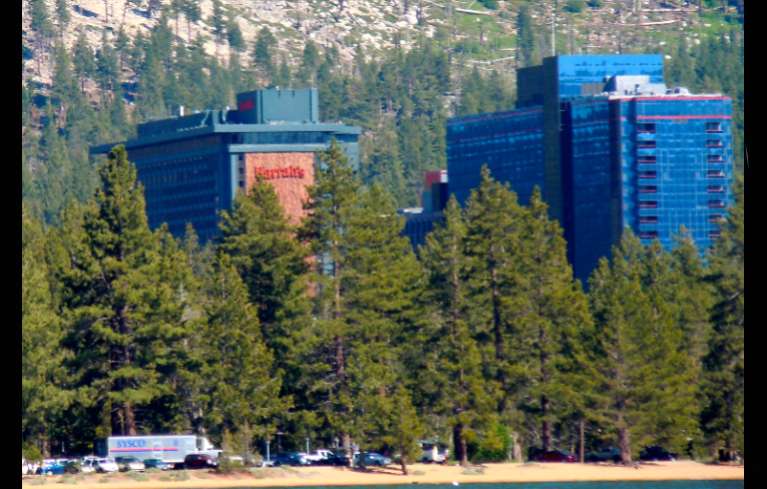
Caesars Entertainment, which owns two properties in Stateline, has had financial problems for years. Photo/LTN file

Caesars Entertainment, which owns two Statelin properties, has had financial problems for years. Photo/LTN file

Caesars is the parent company of Harrah’s Lake Tahoe and Harveys in Stateline.

Caesars, burdened by more than $20 billion in debt after the 2008 leveraged buyout by Apollo and TPG, has considered moves to strengthen its capital structure for the past five years. The Las Vegas-based company, which went public in 2012, didn’t want to sell more stock because it would dilute shareholders’ interests, and instead decided to sell growth-oriented holdings to raise immediate cash while still retaining a stake in those assets.

“The transaction is an important step in our ongoing efforts to improve the company’s balance sheet and position ourselves to make strategic investments,” Loveman said in the statement.

Caesars stock has more than doubled in value this year.

Caesars, bought by Apollo and TPG for $30.7 billion, has been losing money since the global credit crisis as a glut of hotel rooms led to the biggest Las Vegas gambling slump on record. The company earlier this year had its debt rating cut by Moody’s Investors Service to Caa2, as little as two levels above default. The casino operator may seek to extend its maturities at the expense of lenders, the ratings company said, giving some creditors a choice of immediate losses or the risk of default.

The company said in February that its fourth-quarter loss more than doubled because of costs related to Hurricane Sandy and a write-off at an Atlantic City property. In Atlantic City, where the company is the largest owner of casinos, gambling revenue fell 28 percent in November after Sandy forced casinos in the seaside resort to close for six days.

The new investment in the growth venture may increase to $1.2 billion if Caesars stockholders opt to buy a stake in the entity overseeing it, Caesars said. The company will receive the option to buy back all of the venture’s assets in the future, according to the statement.

Caesars was one of several jumbo-sized deals struck during a debt-fueled buyout spree from 2004 to 2007. Many of them, including Caesars, Texas utility Energy Future Holdings Corp. and media company Clear Channel Communications Inc., struggled with high debt and depressed earnings in the aftermath of the financial crisis. Some, including hospital chain HCA Holdings Inc. and retailer Dollar General Corp., have registered big gains for the buyout firms.

Apollo’s sixth flagship fund was carrying Caesars at one-fifth of its $1.34 billion investment as of Sept. 30, according to a marketing document obtained by Bloomberg News. Caesars had returned $158.8 million to the private-equity firm, the document shows.

While Caesars has dedicated $1.1 billion this year to sprucing up its properties, including the construction of the world’s second-biggest Ferris wheel, the payroll tax increase felt by many U.S. consumers is contributing to an estimated $300 million cash burn before capital expenditures, Moody’s said in an April 5 statement.

A business in which Caesars stands to benefit is Internet gambling, which was legalized in New Jersey, Delaware and Nevada in the last two years. Online gaming could generate as much as $210 million in revenue for the company and $84 million in earnings before interest, taxes, depreciation and amortization, according to Susan Berliner, an analyst at JPMorgan Chase & Co.

Mitch Garber, CEO of Caesars’s online gaming business, will be CEO of the new growth venture.