Calif., Nev. governors make peace regarding TRPA

By Kathryn Reed

California and Nevada had decided to play nice and stop with the talk of withdrawing from the Tahoe Regional Planning Agency.

Near identical press releases were sent out from both governors’ offices Tuesday afternoon saying they have reached a compromise.

“This agreement renews our commitment to work together to do what’s best for the environment and economy of the Lake Tahoe region. We urge state legislators and Congress to help us protect Tahoe’s future by taking action,” Govs. Jerry Brown and Brian Sandoval said in the May 14 statement.
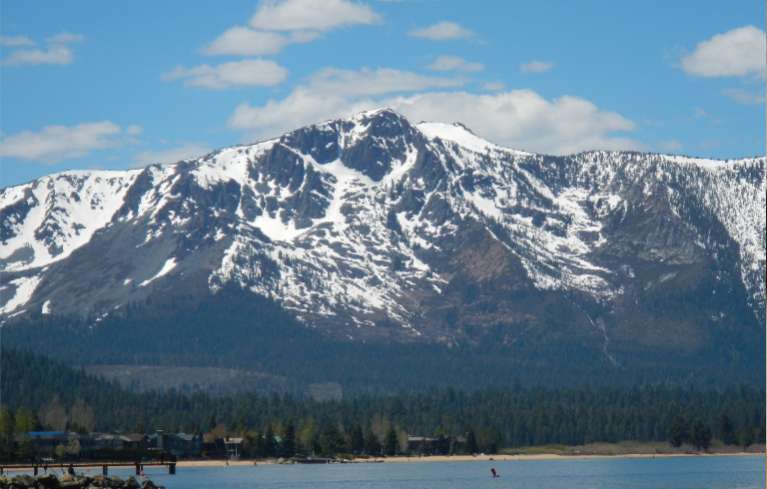
Mount Tallac winter thaw is symbolic of tensions between California and Nevada easing. Photo/Kathryn Reed

Mount Tallac’s winter thaw is symbolic of tensions between California and Nevada easing. Photo/Kathryn Reed

The tussle began when Nevada threatened to pull out of the bi-state Compact if certain concessions were not made on the part of California as well as if a Regional Plan could not be ratified. The latter was done in December. Concessions had been harder to achieve. The voting structure of the Governing Board is one of the more contentious items.

Then the respective legislatures started getting nasty and threatening. That is when the leaders of the two states said settle down, we’ll figure this out.

Both press releases say, “Under the agreement, developed with legislative leadership from both states, amendments will be introduced to bills in the Nevada and California state legislatures that repeal Nevada’s planned withdrawal from the Tahoe Regional Planning Compact in 2015 and California’s proposal to re-establish a California Tahoe Regional Planning Agency in 2014.”

Some of the wording in the agreement will require congressional approval because Congress formed TRPA.

The governors want economics to play a role in decisions made by the Governing Board.

Criticism has been leveled against the TRPA that the Regional Plan that had been in place stifled redevelopment, which in turn led to property owners letting their buildings deteriorate. That in turn made Lake Tahoe not a pretty place to visit at least in terms of the built environment.

TRPA embraces what the governors are doing.

“This is a historic moment for Lake Tahoe. Over the years, the states have had disagreements but have always found a way to work things out. Today there has been a commitment to renew the partnership. This renewal will be important to help Lake Tahoe face the challenges ahead,” TRPA Executive Director Joanne Marchetta told Lake Tahoe News. “We still have a lot of work to do to implement the new Regional Plan. We are pleased by this announcement because through the partnership of two states and many other organizations and agencies, we have accomplished much and can continue working together to fulfill our shared restoration goals.”

The agreement also will add language to the Compact that establishes a burden of proof for challenging decisions.

Many of the Governing Board’s decisions are met with a lawsuit.

And while the additional language seems like a compromise, the burden of proof is already the plaintiff’s responsibility in a court of law, so this addition is more like window dressing than substance.

The League to Save Lake Tahoe sent out a press release saying the governors have done the right thing. While this South Lake Tahoe-based conservation group has often been the one to sue TRPA, when it comes to the lawsuit challenging the 5-month-old Regional Plan, that is the doing of the Sierra Club. Today’s decision has no bearing on that lawsuit.


Slot machines resemble video games

By Ed Komenda, Las Vegas Sun

Ask Bill Wadleigh about serendipity in the slot business, and he’ll say it’s sometimes as simple as spinning the wheel of a toy car.

That’s how the game designer came up with a spinning bonus graphic for his forthcoming NASCAR game.

“We’ll just make a tire a wheel,” Wadleigh recalled thinking. “Wheels are very attune to gambling.”

But he’ll also tell you his NASCAR game is much more than just wheels and reels.

Slot machines are no longer as simple as lining up 7s. Photo/Bally's

Slot machines are no longer as simple as lining up 7s. Photo/Bally’s

“It is a video game,” Wadleigh said.

Wadleigh, a transplant from the video game industry and head of development at Bally Technologies, has found himself moving closer and closer to his roots these days. Bally and many other slot machine makers are beginning to bridge the gap between traditional spin slots and immersive video games.

“From a technological standpoint, on a slot machine, it’s pretty insane,” Wadleigh said. “Insane in a good way.”

The most immersive slot machines, such as NASCAR, have gone beyond simple player-character interaction. Equipped with complex math, high-quality video cards and 3D engines, the machines put gamblers in scenarios they can control, much like the video games made popular by Sony’s Playstation and Microsoft’s Xbox.

Tap the spin button on NASCAR and strike the “U-Race” bonus, and suddenly you’re transported to the first lap of a three-lap race at Daytona. The character you chose at the beginning of the game — either Dale Earnhardt Jr., Jeff Gordon, Jimmie Johnson or Kevin Harvick — sits in the driver’s seat, but you’re in control.

A cluster of arrows pops up on the screen: left, right or straight ahead. Your choice dictates the driver’s decision.

Tap the right arrow, and the voice of your driver responds: “I can pass on the high side!” And that’s what he does.

Tap the forward arrow, and the driver confidently pipes up, “I’m going for the lead!” The car pulls ahead, taking the lead.

When your car crosses the finish line, the driver thanks you. “Couldn’t have done it without you!” he says.

It’s not always that easy, of course. You don’t win every race. But with every choice, there’s money to be made. That’s the beauty of a bonus.

Wadleigh says the possibility of landing in a race or other high-quality bonus scenario keeps players interested and coming back for more — a slot machine’s ultimate goal and measure of success.

“We’re out to find something that’s compelling to a player,” Wadleigh said. “And not just compelling once, but a repeatable event that has a lot of different variety in it.”

There are more than 853,000 electronic gaming machines in the United States, according to the American Gaming Association. Nevada has the most, more than 178,000. Nationally, the casino industry makes 62 percent of its revenue from slot machines.

Slot makers spend a lot of money — sometimes millions — paying for licensing fees and developing character-driven games based on pop stars, movies and television shows.

“(We want to) bring something new and exciting,” Wadleigh said. “It can be a subtle or incremental change, or it could be a vastly radical one.”

Take Pawn Stars, for example.

The Bally game offers players a chance to virtually do business with the characters made famous by the History Channel show.

Roll the Rick bonus, and up pops the show’s deal-savvy leader, Rick Harrison. The game gives you a chance to sell him a rare gas pump from the 1930s.

The item intrigues Rick, and he offers an interesting fact: it was invented in 1885.

But Rick is skeptical. He doesn’t know if the item is authentic, so he asks if you’d like him to call an expert. You tap the “Call an Expert” option, and Rick calls.

After a beat, you have your answer: “Sorry, my expert said it’s a reproduction. … Thanks for stopping by my shop.”

And you’re bum out of luck.

Roll the Old Man bonus, and Richard Harrison appears: “So, what do we have here?”

In this case, it’s an acoustic guitar from the 1970s. The old man takes a moment to examine it. You make him an offer, he counters and you accept. You win the amount he offered — $170.

One of IGT’s most innovative games is CSI.

Cari Bloomquit, the game’s lead producer, started pondering the mechanics of the game shortly after the license landed on her desk.

After two years of development with a team of 15 people, including engineers, 3D artists and mathematicians, the CSI slot machine moved to the casino floor. It’s now one of the most successful slots in the company’s repertoire.

Players first choose one of three cities: Miami, New York or Las Vegas.

If you sit long enough to hit a crime scene bonus, you’re transported to a murder scene where a lifeless body is spread across the floor. Glowing dots are strung across the scene, marking different clues, such as a bloody hand print. You get to pick five, each attached to bonus payout. The game analyzes the clue and reveals how much you’ve won.

“They’re looking for a suspect,” said Bloomquist, who has been working in the slot business for 18 years. “Slots have changed a lot since I came to the business.”

While slot players ultimately want to make money, experts say video game technology has made losing more fun.

“It’s all just a dressing for a traditional slot machine,” said Daniel Sahl, a sociology instructor at UNLV who has been studying the connection between slot machines and video games for the past three years. “People are still playing to win money. … The immersive elements make it more meaningful.”

The math behind the games hasn’t changed much. If they play long enough, gamblers typically can earn an 88 to 98 percent return on their money. So, for every $100 a player pumps into a machine, they’d lose between $2 and $12.

The real reward comes with winning a bonus. But players have to sit at a machine long enough to earn the chance to race a stock car, investigate a crime scene or sell an item to the Pawn Stars. That chance doesn’t come every round.

Sahl said immersive bonuses have helped improve the image of slot machines, which more than half of all gamblers call their favorite form of gaming.

“Some people think slots are these devious machines designed to inflict suffering,” Sahl said. “Players now want to use that virtual world as a conduit for play.”

Some bonuses are much more simple.

In the Queen of Hearts bonus in WMS’ Alice In Wonderland, a queen pops on screen to turn a losing bet into a winning one or a weaker bet into a stronger one.

The Smooth Criminal bonus of Bally’s Michael Jackson slot gives players a virtual concert experience. The chair is equipped with surround sound that pumps Jackson’s famous tunes as a digital image of the singer moonwalks across the screen.

“It’s so much more than hitting 7-7-7,” Sahl said. “(Manufacturers) are doing an amazing job tapping into the cultures people love.”


Cause of Reno woman’s death undetermined

Updated: May 14 9:25am

El Dorado County sheriff’s officials have confirmed the body found in Strawberry is that of Sheri Renstrom.

No cause of death has been determined

Sheriff’s Lt. Pete Van Arnum told Lake Tahoe News there was no sign of trauma to the body and that the coroner is waiting for blood toxicology results. That could be four to eight weeks.

—–

Search and rescue teams found a body near Strawberry on May 10 that is believed to be that of a missing Reno woman.

Sheri Renstrom

Sheri Renstrom

Sheri Renstrom, 66, was last heard from on April 26 when someone spoke with her via telephone. She was at her residence at that time.

An autopsy is pending to confirm positive identification.

El Dorado County sheriff’s Deputy Greg Almos told Lake Tahoe News, “We don’t know how she died. It does not appear to be foul play.”

The fully clothed body was found in the Strawberry tract in a wooded area. Strawberry is along Highway 50 between South Lake Tahoe and Placerville.

A vehicle belonging to Renstrom was seen in Strawberry on May 1, but law enforcement was not notified until Friday.

— Lake Tahoe News staff report


TVES closed today

Tahoe Valley Elementary School will be closed today because of a water pump failure.

It is too soon to know if the closure will be for more than Tuesday.

Updates will be available on Lake Tahoe Unified School District’s website.

All other schools in the district are open.

— Lake Tahoe News staff report


SLTPD to honor citizen who played critical role in 2012 DUI bike-vehicle accident

By Kathryn Reed

One of the people to be honored this week at the annual South Lake Tahoe police awards ceremony is the man who was instrumental in helping save the life of Adam Rose and apprehend Christine Whalen.

Rose continues to struggle to heal from the devastating August 2012 accident in which he was struck by a vehicle while riding his bike. He keeps having surgeries. He has no insurance. And he is not able to work. And whatever money he may get from Whalen has not come through.

On May 10 his right leg and left arm were operated on — again.

Nine months after being hit by a drunken driver, Adam Rose of South Lake Tahoe keeps needing surgeries. Photo/Provided

Nine months after being hit by a drunken driver, Adam Rose of South Lake Tahoe keeps needing surgeries. Photo/Provided

“Adam had what is known as non-union of the bones in his arm and leg. The bones were about five-eighths of an inch apart on each of the fractures in his arm and leg,” Terry Soule, Rose’s mom, told Lake Tahoe News. “This was due to the severity and location of the fractures. The surgeries addressed these issues, and we are hopeful that this will really move Adam along on his road to recovery. The surgeons installed new hardware in his leg and arm and did bone grafts.”

But the surgeries won’t end there.

“Adam found out about two months ago that he will need spinal surgery, due to the trauma of being hit by the vehicle, carried on her car and then thrown off onto the highway,” Soule said. “This will be happening in the next few months, after his leg and arm are doing better.”

Rose is still living in South Lake Tahoe and plans to be at the May 15 ceremony.

Whalen is in prison.

More than one person nominated Rudy Pakes II for the citizen award of merit.

This is what police Lt. Brian Williams wrote in his nomination:

On August 21st, 2012 at about 5:00 pm, South Lake Tahoe Police Officers responded to SR 89 and 12th Street regarding a hit and run traffic collision. A white Subaru station wagon struck a bicyclist traveling in the northbound bicycle lane. The bicyclist, 38-year-old Adam Rose, was riding his bicycle when the Subaru, also traveling northbound, swerved to the right and struck him. Mr. Rose was left gravely injured and bleeding at the roadside.

After striking Adam Rose the suspect driver of the Subaru fled eastbound on 12th Street. Rudy Pakes II was in his truck with his adult son Tyler Pakes and had witnessed the collision. Rudy Pakes made some immediate and critical decisions which helped the victim to survive and also helped the police to capture the suspect. Rudy Pakes dropped his adult son Tyler off with Mr. Rose to offer help, comfort and safety while awaiting medical personnel. Mr. Pakes then called 911 while following the suspect away from the scene. Mr. Pakes gave the police a description of the suspect vehicle and kept them updated on its location and direction of travel as officers responded into the area. While fleeing the scene, the suspect driver was involved in a second collision, striking tree stumps off the side of the road near Tahoe Island and Tahoe Vista Avenues. As police were coming into the area, and the suspect vehicle continued to drive in a reckless manner, Mr. Pakes lost sight of the suspect and wisely stopped following.

When police officers arrived in the area they attempted to stop the vehicle by activating their red lights and sirens, but the suspect driver attempted to evade them until eventually becoming involved in yet a third collision at 2070 James, Bi-State Petroleum. The vehicle was finally forced to stop when it collided with, and impaled itself upon, steel and concrete posts in front of the petroleum warehouse. Not yet ready to give up, the driver of the Subaru, later identified as 54-year-old local resident Christine Whalen, tried to run on foot, but was apprehended by our pursuing police officers.

Other citizens who witnessed the collisions were also helpful in assisting police officers in locating the suspect, pointing out the directions of travel, and making positive identifications of the driver. Mr. Pakes however used particularly sound judgment and acted swiftly to render aid, compassion and comfort to the victim through his son Tyler, and then stayed engaged in order to prevent the escape of a dangerous felony suspect by following the fleeing vehicle and calling the police with a description and direction of travel. The suspect was captured and booked into the El Dorado County Jail on two felonies and three misdemeanor charges, including felony driving while under the influence, felony hit and run, misdemeanor hit and run, misdemeanor evading police officers, and misdemeanor obstructing, delaying or resisting arrest. Mr. Pakes demonstrated an admirable example for his fellow citizens by the manner in which he conducted himself, under circumstances of significant stress, offering help to the injured and attempting to safeguard others who may have become additional victims.

Among other criteria, the SLTPD Citizen’s Award of Merit is given to recognize the demonstration of bravery, sound judgment, compassion, comfort and encouragement to this Department or community, displayed in a situation of great stress, danger or other jeopardy to members of this Department, the community and/or the citizen themselves at the time of taking the action in the service of others. There are other criteria for consideration as well. These items are NOT required, but may be considered by the Awards Committee:

• Innocent person(s) are safeguarded

• A suspect is apprehended or identified

• Citizenship

• Sacrificial giving of self and abilities

• Communication skills

• Professional skills

• Rescue Skills

• Citizen saved someone’s life

• Nominee demonstrated in this act extraordinary personal character

• Courage

• Endurance

• Calm in the face of danger

I would like to nominate Mr. Rudy Pakes II to the SLTPD Awards Committee for consideration of presenting him The Citizen’s Award of Merit.

The ceremony is Wednesday at 4pm at the police department, 1352 Johnson Blvd.

Others receiving awards are:

• Officer Angie Kallstrom — Meritorious Service

• Officer Barret Rider — Meritorious Service

• Officer Nick Carlquist — Meritorious Service

• Dispatcher Linda Clark — Distinguished Service,

• Peggy Goularte — Citizen Award of Merit.


I-80 chase near Truckee ends with 1 death, 2 hurt

By AP

A man driving a BMW led California Highway Patrol officers on a wild high-speed chase on Interstate 80 Monday afternoon, injuring two roadside workers as the car went airborne and landed upside down.

The pursuit began about 1:40pm when an officer tried to pull the driver over for reckless driving on eastbound I-80 near Dutch Flat, in the Sierra Nevada, CHP Officer Pete Mann said.

The driver of the 1989 BMW accelerated instead. Speeds climbed to more than 100 mph during the chase, which spanned more than 50 miles over the crest of the Sierra and back.

The driver left the interstate and changed directions near Truckee, heading westbound on I-80. After crossing back over Donner Summit, the driver entered a lane closed by construction cones near the Soda Springs-Norden exit and lost control of the vehicle as he tried to turn around.

The BMW went airborne and struck two California Conservation Corps workers.

“As it was actually flipping through the air, it actually hit them as they were trying to run away,” Mann said.

A female worker suffered what he described as a “moderate head injury” and was taken by helicopter to a Reno hospital. A male colleague was treated for shoulder pain at the scene of the crash.

I-80 was closed between Soda Springs and Kingvale while authorities investigated Monday evening. It has sense reopened.

The CHP attempted to pull the driver over after receiving reports of a BMW driving erratically, but Mann said officers do not know why he refused to stop. The driver’s name was not released pending notification of next of kin.

Westbound Interstate 80 is closed because of a fatal accident at Castle Peak.

Neither Caltrans nor the California Highway Patrol is estimating when the road will reopen.

Traffic is being diverted off I-80 at Soda Springs to Old Highway 40 to Kingvale and then back onto I-80.

The incident began about 2:10pm with a chase with speeds hitting 100 mph.

The driver crashed in the Truckee area. The suspect is dead and A California Conservation Corps employee injured. That person is receiving care for non-life threatening injuries at Renown Medical Center in Reno.

No names are being released nor why the suspect was originally wanted.


Hotel industry expects good summer season

By Jason Q. Freed, HotelNewsNow.com

If early indications ring true, it’s going to be a busy summer for hotels across the U.S. as both families and business travelers are expected to hit the road in droves.

Several hoteliers reported to HotelNewsNow.com that advanced bookings are up dramatically year over year, backing up a new forecast by STR that predicts strong performance metrics for June, July and August. STR is the parent company of HotelNewsNow.com.

Not only is demand up, but most hoteliers said pricing power has returned and they are finally able to push rate without experiencing consequential declines in occupancy.

According to STR, average occupancy at U.S. hotels for June, July and August combined is expected to be 70 percent, up 1 percent from last year. Average daily rate is expected to be $112.21, up 4.4 percent from 2012, and revenue per available room is expected to be $78.50, up 5.4 percent from 2012.

Preferred Hotel Group, a “soft brand” that provides sales, marketing and technology solutions to more than 600 independent and luxury hotels worldwide, is reporting the biggest boost. The company’s North American portfolio has 27 percent more business on the books for June and 36 percent more in July than it did at this time last year, said Jonathan Newbury, VP of strategic development.

“As of May 4 we had already booked 73 percent of the amount of reservations as we did the entire month of May last year. That’s same-store, like for like,” Newbury said. “Obviously, we are very pleased about that.”

Summer at the Crowne Plaza Hollywood Beach Resort in Hollywood, Florida, looks promising too, according to GM Mike Long. Long said both transient and group demand are up compared with last year, and are even beginning to approach peak occupancy numbers from what he called the “golden years” of 2007 and 2008.

“The Crowne Plaza Hollywood Beach has put substantial marketing effort into increasing summer international business,” he said. “… We are increasing roomnights from Latin America—Brazil, Argentina, Columbia, Peru and Chile—Europe and especially the U.K.”

Hoteliers report several main factors leading to an increase in expected performance metrics. First, any incremental demand is especially meaningful in a period where supply growth has been virtually nonexistent.

“We are seeing the real effect of the collapse of the supply chain and new development across the board, particularly across America,” Newbury said. “I think the demand is coming back strong, as is consumer confidence and business confidence.”

Newbury also pointed to Tuesday’s record close of the Dow Jones Industrial Average, above 15,000 for the first time, as a factor that will have more businesses feeling comfortable about sending salespeople out on the road.

And, for Preferred, a target niche audience of older baby boomers is feeling more comfortable today than they were just four years ago that they will have enough savings to get out and travel.

“People are not only staying more, they’re staying longer,” Newbury said.

While occupancy is forecasted to be up slightly this June and July across Chesapeake Hospitality’s 20-hotel management portfolio, the real movement will be in rate. Chesapeake Executive VP Joe Smith said advanced-booking rates are up 6 percent for transient leisure business.

Smith said the boost in ADR is partly because travelers feel more confident and are willing to spend more and partly because of a strategic effort by the hotels to push rate.

“I think over the past couple years the industry—and rightly so—has talked about leaving rate on the table and we’ve got to get back to pushing it,” he said. “We believed that philosophy long before the past few years but sometimes competition forces your hands.

“From our perspective, we went into 2013 with budgeted rate increases,” Smith continued. “We had an action plan to increase those prices and it’s working. We had given direction that staying flat from a rate perspective wasn’t going to fly.”

At the Hilton Sandestin Beach Golf Resort & Spa in Miramar Beach, Florida, GM Gary Brielmayer said the hotel will be 95 percent full in the June, July and August months, as it typically is. Each year the hotel exceeds prior year ADR across those months, and this year will be no different, he said.

Rates continue to lag a little behind the 2007-2008 peak, said Long of the Crowne Plaza Hollywood, but rate growth is slowly catching up to occupancy demands.

“One of my hoteliers told me it’s like someone turned the spigot back on,” said Newbury of Preferred. “The hose is starting to fill with water. It’s going to take a while to get back to the rate highs we saw in 2007 and 2008.”

“Our occupancy, demand and revenue were at their highest in 2007 and 2008,”said John Hernstat, director of sales and marketing at the Hyatt Regency Lake Tahoe Resort, Spa and Casino in Nevada. “Currently, we are only a few percentage points behind surpassing these figures for 2013.”

Chesapeake has both group- and leisure-oriented hotels in its portfolio. The “group houses” are always the most wary going into each summer, Smith said, as summer demand is typically driven by leisure travel.

This year is no exception as group demand is faltering.

“Group is down all three months,” Smith said. “Group occupancy will be less than last year unless something quickly happens to change that.

“Interestingly,” he continued, “group rates are up about 6 percent for the summer. So while occupancy is down, our sales teams have been able to get additional dollars.”

According to advanced-booking data from TravelClick, the transient segment is continuing to support both ADR and committed occupancy over the group segment in 2013.

In the 12 months from April 2013 to March 2014, overall committed occupancy for the transient segment is up 3 percent versus this time last year and ADR is showing a gain of 4.1 percent. However, the group segment is showing an occupancy increase of 1.9 percent and an ADR gain of 3.8 percent compared with this time last year.

Smith said, in some of Chesapeake’s markets, the hotels are impacted by the sequester and other government travel cutbacks. Those observations have fluctuated month to month, he said.

“I think we’ll end up flat in occupancy for summer months over last year (combining group and transient),” he said. “Last year was a very good year so that’s not necessarily bad.

“But we’re seeing rates in both transient and group up,” he continued.


Lake Valley Fire at times has more ambulances in service than engines

By Kathryn Reed

About a year into a change in how engines and ambulances are staffed by Lake Valley firefighters, the chief of the department says it’s working.

“We don’t run out of fire engines because we have mutual aids. But frequently we run out of ambulances when things get busy,” Lake Valley Fire Chief Gareth Harris told Lake Tahoe News. “We have ambulances at both of our stations fully equipped. We just need personnel. We can take them off an engine and get them on an ambulance without any additional money because paramedics are on the engines.”

Ambulances on the South Shore on the California side are operated by a joint powers agreement that involves Lake Valley and South Lake Tahoe Fire Department. Three ambulances are always on the streets.

New ambulances were acquired last year, which has allowed two older ones to be retained at the Lake Valley stations and be added to the fleet when needed.

There are times when all three regular ambulances are in service. This is more likely to happen in ski season or during summer with car accidents, or if someone is driven to a hospital other than Barton.

“The bottom line is if someone calls 911, we need to take care of our customer whether it’s a fire engine or if it’s medical,” Harris said. “Our engines all have advance life support. But we can’t transport a patient on an engine. We are trying to provide better value to the public.”


S. Tahoe trying to not default on parking garage

By Kathryn Reed

South Lake Tahoe is about to extend how long it will take to pay off the parking garage debt at Heavenly Village as it attempts to refinance the bonds so the overall payment is less.

It’s not a straightforward transaction because the state Department of Finance is involved because the garage is in part an asset of the now-defunct city Redevelopment Agency. The garage had been owned by the city and RDA, while the land is the city’s. The revenue goes to the bondholders. With the state dissolving RDAs, the successor agency is the partner with the city in owning the garage.

The original bond was for $9 million. There are 14 years left to pay off the debt, which today is $7.3 million. That’s just the principal.

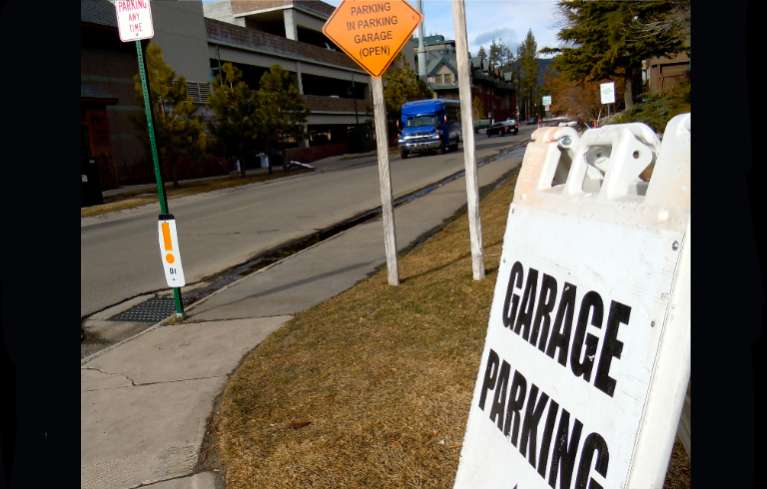
The parking garage at Heavenly Village is saddled with debt. Photo/LTN file

The parking garage at Heavenly Village is saddled with debt. Photo/LTN file

“It will likely have a longer life. Part of what we will try to do is not extend it any longer than is necessary even though the rates are low,” Bob Gamble told Lake Tahoe News. He estimates seven to 10 years will be added to the life of the bond.

Gamble works for PFM Group in San Francisco, the entity handling the refinancing of the bond. He was at last week’s City Council meeting to get that group’s approval to go forward. Councilwoman Brooke Laine was the lone vote against the plan. She preferred an option that would have the bond paid off sooner.

“We are trying to avoid defaulting or a general fund subsidy,” Gamble told the council as to why refinancing is necessary.

In 2007, the 2001 special tax bonds were refinanced. That five-year subsidy has run its course and is creating a greater urgency to finance the main bonds.

While the interest rates will be lower, to what extent remains to be seen. The overriding need to do this is to keep from defaulting on the loan.

The garage has been in technical default since Day 1 because there was never enough income to pay the debt.

The bond payment is about $550,000 a year. While the garage is taking in approximately $650,000 a year, it costs about $200,000 to manage and operate it. This means there is a gap of $100,000.

The community facility district, better known as PADMA, is mostly responsible for that shortfall. Park Avenue Development Maintenance Association is the organization formed in 2002 to maintain Heavenly Village. The two Marriott properties pay 55 percent collectively, Heavenly Mountain Resort 20 percent, South Lake Tahoe 20 percent, Trans Sierra Investments 2.5 percent, and Cecil’s 2.5 percent for the upkeep for the entire center.

However, according to the city staff report from May 7, projections are that without refinancing the bonds revenues would be short $200,000 to pay the debt.

One day all the debt will be paid. But no one knows who will own the garage because of the dissolution of the Redevelopment Agency.

“Statewide there are a lot of those assets in that situation,” Gamble said.


College administrators working on tuition deal

By Kathryn Reed

It is going to take longer than anticipated for Lake Tahoe Community College to be able to offer Nevada residents in the basin the same rate as Californians. But the end result may be a lower rate for Tahoe residents at Nevada colleges, too.

Senate Bill 329 is still alive – it’s just going to be a two-year process.

“We want to see if there is a small scale reciprocal agreement with Nevada on a very localized basis,” LTCC President Kindred Murillo told Lake Tahoe News.

The goal is for the Lake Tahoe Basin to be treated as a whole and not divided by the state line. LTCC is the closest college for South Shore students on the Nevada side to attend, but their fee is substantially higher because of that line.

The original plan just involved LTCC. Now UNR and Western Nevada College are being brought into the fold so there could be a lowering of tuition expenses for California students too, but only for a small geographic area.

UNR is the closest public four-year college for South Shore, and most Lake Tahoe Basin, residents to attend.

While the initial meeting with lawmakers in Sacramento went well, the reality is lawmakers in California may not be needed to make the deal happen.

If the college staffs are able to work out a deal, it’s possible approval would then be sought from the Nevada Board of Regents. California education code already has rules on the books about reciprocal agreements for colleges on state borders.

With Sierra Nevada College being private, it is not part of the current discussions. Plus, LTCC has a partnership with the Incline Village four-year school.