Bill would allow consumers more TV channel choices

By Drew Guarini, Huffington Post

America’s disgruntled cable subscribers have found a fighter for them in Washington: former presidential candidate John McCain.

McCain, R-Ariz., introduced the Television Consumer Freedom Act last week, a bill that would allow cable subscribers to pick the channels they want and pay for them on an a-la-carte basis. The bill would also repeal blackout restrictions for local sports teams using publicly funded stadiums.

In a statement during a Commerce Committee hearing on Tuesday, McCain made his qualms with the current model — in which subscribers pay for tens or even hundreds of channels they don’t watch — well known.

“It is time, in my view, to restore the proper operation of the market by empowering American consumers,” McCain said in his statement. He went on to say that the a-la-carte model is “the right thing to do and popular with consumers in large part because of rising cable prices, which are dramatically outpacing cost of living.”

McCain has the numbers to back up the claim. He cited a recent FCC pricing survey, which found that since 1995 the average monthly cable bill for expanded basic service — the most popular tier — has skyrocketed from about $25 a month to $54 a month — a 116 percent increase. That $25 in 1995 only has the purchasing power of about $38 today, according to the Bureau of Labor Statistics.

While McCain may have the support of consumers seeking cheaper cable, his bill will likely face very stiff opposition from broadcasters and cable companies, while also suffering from a lack of co-sponsors. One anonymous television industry official told The Hill that McCain’s bill has “no chance” of becoming law. The Arizona senator proposed similar legislation in 2006 that didn’t make it past committee.

Michael Powell, head of cable trade group National Cable & Telecommunications Association, also spoke at the hearing. “It’s a very serious question mark whether consumers would have lower bills or cheaper service as a result of a la carte,” Powell said. In 2004, when Powell was head of the Federal Communications Commission, he had the groups economists work up a study on this new pricing model that found a-la-carte pricing would do the opposite of its intentions by driving up costs and causing many channels to go out of business. Though the study has faced some scrutiny, Powell has continually defended it.

Still, cable may be forced to fix their pricing woes as the discourse develops. An April survey by Belkin and Harris Interactive found that 30 percent of Internet users would consider becoming cable cutters as online streaming services like Netflix, Hulu Plus, Aereo and Amazon Prime continue expanding their video selection.


S. Tahoe police officer expected to plead guilty

By Kathryn Reed

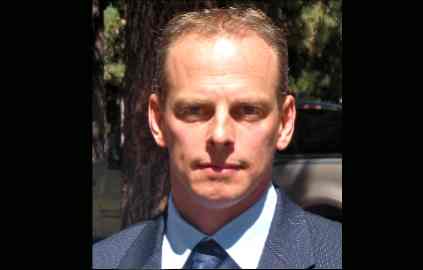
South Lake Tahoe police Officer Johnny Poland is expected to plead guilty next week to federal charges.

“They said in court that they needed a week for negotiations,” Lauren Horwood with the U.S. Attorney’s Office told Lake Tahoe News after the May 15 hearing in Sacramento. “Another hearing is set for May 22 for entry of a guilty plea.”

Poland was indicted earlier this year on three counts related to tampering with a witness, victim or informant, and one count dealing with obstruction of an official proceeding.

Johnny Poland

Johnny Poland

He could have been sent to prison for 20 years on each count if the case had gone to trial and he were found guilty. It is not known what the plea agreement is. Horwood said because the two sides are negotiating the terms of the plea, details are not being released.

Sources have told Lake Tahoe News that Poland is expected to plead to one felony count and more than one misdemeanor. It’s possible he would not face any prison time, but could be put on probation.

Poland is out on bond, but could not be reached. He remains active in the Army National Guard.

The FBI, which was heavily involved in the case, said until the case is over, their office has no comment.

Poland is still on the local police force, but he is not getting paid. An internal civil investigation remains open.

“We are hoping it resolves in close time proximity to the criminal case. It could, or it could drag on two or three weeks after that,” Police Chief Brian Uhler told Lake Tahoe News. “The biggest reason for trying to resolve it is to get the slot resolved.”

The department cannot fill Poland’s position as long as he has not resigned.


Fire damages South Tahoe house

A house in the 900 block of Los Angeles Avenue sustained interior and exterior damage from a fire early Thursday morning.

South Lake Tahoe firefighters responded to the blaze about 3:30am May 16.

A city official called the fire accidental, but no other details were provided. Fire Chief Bruce Martin did not know about the fire until Lake Tahoe News called inquiring about it.

The eves, wood deck and fence were damaged. Then the fire spread slightly into the interior, according to the official.

The resident was outside when police and fire personnel arrived. No one was injured.

— Lake Tahoe News staff report


Median sales price of houses jumps in El Dorado, Placer counties

By Hudson Sangree, Sacramento Bee

The median price of resale homes in El Dorado County jumped by about 33 percent last month compared with April 2012, DataQuick reported Wednesday.

Placer and Yolo counties also experienced double-digit percentage gains, the San Diego-based real estate information service said.

“These eye-popping increases in medians remain a function of two things: home values going up because a lot of people are trying to buy in a supply-constrained market … and we’re seeing a lot more move-up activity,” said DataQuick analyst Andrew LePage.

The median is the price at which half of houses sell for more and half sell for less. Factors that influence it include the mix of homes sold.

Last year at this time, investors snapping up foreclosures dominated the region’s market. Today, foreclosure sales have plummeted and traditional buyers account for the majority of the open market, with many buying pricier move-up homes.

Sales of Sacramento County homes in the $300,000 to $800,000 range nearly doubled in April compared with the same month a year ago, while the number of homes that sold for less than $200,000 dropped by 26.5 percent, LePage said.

Median prices in all four counties also rose from March to April. In Sacramento County, for instance, the median sale price for detached single-family homes went from $162,000 in April 2012 to $208,000 in March to $215,000 last month.

Sales volume has also been picking up across the region, though the number of homes on the market remains at historic lows. Last month, the number of resale homes bought in Placer County was the most for any April since 2005, near the peak of the housing boom.


Names in fatal I-80 accident released

By Barbara Barte Osborn, Sacramento Bee

TRUCKEE — The California Highway Patrol has identified a man who died following a high-speed chase near Donner Summit on Monday as William Orr, 55, of Penn Valley.

After receiving a report of a reckless driver, a CHP officer pursued Orr’s vehicle after he refused to pull over near Yuba Gap. Orr’s car reached speeds beyond 100 mph.

Orr died after losing control of his BMW convertible, which overturned several times after striking a dirt embankment near a construction zone on westbound Interstate 80, west of Soda Springs.

Two Calfiornia Conservation Corps workers, both from Fresno, were injured when the BMW overturned and struck them as they attempted to flee.

Linda Heuangpaseud, 23, was flown to a Reno hospital with head injuries. Jose Gabriel Garcia, 19, was taken to Tahoe Forest Hospital in Truckee complaining of pain.


Justice Dept. secretly obtained journalists’ phone records

By Sari Horwitz, Washington Post

In a sweeping and unusual move, the Justice Department secretly obtained two months’ worth of telephone records of journalists working for the Associated Press as part of a year-long investigation into the disclosure of classified information about a failed al-Qaeda plot last year.

The AP’s president said Monday that federal authorities obtained cellular, office and home telephone records of individual reporters and an editor; AP general office numbers in Washington, New York and Hartford, Conn.; and the main number for AP reporters covering Congress. He called the Justice Department’s actions a “massive and unprecedented intrusion” into newsgathering activities.

The aggressive investigation into the possible disclosure of classified information to the AP is part of a pattern in which the Obama administration has pursued current and former government officials suspected of releasing secret material. Six officials have been prosecuted, more than under all previous administrations combined.

The Justice Department defends its taking of AP phone records. Graphic/Christian Science Monitor

The Justice Department defends its taking of AP phone records. Graphic/Christian Science Monitor

In a letter to Attorney General Eric H. Holder Jr., the AP’s president and chief executive, Gary B. Pruitt, said that the Justice Department sought information beyond what could be justified by any specific probe and demanded that the government return the phone records and destroy all copies.

“There can be no possible justification for such an overbroad collection of the telephone communications of the Associated Press and its reporters,” Pruitt wrote to Holder. “These records potentially reveal communications with confidential sources across all of the newsgathering activities undertaken by the AP during a two-month period, provide a road map to AP’s newsgathering operations, and disclose information about AP’s activities and operations that the government has no conceivable right to know.”

The inquiry is one of two leak investigations ordered last June by Holder. The second involves a New York Times report about the Stuxnet computer worm, which was developed jointly by the United States and Israel to damage nuclear centrifuges at Iran’s main uranium-enrichment plant.

The two leak inquiries were started after Republicans in Congress accused the Obama administration of orchestrating news stories intended to demonstrate the president’s toughness on terrorism and improve his chance for reelection. The Republicans sought a special prosecutor, but Holder instead named two veteran prosecutors to handle the inquiries.

In the AP case, the news organization and its reporters and editors are not the likely targets of the investigation. Rather, the inquiry is probably aimed at current or former government officials who divulged classified information.

But experts said the scope of the records secretly seized from the AP and its reporters goes beyond the known scale of previous leak probes.

“This investigation is broader and less focused on an individual source or reporter than any of the others we’ve seen,” said Steven Aftergood, a government secrecy expert at the Federation of American Scientists. “They have swept up an entire collection of press communications. It’s an astonishing assault on core values of our society.”

The office of the U.S. attorney for the District of Columbia on Monday released a statement saying it is not required to notify a media organization in advance of issuing such subpoenas if doing so “would pose a substantial threat to the integrity of the investigation.”

“We take seriously our obligations to follow all applicable laws, federal regulations, and Department of Justice policies when issuing subpoenas for phone records of media organizations,” said a statement from Bill Miller, spokesman for the office. “Those regulations require us to make every reasonable effort to obtain information through alternative means before even considering a subpoena for the phone records of a member of the media.”

Justice Department guidelines require that subpoenas of records from news organizations must be approved personally by the attorney general. Holder’s office did not reply to repeated requests for comment.

Lucy A. Dalglish, dean of the journalism school at the University of Maryland, said she thought the scope of the seizure was unprecedented. “Unfortunately, the Justice Department does this now and again,” said Dalglish, former executive director of the Reporters Committee for Freedom of the Press. “What’s very unusual is the scope of the subpoenas.”

Republicans also quickly condemned the targeting of journalists and sought to portray the Justice Department’s actions as part of a pattern of Obama administration overreach, noting that the Internal Revenue Service was already enmeshed in a scandal over the reported targeting of conservative groups.

“Coming within a week of revelations that the White House lied to the American people about the Benghazi attacks and the IRS targeted conservative Americans for their political beliefs, Americans should take notice that top Obama administration officials increasingly see themselves as above the law and emboldened by the belief that they don’t have to answer to anyone,” said Rep. Darrell Issa, R-Vista, chairman of the House Oversight and Government Reform Committee.

Senate Judiciary Committee Chairman Patrick J. Leahy, D-Vt., said in a statement that he is “very troubled by these allegations” and wants to hear the government’s explanation. “The burden is always on the government when they go after private information — especially information regarding the press or its confidential sources,” Leahy said. “I want to know more about this case, but on the face of it, I am concerned that the government may not have met that burden.”

In the AP investigation, Pruitt said, the Justice Department obtained the records without notifying his news organization or narrowing the scope of its subpoenas to specific matters relevant to an ongoing investigation.

The story at issue included details of a CIA operation in Yemen that foiled an al-Qaeda plot in the spring of 2012 to set off a bomb on an airplane headed to the United States. The April and May 2012 phone records of the reporters and editor of the story were among the material seized by the Justice Department.

Pruitt said that on Friday, the AP’s general counsel, Laura Malone, received a letter from Ronald C. Machen Jr., the U.S. attorney for the District of Columbia, who was appointed by Holder to lead the AP inquiry. He said that last year, the Justice Department obtained telephone records for more than 20 separate phone lines assigned to the AP and its journalists.

A grand jury based in Washington’s federal court has been investigating the possible leak of classified information to the AP for several months, according to a government official familiar with the probe who spoke on the condition of anonymity to discuss an ongoing case.

In most cases when investigators seek information about a media organization’s source, the news organization moves to quash any subpoena for its records. But in this case, the AP was not aware that the records had been obtained.

Law enforcement officials say leak cases are difficult because hundreds of people often have access to the classified information. In the AP case, knowledge of the details of the al-Qaeda plot would have been highly compartmentalized, which would limit the number of people with access to it. A former government investigator said telephone records could be valuable in narrowing the pool of suspected leakers.

Numerous senior government officials have been interviewed in connection with the investigation into the AP story. Among those questioned was John O. Brennan, who served as Obama’s counterterrorism adviser before becoming CIA director this year.

In his confirmation hearing in February, Brennan said he had cooperated voluntarily with the Justice Department and had been interviewed. He acknowledged speaking to former U.S. government officials who work as commentators on television news, but he denied sharing any classified information.

Greg Miller, Carol D. Leonnig and Julie Tate contributed to this report.


3 people survive plane crash near Carson City

By KTVN-TV

The FAA is investigating why a small Cessna crashed south of Reno in King’s Canyon near Carson City this afternoon.

Carson City Sheriff Ken Furlong says the call came in about 2:45pm Wednesday in upper Kings Canyon, about three miles northeast of Spooner Summit.

Three people were aboard the plane when it crashed, and are not hurt.

Furlong says the plane had departed the Carson City Airport earlier with a pilot and two passengers on a regional area tour.

The details of the flight and cause of the accident are being investigated by the FAA.

The NTSB is en route to the crash to begin the investigation.

The names of the people on board are not being released at this time.


TRPA allocations quashing residential building

By Anne Knowles

Now that the economy is picking up, local jurisdictions and the building industry are counting on the Tahoe Regional Planning Agency to revamp its controversial system for doling out residential building allocations.

Architects and builders says business is beginning to rebound, and local officials say demand for the allocations needed to build on vacant lots is back after languishing for the last four or five years.

At the same time, though, TRPA has cut its maximum allotment of allocations by more than half as part of the many changes made in the Regional Plan update last year.

The contentious topic will get another airing next week when the agency’s Governing Board takes it up again at a public meeting in the Chateau at Incline Village.

One of El Dorado County's biggest building seasons was just after the 2007 Angora Fire. Photo/LTN file

One of El Dorado County’s biggest building seasons was just after the 2007 Angora Fire. Photo/LTN file

“That May 22 meeting is pretty important,” said Pat Davison, executive director of the Contractors Association of Tahoe Truckee in Truckee.

Davison and others hope to convince the TRPA that tests used to determine how many allocations the five counties and city of South Lake Tahoe receive is unfair and is keeping the area from getting the economic shot in the arm it needs.

“The frustration is the economy is showing signs of recovery,” Davison told Lake Tahoe News. “The building industry was hit so hard and not to see the full release (of allocations) was surprising and disappointing.”

Last month the board approved the 2013 allocations; the first set since the RPU became official in December. Previously, the TRPA gave out a maximum of 300 annual allocations to the jurisdictions, but this year that was cut by 55 percent to 130.

And the TRPA ended up releasing only 86 of those 130 based on the same system of environmental benchmarks it has used in the past.

“We didn’t get any allocations on our EIP (environmental improvement program) compliance or transit level of service. It’s very difficult to increase that number,” Mimi Moss, community development director for Douglas County, told Lake Tahoe News. “The TRPA needs to revisit the allocation process. We’ve all done so much over the year and we’re still penalized.”

The jurisdictions are scored by the TRPA based on four criteria: permit issuance and compliance, best management practices retrofit, EIP implementation and increase in transit level of service.

Douglas County, for example, has a base allocation of five and can receive as many as nine by earning up to four additional enhancement allocations by scoring well on the four criteria. For 2013, the county received six allocations, garnering just one extra for permit compliance.

Douglas isn’t alone, though. All the jurisdictions exceeded their base allocations through permit compliance, but only Washoe County earned allocations in another category, BMP retrofit. None received bonuses for EIP or local transit improvements.

Douglas County’s Moss would like to see the counties and city assessed based on other measurements.

“If the jurisdiction is meeting the total daily maximum load, then we should be getting credit of lake clarity,” she said.

Davison, the builders’ representative, is hoping to convince the board to release all of the allocations and even to consider an advance on next year’s pool.

Jeff Cowen, TRPA public information officer, said under the RPU, “We are still on an annual cycle of allocation distribution and do not have any rules that we could distribute in larger amounts or periods.”

The performance review system is likely to be re-evaluated next year.

The TRPA, which is dealing with a number of other matters including a lawsuit filed over the RPU, has a long to-do list.

“I know how the bureaucracy works,” said Roger Trout, development services division director with El Dorado County. “I’m all behind getting the process updated to be, I wouldn’t call it more fair, but maybe more streamlined.”

Trout said El Dorado County probably has as many people waiting for allocations as the county received, which is 32. But he, like others, said demand is starting to tick up.

“The economy is changing so I’m sure that list will get longer,” he said.

Douglas County in the early 2000s issued an average of 500 building permits a year countywide, said Moss. That dropped dramatically during the recession, and was down to two or three allocation applications at the lake for the last few years. Last year, 40 permits were issued for the entire county, she said, and 48 have been given out this year, with another six weeks left in its fiscal year.

Moss said there are 57 people on the waiting list for lake allocations.

South Lake Tahoe, which received 13 allocations out of a possible 21, did not respond to a request for a comment. But at last week’s City Council meeting, Nancy Kerry, city manager, said there was a waiting list of about 100 for the allocations.

“A couple of years ago you could not give them away,” she said.

Demand won’t be letting up if architects are a harbinger. Dan Munsterman, with the Munsterman Group LLC in Tahoe Vista, said work is definitely returning, mostly on higher-end, lakefront properties, but it is starting to trickle down, too.

“The jobs I’m getting are tear downs. I don’t have one single job on a vacant lot,” said Munsterman. “I’m busier than I’ve been in eight to 10 years.”


Calif. doesn’t screen drug counselors

By Nannette Miranda, KABC-TV

SACRAMENTO — A California Senate investigation found felons like J.M., who did time for sex crimes against 12-year-old and 15-year-old girls, was able to be a drug and alcohol counselor after his release.

Senate researcher John Hill spent seven months looking at the loophole that allows criminals like J.M. to treat addicts.

“The concern is counseling, drug and alcohol counseling, or any kind of counseling, involves a high level of trust and the honoring of boundaries, including sexual boundaries,” Hill said.

Hill found at least 23 sex offenders were able to work as rehab counselors. He concludes there are probably more because he was only able to cross-check databases for unusual names.

His research highlights the shortcomings of California’s system for overseeing 36,000 registered or certified substance abuse counselors who don’t have to go through fingerprinted computer checks.

California and Pennsylvania are the only states that don’t require one.

The report also noted that while being counselors, some would be charged for more crimes yet were still allowed to practice by simply going to someplace else — remember, no background checks.

“I think it’s hard to coordinate all of these,” Hill said. “The organizations certify the drug counselors. But then the state investigates when there’s misconduct. So it’s kind of a confusing and fragmented system.”

Calls and emails to the state Department and Alcohol Programs were not returned.

There have been two attempts to close this loophole at the state Legislature, but both of the measures never got anywhere.

Sen. Mark DeSaulnier, D-Concord, led that effort after a constituent’s son died at the hands of one of those counselors … but found resistance.

“My belief is that there are a lot of people who make a lot of money selling these services,” said DeSaulnier. “There are people in this building who have influence in this building who want to keep the status quo.”

Thousands of Californians are expected to flood drug and alcohol programs as the services begin to be covered under the federal Affordable Care Act next year. Many will not know if their counselors have a criminal past.


Big-rig catches fire on Hwy. 50

Traffic on Highway 50 near Whitehall is reduced to one lane because of big-rig fire.

The road is expected to open about 5:30pm. (Whitehall is about seven miles west of Kyburz.)

A wrecker was on the scene to remove the truck.

Hazmat crews were called to cleanup up the mess, though the substance is not toxic, according to authorities.

Further details – like how the rig caught on fire and the contents of the truck – have not been released.

 — Lake Tahoe News staff report