Washoe County part of multi-state hepatitis A outbreak

By USA Today

Health officials have linked an outbreak of acute hepatitis A that has sickened at least 30 people in five states to a frozen berry and pomegranate mix.

Washoe County is among the areas where people have gotten sick, according to this item from the Washoe County Health District.

Cases have been reported in Colorado, New Mexico, Nevada, Arizona, and California. In a release Friday, the Centers for Disease Control and Prevention said the first victims fell ill on April 29 and the most recent case was May 17. It is believed more will come.

The outbreak appears to be linked to a frozen berry blend sold by Costco called The Townsend Farms Organic Anti-oxidant Blend Frozen Berry Mix, a frozen berry and pomegranate seed mix. Costco is notifying all members who purchased the product since late February and has removed it from its shelves.

Health officials don’t yet know if the product was sold at other stores or markets. They do know that frozen berry blends are often used to make smoothies, frozen bar drinks and other types of desserts and drinks. One concern is that smaller businesses might have bought bulk frozen berries at Costco and then used them in other products.

Hepatitis A is a highly contagious liver infection caused by the hepatitis A virus. Of the people who’ve been sickened in this outbreak 47 percent have been hospitalized, CDC said. Some people who contract it have no symptoms but many have fever, fatigue, nausea, vomiting, abdominal and joint pain.

The virus is most often transmitted when an infected food handler prepares food with dirty hands. Food contaminated with hepatitis A can also transmit the disease to people who ate or handled it.

According to the label, the berry blend contained pomegranate seeds and other produce from the U.S., Argentina, Chile, and Turkey.

The strain of hepatitis A in this outbreak is rarely seen in the United States, said CDC’s Lola Russell. It’s known to circulate in North African and the Middle East. The same type of hepatitis A was identified in a 2013 outbreak in Europe linked to frozen berries and another one in 2012 in Canada linked to a frozen berry blend with pomegranate seeds from Egypt, she said.


Overhaul of Calif. water system has $25 bil. price tag

Farmers and urban water users would have to pay for the new system. Photo/NPR

Farmers and urban water users would have to pay for the new system. Photo/NPR


The state plan to overhaul the hub of California’s water system will cost nearly $25 billion to build and operate, according to preliminary figures released Wednesday.

The proposal, backed by Gov. Jerry Brown’s administration and the Obama administration, calls for habitat restoration and the construction of two enormous tunnels to divert water from the Sacramento River and carry it under the Sacramento-San Joaquin Delta to southbound pumps.

Water users, including San Joaquin Valley irrigation districts and urban agencies in Southern California and the Bay Area, would bear roughly two-thirds of the cost, with the rest coming from federal and state sources.

The proposal — in the planning stages for seven years — represents the biggest water supply project in California since the 1960s launch of the State Water Project under Brown’s father, Gov. Pat Brown. But important questions are hanging over it, in particular whether federal fishery agencies will approve operating rules that will deliver the volume of water sought by the contractors who will pay for most of the project.

By building a diversion point on the river in the north delta and restoring more than 100,000 acres of habitat, the contractors hope to escape the endangered species restrictions that have reduced their water deliveries from the delta.

Citing an economic analysis, state water officials said the value of benefits the project would provide outweighed costs by 35 percent to 40 percent. Proponents said the new diversion would improve the quality of water deliveries by taking some supplies north of tidal influences and runoff from delta farms. It would also stabilize export amounts by taking less water from the existing, fish-killing south delta facilities and make the water system less vulnerable to earthquake damage.

Under the estimates released by the state, building the tunnels, three large intakes on the river and associated facilities would cost $14.5 billion. Operations and maintenance would amount to $4.8 billion over the 50-year life of the project. Habitat restoration, which would be funded with state bonds and federal appropriations, would cost $4.1 billion.

Since most of the money would come from water users, their participation in the project is crucial. And they are reserving final commitment until still-evolving details of the plan are firmed up.

“We’ve got to be able to say we can make it work under all conditions,” said Roger Patterson, assistant general manager of the Metropolitan Water District of Southern California, which imports supplies from the delta. “There will be some judgment as to where we think things may or may not go.… Under the worst-case scenario, does it still work for us?”

Depending on what operating rules the fishery agencies demand to protect endangered native fish, delta deliveries could increase or decrease compared to the average of the last two decades. If they fall, the water contractors must decide if the project is worth it.

“We need to see a project that provides improved water supply, has affordable costs and enforceable regulatory assurances before we can make any commitments,” Ted Page, board president of the Kern County Water Agency, said in a statement.

Metropolitan expects its share of the project costs to add from $60 to $84 a year to household water charges in Southern California.

But tunnel opponents argue that urban users will wind up footing much more of the bill because agriculture won’t be able to afford its share. “They’re irrational costs for a subset of San Joaquin Valley farmers to bear,” said Jeffrey Michael, director of the Business Forecasting Center at the University of the Pacific in Stockton.

“Urban users are going to pay much more for this than they’ve been told and the usual cost overruns will just make the problems worse,” he said.

Tom Birmingham, general manager of the Westlands Water District, the state’s largest irrigation district, estimates that the delta project will add at least $125 million to his agency’s annual budget. But the district’s growers are willing to pay that, he said last year, because when delta deliveries are cut in dry years, they have to buy expensive water from other irrigators to keep their almond groves alive.

The Brown administration has made the delta project one of its priorities. It has set this fall as the deadline for release of draft environmental documents that would begin a formal public comment period. A final decision on the project is likely a year or more away.

Under the most optimistic time frame, construction would begin in 2015 and last 10 years.

Brown has been pushing the U.S. Interior Department to speed its review of the project, which has so far generated about 20,000 pages of draft environmental documents.

“We are completely focused on the huge amount of work … that remains to be done,” Letty Belin, an Interior counselor, said during a news conference announcing the funding details. “The Obama administration is arm-in-arm with you.”


Plastic bags remain legal in California

By Laurel Rosenhall, Sacramento Bee

A proposal to ban plastic grocery bags in California went the way of so many plastic bags – into the trash can – on Thursday when it failed to garner enough votes in the state Senate to move ahead in the lawmaking process.

Senate Bill 405 by Sen. Alex Padilla, D-Pacoima, would have prohibited supermarkets and drugstores from providing plastic shopping bags to consumers beginning in 2015. Paper bags would be available for purchase. Padilla argued that the ban would be good for the environment, reduce litter and help local governments that now deal with cleaning them up. Many senators said the bill would promote good habits among Californians, who would get used to carrying their own reusable shopping bags.

But several of Padilla’s Democratic colleagues opposed the measure, saying it would cut jobs for constituents who work in Los Angeles-area bag factories and would hurt consumers who re-use their plastic bags for garbage, dog waste and other household needs. Republicans also opposed it, saying the Legislature had more important things to work on.

“I think there is an education campaign necessary,” Padilla said after the final 18-17 vote on his bill.

Four senators did not vote – Democrats Ben Hueso, Curren Price, Lois Wolk and Rod Wright. Padilla said he hopes to persuade them to vote for his bill and wants to move it from the Senate’s trash can to its recycling bin, so it can get another vote next year.


Tahoe bears finding human garbage

By Colin Lygren, KOLO-TV

This year’s dry winter could mean an active season for black bears in higher elevations, according to wildlife officials.

Evidence of what’s to come was seen Thursday morning on Palmer Court in Incline Village.

A mom and two cubs reportedly broke trough a garage door in search of food. This is the second time the bears have broken into that house in eight days. Neighbors say the homeowners repeatedly leave garbage in the their garage.

“If it is up to us, if we move into bear country, we need to take care of this area including the animals,” said neighbor Carolyn Stark.

Years ago, bears did not see humans as a food source. But a series of drought years reduced their food supply. They discovered garbage as a food source.

Nevada Wildlife officials say dry conditions this year and last mean more bears will be in search of food.

“We are sure that we are going to have a pretty good sized nuisance bear year, because of the lack of natural foods. The bears will turn and look towards humans and human garbage as a source of food and that will create conflict,” said Nevada Wildlife spokesman Chris Healy.

In addition to garbage; compost bins, bird feeders, and pet food attract bears.

Residents in bear country are asked to take preventative measures. If bears become too comfortable with humans, they can become dangerous and are often killed by wildlife officials.


Calif. Senate OKs bill letting nurse practitioners do more

By Patrick McGreevy, Sacramento Bee

SACRAMENTO — Addressing an expected shortage of doctors in California, the state Senate approved a measure Tuesday that would allow nurse practitioners to independently perform more medical functions now within the domain of physicians.

The measure would allow nurse practitioners to have stand-alone practices to provide primary healthcare services independent of physicians including certification of disability claims, prescription of drugs and approving many treatments.

Some Democrats and Republicans opposed the measure by Sen. Ed Hernandez, D-West Covina, because of concern that it would mean a lower level of medical care.

“To allow nurse practitioners to practice without any oversight endangers the community,” said Sen. Hanna-Beth Jackson, D-Santa Barbara. Added Sen. Jim Nielsen, R-Gerber, “I have grave concerns where we are going with medicine in California.”

Sen. Roderick Wright, D-Inglewood, said the alternative for some Californians was to use the Internet to do self-diagnosis and treatment.

“We’re not talking about this person doing brain surgery,” Wright told his colleagues in arguing for SB491. “What you are talking about is providing a basic level of care, which I think they can handle.”


Settlement in casino comped meals lawsuit

By Anjeanette Damon, Las Vegas Sun

CARSON CITY — The Nevada Tax Commission signed off on a $233 million settlement with the state’s largest casino resorts to free them from paying sales taxes on the comped meals they provide their patrons and employees in exchange for the resorts dropping their lawsuit seeking a refund on back taxes they’ve already paid.

In agreeing to the settlement, which will also require the Legislature to pass a new law in the last seven days of session, the commission is essentially reversing its long held position that such free meals given to customers are subject to sales tax in order to free the state from a quarter billion dollar potential liability.

The issue has been winding its way through the court system since 2003, when a Sparks casino sued, arguing it shouldn’t be required to pay the tax on comped meals. The courts have issue conflicting opinions on the issue, which is worth millions to casinos and state government. The case is now pending before the Nevada Supreme Court.

Gov. Brian Sandoval’s staff helped broker the deal, which involves more than 150 casinos that will be giving up their refund requests in exchange for a law guaranteeing they no longer have to pay the tax through 2019. If a future Legislature were to try to implement the tax before then, the casinos could resume their lawsuits and the state would be liable for the refunds.

“I can tell you from the governor’s perspective, and from my discussions with him, the real piece is that $233 million in liability,” said his general counsel Michon Martin. “The governor indicated, and these are his words, it’s almost a quarter of a billion in liability this state is exposed to. The governor wants to make sure we resolve that liability.”

Martin said it is uncertain how the Nevada Supreme Court will rule in the case brought by Boyd Gaming and Harrah’s Casino. If the state lost, it would have to pay $233 million in refunds. If it won, it would be able to continue collecting sales tax amounting to as much as $4 million a month, or $48 million a year.

“I can tell you as a litigator for a very long time, we just can’t predict the outcome of these cases with any certainty,” Martin said. “If we lost, we just can’t tell what will happen. It would require a special session. It would require a whole host of things. It would put the state in a position that would be exceedingly difficult to recover from.”

For perspective, the refunds are almost twice what Sandoval has proposed spending on new education programs over the next two years.

The commission voted 7-1 to ratify the settlement, after minor adjustments to the language in the agreement is made.

Commissioner Craig Witt, a former dairy farmer from Minden, voted against the settlement, arguing it’s been the commission’s intent, and, he believes the court’s intent, that the sales tax be applied to free meals given to casino patrons. He said he may have voted in favor of a deal that exempted employee meals.

“Our intent, as far as the gaming card patrons, that is a taxable issue,” Witt said. “I don’t get a choice to tax ourselves in agriculture because we are not an entity or a business like gaming. We can’t afford the attorneys.

“In this case we start to look at both sides and it’s give and take and there’s no end to the gaming card abuse.”

The settlement doesn’t take effect unless the Legislature passes a law affirmatively stating that comped meals are not subject to the sales tax. No such bill has been introduced yet, with seven days left in the session. Since the issue began working its way through the court system, the Legislature has refused to clarify the law one way or the other.

Under the agreement, a handful of smaller casinos and companies that have gone out of business would be eligible for refunds of up to $5 million. The Nevada Board of Examiners would have to approve the refunds.


Summer economic travel expectations — fair

By Scott Mayerowitz and Jonathan Fahey, AP

NEW YORK — The forecast for summer travel 2013: Partly sunny.

Airlines, hotels and campgrounds are commanding higher rates and seeing more customers than a few summers ago, and luxury hotels are selling out. Local businessmen and state officials are optimistic.

But for a travel industry still stinging from the Great Recession, the best it can likely hope for is another summer of steady, but slow, recovery. The blockbuster crowds seen in 2007 have become a distant memory.

Americans’ plans for summer travel mirror the current state of the economy. Rising home prices and a soaring stock market are encouraging those at the top of the income ladder to take more lavish trips. But large segments of the population are staying close to home because wages are stagnant, rents are high and the end of the payroll tax holiday has shrunk their take-home pay.
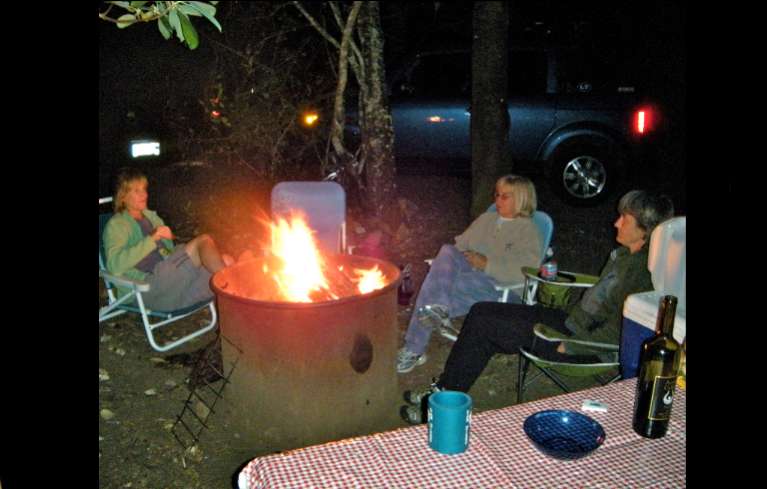
Camping is expected to continue to be popular this summer. Photo/LTN file

Camping is expected to continue to be popular this summer. Photo/LTN file

As vacationers set out this summer, here’s what they can expect:

• Gas prices about the same as last year. The national average price of gasoline was $3.66 a gallon Thursday, 2 cents higher than during last year’s Memorial Day weekend.

• More-expensive hotel rooms. The average hotel will cost $112.21, before taxes and any other add-on such as resort fees. That’s up 4.4 percent from last year’s $107.52, according to hotel research firm STR. Hotels are also expected to be slightly fuller, with occupancy rates climbing from 69.3 percent last summer to 70 percent this year.

• Packed planes, steady airfare. Airlines for America, the industry’s lobby group, expects 208.7 million people to fly, up 1 percent from last year. About 87 percent of airplane seats will be filled with paying passengers. Domestic fliers will pay $421 on average for a round trip ticket, down $6 from last summer. International fliers will pay $1,087, up $8, according to the Airlines Reporting Corp.

• Amtrak expects to meet or exceed the 8.3 million passengers it carried last summer. But the taxpayer-backed railroad wouldn’t disclose how fares compare with last summer’s average one-way ticket of $66.39.

Mike Klopp, a commercial insurance salesman in Irvine is starting to feel better about the economy. He and his wife plan to take their three kids on a vacation up the coast to Monterey in August — a trip they skipped last year.

But Klopp says local trips are the limit because they’re cheaper. Like many others, he’s not yet willing to splurge on a dream vacation.

“The kids would love to go to Hawaii, but there’s no way I’m going to do that. We’ve been hunkering down; money is tight right now,” he says.

“I’m not sold that things are better,” he says.

Other Americans likely agree. Although the unemployment rate has dropped to 7.5 percent, compared with a post-recession high of 10 percent, the Federal Reserve doesn’t see it falling below 7.3 percent this year. And economic growth still isn’t as strong as it has been after previous recessions. The economy grew at an annual pace of 2.5 percent from January to March. Economists expect the rate to slow to 2 percent from April through June, partly because of the federal budget cuts that started taking effect March 1.

Those with higher incomes never stopped traveling, but thanks to new highs in the stock market they now feel secure enough to take longer vacations.

Patrick Veling, the owner of a California real estate data analysis and consulting business, says he’s taking his “most expensive vacation ever” this year. Instead of the normal one-week vacation, he and his wife, Susan, are taking their two adult kids on a three-week vacation through northern Europe that will include a 12-day cruise. They’ll see Denmark, Norway, the Shetland Islands, Ireland and the Netherlands.

“My confidence in the economy and my business is now strong enough that my wife and I have pretty much insisted we make this trip,” says Veling.

“The improvement in confidence is all in the upper income brackets,” says Diane Swonk, chief economist at Mesirow Financial.

During the worst days of the recession, travelers mostly stayed home. Hotels desperate to fill rooms started marketing “staycations” to local families who couldn’t afford to drive or fly somewhere. Summer air travel fell by nearly 8 percent in two years, from 217.6 million passengers in 2007 to 200.3 million in 2009. Luxury hotels saw their occupancy levels plummet during that period from 72.5 percent to 59.3 percent. More than half the rooms at economy and midscale hotels sat vacant.

There has been a slow and steady climb back, but not all parts of the recovery have been equal.

Luxury hotels such as Four Seasons, Park Hyatt, Ritz-Carlton and Mandarin Oriental are filling 73 percent of their rooms on average, surpassing their pre-recession peak, according to an Associated Press analysis of data from hotel research firm STR.

But budget hotels like Days Inn, Econo Lodge and Motel 6 are still below their 10-year occupancy average, more than 3 percentage points below their peak.

The same pattern holds for fliers.

Domestic traffic is projected to grow 0.7 percent this summer, while the number of people buying more expensive international tickets will climb 2.6 percent, according to Airlines for America.

“Expect luxury travel to continue to rebound — consistent with luxury across all industries — while the rest of summer travel will be flat” as the economy still weighs heavily on middle-income families, says Adam Weissenberg, who heads the travel and hospitality consulting group at Deloitte.

But some less-expensive destinations are seeing a recovery.

Campgrounds fared well during the downturn because they are relatively affordable. Some are now doing better business than ever because the operators have retooled their facilities to entice visitors beyond the typical outdoor types.

Steve Stafford, general manager of North Texas Jellystone Park Camp-Resort in Burleson, Texas, has attracted a broader swath of people with “homesteads.” These are recreational vehicles that look like cottages. Now the camp can accommodate campers with tents, who only have to pay $32 a night for an empty patch of ground, and those who want to stay in the comfort of the largest homesteads for $209 a night.

His 37 homesteads were booked solid last year. So he is adding a dozen more, which are already booked.

The hunt for inexpensive vacations is helping companies that rent recreational vehicles, too. Traveling by RV means families don’t need to pay for hotels and can cook most of their meals. Families may not be ready to buy one — sales are only up slightly — but more are choosing to rent one this summer for as little as $100 a day, or $300 during peak weeks.

At El Monte RV, one of the country’s largest RV rental companies, summer bookings from domestic customers are up 20 to 25 percent over last year.

“It has stunned us,” says marketing director Joe Laing. “We’re looking forward to this year. We think it’s going to be a good one.”


Berkshire Hathaway unit buys NV Energy

By Kristin Jones, Wall Street Journal

A unit of Berkshire Hathaway Inc. has agreed to buy NV Energy Inc. in a deal that values the Nevada-based utilities company at $5.59 billion.

The deal has an enterprise value of about $10 billion, the companies said. Representatives from the companies weren’t immediately available to comment on what is included in the enterprise value.

MidAmerican Energy Holdings Co., the Berkshire Hathaway subsidiary, has agreed to acquire the energy company at $23.75 a share, a premium of around 23 percent to NV Energy’s Wednesday closing price.

The transaction, which is subject to state and federal approval and other conditions, is expected to close in the first quarter of 2014.

“Part of what attracted MidAmerican to NV Energy is its solid commitment to the state of Nevada” and its performance as a high-quality energy company, said MidAmerican Chief Executive Greg Abel, adding that the company is impressed with the strategic direction of NV Energy Chief Executive Michael Yackira.

Abel said MidAmerican brings stability, expertise and competitively priced capital to NV Energy.

NV Energy will operate under its current name as a separate corporate subsidiary of MidAmerican, and it will continue to be based in Las Vegas.

NV Energy supplies power to residents on the Nevada side of the Lake Tahoe Basin.

Upon completion of the deal, MidAmerican Energy Holdings will have assets of around $66 billion and its regulated utilities will serve 8.4 million customers.

NV Energy’s Sierra Pacific and Nevada Power units have cut expenses, particularly fuel purchases, in an effort to counterbalance lower revenue recently. The company’s first-quarter earnings rose 76% as it sharply reduced expenses.

NV Energy shares rose 23 percent after hours to $23.75.


Vail Resorts enters the Utah ski market

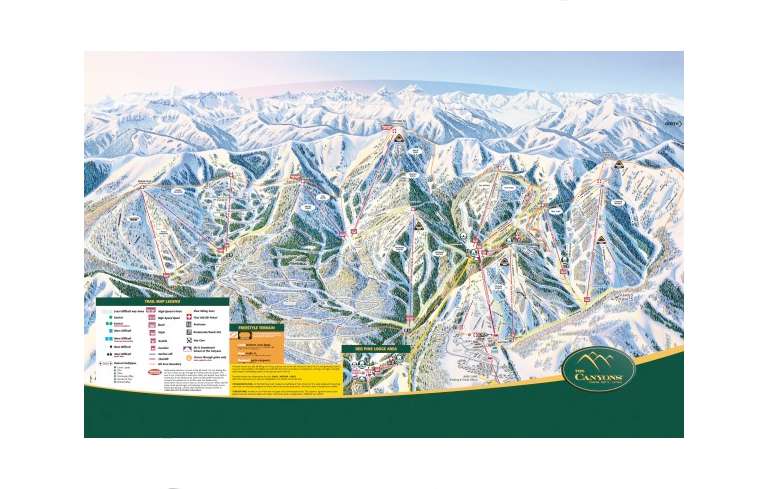
The Canyons is first Utah resort for Vail Resorts to operate.

The Canyons is the first Utah resort Vail Resorts will operate.

By Kathryn Reed

While Vail Resorts has not had a presence in the Utah ski market until today, the president of the company’s mountain division used to run The Canyons.

Blaise Carrig, who was also the top guy at Heavenly Mountain Resort, was at the Park City resort when some of the Olympic events were staged at the Utah mountain in 2002.

Now The Canyons is part of the Colorado-based company’s portfolio. The 4,000-acre resort will be part of the Epic Pass for the 2013-14 season. The management team has not been named.

This brings the number of Vail Resorts ski areas to 10, which include: Heavenly, Northstar and Kirkwood in California; Vail, Breckenridge, Beaver Creek and Keystone in Colorado; Afton Alps in Minnesota; and Mt. Brighton in Michigan.

In the deal announced today, Vail entered a 50-year lease agreement with Talisker, a Toronto-based privately held real estate firm, to operate the ski area. There is an option for six 50-year renewals.

Vail will pay Talisker a $25 million annual base payment, which will grow with the consumer price index, plus 42 percent of earnings over $35 million. Vail expects earnings of about $15 million in fiscal year 2014, with that increasing to $25 million in 2017.

Vail Resorts CEO Rob Katz said during a May 29 conference call that the structure is similar to what it entered into at Northstar in Truckee in 2010.

He anticipates being able to tap into the Los Angeles and Salt Lake City markets, which have historically not been big players for Vail Resorts. Katz called Los Angeles “the most underserved market.”

“We do feel The Canyons is on a higher growth projector than other resorts,” Katz said.

The Canyons has about 450,000 skier visits a season, which Katz described as being “traditionally hard to make a profit.” Vail Resorts anticipates through its pass programs and centralizing some operations, that The Canyons’ skiers and bottom line will increase.

Talisker retains the rights to the 4 million-square-feet of developable real estate.

“The Canyons has more real estate opportunities than any other resort in the country,” Katz said. “Because of the recession it has not monetized in the six or seven years.”

Katz also added that this arrangement is similar to Northstar in Vail not having real estate rights, but expecting to benefit from it in terms of people accessing the mountain.

Another caveat to the deal in Utah is Vail Resorts has the rights to the potential lease of the land on which Park City Mountain Resort sits. That ski resort is owned by Powdr Corp., the same company that owns Boreal and Soda Springs on Interstate 80, Copper Mountain in Colorado, Mt. Bachelor in Oregon and other resorts.

Talisker and Powdr Corp. are involved in litigation regarding the 2011 lease renewal. That must be resolved before Vail Resorts would be more of a player with that acreage. But in the meantime, Vail is assuming responsibility of Talisker’s side of the lawsuit.

Vail Resorts first looked at The Canyons six years ago, but the Park City resort land was not part of the equation then.

Park City Ski Resort sits next to The Canyons, which could open the opportunity to linking the resorts.


State budget not good news for LTUSD

By Kathryn Reed

While much of the news that comes out of Sacramento is school districts will fare better in the next fiscal year, this is not the message Lake Tahoe Unified School District Chief Financial Officer Deb Yates presented Tuesday night to the board of education.

Yes, there is more money. In large part the additional $4.5 billion comes from November’s voter-approved Proposition 30. But what changes for school districts is how the state will distribute the money. That is why LTUSD could be hurt.

Gone in the governor’s budget is the $1.4 million the district has flexibility with for categorical programs. Those dollars will be under the supplemental and concentration grants categories.

“That’s a real problem for our district,” Yates told the board May 28.

After the meeting, Yates told Lake Tahoe News when the initial budget came out in January using the Local Control Funding Formula (LCFF); it looked like the district would benefit from the new spending mechanism.

She said now it appears districts like LTUSD that have a high percentage of English language learners, foster youth and those receiving a free or reduced lunch will be hurt. This is because of the formula for how the money can be spent, not that the overall pot is necessarily different between districts. Most education dollars come with strings attached, thus giving individual districts little discretion.

“Under LCFF we are not whole and we can’t spend it the same way,” Yates said.

The LCFF also proposes reimbursing districts $723 per student for K-3 class-size reduction. Right now LTUSD receives $1,000.

The state Senate has proposed implementing LCFF in 2014-15.

What is on the table is the funding levels would be restored to 2007-08 allocations. This means districts are still owed millions of promised funds by Sacramento lawmakers.

And with projections for revenue growth expected to be less in 2013-14, the financial picture is not getting brighter.

It’s possible some of this year’s “surplus” could be a one-time payment to help pay back what is owed districts instead of being sustained dollars.

Gov. Jerry Brown and the Legislature have until the end of June to figure out a compromise and pass a budget that takes effect July 1. The California Teachers Association is backing the governor’s plan.