No surprise to find rogue genetically altered crop

By Michael Wines, New York Times

One week after the revelation that an Oregon farmer had found genetically engineered wheat growing in his fields, scientists remain mystified over how the strain — apparently the remains of a test crop shut down a dozen years ago — got there.

The boom in so-called transgenic crops should prompt even more careful evaluation of future varieties.

But few are surprised. Even with extensive precautions, gene-altered plants turn up in unwanted places regularly enough that farmers have come to consider a few of them weeds, and even a threat to their livelihood.

And while none of them yet poses any known public health hazard, experts say the boom in so-called transgenic crops should prompt even more careful evaluation of future varieties with an eye to the prospect that they, too, could eventually appear elsewhere.

In the case of the wheat found in Oregon, most experts say, all those prospects are remote. The experimental wheat was created and tested by the Monsanto Company to be resistant to its best-selling Roundup herbicide, and similarly Roundup-resistant varieties of corn, soybeans and other crops are widely grown with no known health effects.

In a telephone news briefing on Wednesday, Monsanto officials called the appearance of the altered wheat “a random isolated occurrence” and said there was no evidence that the wheat had moved beyond the single farm or that its seeds were in the seed stocks that the farmer used to plant his fields.

Nor is the Monsanto wheat likely to spread elsewhere, most experts say. The plants found in Oregon, which the company said covered less than 1 percent of the farmer’s 125 acres, are the only ones found anywhere since Monsanto abandoned plans to sell modified seeds in 2004.

As with most transgenic plants, the wheat could have transferred its engineered trait to ordinary wheat via its pollen, which contains the single gene for herbicide resistance. That gene is dominant, meaning plants fertilized by the Monsanto wheat’s pollen would likely pass the Roundup-tolerant trait to future generations.

But while plants like corn fertilize each other, spreading their pollen far and wide by winds, butterflies or bees, wheat plants generally fertilize only themselves. Moreover, wheat pollen rapidly loses its potency once it leaves the plant.

“A transgene that comes up in corn could be a much different situation,” Kendall Lamkey, the chairman of Iowa State University’s agronomy department, said in an interview. “Corn pollen can travel, under the right conditions, a great distance,” he said. But with wheat, he said, “The gene’s unlikely to be moving to other varieties in any significant way.”

When a gene does move to other varieties, however, the potential for mischief can be considerable.

Consider the benchmark example: in 1998, Aventis Agroscience Inc., a Swiss company now known as Syngenta, won federal approval to sell a strain of corn called StarLink altered to produce a pesticide that kills insect larvae. After scientists found a moderate possibility that the strain could trigger allergic reactions in some people, the government registered the corn for use only in animal feed and biofuels, and imposed safeguards to keep it out of the food processing chain.

At its peak, StarLink corn was grown on less than half of a percent of all the corn acreage in the United States. Yet by September 2000, it was discovered in corn taco shells, triggering a huge recall, tests on more than four billion bushels of corn and the cancellation of StarLink’s federal registration.

Such dire consequences are rare, but not unheard of. A group representing more than a thousand organic farmers in Saskatchewan complained in 2002 that gene transfers from canola that had been genetically engineered to tolerate herbicides had contaminated their fields. That made it impossible to certify their canola as wholly natural, costing the farmers $10 million, the group stated.

Nature is hardly the only culprit in genetic transfers. Farmers can accidentally mix bags of natural and modified seed. Combines that harvest a gene-altered crop can pick up its seeds, then drop them while harvesting a field of natural plants.

Both farmers and manufacturers alike employ measures like putting buffer zones around fields, to limit the risk that genetic material will cross from altered crops to natural ones. But many experts say that the myriad ways that seed and genes can be spread make that possibility substantial.

The real question, they say, is how much that matters.

Absent any proven health threat, the most common fear is economic — that organic farmers will lose crops, or that food exports to countries that ban imports of gene-altered products will suffer. The Oregon incident instantly raised fears that the United States’ $8 billion annual wheat trade would be hard hit, although the strain of winter wheat at issue makes up only a fraction of those exports.

But a 2010 report on genetically engineered crops by the National Research Council noted that genes can pass not only from an altered plant to its natural brother, but to less close relatives in the wild. “Such hybridization is common in plants generally and is a key process for the evolution of new plant species,” the report stated.

Concerns about transfers to the wild already had stalled approvals of genetically altered crops like sunflowers and rice. During tests in Oregon of a pesticide-tolerant bentgrass in 2003, “introgression of the transgene into weedy populations was detected at a considerable distance from the test sites,” the report stated.

That is also a potential problem with genetically modified wheat, said the chairman of the group that prepared the report, David E. Ervin, an environmental management professor at Portland State University in Oregon.

“There has always been a worry with wheat, being in the grass family,” he said. He added that if there were a transfer of the gene into grasses, “There’s going to be difficulty in controlling those grasses, and you might have to resort to stronger herbicide treatments, some of which have more environmental consequences.”

That underscores the need for caution in approving new varieties of altered plants, he said, adding: “All bets are off when you start introducing new kinds of crops. That we haven’t had any serious events to this point doesn’t mean we won’t have significant risk of them occurring in the future.”



Vail Resorts’ 3Q net income up; skier visits down at Heavenly, Northstar

By AP

BROOMFIELD, Colo. — Vail Resorts said Thursday its earnings rose 23 percent in its fiscal third quarter, as late spring snow helped boost skier visits to its Colorado resorts and visitors proved willing to spend on food, lessons and gear.

The Broomfield-based company reported net income of $97.6 million, or $2.66 per share, for the three months that ended April 30. That’s up from $79.5 million, or $2.17 per share, during the same period last year. Analysts had forecast earnings of $2.74 per share.

Revenue climbed 12 percent to $469.7 million.

Fewer people went to Northstar and Heavenly last season compared to the previous year. Photo/LTN file

Fewer people went to Northstar and Heavenly last season compared to the previous year. Photo/LTN file

Vail Resorts Inc. operates the Vail, Beaver Creek, Breckenridge and Keystone resorts in Colorado; Heavenly, Northstar and Kirkwood in the Lake Tahoe area; Afton Alps in Minnesota; Mount Brighton in Michigan; and Grand Teton Lodge Co. in the Jackson, Wyo., area. Last month, it announced it has reached a deal to also operate Canyons in Park City, Utah.

Excluding recently purchased Kirkwood, Afton Alps and Mount Brighton, skier visits climbed 9.1 percent from a year ago. Visits to the company’s Colorado resorts were up 11.8 percent, but Heavenly and Northstar together saw a 0.4 percent decline in skier visits after an unusually warm, dry spring, Vail Resorts said.

Visitors also were spending. Lift revenue, excluding season passes, was up 13.4 percent, dining revenue was up 13.9 percent, ski school revenue was up 11.8 percent, and retail and rental revenue was up 7.4 percent from a year ago, excluding the newly acquired resorts.

Vail Resorts reported selling roughly 138,000 season passes this spring for the 2013-14 season. Spring season pass sales through May 28 are up 18 percent in terms of units sold and up 24 percent in sales dollars from a comparable period last year. CEO Rob Katz said some of the customers include those who would normally have bought passes in the fall.

Nearly all spring pass sales will be recorded as revenue in fiscal 2014 over the course of next ski season.

For the fiscal year ending July 31, Vail Resorts said it now expects $31.5 million to $39 million in net income, down from an earlier estimate of $39 million to $49 million. It estimates $8.7 million in losses relating to the signing May 29 of its long-term lease to operate Canyons, including $2.2 million in operating losses and about $6.5 million in one-time transaction costs.


DiCamillo returns to S. Tahoe as temp attorney

By Kathryn Reed

Former South Lake Tahoe City Attorney Cathy DiCamillo is back on the payroll.

She started this week as interim deputy city attorney. She will be working for Nira Feeley, who is interim city attorney until Tom Watson takes the helm July 8. Feeley will be going out on maternity leave about a week later for three months. DiCamillo will be on board that entire time. She is making more than $7,000 per month.

“With Cathy’s extensive legal background and experience, she is able to pick up any of our cases fairly effortlessly and will provide the city as well as Nira and Tom leading the City Attorney’s Office with high-level legal assistance far better than bringing in another new and temporary attorney,” City Manager Nancy Kerry told Lake Tahoe News. “For example, I know that (Wednesday) she was reviewing redevelopment/successor agency dissolution matters. As deputy city attorney her day-to-day work assignments will be directed by the interim city attorney and/or city attorney.”

The irony is that when DiCamillo worked for the city the first time she was deemed to not have enough redevelopment experience. That is when then City Manager Dave Jinkens hired outside legal counsel to help with such matters.

DiCamillo was the city attorney for about a decade before retiring in June 2009. During a 2008 closed session DiCamillo received a less than favorable evaluation by the City Council. Months later she submitted her resignation.

Previously, she had worked for attorney Lew Feldman. He is the attorney who from the get-go and to this day is representing the developers for the Chateau project. (That project will be on the June 11 City Council meeting.)

Feeley is the lead attorney on the Chateau project. Kerry said Watson is being briefed on all aspects of it so he will be “up to speed when he officially begins.”

It is not known how much DiCamillo will eventually be involved with the Chateau project. She has nothing to do with the staff report that will be presented Tuesday and she has not been assigned to that project. But she was the city attorney at the time the project was allowed to start without having a consolidated map filed or financing in place.

DiCamillo was also the city attorney when Jaye Von Klug was the city’s redevelopment manager. Von Klug is the one who spearheaded the overspending at the Heavenly Village project that required $7.2 million being “borrowed” from the general fund unbeknownst to the City Council.


U.S. receives compensation for fires in national forests

By Denny Walsh, Sacramento Bee

Federal prosecutors in Sacramento have collected $50.5 million from four companies found by investigators to be responsible for igniting two wildfires that burned more than 31,000 acres of national forest land, U.S. Attorney Benjamin Wagner announced Thursday.

The Power Fire, which ignited on Oct. 6, 2004, in the Eldorado National Forest in a remote area of Amador County, started when tree trimmers discarded cigarette butts on the floor of the forest, Wagner said.

The Whiskey Fire ignited on June 12, 2008, in the Mendocino National Forest, when Pacific Gas & Electric transmission lines contacted branches of a gray pine tree, Wagner said.

All four companies deny responsibility for the fires, Wagner said, but he noted that lawsuits filed by his office against the companies settled comparatively quickly.


State hands out money for Tahoe bus service

South Shore bus riders will benefit from some of the nearly $250 million Caltrans gave out this week to improve public transit and air quality across California.

One-hundred twenty-seven projects were awarded funds to upgrade transit services, purchase eco-friendly buses, modernize transit stations and create jobs throughout the state.

Tahoe Regional Planning Agency was awarded $1.3 million to modernize bus facilities, install fare boxes and purchase buses.

Placer County Department of Public Works was awarded $2.2 million to purchase buses.

The funding comes from Proposition 1B, the 2006 voter-approved transportation bond, which is providing $3.6 billion over a 10-year period to improve public transit in California.

— Lake Tahoe News staff report


Hackers hit Raley’s grocery stores

By KOLO-TV

WEST SACRAMENTO — The Raley’s chain of supermarkets has recently discovered that a portion of its computer network systems may have been the target of a complex, criminal cyber attack.

According to a news release, the company immediately initiated an investigation to determine whether cyber criminals may have obtained customer credit and debit card information. So far, the company has not confirmed any unauthorized access to payment card data, but its investigation remains ongoing.

Raley’s does not believe that debit PINs could have been accessed, as it does not collect Social Security or drivers’ license numbers in association with payment card transactions.

A company spokesman says a series of immediate steps has been taken to enhance the security measures already in place to protect customer data. The company is confident that customers can continue using their payment cards in its stores.

“Our customers’ peace of mind is our top priority. We take protecting our customers’ privacy seriously and sincerely regret any inconvenience that the attack on our network may have caused,” says Mike Teel, Raley’s president and CEO. “We are working around the clock to gather details to determine the extent of any possible compromise of customer information.”

Raley’s has a dedicated response team available to answer customer questions and is providing customers updates online as they become available. The company encourages customers who have used credit and debit cards at Raley’s, Bel Air, Nob Hill Foods, Food Source stores or Aisle One fuel stations to take the following steps to protect their accounts:

• Check and monitor your bank and credit card statements for evidence of unauthorized transactions;

• Contact your bank or credit card company if you identify suspicious charges; and,

• Know that cardholders are not held responsible for fraudulent charges made by unauthorized parties if reported promptly to the card issuer.

Customers can reach Raley’s dedicated response team from 7am to 10pm every day at 800.925.9989.


Additional charges filed against county supervisor

By Peter Hecht, Sacramento Bee

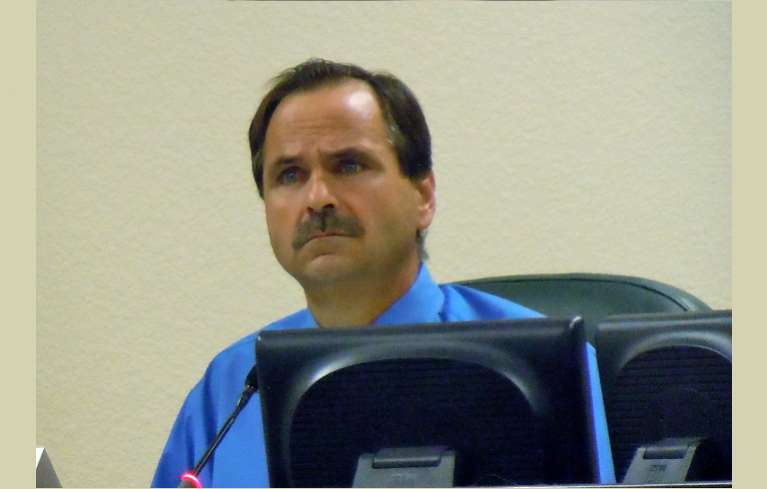
El Dorado County Supervisor Ray Nutting faces new legal troubles as state and local prosecutors filed four misdemeanor charges today, alleging he improperly collected money to post bail after his May 28 arrest for felony political corruption.

Ray Nutting

Ray Nutting

Nutting, 53, surrendered voluntarily to authorities last week after District Attorney Vern Pierson charged him with four felony counts for allegedly failing to properly disclose some $70,000 in state income received for brush clearing on his family ranch.

Now new charges, filed by Pierson and state Attorney General Kamala Harris, allege that Nutting illegally solicited bail money from two El Dorado County employees and a local construction contractor. Harris’ office is assisting in the local investigation.

Nutting’s defense attorney, David Weiner, blasted the filing of new charges and says his client has done nothing wrong.

“We will see what this fishing expedition leads to now,” Weiner said today. “He is not guilty of anything – except being a political target. It’s becoming more and more clear.”


Effort under way to overhaul California State Parks

By Matt Weiser, Sacramento Bee

California officials on Monday launched a new program to analyze and overhaul the state parks system, to be led by a volunteer commission.

Called Parks Forward, the effort is required by the California State Parks Stewardship Act, passed last year in the wake of a financial scandal that upended the leadership ranks at state parks headquarters.

The system has been under scrutiny since the Bee revealed last year that top officials at the Department of Parks and Recreation hid $20 million in “surplus” money even as they set about closing 70 parks due to budget cuts.

Among its other troubles, the department has a deferred maintenance backlog at its 280 parks that exceeds $1 billion.

That is partly because the state general fund subsidy for parks has declined over the past 20 years, and revenues from visitor fees have not filled the gap.

California Natural Resources Secretary John Laird said Monday that Parks Forward aims to make the parks department “sustainable” over the next century.

“We would like to get to a point where we are not deferring maintenance and we are adequately funding the stewardship of the parks,” he said.

Laird will appoint the commission members, to include park users as well as experts on conservation and finance. The only commissioner named so far is Lance Conn, a venture capitalist and former investor for Microsoft co-founder Paul Allen.

Conn vowed to confront the “brutal facts” about state parks operations and funding. He said the commission will produce a report by the end of next year. The process will be public and will draw from examples of park management around the nation and world.

“I love California parks, and I love tough problems,” Conn said. “We’re not going to toss the report over a wall and sneak away under cover of darkness. We’re going to stick around and see that the measures are implemented.”

Many of the problems confronting California’s parks system have been studied for years and are well understood.

The Parks Forward initiative, for instance, follows a Little Hoover Commission report released in March that recommended a number of operational changes. Among them was the idea of divesting some parks, to reduce operating expenses, and turning them over to other entities, such as local governments.

Carrying out such ideas, however, is fraught with controversy.

“I don’t know that any of us know the right steps to get us there,” said Carolyn Schoff, president of the California League of Park Associations, a coalition of nonprofits that assist individual parks. “But I think all of us know there needs to be a paradigm shift.”

Parks Forward will be funded by grants from the David and Lucile Packard Foundation, the S.D. Bechtel Jr. Foundation, the James Irvine Foundation and others, under the auspices of the Resources Legacy Fund.


LTUSD board wants a handle on STHS’ club debt

By Kathryn Reed

When the Lake Tahoe Unified School District board of education meets later this month, the five electeds will be asked to decide how to deal with the debt incurred by South Tahoe High School’s Associated Student Body and what the future policy will be.

Consultant Terri Ryland gave a presentation last week about the audit she did regarding the continued deficit. This has been a multi-year problem. (Board member Sue Novasel was not at the May 28 meeting.) The total balance from the various clubs that make up the ASB account is negative $20,892. Plus, the yearbook has a loan from the district totaling $30,397.

“No one wanted to see the kids go without. I think that is what started the negative balances,” Ryland told the board.

LTUSD is studying the books for South Tahoe High's clubs. Photo/LTN file

LTUSD is studying the books for South Tahoe High’s clubs. Photo/LTN file

One of her recommendations is no club or individual class can spend money until it is in the account. Today it’s OK to fund raise after the fact or after the event has been planned and deposits made. This is partly what has led to the debt because the money raised has not always met the expenses.

The classes of 2010, 2011 and 2012 all graduated and left a negative balance in their respective accounts. There are no consequences for having done so.

An issue that was brought up by Roy Benavidez, who heads the ASB, is that ASB is responsible for paying the salaries of the adults who are tasked with doing the bookkeeping.

Ryland said she did a check and could not find a single instance where any other ASB was saddled with the entire bookkeeping expense. Most districts incur the cost, with some charging a percentage to the ASB.

Twenty hours a week – just for the ASB books – have been allocated and is what the student group must pay. The position was supposed to be for 15 hours, but 20 is what it turned out to be.

“Prior to 2010, several positions at the high school performed various parts of the ASB bookkeeping function. Costs for approximately 11 hours per week were $27,000-$34,000,” Ryland wrote in her presentation.

STHS Principal Ivone Larson pointed out that if the district were to incur the expense of the salaries from the last two years for the bookkeeper, then that would essentially wipe out the debt that is on the books.

CFO Deb Yates told Lake Tahoe News after the meeting, “I’ll recommend we bring it in house to assess how many hours are really needed (for bookkeeping.)” (It will be on the board agenda June 25.)

It will be up to the board if the debt is paid off through general fund dollars or some other way and if policy as to how ASB is managed in the future is changed.

On the June 11 agenda is the hiring of administrative intern Cindy Martinez as interim principal at Bijou Community School for 2013-14.

The meetings start at 6pm in the district office on Al Tahoe Boulevard.


Study: Calif. needs the most water infrastructure upgrades

By Bettina Boxall, Los Angeles Times

California could use $44.5 billion to fix aging water systems over the next two decades, according to a federal survey that placed the state at the top of a national list of water infrastructure needs.

Texas, at nearly $34 billion, and New York, with about $22 billion, were next in line.

The assessment, conducted by the U.S. Environmental Protection Agency in 2011 and released Tuesday, is used to document the capital investment needs of public drinking water systems across the country. The EPA relies on the results to allocate grants through the Drinking Water State Revolving Fund.

All told, the survey revealed a $384-billion wish list of infrastructure projects through 2030 — $4.5 billion more than in the 2007 assessment.

In California and elsewhere, the biggest need was for repairing and upgrading water transmission and distribution lines. That will come as no surprise to residents of Los Angeles, where old mains routinely break, sending gushers of water flooding city streets. Treatment projects were next on the list.

“The nation’s water systems have entered a rehabilitation and replacement era in which much of the existing infrastructure has reached, or is approaching, the end of its useful life,” EPA acting Administrator Robert Perciasepe said in a statement. “This is a major issue that must be addressed so that American families continue to have the access they need to clean and healthy water sources.”

In April, the regional EPA administrator sent a letter of noncompliance to the California Department of Public Health, complaining that the state had failed to spend $455 million of federal money in another state revolving fund used to improve drinking-water quality in small rural communities with contaminated wells or other problems.

The EPA said the state had set much of the funding aside for projects that were not shovel ready, while other, ready-to-go projects languished.