Scientist details human impact on Lake Tahoe

By Jessie Marchesseau

INCLINE VILLAGE – Lake Tahoe is not the same as it used to be. Most of us are already aware of this, but none as much as Charles Goldman.

In 1959, Goldman, a limnologist and UC Davis professor, formed the Tahoe Reasearch Group and began regular and extensive testing of Lake Tahoe.

On Friday evening, Goldman gave a presentation at the UC Davis Tahoe Environmental Research Center in Incline Village entitled “The impact of climactic change and global warming on inland waters of the world.” The lecture was part of the annual UC Davis volunteer docent training session.

In his introduction on June 7, Geoff Schladow, director of TERC, credited Goldman with providing “unassailable evidence that Lake Tahoe has changed. Without that,” he said, “we would all be here arguing about whether or not it’s changed.”

Charles Goldman has been studying Lake Tahoe for decades. Photo/LTN file

Charles Goldman has been studying Lake Tahoe for decades. Photo/LTN file

Event organizers continued to bring in more and more chairs as 135 people crowded into the tight room to hear Goldman speak. The docent training sessions are generally for trainees only, but this year, organizers decided to open Goldman’s presentation to the public.

“He has all of the historic knowledge that really grounds the science in a historical context,” Heather Segale, UC Davis education and outreach director, said. “We can tell our docents about the latest and greatest, but giving them history gives them the long view of science at the lake.”

Goldman started with the long view of climate change in general by putting up a graph showing carbon dioxide levels going up faster and higher then they have in 800,000 years.

“There’s probably no problem that’s faced humanity the way this has since the ice age,” he said.

He acknowledged the climate change skeptics and compared their argument to that of tobacco companies arguing that cigarettes are good for you.

His slide show was filled with charts, graphs and photographs depicting everything from Arctic ice melt to changes in atmospheric makeup to the fault lines under Lake Tahoe. Pictures of lakes in Asia showed one so green with algae it practically glowed and another so polluted people can hardly breathe when attempting to cross it by boat.

Stopping and preventing pollution in Lake Tahoe has been one of Goldman’s main goals. In fact, he calls convincing authorities to stop putting sewage, treated or otherwise, into Lake Tahoe in the late 1960s his “single greatest contribution” and the most significant thing that could have been done for the lake.

He also remembered a time when the clean Tahoe air resembled the smog of a big city. The air quality outside the casinos, he said, was worse than inside, and virtually all the pollution was being created inside the basin. Again, he spoke up. People were defensive at first, but eventually changes were made.

Over the years, Goldman has seen a lot of changes in Lake Tahoe. He talked about watching the Tahoe Keys be built and how it is the main culprit of the Eurasian milfoil invasion in Lake Tahoe. It is also the site of the addition of non-native species such as goldfish.

Over the course of 30 years, Goldman has also seen the overall temperature of Lake Tahoe increase by about 1 degree. His graphs showed that while the maximum and minimum temperatures of Lake Tahoe fluctuate constantly, the average maximum temperature has remained virtually the same; it is the average minimum temperature that appears to be rising at a relatively steady rate. This means the lake is not cooling off at night like it used to, the result of increased CO2 in the atmosphere.

The long-term data collected by Goldman and his team over more than 40 years has resulted in building restrictions, erosion control, protection of wetlands and the establishment of water quality thresholds, all put in place to protect the delicate environment of Lake Tahoe.

Now retired, Goldman’s legacy in Lake Tahoe continues with the Tahoe Research Group and the Tahoe Environmental Research Group.

Goldman left the audience with this: “Keep in mind that the younger generation is going to inherit a badly damaged planet. It’s really up to us to inspire them with a lot of enthusiasm.”


1 person dies, 4 injured in Zephyr Cove collision

Updated: 9:10pm June 9.

One person died in a two-vehicle accident in Zephyr Cove on Sunday afternoon near the fire station at Highway 50 and Warrior Way.

Four other people were transported to Renown Medical Center in Reno; three by ground and one by air.

Nevada Highway Patrol Trooper Barb Stapleton said told Lake Tahoe News a Toyota Camry was headed west on Highway 50 when the vehicle slid on the slick roadway. It went into oncoming traffic, where the passenger side was struck by a Hyundai Elantra.

Rain and hail been coming down at a rapid rate just before the accident.

No names or hometowns of any of the five have been released. The driver of the Camry was a male and it was his female passenger who died. The Hyundai had three occupants.

In other news, smoke was seen about 3pm on the ridge above Zephyr Cove in the Genoa Peak area. Tahoe Douglas firefighters did not locate a fire.

— Lake Tahoe News staff report


Nevada gaming firm, Calif. lawmakers at odds over tribal casino

By Anthony York, Los Angeles Times

SACRAMENTO — When California voters approved Las Vegas-style gambling in 1998, proponents said it would be limited to places already recognized as American Indian lands.

But a rare ruling from the Obama administration and a deal approved by Democratic Gov. Jerry Brown would allow one tribe to build a casino on a 300-acre property owned by Station Casinos in the Central Valley town of Madera. The prospect has divided Indian tribes and touched off an intense fight in the Capitol.

Members of the tribe, the North Fork Rancheria of Mono Indians, have not lived on the Madera land for generations. But if the group is successful, it could help reshape the future of tribal gaming in California, opening the way for new casinos up and down the state — and closer to urban centers — according to critics of the gaming industry and other opponents of the deal.

Backers of the tribe’s plan say it is an exception. They point to strong support for the casino from Madera city and county officials as well as the tribe’s historic ties to the area, documented in an intricate seven-year appeal process and approved by the U.S. Department of the Interior.

Tribes that own some of California’s largest gambling halls say North Fork leaders and their Nevada-based financial backers are “reservation shopping” to put a casino in a prime location. Approval of the deal, they say, would break a promise made to voters 15 years ago that gaming would be restricted to remote locations.

State law limits casinos to land where the federal government recognizes a tribe’s historic tie. Once that determination is made, the tribe must negotiate a casino deal with the governor and have it ratified by the Legislature.

North Fork made its claim to the land, which was once slated to be a NASCAR racetrack, in question in 2004, a year after it was purchased by Nevada-based Station Casinos. Tribal leaders say the band spent summers in the Sierra Nevada foothills near Yosemite National Park to escape the Central Valley heat and moved to the lowlands that include present-day Madera to flee the snows of winter.

In the 1980s, the federal government set aside 80 acres for North Fork about 50 miles away, but the group’s leaders say that land is held privately by tribal members and does not belong to the tribe. Moreover, the land, on a steep slope on a remote hillside near Yosemite National Park, is environmentally sensitive and could not sustain a casino development, they say.

North Fork officials say the root of opposition to their plan lies in wealthy tribes trying to keep other Indian nations from sharing in the prosperity of the gaming business.

Other tribes also are uncomfortable, the North Fork leaders say, with the cut of gaming revenue the group is willing to share with state and local governments — potentially millions more than tribes typically have agreed to contribute in exchange for approval to operate casinos.

The tribe and Station Casinos have been trying for more than 10 years to build a hotel and casino with 2,000 slot machines on the Madera land. Along the way, they have enlisted the support of local leaders, labor unions and environmental groups.

The Department of the Interior accepted the tribe’s land claim in 2011. It was just the seventh time the federal government had granted such a request on land acquired after 1988, when Washington created rules to allow tribal casinos. Last year, Brown signed the gaming deal with North Fork.

The governor has downplayed concerns about casinos creeping toward California’s major cities, where they can add to traffic congestion, strain city resources and upset residents. He has said he expects the kind of deal he struck with North Fork to be rare.

The nearly 2,000 members of the tribe, the fifth-largest in California, “are mired in the type of poverty tribal gaming was designed to ameliorate,” said Jacob Appelsmith, a senior adviser to Brown who negotiated the casino deal.

Last month, the state Assembly ratified the plan. It has stalled in the Senate despite an intense lobbying effort for it by organized labor, which has been promised that the project would create thousands of union jobs.

The Picayune Rancheria of the Chukchansi Indians have a casino about 30 miles off the highway from the proposed North Fork site. Its leaders say the proposed new casino, with its more convenient location, could put them out of business and leave them saddled with debt after an investment of nearly $300 million to expand their operations.

Wealthier gambling tribes such as the Riverside-based Pechanga Band of Luiseno Indians and the United Auburn Indian Community, which operates the Thunder Valley Casino Resort between Sacramento and Lake Tahoe, are worried about other pending casino deals that could gain momentum if the North Fork accord is approved.

Brown also has authorized a casino with 2,000 slot machines for the Enterprise Rancheria of the Estom Yumeka Maidu tribe on newly acquired land the federal government ruled eligible in Yuba County. Enterprise is planning a 170-room hotel, as well. Its plan is not yet before the Legislature. Its business would compete with Thunder Valley, which has 3,000 slots and a 300-room hotel.

In addition, the federal government is considering a land request from a tribe in Barstow that could lead to a casino along Interstate 15 between Los Angeles and Las Vegas. That business could be a threat to some of the large tribal casinos in the area.

“Developer-driven gaming proposals like Stations-North Fork have infected Indian gaming for over a decade now,” Pechanga’s chairman, Mark Macarro, told senators at a recent hearing. “Tribes used to respect the boundaries of each other. But casino developers don’t care one way or the other.”

North Fork’s chairwoman, Elaine Bethel-Fink, said wealthy tribes oppose her group’s deal because their own will be up for renegotiation in a few years, and they don’t want pressure to match North Fork’s revenue-sharing plan.

“The concern,” Bethel-Fink said, “is that we’re being too generous.”


Heat in Lake Tahoe keeps breaking records

By Kathryn Reed

Hot. That’s the word of the day. It’s the word for the last five days. It will probably be the word for today, too.

Sunday is expected to be the sixth consecutive day South Lake Tahoe has recorded a record high.

The following is data from the National Weather Service in Reno:

• June 8 – high 88, previous record was 83 in 1996

• June 7—high 88, previous record was 83 in 1996

• June 6 – high 85, previous record was 83 in 1996

• June 5 – high 85, previous record was 82 in 2002

• June 4 – high 83, previous record was 82 in 1996.

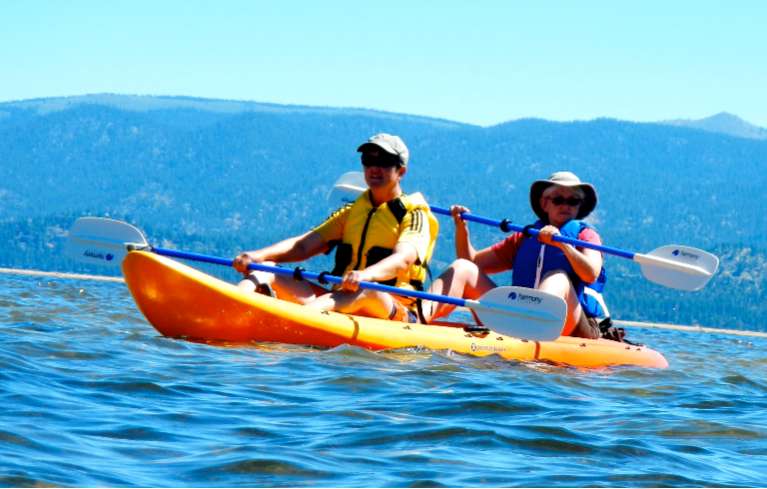
Roni Davis and Brenda Knox on June 8 paddle along Lake Tahoe. Photo/Kathryn Reed

Roni Davis and Brenda Knox on June 8 stay cool paddling along Lake Tahoe. Photo/Kathryn Reed

“It’s pretty unusual to set record temperatures six days in a row,” NWS in REno meteorologist Zach Tolvy told Lake Tahoe News.

Records are breaking throughout California and into Nevada.

People have been flocking to Lake Tahoe this weekend to escape the more oppressive heat in other parts of Northern California where the mercury has been in the triple digits.

Once in Tahoe, the beaches have been a popular destination. Many people are venturing onto and into the water to cool off. Others can be found at the waterside eateries.

The temps in the basin are about 18 degrees above normal. Normal, though, should return on Monday.

But before that happens, thunderstorms are expected to roll through the basin and into western Nevada today, and linger into Monday.

“The biggest danger will probably be the wind,” Tolvy said. The Weather Service typically does not issue lake wind advisories with thunderstorms, but suffice it to say being on the lake as the storms come in is not advisable.

Gusts could exceed 60 mph today. It will be breezy most of the week.

The lake was pretty choppy Saturday afternoon – especially for those in human powered watercraft.

The thunderstorms are expected to be widespread and arrive midmorning to early afternoon, with some sticking around until the evening. Tolvy said they could be heavy in spots and are expected to be widespread.

Dry lightning will precede the rain, but is not seen as a serious fire threat.

For those hiking, remember lightning can strike far from where the thunder and/or rain are and standing on a slab of granite is not the best place to be.


STPUD, Chateau developers resolve water line issue

An agreement regarding the water lines has been reached between South Tahoe Public Utility District and Tahoe Stateline Ventures, the developers of the Chateau project.

The issue was discussed at the June 6 STPUD board meeting and the board unanimously approved it.

“The district’s inspection of the existing sewer lines built in 2007, showing them to be in good condition, helped to achieve an acceptable agreement to all, since any repair obligations to TSV were taken off the table,” STPUD General Manager Richard Solbrig told Lake Tahoe News after the meeting. “TSV has agreed to provide as-built drawings to the District. Once these drawings are submitted and accepted, dedication of the existing lines to the district will occur.”

The issue of who owns the water lines was first publicly discussed at last month’s board meeting.

Solbrig said when the next phase of the water line along Highway 50 is put in that will require a future dedication.

In other action:

Ad hoc committees from STPUD and the South Lake Tahoe City Council will meet to discuss water service for the T.J. Maxx building.

— Lake Tahoe News staff report


Placer County approves tentative 2013-14 budget

The Placer County Board of Supervisors approved tentative 2013-14 $690.5 million budget is 5.4 percent less than the current year’s budget.

The reduction is largely a result in how the county is budgeting multi-year infrastructure projects.

The proposed operating budget is up $10 million, or 1.9 percent, because of projected increases of $7.9 million, or 2.2 percent, in the general fund and $3.6 million, or 2.6 percent, in the public safety fund.

More budget workshops are planned for August before the board is expected to adopt the final budget in September.

“I do think it’s important that any of the budget adjustments we make throughout the year are reflected in documents we provide to the public,” Vice Chairman Jack Duran said at this week’s meeting. He suggested the county provide quarterly updates to allow the public to track mid-year changes.

The county budget team and board members pointed to several encouraging signs, including a $60 million reduction over the last two years in the county’s unfunded liability for post-retirement benefits other than pensions. Collectively, they are known as other post-retirement benefits and include medical, dental and vision benefits.

A new actuarial report places the unfunded liability at about $136 million, down from approximately $196 million two years ago.

“Hopefully, the economy will continue to improve,” Supervisor Jennifer Montgomery said, “and, years into the future, we will be able to build back some of our services and build back some of our staffing to really provide that top-notch level of service that we provide now, but we could provide even better with more dollars and more staff.”

In a report to the board, the county budget team pointed to several accomplishments over the past year, including:

• A stronger focus on communicating with the public and employees about the county’s priorities and plans for achieving them. A cornerstone of that effort is a transition over the next several years to priority-based budgeting, an approach that seeks to improve transparency in the budget process while helping ensure county resources are allocated based on priorities and results to county residents.

• An approved plan for a phased opening of the county’s new jail in Roseville early in 2014.

• Board adoption of a multi-year budget strategy focused on balancing county priorities with available resources and making sure the costs of county programs can be sustained in future years.

• A comprehensive approach to infrastructure planning that seeks to identify and fund high-priority projects.

• Using one-time revenue for one-time costs.

• Budgeting conservatively so the county has flexibility to handle revenue and cost fluctuations.

• Maintaining healthy budget reserves.

• Focusing on innovative, cost-effective approaches for providing public services.

• Relying on a pay-as-you-go approach whenever feasible so the county maintains a relatively light debt load.

— Lake Tahoe News staff report


Settlement reached in EDSO discrimination suit

By Bill Lindelof, Sacramento Bee

The lawsuit brought by three community service officers against El Dorado County has been resolved.

The suits were filed by the three community service officers with the sheriff’s office – Nicole Sahaj-Myers, Stacie Walls and Jona Scher – in June 2010.

The women complained that other members of the department had harassed and discriminated against them.

County officials denied that there was a violation of the law. The parties were scheduled to begin trial Monday in federal court on the claims of gender discrimination and harassment.

A joint statement released Friday said that rather than go through the expense and uncertainty of a jury trial, the parties agreed to settle the case for $95,000.

The sheriff’s office and the three plaintiffs thought they had good cases. However, the county sought to avoid plaintiffs’ attorney’s fees that would be rewarded if the jury awarded even $1 to any of the women. And the plaintiffs agreed to settle to resolve the issue and avoid the risk of having to pay county costs if the women lost at trial.


Defensible space can be the difference between a home still standing and one reduced to ash

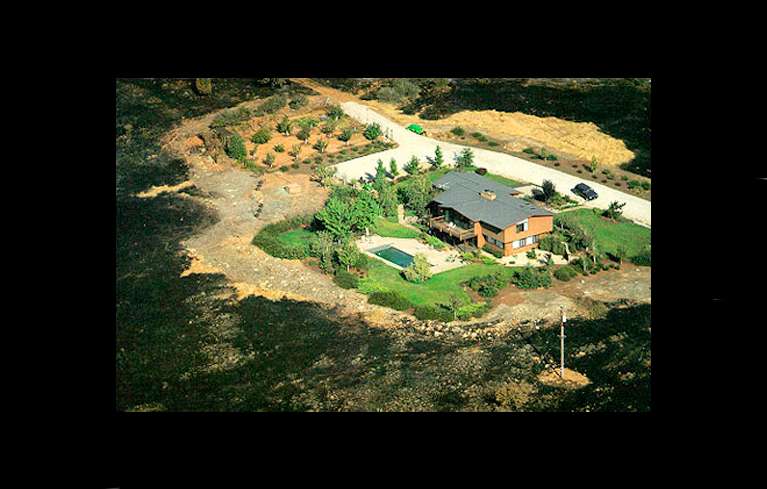
Defensible space can help save a house from fire.

Defensible space can help save a house from fire.

By Kathryn Reed

What would happen if an ember the size of a softball were to land on your property? On your roof? Is there anything that would catch fire?

That is the visual Leona Allen with Lake Valley Fire Protection District likes people to think about.

If that burning ball can ignite a larger fire, then better defensible space is needed.

“Our fire season is predicted to be heavy to extreme. That is something we want people to be prepared for. We want people to do defensible space,” Eric Guevin, Tahoe Douglas Fire Protection District fire marshal, told Lake Tahoe News.

While defensible space has become a common phrase in the last handful of years, laws about defensible space have been on the books for decades.

But it really came into play after the 2003 Southern California fires. After they were extinguished, a Blue Ribbon Commission was convened. Out of that came recommendations for suppression, response, building standards and defensible space.

“With expanding communities, we now have structures embedded in natural fuels. People who live there see it as nature, not fuels. Fire sees a structure as something to burn,” South Lake Tahoe Fire Chief Bruce Martin told Lake Tahoe News.

Many people moved to Tahoe to be in the mountains, which means being around trees. But too many trees too close together, with canopies not adequately spaced can be a bad thing.

Years of suppressing fire also means some forests are now more combustible. That is a reason thinning or fuels reduction projects are so common.

But individuals have a responsibility to be fire aware, too. From zero to 5 feet is supposed to be a noncombustible area around a structure. This means rock or succulent plants that hold lots of moisture. The 5- to 30-foot area is supposed to be lean, clean and green. Trees should be 10 feet apart; same with crowns. From 30 feet to 100 feet or the property line is where vegetation can start transitioning back to the wild.

A rake, loppers and gloves can improve the defensible space area of many houses, Guevin said. He added that juniper is “like a gas can” and it’s best to remove it.

“They say your defensible space is as good as your neighbors’, so you have to look at it from a community aspect,” Guevin said. “The way codes are written now there is more ability to enforce people to take action. They can be liable for fires that start on their property and spread to another. It’s called fire trespass.”

Adequate water supply, ease of access to and from a house, proper signs on streets, addresses clearly marked are all part of being fire ready. So is having an evacuation plan.

Gareth Harris, fire chief at Lake Valley, said, “Every home in the Angora area had been contacted three times. Of the homes that did defensible space, 75 percent survived the Angora Fire. Statistically, that is saying a lot considering the devastation of homes lost there.”

Six years ago this month, 254 houses on the South Shore – in Harris’ jurisdiction – were swallowed by fire. This, after someone who has never been caught left an illegal campfire without its being fully extinguished.

Fuel, weather and topography are the key factors in how a wildland fire will spread.

“Because a fire is a force of nature we can’t stop it. We can try to protect homes in front of it and work the edges. We have to wait for the weather to moderate to put (the fire) out,” Martin said.

He believes if a couple million dollars had been put into fuel breaks or treatments that the $150 million in property loss from Angora would not have been so high.

In 2007 the Tahoe Regional Planning Agency was promoting wood chips and pine needles as tools to cut down on erosion. Property owners could only cut down trees with a diameter of 6 inches or less. Policies have changed and TRPA even has a forester on staff now. Now trees 14 inches or less in diameter may be taken down without a permit; and firefighters can mark trees for defensible space reasons.

“Reducing the threat of catastrophic wildfire is a top priority for TRPA and we encourage defensible space and fire resistant landscaping practices. Our stance on pine needles is clear: on areas of bare soil, rake them in the spring and let them fall in the fall. Keep pine needles and flammable vegetation away from structures and follow fire guidelines to clear your roof of pine needles regularly,” Jeff Cowen with TRPA told Lake Tahoe News.

—-

Note:

• Living with Fire is a website that has more information about defensible space.

• This article is about an individual defensible space inspection.


Suspect arrested in bike theft

Brandon Lee Rose, 41, was arrested this week on charges of second degree burglary and possession of stolen property in connection with a high-end bike that was stolen from an El Dorado Hills shop.

Brandon Lee Rose

Brandon Lee Rose

Rose allegedly broke into the store May 20 and left with $7,000 worth of cycling equipment.

El Dorado County sheriff’s Detective Troy Morton was able to identify the suspect and obtain a search warrant for a locations in Sacramento and West Sacramento.

While serving the search warrant, Morton said he recovered the bicycle and other stolen property from a crime committed in another jurisdiction.

The suspect was subsequently arrested.

 — Lake Tahoe News staff report


Job market improving for new graduates

By Marilyn Geewax and Andrew Schneider, NPR

For the last five years, graduation day has been as much a time for apprehension as for celebration.

Even now, with the Great Recession over, many recent graduates are still struggling to turn their high school and college diplomas into tickets for a better life. The unemployment rate for Americans under age 25 remains more than double the overall rate of 7.5 percent.

But experts are predicting this year’s graduates — whether from high school, community college or a four-year college — should have better career launches than at any time since 2008. Companies expect to hire about 2.1 percent more college graduates from the Class of 2013, and will offer a higher overall starting salary of $44,928 — up 5.3 percent over last year, according to the spring survey by the National Association of Colleges and Universities.

Many college officials are cheering as the job offers come in for their graduates. “At both the graduate and the undergraduate level, we’re seeing higher salaries, we’re seeing earlier offers, and we’re seeing better acceptance rates than we’ve seen in quite some time,” said Jamie Belinne, assistant dean for career services at the University of Houston’s Bauer College of Business.

On Friday, the U.S. Department of Labor will release data about May hiring. The new numbers likely will confirm a trend that already is well entrenched: Job growth is improving in general, but the higher your skill level, the better your chances of landing one of those jobs.

In April, the unemployment rate for people with at least a college bachelor’s degree was 3.9 percent. For those with less than a high school diploma, the rate was 11.6 percent. Not only do college graduates have more job offers, they also command salaries that average nearly twice as much as high school graduates.

But even for the roughly 1.7 million Americans who will earn college degrees this year, the job market will remain very uneven, with hot spots and cold. NACE, the nonprofit organization that assesses graduates’ employment prospects, says the biggest pay gains this year are going to people entering health-sciences careers. They are being offered 9.4 percent more than last year’s recruits.

But graduates in the humanities and social sciences are still facing tough times. Their job offers pay just 1.9 percent more than last year, the survey showed.

For people who have high school diplomas or two-year-degrees, the prospects are improving too, but mostly for those in growing economic sectors, such as health care and energy.

“It helps to have a hard skill that is immediately useful for a company,” said John Challenger, who heads the global outplacement firm Challenger, Gray & Christmas.

That’s exactly what Adan Alanis discovered when he decided to go into automotive repair work. He graduated from high school three years ago when the job market was far weaker. Still, he managed to land a good job at a Ford dealership in Pasadena, Texas, because he was at the top of his class.

“The manager here and a few other managers from different dealerships came by and they interviewed all of us, and they only hired me and one other guy because we were always on top of our studies, and we always had the highest grades in class,” Alanis said.

But he could see the repair tasks were getting more complicated all the time as automakers continued increasing the technological sophistication of their vehicles. “Everything’s getting more electronic, and I’ve been into electronics, too,” he said. So he went back to school and has just earned his associate’s degree from nearby San Jacinto College.

The Bureau of Labor Statistics’ shows the best opportunities are turning up for people like Alanis — those willing to keep layering on skills involving electronics, software and computer systems.

And in health care, jobs abound for high-skilled professionals such as physical and occupational therapists, optometrists, dental hygienists and audiologists, the handbook says.

But not all skilled workers are flourishing. Many people who have challenging jobs — such as flight attendants, mail carriers and newspaper reporters — are in industries that need to reduce employee ranks.

J.C. Gage, an Iraq War veteran and new graduate of the University of Houston, is learning how tough the job market remains for those with degrees outside of technology or a hard science. With his degree in public relations, he has started an internship with a public-relations firm. He also is working for the Houston Chronicle’s sports section while continuing his search for a full-time job.

“I’m working 9 to 4, Monday through Thursday [at the PR firm], and then I’m working four nights a week at the Chronicle, from 6 to midnight,” he said. “It is exhausting.”