LTVA not ready to pay to bring SnowGlobe back

While New Year’s Eve is still more than six months away, in the event planning world that can feel like tomorrow. Even so, a decision has yet to be made as to whether SnowGlobe will return to the South Shore.

Potentially paying the promoter $75,000 was on the June 13 Lake Tahoe Visitors Authority’s board agenda.

“The board feels that we can’t make a decision regarding funding without the promoter having a venue secured,” LTVA Executive Director Carol Chaplin told Lake Tahoe News. “We understand that he has been speaking with the city in regards to maintaining  the long-term integrity of the field, but until an agreement is reached in that front, we are in a neutral position.”

South Lake Tahoe City Manager Nancy Kerry told LTN talks are still under way with the promoter.

The three-day music festival has been said to be a money maker for the region for the last two years. And while the city and Lake Tahoe Community College have charged for access to the community ball fields adjacent to the college and for other costs, the promoter now wants to be paid to come to town.

A drop dead date for when a decision needs to be made has not been disclosed.

— Lake Tahoe News staff report


Unpaid internships may be illegal

By Dylan Matthews, Washington Post

Unpaid internships* are increasingly a fact of life for college students. The National Association of Colleges and Employers found that 52 percent of the class of 2012 had an internship or co-op during their time in college. Almost half of those — 47 percent — were unpaid. A third of internships at for-profit companies were unpaid.

Depending on how you look at it, this is either massive exploitation of young people by powerful corporations which worsens inequality, or a valuable opportunity for on-the-job training at lower cost than a degree or certificate at a college or university.

But whatever your moral leanings, a judge on Tuesday confirmed what intern advocates have been alleging for years: a lot of these programs are illegal.

Judge William Pauley, who sits on the U.S. District Court for the Southern District of New York, ruled that Fox Searchlight’s use of interns in the production of the movies “Black Swan” and “500 Days of Summer” violated minimum wage and overtime laws, and that those interns can file a class action against the studio. He concluded:

They worked as paid employees work, providing an immediate advantage to their employer and performing low-level tasks not requiring specialized training. The benefits they may have received — such as knowledge of how a production or accounting office functions or references for future jobs — are the results of simply having worked as any other employee works, not of internships designed to be uniquely educational to the interns and of little utility to the employer. They received nothing approximating the education they would receive in an academic setting or vocational school.

The tests being hinted at there — of whether an internship provides valuable training and whether it benefits the firm or the intern more — reflect the reasoning of a 2010 fact sheet put out by the Department of Labor’s Wage and Hour Divison, which enforces these laws. That fact sheet sets up six criteria to determine if an internship is legal or not:

The internship, even though it includes actual operation of the facilities of the employer, is similar to training which would be given in an educational environment;

The internship experience is for the benefit of the intern;

The intern does not displace regular employees, but works under close supervision of existing staff;

The employer that provides the training derives no immediate advantage from the activities of the intern; and on occasion its operations may actually be impeded;

The intern is not necessarily entitled to a job at the conclusion of the internship; and

The employer and the intern understand that the intern is not entitled to wages for the time spent in the internship.

Pauley cites that fact sheet, reproduces all six points, and then proceeds to determine if the internships in this case satisfied all six requirements. Perhaps the most important result of the ruling is that it treats that fact sheet, effectively, as a binding interpretation of federal law around internships.

Some employment attorneys think that move is a mistake. “You’ve got to consider a lot of different factors including these six factors,” Camille Olson, a partner at Seyfarth and Shaw who frequently defends companies in wage and hour cases.

A better analysis, she argues, can be found in Xuedan Wang v. The Hearst Corporation, a case in which Wang, a former unpaid intern at Harper’s Bazaar, tried to put together a class action on behalf of the Hearst Corporation’s unpaid interns. The judge in that case, Harold Baer (also of the Southern District of New York), didn’t discount the six-factors in the fact sheet — “After all,” he writes, “they emanate from the agency that administers the laws under which Plaintiffs brought this lawsuit.” – but also argued that one must look at the “totality of circumstances.”

Baer ruled that Wang couldn’t file a class action, as she couldn’t show that all of Hearst’s interns faced similar enough conditions for them to file a suit together. But more importantly for these cases going forward, he denied summary judgment for the plaintiffs. That is, unlike Pauley, he declined to rule, without a trial, that Wang and her prospective co-plaintiffs were employees covered by minimum wage and overtime laws.

The trial has been adjourned indefinitely, though Juno Turner, one of Wang’s attorneys at the firm Outten & Golden, which also represents the interns in the Fox case, confirms that they’re planning on going forward with a jury trial. All of which reinforces Olson’s point that Pauley is just just one judge, in just one district, and it’s hard to predict what appeals court judges will rule on any of these cases.

As you can imagine, intern advocates disagree vehemently with Olson’s suggestion that the reasoning in the Pauley ruling was weak. ” I think the reasoning will stand up strongly and clearly,” Ross Perlin, author of “Intern Nation” and a critic of unpaid internships, says. That includes, he continues, the reasoning that for-profit companies’ interns are employees entitled to back pay, and that they constitute a class that can file a class action suit.

They also differ on which kinds of firms are breaking these laws. Perlin argues that even non-profit firms — which are allowed to have unpaid “volunteers” — are likely in violation of the law if they have actual unpaid interns. “Just because you’re working for somebody who’s been classified as a 501(c)3 doesn’t mean you don’t have to treat them like workers,” he says, though he concedes, “Interns would have the burden of proving they’re not volunteers. Somebody is going to have to step up and make the case.” A logical place to start, he says, would be D.C. “Congress has exempted its own interns from fair labor standards act,” he says. “That’s something waiting to be addressed.”

Olson thinks that’s far-fetched. “We’ve had volunteers at hospitals and not-for-profits that are performing responsibilities, and never had a claim to paid work,” she says. “It would be a first, but I don’t think there’s a strong argument to be made there.”

But the two agree that there are many for-profit companies currently in violation of the law, even if Fox Searchlight and Hearst aren’t specifically among them. “In the last three, four years for-profit companies are really reviewing their internship programs, and eliminating unpaid internships more and more, because they don’t want to run the risk that there’s not enough benefit for the worker,” she says. “Of the ones that do offer internships, many have revised them so they are paying minimum wage.”

That’s largely an effect of media scrutiny, she argues. “The media coverage has made a difference in companies having heightened awareness, that they want their programs to be compliant,” she says. “And that’s a really good thing.” That could be the most important way that cases like this change things. Neither Olson nor Perlin have noticed the Department of Labor stepping up enforcement lately, and lawsuits are a rather expensive and time-consuming way to protect your rights. Olson notes that some settlements in these cases have been as paltry as $1,100.

She advises interns who think their companies are running afoul of the law to talk to their human resources department, perhaps through an anonymous tip, or to contact their state or federal wage and hour department to get answers on what’s required, and whether the company is violating those rules. Potentially the matter could be resolved without the cost of a lawyer.

Of course, you’d expect a defendant’s lawyer to say that, but she has a point. The worst thing that happens if you file an internal complaint is that you lose the unpaid internship, and the zero dollars in future compensation that you could have gotten from it. And if the repetitional cost of being fired from the internship is too great to bear, then legal recourse is still available. Unpaid interns have nothing to lose but their chains.

* Full disclosure: I’ve had three unpaid summer internships in my life, two at nonprofits and one at a for-profit that hasn’t made a profit in years. The Washington Post pays its interns, who are great.


El Dorado deputies discover stolen goods

Eight days after El Dorado County sheriff’s deputies found stolen property in a residence they are telling the public about it.

It took deputies, South Lake Tahoe cops, CHP, DA investigators and agents from the drug task force to execute the search warrant on the South Shore residence on June 6.

Even though deputies want people to come forward who may have been the victim, they are not giving any clues to what was recovered.

It is not known what led to the warrant being issued, why it took all those agencies or if arrests are pending.

The street where the goods were found also not provided.

Deputies believe the property had been stolen from storage facilities and mailboxes and people may not be aware of the theft.

Detective Paul Kuhn, (530) 573.3022, is the one to contact for more info.

— Lake Tahoe News staff report


Air quality improving in California

By Julie Cart, Los Angeles Times

Despite a threefold increase in people and cars in the last 50 years, California’s strict vehicle emissions standards have managed to significantly clear the state’s air, according to new research.

The study also found that Southern California’s air chemistry has changed for the better. The amount of organic nitrates in the atmosphere — which cause smog’s eye-stinging irritation — has drastically fallen off, according to federal researchers.

Ozone and other pollutants have been monitored in the state since the 1960s. Since then the population in Southern California has tripled, as has the number of cars on the road. Nevertheless, tailpipe emissions have decreased.

The National Oceanic and Atmospheric Administration’s Cooperative Institute for Research in Environmental Sciences at the University of Colorado led the research, which analyzed decades of data and collected air samples from overflights in 2010.

The researchers credited the state’s stringent emissions standards with bringing about the pollution reductions, although they note that automobiles remain the dominant emissions source in Los Angeles.


Personalized learning could transform education

By Kayla Webley, Time

Sitting at a computer in her school library in the far western reaches of the Phoenix suburbs, Taylor Beattie logs on to her digital dashboard to find something she has never seen before. Taylor’s eighth-grade class has not yet studied units, but the program knows she is ready.

The first question comes immediately: “Franz is writing Christmas cards for friends. He wrote for 2 1/3 hours and wrote 70 cards. How long did it take him to write each card?” After some quick calculations, Taylor, 14, picks answer E, one of five options on the screen. Her choice zips through Amazon’s massive data servers in the cloud to an algorithm programmed by a team of engineers in New York City that takes into account the time it took Taylor to answer the question, the answer itself, her answers to hundreds of other questions and the answers of hundreds of thousands of other people to similar questions, to determine the next question on her screen. The entire process takes milliseconds.

That math program is a product from Knewton, a New York City-based education-technology start-up with deep pockets and bold claims about its potential to revolutionize how students learn. The more Taylor and her classmates at Festival Foothills Elementary use Knewton’s program, the better the company’s algorithm gets at predicting how they will best perform.

Knewton’s goal is to be able to tell not just what students do or do not do well but also what time of day they learn best, whether they’re likely to pass a quiz, their final grade in the course and even how they will score on the SAT. If all goes according to Knewton’s plan, the information it gathers will be used to form a learning profile, a sort of anonymous permanent record that travels with a student from school years through college and on to employment. Think of it like the statistics on the back of a baseball card (though with a string of numbers in place of the player’s name), there for all to see and analyze.

“There’s going to be one company in the world that does this,” says Jose Ferreira, Knewton’s high-motor founder and CEO. “People are going to insist on having their profile that knows how they learn travel with them across schools, across teachers, across grade levels, across countries. There will be one company, and I think it’s going to be us because we’re so far ahead now.”

Knewton is part of a wave of companies marketing “adaptive learning” technologies, which promise to use data to personalize education and eliminate the one-size-fits-all curriculum. The concept has been embraced by education reformers who see predictive data analysis as key to solving one of America’s most persistent problems. And it has attracted investments from heavyweights in Silicon Valley, who are betting that the reformers are right–and that the solutions will be lucrative.

But all of this promise comes at a cost to individual privacy. Like Facebook, Knewton has built its business on the reams of data it gathers from its users. It’s too soon to tell if Knewton will become essential for students learning, say, algebraic equations, but it is clear that the more students use its programs, the more money the company stands to make.

Knewton’s downtown Manhattan office has all the hallmarks of a well-funded start-up: beer is on tap, dinner is ordered in nightly, and a third of the space is given over to a lounge area with overstuffed leather chairs and a ping-pong table. (Knewton regularly hosts friendly matches against other tech companies.) Only 25 of the about 110 full-time employees are former schoolteachers.

“We’re trying to build a very big data-infrastructure platform with very cutting-edge stuff,” Ferreira says. “We need really top data scientists, statisticians and programmers.” Ferreira doesn’t have an office; he sits instead at the end of a row of desks housing the marketing team.

On a recent visit he was wearing cargo pants and a loose fleece pullover, blending in among his casually dressed charges (some of whom were wearing T-shirts reading KNERD, which the company has embraced as a term for employees and fellow travelers).

Ferreira, 44, might be king of the Knerds now, but long before he memorized the dictionary because he was bored in college, he was a kid who got bad grades in school. He says he always had a sense that his performance had more to do with the way subjects were taught than with his intelligence.

“I always blamed the system for my repeated failures,” he says. “Some kids just through sheer luck happen to be better fits for that system, and other kids like me and millions of others are not.”

In the early 1990s, Ferreira joined Kaplan Inc.’s standardized-test-prep division. After being promoted to product director for Kaplan’s GRE line, he led the development of a system to personalize content on the basis of student-performance data. While the technology of the time couldn’t support the product, one of his former bosses there says it was the “alpha version” of a system that later became a central Kaplan offering. Feeling restless, Ferreira left for business school at Harvard, followed by a stint at Goldman Sachs and a failed start-up, DizzyCity, which he describes as a proto Google Street View. After that flopped, Ferreira returned to Kaplan in 2002, this time tasked with revising the CPA-prep business, then left two years later to work for the presidential campaign of his uncle John Kerry.

Technology finally caught up to Ferreira’s adaptive-learning vision, and he launched Knewton in January 2008 to capitalize on it. His goal was for Knewton to be not a test-prep company or an appmaker but an adaptive-learning platform powering those products. But nobody was buying. “No one believed in adaptive learning or thought it would work. It sounded like space talk,” he says.

So Ferreira and what was then a three-person team built a math course to prove their concept. It caught the attention of administrators at Arizona State University, who incorporated Knewton’s product into a redesigned remedial-math curriculum for incoming freshmen in summer 2011. The effect was notable: one year after the overhaul, more students passed the course (75 percent, up from 64 percent the year before) and fewer dropped out (7 percent, down from 15 percent the previous year).

Suddenly Knewton was in demand, raising $33 million from investors in October 2011. Among those who bought in: the Founders Fund, a venture-capital firm whose partners include the founders of PayPal and Facebook’s first president, and Pearson, the world’s largest education company. The investment round valued the company at over $150 million.

In a separate deal, Pearson contracted Knewton to provide the adaptive technology for part of its higher-education digital textbooks. Since then, Knewton has become the platform for math and English products Triumph Learning designed to align with the new Common Core public-education standards, and it has dipped a toe into the English-as-a-second-language market through deals with international education companies. Last month, Knewton reached an agreement with Houghton Mifflin Harcourt to incorporate its technology into products used by some 10 million U.S. students. Not one for modesty, Ferreira expects Knewton will eventually be part of the HMH products used by nearly 60 million students around the world.

These deals have allowed Ferreira to turn Knewton into the company he intended it to be. Though the math course it built as a calling card is still used by 14,000 students and earns the company about $1.24 million per year, Knewton is no longer in the business of creating courses. Just as Mark Zuckerberg famously said he didn’t want to build a Facebook phone–he wanted Facebook to be on every phone–Ferreira is convinced Knewton can be the infrastructure for the emerging field of adaptive-education technology. “We’re not building applications that we can sell to schools. That’s what everybody else is doing,” he says. “The whole point of Knewton is that it has got to be a platform that anyone else can work with.”

Working with Knewton costs clients a one-time integration fee between $100,000 and $250,000, depending on the organization’s needs. That’s not spare change–and Knewton’s algorithm improves with every user it adds–but it isn’t enough to sustain a growing company and pay off those investors. For that, the Knerds are hard at work on a second platform. By the beginning of next year, Knewton plans to release a retail edition that will allow any small business or tutor to make a course, content or product adaptive.

“Everybody is going to produce adaptive applications one day — everybody,” Ferreira says. “Every school will. Every publishing company will. There will be thousands of them.” If Knewton can be the engine powering many of those, well, then you’re starting to talk real money.

Teachers have always led a very basic form of personalized learning: students needing a challenge are given extra-credit assignments, while those struggling are given more attention and supplemental work. But packed classrooms and the demands of rigid curricula make it impossible to sustain at any scale, leading to the common teacher lament of being forced to teach to the middle — pushing slower kids on to the next level before they’re ready while the faster learners become disengaged.

“Our pacing schedule says when a kid doesn’t get something, you keep moving forward and provide remediation as necessary when time allows,” says Ben Newman, a math teacher at Festival Foothills. “At the same time, you have to challenge the smart kids so they’re not sitting there bored. It’s always, ‘You already mastered that? Well, why don’t you help your neighbor?’ You can only ask someone to help their neighbor for so long.”

“The concept of differentiating instruction on the student level has been around for years. That’s sort of the holy grail of what teachers are supposed to be doing, but it’s incredibly hard when you have 30 kids in your class,” says Adam Newman of Education Growth Advisors, a consulting firm. Researchers have long touted the benefits of one-to-one tutoring. “It’s not hard to imagine why there would be more learning that takes place with a skilled tutor than if you have a kid in a classroom of 30 spending the same amount of time getting one-size-fits-all instruction,” says Chris Dede, a professor in learning technologies at Harvard’s Graduate School of Education.

It’s impossible to provide one-to-one teaching on a mass scale, but technology enables us to get closer than ever before. As schools increasingly invest in computers and other digital products, students have access to a wider range of study materials, and teachers and administrators have the ability to view precise analyses of how they respond to that material, adjusting as needed. Proponents claim that these tools will allow teachers to help struggling students before they fail a test rather than discovering problems too late. The promise of these predictive metrics has set off a gold rush in education technology.

The global education market is estimated at nearly $4.6 trillion in 2013, according to research by asset-management firm GSV Advisors. A minuscule portion of it is spent on technology, but experts expect the balance to shift as the industry becomes increasingly digitized. Education-tech start-ups aimed at the K-12 market attracted more than $425 million in venture capital last year, according to the NewSchools Venture Fund. “Investors are looking at education and saying, ‘Holy cow, there’s a huge number of dollars being deployed here. If we can wrest free some of it, there’s a huge opportunity to make money here,'” says Michael Horn, executive director for education at the Innosight Institute.

Knewton is far from the only company selling personalization. Textbook giant McGraw-Hill Education launched an adaptive product line in 2009 and has tailored it to more than 200 textbooks across 30 subjects. Amplify, the education company owned by media giant News Corp., plans to launch an adaptive curriculum in 2014, and IBM has developed systems to evaluate student performance and improve instruction that are used by public schools in Alabama and Tennessee. Kaplan, Ferreira’s old employer, says it generates more revenue from adaptive products than anyone else. Many start-ups are also in the fray, including the nonprofit Khan Academy, whose adaptive-exercise engine has over 6 million registered users doing some 3 million exercises per day and which is releasing a more sophisticated version this fall. “The space is changing very fast right now, and there are a lot of people making plays at it,” Horn says. “I think next we’ll start shaking it out and see who’s real and who’s not.”

In the past five years, the department of Education has made changes to student-privacy laws that make it much easier for companies like Knewton to gather data on kids. Student information can now be passed, without parental consent, to a third party that a school deems to have a “legitimate educational interest in the records,” as when a district hires a contractor to perform a service that cannot be carried out without access to student data. “If a school is using a service, the school is the steward of the data and is subject to the same privacy requirements as always,” says Richard Culatta, acting director of the Department of Education’s Office of Educational Technology. “We encourage schools to be transparent–to make sure parents are aware of how student information is being used.”

That latitude has led to an outcry from those concerned about the potential invasion of student privacy and the ability of private companies to profit from it. “Schools are availing themselves of these free or low-cost services and not seeing the real cost to student privacy,” says Khaliah Barnes, administrative law counsel at the Electronic Privacy Information Center, which is suing the Department of Education over its changes to student-privacy laws.

Knewton says it doesn’t have access to any information that would identify a student. It assigns each student a lengthy identification number that is used to track performance and build a learning profile, but it does not know the student’s real name or Social Security number. “The data we collect is only ever used to drive the best possible recommendation for the next thing you do,” Ferreira says. “That’s it.” He acknowledges that Knewton “co-owns” the data, but he’s adamant that the company will “never advertise against it. Never, never.”

But that doesn’t mean it won’t profit from it, of course. And if Knewton is capable of delivering on its promise — and while it is a relatively young company, it does not have any peer-reviewed academic studies to back it up — then it won’t be the only one reaping the benefit.

“If you’re using student data to improve your algorithm, there’s value creation that’s being attributed to you, but what’s falling back to the students who are contributing the data?” says Adam Newman of Education Growth Advisors. “If as a result, Knewton is able to help students learn more, learn faster, stay better engaged, is that a fair trade-off?”

For Ben Newman, Taylor Beattie’s math teacher in Arizona, the payoff is worth it.

“Their ability to collect large quantities of data and crunch it and tell us something about how we’re doing is pretty powerful,” he says. “I’m so used to other entities wanting information about my kids. Everyone is asking for data. As long as they are being responsible with that data, I don’t see it as being an issue.”



Nevada to allow medical marijuana dispensaries

By Matt Woolbright, AP

After 13 years of waiting, medical marijuana patients in Nevada will soon have a legal way to obtain the drug without growing it themselves.

Republican Gov. Brian Sandoval signed SB374 into law Wednesday. The measure establishes the framework to make pot available to medical marijuana card holders, imposing fees and requirements for growers, processors and dispensaries of pot. It also contains provisions to continue to allow home-growing until 2016.

Nevadans voted to legalize medical marijuana in 2000 and a year later were able to obtain medical marijuana cards. However, legislative efforts to create a legal way for users to obtain the drug — aside from growing a small number of plants at home — have all failed over the years.

Now, their wait is over.

“This new law will provide patients with the safe and reliable access to medical marijuana that they deserve,” Karen O’Keefe, director of state policies for the Marijuana Policy Project, said in a statement shortly after the bill’s signing. “Regulating medical marijuana sales will also generate revenue and take a bite out of the state’s underground marijuana market.”

Nevada becomes 14th state to legalize medical marijuana dispensaries, and it’s one of 19 states and the District of Columbia with medical marijuana laws, according to the National Conference on State Legislatures. Illinois lawmakers passed a bill legalizing medical marijuana this year that is awaiting the governor’s final decision.

Lawmakers crafted the legislation largely after the Arizona model. In fact, several members of the Senate Judiciary Committee traveled to Arizona during the session to get a better sense of what Nevada’s law should look like.

The product will be taxed at the growing, processing and selling stages. The revenue created will first fund the regulation of the dispensaries with any remaining revenue being funneled to education. Hefty application fees are also expected to help defray some of the costs.

That group was led by the committee chairman, Sen. Tick Segerblom, D-Las Vegas, who was also the bill’s primary sponsor. Also in attendance was Assemblywoman Michele Fiore, R-Las Vegas, who ended up being the deciding vote in the bill passing the Assembly.

Because of the tax components, supporters needed a two-thirds majority to approve the bill. With Sen. Mark Hutchison, R-Las Vegas, championing the effort in the Senate that was not a problem, but Assembly Republicans had no appetite for the bill — and without at least one voting for it, it would have failed.

But Fiore, a freshman legislator, sided with the Democrat majority to propel the dispensaries to Sandoval’s desk. She told the Associated Press at the time that she swung the vote because her allegiance to the state constitution — which mandates a distribution system for medicinal marijuana — was her top priority.

Republican Minority Leader Pat Hickey, R-Reno, said during the floor debate that the law would benefit the Silver State economically, but he feared society would decline because the availability of the drug would lead to misuses.

Other Republicans objected on federal grounds, because marijuana — whether used medicinally or recreationally — is illegal under federal law. State lawmakers had an obligation to uphold the U.S. Constitution before state laws, they argued in hearings and during the floor debate.

Federal authorities would have legal grounds to intervene, but that has not happened in other states with operating medical pot dispensaries.

Dispensaries in the Silver State would open fully aware of potential federal prosecution, Hutchison said.


Kings Beach receives $1 mil. in state money for roads

Placer County was awarded money this week from the California Transportation Commission for the Kings Beach project.

The commission doled out $1 billion in funding for 153 transportation projects that are designed to strengthen the state’s economy by sustaining and creating jobs while providing congestion relief for motorists statewide.

The allocations include nearly $541 million from Proposition 1B, a 2006 voter-approved transportation bond. In total, more than $15.5 billion in Proposition 1B funds have been put to work statewide.

The $1 million Placer County received will be used to construct one mile of pedestrian/bicycle and water quality improvements along Highway 28 from Highway 267 to Chipmunk Avenue.

— Lake Tahoe News staff report


Crews contain West Shore blaze to 1 acre

The General Creek area of Sugar Pine Point is where a fire burned Thursday. Photo/LTN file

The General Creek area of Sugar Pine Point is where a fire burned Thursday. Photo/LTN file

A 1-acre fire in the General Creek area of Sugar Pine Point State Park on Thursday sent off alarms throughout the basin.

While CalFire was the lead agency, with the primary back up by the U.S. Forest Service, it was a reminder of how quickly agencies want to douse any flames in the Lake Tahoe Basin. Several trucks responded to the West Shore blaze to ensure it did not spread farther.

The day before crews battled a 15-acre blaze just outside the basin near the top of Kingsbury Grade. Wind was a factor in both fires.

Forest Service officials told Lake Tahoe News that lightning is the probable cause of the June 13 fire. No official cause of the King Fire has been released.

— Lake Tahoe News staff report


Rise in number of people in U.S. graduating from college

By Catherine Rampell, New York Times

WASHINGTON — The number of Americans graduating from college has surged in recent years, sending the share with a college degree to a new high, federal data shows.

The surge follows more than two decades of slow growth in college completion, which caused the United States to fall behind other countries and led politicians from both parties, including President Obama, to raise alarms.

Last year, 33.5 percent of Americans ages 25 to 29 had at least a bachelor’s degree, compared with 24.7 percent in 1995, according to the National Center for Education Statistics. In 1975, the share was 21.9 percent. The number of two-year college degrees, master’s degrees and doctorates has also risen recently.

The increases appear to be driven by a sharp rise in college enrollment and by an improvement among colleges in graduating students. The trends could bring good news in future years, economists say, as more Americans become qualified for higher-paying jobs as the economy recovers.

College attendance has increased in the past decade partly because of the new types of jobs that have been created in the digital age, which have increased the wage gap between degree holders and everyone else. The recent recession, which pushed more workers of all ages to take shelter on college campuses while the job market was poor, has also played a role.

“Basically, I was just barely getting by, and I didn’t like my job, and I wanted to do something that wasn’t living dollar to dollar,” said Sarah O’Doherty, 24, a former nail salon receptionist who will graduate next month from the County College of Morris in New Jersey with a degree in respiratory therapy. “After I had my son, I wanted to do something I felt passionate about, to have a career.”

The attainment of bachelor’s degrees has risen much faster for young women in the past decade than for young men. It has also risen among young whites, blacks and Hispanics, though relatively little among Asians, who already had the highest rate of college completion. The share of people with a college degree also varies tremendously by state, with 48.1 percent of people ages 25 to 34 in Massachusetts holding a bachelor’s degree, but just 20.4 percent in Nevada, according to the National Center for Higher Education Management Systems, a research and development center founded to improve management at colleges.

Despite the recent improvement, higher education experts emphasized that college completion rates were still distressingly low, with only about half of first-time college freshmen who enrolled in 2006 having graduated by 2012, according to the National Student Clearinghouse.

“There are worrisome signs that the demand for high-skilled talent is increasing more rapidly than we’re actually educating people,” said Jamie P. Merisotis, the chief executive of the Lumina Foundation, an Indianapolis group that focuses on higher education, which is releasing a report on Thursday analyzing the federal data. “We can’t expect our citizens to meet the demands of the 21st-century economy and society without a 21st-century education.”

The recent jump in college graduation mirrors similar increases in educational attainment during previous severe downturns, economists said.

“It was sort of one of these ironic good things about the Great Depression, that it got all these kids to graduate from high school, which turned out to be really good for workers later on,” said Claudia Goldin, an economics professor at Harvard.

The G.I. Bill then created a second surge in educational investment after World War II, which also helped fuel the postwar economic boom. Of course, in those cases, Professor Goldin said, education was free or very cheap; college today is not.

Cost may be one reason that college completion has not risen nearly as much for low-income students, many of whom take on large amounts of debt and often do not graduate. The share of 24-year-olds from low-income families who hold college degrees has remained relatively flat over the last several decades, according to Tom Mortenson, a higher education policy analyst with Postsecondary Education Opportunity, a newsletter.

Low-income students are less likely to graduate from high school than more affluent students, less likely to enroll in college after high school and less likely to graduate from college after enrolling. Only about 1 out of 10 Americans whose parents were in the lowest income quartile held four-year college degrees by age 24 in 2011; the comparable share for people from the highest quartile was about 7 in 10, according to Mortenson.

Some of the recent increase in college completion has come among students who enroll in college, or return to it, at older ages, and experts say any future increases will probably need to come among this group as well, given its growth potential.

For-profit colleges — despite being more expensive and having lower completion rates than other colleges — are taking in many of these older and lower-income students. Professor Goldin estimates that for-profit colleges account for about one-fifth of the increase in bachelor’s degrees over the last decade.

“Community colleges just don’t have the money to expand,” she said. “At the for-profits, every person who comes there they’re making money on, so boy, are they expanding.”

The increase in college degrees is likely to fuel a debate about the wisdom of having so many people flock to college, given high debt levels and stories of unemployed graduates who are stuck on their parents’ couches.

Many economists point out that college graduates have fared much better than their less-educated peers and argue that rising educational levels will help the economy in the long run. Since the recession began in December 2007, the number of Americans with bachelor’s degrees who have jobs has risen by 9 percent, while employment has fallen for everyone else.

The unemployment rate for graduates of four-year colleges between the ages of 25 and 34 was 3.3 percent in March, according to the Bureau of Labor Statistics. For high school graduates in the same age group who had not attended college, it was 11.8 percent.

Today’s premium for college degrees is caused partly by increasing selectiveness among employers about whom they hire and screening based on education even for positions that do not require higher skills. But jobs themselves have changed, too.

“Think about jobs 15 years ago that didn’t need any college education,” said Sandy Baum, a senior fellow at the George Washington University Graduate School of Education. Many of them now do, she added.

“Maybe you don’t need a bachelor’s to change bedpans,” Baum said, “but today if you’re an auto mechanic, you really have to understand computers and other technical things.”


Casinos frowning on Google Glass

By Dara Kerr, CNET

It’s looking like gamblers aren’t going to be able to use Google Glass to enhance their poker face.

Even though the high-tech eyewear has not yet been released to the general public, casinos across the U.S. are banning Google Glass, according to the Associated Press.

Taking photos or videos is strictly prohibited in most all casinos, so it makes sense that a gadget touted as being able to record a video with a slight head movement or snap a photo with the wink of an eye wouldn’t be allowed.

According to the Associated Press, casinos in New Jersey, Nevada, Pennsylvania, Ohio, Connecticut, and other states have banned Google Glass because they say it could help players cheat at card games.

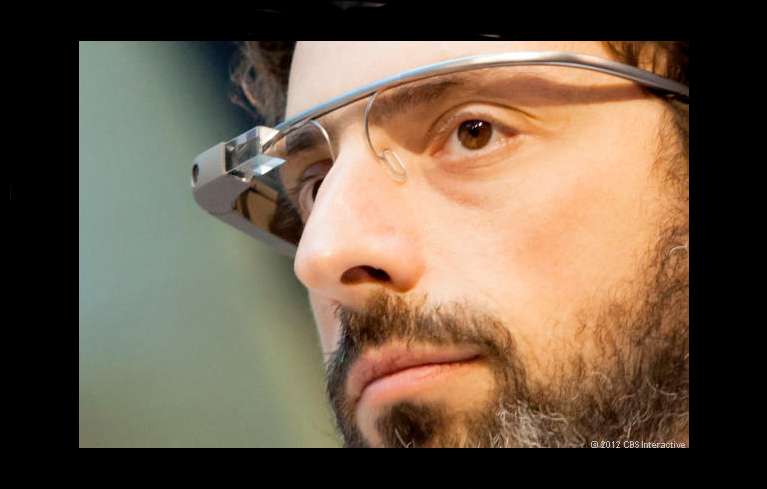
Google co-founder Sergey Brin wearing Google Glass. Photo/James Martin/CNET

Google co-founder Sergey Brin wearing Google Glass. Photo/James Martin/CNET

“If these eyeglasses were worn during a poker game, they could be used to broadcast a patron’s hand to a confederate or otherwise be used in a collusive manner,” the New Jersey Division of Gaming Enforcement director David Rebuck wrote in a memo to the state’s casinos, according to the Associated Press.

“Even if the glasses had not been used for cheating… their presence at a gaming table would lead to the perception that something untoward could be occurring, thereby undermining public confidence in the integrity of gaming,” he continued.

Casinos aren’t the only places banning Google’s augmented reality eyeglasses. West Virginia lawmakers are working on a bill that would prohibit drivers from wearing Google Glass while on the road and even a bar in Seattle has announced that it’s a Glass-free zone.