Doughnut maker damages Tahoe golf course

Someone doing doughnuts at the Glenbrook Golf Course tore up the greens. Photo/Provided

Someone doing doughnuts at the Glenbrook Golf Course tore up the greens. Photo/Provided

Someone driving on the Glenbrook Golf Course caused about $15,000 in damage.

The driver went on the greens and fairways of the course in the early morning hours of June 16, and spun around in a vehicle.

Anyone with information is urged to call Douglas County sheriff’s Investigator Ed Garren at (775) 586.7255 or Douglas County Secret Witness at (775) 782.7463.

— Lake Tahoe News staff report


Gun sales surge in California

By Phillip Reese, Sacramento Bee

Gun sales boomed across California to record levels last year as horrific mass shootings reignited the gun control debate, new state figures show.

A growing number of Sacramento-area gun dealers – about 200 and counting – sold a total of 74,000 firearms in 2012, roughly 20,000 more than in the previous year.

That’s enough guns to provide a new firearm to every resident in the city of Folsom. And sales are still going strong.

Click here for the rest of the story


Nev. parks administrator set to retire

By Cy Ryan, Las Vegas Sun

CARSON CITY — David Morrow, administrator of the state Division of Parks for the past 10 years, is retiring and he jokes it’s because of “old age.”

Morrow turns 65 in September and he said Monday he wants time to walk, hike and fish.

He worked 30 years in Utah before being chosen to head the Nevada system of 24 parks.

The park system took some big hits during the economic downturn with the state budget being cut by 60 percent. But he said the division was able to keep parks open and operating.

The two biggest parks in the system are the Valley of Fire in Southern Nevada and Lake Tahoe Park, both getting close to 1 million visitors a year.

The system, in cooperation with Douglas County, operated the Dangberg Home Ranch Historic Park, but the state gave it up during the recession to the county.

His last day will be in July, but he’ll be on annual leave most of August.

The replacement will be named by Leo Drozdoff, director of the state Department of Conservation and Natural Resources. The incoming administrator will earn $107,165.


Partial ruling favors TRPA in Regional Plan lawsuit

By Kathryn Reed

The Tahoe Regional Planning Agency on Monday won a partial decision in federal court when the judge dismissed some of the claims against the bi-state regulatory agency.

“The litigation is still pending, but this answers a lot of questions TRPA raised at the start,” TRPA spokesman Jeff Cowen told Lake Tahoe News.

The Sierra Club and Friends of the West Shore filed a lawsuit in February in U.S. District Court in Sacramento to stop the TRPA’s Regional Plan that was approved in December from taking effect in its entirety.

Neither of those groups was immediately available for comment June 17.

A federal judge is handing out the ruling on the TRPA Regional Plan update lawsuit piece-by-piece. Photo/LTN

A federal judge is handing out the ruling on the TRPA Regional Plan update lawsuit piece-by-piece. Photo/LTN

Judge John A. Mendez said the Regional Plan update does not violate California law by allowing local jurisdictions to have more authority. This was one of the items in the lawsuit.

Plaintiffs, not taxpayers, are to bear the expense of litigation. Mendez upheld that stipulation, too, which has existed since 2010 when the Rules of Procedures was amended.

“The only new rules not in effect are the land coverage credits and exemptions which are on hold waiting for parallel approval of the Lake Tahoe Water Quality Management (208) Plan by the U.S. EPA, which is expected to be considered by the end of this month,” Cowen said. “TRPA is expecting to be able to process applications with the new coverage rules this summer and we are working closely with local jurisdictions to develop their area plans.”

Area plans have replaced community plans in the TRPA paperwork world. Douglas County is expected to approve the first area plan in the basin at its June 20 meeting in Stateline. South Lake Tahoe is having a special meeting in July to discuss its plan for what is being called the tourist core.

It is not known how future rulings by the judge could impact an area plan that the TRPA Governing Board approves.

Further litigation is always possible when it comes to specific projects in an area plan.


Truckee youth hit by car while on bike

An 8-year-old cyclist was flown to Renown Medical Center in Reno from Truckee on Sunday after being hit by a vehicle.

Authorities say the youth sustained non-life threatening injuries.

The accident happened in the Glenshire subdivision of Truckee.

The exact cause of the collision has yet to be determined, but Truckee police officers said speed and alcohol were not factors.

— Lake Tahoe News staff report


Mixed bag of results in banning plastic bags

By Paul Gabrielsen

SANTA CRUZ — An employee gathering carts from the sunny parking lot at a Santa Cruz Safeway said shoppers are warming up to Santa Cruz’s ban on single-use plastic bags. But some still miss the bags’ convenience.

“I used to be able to carry so many at a time,” a senior woman remarked.

“Wrong thing to do,” said a middle-aged man of the ban.

“But they’re killing the innocent turtles,” his wife said, adding that in Europe, reusable bags are just a way of life.

The couple’s disagreement is typical of the strong feelings evoked by plastic bag bans, which seem to delight environmentalists and aggravate retailers and consumers who value the bags’ convenience.

While there is some evidence for reductions on litter on city streets and beaches, ambiguities in the data seem certain to fuel further heated debate.

California cities enacting bans commonly cite two main justifications: reducing unsightly street litter and protecting marine life.

So, have the bans had the desired result? San Francisco led California’s war on plastic, banning bags at large grocery stores and chain drugstores in 2007. Litter surveys in the city, covering the first two years after the ban went into effect, paint a foggy picture. These city-commissioned surveys occurred in 2007, 2008 and 2009, covering the first two years after the initial ban went into effect. The studies, said environment department spokesman Guillermo Rodriguez, were commissioned “to see what San Franciscans are throwing away.”

Surveyors assessed more than 100 randomly selected sites in the city each year, counting every piece of litter in an area half the length of a city block. In 2007, before the ban was introduced, plastic bags amounted to 0.5 percent of large litter. By 2009, the percentage climbed to around 1.5 percent.

During the same three-year period, the average amount of litter stayed about the same.

San Francisco’s ban effected no measurable change in plastic bag litter, at least in the first two years.

The city hasn’t collected any litter data since the 2009 survey, Rodriguez said.

But the ban expanded to all retailers in July 2012 and will continue to expand to all restaurants this year. Once the restaurant ban is a year old, San Francisco plans to commission another litter survey to see whether the new scope of the ban makes a measurable impact.

San Jose has already seen that impact. The city’s 2012 bag ban immediately covered all retailers. Last December, San Jose presented results of litter surveys in city creeks, streets and storm drains. Surveys after the bag ban in 2012 found 89 percent fewer bags in storm drains, 60 percent fewer in creeks, and 59 percent fewer in San Jose streets, compared to surveys before the bag ban.

Plastic bags only comprised 8 percent of total creek litter in 2011 and 4 percent in 2012. In contrast, a 2012 survey of Bay Area storm drains found that “other plastics,” not including plastic bags, constituted around 50 percent of storm drain trash. Paper, Styrofoam and drink containers together made up another 30 percent. Plastic bags are only one part of the urban litter problem.

But the bags also show up in marine litter, comprising around 15 percent of trash in the deep reaches of Monterey Bay. The Monterey Bay Aquarium Research Institute reported finding plastic bags in water nearly 2½ miles deep, according to a paper published online last month in the journal Deep Sea Research I.

Closer to the surface, concern for the bags’ effect on marine life stems from the fact that ocean-borne plastic bags look similar to jellyfish, which sea turtles love to eat.

Are bans preventing bags from reaching the ocean? That’s hard to measure, but surveys of litter on Monterey Bay beaches provide the best available picture.

Santa Cruz-based Save Our Shores promotes weekly cleanups around Santa Cruz and Monterey counties and collects trash data from many of these events. On average, volunteers pick up only six bags at each event, down from a high of 65 in 2008.

The number of bags collected per cleanup has dropped in the past two years because of four bans which took effect in 2012, said Save our Shores executive director Laura Kasa. The four bans covered unincorporated Santa Cruz County and the cities of Watsonville, Monterey and San Jose. The latter ban matters because of the volume of tourist traffic coming “over the hill” to Santa Cruz beaches. Kasa also credits the shift in public perception toward plastic bags in the region.

“In Santa Cruz it’s become the trend to be green and to bring your own reusable bags and not use plastic bags,” Kasa said. “I think we can attribute it to that as well.”

Save Our Shores Program Manager Brad Hunt pointed out that Monterey County has not yet implemented a bag ban, which affects Save Our Shores’ average cleanup numbers.

“It could go down to one bag per cleanup after Monterey County implements theirs,” Hunt said, “but we won’t know that until a year or two down the road.”

Volunteers — not professional trash surveyors — collect Save our Shores’ cleanup data, and do so at targeted beaches, not in randomly selected site surveys. But the focused, local and frequent data captures the best available picture of Monterey Bay’s beaches.

Opponents of plastic bag bans point out that bags comprise a small fraction of litter. “You’re talking about such a small amount to begin with that you wouldn’t notice any change,” said Stephen Joseph of the Save the Plastic Bag Coalition.

Joseph said political leaders have exaggerated the plastic bag problem, using figures he claims are unsubstantiated. He disputes claims by Oakland-based Save the Bay that a million plastic bags enter the Bay each year. In 16 years of living in the city, Joseph said, he never saw one bag in the Bay. “It’s a hoax,” he said.

“There’s obviously plastic bag litter,” Joseph said. “Anyone who’s never seen a plastic bag flying around is blind. But that does not justify all the exaggeration.”

What form of litter will cities target next? Nearly two dozen Bay Area communities have banned Styrofoam takeout food packaging, in addition to plastic bags. And San Francisco’s Rodriguez said the city is looking at ways to reduce the use of bottled water.

Until definitive, rigorous results of bag ban effects emerge, the debate will continue, from the Senate floor in Sacramento to the Safeway parking lot in Santa Cruz.


Reid says no one in D.C. willing to compromise

By Karoun Demirjian, Las Vegas Sun

Legislation, as Sen. Harry Reid often says, is the art of compromise. But lately, Reid has not been in a compromising mood.

“Who would I negotiate with?” Reid said last week when asked about his recently expressed reticence to parley with Republicans over how to keep student loan rates from rising on July 1, an issue on which Republicans and Reid’s Democrats differ. “I don’t know of anyone. I’m serious about that. I don’t know of anyone.”

In light of Republicans and Democrats trying their best to work with fresh bipartisan vigor on divisive issues from immigration reform to the federal budget, Reid’s observation might sound like defeatism.

But the conclusion he has been building toward for years also is the foundation of a strategy Reid regularly deploys to achieve his aims.
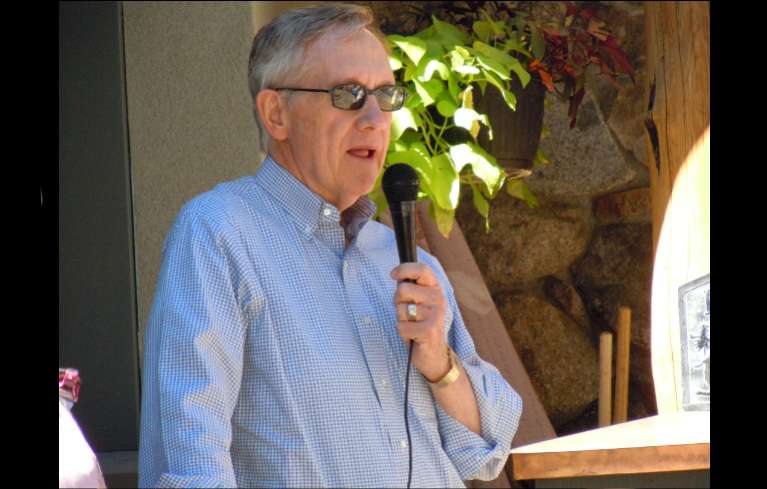
Sen. Harry Reid says compromise is elusive in Washington. Photo/LTN file

Sen. Harry Reid says compromise is elusive in Washington. Photo/LTN file

Ask Democrats why Reid is sticking so fiercely to his proposal to extend student loan rates instead of linking them to interest rates, as Republicans would prefer, and they will recall December 2011, when Reid and Republicans couldn’t agree on how to offset the cost of a payroll-tax-cut extension.

Reid didn’t like the Republican proposal to pay for it with a salary freeze for federal employees. He dug in his heels, insisting he would go no further than a temporary extension. After a punishing few weeks as the target of campaign-style advocacy, Republicans acquiesced — 36 hours before Christmas.

Since then, the experience of the debt ceiling, budget, sequestration and “fiscal cliff” suggest that as the hourglass runs low, the House can be driven to follow, albeit often at the last minute, the Senate’s lead.

“The play right now is to put (House Speaker John) Boehner in a box … to make it so uncomfortable for Boehner that this is his only course of action,” said David Damore, a professor of political science at UNLV. “He either has to let popular legislation die going into 2014 or, essentially, allow Democrats to be part of the winning coalition. Or does he want to run in the midterm with his party killing immigration and killing student loans?”

Congress will contend this summer with issues that are both pressing and practically designed to play on the campaign trail. The first half of the summer promises to be dominated by immigration and student loan rates, and the second half by immigration and the budget.

On immigration reform and student loans, Democrats have the more naturally crafted sales pitch.

“On immigration and student loans, Reid is in a position of strength, on the substance, on the politics and on his team sticking together,” said Eric Herzik, a political science professor at UNR.

“Republicans have to figure out a way to keep their most conservative Tea Party base happy while at the same time at least start to talk to immigrants, especially Latinos. … And on student loans, Republicans can’t make up a good story line. It’s not only a lot of young people trying to pay their student loans, it’s their parents, too.”

Republicans, however, are in no mood to roll over. Boehner’s House passed a student loans bill last week despite the threat of veto by President Obama, and the speaker has been adamant that while he supports the idea of comprehensive immigration reform, he has no intention of having the House rubber-stamp the Senate’s proposal.

But if Reid is listening to Boehner’s words, he’s filtering them liberally.

“He’s already said a lot of things,” Reid said, calmly dismissing the force of Boehner’s stated plans for immigration and saying with steely confidence: “I would prefer them to pass our bill.”

Reid, for months, has been maintaining a nearly split stance when it comes to his estimation of Republicans in the House and Senate.

On the one hand, he oversees a Senate in which he routinely expounds on the merits of bipartisan cooperation, as he has lately with his hands-off approach to the Senate’s immigration bill, designed by a bipartisan group of eight lawmakers and vetted through the regular order in the Senate Judiciary Committee.

On the other hand, he is still Democrats’ No. 1 attack dog, charged with pillorying his Republican counterparts.

Lately, Reid has abandoned the 2012 election description of Republicans as “extreme” in favor of calling them “anarchists.”

“You have to understand, we’re in a period where the anarchists have taken over the House of Representatives,” he said in a recent interview, supporting his claim with: “I studied the anarchists, before World War I, after World War I. … Some say they’re the ones who started World War I. Now the new anarchists aren’t violent. But they still have the same basic beliefs that the anarchists had — no government.”

Reid’s firebrand tactics are normally part of a larger, coordinated strategy to advance the Democratic position.

“If Reid pushes too hard and becomes the bad cop, he’s usually able to find a good cop to carry his message for him,” Herzik said.

Usually, the good-cop role is played by the White House, whether it’s Obama intervening on grand bargain talks with Boehner or Vice President Joe Biden spending New Year’s Eve at the Capitol to hash out the final details of a fiscal cliff deal with Senate Republican Leader Mitch McConnell.

But with the White House largely distracted by scandals at the IRS and National Security Agency, Reid has lately been on his own, and as such may be seeing other incentives to make an uncompromising push for the Democratic platform.

“You look at 2014 and those Senate seats, and it’s going to be hard for Reid to hold the Senate,” Damore said. “So he’s got to do all this now; otherwise, he’s just going to be the minority leader.”

Even Reid has obliquely referred to the potential of losing the Senate in reference to his agenda, telling an audience at a ceremony on Capitol Hill last week to honor the victims of last December’s school shooting in Newtown, Conn., that a Republican-controlled Senate is a sure sign that “we’ll never, ever get anything done” on gun control.

As long as he has a Democratic majority, Reid can put relative faith in the reliability of his caucus. In every major deal of the past two years, Senate Democrats have stuck together more than any other quadrant of Congress.

“This divisiveness within the Republican caucus is new. Traditionally Democrats are the more divided caucus, so they were the ones that could be split,” Damore said. “But now, there’s hay to be made for that. … The issues line up well for him, so why not take the opportunity?”

In lieu of a negotiating partner, Reid is publicly relying on the strength of the Senate Democrats, and the substance of his position, to try to knock out the top items on his agenda.

“I feel confident we’ll get something done, in spite of the Tea Party (on immigration) … because it’s an issue that 80 percent of the American people support,” Reid said. “Now maybe (Republicans) will do the same thing with this that they did with guns — 90 percent of the American people supported gun legislation. But I think that they’d better be very careful.”

In a divided Congress, to truly operate without a negotiating partner is a tall task. But, experts remind, even in an adverse environment, Reid is still a dealmaker. So broadcasting that he can’t make a deal may be just what lets Reid get a deal done.

“At the point Reid is finally just saying, ‘I’ve got no one to work with, so I don’t even have to concern myself with them, I’m just going to pummel whomever’s on the other side’ … then you’re really not attempting to negotiate. But I don’t think that’s happening,” Herzik said.

“What Harry Reid says at the start of an issue and where he ends up on the issue can be very different. Because he’s ultimately about guiding an issue to conclusion.”


States influence direction of gay marriage

By Alan Greenblatt, NPR

The Supreme Court may rule on gay marriage this week. Advocates both for and against are glad the issue didn’t reach the court any sooner.

They didn’t want a repeat of the abortion issue. With its landmark decision in Roe v. Wade, the high court stepped in and guaranteed a right to abortion but also triggered a backlash that has lasted for 40 years.

With same-sex marriage, by contrast, legislators and voters in nearly every state had the chance to make their feelings known before the Supreme Court weighs in.

“People forget that durable rights don’t come from courts, they come from consensus and strong support from society,” says Jonathan Rauch, author of Denial, a recent memoir about growing up gay. “We are winning the right to marriage in a bigger, deeper way by winning it in the court of public opinion.”

After losing political battles in a majority of states, gay marriage supporters have won a number of legislative victories and ballot measures in recent years. Sensing momentum is in their favor, it may not be surprising that they’re glad they’ve had time to make their case to the public.

A Pew Research Center this month found that 72 percent of Americans believe universal gay marriage rights are “inevitable,” including 59 percent of those opposed to the idea.

But supporters of traditional marriage definitions also say that they’re pleased the court has waited to rule on this issue. The number of states blocking gay marriage still outnumber those allowing same-sex marriage by 3 to 1.

“If states originate marriage laws, then state legislatures should legislate them,” says Sam Schulman, a journalist who has written a number of articles critical of gay marriage. “To let the courts decide feels just as wrong as letting opinion polls decide.”

In 2004, Rauch, a guest scholar at the Brookings Institution, wrote a book advocating gay marriage. That same year, Massachusetts saw its first legal same-sex marriages following the state Supreme Court’s in Goodridge v. Dept. of Public Health.

The issue became central to the presidential campaign that year. On Election Day in 2004, voters in 11 states approved measures defining marriage as the union of one man and one woman.

If it had been the U.S. Supreme Court that issued a ruling back then, Rauch says, resistance would have been even more fierce.

States where opposition to gay marriage was strongest would have been angry not only about having had this issued decided for them in a way they didn’t approve, but about federal intrusion as well.

“Gay marriage would be a legal reality, but it would have been in the crosshairs of massive resistance for two generations,” Rauch says.

Thanks to federalism, each state has been able to decide for itself. Last month, Minnesota granted gay couples marriage rights, joining 11 other states and the District of Columbia.

allow civil unions. All the rest block gay marriage, although there’s still some about the law in New Mexico.

“If Goodridge had gone to the U.S. Supreme Court, we would not have been ready,” says Fred Sainz, vice president for communication and marketing for the gay rights group Human Rights Campaign, referring to the Massachusetts case.

But opponents of gay marriage are also glad this issue has played out in states.

“Who has the constitutional authority in our regime to make marriage policy?” asks Ryan T. Anderson, a fellow at the Heritage Foundation who has written extensively in favor of traditional marriage. “It’s not the unelected officials who sit on the federal bench.”

Having this issue continue to play out politically gives opponents a fighting chance, he says.

“Obviously, it’s very important that the majority of Americans do still support the description of marriage as between a man and a woman,” says Caitlin Seery, director of programs at the Love and Fidelity Network, referring not to poll numbers, but to the laws enacted in most states.

Sainz is hoping the Supreme Court will find that there’s a constitutional right to same-sex marriage. “There is absolutely no doubt that the best possible outcome is a finding by the court that there is a fundamental right to marry nationwide,” he says.

Most observers don’t expect that outcome. More likely, they say, justices will offer a split decision, striking down the Defense of Marriage Act, which blocks federal recognition of same-sex marriages, but not creating a universal right to such marriages.

Rauch says that may be for the best. He argues it would still be better to let states continue to handle the issue.

He can understand the impatience of those who want marriage rights to be sanctified nationwide. He works in a jurisdiction in which his own marriage is legal — Washington, D.C. — but lives in Virginia, where it is not.

Rauch says Loving v. Virginia, not Roe v. Wade, may be the more apt comparison.

In its 1967 ruling in Loving, the Supreme Court struck down bans on interracial marriage. But that decision came 19 years after a similar ruling by the California Supreme Court, during which time a number of states had decided to remove such bans themselves.

“There may well come a time, maybe not all that long from now, when the Supreme Court will be recognizing rather than imposing socially recognized marriage equality,” Rauch says. “It’s a much bigger deal doing that at the front end, before there’s a national consensus, and at the back end when you’re basically cleaning up.”


Record fine in El Dorado County mine case

By Don Thompson, AP

SACRAMENTO — State regulators imposed a record $11 million fine Thursday on the operators of a renegade gold mine in the Sierra foothills east of Sacramento.

Owners of the Big Cut Mine south of Placerville previously ignored more than $1 million in fines from the state Mining and Geology Board, and board executive officer Stephen Testa said he doubts the state can collect on this one.

But the board also plans to seek a court injunction to halt mining while it sues over the property owners’ repeated failure to correct violations of the states’ Surface Mining and Reclamation Act.

In this Wednesday, Jan. 25, 2012, file photo, mining equipment sits at the Big Cut Mine near in Placerville, Calif. The state Mining and Geology Board is considering levying a $2.5 million fine against the operators of a renegade gold mine in the Sierra foothills east of Sacramento. (AP Photo/ Rich Pedroncelli, File) Read more here: http://www.sacbee.com/2013/06/13/5495635/record-11m-fine-for-illegal-california.html#storylink=cpy

Mining equipment sits at the Big Cut Mine near in Placerville in January 2012. Photo/Rich Pedroncelli/AP

Regulators say the miners have continued to scrape valuable ore from a ridge about 45 miles east of the state capital even though two of the operators also face criminal charges in El Dorado County. Joseph Hardesty and Rick Churches have another court appearance set for Friday. State agencies and county prosecutors say the ongoing mining operations are illegal, have polluted a nearby creek and threaten to collapse 150-year-old mining tunnels.

Testa had recommended the board impose a $2.5 million penalty, more than enough to cover his agency’s expenses and the estimated cost of cleaning up the site.

But the board voted 6-0 to impose the entire $11 million penalty allowed by law, based on two years of multiple violations at a maximum penalty of $5,000 per violation per day. It’s the largest penalty every imposed by the board, Testa said.

“It sends a message to something that you don’t see very often, and that is a party that just ignores everybody and just does what it wants to do,” Testa said.

The miners sent no representatives to the board meeting, did not contest the fine, and their attorney, William Brewer of San Diego, did not return a telephone message. Hardesty has previously contended that he has a historic right to operate the mine over the objections of state and local authorities.

“They have local legal troubles, they have state legal troubles, they just seem to be of the mindset that laws don’t apply to them,” said Don Drysdale, a spokesman for the state Department of Conservation.

The price of gold has fallen considerably to $1,400 an ounce, down from more than $1,600 an ounce when the Associated Press published stories about the mine in February 2012.

Yet regulators say the mine’s operators have apparently decided that the fortune to be made outweighs the threat of fines. The owners have ignored $850,000 in penalties and multiple cease-and-desist orders over the last three years, expanding what officials say is an unpermitted and illegal surface mining operation.

Aside from the recent fines, the owners never paid more than $220,000 in penalties levied a decade ago, despite losing an appeal in court.

By the time investigators used a search warrant to inspect the property again in November, the operation 1.5 miles south of Placerville had spilled beyond the 150-acre site’s southern boundary onto about 2.6 acres owned by the El Dorado Irrigation District.

Despite the earlier orders, the operators had increased the size of an ore processing plant, dug several additional water retention ponds, brought in multiple pieces of heavy mining equipment, and installed a truck scale and water pipelines.

“This is a case of an egregious, ongoing, total and intentional failure on the part of the owners/operators to comply with … regulations and local county laws,” Testa said in a report to his board.


Calif. budget increases healthcare, education funding

By Chris Megerian and Anthony York, Los Angeles Times

SACRAMENTO — California lawmakers passed a budget Friday that lays the groundwork for the largest expansion of public healthcare in the country, placing the state at the leading edge of President Obama’s federal overhaul.

The budget, which the governor has until June 30 to sign, will also increase funding for schools, public universities and social services — a dramatic turnaround after years of deficits and cuts.

The Legislature approved the $96.3-billion spending plan after a relatively smooth series of negotiations between Gov. Jerry Brown and Democratic leaders that maintained much of the fiscal restraint urged by the governor.

California still faces financial problems, including the spiraling cost of public employee pensions. But lawmakers welcomed the change of fortune fueled by the improving economy and new taxes approved by voters in November at Brown’s request.

Senate budget chairman Mark Leno, D-San Francisco, called the spending plan “the most encouraging and positive budget I’ve seen in my 11 years in the Capitol.”

Lawmakers were scheduled to return to work Saturday to consider more budget-related bills, most of them involving implementation. But the bulk of the spending legislation, which takes effect July 1, now heads to the governor’s desk.

The expansion of health coverage is a core part of the budget.

The state’s public healthcare program, known as Medi-Cal, is expected to grow by 1 million enrollees and could soon cover roughly one in four Californians. Millions more people will be able to buy insurance through a state-run market.

Most of the changes will be funded with federal money. The state will pick up $196 million of the $2.1-billion tab for the Medi-Cal growth. The $381.6-million price of the state-run marketplace, called an exchange, will be almost completely funded by Washington.

Although the federal overhaul still faces opposition in many states, California was an early supporter, and Obama was in San Jose earlier this month to tout the state’s progress. Californians can begin buying health insurance through the exchange in October, and officials plan to enlarge Medi-Cal membership in January.

Drew Altman, president and chief executive of the Kaiser Family Foundation, said the success of the federal healthcare law hinges largely on the outcome in California.

“California is pace-setting, and everyone in health reform is watching very closely,” he said. “It’s hard to imagine its success until it succeeds in California.”

Many of the healthcare changes are riding on this year’s budget and a series of related bills among those lawmakers are expected to take up Saturday.

“California really couldn’t move full speed ahead” until the budget passed, said Chris Perrone, a director at the California HealthCare Foundation. “It clears the path to a lot of work that needs to happen.”

That work includes computer upgrades to process new patients and outreach efforts to ensure that more people enroll in health plans.

Healthcare was one of the final sticking points in budget negotiations this year. Brown insisted on allowing the state to scale back its coverage if federal money is reduced.

The issue was resolved Monday afternoon, when the governor met in his office with Assembly Speaker John A. Pérez, D-Los Angeles, and Senate leader Darrell Steinberg, D-Sacramento. The three agreed that the state would stop the Medi-Cal expansion if federal funding dropped below 70 percent of the cost in the next four years.

Steinberg said the expansion “only works if it continues to be a true partnership.”

The budget includes a controversial plan to redirect county healthcare money to other state programs. Brown has said counties won’t need the funds to care for the poor because they will soon be covered by the state or by private insurance. But county officials and activists say there will still be millions of uninsured Californians.

Republicans were sidelined during budget negotiations, and the final spending plan represents a series of compromises between Brown and the Democratic leaders, whose party holds supermajorities in both houses of the Legislature.

In addition to the $96.3 billion in general fund spending, the budget includes $42 billion from accounts funded by dedicated taxes and fees, $7 billion from bond funds and $87.6 billion in federal money. Almost $1.1 billion will be held in reserve.

The governor was able to include a slightly modified version of his K-12 education plan, which will shift some money from wealthy schools to districts with larger numbers of students who are poor or are learning English. The measure received bipartisan support.

But Brown backed off a plan to tie some higher education funding to changes he wanted state universities to make, such as improving their graduation rates and freezing tuition for four years, when university officials and key lawmakers balked. The UC and CSU systems each receive $250 million more than last year.

Brown persuaded Democratic lawmakers to use his more conservative revenue estimates to help limit spending in the upcoming fiscal year. But he accommodated some new spending pushed by Steinberg and Pérez: hundreds of millions of dollars in future funding for welfare grants, mental health care, college tuition aid, dental care for poor adults and other programs.

Much of that spending won’t start until next spring or summer, giving the economy more time to recover. There could also be raises next year for roughly 95,000 employees in California’s largest state worker union.

Republicans said the new spending would be unsustainable, especially after Brown’s tax hikes begin expiring in 2017.

“With this budget, we have positioned ourselves perfectly to repeat the mistakes of the past,” said Assemblyman Jeff Gorell, R-Camarillo.

Assembly Budget Chairman Bob Blumenfield, D-Woodland Hills, said poor Californians needed the help.

“Our duty is to prioritize where we can spend the public’s money for the greatest good,” he said.