S. Tahoe parking garage ownership questioned

By Kathryn Reed

Title to the South Lake Tahoe parking garage is in the name of the non-existent city Redevelopment Agency. It’s supposed to be owned by the South Tahoe Joint Powers Parking Financing Authority.

A contract was signed in 2002 by then City Manager Dave Jinkens to make that happen. But the title was never filed.

Even so, the city has been in the habit of listing the parking garage as a Redevelopment Agency asset.

When the state did away with redevelopment agencies it forced jurisdictions to unload those holdings and give the state the money after debts were paid. This would technically mean the city would have to sell the garage, the bondholders would be on the losing end and could potentially sue the city, and that there would be no guarantee the garage remained a garage. Though the city could buy it.

But what the city wants is for the state to acknowledge the original intent of the agreement and allow the title to be filed 11 years after it was supposed to happen.

The council members acting as the Parking Authority board voted July 2 during a special meeting for this to happen. Late in the afternoon the oversight board (which handles redevelopment issues) seconded that vote. El Dorado County Supervisor Ron Mikulaco was the lone dissenting vote.

Now the motion goes to the Department of Finance for a ruling.

“It is unfortunate the city administration did such sloppy work in the early and mid-2000s to put the city in this no-win situation,” El Dorado County Auditor Joe Harn told Lake Tahoe News.

The city has asked Harn to leave the parking garage off the due diligence report that he expects to have prepared by the end of the summer. If it were on there, the state would say sell it. The city expected the DDR late last year. There is disagreement between the auditor’s staff and city staff regarding whether the necessary documents have been sent to Placerville for the DDR to be written.

The DDR is a document California came up with when it decided to abolish redevelopment agencies.

Once the DDR is signed off by the state, the successor agency, which is comprised of the City Council members, must devise a Long Range Property Management Plan for the remaining assets that the state eventually would vote on.

Also caught up in the paperwork is the sale of the lot on the corner of Highway 50 and Ski Run Boulevard that the city’s Redevelopment Agency once owned. A buyer has been waiting in the wings since last year.

The other thing the council did while acting as the parking board was to authorize going forward with the next step to have the bonds on the structure be refinanced. They cannot be refinanced until the deed is filed as it was supposed have been done in 2002.

There is no longer money to cover all the debt, so refinancing is imperative. What happens if the state says no to any of this, would be the subject of future meetings.


Eastbound I-80 open; mud still covers west lanes

Update 9:25pm:

Eastbound lanes of I-80 are open. Motorists are moving at 25 mph with a CHP escort. Westbound lanes are estimated to open at 11pm Tuesday.

—-

A major mudslide triggered by severe thunderstorms late this afternoon closed Interstate 80 about 1.5 miles west of the California-Nevada border.

Caltrans crews said the football field-sized mudslide is covering the lanes in both directions.

It is estimated the mud and debris is 3 to 8 inches deep.

It is not known if any vehicles were caught in the July 2 slide.

Eastbound traffic is being directed off the interstate at Hirschdale Road in Truckee. Westbound traffic is being turned around at the state line. Motorists should use alternate routes.

Eastbound big rigs are being routed on Highway 89 through Loyalton to Highway 395 in Nevada. Westbound big rigs are being routed to Highway 395 through Loyalton to Highway 89 to Truckee.

There is no estimated time for the opening of the interstate. Dump trucks and loaders are already trying to clear the mess.

— Lake Tahoe News staff report


Firefighters quick to put out Incline brush fire

Flames were shooting high into the air early Tuesday morning in Incline Village.

North Lake Tahoe Fire Protection District personnel are still trying to figure out how the brush fire started.

It was reported at 3:17am July 2 at 400 Fairview Blvd. Firefighters were able to contain it to about one-half acre.

Firefighters said the neighbor’s defensible space helped keep the fire from spreading farther.

Anyone with information is asked to call Assistant Fire Marshal Mark Regan at (775) 461.6200.

— Lake Tahoe News staff report


Lightning ignites several fires in Douglas County

Smoke is filling parts of the Lake Tahoe Basin this afternoon and the East Fork Fire and Paramedic District is responding to several reports of wildland fires within Douglas County.

Additional fire resources have been called from various agencies – Carson, BLM, Antelope Valley, Nevada Division of Forestry and Mono County.

This is what crews are working on:

• Highway 395 and Leviathan Mine Road, brush fire, size unknown.

• East Valley Road and Fish Springs, small brush fire.

• Pinenut Road near Sierra Spirit Ranch, two reports of smoke in this area

• Sunrise Pass Road.

Officials believe lightning ignited the fires.

No structures are currently threatened.

— Lake Tahoe News staff report


Highways in Calif. some of the worst in U.S.

By Gary Richards, San Jose Mercury News

California’s highways continue to rank among the worst in the nation — a sorry distinction the state has held for more than a decade.

The Golden State’s highway system is ranked 47th among the 50 states in overall highway performance and efficiency in the latest annual highway report by the Reason Foundation. That is a slight improvement for California, which ranked 48th in the two previous studies and has ranked in the bottom 10 every year since 2000.

Only Alaska, Rhode Island and Hawaii have worse roads, while North Dakota, Kansas and Wyoming have the best and most cost-effective highways.

“I’ve noticed a lot of paving over the past few years, but there are so many roads with so many potholes,” said

Mark Lin of Stockton, who commutes over the Altamont Pass to the East Bay. “Interstate 580 is like driving in a Third World nation. It needs fixing bad.”

The report covers road conditions through 2009, the most recent year data was compiled by the Department of Transportation.

“It’s hard to believe it when you hit a pothole or see a bridge in Washington collapse, but the nation’s roads have been getting better,” said David Hartgen, author of the study and a professor at the University of North Carolina at Charlotte. “There are still several states struggling and plenty of problem areas but progress continues to be made.”

Progress has been slow in California, which spent $679,000 per mile on road maintenance and other highway

upgrades. That’s a significant increase (24 percent) in per-mile highway expenditures over 2008, making per-mile spending in the state nearly five times the national average. But with 18,260 miles, California’s highway system is the 11th largest in the nation and carries the most traffic of any state.

“California seems to lag behind the others,” Hartgen said, noting that improvement was shown in only two of seven categories analyzed. “This report doesn’t get into the why and we are not asserting they are doing a good job or if there is something fundamentally flawed in what they are doing. We’ll let the locals decide that.”

California’s urban interstates are the most congested in the nation, ranking 50th. The state ranks next to last in urban interstate pavement condition and 49th in the condition of key rural roads.

More than 16 percent of urban interstate pavement in California is in poor condition. Only Hawaii ranks worse, with 27 percent of its urban interstate pavement rated as poor.

But there are bright spots. California ranks 14th in highway fatalities and 12th in the number of deficient bridges.

Not only are California’s interstates full of potholes, they are also jammed — 80 percent of the state’s urban interstates are congested. Minnesota has the next highest percentage of gridlocked interstates, with 78 percent deemed congested.

Transportation officials say decades of underfunding have contributed to today’s poor road conditions in California. The state excise gas tax had not been raised in two decades until Monday, when it went up 3.5 cents.

“The trend is now being slowly reversed,” said John Goodwin of the Metropolitan Transportation Commission, “but our state dug itself a deep hole that we will not climb out of overnight.”

Added Hans Larsen, head of the San Jose Department or Transportation: “The cracked and bumpy freeways, potholes, weeds, graffiti and trash are all clear evidence of the lack of investment. The main source of funding for transportation has been the gas tax (and) it’s dying like a dinosaur as vehicles are getting more fuel-efficient or aren’t even using gas.”


Website publishing ‘hidden’ travel fees

By Richard N. Velotta, Las Vegas Sun

High on the aggravation list for anyone who travels is the growing number of fees airlines and hotels add to customers’ bills.

To try to help the public avoid any last-minute surprises, a longtime travel executive developed a website to teach people about the hidden costs.

Bill Maloney, a former transportation sales and marketing official, recently launched FeeZing. The beta version features databases of airline fees, as well as ancillary charges for hotels in Las Vegas and Orlando, Fla. Maloney said he is days away from launching a fee list for California hotels.

Click here to read the whole story


Ken Smith — early S. Tahoe doc, former mayor dies

By Kathryn Reed

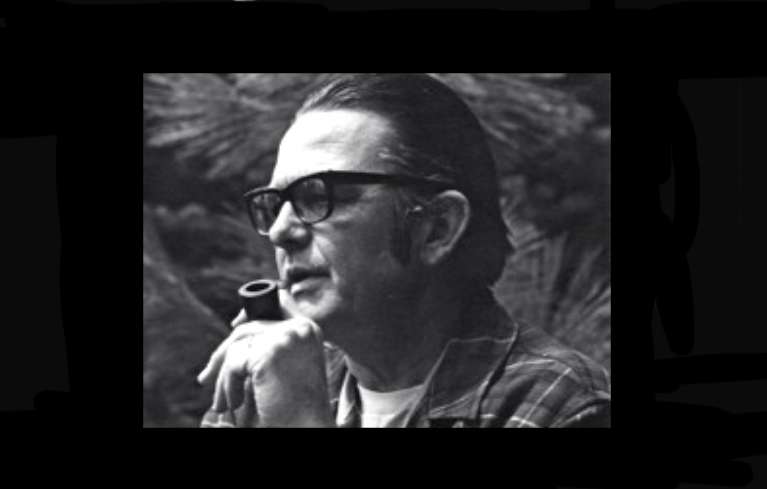
Ken Smith, Barton Memorial Hospital’s first chief of staff and former mayor of South Lake Tahoe, died June 28 in South Lake Tahoe. He was 87.

Dr. Smith was born in Alameda on April 21, 1926.

During World War II he spent much of his time in the Army in the Philippines. He left the service as a second lieutenant.

He returned to the Bay Area, where he had grown up, to do his undergraduate work at UC Berkeley. In 1954, he graduated from McGill University’s medical school in Montreal.

Ken Smith

Ken Smith

On July 16, 1950, he married Ruth Marilyn “Lynne” Zant.

It was in 1960 that the Smith family moved to South Lake Tahoe from Guerneville in Sonoma County. At that time there was no hospital in town. He was the second doctor in South Tahoe, with the other being Jim Whitely. The two had first met in the Bay Area.

Minor surgeries could be performed in their office, which was near where the senior center is now located. More intricate medical services required going to Carson Tahoe Hospital. A few beds were in their office in case someone had to spend the night.

While he delivered babies in his time, Dr. Smith was a general practitioner. Most people knew him as Doc Smith.

His daughter, Connie Hendryx, remembers as kids not being allowed to be on the phone for more than five minutes at a time because her dad was on call. This was at a time before call waiting or cell phones.

Barton Memorial Hospital opened Dec. 23, 1963. Dr. Smith became the first chief of staff.

With Whitely and Peter Irving, Dr. Smith opened a practice close to the hospital. At age 65 he retired in 1991.

At one time Dr. Smith was the medical director for Sierra Recovery Center, a drug and alcohol rehabilitation center.

Local politics and the environment were important to him.

“They were very much environmentalists,” longtime local Patty Olson said of the Smiths. She said they were into the ecology of the lake.

The Smiths were each other’s best friend, according to their daughter. Bird watching was a passion of theirs. When he would see a particularly interesting bird on the feeder outside his window it was his wife that Dr. Smith would call.

He was one of the key players in helping incorporate South Lake Tahoe in 1965.

Dr. Smith was appointed to the South Lake Tahoe City Council on Jan. 5, 1971, was elected in his own right, and then resigned on March 12, 1974. He was mayor for one year starting in spring 1973. He was also on the Planning Commission for about a decade starting in 1983.

While on the council Dr. Smith was instrumental in ridding the city streets of billboard advertisements as well as getting the power lines on Highway 50 to be put underground.

“A favorite thing after dinner was all six of us would sit around the table and just talk about environmental issues, politics, everything,” Hendryx said.

He served on the board for the Tahoe Resource Conservation District, was active with the League to Save Lake Tahoe, and was on the board of the Tahoe Rim Trail Association.

“He was so thrilled when it got built,” Hendryx said of the 165-mile trail around Lake Tahoe.

Dr. Smith was also involved with the Boy Scouts, having served as a Scout leader.

Olson recalls when their kids were growing up – she and husband Neil had three, the Smiths four, Whitelys four and Ledbetters four – that they created their own day care so the adults could all have a day free of kids.

She said socially they played bridge together.

Olson remembers that as being a much different time in Tahoe, when people knew each other and pitched in to help one another.

For at least a decade the Smiths were known for having a party after school got out. All the neighbors were invited, hot dogs and popsicles were served, and it was a time for Dr. Smith to share his dry sense of humor.

His wife, Lynne, in 1999, and sister Jean Sharp preceded Dr. Smith in death. He is survived by sons Ken “Casey” Smith (Glenda) from Saratoga and Larry Smith (Debbie) from Butte, Mont.; and twin daughters Kelsey Julander (Dale) from Bakersfield and Connie Hendryx (Michael) from Yreka; and grandchildren Emilie Hendryx, and Allison and Adam Julander.

Services are pending. In lieu of flowers, the family asks donations be sent to one’s favorite charity.


NV Energy plots path to make money without coal

By Andrew Doughman, Las Vegas Sun

Sen. Harry Reid arrived in Carson City on a Wednesday in February, commandeered an office at the Legislature and sat down with state Sen. Kelvin Atkinson to hatch a plan.

A sweeping proposal to move coal out of Nevada’s energy mix had incubated for months among a group of powerful and influential politicians, business executives and lobbyists before they stepped forward and selected Atkinson to help execute it — at least publicly.

What emerged from that meeting was a legislative power play reaching from D.C. to Nevada that illustrates how consummate insiders can dictate energy cost and policy for every Nevadan for the next decade.

The big idea: Nevada would cease its investments in three coal-fired power plants and NV Energy, the state’s energy monopoly, would get to build expensive gas and renewable energy power plants — a cost that ratepayers would have to bear.

In a state with nearly the highest energy costs in the Mountain West region and a growing renewable energy sector, a potentially risky shift from coal to gas and alternative-energy plants could have been momentous or disastrous for Nevada residents, businesses, energy providers and politicians.

Click here to read the whole story


Fire causes substantial damage to Tahoe Vista house

Firefighters are still investigating what caused a cabin in Tahoe Vista to erupt in flames on Friday afternoon.

North Tahoe crews got the call about the fire in the 300 block of East Agatam Avenue at 3:39pm June 28.

“It was going pretty good when we go there,” North Tahoe Fire spokesman Dave Zaski told Lake Tahoe News. It was controlled and knocked down by 3:50pm.

Zaski said the small house sustained significant damage. There were no injuries.

— Lake Tahoe News staff report


El Dorado County probation employees tired of workplace harassment

By Kathryn Reed

Chaotic could be one word to describe the El Dorado County Probation Department. Discriminatory, dysfunctional and secretive would be other words.

“The kids aren’t the problem, management is,” said one person who recently severed ties with the department.

Rank and file employees are fearful of talking to Lake Tahoe News on the record and most higher ups won’t even talk.

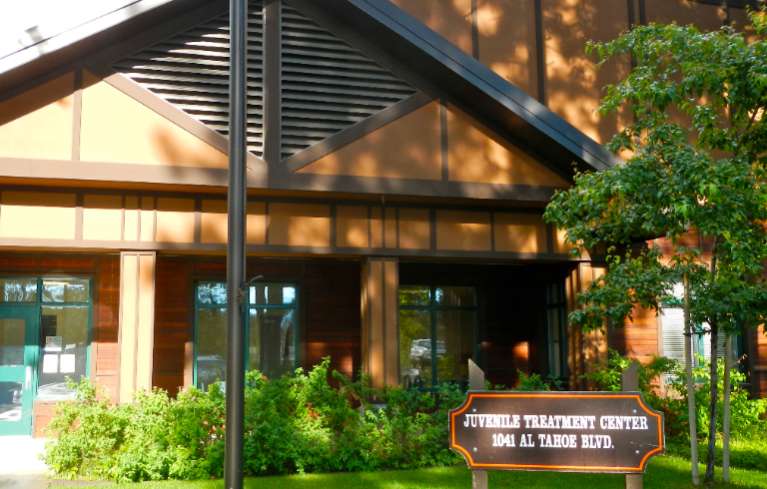
The Juvenile Treatment Center in South Lake Tahoe is one of the workplaces county probation officers say is less than ideal to work. Photo/LTN

The Juvenile Treatment Center in South Lake Tahoe is one place county probation officers say is less than ideal to work. Photo/LTN

When word got out last week that Lake Tahoe News was asking questions, interim Chief Probation Officer Vince Janette sent the following email to all probation staff, “Recently a few staff members were contacted off duty by the media. I would like to take this opportunity to remind all staff of policy IV2 Contact with the News Media. Please take a moment to review the policy and report any contacts via the chain of command. If you are contacted at home or in the community this policy still applies.”

He then attached the policy in the email, which was given to LTN by someone other than Janette. Part of the policy says only the chief of the department or a designated manager may speak with the media.

It also says, “Staff is prohibited from writing letters to the media or otherwise communicating with the media as a representative of the Probation Department.”

When Lake Tahoe News asked Janette if he thought there is a morale issue within the department, he said, “I will not comment on that.”

When asked to comment on whether harassment issues are ignored, he said, “I haven’t heard that.”

According to the people who spoke off the record with Lake Tahoe News, Janette is one of the harassers.

Change in leadership

Janette is now in charge of probation because Greg Sly, who is still technically the chief, is out on leave until he officially retires Sept. 13. Sly is getting full pay and medical benefits until then.

At first Janette said, “I’d rather not comment” – in response to whether he applied to be the chief permanently. Then he added, “I will not be our next chief.”

When Sly was asked to explain what is really going on today at probation, he emailed LTN, “Current direction from the CAO and County Counsel is that all media questions are referred to them. Therefore, I need to refer you to their offices.”

Terri Daly is the county’s chief administrative officer and Ed Knapp the county counsel. Neither is communicating with Lake Tahoe News.

In an email obtained by LTN written June 7 to staff Sly says he is remaining out on medical leave.

Sly’s email says, “I wish my career and term as your chief would be ending under different circumstances, but sometimes doing the right thing pays off a little differently than one would like. During my entire 29 year law enforcement and community corrections career, I always pushed for true justice on all fronts. But as I have often said, ‘Sometimes Justice just isn’t Just.’”

Sly was out on administrative leave from Sept. 28-Dec. 12 as well. At that time Gary Hudgeons, then assistant chief probation officer, was put in charge of the department. He abruptly left when Sly returned to work.

Sly has not always gotten along with the current CAO, but the truth to why he keeps being put on leave is not forthcoming because officials say it is a personnel issue.

Feeling threatened

Those who are left to do the work at the South Lake Tahoe and Placerville detention centers say there is a culture of harassment and discrimination within the department. This includes workers at the facilities housing the youths as well as those working in the field.

And it’s not just women who have been harassed. One guy chose to take a demotion to get away from a harassing boss. Another left to work at a coffeehouse.

“Within the department retaliation is alive and well and strong. If you speak out, you will absolutely be gone,” one employee said. “There is no personality conflict; it’s a power and control issue.”

Sometimes the harassment is because a person is outspoken, sometimes it’s for having a quirky personality, sometimes for just not fitting in with the established older-white-male power structure, and other times it’s for reasons that are not obvious.

But it’s predominately women who are subjected to the hostile work environment – unless they are having an affair with one of their male superiors or their husband is a cop.

Several people have left the department this year. They are fed up with the treatment, filing grievances and getting nowhere but being retaliated against.

Harassment, according to those who spoke with LTN, is verbal and sexual – and ongoing.

Some complaints are investigated, some are not. But even when they are, they often end with the harasser not being reprimanded and the employee reaching a financial settlement with the county so they will go away.

One employee said they look around and ask, “Why is the person who all complaints were directed toward still here and the person who instigated the investigation now gone?”