South Tahoe police officer involved in accident

A South Lake Tahoe police vehicle was hit Thursday afternoon at the Y.

The officer, whose name has not been released, was going through the intersection with lights and sires on when a vehicle towing a boat broadsided the cop car.

Lt. Brian Williams told Lake Tahoe News no one required medical care at the scene.

The California Highway Patrol is assisting with the investigation.

— Lake Tahoe News staff report


Questions remain if Zodiac Killer struck in Tahoe

By Mike TeSelle, KCRA-TV

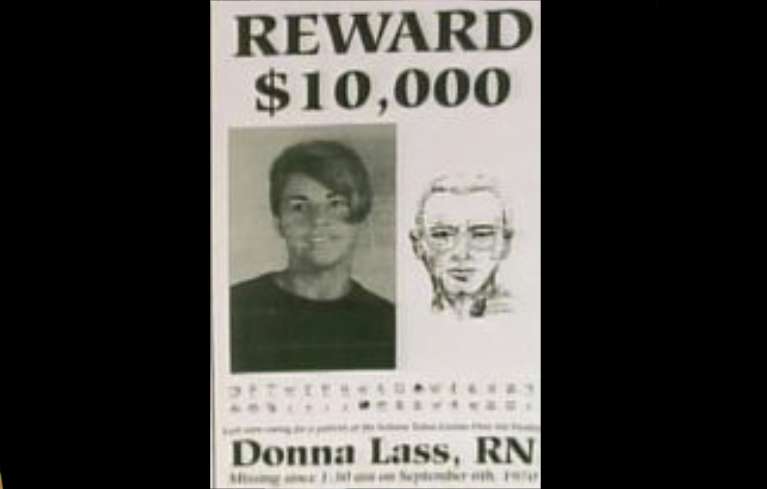
Why did Donna Lass disappear?

Was the then-25-year-old nurse killed?

Is she the 12th victim of Northern California’s infamous Zodiac Killer?

zodiac poster“We don’t know. … Of course it captures one’s imagination, because it’s such an intriguing case,” said Lt. Brian Williams with the South Lake Tahoe Police Department.

On Sept. 6, 1970, Williams said Lass signed a worker’s log inside the old Sahara casino (now the Horizon) about 1:50am.

Shortly after that, Lass was never seen — nor heard from — again, Williams said.

Six months after her disappearance, Williams said Lass’ case took a turn that, to this day, is still generating new tips, leads and theories of what happened to her.

“The Zodiac sent a postcard to the San Francisco Chronicle newspaper. It suggested a Lake Tahoe location for his 12th victim,” Williams said. “Donna Lass would’ve been his 12th victim.”

The postcard contained phrases and symbols similar to Zodiac mailings.

One phrase read “Peek through the pines.” Another was written upside down: “Around in the snow.”

In 2007, acting on a tip related to the Zodiac killings, South Lake Tahoe police participated in a dig of a possible burial site near Lake Tahoe, but found nothing.

To this day, even though one investigator said his hunch is that Lass’ disappearance is not linked to the Zodiac, Williams said the department still can’t rule out that possibility.

“Stranger things have happened, as we have seen with the Jaycee Lee Dugard case. We will never give up hope in solving this case for Lass’ family,” Williams said.


Big 5 posts quarterly gains

Big 5 Sporting Goods Corp. this week announced that its second-quarter net income increased.

The South Lake Tahoe store is one of two to open this past quarter. Revenue from stores that were open for a year or longer increased 4.4 percent for the quarter ending June 30. This quarter the company plans to open four stores and close one.

The retailer’s net income increased to $6.1 million. That is up from $2.6 million for the same quarter in 2012. Revenue in the same time period was up $239.9 million compared to $226.6 million a year ago.

— Lake Tahoe News staff report


Politicians hear from fire experts about challenges

By Clare Foran, National Journal

In a forum convened Tuesday by the Bicameral Task Force on Climate Change, a panel of experts on climate, wildfires, and forestry met with task force co-chairs Rep. Henry Waxman, D-Calif., Sen. Sheldon Whitehouse, D-R.I., and other lawmakers to discuss the impact of climate change on wildfires.

“We’ve been experiencing wildfire activity that is different and more dangerous,” Waxman said in his opening statement, calling recent fires some of the “largest and most intense … we’ve seen.”

Panelists cited a number of reasons for wildfire flare-ups, including land-use patterns and insect activity. But the discussion kept circling back to climate change.

“Scientists tell us these changes are not just random variability,” Waxman said. “Bigger and more-intense fires are one of the red flags of climate change.”

Climate-change expert William Sommers, a researcher at George Mason University’s EastFIRE Laboratory, agreed. Sommers cautioned that rising levels of atmospheric carbon dioxide will only worsen wildfires in decades to come. “If current greenhouse-gas emission trends are not sharply reversed in the immediate future, we will see observed trends in wildfire risk accelerate,” he warned.

Waxman and Whitehouse asked firefighting and forestry experts for policy recommendations to help mitigate the situation.

Panelists, including Santa Fe, N.M., Fire Chief Erik Litzenberg and Rick Swan, director of supervisory personnel and health and safety for the California Department of Forestry Firefighters, cited budget cuts as a major stumbling block in efforts to combat wildfires, and called for increased funding for park services and firefighters.

“We are seeing a dramatic increase in the number of fires, especially in California,” Swan said. “But we are not seeing the same increase in staffing levels and funding.”

Litzenberg called on lawmakers to increase funding for the federal Volunteer Fire Assistance Grant program, noting that volunteers frequently serve as the first line of defense against wildfires.

Waxman and Whitehouse promised to consider the recommendations, but acknowledged that cutbacks due to sequestration would make funding increases difficult to achieve, at best.

Nevertheless, Waxman stressed that Congress cannot ignore the link between climate change and wildfires. “It’s going to continue to get worse and … this isn’t the only problem that we’re facing because of climate change,” he said. “We’ve got to wake up the American people and their representatives and we’ve got to deal with this issue.”


Company using cannabis in pharmaceuticals

By Carol Matlack, Bloomberg Businessweek

Medicinal marijuana advocates contend that smoking pot helps relieve pain and alleviate nausea. British drug company GW Pharmaceuticals is betting that medicine made from cannabis can also treat maladies as diverse as diabetes, colitis and epilepsy.

GW is the only pharmaceutical group in the world that sells a prescription medicine derived from marijuana plants, as opposed to synthetic equivalents. The drug, a nasal spray called Sativex, has been approved by regulators in eight countries – Italy, most recently – to treat spasms associated with multiple sclerosis. A request for U.S. Food and Drug Administration approval is pending.

Taking aim at a potentially much bigger market, the company plans to start second-stage clinical trials of a cannabis-based drug that has showed promise in treating Type 2 diabetes. The drug, with the tongue-twisting name of tetrahydrocannabivarin-9, improved patients’ production of insulin and helped lower blood-sugar levels between meals.

An estimated 371 million people worldwide suffer from Type 2 diabetes. Patients taking the cannabis-based drug “could potentially be controlled on oral therapy for a longer period of time and wouldn’t need to take injections,” says Mike Cawthorne, a GW consultant who is director of metabolic research at the University of Buckingham.

GW Pharma, with $52.2 million in annual sales, is literally betting the farm on cannabis: Its entire drug pipeline is derived from pot that it grows at an undisclosed location in southeastern England.

By contrast, other companies developing pot-based medicines have used synthetic versions of chemicals that are either identical or similar to those found in the plant.

While the idea of using a living plant might have some marketing appeal, in fact GW Pharma has to “purify the chemicals so much, that it’s almost incidental that they’re using cannabis as the source,” says Sam Fazeli, chief pharmaceutical analyst for Bloomberg Industries in London.

Though the diabetes drug has the potential to be GW’s first blockbuster, it also faces big regulatory hurdles. One is the possibility that it could block receptors in the body that ordinarily trigger pleasurable sensations and increased appetite often associated with pot smoking.

French drugmaker Sanofi developed an antiobesity drug called Acomplia that acted by blocking these receptors, but had to pull it from the market after it caused heightened rates of depression and suicide.

Diabetes, though, is just one of many diseases that GW is targeting. It’s developing a pot-based medication to treat inflammation in ulcerative colitis, and is working with Otsuka Pharmaceutical of Japan on a drug that could treat epilepsy. The company also is carrying out further studies on the multiple sclerosis drug Sativex that could lead to its use for treating pain in cancer patients.

And no, patients taking these medicines won’t get a buzz. Of an estimated 60 chemical compounds in marijuana, only one will get you high. GW is working with the other 59.


West Nile virus found in parts of N. Nevada

Mosquitoes carrying the West Nile virus are buzzing around Northern Nevada.

Officials found the virus in Douglas County test pools. Infected mosquitoes have been found in Carson City, and Washoe and Lyon counties.

While there is no human vaccine for West Nile, horses can be vaccinated.

The best prevention for people is to apply a dose of bug juice and/or wear clothing that covers skin to avoid being bitten.


Sub exploring Tahoe sputters with mechanical problems

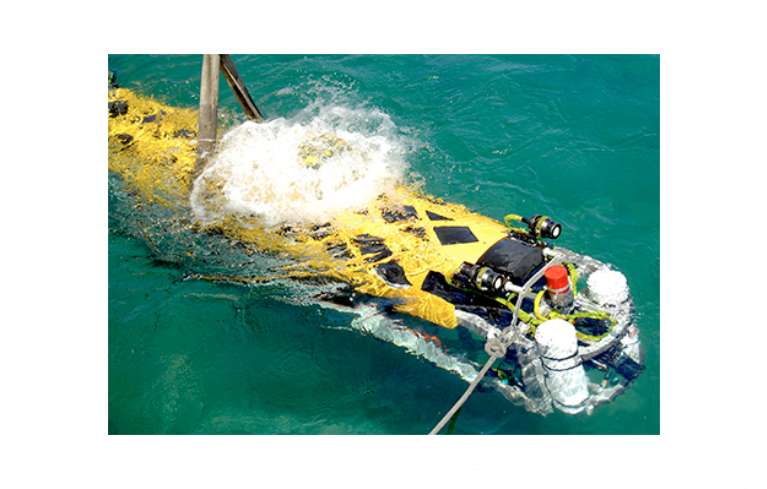
The remotely operated vehicle’s vertical thrusters are tested. Its two lights, high definition video camera and two ballast tanks can be seen at its bow. Photo credit: Ross Powell, NIU

The remotely operated vehicle’s vertical thrusters are tested when it was put into Lake Tahoe in early July.
Photo/Ross Powell/Northern Illinois University

By Rosanna Xia, Los Angeles Times

An unmanned submarine set to dive more than 1,000 feet to scour the bottom of Lake Tahoe didn’t quite make it all the way.

During shallower test dives earlier this month, the submarine encountered complications with a few of its motors, said Gordon Seitz with the California Geological Survey. The engineers who created the vessel considered the problems serious enough that they didn’t want to risk diving it all the way to the bottom of the lake, he said.

The 28-foot-long, 2,200-pound submarine, designed to explore beneath the ice shelves of Antarctica, was diving Lake Tahoe in its first test run. Seitz and his team hoped to capture valuable data and high-definition images of an earthquake fault along the lake’s bottom that scientists have wondered about for years.

Since 1998, when the West Tahoe fault was first put on the map, engineers have tried various ways to decipher the underwater fault, which they estimate — based on shore studies — is capable of producing a magnitude 7.1 to 7.4 earthquake and tsunamis up to 30 feet high every 2,500 to 4,000 years.

The last massive temblor was about 4,000 years ago, and scientists say now is the time to get better data.

“I wouldn’t say the earthquake’s overdue. But if it happened tomorrow, I wouldn’t be surprised,” said Seitz, who is leading the Lake Tahoe study. “It’s urgent enough that we want to look at it and figure it out.”

Read the whole story


Obama proposes more cash for community colleges

By Paul Fain, Inside Higher Education

President Obama may have strong words for colleges about tuition prices, but he continues to push for more federal funding for community colleges.

In a major speech Tuesday on job creation Obama repackaged a February budget proposal for an $8 billion “Community College to Career Fund.” The address follows the president’s vow six days ago to “shake up” higher education to ensure better value for middle-class students and their families.

Both speeches were grounded in the economy and middle-income jobs. And the event Tuesday, which Obama held at an Amazon.com warehouse in Tennessee, was aimed at bringing Congressional Republicans to the table.

The president included a suggestion to slash corporate tax rates, a move Republicans support. The overhaul of business taxes would also generate revenue through a fee on the foreign earnings of U.S. companies, The Washington Post reported, which would help pay for the community college plan and other proposals.

Another idea the administration unveiled Tuesday that involves higher education is the creation of 45 manufacturing innovation institutes, which link companies, colleges and government. That proposal builds on a pilot program in Youngstown, Ohio, as well as three new manufacturing institutes that are slated for creation later this year.

“We’re getting businesses, universities, communities all to work together to develop centers of high-tech industries all throughout the United States that allow us to be at the forefront of the next revolution of manufacturing,” Obama said, according to a written transcript of his speech.

The president dubbed his plan a “grand bargain.” But the GOP doesn’t appear to be buying. Congressional Republicans quickly signaled that they opposed the jobs deal, according to news media reports.

Obama’s proposed community college fund would support job-training programs in growing and high-demand fields, according to a written statement from the White House. The accompanying fact sheet did not include a price tag, but Obama asked Congress for $8 billion for the program in February.

A more detailed description of that proposal, which the administration released when it was announced, described a “blueprint to train two million workers.” The plan included money for apprenticeships and other on-the-job training for community college students, like internships that would lead to college credit for work-based learning.

The fund would also include performance-based incentives. For example, states might set aside money for job-training programs at colleges that successfully place graduates in good-paying jobs.

The American Association of Community Colleges backs the job-training fund, not surprisingly. David Baime, the association’s senior vice president for government relations and research, said campus officials strongly support the proposal.

“If enacted, it would dramatically bolster the work that our colleges are already doing to help address the skills gap and to provide economic opportunity for the many people still struggling in today’s economy,” he said in a written statement.

But advocates for community colleges are realistic about the slim odds of multibillion-dollar plans going anywhere while federal lawmakers on both sides of the aisle are pushing budget austerity.

However, the White House keeps trying to find more money for the two-year sector. And it has succeeded before, even if at levels smaller than those first sought.

Obama in 2009 announced a $12 billion proposal directed at community colleges. The American Graduation Initiative failed, but morphed into $2 billion in U.S. Department of Labor funding for workforce development at two-year institutions.

That program, which has a name that is too long to include here, appears to be having a substantial impact. Community college officials have said that the money has led to lasting, ambitious changes on their campuses, particularly around career services.

Vehicle strikes 6 parked cars in Tahoe Keys

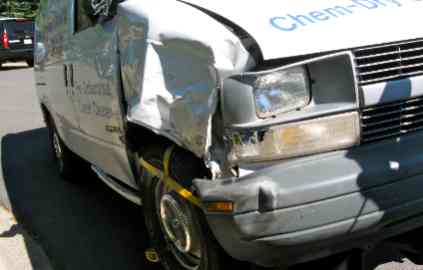
A commercial van struck several vehicles July 31 in South Lake Tahoe. Photo/Provided

A commercial van struck several vehicles July 31 in South Lake Tahoe. Photo/Provided

The driver of a carpet cleaning van sideswiped six parked vehicles in the Tahoe Keys this morning.

South Lake Tahoe police said is appears the 67-year-old man suffered a medical emergency that led to the accident July 31 at 9:25am. He was taken to Barton Memorial Hospital.

The Chem-Dry Carpet and Upholstery Cleaning van from Gardnerville struck three cars on Kokanee Avenue and three on Emerald Avenue. All sustained minor damage.

— Lake Tahoe News staff report


Toddler dies in Hwy. 50 car accident

A 3-year-old girl died from the injuries she sustained Tuesday night in car accident near Cave Rock.

The toddler was riding in the vehicle that was headed west when it crossed the double yellow line about one mile before Cave Rock, according to authorities.

There are conflicting reports as to how many people were injured. NHP told Lake Tahoe News on Tuesday that two adults were hurt in the three-vehicle crash that occurred about 8:45pm July 30. KRNV-TV is reporting eight injuries. This morning NHP didn’t have a figure to release.

Nevada Highway Patrol investigators will be at the Highway 50 crash site this morning to diagram the scene in an attempt to figure out exactly what happened.

At this time the names and hometowns of the people involved in the collision are not being released.

NHP troopers said the westbound vehicle sideswiped an SUV that then rolled over. The initial vehicle then hit a mini van nearly head-on.

— Lake Tahoe News staff report