2012 one of 10 warmest on record

By Neela Banerjee, Los Angeles Times

WASHINGTON — Last year was one of the 10 hottest since global average temperatures have been recorded, according to an assessment of worldwide climate trends by the National Oceanic and Atmospheric Administration.

“The State of the Climate in 2012,” released Tuesday, paints a sobering portrait of vast swaths of the planet transformed by rising temperatures. Arctic sea ice reached record lows during the summer thaw. In Greenland, about 97% of its ice sheet melted in the summer, far greater than in years past.

Greenhouse gas emissions continued to rise. In early May, the ratio of carbon dioxide in the Earth’s atmosphere surpassed 400 parts per million in an average daily reading at Hawaii’s Mauna Loa Observatory, thought to be the highest concentration in millions of years.

The report is a like “an annual check-up for the planet,” said Kathryn Sullivan, undersecretary of Commerce for oceans and atmosphere and NOAA’s acting administrator. It documents “remarkable changes” in crucial areas like Arctic ice, sea levels and greenhouse gas emissions, she said.

Read the whole story


Cash coming to help Nevada’s mental health system

By Andrew Doughman, Las Vegas Sun

The legislative Interim Finance Committee approved $2.1 million in emergency mental health funding on Tuesday after spending hours criticizing Nevada’s inadequate treatment of mentally ill residents and visitors.

Legislators said the state of Nevada’s mental health system appears to have reached crisis levels. Failures in the system, they said, have led to overcrowding in emergency rooms, backlogs and delays in jails, loss of accreditation for one major state hospital, difficulties in recruiting quality staff because of pay that’s not competitive, and inefficient, expensive practices of moving mentally-ill inmates between Southern and Northern Nevada.

The $2.1 million would allow the state to renovate and reopen a state facility in Southern Nevada, hire more staff, pay for a mental health “drop-in” center and provide for more patient beds.

Gov. Brian Sandoval’s chief of staff called the funding “urgent” in the wake of a dramatic spike in the numbers of mental health patients flooding Southern Nevada’s emergency rooms and a crisis at Rawson-Neal Psychiatric Hospital in Las Vegas.

Read the whole story


South Tahoe cracking down on hoarders

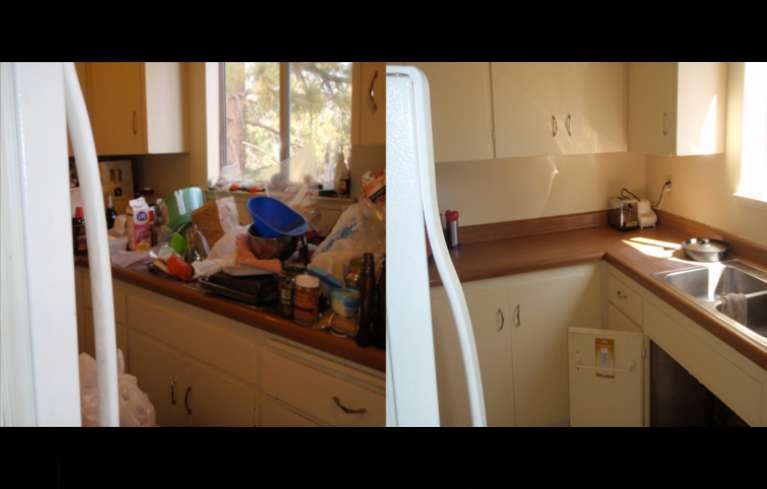
Hoarding issues become health and safety issues. These are before and after pictures of a South Lake Tahoe residence. Photos/Provided

Hoarding issues become health and safety issues. These are before and after pictures of a South Lake Tahoe residence. Photos/Provided

By Bill Potts

Hoarding! We’ve all seen it, and shows like “Extreme Hoarders” have brought us up close and personal with some of the people and places afflicted with pathological collecting disorder.

I encounter residences affected by hoarding while investigating complaints of substandard housing or during required inspections under the Multi-Family Dwelling Inspection Program.

Typically, the heavy clutter within a hoarder’s residence constitutes a violation of several health and safety codes and represents a potential hazard to all of the building occupants. Excessive storage of combustibles, blocking of exit pathways and obstruction of egress windows in bedrooms are some of the fire code violations observed. There may also be violations of health code, due to the propensity on the part of some hoarders to collect food and other perishables.

Ultimately, it comes down to evaluating the effect of the hoarder’s habits on the building as a whole.

In high density apartment complexes many walls are shared and unfortunately one occupant’s habits can have a profound effect on their neighbor’s health and safety. In situations where an imminent fire and health hazard is present and the hoarder is unwilling to take immediate action, condemnation of the dwelling may be the only practical choice.

In such cases, removal of the hoarder and other occupants from the dwelling is necessary, followed by mandatory abatement (clean-up) of the premises.

The good news is that in the majority of cases, conditions are not severe enough to warrant immediate drastic intervention. Working with hoarders is difficult and may require the involvement of several government regulatory agencies, including county Adult Protective Services (APS), Child Protective Services (CPS), Mental Health, Environmental Management and, of course, the South Lake Tahoe’s Building Division.

However, using a firm, coordinated approach with monitoring and well defined goals, progress can be made until compliance is eventually achieved.

The pictures were taken in the residence of a hoarder that came to the attention of the building division nearly two years ago. I prescribed a prioritized, incremental method for reduction of combustible materials and clearing of exit pathways and egress windows. This gentleman still has work to do, but as you can see from the pictures, he has come a long way toward compliance and everybody is safer now.

I’m proud of what he has done so far.

Bill Potts is the senior housing inspector for South Lake Tahoe.


Stateline resident wants no delay in CalPERS case

By Dale Kasler, Sacramento Bee

The central figure in the CalPERS bribery scandal says he is in “failing health,” nearly died two years ago and needs a quick resolution to the pile of litigation he faces.

The disclosure by Alfred Villalobos is part of an effort by the Stateline businessman to thwart a new legal strategy by government lawyers who have been pursuing him for years over his role in the scandal at the California Public Employees’ Retirement System.

In June, federal and state officials asked the courts to put a “stay,” or legal hold, on a series of civil lawsuits involving Villalobos.

Their reasoning: The suits could give Villalobos’ lawyers access to witness statements and documents they could use to fight the U.S. Justice Department’s criminal prosecution of Villalobos and his friend, former CalPERS Chief Executive Fred Buenrostro.

Villalobos, however, wants to keep the lawsuits on track.

Read the whole story


Fire engulfs S. Lake Tahoe house

Fire caused substantial damage to a South Lake Tahoe house on Wednesday.

Firefighters are still trying to determine the origin and cause of the fire that was reported at 12:31pm Aug. 7 at 3732 Paradise Ave.

No one was at the residence when the fire started.

— Lake Tahoe News staff report


Tahoe clarity improves; climate change a concern

Lake Tahoe's clarity improved for the second consecutive year. Photo/Kathryn Reed

Lake Tahoe’s clarity improved for the second consecutive year. Photo/Kathryn Reed

By Kathryn Reed

While Lake Tahoe’s clarity improved for the second straight year, no one is ready to throw a victory party.

“The data shown reveal a unique record of trends and patterns – the result of natural forces and human actions that operate at time scales ranging from minutes to decades. These patterns make clear that Lake Tahoe is a complex ecosystem, behaving in ways we don’t always expect. This was exemplified this year by the decrease in the abundance of (the algae) Cyclotella in the lake, and the corresponding increase in summer clarity,” Geoff Schladow, director of UC Davis Tahoe Environmental Research Center in Incline Village said in the Tahoe: State of the Lake Report 2013 that was released today. “While Lake Tahoe is unique, the forces and processes that shape it are the same as those acting in all natural ecosystems. As such, Lake Tahoe is an analog for other systems both in the western U.S. and worldwide.”

Schladow will be talking tonight at 6 at Sierra Nevada College about the report and lake clarity.

Jeff Cowen with the Tahoe Regional Planning Agency said the results of the report confirm a lot of trends the bi-state regulatory has known about.

“It underscores the approaches we have established,” Cowen told Lake Tahoe News.

In 2012, Lake Tahoe’s annual clarity improved 6.4 feet compared to 75.3 feet. Clarity improved in the summer and winter.

Scientists attribute the improvement to:

• 2012 being dry year in the basin. This means less runoff carrying sediment reaching the lake.

• The lake water not mixing. In winter, surface waters cool and sink downward, mixing with deeper waters. This brings nutrients to the surface, promoting algae growth, while also moving oxygen to deep waters, promoting aquatic life. A lack of deep mixing can contribute to warmer lake temperatures.

• Reduced numbers of tiny Cyclotella algae. An abundance of the microscopic algae over the past five years has been linked to climate change and coincided with reduced summertime clarity.

Since 1968 a Secchi disc – which resembles a white dinner plate – has been used to measure the clarity. That year the disc could be seen at depth of 102.4 feet. People stand on a boat, look in the water and decide how far down they can see the disc.

Schladow said this report is the first to use “other environmental and water quality factors that all provide indicators of the lake’s condition.”

Some of the new tools include an underwater glider that was in the lake for 11 days in May. It provided the first “snapshots” of water quality across an east-west transect. The data confirmed the presence of giant “internal waves” deep in the lake that could move algae and pollutants vertically over 150 feet.

A water-quality monitoring station was placed at a depth of 360 feet off the West Shore that provides data from top to bottom every 30 seconds. This is the first such station in any lake in the world and is expected to provide a better understanding of climate change impacts on Lake Tahoe.

Climate change is a growing concern for Lake Tahoe. The annual average surface temperature was 52.8 degrees, the highest ever recorded for Lake Tahoe.

The lake dropped a foot in 2012 because of the lack of snowfall.

The report says, “In a dry year lake Tahoe typically loses 1.5 feet of water level. Predictions of future climate conditions in the basin point to more extreme events in the future. A five-year drought could conceivably reduce the lake level to 6215.5 feet, or 5 feet below the record 1992 levels.”

Air temperatures are also increasing in the Lake Tahoe Basin. This in turn will mean more rain and less snow. All of this will affect lake clarity, too.

“Although the date on which peak snowmelt occurs varies from year to year, since 1961 it has shifted earlier an average of two weeks (16.3 days). This shift is statistically significant and is one effect of climate change on Lake Tahoe. In 2012, peak discharge was one of the earliest recorded, occurring around May 4,” the report says. “Peak snowmelt is defined as the date when daily stream flows reach their yearly maximum. Daily stream flows increase throughout spring as the snow melts because of rising air temperatures, increasing solar radiation and longer days. The data here are based on the average from the Upper Truckee River, Trout Creek, Blackwood Creek, Ward Creek, and Third Creek.”

While most of the attention in the past half-century has been focused on the disc in the middle of the lake, it’s the gunk growing along the shoreline that has the average resident and tourist concerned. This is what scientists call the near shore.

“Periphyton, or attached algae, makes rocks around the shoreline of Lake Tahoe green and slimy, or sometimes like a very plush white carpet. Periphyton is measured eight times each year. In 2012, concentrations at Sugar Pine Pt. (no urban influence) and Zephyr Pt. (low urban influence) were below the long-term average. The site with the most periphyton (Pineland) is close to an urban area, and was relatively high this year,” the report says. “The Tahoe City value was about average for that site. To date, no statistically significant long-term trend in maximum periphyton biomass has been detected at any of these individual locations. Monitoring periphyton is an important indicator of near-shore health.”

Here is the full 2013 State of the Lake report.


Countries increasingly regulating Internet content

By Caitlin Dewey, Washington Post

A new Vietnamese law will make it illegal for citizens to post news or “general information” online, a restriction that sounds absurdly unenforceable but turns out to be more doable – and less of an outlier – than you might expect.

According to analysis from the watchdog group Freedom House, Vietnam isn’t alone in its crackdown, even if its methods are particularly severe. Internet censorship is on the rise worldwide, and restrictive, one-party countries like Vietnam aren’t the only ones legislating what people can post online.

Consider the headlines you’ve seen over the past month alone. In the U.K., a proposed filter would automatically block pornography and, according to Internet rights groups, other unwanted content. In Jordan, news websites can’t operate without a special license from the government.

“What we’ve seen in our research is that as more people access the internet, governments are more and more likely to impose measures that censor certain types of content,” said Sanja Kelly, the project director for Freedom House’s “Freedom on the Net,” which will publish its 2013 report in September. “One of our findings for this year will be that Internet censorship is on the rise: more Web sites are being blocked than ever before and an increasing number of countries are passing laws that would restrict certain types of online content.”

Read the whole story


S. Tahoe gas station attendant shot to death

Updated 1:50pm

A 27-year-old clerk working at a gas station in South Lake Tahoe was shot to death Tuesday night.

Video of the suspect shows that he walked into the USA gas station on the corner of Highway 50 and Lodi Avenue at 10:40pm Aug. 6. Ten minutes later a patron walked in, saw the clerk on the floor in a pile of blood and called 911. The clerk, whose name is not being released pending notification of family, was pronounced dead at the scene.

This man is wanted in the Aug. 6 shooting of a South Lake Tahoe gas station attendant. Photo/Provided

This man is wanted in the Aug. 6 shooting of a South Lake Tahoe gas station attendant. Photo/Provided

The assailant as of Wednesday afternoon was still at-large. He is a male between the ages of 20 and 40, between 5-feet-8 and 5-feet-10, wearing a dark hoodie and dark mask over his face, his skin tone is light but exact race unknown.

“During a very brief encounter with the clerk, the suspect raised a handgun and shot the clerk. The clerk fell to the floor immediately as the suspect fled from the store,” police said in a statement.

Police Chief Brian Uhler told Lake Tahoe News at this point they are not calling the incident a robbery. But they also are not saying if the suspect and victim knew each other.

Reports are that only one shot was fired, but the type of gun involved has not been released.

Anyone with information regarding this homicide should call the police department at (530) 542.6100 or Secret Witness at (530) 541.6800.

— Lake Tahoe News staff report


SnowGlobe returning to S. Tahoe in December

By Kathryn Reed

SnowGlobe, the three-day outdoor music festival in South Lake Tahoe, is coming back.

The City Council on Tuesday approved the agreement for the event to return Dec. 29-31. But this third year is most likely the last time it will be at the ball fields next to Lake Tahoe Community College.

While Chad Donnelly, who produces the event, is going to put heavy mats on the high-traffic areas, he said it’s cost-prohibitive ($800,000) to cover the entire field. That field was paid for by taxpayer dollars through Measure S/R. And with the city wanting to preserve the integrity of the field as long as possible, City Manager Nancy Kerry is recommending “it never come back to this location.”

SnowGlobe will return to South Lake Tahoe for the third year over New Year's Eve weekend. Photo/LTN file

SnowGlobe will return to South Lake Tahoe for the third year over New Year’s Eve weekend. Photo/LTN file

The thinking is that by telling Donnelly now that he has to find a new location for 2014, that a location on the South Shore will be found.

Horizon had considered having it. The North Shore expressed strong interest when Donnelly started fishing around for cash to come back. But the South Shore always wanted it. It’s all about money.

The Aug. 6 staff report says, “An overall economic impact analysis was provided by a consultant contracted by SnowGlobe, which estimated the direct economic benefits to South Lake Tahoe community at $5.8 million.” Strategic Marketing Group then analyzed those findings, saying the consultant should have included indirect economic impacts, too, which would bring the financial benefit of SnowGlobe to between $11 million and $14 million.

Jack Fisher, general manager at MontBleu casino, told the council he thought $10 million was “a little light”. His casino has had multiple after parties that have been popular with SnowGlobe attendees.

He broached the possibility of having SnowGlobe at multiple locations in the future.

On the Aug. 8 Lake Tahoe Visitors Authority board meeting agenda is an item to allocate up to $75,000 to the producer of SnowGlobe. The board opted earlier not to vote on the funding until a location on the South Shore had been secured.

Lake Tahoe Community College in April had directed staff to negotiate a multiyear contract with Donnelly. But that won’t be necessary with the city’s not wanting to subject the field to an event like SnowGlobe. The college board, though, will have an item about SnowGlobe on its Aug. 13 agenda.

Donnelly will be responsible for cleaning the field once the snow melts. Under consideration is adding warming huts by the line for buses and near food vendors.

He must put up a $25,000 deposit.

The city is going to absorb about $25,000 in soft costs, which includes time for police and parks and rec staff.

The city believes that $25,000 is an investment in the event with a return many times over via hotel and sales tax revenue generated from concert-goers.


S. Tahoe woman clinging to life at Reno hospital

A South Lake Tahoe woman in her mid-30s was found unresponsive and covered with bruises when two people arrived about 5pm Tuesday to issue her an eviction notice.

Instead, they called 911.

When paramedics arrived at the South Shore Avenue house they thought the injuries were suspicious so they called police.

Officers as of 8:30pm Aug. 6 were still at the residence looking for evidence that might answer questions as to what happened to the woman. Police are also waiting to hear from medical personnel at Renown Medical Center in Reno.

The woman was initially taken to Barton Memorial Hospital, but was taken by Calstar to Reno based on her life-threatening injuries.

Police Lt. Brian Williams told Lake Tahoe News it’s too soon to know if a medical condition led to the injuries or if foul play was involved. Neighbors have told officers they last saw the woman on Monday.

— Lake Tahoe News staff report