Campaign mailings coming from El Dorado County-owned building

By Laura Cole, CBS-13

The campaign for a water district seat is generating controversy after a mailer was linked to a developer whose address happens to be a building owned by the county.

It’s not too often a little-watched race for the El Dorado Irrigation District makes news, but a flyer sent to voters’ homes this week is not only generating controversy, but it has one county leader calling it illegal.

The ad warns of skyrocketing water rates, and endorses irrigation district candidate Richard Englefield.

The mailer is paid for by the El Dorado County Farmers Businesses And Homebuilders For Responsible Water Policy.

CBS13 tracked down who is behind that political action committee. Documents with the state connect the group to area developer Parker Development Group.

But the address clearly listed on the ad is 542 Main Street in Placerville. That’s the Chamber of Commerce, which is housed in a county-owned building. The chamber is getting a steal of a deal, paying $1 a year for a five-year lease.

Read the whole story


Home sales, prices increase in Lake Tahoe

While third quarter home sales in the Lake Tahoe Basin surged, the federal government shutdown could bring those numbers down this quarter.

Ninety percent of the Federal Housing Administration has been furloughed. FHA-approved loans account for about one-third of the loans. The IRS doesn’t have the staff to verify income. Cash sales won’t be impacted.

Most experts are saying the housing market will weather the shutdown as long as it doesn’t last long. The nation is now in week two of the shutdown.

For the quarter ending Sept. 30, the number of home sales in the Tahoe basin with a price tag of less than $1 million was up 293 percent. Overall the volume was up 60 percent from a year ago.

“The luxury market seems to be adding to our market rebound,” Sue Lowe, corporate vice president for Chase International Real Estate, said in a statement. “Sales across the board are increasing, but luxury is making a substantial comeback.”

The median price of a home in Lake Tahoe is up 33 percent from 2012 to $440,000.

According to the National Association of Realtors, sales across the nation are at the highest pace since February 2007, and have remained above year-ago levels for the past 26 months.

California is second to Florida for the most attractive state for foreign buyers of U.S. property, according to an Asia Society report. More than half the homes sold to foreign buyers in California go to Chinese nationals, estimates CNN Money.

Representatives from Sierra Sotheby’s International Realty recently attended an event in Hong Kong in an effort to form relationships with Asian homebuyers in the market to purchase property on the California side of Lake Tahoe.

The median home prices are up on the South Shore 36 percent to $325,000 for the third quarter compared to 2012.

In the same time period, Tahoe City is up 18 percent to $499,900; Incline Village is up 26 percent to $885,000; Truckee is up 13 percent to $499,90; Carson Valley is up 28 percent to $250,000; and Reno-Sparks area is up 31 percent to $210,000.

— Lake Tahoe News staff report


South Tahoe proceeds with tourist core plan

Stormwater and height issues prevented South Lake Tahoe Councilwoman JoAnn Conner from voting for two items related to the tourist core area plan.

“My biggest concern is they have not addressed stormwater,” Conner told Lake Tahoe News after the item was discussed last week. “And people don’t want three-, four-, five-story buildings down the highway.”

Others voiced similar concerns. Laurel Ames, a long-time city resident, does not believe the plan addresses the threat of floods. Jennifer Quashnick, representing the local Sierra Club chapter, wants a visualization of what the height rules could look like.

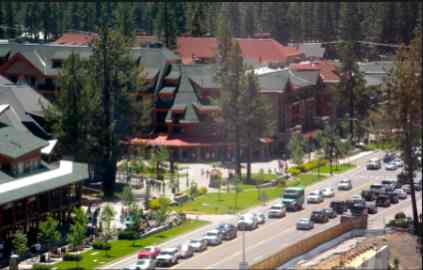
The tourist core plan goes from the state line to Ski Run Boulevard. Photo/LTN file

The tourist core plan goes from the state line to Ski Run Boulevard. Photo/LTN file

The other person expressing concern about the plan was Shannon Eckmeyer with the League to Save Lake Tahoe. She said the League wants a connection between the area plan and the total maximum daily load requirements.

The city’s Hilary Roverud told the council the flood component is the same as what South Tahoe has been using with past plans that are mandated by the Tahoe Regional Planning Agency.

Maximum height of buildings in the plan area fluctuates between 36 and 95 feet, with the higher number being in the main tourist area. And while those are maximums, staff and council do not have to approve that amount – it could be lower.

The six other speakers from the public spoke in favor of the plan.

The council voted 4-1 for the plan as well as for the environmental negative declaration. Conner was the dissenting voice both times.

South Lake Tahoe and Douglas County staff worked in unison so the respective plans will complement one another. The goal is that locals and tourists will not see the state line when it comes to aesthetics, walkability and other basics.

The TRPA Governing Board has approved Douglas’ plan and will discuss South Lake Tahoe’s on Nov. 20.

— Lake Tahoe News staff report


Shutdown reaches beyond government workers

By Marc Fisher and Holly Yeager, Washington Post

The reality of the government shutdown is finally hitting Americans who don’t get their paychecks from Uncle Sam.

In Pittsburgh, Tim Russell was on the cusp of living his dream: After two years of work, after lining up federal and state licenses and buying equipment to make rum, he started making his first batch last week. Then the federal Alcohol and Tobacco Tax and Trade Bureau closed shop. With no one to approve the “Maggie’s Farm Rum” labels, Russell can’t sell a drop.

On Alaska’s Upper Kenai River, the silver salmon and rainbow trout are huge and plentiful, but Fred Telleen’s fly fishing guide service this week has been reduced to processing cancellations and refunds, because the Kenai National Wildlife Refuge is closed. Telleen lost $1,100 on Monday alone.

In Bridgeport, Conn., Renate Seymour, an office manager at a factory, suddenly had to make alternative arrangements for her 4-year-old grandson, Jeremiah, who can no longer attend Head Start because classes shut down when the government closed up.

But wait: The pain of a shutdown is also eluding many millions of Americans.

Orange cones still dot plenty of federally funded highway projects, keeping an estimated 783,000 construction workers on the job. That’s because the way road financing works, states usually pay the up-front costs, then bill Washington for reimbursement. And the Highway Trust Fund, funded by the federal gas tax, has money to make these payments.

Thousands of federal meat and poultry inspectors are still monitoring slaughterhouses and packing plants, which can’t sell meat without the government’s stamp of approval. The Agriculture Department told field inspectors to stay on the job “to ensure the safety of human life for the duration of a government shutdown.”

In Mesquite, Nev., Police Chief Troy Tanner has seen no blip in crime, no signs of strain, no sense of a nation in distress. True, he has found himself pumping out more emails and phone calls than usual to figure out which of his federal counterparts are working — no answer at the nearest Bureau of Alcohol, Tobacco, Firearms and Explosives office, but the FBI guy is there, he says.

But in his town of 16,000 near the borders with Utah and Arizona, the only frustration Tanner senses has come from one of his captains, who had just arrived in Virginia for a 10-week FBI National Academy course on the day before the government closed, only to be told that he had to turn right back around because the shutdown forced the cancellation of classes.

“What a waste of time,” the chief said. “He’s disappointed.” There is one silver lining, though: When the airline charged the captain an exorbitant last-minute airfare to get back home, the feds picked up the tab, Tanner said. Thank you, Uncle Sam.

The federal government has become the behemoth that cried wolf. For more than two decades, budget brinksmanship has been such a mainstay of Washington politics that many Americans long ago grew skeptical of claims that if one deal or another weren’t made, the Statue of Liberty would close or the nation’s highways would seize up in the mother of all gridlocks.

Read the whole story


Tahoe Verde residents upset with new owners

By Kathryn Reed

Tahoe Verde mobile home park residents must feel like they are living in a bit of a time warp. The topic of rental control is back.

In 2007 and 2008 occupants of the more than 200 units were in a dispute with the owners at the time that escalated to the South Lake Tahoe City Council. The council said no to mandating rent control. Rent control would have to apply to all such dwellings in the city limits and would be overseen by city staff.

The mobile home park has new owners, rents are going up, new leases are being circulated and rent control is back on the table. The five-year leases were distributed in September, but not everyone is signing them. Residents are talking privately to council members and anticipate bringing the issue of rent control to a vote of the council.

“As far as what my rent pays for, I would expect it to pay for any maintenance of the park. But this lease would make it otherwise,” Kim Love told Lake Tahoe News.

Love and Mike Gwin have been talking to fellow Tahoe Verde residents to inform them of their rights and to create a united front. Attorney Ted Long, who helped with the rent control measure the first time, is again working on behalf of the tenants.

“We are not asking for special treatment. What we want is a level playing field,” Long told Lake Tahoe News.

He and the residents also want to talk to the owners about their concerns, but that has yet to happen.

Owners of the mobile homes occupy most of the 268 spaces. But mobile is a bit of a misnomer. The structures are for the most part permanent and not able to be hitched to a vehicle and carted out of the park. The land is what these people are renting.

One of the issues is that they can’t just leave like an apartment or house renter could because of owning the structure. And residents don’t believe they could sell based on what many see as a one-sided lease agreement.

HCA Management Company out of Novato is managing the property.

“We try to be above board in our leases. They are sometimes maybe difficult for someone to read,” Phil Taylor, regional manager with HCA, told Lake Tahoe News. “I believe the concern of residents boils down to this – we have made almost $1 million worth of improvements since we purchased it last December. I think residents are apprehensive they are going to have to pay for that now and they are not. If they read the lease, we could not ask for them to pay for improvements unless they voted for it.”

The lease actually says capital replacement and capital mandates can be done without consent of residents. Capital improvements of more than $10,000 must be agreed to by at least 51 percent (each space gets one vote) of residents. Then any improvement costs above $10,000 would be divvied up among the residents.

Rent increases are loosely tied to the consumer price index, though the management company can up the fee 3 percent each year no matter what the CPI is and won’t hike it more 6 percent as long as the CPI is not above 10 percent.

And if all the spaces are not occupied, any fees beyond rent will be divvied up among the occupied spaces. This, residents say, gives the owners zero incentive to keep the park full.

Water is included in the price of rent as is landscaping of the common area.

Previous leases with prior owners did not require residents to pay for capital improvements.

“What are they doing with their money?” Gwin wonders of the current owners.

His base rent is now $654 month. In 2000 it was $480. He has put $40,000 into improving his home.

Many who live at Tahoe Verde are on fixed incomes. Even those who aren’t, like Gwin, aren’t seeing their paychecks increase. He hasn’t had a raise in three years.

“People are scared,” Gwin said.


Kayakers rescued from Lake Tahoe

A kayaking excursion on Lake Tahoe ended with one person being treated for hypothermia at Barton Memorial Hospital.

“A male subject was lying on top of the overturned kayak and he appeared to be in medical distress and almost lifeless,” the El Dorado County Sheriff’s Department’s Oct. 10 press release reads. The incident occurred Oct. 4.

That person has been released from the hospital.

Another kayaker was unable to paddle to the shore near the Tahoe Tallac Site, while the third person was found safe at Whiskey Cove.

There was a lake wind advisory for that day. When the patrol boat set out it encountered 2 to 4 foot swells.

Names, ages and hometowns of the three were not released.

 — Lake Tahoe News staff report


STHS teacher disciplined, returns to classroom

By Kathryn Reed

South Tahoe High School math instructor Paul Kushner returned to the classroom Thursday after being off for five days while the district investigated what websites he had been looking at while at school and on the district’s computer.

“Appropriate disciplinary action was taken,” Jim Tarwater, Lake Tahoe Unified School district superintendent, told Lake Tahoe News. Because it is a personnel issue Tarwater could not divulge what the discipline was or why Kushner was disciplined.

Paul Kushner

Paul Kushner

A student earlier this month reported to high school officials that Kushner was looking at inappropriate, non-educational websites.

A filter on district computers prevents anyone from accessing pornographic websites. Even Facebook cannot be accessed from district computers. However, that still leaves plenty of websites that have half-naked women.

Lake Tahoe News was sent a video of Kushner perusing questionable websites of women in bras. A video expert told LTN it would take a seasoned professional to have altered the video. This person’s opinion is the video was authentic. Earlier a photo had been sent to LTN that was believed to have been altered.

School district personnel must sign a document that acknowledges they understand what is an appropriate use of school equipment and what is not.

Tarwater said violation of the user’s guide could result in termination. Kushner’s actions did not warrant such action.


S. Tahoe parking garage bonds to be refinanced

Bonds on the 10-year-old South Lake Tahoe parking garage are going to be refinanced.

While the interest rate will be lower, the payment date will be extended another 10 years from the original 30-year end date. However, financial experts have told the city it’s possible the debt could be paid off in 20 years. And a decade ago the city was also told this concrete structure would be a money-maker.

The paperwork is such that the garage would not be able to be refinanced in the next 10 years.

South Lake Tahoe's parking garage has been problematic since Day 1. Photo/LTN

South Lake Tahoe’s parking garage has been problematic since Day 1. Photo/LTN

The interest rate is estimated to be about 6.3 percent. The goal is to have the transaction done by December before the next payment is due on the current bonds.

The City Council at its meeting last week unanimously agreed to this deal.

The original bond in 2002 was for $9 million.

The garage takes in about $650,000 in revenue. But the operating expenses and debt payment are close to $750,000. The $100,000 shortfall was been double that in past years before management changes were made.

The South Tahoe Joint Powers Parking Authority owns the garage. The council acts as that entity’s board of directors.

— Lake Tahoe News staff report


Sandoval: Prolonged shutdown will devastate Nev.

By Anjeanette Damon and Andrew Doughman, Las Vegas Sun

CARSON CITY — Gov. Brian Sandoval said Wednesday Nevada is in danger of “catastrophic” consequences if the federal government shutdown persists until the end of the month.

Most state agencies are able to continue federal programs until the end of the month, Sandoval was told in a mini-cabinet meeting today. But the cash-strapped state is already beginning to rack up a significant bill keeping essential programs running without the guarantee of the federal government reimbursing the costs.

“Particularly at the end of the month, I think that’s really when we are going to start to see … some catastrophic issues going on for the state,” Sandoval said.

“Time is short. We have hundreds of thousands of Nevadans facing real consequences. The first of the month is right around the corner.”

Most immediately, 362,000 food stamp recipients will see their benefits halt on Nov. 1 and the 500 state employees who administer that program will face potential furloughs if the shutdown is not resolved. About 74,000 women, infants and children would also stop seeing food benefits.

To continue both programs without federal money would cost the state $50 million a month.

“We don’t have it,” Sandoval said, of the state’s $6.1 billion biennial budget. “We can’t afford it.”

Read the whole story


Adults in U.S. not as smart as those in other countries

By Richard Perez-Pena, New York Times

American adults lag well behind their counterparts in most other developed countries in the mathematical and technical skills needed for a modern workplace, according to a study released Tuesday.

The study, perhaps the most detailed of its kind, shows that the well-documented pattern of several other countries surging past the United States in students’ test scores and young people’s college graduation rates corresponds to a skills gap, extending far beyond school. In the United States, young adults in particular fare poorly compared with their international competitors of the same ages — not just in math and technology, but also in literacy.

More surprisingly, even middle-aged Americans — who, on paper, are among the best-educated people of their generation anywhere in the world — are barely better than middle of the pack in skills.

Arne Duncan, the education secretary, released a statement saying that the findings “show our education system hasn’t done enough to help Americans compete — or position our country to lead — in a global economy that demands increasingly higher skills.”

Read the whole story