Decaying roads add to economic woes in U.S.

By Bob Tita, Barron’s

America’s road to recovery may face a costly detour due to a fraying transportation network.

One in nine of the country’s 607,380 bridges are structurally deficient and 42% of the country’s major urban highways are congested, according to an American Society of Civil Engineers estimate, the result of years of inadequate funding and deferred maintenance.

Trucks ship the bulk of the country’s goods. But trucking companies and their customers complain those shipments are being rerouted—sometimes by hundreds of miles—or traveling at lower speeds over deteriorating or traffic-clogged highways. That causes higher costs for fuel, maintenance and other expenses, including drivers.

In some cases, the higher transportation costs end up on consumers. “We try to price our products to what our costs are,” said Donald Maier, senior vice president of global operations for Lancaster, Pa.-based Armstrong World Industries Inc., which makes floor and ceiling tiles.

He said fully loaded truck trailers traveling to or from its Marietta, Pa., ceiling tile plant will have to use a 25-mile detour, mostly to avoid a two-lane state highway bridge over a tributary of the Susquehanna River that will no longer be rated to accommodate fully-loaded heavy-duty trucks. Armstrong projects the additional miles will add about $200,000 to $300,000 a year to the Marietta plant’s transportation costs “These costs will get passed on to our distributors and it’s a cost that will get passed on to the consumers too,” Maier said.

The burden is greatest in industries and regions where heavy loads are the norm, such as steel, energy, construction and automotive. But the impact percolates through the broader economy as well. Inadequate surface transportation is projected to cost U.S. businesses $430 billion more in operating expenses by 2020 and cause $1.7 trillion in lost sales opportunities, according to the ASCE.
Read the whole story


Alternative energy program in Calif. scrutinized

By Ralph Vartabedian and Evan Halper, Los Angeles Times

California is spending nearly $15 million to build 10 hydrogen fueling stations, even though just 227 hydrogen-powered vehicles exist in the state today.

It’s a hefty bet on the future, given that government officials have been trying for nine years, with little success, to get automakers to build more hydrogen cars.

The project is part of a sprawling but little-known state program that packs a powerful financial punch: It spent $1.6 billion last year on a myriad of energy-efficiency and alternative-energy projects.

Even as California has scaled back education, law enforcement and assistance to the disabled in this era of financial stress, the energy program has continued unrestrained and is expected to grow significantly in coming years.

Read the whole story


Full college classes keep students from graduating

By Josh Dulaney, Pasadena Star-News

A shortage of veteran professors and crushing enrollment demands in the California State University system are creating headaches for students who find themselves shut out of the classes they need to graduate in four to six years.

Known as bottleneck courses, there were 1,294 identified throughout CSU’s 23-campus system during the 2012-2013 academic year, according to a survey of 791 department chairs between June 14 and Sept. 6.

CSU officials point to a lack of tenured professors as the biggest cause for the logjam of courses. But other issues ­— the lack of lab space, students failing and retaking courses and a crush of students taking whatever courses are available in order to maintain the minimum workload needed to keep their financial aid — are driving increasingly harried CSU faculty and staff into semiannual rounds of class-switching, seat-shuffling and other measures to press as many students as possible into a classroom.

Read the whole story


Placer creating facility to help inmates transition

Placer County’s Probation Department is moving closer to setting up a one-stop center where individuals on probation or those about to be released from incarceration can get services and assistance while they transition back into society.

The Board of Supervisors last week agreed to build a 2,000-square-foot Community Transition Center in the County’s Santucci Justice Center near Roseville.

The center will be used by the Probation Department to implement individualized case plans for each inmate and former inmate. The plans will be based on risk and needs assessments.

Issues that will be addressed include housing, employment, education, restitution, substance abuse and other treatments and re-establishing family and community connections that improve the likelihood of success.

The Placer County Justice System Master Plan consultant conducted a survey of 200 inmates to help identify what helps them after release and what services are needed. Combining this data with research from programs used by other jurisdictions, the Center, when operational, will provide a combination of existing services and new ones that will be identified and shaped through the research.

The array of services and classes offered through the program will provide participants with a structured return to the community after incarceration.

The center is expected to open next summer.

 — Lake Tahoe News staff report


Political veteran wants to be Douglas sheriff

By Kathryn Reed

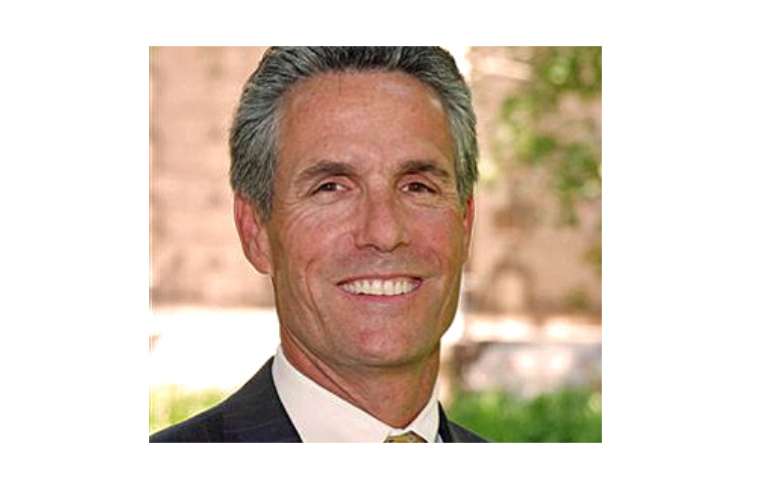
Dave Brady believes there are plenty of ways to change the Douglas County Sheriff’s Department. He would start with the budget.

Brady is challenging longtime incumbent Ron Pierini for the job of sheriff. The primary is in June, with a runoff in November 2014 if necessary. They are the first two to declare their candidacy.

“I served as a reserve (deputy) initially in 1986. The (department’s) budget was $3.1 million and there were 24,000 residents. Now the population has about doubled, the budget is $16 million and they are still running with five cars. I see that as an issue that needs to be addressed,” Brady said.

Dave Brady

Dave Brady

He doesn’t understand why the budget has grown and services have not.

Brady resigned as a reserve deputy when he declared his candidacy this month. This is a volunteer position.

He wants to take his experience in law enforcement and the financial world to do something so the sheriff’s office budget no longer represents 40 percent of Douglas County’s general fund. He believes the department is in need of leadership change.

“I think we can safely reallocate resources. I would want to add a car to the lake at peak hours,” Brady said.

Most times of day there are two Douglas sheriff’s vehicles covering the Lake Tahoe portion of the county.

“I don’t see the lake as being an afterthought. I see it as being a vital and critical element to Douglas County both in the short term and long term,” Brady told Lake Tahoe News. “I see the lake in transition. There are a lot of things being done to reinvent that area. I want to make sure the sheriff’s office is onboard and willing to provide support.”

As a reserve, Brady was on the patrol boat this summer at Tahoe. He works Fourth of July and New Year’s Eve, so he knows all about the influx of tourists to the South Shore.

Brady and his wife moved to the Carson Valley in 1985 after their daughter was born. (They have five adult children.) They had been living in Southern California where he was a police officer in Redondo Beach for eight years. He worked patrol and was primarily a K9 officer.

When the president of the police association said they needed someone to manage the money Brady realized he didn’t have the skills to do so. This led him back to the classroom where he became a certified financial planner.

He also has an associate of arts degree in criminal justice, a bachelor’s in public affairs from USC, as well as a master’s in public administration from USC.

Today he blends law enforcement with finance by managing several police associations in Nevada and California. He is president of Brady & Associates, a financial services firm in the Carson Valley.

When he first moved to Nevada he worked for the state Gaming Control Board.

“When I began my career in law enforcement I did so with the expectation I would lead a law enforcement agency,” Brady said. “Along the way I took on careers that distracted from the typical way up the ranks that people would pursue.”

Brady was appointed to the Douglas County school board in 1995 and resigned in 2004 when he moved out of the district. He was a Douglas County commissioner from 2005-10.

When he isn’t working, Brady likes to compete in ocean sailing races in Southern California – in 2011 he sailed to Hawaii, and once a week he likes to ride his bike up Kingsbury Grade.


Truckee bears entering vehicles

Truckee police officers have been busy chasing bears out of vehicles.

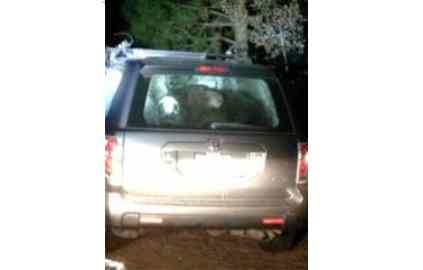
Officers responded to Stuart Staithe in Glenshire late Sunday night for a bear trapped in a car. The bear had locked himself inside and caused significant damage to the interior of the vehicle.

Bears are entering vehicles in Truckee. Photo/Provided

Bears are entering vehicles in Truckee. Photo/Provided

The car’s owner could not be located, so officers broke a window to release the bear.

This was the third such incident in the last two weeks in Truckee.

A bear got stuck in a car in Prosser Lakeview on Oct. 8 and was let out by the car’s owner.

In the early morning hours of Sept. 30 a bear got stuck in a car on Alder Drrive near Alder Creek Middle School. The bear broke a window to escape.

There was major damage to all three of these vehicles. Bears can get stressed and angry when confined to a small space.

The Bear League recommends rolling car windows and locking the doors. Bears can open unlocked car doors. And never leave food or anything smelly in a vehicle.

— Lake Tahoe News staff report


Calif. pilots 2-tiered tuition law at community colleges

By Lydia O’Connor, Huffington Post

A controversial new law will allow some California community colleges to charge more for their most popular classes, outraging some students and public education advocates who fear this lays the foundation for a new standard of rewarding wealth over academic standing.

Signed into law on Thursday by California Governor Jerry Brown, the two-tiered tuition law allows for up to six of the state’s community colleges to participate in a pilot program wherein schools can charge a premium price for the most in-demand classes. The option will only apply to summer and winter term extension classes, and the experiment will expire in 2018.

The six eligible schools are College of the Canyons, Crafton Hills College, Long Beach City College, Oxnard College, Pasadena City College and Solano Community College.

A popular three-unit class would jump from $138 to roughly $600, the San Francisco Bay Guardian reports.

Read the whole story


Mixed reactions to Brown’s stance on gun bills

By David Siders, Sacramento Bee

Gov. Jerry Brown signed legislation Friday banning the use of lead ammunition in hunting in California, but he vetoed the most controversial gun control bill the Legislature sent to him this year, a proposal to ban the sale of certain semi-automatic rifles.

In mixed action on a high-profile package of gun control bills, the Democratic governor signed legislation requiring buyers of long guns to obtain firearm safety certificates, but he vetoed measures to limit the transfer of unsafe handguns and to let Oakland enact its own, more restrictive, gun control regulations.

While environmentalists claimed a victory on the lead ammunition ban and the National Rifle Association took heart in Brown’s veto of the semi-automatic rifle bill, gun control activists were crestfallen.

Read the whole story


Millennials driving change in transportation

By Mantill Williams

The largest generation in U.S. history and the most multi-modal could be a game changer for public transportation and America’s transportation network as a whole.

The millennial generation chooses the most practical transportation mode (driving, public transit, biking or walking) for each trip, and this flexible concept of mobility is spreading. According to the study Millennials and Mobility, nearly 70 percent of millennials, people 18 to 34, use multiple travel options several times or more per week.

The study shows that while car-sharing, bike-sharing, walking and car ownership will all play a part in the multi-modal network, public transportation is ranked highest as the best mode to connect to all other modes, according to 54 percent of millennials polled.

Smartphone applications allow public transit users to be increasingly spontaneous and flexible with their travel decisions. This is a game changing element because it closes the gap with the perceived benefit of auto use.

According to the study, the top five reasons and motivations for choosing public transportation are pragmatic, as 46 percent state that a need to save money drives their choices, 46 percent note convenience, 44 percent want exercise, and 35 percent say they live in a community where it just makes more sense to use public transportation.

Millennials say the key advantages of public transportation is the ability to pay-per-use (58 percent), protecting the environment (50 percent), the ability to socialize online (44 percent), and creating community (44 percent).

Because of the future demands of this millennial generation, transportation systems and public transportation systems in particular, will be built around the smart phone.

Mantill Williams works for the American Public Transportation Association.


Shutdown delays work on Upper Truckee River

One of the casualties of the federal government shutdown is work by the U.S. Forest Service to reroute the Upper Truckee River had to come to an abrupt halt.

Without being able to talk to anyone in the Lake Tahoe office, it is not known how this setback will impact the project or the environment.

Oct. 15 is the date set by the Tahoe Regional Planning Agency for when dirt can no longer be moved in the basin without special permission. The Lahontan Regional Water Quality Control Board also has a say in what is going on with projects affecting waterways.

Both agencies have been watching to make sure the staging are at Sunset Stables has been secured.

“The large stockpile at the staging area was graded and compacted, then covered with a hydraulically-applied bonded fiber matrix. Weighted fiber rolls surround the downslope sides of the pile. In addition the entire staging area has runoff collection ditches along the downslope side that lead to infiltration basins,” Laurie Scribe, environmental scientist with Lahontan, told Lake Tahoe News.

Jeff Cowen with TRPA told Lake Tahoe News, “The shutdown has affected the project, but the USFS was able to get an exemption to keep a couple of people on for one extra week. They are on call for emergencies.”

— Lake Tahoe News staff report