Gamblers drop lots of cash at Stateline casinos

Stateline casinos hauled in a ton of cash in September, especially compared to the previous year.

Revenues were $22 million, which was up 23.2 percent compared to 2012.

The Nevada Gaming Control Board on Thursday said revenues statewide were up 7.4 percent. Casinos brought in $958.8 million. Las Vegas did better than the previous September, while Reno’s numbers were down.

In August, the state was up and Stateline was down.

— Lake Tahoe News staff report


South Tahoe PUD doesn’t have enough in revenues to meet infrastructure needs

By Kathryn Reed

South Tahoe Public Utility District is spending only half of the money it should on infrastructure in order to keep up with an aging system, according to officials.

The board is trying to figure out how to allocate the money it has.

Earlier this month the five electeds had a workshop about the capital improvement program. The board directed staff to do a rate study in order to have more information on which to base a decision. A significant number of water meters have been installed since the 2011 study, which plays a role in water use and money collected.

After the first of the year the district plans to have more workshops to seek the public’s input regarding their priorities.

On average for the last 10 years the district has spent $4,020,022 on sewer and $6,462,312 on water projects each year.
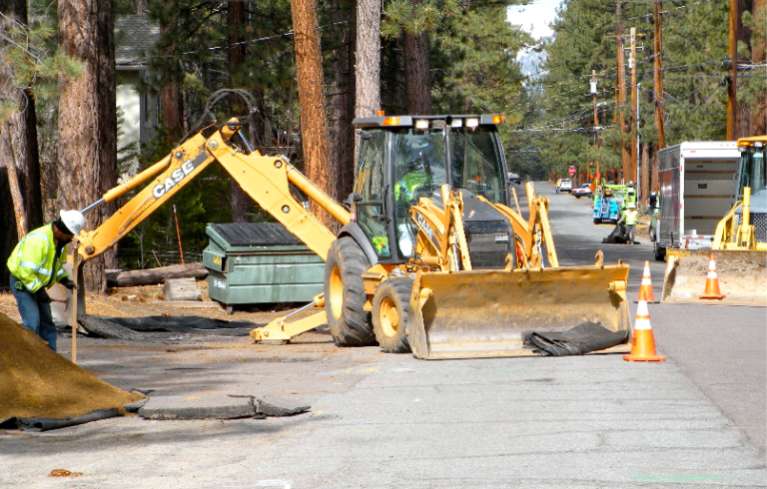
Installing water meters is an unfunded mandate by California. Photo/LTN file

Installing water meters is an unfunded mandate by California. Photo/LTN file

In the district’s 10-year plan nearly $60 million in upgrades to the water system are needed and more than $70 million for the sewer side. Even then, not all of the nearly 8,000 customers who still need a water meter would have one.

To achieve those dollar amounts, the district would need to raise sewer rates 4 percent each year. The needed water rate increase will be determined after the study is completed. Each year that rates are not raised the district falls behind on its master capital improvement plan.

For the current budget, which started July 1, the board voted not to raise sewer or water rates.

Historically, board members Jim Jones and Eric Schafer favor rate increases for infrastructure needs, members Chris Cefalu and Randy Vogelgesang are against increases, and Kelly Sheehan is the swing vote. The last increases were in 2012 on a 3-2 vote to raise sewer rates 5 percent and water rates 2 percent.

Rates in the last 10 years have gone up on average 2 percent a year for water and 2.3 percent for sewer.

Needs of the district

Water meters is the biggest issue board members hear about from constituents. About one-third of STPUD customers are on meters. This creates an inequity between users when it comes to who is paying what.

“It will be unfair until everyone is metered,” Richard Solbrig, STPUD general manager, told Lake Tahoe News.

The state is mandating California water districts install meters by 2025. While the district lobbied to be exempt because it is not in the California watershed, lawmakers said too bad.

The district is looking into zero interest loans from the state to cover the $27 million expense to complete the meter installation. To pay that money back would require a rate increase either just for the 20-year repayment of the loan or an ongoing adjustment. That is another issue for the board to decide.

If STPUD were to ignore the mandate, money from the state would dry up and penalties are likely.

The district also has the need to replace more than 100,000 feet of undersized water line.

“With Angora we had enough water. How much worse would it have been if we didn’t?” Solbrig said of the 2007 Angora Fire that destroyed 254 houses and burned more than 3,000 acres on the South Shore.

An area like Sierra Tract in South Lake Tahoe doesn’t have the minimum 8-inch water lines to fight a fire like Angora. There aren’t hydrants every 500 feet like firefighters want.

Every time the district installs water lines it also puts in meters at residences and hydrants in the neighborhood. Some of the “state streets” were done this fall, with the rest of the area, including Tahoe Keys Boulevard, to get upgraded water lines next year.

Going forward

“The board is looking at the affordability to ratepayers,” Solbrig said in regards to if and when to raise rates.

Earlier this year the majority of the board believed ratepayers could not sustain an increase because of the economic downturn.

Chief Financial Officer Paul Hughes explained that the industry standard is to replace 1 percent of underground facilities annually and above ground at 2 percent. The district isn’t doing that. STPUD’s infrastructure is worth about $1.3 billion.

Besides meters and water lines, the district also has a couple storage tanks and booster stations that need replacing.

“All of our lift stations are approaching 50 years in age and need significant refurbishments,” Solbrig said.

When it comes to prioritizing projects, the district looks at what lines have sustained leaks, the probability of failure, if there are backup units and the risk involved if nothing is done.

The booster station at Luther Pass is inadequate. It pumps the treated wastewater into Alpine County.

“There is not a full backup for utilities there. Every year we get a little more nervous,” Solbrig said.

If something significant fails on the wastewater side, it would likely have a more immediate impact on the environment. But a fire that cannot be extinguished because of inadequate water supply would undoubtedly be detrimental to the land and water as well.

Those are the concerns the board must weigh when deciding how to spend money and where the money will come from.

There was a time in the late 1970s and early 1980s when South Tahoe PUD was banned from adding customers because of issues with the export lines – as in spills and leaks involving sewage and treated wastewater.

Staff wants to ensure the district does not create a scenario with the existing infrastructure where that could happen again.

The bottom line is there is not enough money being generated to do all that needs to be done.

Seventy percent of revenues come from ratepayers. The remaining 30 percent is a combination of grants, loans, connection fees, investment revenue, delinquent penalties and property tax.

With water and sewer mandatory for those who are connected to STPUD, it means 70 percent of the residential ratepayers don’t live in the district. The cost to locals would be much greater without the second homeowner subsidy.


El Dorado County hires probation chief

El Dorado County Probation Department will finally have a leader on Dec. 2.

Brian Richart has been appointed chief probation officer.

Greg Sly left the top spot in June on medical leave. He officially retired Sept. 13. Days before his last official day Sly sent a document to each member of the Board of Supervisors. The contents of which have not been disclosed by anyone. Sly told Lake Tahoe News he does not want to talk at this time about any further dealings he may have with the county.

Richart was hired away from Alameda County. He was hired in 2011 as chief of staff overseeing the administrative function of Human Resources, Fiscal, Information Technology Unit, Training, Information Services and Research, and Quality Assurance. Since July, he has been acting director of Adult Field Services.

Prior to that he was president of Assessments.com, a software developer. From 2006-10 he was chief probation officer for Shasta County. He spent 13 years with the Shasta department.

— Lake Tahoe News staff report


Caesars 3Q loss worse than expected

By AP

LAS VEGAS — Caesars Entertainment Corp. said Tuesday that its third-quarter loss expanded by more than 50 percent due to weakness in the U.S. gambling market and stiffer competition.

Casino revenue fell 7 percent because of fewer visitors to its properties in Atlantic City and other U.S. markets outside of Nevada. Caesars also lost revenue from selling part of its stake in a casino in Uruguay.

Caesars is the parent company of Harrah’s Lake Tahoe and Harveys in Stateline.

The company lost $761.4 million, or $6.03 per share, for the quarter that ended Sept. 30. A year earlier its loss was $505.5 million, or $4.03 per share.

The loss from continuing operations came to $6.12 per share, far short of Wall Street’s prediction of $1.28 per share. The company absorbed an accounting charge of $930.9 million for writing down the value of assets in Atlantic City and other U.S. markets outside of Las Vegas. That compared with a similar charge a year ago of $419 million.

Revenue fell less than 1 percent, to $2.18 billion from $2.2 billion. Analysts surveyed by FactSet expected $2.24 billion.

In Las Vegas, however, revenue rose about 5 percent to $773.5 million, as Caesars brought in more money from gambling, hotel rooms and food.

The casino business was among the industries hardest hit by the economic downturn, and has been slow to recover. Visitor numbers are only now returning to 2007 levels in Las Vegas.

Also Tuesday, Caesars said that private equity firms Apollo Global Management and TPG Global are adding to their investment in a company called Caesars Acquisition Co., which has applied to trade on the Nasdaq. Their total investment now comes to about $600 million, Caesars said.

Caesars Entertainment and Caesars Acquisition plan a joint venture called Caesars Growth Partners, which will acquire assets for online gambling.

Caesars shares had fallen 16 cents to close at $18.40 before the results were released. They fell another 50 cents, or 2.7 percent, to $17.90 in after-market trading.


Calif. joins others to battle climate change

By Paul Rogers, San Jose Mercury News

SAN FRANCISCO — Saying that the West Coast must lead the way in battling climate change, the governors of California, Oregon and Washington, along with the premier of British Columbia, signed an agreement Monday committing the Canadian province and the three states to coordinate global-warming policies.

Each state and the Canadian province promised to take roughly a dozen actions, including streamlining permits for solar and wind projects, better integrating the electric power grid, supporting more research on ocean acidification and expanding government purchases of electric vehicles.

“You are witnessing a historic small-but-powerful first step,” Gov. Jerry Brown said during the event at Cisco’s San Francisco campus.

“It’s only the beginning. You just watch,” Brown said. “Next year and the year after and the year after that, this will spread until finally we get a real handle and grasp on what is the world’s greatest existential challenge — the stability of our climate, on which we all depend.”

Read the whole story


Nev. selling bonds to pay back federal debt

By Priya Anand, Bloomberg

Nevada, whose 9.5 percent unemployment rate is the nation’s highest, plans to sell $572 million in bonds this week to repay the federal government for jobless benefits. It’s the state’s biggest sale since 2008.

The borrowing would pay down the $520 million Nevada owes the U.S. for bolstering its unemployment fund after the longest recession since the 1930s pushed the jobless rate to a record 14 percent in 2010. That debt peaked at $846 million in 2012.

Sixteen states and the Virgin Islands collectively owe the federal government $21.3 billion for boosting jobless funds as the national unemployment rate reached a 26-year high of 9.9 percent, Labor Department figures show. Nevada is the eighth-most indebted, with California leading at $9.5 billion.

Read the whole story


Feds, states want to track drivers’ mileage

By Evan Halper, Los Angeles Times

WASHINGTON — As America’s road planners struggle to find the cash to mend a crumbling highway system, many are beginning to see a solution in a little black box that fits neatly by the dashboard of your car.

The devices, which track every mile a motorist drives and transmit that information to bureaucrats, are at the center of a controversial attempt in Washington and state planning offices to overhaul the outdated system for funding America’s major roads.

The usually dull arena of highway planning has suddenly spawned intense debate and colorful alliances. Libertarians have joined environmental groups in lobbying to allow government to use the little boxes to keep track of the miles you drive, and possibly where you drive them — then use the information to draw up a tax bill.

The tea party is aghast. The American Civil Liberties Union is deeply concerned, too, raising a variety of privacy issues.

And while Congress can’t agree on whether to proceed, several states are not waiting. They are exploring how, over the next decade, they can move to a system in which drivers pay per mile of road they roll over. Thousands of motorists have already taken the black boxes, some of which have GPS monitoring, for a test drive.

Read the whole story


Snow impacts schools, roads in Lake Tahoe

Douglas County schools at the lake are starting one hour later because of snow. Lake Tahoe Unified schools are open. In Tahoe Truckee Unified it’s a snow day for Donner Trail Elementary and there is no bus service on Donner Summit.

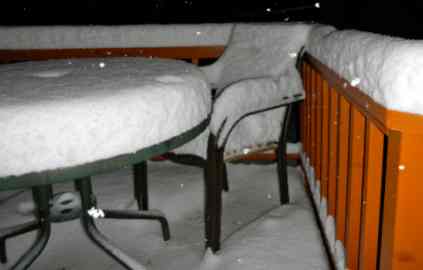
Not the ideal spot for morning coffee on Oct. 28 in South Lake Tahoe. Photo/LTN

Not the ideal spot for morning coffee on Oct. 28 in South Lake Tahoe. Photo/LTN

A fast moving storm dumped 6 inches of snow in South Lake Tahoe overnight. A winter weather advisory remains in effect for the basin until 1pm Monday.

At 7:45am it was hailing at Stateline.

The National Weather Service in Reno told Lake Tahoe News more snow is expected to fall through today, with light showers this evening. It will be dry Wednesday, with close to normal temperatures by the weekend.

“It was a pretty good system for late October, but it’s not out of the usual,” Brian O’Hara, NWS meteorologist, told LTN.

Chain requirements are in effect on most mountain passes. Click on the state icons on the home page of Lake Tahoe News for road conditions.

— Lake Tahoe News staff report


Growth in online sales may set Cyber-Monday record

By Laura Stevens, Wall Street Journal

ATLANTA — FedEx Corp. expects to ship a record 22 million packages on Dec. 2, known as Cyber-Monday, which would make it the first time ever it has been the busiest shopping day of the holiday season.

The total number of packages that day would be an 11 percent increase over the company’s busiest day last year, FedEx said.

FedEx expects to handle 85 million shipments from Dec. 1 through Dec. 7, a 13 percent increase in shipments over last year and another record for the holiday season.

FedEx attributed the increase to the continued acceleration in online retail, including electronics, clothing and luxury goods. In addition, Cyber-Monday, a term coined to label one of the busiest online shopping days of the year, falls later in the shopping season this year.

“Online commerce is growing at three to four times the rate of retail,” said Raj Subramaniam, FedEx executive vice president of marketing and communications.

Also, Cyber-Monday got a boost this year because Thanksgiving falls so late in November. Thanksgiving is Nov. 28, which leaves less than four weeks before Christmas. No matter how much shopping gets done in brick-and-mortar retail stores on so-called Black Friday, the day after Thanksgiving and into the following weekend, FedEx still expects a lot of shopping to extend into the workweek on Monday.

Read the whole story


Feds looking at regulating food for animals

By Michelle Fay Cortez, Bloomberg

Pet and animal foods would for the first time have to meet uniform manufacturing, processing and packaging standards under rules proposed by the U.S. Food and Drug Administration.

While the FDA typically gets involved in investigating contaminated pet food that is already on the market, the new regulations are designed to prevent disease-causing bacteria and dangerous chemicals before the poisoning occurs. The rules are part of implementation of the Food Safety Modernization Act of 2011, the biggest change to food oversight since 1938.

The safety of pet food has been in the spotlight in part because of imported jerky treats imported from China that have sickened 3,600 dogs and 10 cats, and killed 580, in the U.S. since 2007. The FDA has been unable to pinpoint the cause of the illness. The new rule, added to two others related to humans proposed this year, would ensure that foods brought into the U.S. from abroad meet FDA safety standards.

Read the whole story