Few problems with pot in California

By Adam Nagourney and Rick Lyman, New York Times

LOS ANGELES — In the heart of Northern California’s marijuana growing region, the sheriff’s office is inundated each fall with complaints about the stench of marijuana plots or the latest expropriation of public land by growers. Its tranquil communities have been altered by the emergence of a wealthy class of marijuana entrepreneurs, while nearly 500 miles away in Los Angeles, officials have struggled to regulate an explosion of medical marijuana shops.

But at a time when polls show widening public support for legalization — recreational marijuana is about to become legal in Colorado and Washington, and voter initiatives are in the pipeline in at least three other states — California’s 17-year experience as the first state to legalize medical marijuana offers surprising lessons, experts say.

Warnings voiced against partial legalization — of civic disorder, increased lawlessness and a drastic rise in other drug use — have proved unfounded.

Instead, research suggests both that marijuana has become an alcohol substitute for younger people here and in other states that have legalized medical marijuana, and that while driving under the influence of any intoxicant is dangerous, driving after smoking marijuana is less dangerous than after drinking alcohol.

Although marijuana is legal here only for medical use, it is widely available. There is no evidence that its use by teenagers has risen since the 1996 legalization, though it is an open question whether outright legalization would make the drug that much easier for young people to get, and thus contribute to increased use.

Read the whole story


FAA to allow more electronic devices on flights

By Reuters

The Federal Aviation Administration said on Thursday it will allow airlines to expand the use of portable electronic devices in flight.

The agency said it is immediately providing airlines with guidance for implementation, the time frame for which is expected to vary among carriers.

Read the whole story


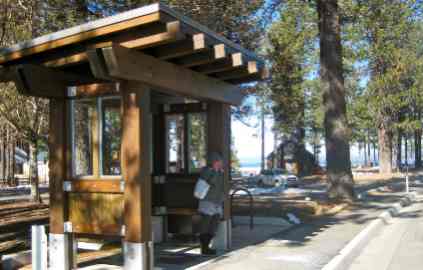
Shelters added in South Tahoe for bus riders

Bus riders now have shelter in South Lake Tahoe. Photo/Provided

Bus riders now have shelter in South Lake Tahoe. Photo/Provided

It’s going to be lot more comfortable waiting for a bus this winter in South Lake Tahoe with the addition of six covered shelters.

The structures are located on Highway 50 in front of South Tahoe Middle School, by the senior center, South Lake Tahoe Library, El Dorado Center, corner of Ski Run Boulevard and Highway 50, and next to Lakeview Commons.

Tahoe Transportation District installed the shelters along with bike racks, bear-safe trash cans, seating, and weather protection for riders.

Additional structures along Pioneer Trail will be put in this fall.

Two of the shelters are pre-fabricated aluminum frames and glass that match existing shelters on the South Shore, while the remaining four are a new design and constructed of redwood timber and glass.

Each is wired for future installation of real-time passenger information technology to alert riders of the estimated arrival of the next bus.

The total construction cost of the six units was approximately $212,000 including materials, labor, site work and installation.


NV Energy’s quarterly earnings drop

By Kristy Totten, Las Vegas Review-Journal

Cool weather, refunds to consumers and merger-related costs held down NV Energy earnings in the third quarter.

The utility reported Friday a third-quarter net income of $187.2 million, or 79 cents per share — $36 million less than third-quarter earnings in 2012, which totaled $223.2 million, or 94 cents per share.

In September, the Nevada Public Utilities Commission ordered NV Energy to refund $10 million to customers in Southern Nevada, and $4.5 million to customers in Northern Nevada. The PUCN permits NV Energy to raise rates to make up for income lost to energy-conservation efforts, but the utility overcollected in 2012.

“The commission recently completed its annual review and directed us to refund 2012 revenues collected through (energy efficiency implementation rates), based on the finding that we earned more than our authorized rate of return last year,” said Kevin Bethel, NV Energy vice president and chief financial officer, during a conference call.

Read the whole story


Barton Health buying multiple properties, building cogeneration plant at hospital

By Kathryn Reed

Barton Health has been on a bit of a property buying spree as well as deep into plans to be more energy efficient.

The South Lake Tahoe health care system just closed escrow on four buildings on Emerald Bay Road, two of which the organization was renting. One is used for Barton University and the other physician billing.

“To reduce costs in the long term, Barton Health purchased the buildings as the cost of purchase was less than the rental of the buildings,” Rich Belli, director of Facilities Administration, told Lake Tahoe News.

Barton now owns these buildings on Emerald Bay Road. Photo/LTN

Barton now owns these buildings on Emerald Bay Road. Photo/LTN

Barton has also purchased the Ponderosa Glass building that is next door on the west side. The address for that is 1119 Emerald Bay Road, while the other properties are 1111, 1113, and 1115 Emerald Bay Road.

“It is unclear what Barton will do with the Ponderosa building once the lease is up. Barton still rents some buildings and could move other offices to those buildings or expand a new service to the community in that building,” Belli said. The lease expires in three years.

Renters in the other buildings will be able to continue to operate their businesses for the foreseeable future.

Dave Cooper had owned the 1111, 1113, 1115 properties. He is the same property owner who recently sold land and a building to South Lake Tahoe in the industrial area. The city intends to relocate its fleet of snow removal equipment there.

As part of the purchase agreement with Barton, Cooper agreed to pave the back lot so there is now adequate parking. The back of what is known as Barton University had long been just dirt. Tahoe Regional Planning Agency required erosion control measures be put in at the same time.

TRPA has also signed off on all the permits for Barton Memorial Hospital to build a utility plant that will replace the 40-year-old facility. The Governing Board approved the proposal at its October meeting.

“As part of the project, Barton will be adding a cogeneration plant that will produce roughly 75 percent of our own electricity and will enable the hospital to reuse the excess heat to provide heat to the hospital. This will save the hospital on utility costs moving forward,” Belli said.

It’s estimated the hospital will save $200,000 on utility bills with the cogeneration plant.

Construction is expected to start next year. The Office of Statewide Health Planning and Development still needs to give its OK.

The new building will be south of the emergency room entrance. The floor area will be 6,555-square-feet, and the building will be 41-feet-tall. Even though existing buildings range from 25 to 37 feet in height, the TRPA staff report said the taller building “is consistent and compatible with these other structures and uses.”

The staff report also said, “The new (central utility plant) building will incorporate several new and sustainable technologies including equipment for heating and cooling, domestic hot water, medical air and medical vacuum systems, process and humidifying steam, gas powered cogeneration equipment, and two new diesel engine-driven generators that will provide emergency power for the hospital in case of loss or interruption of utility supply.”

The current plant, also located outside the hospital, will become storage.


Calif. draft water plan lacks substance

By Bettina Boxall, Los Angeles Times

State officials Thursday released the draft of a new California Water Action Plan that doesn’t include much action.

The 17-page document covers little new ground, outlining familiar water policy goals with few details of how they will be achieved.

Among the goals:

• Make water conservation a “way of life” in California.

• Develop local supplies such as recycled water to make regions more self-reliant and reduce their need for imported water.

• Expand the state’s water storage, whether in the form of new reservoirs or groundwater reserves.

• Improve flood protection and provide safe drinking water for all communities.

• Restore important ecosystems.

Read the whole story


4 hurt in Kingsbury Grade crash

Four people were seriously injured in a two-car accident Friday afternoon on Kingsbury Grade.

Nevada Highway Patrol did not have the names, ages or hometowns of any of the women.

Two women were taken to Renown Medical Center in Reno by CareFlight and two by ambulance. NHP Trooper Dan Lopez told Lake Tahoe News they all had serious injuries.

Firefighters had to extricate some of the women. Lopez said a Toyota with three women was headed west when it crossed the center line and struck a Subaru going in the other direction. The cause of the Nov. 1 2:08pm accident is under investigation.

The road was reopened to one-way traffic at 3:15pm.

— Lake Tahoe News staff report


Oversight missing on Calif. plastic bag recycling

By Laura Olson, AP

SACRAMENTO — Seeking to reduce the number of plastic shopping bags cluttering California’s beaches and landfills, the state Legislature in 2006 passed a law requiring grocery stores and other large retailers to give consumers an easy way of returning used bags.

Stores handing out plastic bags to customers were directed to collect used bags for recycling and make reusable bags available for purchase.

Seven years later, recycling bins continue to sit outside California stores. But the agency in charge of the recycling program can’t say how many bags are being recycled or whether the program has affected the demand, factors that could help state lawmakers in weighing proposals to ban the product.

Stores are required to submit annual reports detailing how many bags were bought by the store, how many were returned by consumers and which recyclers processed them.

A review by the Associated Press found data has not been analyzed since 2009, two years after the law took effect. Then, 3 percent of California’s plastic bags were being recycled, a 1 percentage point increase.

While totals of bags purchased and recycled during the last three years were made available after an AP request, Department of Resources Recycling and Recovery spokesman Mark Oldfield said those numbers have not been verified so the official recycling rate can be updated.

He said the program lacks resources to analyze recent reports. No fees are charged to bag manufacturers or retailers. While the law allows for fines if stores do not comply, no violations have been issued.

“Work on the program at this point consists of a few weeks of data entry by entry-level staffers when the reports come in during the spring,” Oldfield said.

Last year, lawmakers renewed the law through 2020. But in doing so, they did not give the recycling department, known as CalRecycle, more authority or money to improve oversight.

At least four other states, including New York and Delaware, have enacted statewide recycling programs to prevent plastic waste. More than a dozen states this year considered fees or bans on the bags, according to the National Conference of State Legislatures.

Former Democratic Assemblyman Lloyd Levine, who authored the California recycling legislation, said he hoped the program would help prevent the tangle of dirty bags in tree branches in his San Fernando Valley district. He initially sought a fee on bags, but the plastic industry urged him to first try recycling.

“My goal was to eliminate plastic bags from polluting the environment,” Levine said. “It’s now 2013 and recycling rates have only marginally improved. It’s absolutely pathetic.”

The state’s raw data from the last three years appears to show the weight of bags bought by retailers has decreased, while the weight of bags being recycled grew slightly.

Retailers reported purchasing 62.3 million pounds of bags in 2012, down from 107.4 million in 2008. They reported 4 million pounds of bags and 27 million pounds of mixed bags and plastic film were returned for recycling in 2012.

But those figures don’t reveal how many bags were recycled. A study by CSU Sacramento, which calculated previous recycling rates, showed the store-submitted totals for collected bags often included other materials. Without verifying the stores’ totals, it’s impossible to say how much was from bags, plastic film or general garbage.

Mark Murray, executive director of Californians Against Waste, said his group has not pushed CalRecycle to update recycling rates because he does not want to take resources from more effective programs.

“I’m not sure having state bean-counters counting recycling that’s not happening is all that useful,” he said.

Murray credited the law with increasing recycling of commercial plastic film stores previously discarded, but said it has failed to significantly affect how many shopping bags are recycled. He faulted the plastics industry for not doing enough public outreach.

Plastics industry officials say they fulfilled their role by creating the bins, signs and other educational materials. They say grocers failed to aggressively promote the program, while the state grocers association argues education was the responsibility of manufacturers.

“It didn’t increase recycling the way we had hoped,” said Kevin Kelly, chief executive of Union City-based Emerald Packaging and among those involved in discussions on the original recycling legislation.

Grocers acknowledge they have changed their position on recycling and now support phasing out bags. California Grocers Association spokesman Dan Heylen said stores have been shifting away from plastic as California communities approved local bag bans.

More than 80 counties and cities in California have banned plastic bags, including South Lake Tahoe, where a ban starts in January.

Levine says he is disappointed the program — and what his former staffers affectionately refer to as “the Lloyd bins” — has not had a greater effect. He now supports a statewide bag ban.

“It’s never too late to increase awareness on recycling,” he said. “But at this point, I am skeptical of whether that will ever be as effective as we’d like.”



Casinos adapt to latest $100 bill

By Ed Komenda, Las Vegas Sun

There’s a new Benjamin in town, and the casino companies were ready for him.

For years, Las Vegas’ gaming companies had been preparing for the Oct. 8 debut of a new $100 bill. In advance of its arrival, resorts and equipment manufacturers spent thousands of hours making sure every slot machine and money-taking device would accept them without a hitch.

It worked. Bosses at the biggest gaming companies say the transition so far has been smooth.

David Kubajak was among the first to find out about the new $100 bill.

As senior director of operations at JCM Global, which supplies more than 75 percent of the country’s 850,000 slot machine bill validators, Kubajak got word from the U.S. Treasury Department about five years ago that Benjamin Franklin was getting a makeover.

The U.S. Bureau of Engraving and Printing relies on industry experts such as Kubajak for feedback on bill design. The Federal Reserve wants to make sure its design is secure and difficult to counterfeit.

Read the whole story


Nissensohn guilty on 3 counts of murder

By Kathryn Reed

Joseph Michael Nissensohn stared intently at the court clerk on Thursday as she read the jury’s verdicts – guilty on three counts of first-degree murder.

The six-woman, six-man jury found the 62-year-old guilty of murdering Kathy Graves, 15. The remains of the South Lake Tahoe teen were found near the Mount Tallac trailhead in 1990, about one year after she was last seen alive. He was charged with that crime in January 2008. He was also found guilty of killing Monterey County teenagers Tanya Jones and Tammy Lynn Jarschke in 1981. He was charged with those murders in fall 2008.

Joseph Michael Nissensohn

Joseph Michael Nissensohn

But these aren’t Nissensohn’s first murder convictions. In 1990 he was convicted of second-degree murder in the 1989 stabbing death of a woman in Tillicum, Wash. He served 15 years in prison for that crime.

With the three convictions on Oct. 31, Nissensohn faces the death penalty. He has been in El Dorado County Jail since 2008. The penalty phase begins Nov. 12 and should last a few weeks.

“A very bad person is finally being held for his actions as a direct result of the efforts of a dedicated team. The victims and their families are entitled to nothing less,” District Attorney Vern Pierson told Lake Tahoe News.

Nissensohn didn’t interact with his two attorneys, Hayes Gable III and Peter Kmeto, who sat to his left in El Dorado County Superior Court in South Lake Tahoe. With his gray hair pulled back in a ponytail, his focus was on the clerk and Judge Suzanne Kingsbury and not the 12 who just found him guilty.