Remembering passwords might become passé

By NPR

You’re probably well-acquainted with one of life’s little annoyances: the password.

Your voicemail. Your email. Your smartphone. Maybe you’ve got a different one for each — which means you’re bound to slip up.

Or maybe you use the same one for everything — a security no-no. The number of sites and services that demand a password or PIN seems to have grown exponentially. And keeping track of the ones you’ve got? Forget about it.

Well, Silicon Valley titans are getting tired of them, too. At the Tech Crunch Disrupt conference in September, Google’s top security executive, Heather Adkins, declared that passwords are dead. And that’s straight from a founding member of the security team at Google, home to 425 million email accounts.

Adkins says startups tying their future to passwords might as well give up now, given how much work it takes to keep customers’ passwords secure.

But if passwords are a thing of the past, what will replace them?


Wall Street is betting on biometrics. Now that Apple is adding a fingerprint sensor to its newest iPhone, companies that make similar technology have seen their share prices jump. And industry analysts say the market for fingerprint scanners could top $10 billion in the next five years.

Read the whole story


Supplement labels and contents not always the same

By Anahad O’Connor, New York Times

Americans spend an estimated $5 billion a year on unproven herbal supplements that promise everything from fighting off colds to curbing hot flashes and boosting memory. But now there is a new reason for supplement buyers to beware: DNA tests show that many pills labeled as healing herbs are little more than powdered rice and weeds.

Using a test called DNA barcoding, a kind of genetic fingerprinting that has also been used to help uncover labeling fraud in the commercial seafood industry, Canadian researchers tested 44 bottles of popular supplements sold by 12 companies. They found that many were not what they claimed to be, and that pills labeled as popular herbs were often diluted — or replaced entirely — by cheap fillers like soybean, wheat and rice.

Consumer advocates and scientists say the research provides more evidence that the herbal supplement industry is riddled with questionable practices. Industry representatives argue that any problems are not widespread.

For the study, the researchers selected popular medicinal herbs, and then randomly bought different brands of those products from stores and outlets in Canada and the United States. To avoid singling out any company, they did not disclose any product names.

Among their findings were bottles of echinacea supplements, used by millions of Americans to prevent and treat colds, that contained ground up bitter weed, Parthenium hysterophorus, an invasive plant found in India and Australia that has been linked to rashes, nausea and flatulence.

Read the whole story


Incline resident found guilty of armed robbery

Jorge Miranda-Rivas will be going to prison for at least seven years for the armed robbery at the Chevron in Incline Village.

The sentence of seven to 23 years was handed down Nov. 7 in the Second Judicial District Court after Miranda-Rivas was found guilty on one count each of robbery with a deadly weapon, discharging a weapon from within a structure, assault with a deadly weapon and grand larceny of an automobile.

The Incline Village man robbed the station the night of Jan. 2. According to investigators, he entered the Chevron wearing a face mask, demanded money from the clerk, discharged a revolver inside the store and fled with an undisclosed amount of cash.

Also charged in the crime are two juveniles and Jorge Torres. Torres was arrested in June.

 — Lake Tahoe News staff report


Are vets using too may antibiotics on farms?

By Dan Charles, NPR

In a barn outside Manhattan, Kansas, researchers from Kansas State University are trying to solve the riddle of bovine respiratory disease. They’re sticking plastic rods down the noses of 6-month-old calves, collecting samples of bacteria.

“This bacteria, Mannheimia haemolytica, lives in most cattle,” explains Mike Apley, one of the research leaders. Sometimes, for reasons that aren’t well understood, those bacteria make cattle sick. When that happens, or when it just seems likely to happen, cattlemen deploy antibiotics.

Apley hopes to find out, among other things, whether those antibiotics actually work as advertised. If they don’t, he says, it’s an easy decision to not use them. Farmers save money and meat industry critics, who want farmers to use fewer antibiotics, are happy, too. “It’s a win-win for everyone.”

These pigs, newly weaned from their mothers, are at their most vulnerable stage of life. They’re getting antibiotics in their water to ward off bacterial infection.

Piglets in a pen on a hog farm in Frankenstein, Mo.

Unfortunately, when it comes to antibiotics on the farm, it’s not always a win-win. And when there’s a fight, veterinarians are right in the middle of it, pushed back and forth by conflicting loyalties.

Read the whole story


S. Tahoe making dent in unfunded liabilities

By Kathryn Reed

South Lake Tahoe’s unfunded liability for health care was dramatically decreased by having retirees join Medicare. If they all go this route, the figure will drop even more.

Before the change was implemented earlier this year, the city was on the hook for $52 million. That amount would have to be paid if the city closed its doors today. In actuality there will always be a balance due. But it can be lowered if the city sets money aside for the future and implements changes to the program.

That $52 million becomes $37 million when all retirees who are 65 and older switch to Medicare. This is a program City Manager Nancy Kerry implemented.

John Bartel, president of Bartel Associates, gave a presentation to the City Council on Nov. 5 about where the city stands with its health care and pension obligations. He took a more conservative approach. There could be another $7.5 million reduction depending on what plan the retirees choose.

Changes have been implemented throughout the years to trim retiree health benefits. There was a time when the city worker and that person’s family could be on the plan forever – even after the employee died.

Employees heard the numbers at a mandatory meeting Nov. 6.

Depending on which medical program employees enroll in, there could be an annual cost savings to the general fund of $300,000. This is money the residents could see reinvested in the community.

Reasons public entities are caring more about unfunded liability is that under a new government accounting standard all unfunded liability has to be accounted for. It could affect the ability to borrow money or issue debt through a bond because it is now a debt on the books.

City staff is in talks with employee groups about potential changes to the health care plan. It had been hoped the Affordable Care Act would have played a roll, but it does not allow an employer to pay part of the fees.

“Every city that is in bankruptcy is in bankruptcy because of benefits problems. You have to stop the runaway train,” Kerry told Lake Tahoe News.

In total, the city has 140 retirees it is responsible for when it comes to funding pension and health care benefits. This doesn’t include their dependents on the health program.

On the pension side, the liability is $53.6 million.

“The bulk of your liability rests with the people not providing services,” Bartel said of the Public Employee Retirement System, or the state pension fund.

Public employees are guaranteed a defined paycheck when they retire no matter how well the money was invested by PERS officials and what the return is. That is why public entities have to keep paying more. The pension is a lifetime commitment and investments don’t always go up.

The city’s hands are tied when it comes to making changes to PERS. The state Legislature controls the rulebook. That means cops and firefighters can keep retiring at age 50, and all other employees at 55.

Cities across the country are dealing with this issue of unfunded liabilities. The Wall Street Journal launched a series looking at the fiscal health of the country’s 250 largest cities.


2 S. Lake Tahoe murderers remain at-large

While the investigation into two South Lake Tahoe homicides continues, the trail to the killers is getting colder.

“It’s very weird and unusual for our area,” Police Chief Brian Uhler told Lake Tahoe News of the unsolved crimes. “We continue to methodically make progress.”

Julian Acevedo Salvador, 28, of South Lake Tahoe was stabbed to death July 20 along Pioneer Trial after he was in an argument and then a fistfight with an unknown assailant.

Leads have taken detectives to Southern California and the Bay Area, but to no avail.

Working with SLTPD on both cases are El Dorado County Sheriff’s Department, El Dorado County District Attorney’s Office and South Lake El Dorado Narcotics Enforcement Team.

The other homicide occurred Aug. 6 when a gunman opened fire and killed USA gas station clerk Manpreet Singh, 27.

— Lake Tahoe News staff reporter


Swanson enters El Dorado County supes race

By Kathryn Reed

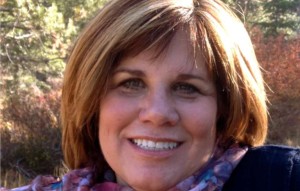
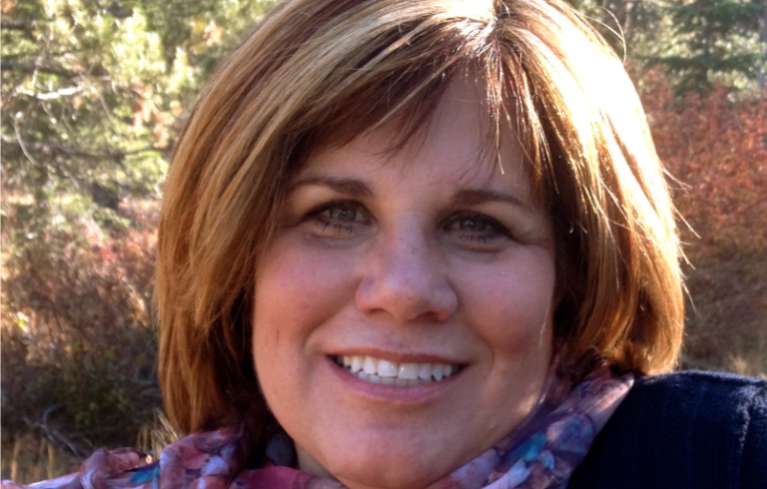
Experience, knowledge and the ability to get things done are what Angela Swanson believes she would bring to the job of El Dorado County supervisor.

The 53-year-old officially threw her hat in the ring this week when at the Nov. 5 South Lake Tahoe City Council meeting she told her peers she would not be seeking re-election to that body but instead would be going for the county position in 2014.

When she isn’t at the twice-monthly council meetings she is either at the Board of Supervisors meeting in Placerville or watching it online. She believes in relationship building, and has been doing so on the West Slope to grasp a better understanding of countywide issues.
Angela Swanson

Angela Swanson

“District 5 is very different than in the past with the inclusion of the district going to Pollock Pines. We are no longer the lake district. We are the eastern end of El Dorado County,” Swanson told Lake Tahoe News. “We have to know how to play in the big sandbox.”

Swanson is entering her fourth year on the City Council. In the past three years she said, “I had to expand my base knowledge of Tahoe and El Dorado County to understand environmental politics, transportation, growth, development, management of public safety and fire, and more.”

She says her city appointments have helped her gain a breadth of knowledge. For two years she was on the California Tahoe Conservancy board, is in her third year on the Tahoe Transportation District, three years on the Cal-Tahoe Joint Powers Authority, and has been on the Waste Disposal board.

Swanson is also active in the League of California Cities. She is on the Transportation, Communication, and Public Works Policy Committee as well as the Women’s Caucus dealing with pensions.

Outside of the city responsibilities Swanson is part of Lake Tahoe Collaborative, advisory board member of the Boys & Girls Club of Lake Tahoe and on the Lake Tahoe Educational Foundation board.

It is the latter role and that of being a council member that put her name in headlines in August 2012. The ed foundation accepted money from a man who had business before the council and who subsequently went to prison on drug charges. The District Attorney’s Office has never filed charges nor exonerated her in that case, with DA Vern Pierson telling Lake Tahoe News there is still an active investigation involving Swanson.

Swanson said she has only spoken with Pierson twice in the last 15 months.

“My focus needs to be not on worrying about forces outside my control, but continuing to do what I have done since last August – come prepared, come with a plan, do hard work, and execute projects on behalf of the city at the policy level,” Swanson said.

Prior to being elected to the council, Swanson was on the Lake Tahoe Unified School District board from 2005-09. She left before the term expired “to focus on my family after a job loss.”

She is still working in school facility planning arena, though most of her emphasis is on grant writing projects.

The other declared candidates for the fifth district seat are Gerri Grego and Sue Novasel.


Paid parking may be decided by S. Tahoe voters

By Kathryn Reed

Do the voters of South Lake Tahoe want paid parking?

That is a question a group of residents wants on the June 3 ballot. The goal if voters say remove the parking kiosks, is they would be uprooted 30 days later.

The legwork to get the initiative on the ballot started Wednesday. This is one day after the City Council heard a report from staff about how the program is working.

The names on the document given to the city Nov. 6 are Peggy Bourland, John Cefalu and John Grace.

A grassroots group called Tahoe4Tahoe is behind the initiative. Bourland, who is part of the group, would not say how many people are involved, nor would she say who they are. The group formed out of frustrations with the city in regards to paid parking.

Bourland told Lake Tahoe News the point of the ballot initiative is to give the people a voice in the parking decision, adding that the group believes the City Council acted against the will of most residents with the parking program that started this past summer.

However, the language on the “text of the initiative” is much broader than that and could limit the power of the city government.

The text says, “The people of the city of South Lake Tahoe do ordain that the city of South Lake Tahoe be prohibited from enacting any ordinance that would result in a tax, an assessment, a fee, or charge of any kind for the use of public streets for vehicle parking purposes.” It ends with, “Any other ordinances or parts of ordinances of the city of South Lake Tahoe in conflict herewith are hereby repealed.”

The next step is for the city attorney to answer the “text of the initiative”. Tom Watson has 15 days to write a legal summary that does not exceed 500 words and he must write a ballot title.

It is possible if a legal summary could not be written, that the petitioners would have to start over.

Assuming Watson writes the summary, the Tahoe4Tahoe group must publish the intent in an adjudicated publication, and then take that document to the city clerk. Then the group must get 926 valid signatures on the petition. If certified by the county elections department, it goes on the ballot.

“The way I look at the time frame, it is going to be really, really tight to get on the June ballot,” City Clerk Suzie Alessi told Lake Tahoe News.

Bourland was of the belief it would not cost the city any money to put the initiative on the ballot. The truth is will cost between $10,000 and $20,000, according to Alessi.

The city was not expecting to have any election costs in June, just in November 2014. Because El Dorado County has issues on the June ballot the city would not have the burden of that entire election.

The fee to the city is based on a formula of the county tallying all of its election expenses, take the number of registered voters and coming up with a fee per voter that is then paid by the city.


Teenager missing from Shingle Springs

El Dorado County sheriff’s deputies are looking for a teenager who ran away from her home in Shingle Springs.

Juliet Riffey

Juliet Riffey

Juliet Riffey was last seen the night of Nov. 1.

Riffey is 15, white, 5-feet-2-inches, weighs 110 pounds, has dark blonde/brown hair, blue eyes, and wears oval wire framed glasses. She has a cleft lip, which causes her to become easily ill.

Deputies said there is great concern for Riffey’s safety due to her being home schooled and having limited contact with anyone outside her home.

Anyone with any information regarding Riffey’s whereabouts is asked to call (530) 642.4720 or (530) 621.6600.

— Lake Tahoe News staff report


Marijuana one of the fastest growing markets

By Carly Schwartz, Huffington Post

Legal marijuana is the fastest growing market in the United States, and it’s growing at a rate poised to outpace the expansion of the global smartphone market, according to a new report obtained exclusively by the Huffington Post.

Researchers surveyed hundreds of medical cannabis retailers, processors, dispensary owners and industry leaders over the course of six months this year, and estimated that more than $1.43 billion worth of legal marijuana will be sold in 2013. The report also predicts that figure to grow by 64 percent to $2.34 billion next year. Recent figures show the smartphone market expanded by 46 percent from 2012 to 2013.

“Cannabis is one of the fastest growing industries,” said Steve Berg, a former managing director of Wells Fargo Bank and editor of the report, the second edition of the State of Legal Marijuana Markets. “Domestically, we weren’t able to find any market that is growing as quickly.”

While it’s important to note that smartphones surged in popularity long before medical marijuana became a viable industry, and global sales numbers for 2012-2013 don’t offer a direct comparison to 2013-2014 domestic estimates, Berg said his goal was to illustrate just how rapidly the cannabis market is expanding by offering familiar data points. The U.S. smartphone market, by comparison, is growing at a rate of 7.3 percent.

Read the whole story