NV Energy joining Calif. partnership

By Eli Segall, Las Vegas Sun

After more than a year of study, NV Energy says it “may” have a new way to help customers.

The Las Vegas-based electric utility said last week it plans to join a western U.S. energy network that, starting next year when it’s up and running, will distribute power where it’s needed on a fast, rolling basis.

The “energy imbalance market” will be run by the California Independent System Operator Corp., which manages the bulk of California’s power grid.

NV Energy announced in August 2012 that it would work with California ISO to study the possibility of developing transmission facilities between their systems to share conventional and renewable energy.

NV Energy, which serves 90 percent of Nevada’s population, said in a news release today that the “initial results” of the study indicate that if the company joins the new market, this “may benefit both California and Nevada customers.” It did not elaborate.

Once the study is finished, the company said, it plans to file a report with the Public Utilities Commission of Nevada and seek approval to join the market.

Read the whole story


Nevada students below national average

By Trevon Milliard, Las Vegas Review-Journal

A national assessment shows Nevada students fell short of the national average in math and reading despite the unprecedented efforts of the Silver State’s predominant district, Clark County, to assist failing students and hire reform-minded leadership.

On Thursday, the U.S. Department of Education released the results of the National Assessment of Educational Progress – also called the Nation’s Report Card – given this year to 719,000 students in fourth and eighth grades, which are seen as educational milestone years. Students can score in a range of 0 to 500, with a scale score of 250 equaling a 50 percent score.

For the sampling of Nevada fourth-graders tested, the average score was 47 percent in math and 43 percent in reading. In both subjects, Silver State fourth-graders placed seventh-worst among the 50 states, the District of Columbia and Department of Defense schools. For eighth-graders, the average score was 56 percent in math and 52 percent in reading, putting the state ninth and 11th from the bottom, respectively.

All four of Nevada’s average scores fell short of the national average, a dubious showing made only by the Silver State, California, New Mexico, Oklahoma, Louisiana, Mississippi, Alabama, South Carolina, West Virginia, and the District of Columbia.

Read the whole story


Calif. has worst poverty rate in the nation

By San Jose Mercury News

A new way of measuring poverty reveals California has by far the biggest share of people in economic despair, eclipsing states such as Mississippi and Louisiana, when housing and other costs are factored.

The alternative yardstick, known as the supplemental poverty measure, found nearly 2.8 million more people are struggling across the country than the traditional benchmark shows.

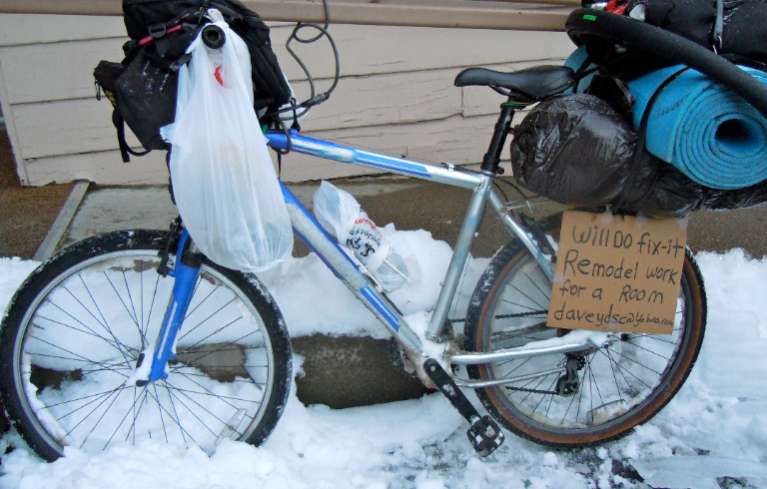
This is how some people get to Bread & Broth in South Lake Tahoe. Photo/LTN file

This is how some people get to Bread & Broth in South Lake Tahoe. Photo/LTN file

That makes a big difference in California, where the broader measure counts more than 8.9 million people living in poverty between 2010 and 2012 — a report released Wednesday by the U.S. Census Bureau shows — far higher than the 6.2 million living in poverty tallied the official way.

“Anyone who has moved to California from somewhere else knows the dramatic increase of the cost of living,” said Ann Stevens, director for the Center for Poverty Research at UC Davis. “It’s not more surprising that California looks more impoverished. It is really driven by the cost of housing. California is a very expensive place to live.”

Using the alternative measure, California had the highest poverty in the country between 2010 and 2012 — 23.8 percent — followed by the District of Columbia and Nevada. The official measure ranked Louisiana, Mississippi and New Mexico at the top during that period.

Read the whole story


Global warming goals slipping away

By Alex Morales, Bloomberg

The only three living diplomats who have led the United Nations global warming talks said there’s little chance the next climate treaty will prevent the world from overheating.

The specific goal, to hold temperature increases to 3.6 degrees Fahrenheit, was endorsed by envoys from 190 nations in 2010. It’s considered the maximum the environment can bear before climate change becomes more dangerous. Delegates to the UN Framework Convention on Climate Change meet in Warsaw starting Nov. 11 to work on a treaty that could be agreed to in 2015.

The comments from the current and former executive secretaries to the UNFCCC add to the urgency of the Warsaw talks. Humans already have emitted more than half the greenhouse gases needed to surpass the 2-degree target, a panel of scientists brought together by the UN concluded in September. The World Bank last year said the planet is on track to warm by 4 degrees this century, a level that would raise the seas, worsen droughts and make storms more violent.

“There is nothing that can be agreed in 2015 that would be consistent with the 2 degrees,” said Yvo de Boer, who was UNFCCC executive secretary in 2009, when attempts to reach a deal at a summit in Copenhagen crumbled with a rift between industrialized and developing nations. “The only way that a 2015 agreement can achieve a 2-degree goal is to shut down the whole global economy.”

Read the whole story


Unknown animal may be rare Sierra fox

California Department of Fish and Wildlife officials are analyzing DNA from an animal that was roaming at Donner Lake. It may be a nonnative California red fox or a native Sierra Nevada red fox.

The animal was first seen on Halloween and then early last week in North Lake Tahoe.

The Sierra Nevada red fox was believed to be extinct until it was spotted in 2010 near Sonora Pass.

 — Lake Tahoe News staff report


Rethinking who provides medical care

By Bloomberg

One obvious way to address the shortage of primary medical care in the U.S. is to train more people who can provide it. Even if this could somehow happen overnight, though, it wouldn’t necessarily solve the problem: Only 1 in 4 medical-school graduates goes into primary care (the least lucrative area of medicine), and no more than half of nurses and physician assistants do.

Just as important, those who do practice general medicine are rarely drawn to work in the rural and inner-city areas where people most lack access to medical treatment.

What’s needed is a strategy to lure people who already live in underserved communities to practice health care there. One clever way of doing that, just proposed by a group of authors writing in the November issue of Health Affairs, is inspired by the successful model of emergency medicine — that is, give people the level of training that emergency medical technicians and paramedics receive, but aimed at primary rather than emergency care.

After all, what do EMTs and paramedics do but bring medical skills and equipment to places where doctors and nurses aren’t readily available? In their case, the places are wherever car crashes, heart attacks or other sudden medical catastrophes happen. EMTs and paramedics are also trained relatively quickly and paid relatively modestly, with a mean annual salary of less than $35,000.

Read the whole story


138 lbs. pot found during Truckee traffic stop

A traffic stop led to the confiscation of 138 pounds of marijuana and one person going to jail.

A California Highway Patrol officer pulled Brandon T. Cook, 46, of Sacramento over after he reportedly passed several vehicles on the shoulder of Interstate 80 near Donner Summit.

With the smell of pot coming from the suspect’s vehicle, the officer searched the vehicle. The marijuana was in large duffel bags. Also found in the Nov. 4 search was $2,600 cash.

— Lake Tahoe News staff report


El Dorado County man admits stealing from bank

Ethan George Banaszak, 35, of Cameron Park pleaded guilty Nov. 8 to one count of bank embezzlement.

According to court documents, Banaszak embezzled thousands of dollars from his employer, a federally insured bank. According to court records, Banaszak made more than $660,000 in unauthorized withdrawals from customers’ accounts and took $16,000 cash from the bank’s vault.

Banaszak is scheduled to be sentenced Jan. 24. He faces a maximum 30 years in prison and a $1 million fine.

— Lake Tahoe News staff report


S. Tahoe Realtor to speak at national convention

By Kathryn Reed

Two dynamic women will be addressing the National Association of Realtors today – Deb Howard and Hillary Clinton.

Howard, who owns D. Howard & Company real estate in South Lake Tahoe, is one of the panelists of a breakout session focusing on referrals. Clinton is the keynote speaker.

Howard’s talk is not expected to be controversial. Clinton’s already is because she isn’t letting the media in even though NAR would have welcomed the coverage. The San Francisco Chronicle earlier this week called Clinton out for her decision.

The 1 million-strong real estate group has not met in California for a number of years. It’s expected that 22,000 will attend the Nov. 8-11 conference, including many from the Lake Tahoe Basin. Howard will be speaking at one of the 100 workshops.
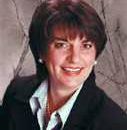
Deb Howard

Deb Howard

For 10 years she has been on the NAR Resort and Second Home Committee. Her topic today is how to make money through referrals.

“I think it’s easy. Everyone you meet is a potential referral,” Howard told Lake Tahoe News.

She said it’s important to be nice to everyone, hand out business cards, and follow-up with an email to remind people who you are and how you might be able to help them.

To her peers Howard says it is important to be involved in the community and know what is going on. In Tahoe, this means understanding Tahoe Regional Planning Agency regulations, what may be built where, attending community planning meetings and being educated.

“We can work together to raise the level of professionalism, the customer service we provide clients, and know what the TRPA Code of Ordinances means, land coverage rules, and how entitlements works, that is other dark closet people don’t want to go in because it is scary. But that is the kind of stuff that helps us all,” Howard said.

She takes advocacy a step further by going to Washington each year to bend the ear of federal lawmakers. Banking and lending regs have a tremendous impact on the real estate industry.

For instance there are few loan options for condos that double as hotel rooms. An FHA loan is about the only option other than cash. Lakeland Village in South Lake Tahoe is an example of such a property where individuals own the unit but there is a traditional hotel front desk because so many people put their place in the rental pool. Getting a conventional loan for one of those units is near impossible.

Howard said it is critical to ensure there is a“ healthy flow of money to the borrowers.”

Overall, reports from NAR show the housing market improving. Prices are going up between 5 to 10 percent, with greater gains in markets that were severely hurt by the recession.


Reports: Higher education is worth the money

By Scott Carlson, Chronicle of Higher Education

In recent years, folks as different as Mitt Romney, Peter Thiel, William J. Bennett, and the disaffected people of the Occupy movement started turning their attention to the cost of college—and the underlying question always seemed to be whether college was still worth its cost.

There has been a lot of evidence to suggest that college is indeed worth it, and plenty of studies and pundits lining up to tout the evidence.

One of the latest comes from College Summit, a nonprofit group that promotes broader college access. Its report, “Smart Shoppers: The End of the ‘College for All’ Debate?,” notes that people have for years predicted a glut of “overeducated” Americans, an environment where college graduates would not be able to get jobs that reflected their years in higher education. But the opposite has happened, the report says: There is more demand for college education in the workplace, and college graduates in fields that might not normally require college—like plumbing or hairdressing—make substantially more. The report puts the college wage premium—the amount that college graduates make compared with mere high-school graduates — at 80 percent.

However, another new report, from three researchers, examines the question again, with a closer look at economic outcomes and more ambivalence. It considers the individual and societal economic returns of a bachelor’s degree, using data from California’s higher-education system.

Read the whole story