USFS plans to move historic Tahoe fire lookout
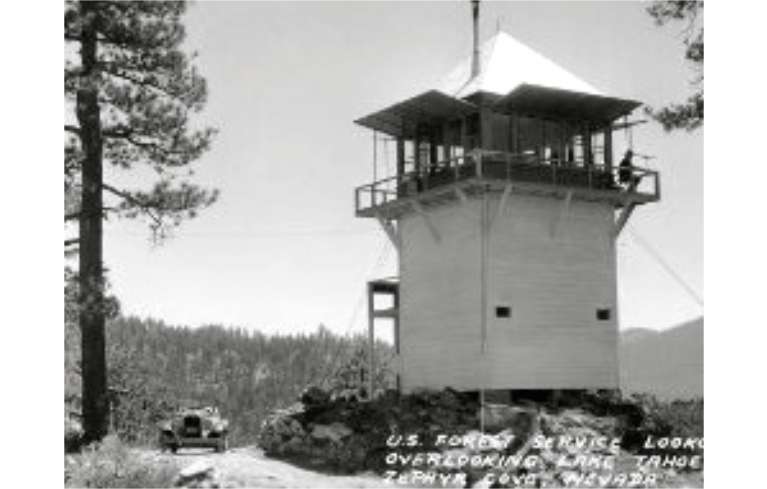
This U.S. Forest Service fire lookout may be moved to Spooner Summit. Photo/USFS

This U.S. Forest Service fire lookout may be moved to Spooner Summit. Photo/USFS

By Kathryn Reed

Technology has almost rendered fire lookouts obsolete. Still, there is one from the 1930s that is going to get a new lease on life in the Lake Tahoe Basin.

The U.S. Forest Service wants to move the Zephyr Point lookout to White Hill, which is above the agency’s firehouse at Spooner Summit. This is where the old White Hill ski lift was located.

The wooden structure was built in 1932. It was staffed through the late 1960s. After that fire crews would go to the lookout when thunderstorms rolled though to see if lightning had ignited a fire.

More recently telecommunication equipment was stored at the lookout, but that use has since ended.

“The current location is a somewhat urban industrial location. At one time it was in a remote spot on a mountain,” John Maher, USFS heritage resources program manager, told Lake Tahoe News. “Now it’s on private property and we don’t have easy access to it.”

In 1997, the fire lookout was listed on the National Register of Historic Places. One reason for not just dismantling the lookout is because of the historical significance.

Maher described the lookout as “in better than moderate condition, not excellent condition.”

There are strict guidelines as to improvements that can be made based on its being a historical structure.

“We also want it to be functional,” Maher said. “It would be used probably during thunderstorms to look for lightning-started fires.”

Plus, moving the lookout will allow public access. No new trails are planned. However, the current road would likely need to be improved so Forest Service employees could access it.

Maher said it’s possible the snowmobile tours out of Zephyr Cove could use the lookout as a stop.

The cost to build a foundation, move the lookout and add interpretive signs is estimated to be a little more than $10,000. Not all of the money is in hand. Once the forest supervisor has signed the environmental assessment it is predicted that money could become available.

The Forest Service also plans to work with the National Historic Lookout Register, which enlists volunteers to help with such relocation projects.

The other lookout in the basin, but also is not staffed, is at Angora on the South Shore.

The Forest Service is studying the environment aspects of the project now. Comments will be taken until Dec. 13. More info is available online. Depending on the comments received, a decision by the forest supervisor could be made by mid-February.


Court decision good for readers, bad for writers

By Sophia Pearson and Bob Van Voris, Bloomberg

Google Inc.’s project to digitally copy millions of books for online searches doesn’t violate copyright law, a federal judge ruled, dismissing an eight-year-old lawsuit against the largest search-engine company.

Google Books provides a public benefit and is a fair use of copyrighted material, Judge Denny Chin in Manhattan ruled today. The project, which has scanned more than 20 million books so far, doesn’t harm authors or inventors of original works, Chin said.

“Google Books provides significant public benefits,” Chin wrote. “It advances the progress of the arts and sciences, while maintaining respectful consideration for the rights of authors and other creative individuals, and without adversely impacting the rights of copyright holders.”

Chin’s decision comes more than two years after he rejected a proposed $125 million settlement in the case filed by The Authors Guild, which represents writers. The group sued in 2005 alleging that Google, owner of the world’s most popular search engine, infringed copyrights by scanning and indexing books without writers’ permission.

Paul Aiken, the Authors Guild’s executive director, said in a statement today that the ruling is a “fundamental challenge” to copyrights and that his group plans to appeal.

Read the whole story


Companies target workers who are fat, smoke

By Kathleen Kingsbury, Reuters

Employers tried the carrot, then a small stick. Now they are turning to bigger cudgels.

For years they encouraged workers to improve their health and productivity with free screenings, discounted gym memberships and gift cards to lose weight. More recently, a small number charged smokers slightly higher premiums to get them to quit.

Results for these plans were lackluster, and healthcare costs continued to soar. So companies are taking advantage of new rules under President Barack Obama’s healthcare overhaul in 2014 to punish smokers and overweight workers.

Some will even force employees to meet weight goals, quit smoking and provide very personal information or pay up to thousands more annually for healthcare. That could disproportionately affect the poor, who are more likely to smoke and can’t afford the higher fees.

Nearly 40 percent of large U.S. companies will use surcharges in 2014, such as higher insurance premiums or deductibles for individuals who do not complete company-set health goals, according to a survey of 892 employers released in September by human resources consultancy Towers Watson and National Business Group on Health, which represents large employers.

That is almost twice as many as the last time they did the survey in 2011, when only 19 percent of companies had such penalties. The number is expected to climb to two-thirds of employers by 2015.

Read the whole story


Study: Diabetes kills 1 person every 6 seconds

By Albertina Torsoli, Bloomberg

Diabetes kills one person every six seconds and afflicts 382 million people worldwide, according to the International Diabetes Federation, which has been canvassing the help of people ranging from celebrity chef Jamie Oliver to Bob Marley’s nephew to raise awareness about the problem.

The number of diabetes cases has climbed 4.4 percent over the past two years, according to new figures the Brussels-based federation released today. The number of people affected by the disease is expected to climb 55 percent to 592 million by 2035 as factors including poor diet, a more sedentary lifestyle, increases in obesity and life expectancy fuel an epidemic, it said. There were only 285 million sufferers worldwide in 2009.

“We haven’t seen any kind of stabilizing, any kind of reversal,” Leonor Guariguata, an epidemiologist and project coordinator for IDF’s Diabetes Atlas, published every two years, said in a phone interview. “Diabetes continues to be a very big problem and is increasing even beyond previous projections.”

Read the whole story


Scientist sues USFS to stop Echo Lake tree thinning

By George Warren, News 10

A prominent environmental scientist is suing to stop the U.S. Forest Service from cutting trees around Echo Lakes because he says it’s unnecessary and destructive.

“There is essentially no wildfire risk in the Echo Lakes Basin,” insists Dennis Murphy, a UNR research professor who helped draft the Lake Tahoe Watershed Assessment for the federal government.

In late September, the Forest Service began a multi-year project to clear mostly smaller trees and brush from roughly 100 acres around Upper Echo Lake and part of Lower Echo Lake.

A memo from the forest supervisor in South Lake Tahoe says the goal is to reduce the potential for a catastrophic wildland fire and provide defensible space around the rustic summer homes that are built on leased forest service land.

Murphy, whose family has owned a cabin on Upper Echo Lake for generations, filed a lawsuit in U.S. District Court in Sacramento Nov. 6 claiming the Forest Service did not adequately consider the environmental impacts of the project.

Read the whole story


Report: Non-violent criminals getting life sentences

By Meredith Clark, MSNBC

Thousands of people convicted of non-violent crimes are serving life sentences, according to a report by the American Civil Liberties Union.

There are currently 3,278 people who have been sentenced to life without parole for crimes as small as selling less than $10 worth of marijuana and shoplifting. The report also found that it will cost nearly $2 billion to keep those inmates incarcerated until their deaths. At a time when state and local governments are desperately trying to reduce their populations of non-violent offenders in order to reduce strain on overcrowded facilities and cut spending, these prisoners are a reminder of the much harsher “tough on crime” era of the 1980s and 1990s.

As is the case throughout the country and within the federal prison system – the home of two-thirds of those prisoners serving life sentences without parole – black prisoners far outnumber white prisoners. A black person is about 20 times more likely than a white person to be sentenced to life without parole in the federal system, the study found. In Lousiana, 91.4 percent of those serving life without parole for nonviolent crimes are black.

Life sentences without the possibility of parole are given out for a variety of reasons, but the ACLU’s analysis points to a combination of mandatory minimums and three- and four-strike rules for crimes regardless of their severity that even judges and corrections officers involved in some of the cases highlighted found too harsh.

Read the whole story


Employers grapple with e-cigs indoors

By Chris Burritt, Bloomberg

When John Castellano feels like a smoke, he simply heads to the break room at Kraft Foods Group Inc.’s Garland, Texas, factory.

The 39-year-old technician has been able to indulge his habit in common areas at work since he started using electronic cigarettes, which emit vapor rather than smoke.

E-cigs are “very liberating,” said Castellano, who used to join the other nicotine addicts at the factory’s designated smoking area.

Twenty-five years after companies began banning smoking in the workplace, the increasing popularity of e-cigs is forcing them to review their policies. Many corporations still ban “vaping” as they wait to see if the U.S. Food and Drug Administration will regulate e-cigs as strictly as regular smokes. Yet Kraft and Walgreen Co. allow local managers to set the rules. Smaller firms, especially creative agencies and Web startups, have already adopted a more laissez-faire attitude.

U.S. e-cig sales will triple this year to $1.5 billion and double annually through 2018, according to Euromonitor International projections. After that, sales of e-cigs may increase 10 percent a year and reach $124.5 billion in 2028, surpassing conventional smokes for the first time, Kenneth Shea, an analyst for Bloomberg Industries in Skillman, N.J., said.

Read the whole story


Lahontan looking at easing forestry work rules

By Kathryn Reed

Regulating the size of a burn pile and testing the moisture content of soil are some of the rules that are proposed to go by the wayside when Lahontan Regional Water Quality Board revises the timber waiver in 2014.

The board on Nov. 14 heard an update from Doug Cushman, senior engineer, about proposed changes to the 2009 document. The waiver must be re-examined every five years.

Lahontan only has say over matters in California.

While there have been changes to the timber waiver since it was adopted, this would be the first time any changes would be made to the monitoring segment.

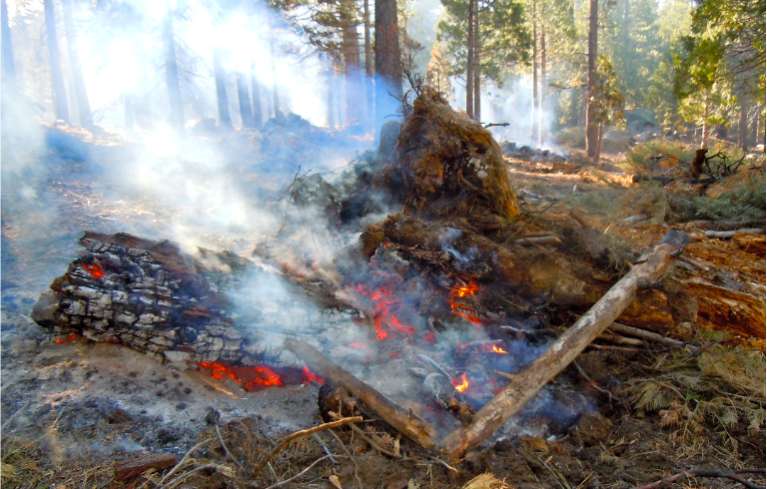
Proposed timber waiver changes would affect burn piles. Photo/LTN file

Proposed timber waiver changes would affect burn piles. Photo/LTN file

The forms are all online and are a bit cumbersome. They will be streamlined to make it easier for reporting agencies to comply with the rules.

In the coming months Lahontan staff will meet with entities that must comply with the timber waiver. The goal is to bring to the board a document that will not be opposed by outside agencies. The board is likely to take the matter up in April.

The timber waiver can apply to any agency removing trees or burning slash piles. Mostly it’s large projects like the U.S. Forest Service’s multi-year South Shore Fuels Reduction Project and work in stream environmental zones that are under the extra scrutiny.

Cushman admitted the process to test soil cut into the time period agencies could do work. The current policy requires digging a hole, seeing how moist the dirt is and comparing it to a detailed chart.

“We call this the squeeze test. It’s been problematic over time,” Cushman said. “There is tremendous variability.”

He also said it is staff intensive, requires soil scientists and can be subjective.

The proposed change would be a more visual analysis. If rutting occurs, the soil is too wet to do the work.

Martin Goldberg with Lake Valley Fire Protection District told the board how a stream area project his department just did had substantial cost overruns because of the current procedures that are in place.

“Pulling slash out of an SEZ is labor intensive and cost prohibitive,” Goldberg said.

Cushman said the goal of the changes is to move from prescriptive mandates – as in rigid rules before the work is done; to performance based – meaning looking at the end product to determine if what was done worked.

“Research shows size doesn’t affect soil,” Kathy Murphy, with the U.S. Forest Service, said in regards to burn piles. Current Lahontan policy is to regulate the size of piles.

What matters is if the soil is damaged. Burning seeds and sterilizing the soil are bad.

Part of the problem agencies have with Lahontan’s rules is the layer of redundancy. Water quality is already a concern of most who are doing this type of work. But Lahontan also provides a checks-and-balances so someone is looking over the shoulders of the agencies.

“If left on our own, we would protect water quality with our own practices,” Murphy told Lake Tahoe News.

Lahontan and the Forest Service have had many differences in the past, but the two leaders and now the staff are making peace. While they each have a different purpose, there is a growing respect that each has a job to do.

“The public is better served if people are getting along. Sparring takes too much energy,” Forest Supervisor Nancy Gibson told Lake Tahoe News.

She said the timber waiver has forced her agency to look at how it was doing business and in turn changes were made to be more efficient.

The Lahontan board unanimously told staff the performance approach was a better way of doing business.


Scientists urge Brown to stop fracking

By Paul Rogers, San Jose Mercury News

Twenty of the nation’s top climate scientists have sent a letter to Gov. Jerry Brown, telling him that his plans supporting increased use of the controversial practice of hydraulic fracturing, or “fracking,” will increase pollution and run counter to his efforts to cut California’s global warming emissions.

The letter is the latest example of the increased pressure that environmentalists and others concerned about climate change have been putting on Brown in recent months. Their argument: The governor can’t say he wants to reduce global warming while expanding fossil fuel development in California.

“If what we’re trying to do is stop using the sky as a waste dump for our carbon pollution, and if we’re trying to transform our energy system, the way to do that is not by expanding our fossil fuel infrastructure,” said Ken Caldeira, an atmospheric scientist at the Carnegie Institution for Science at Stanford University.

Caldeira signed the letter along with other prominent climate scientists, including James Hansen, the former head of NASA’s Goddard Institute for Space Studies; Richard Houghton, acting president of Woods Hole Research Center in Massachusetts; and physicist Michael Mann, a professor of meteorology at Penn State University.

Read the whole story


‘Boil water’ mandate for Lukins customers

Updated: Nov. 15 10:25am

By Kathryn Reed

All Lukins Brothers Water Company customers are on a “boil water” order because coliform was discovered at one of the test sites.

Coliform is found naturally in the environment.

According to the EPA, “Total coliforms are a group of closely related, mostly harmless bacteria that live in soil and water as well as the gut of animals.”

Each month Lukins runs tests on its wells and other sites within the system. Samples taken Tuesday and Wednesday both showed coliform at one of the sites. The results of the second test came back Nov. 14.

All of the 963 customers are receiving hand-delivered notices today.

“We are chlorinating the entire system right now,” Jennifer Lukins told Lake Tahoe News on Thursday afternoon. The process started within an hour of being notified of the results.

The chlorination program will run two to three weeks. If people smell chlorine, Lukins advises people to run their cold water to flush their individual water lines.

According to Danny Lukins, this is the first time the South Shore water system has had a positive coliform sample. This is why the company believes this is an isolated case.

Per California Department of Public Health regulations, the “boil water” order is in effect until Lukins has two tests that are negative. The water will be tested again Nov. 18 and Nov. 19. This means the soonest the “boil water” order would be lifted is Nov. 20.

More information will be available on Lukins website. Here is a link to Lukins’ service area.