Nev. mental health patients bused and crimes followed

By Cynthia Hubert and Phillip Reese, Sacramento Bee

Six months after he was discharged to a Greyhound bus and shipped out of Las Vegas, one former patient of Nevada’s primary hospital for mentally ill people stabbed a man to death in Iowa.

Another former patient, responding to voices in his head, set off explosions in a grocery store and a doughnut shop in Tennessee just a month after Rawson-Neal Psychiatric Hospital in Las Vegas gave him a one-way ticket to Knoxville in July 2012.

Nevada bused yet another Rawson-Neal patient, a convicted child molester, to San Diego in 2011, even as he faced criminal charges in Las Vegas for failing to register as a sex offender. He also failed to register in San Diego, where he disappeared into the streets and soon became the target of a citywide manhunt.

Yet another former Rawson-Neal patient was found dead, his body floating in the American River near a homeless camp, seven months after he received a Greyhound ticket to Sacramento courtesy of the state of Nevada.

Even as Nevada’s embattled state mental hospital works to revamp operations, the fallout from its aggressive busing policies continues to resonate from California to Florida.

Read the whole story


Doctors’ ties to drug companies scrutinized

By Leana Wen, NPR

Last month, the American Heart Association and the American College of Cardiology issued new guidelines that could double the number of people taking cholesterol-lowering drugs.

The organizations receive financial support from drug companies, and many of the experts who worked on the guidelines have industry ties.

The groups’ response to ethical concerns raised about the advice is, in large measure, that a final decision about what you should do to manage your health is between you and your doctor.

Unfortunately, doctors have biases, too. A 2007 study in The New England Journal of Medicine found that the vast majority of doctors have some kind of relationship with with a pharmaceutical or medical-device company. Most of the time, the ties involved free food or drug samples. Dozens of studies have demonstrated that even innocuous-seeming inducements like these can influence doctors’ prescription practices.

Read the whole story


Naso’s Reno properties may be used to pay for his public defender

By Gary Klien, Marin Independent Journal

A judge ordered serial killer Joseph Naso to reimburse Marin County more than $170,000 for legal services in his case, possibly through liens on his property in Reno.

But Naso apparently managed to unload $300,000 or more in liquid assets while he was awaiting trial, and it was unclear whether it could ever be recovered for victim restitution, county lawyers said.

County Counsel Jack Govi and a deputy, Ed Kiernan, said Naso drained his bank accounts and divested a $30,000 coin collection during his time in custody. They said there is evidence he gave the money to a son who is now living outside the country, possibly in the Philippines.

Read the whole story


Alarms sounding over resistance to antibotics

By Indre Viskontas and Chris Mooney, Center for Investigative Reporting

It’s flu season. And we’re all about to crisscross the country to exchange hugs, kisses and germs. We’re going to get sick. And when we do, many of us will run to our doctors and, hoping to get better, demand antibiotics.

And that’s the problem: Antibiotics don’t cure the flu (which is viral, not bacterial), but the overprescription of antibiotics imperils us all by driving antibiotic resistance. This threat is growing, so much so that in a recent widely read Medium article, Wired science blogger and self-described “scary disease girl” Maryn McKenna painted a disturbingly plausible picture of a world in which antibiotics have become markedly less effective.

“For 85 years,” McKenna explains, antibiotics “have been solving the problem of infectious disease in a way that’s really unique in human history. And people assume those antibiotics are always going to be there. And unfortunately, they’re wrong.”

Here are some disturbing facts about the growing problem of antibiotic resistance:

1. In the United States, 2 million people each year contract serious antibiotic-resistant infections, and 23,000 die from them.

These figures come from a new Centers for Disease Control and Prevention report on antibiotic resistance that, for the first time, uses a blunt classification scheme to identify “urgent,” “serious” and “concerning” threats from drug-resistant bacteria. The CDC currently lists three urgent threats: drug-resistant gonorrhea; drug-resistant Enterobacteriaceae, such as E. coli; and Clostridium difficile, which causes life-threatening diarrhea and often is acquired in hospitals. C. difficile kills at least 14,000 people each year.

2. We’ve been warned about antibiotic resistance since at least 1945. We just haven’t been listening.

From the first discovery of antibiotics, scientists have known that resistance is a danger. Alexander Fleming himself, credited with the discovery of penicillin, warned us as early as 1945 that antibiotics could lose their effectiveness.

His eerily prescient Nobel Prize speech cautions that “there may be a danger, though, in underdosage (of penicillin). It is not difficult to make microbes resistant to penicillin in the laboratory by exposing them to concentrations not sufficient to kill them, and the same thing has occasionally happened in the body. The time may come when penicillin can be bought by anyone in the shops. Then there is the danger that the ignorant man may easily underdose himself and by exposing his microbes to nonlethal quantities of the drug make them resistant.”

3. Antibiotic-resistant strains of bacteria are on the rise.

Clearly, antibiotic resistance is not a new phenomenon. Nonetheless, the frequency of these “antibiotic resistance events” is increasing. For example, from 1980 to 1987, cases of penicillin-resistant Streptococcus pneumoniae (the bacteria that causes pneumonia) remained steady at about 5 percent of all strains. By 1997, 44 percent of strains were showing resistance. Similarly, Enterococci bacteria can cause urinary tract infections and meningitis (among other diseases), and in 1989, fewer than 0.5 percent of strains found in hospitals were resistant to antibiotics. Four years later, though, that number was at 7.9 percent; by 1998, some hospitals reported levels as high as 30 to 50 percent.

“The more antibiotics are used, the more quickly bacteria develop resistance,” the CDC says.

4. There has been a steady decline in Food and Drug Administration approvals for new antibiotics.

And even as more bacteria are becoming resistant and our treatments are becoming less effective, we’re also producing fewer new drugs to combat infections. There has been a clear downtrend in FDA approvals for antibiotics that began in the 1980s.

Why has this happened? “There’s a kind of curve to antibiotic development,” McKenna says, noting that there was a boom in the 1950s, when Eli Lilly collected samples of biological materials from all over the world to capture antibiotic properties in natural substances. By the 1980s, though, much of the low-hanging antibiotic fruit had been harvested. Now, the development of new treatments is becoming increasingly difficult and costly, even as pharmaceutical companies are cutting research and development budgets and outsourcing drug discovery more and more.

“The faucet from which (antibiotics) come has been turned down and down and down, and now it’s just a drip,” McKenna says.

5. As many as half of all antibiotic prescriptions either aren’t needed or are “not optimally effective.”

A huge part of our problem is that we’re misusing and abusing antibiotics.

“Resistance is a natural process,” McKenna says, but “we made resistance worse by the cavalier way that we used antibiotics, and still use them.”

Sick patients pressure their doctors for drugs, and doctors too often yield and dash off a script. Indeed, a recent study found that doctors prescribed antibiotics 73 percent of the time for acute bronchitis, even though, as Mother Jones’ Kiera Butler reports, “antibiotics are not recommended at all” for this condition.

Adding to the evidence of misuse: According to the CDC, almost 1 in 5 ER visits resulting from adverse drug events are caused by antibiotics. Children are the most likely victims. Despite the fact that antibiotics generally are safe, they can cause allergic reactions and interact with other drugs, harming patients who are vulnerable because they already suffer from other medical conditions. If we stopped overprescribing antibiotics, we’d not only head off resistance, but we’d also lessen adverse drug effects.

6. And it’s not just human medical misuse – a large volume of antibiotics is inappropriately used in livestock.

Antibiotics also often are used in the agricultural industry; in fact, there is reason to think that more antibiotics are used to treat animals than to treat people. And these livestock drugs are not just used to fight off infections, but are often fed to animals in smaller doses to encourage weight gain and growth – a practice, the CDC says, that is “not necessary” and “should be phased out.” A recent draft document from the FDA similarly states that “in light of the risk that antimicrobial resistance poses to public health, the use of medically important antimicrobial drugs in food-producing animals for production purposes does not represent a judicious use of these drugs.” For now, though, the FDA’s approach to curbing this threat has been limited to issuing voluntary guidelines.

7. Before antibiotics, death rates were much higher from common occurrences like skin infections, pneumonia and childbirth.

In her Medium article, McKenna gives some disturbing stats. Giving birth could be deadly: Five out of every 1,000 women who had a baby died. Pneumonia killed 30 percent of its victims. And “one out of nine people who got a skin infection died, even from something as simple as a scrape or an insect bite.” If we run out of antibiotics, our future looks rather bleak.

8. The next major global pandemic might involve an antibiotic-resistant superbug.

For millennia, infectious diseases have reshaped civilization, culled our species and spread fear, superstition and death. But over the last century, we haven’t seen anything as devastating as the 1918 flu pandemic, which killed some 50 million people around the world.

But with drug-resistant bacteria, the threat rises. “Plagues still really have power, and almost a hundred years later, we shouldn’t think that we’re immune to them, because we’re not,” McKenna warns. For instance, tuberculosis kills more than 1 million people a year, and it is becoming increasingly drug resistant, according to the World Health Organization.

Meanwhile, though the 1918 flu was caused by a virus rather than a bacterium, recent research suggests that most victims actually died from bacterial pneumonia. Viruses can weaken our immune systems just enough to allow bacteria to take hold, and often, death results from secondary bacterial infections that, at least until recently, largely were curbed by effective antibiotics.

So are we doomed to recede back into a time when infections were the most significant health threat our species faced?

According to McKenna, it is not clear that we can fully curb antibiotic overuse. So the better approach is to get drug industry research engine firing again. “There’s a really active discourse around what’s the best way to get pharmaceutical companies back into manufacturing antibiotics,” she says.

Our future, then, once again lies in the hands of scientists, whose quest to find new treatments for drug-resistant bacteria is now of the utmost importance.

This story from the Climate Desk, a journalistic collaboration among the Atlantic, CIR, Grist, the Guardian, Mother Jones, Slate, Wired and PBS.


2013 fire season below average

By Bettina Boxall, Los Angeles Times

A wildfire season that began with dire warnings that dry conditions had set the stage for a year of flames across California and the West turned out to be one of the nation’s quietest in the past decade.

Although 2013 was marked by two high-profile blazes, one in California and the other in Arizona, nationally the total wildfire acreage of 4.15 million is far below the 10-year average of 6.8 million acres.

In California, the number of wildfires was high, but the amount of land that burned was slightly less than the 10-year average, according to state and federal figures. As always, weather was the deciding factor.

Read the whole story


Californians’ happiness depends on age, politics, location

By Tracy Seipel, San Jose Mercury News

If you’re a Medicare-age Democrat lucky enough to live near the coast, life in the Golden State looks pretty good.

Californians who live near the coast are happier living in the state. Photo/LTN file

Californians who live near the coast are happier living in the state. Photo/LTN file

But if you’re younger, among California’s dwindling number of registered Republicans or hail from an inland county, not so much.

Those are the results of a Field Poll that tracked how Californians view their state as a place to live. Forty-three percent of registered voters surveyed said it’s one of the best places to live; 26 percent rated it “nice but not outstanding.” Twenty-one percent said it’s about average, with 8 percent calling it a poor place to live.

Driving those numbers, said Field Poll director Mark DiCamillo, is where the voter lives, their age and political bent.

Read the whole story


Cove East, Keys Marina to get more free parking

By Kathryn Reed

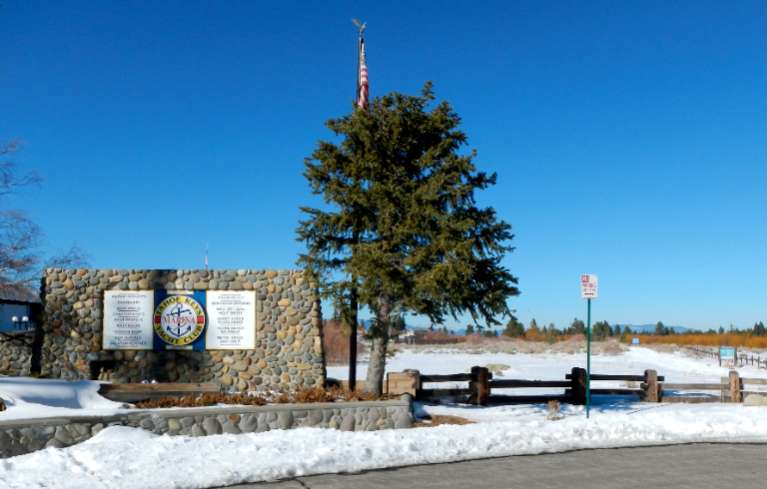
Increasing the allowable coverage by 33 percent for parking at Tahoe Keys Marina will require shifting the entrance of Cove East about 20 feet closer to the Upper Truckee River.

The California Tahoe Conservancy board on Dec. 12 agreed to allow the marina to cover up to 60,000-square-feet of the nearly 1.5-acre parcel. In January 2011, the coverage allocation was 45,000-square-feet. And at that time the entrance to the popular Cove East walking path that leads to Lake Tahoe was not going to have to be altered.

The land behind the fence is destined to become parking at Tahoe Keys Marina-Cove East. Photo/LTN

The land behind the fence is destined to become parking at Tahoe Keys Marina-Cove East. Photo/LTN

The marina plans to build the parking lot this summer. It is designed to be free parking, though there is a caveat in the lease agreement that allows for the marina to charge if it wants to. The Conservancy would receive 20 percent of any revenue generated from paid parking.

“This doesn’t affect what the city is doing and that seems to be changing year-to-year,” Bruce Eisner, with the Conservancy, told the board.

South Lake Tahoe implemented paid parking on Venice Drive, the road to Cove East and the marina, this summer. Now the meters are gone, which the city said was always the plan so they would not be damaged by snowplows.

Councilman Tom Davis, the city’s rep to the CTC board, could not make the meeting for personal reasons so he could not enlighten everyone what the city might do with Venice in the future, especially considering a new free lot is going to be built.

Additional parking by the marina owners is allowed in the master plan that has been approved by the Tahoe Regional Planning Agency. The plan allows for 303 total parking spaces. The new lot will add 120. The spots are designed for marina and Cove East users, not Fresh Ketch patrons.

Eisner said the parking situation would be reviewed annually to ensure people using CTC land have adequate access to the parking spots.

Marina owners must build the lot and bathrooms, a lane for watercraft inspections and then maintain the area per the 30-year lease. Two unisex bathrooms on the north end of the lot, which is closer to the marina, will be constructed.

The parcel is between the current parking area for the marina and the trail. It’s vacant land. The dirt is fill from when the Tahoe Keys was developed in the 1960s.

Laurel Ames with the Tahoe Area Sierra Club was the lone member of the public to talk to the issue.

“It’s the wrong kind of public access in the wrong place,” Ames told the board. “It’s the wrong time to be adding pavement at the lakeshore.”

She believes it would have been more prudent to wait to see what comes of studies on the nearshore that might say what is contributing to the decline in clarity, and questions the increase in vehicle miles traveled. That then becomes an air quality issue.

And the Conservancy anticipates more people will come because parking will be less of an issue and the lot will put people that much closer to the trail.

From the lot there will be links to the Cove East trail so people won’t have to walk back to the entrance on Venice Drive.


Calif. tries to find a balance with water needs

By Karen Weise, Bloomberg

A century after William Mulholland’s Los Angeles aqueduct first began watering the Southland, the water wars in California show no sign of abating.

The state reached a milestone on Monday in its effort to balance equal-but-conflicting goals: channeling more water to dry farmland and cities while restoring the natural habitat already hurt by the state’s thirst.

California has released details of a $25 billion plan to run two tunnels under the Sacramento-San Joaquin Delta. The tunnels would divert water from supplies north of the delta to existing pumps on its southern edge that push water to Southern California and the agricultural land of the Central Valley.

By forcing the water underground for 35 miles, the plan also calls for the restoration of more than 80,000 acres of habitat in the delta, which houses 56 species of plants, fish, and wildlife that have been struggling. The area’s current system of fragile earthen levees are vulnerable to a nightmare scenario known as “California’s Katrina.”

The state’s twin reports explaining the conservation proposal and the impact of the water project span some 34,000 pages; the “highlights” brochures alone total more than 170 pages. The reports look at 14 alternatives but focus on the one favored by Gov. Jerry Brown.

Read the whole story


Concern about non-college bound girls

By Claudio Sanchez, NPR

Kyrah Whatley, 17, is a bright student with pretty good grades. But the thought of spending two to four more years in a college classroom is depressing, she says.

Masonry, on the other hand, intrigues her. “I’m a kinesthetic learner. … I learn with my hands,” she says.

That’s why Kyrah is thinking of joining the Navy as a certified mason right after she graduates from Buchtel High School in Akron, Ohio.

A new poll from NPR, the Harvard School of Public Health and the Robert Wood Johnson Foundation finds that the majority of parents feel their child’s school is preparing students for college. But 4 in 10 say that schools do not sufficiently prepare students who will not attend college — and parents of girls are even more likely to be concerned than parents of boys.

Read the whole story


Poll: Californians have no desire to split state

By David Siders, Sacramento Bee

Officials in Siskiyou and Modoc counties may want to secede from California, but the rest of the state has no desire to see them go.

Just one-quarter of California voters support allowing the state’s northernmost counties to break away from California, according to a new Field Poll.

Fifty-nine percent of registered voters statewide oppose such an effort, according to the poll. Opposition to the effort is bipartisan, with majorities of Democrats, Republicans and independent voters all opposed.

Read the whole story