Lake Tahoe part of study on Rim Fire’s smoke impacts

By Heather Segale

On Aug. 17, the largest recorded wildfire in the Sierra Nevada and the third largest in California history started in Stanislaus National Forest. This devastating fire burned more than 250,000 acres and took two months to contain.

The effects of the fire on the terrestrial ecosystem will certainly last for years. Here at TERC, the question is to what extent were Sierra lakes impacted?

Smoke was a constant in Tahoe for much of August 2013. Photo/LTN file

Smoke was a constant in Tahoe for much of August 2013. Photo/LTN file

In October TERC researchers received a National Science Foundation – Rapid Response Grant to assess the effects of the Rim Fire on lakes in Northern California. It is a one-year study to look at water quality and ecological changes in lakes affected by the wildfire.

TERC is studying two lakes, Cherry Lake and Lake Eleanor, within the heart of the burn area and several lakes to the north that were impacted by smoke during the fire event, including Lake Tahoe, Emerald Bay, and Cascade Lake. Rock Creek Lake just south of Mammoth will serve as the control lake since it was not impacted by the fire or smoke.

UC Davis is collaborating in the study with Miami University, Ohio; Stony Brook University, New York; UNR; and UC Santa Barbara.

Initial assessment of the water quality and zooplankton community was completed in late October, prior to the first snow. The science team will return following a weather event that causes dramatic runoff, or during the spring snowmelt.

The research is focused on how the lakes respond to the organic compounds contained in the smoke from wildfires. The results will have importance to the entire west, with expectations for increases in wildfires due to climate change.

Heather Segale is the education and outreach director for the UC Davis Tahoe Environmental Research Center in Incline Village.


Local CalFire chief retiring

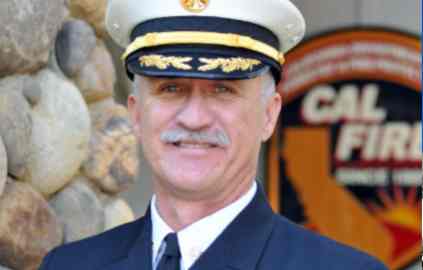
Kelly Keenan’s last day as chief of the Amador-El Dorado unit of CalFire is Dec. 22.

“I have spent most of my adult life dedicated to a career with the California Department of Forestry and Fire Protection and I wouldn’t change a thing,” Keenan said in a statement. “It has been an amazing journey taking me from traditional forestry work, to overseeing an inmate conservation camp to running a unit spanning five counties.”

Kelly Keenan

Kelly Keenan

Keenan began his career in 1982 with then CDF Coast Region Headquarters, where he worked as a seasonal forestry aide. In 1983, he went to the Jackson State Demonstration State Forest in the Mendocino Unit as a forestry aide where he worked on the Caspar Creek Experimental Watershed project and prepared timber harvest plans.

He was promoted in 1988 to the Nevada-Yuba-Placer Unit where he worked as an area forester, vegetation management program coordinator, unit forester and interim unit administrative officer.

In 2004, Keenan accepted an assistant chief position in the Amador-El Dorado Unit. In 2011, he took over the helm of the entire unit.


2012 SnowGlobe tragedy not forgotten during preparations for annual S. Tahoe music event

By Kathryn Reed

While it’s the music that draws people to SnowGlobe, it is Alyssa Byrne who is on so many people’s minds. The 19-year-old Petaluma woman died last year of hypothermia as she tried to walk from the concert venue to her Stateline hotel.

A lasting legacy of the tragedy is the Always Buddy Program that was created by her family and friends in Sonoma County. The mantra is, “I promise to never let myself or anyone I love leave in an unfamiliar place without a buddy system.”

SnowGlobe returns to South Lake Tahoe Dec. 29-31. Photo/LTN file

SnowGlobe returns to South Lake Tahoe Dec. 29-31. Photo/LTN file

Leandra and Paul Hale, who own the Butter Muffin in South Lake Tahoe, have become friends with the Byrne family. They are working on securing permits from the city to erect warming huts at Al Tahoe Boulevard and Highway 50, and Al Tahoe and Pioneer Trail.

“The most important thing is the heat up huts,” Leandra Hale told Lake Tahoe News. “Then people will realize if they hit Pioneer Trail, they are going in the wrong direction.”

The booths are likely to be 12-feet-by-12-feet, include warmers, cell phones for people to use and water. Vegan Café is donating hot beverages.

The Hales are also organizing a free ride program because if people make it to their tents, it means their intention is to walk and not take the bus. Rides will be provided all three nights.

Anyone wanting to donate water or a ride may call (530) 541.8547 or email the_buttermuffin@yahoo.com.

South Tahoe High School seniors Cassidy Jackson and Noah Palmeiri have a booth at SnowGlobe. They have been collecting hats, jackets, gloves, blankets, and hand warmers for attendees. They plan to provide coffee and water, along with charged cell phones people may use.

Another STHS student planned to create a video to air on V-TV, the school television station, that talks about the dangers of drugs, especially Molly. Molly, also known as ecstasy, causes dehydration.

“This is the reason at SnowGlobe that the water line is longer than the beer line,” South Tahoe police Officer Russell Liles told the South Lake Tahoe Drug Coalition this month.

And people who are not used to Tahoe’s elevation can easily become dehydrated without drugs, so the mix can be even more dangerous for flatlanders.

Methamphetamines and other drugs were found in Byrne’s system, according to the toxicology report.

Changes for this year

The SnowGlobe Music Festival is Dec. 29-31 on the ball field adjacent to Lake Tahoe Community College.

“The college is very much in support of a safe and responsible SnowGlobe and making sure people pay attention to the cold, make sure they ride buses, and follow the signage,” LTCC President Kindred Murillo told Lake Tahoe News.

This year’s lineup features Tiesto, Cut Copy, Kaskade, Snoop Dogg, Holy Ghost!, Zed’s Dead, Gramatik, and Beats Antique and others. More than 50 bands or DJs will fill the main stage and two tent stages.

“The artists are from a number of different genres. Snoop Dog will play a greatest hits set,” Chad Donnelly, SnowGlobe promoter, told Lake Tahoe News. Snoop Dog will be on stage Dec. 31.

Tickets are still on sale, but Donnelly expects them to sell out in the next 11 days.

Fireworks will be shot off all three nights instead of just on New Year’s Eve, as has been the case the previous two years.

SnowGlobe has expanded its affiliation with Heavenly Mountain Resort. Big Air snowboard and skiing demos will go on in between sets near the main stage.

To help with the cold, 10,000-square-feet of heated enclosed spaces will be set up. The main stage is totally exposed to the elements, while there are heaters in the two tent venues. However, those are only enclosed on three sides.

The number of buses being used has doubled, so this should eliminate the length of time people are standing around in the cold waiting to get back to their hotel room.

“We have made arrangement as a city to ensure pathways from the post office to the college are free of snow and accessible. That way we try to keep them off the road as much as possible,” Police Chief Brian Uhler said.

One of the noticeable changes will be what people are walking on. To help preserve the ball field the promoters will lay down a material called LD Panels on top of the synthetic field. It will be used along with plywood. The wood will be used to widen the spots and under anything that needs to stay in place for the entire event.

Law enforcement

Police agencies on the South Shore like that SnowGlobe has contributed to fewer people gathering in the casino core on New Year’s Eve.

New this year is the Horizon casino is having an outdoor concert Dec. 31-Jan. 2. No one at the casino returned calls so details are not available. El Dorado County sheriff’s Lt. Pete Van Arnum said that event is expected to attract 5,000 people each night. (Douglas County law enforcement had no information.)

SnowGlobe brings about 10,000 people per night.

“It will be nice if people go to that and SnowGlobe instead of hanging out in the middle of the street at Stateline,” Van Arnum told Lake Tahoe News.

Uhler said his department is not making any major changes this year in regards to SnowGlobe. Amnesty bins will be at the entrance where people can drop their drugs, no questions asked.

“Essentially it will be the same sort of presence. We have undercover officers. We are not making secret about it because we want to prevent any illegal drug use,” Uhler told Lake Tahoe News.

Officers in uniform will be out, as will a few dozen security guards provided by the event organizers.

The future

Even with precautions for the field, this is likely to be the last year SnowGlobe will be at this location.

“The reality is (city officials) just are not sure if that venue is the right venue over the long haul. We will continue to work with them to assess what makes sense,” Donnelly told Lake Tahoe News.

Murillo said the college is encouraging the city to find a venue that would be ideal for more of these types of events.

“As far as the status of SnowGlobe for future years there has been no definitive decision on whether they will return, but there has been discussion regarding the desire to relocate the event to some other venue not yet identified,” Lauren Thomaselli, South Lake Tahoe recreation manager, told Lake Tahoe News. “Each year the promoter has asked for a multi-year contract, however until another venue can be identified, it is not likely the city would commit to multiple years.”



2 dead in Renown Medical Center shooting

By Carma Hassan and Michael Martinez, CNN

A gunman and another person were killed during a shooting Tuesday at a medical building at Renown Medical Center, said Tom Robinson of the Reno Police Department.

Two other people were injured and were being treated at a hospital, Robinson said.

The shooter, who carried one weapon, died of a self-inflicted gunshot wound, authorities said.

On Tuesday afternoon, the shooter opened fire after going to the urology office of Nevada Advanced Medicine on the third floor, said Sharon Spangler, spokeswoman for Reno police.

Read the whole story


Reno firm wants to be first to create supersonic business jet

By Molly McMillin, Wichita Eagle

The need for speed remains the catalyst behind a continuing effort by the Aerion Corp. to develop a business jet that can fly faster than the speed of sound.

“We don’t think there’s any doubt this is clearly the next frontier,” said Brian Barents, Aerion vice chairman and a former executive at Bombardier Learjet and Cessna Aircraft in Wichita.

The industry is building business jets that fly farther, but it’s stuck at subsonic flight, Barents said.

“There’s clearly a demand for speed, and we feel that we’re in a good position to take advantage of that demand,” he said.

Supersonic business jet flight will happen in our lifetime, Barents said.

Reno-based Aerion wants to be first to the market.

Read the whole story


Squaw significantly scales back growth plans

By Ed Fletcher, Sacramento Bee

In the face of a community backlash, the owners Squaw Valley ski resort announced plans Monday to scale back their proposal to expand an existing village at the base of the mountain.

The new plan – dubbed “The Right Plan” on the resort’s website – calls for a series of buildings housing 1,493 new luxury bedrooms. That’s less than half the 3,400 bedrooms proposed in the company’s 2011 plan. Monday’s revision is the second revision of the development proposal by Colorado-based KSL Capital Partners LLC.

Chevis Hosea, the company’s vice president of development, acknowledged the firm was a little surprised by the level of resistance to its 2011 proposal. He now says the company has a better plan after listening to its customers and the community.

Stepner, one of the founding members of Friends of Squaw Valley, said there are battles ahead once the exact site plan and building design aesthetic come into focus, but he said he was pleased with how far Capital Partners moved from the old plan – dubbed by some as a Disneyland in the snow.

Read the whole story


4 Truckee residents accused of cooking drugs

Truckee firefighters on Sunday responded to what they thought was a grease fire. It turned out to be a drug lab on fire.

Crews said they quickly determined there had been a small chemical explosion from people trying to make “hash oil” from marijuana by using butane fuel. The call came in Dec. 15 about 2:30pm

“This has become a common practice among some marijuana users looking for stronger THC content. This can be very dangerous and has resulted in many explosions and fires across California and the rest of the United States,” authorities said in a press release.

Anthony Garner, 20, was transported to the hospital with moderate burns. He was later booked into jail on felony charges involving manufacturing drugs, child endangerment, conspiracy to commit crimes, and maintaining a residence for manufacturing drugs.

Kiev Watson-Akright, 22, Yvenel Casseide, 21, and Austin Coton, 21, were also arrested at the scene on felony charges including manufacturing drugs, child endangerment, and conspiracy to commit crimes.

— Lake Tahoe News staff report


Economy has Americans staying put

By Annie Lowrey, New York Times

Economists admire Americans for many traits: our profound respect for property rights, our tendency to forgo vacation days, our ingenious methods of mass-producing “food.”

Another important attribute is our willingness to move, between houses, between states and across the country. Some economists believe our inborn rootlessness makes the country’s work force more dynamic and strengthens our economy’s growth. Imagine how much worse off the country might be if the 49ers had decided against making the trek to California or the sharecroppers chose to stay in the South.

Economic mobility and geographic mobility have been closely linked for much of American history, so economists find it troubling that migration rates have been in decline lately. The proportion of Americans moving has fallen to new postwar lows in the past few years.

According to Census Bureau data from 2013, about 4.8 million Americans moved across state lines in the previous year. That is down from 5.7 million in 2006 and 7.5 million in 1999. All in all, the percentage of Americans moving across state lines has fallen by about half since the 1990s.

Read the whole story


Law would allow Congress to vote without being in D.C.

By Bryan Steele, California News Service

WASHINGTON — Since he began his new job in January, Rep. Eric Swalwell, a freshman lawmaker from Pleasanton, has commuted roughly 250,000 miles from California to Washington.

That’s equivalent to flying around the planet 10 times. And for California representatives, the commute is not unusual.

Rep. David Valadao, R-Fresno, didn’t mind the three-hour drive from Fresno to Sacramento when he served in the state assembly. But add another six hour flight across country and the commute begins to take a serious toll. Rep. Alan Lowenthal, D-Long Beach, calls the repeated trips the hardest part of his job.

The long commute inspired Swalwell to introduce a measure that would let members vote remotely on non-controversial bills.

Under the provisions of HR287, which Swalwell introduced in late June, representatives would be able to vote via secure computers on the road or while at home, on issues with low priority. They would also be able to use video conferencing to participate in committee hearings.

Read the whole story


Tahoe fire agencies improve cardiac care

By Kathryn Reed

Saving lives is nothing knew for fire departments. How they to it, though, changes regularly as technology evolves.

Two agencies in the Lake Tahoe Basin this month were recognized by Nevada Gov. Brian Sandoval as a Heart Safe Community – Tahoe Douglas and North Lake Tahoe fire protection districts. The mission of Nevada Project Heartbeat is to save lives through promotion of early defibrillation, education in sudden cardiac arrest, and promotion of training in AED-CPR.

In the United States, more people age 40 and older die of sudden cardiac arrest than anything else. That is one of the main reasons there is a strong push to get AED units distributed to areas beyond the typical medical facility.

Automated external defibrillators – or AEDs – can save lives. They are portable devices that shock the heart back into action. The machines require little training to use.

It is because the fire districts have worked at getting them distributed into their respective communities that the governor singled them out.

“It’s pretty big,” Eric Guevin of Tahoe Douglas said of the recognition and program. “It means that the public has access to AEDs, there are people trained to use the AEDs and can perform CPR. It means we should have a higher survival rate then other areas that don’t.”

There are about 60 AEDs in the district. Ten automated defibrillators are at the various stations as well ones on the engines. They are also at county facilities, including schools and the Zephyr Cove tennis courts.

Private businesses have bought AEDs in case of an emergency. Guevin said his department has been working on this for a while to get more AEDs in the community, especially in locations where people gather, like the Stateline casinos.

Dispatchers know where they are in Tahoe Douglas so if someone calls 911 with a cardiac emergency, it might be possible to locate a nearby AED to help the patient before paramedics arrive.

Tahoe Douglas gets about 200 cardiac calls a year.

“For every minute that goes by without shocking the heart you lose a 10 percent chance of saving that life,” Guevin told Lake Tahoe News. “This program will save lives. Every year more than 200,000 people die of sudden cardiac arrest, according to the American Heart Association.”

A heart attack is when there is an injury to the muscle, whereas sudden cardiac arrest is when heart stops and immediate care is required.