Navy Cross to be awarded posthumously to El Dorado County marine

Two Marines, one from El Dorado County, who are from 1st Marine Special Operations Battalion will be posthumously awarded the Navy Cross for actions while deployed to Afghanistan last year.

The awards will be received by the families of Staff Sgt. Sky R. Mote and Capt. Matthew P. Manoukian, respectively, during a ceremony at 1st MSOB Headquarters on Jan. 18 at 3pm.

Mote, of El Dorado, and Manoukian, from Los Altos Hills, were assigned to Marine Special Operations Team 8133, Marine Special Operations Company C, 1st Marines Special Operations Battalion, Marine Special Operations Regiment, U.S Marine Corps Forces Special Operations Command in support of Operation Enduring Freedom when they came under intense enemy fire from an Afghan uniformed police officer attacking from inside the perimeter of their tactical operations center.

Mote, an explosive ordnance disposal technician was gravely wounded during the initial attack, not knowing the actual enemy threat or the status of his Marines, he exposed himself to a hail of gunfire drawing attention away from others and halting the shooter’s pursuit of his comrades. In his final act, he remained in the open and engaged the shooter, now less than 5 meters in front of him. He pressed the assault on the enemy until he received mortal wounds.

Manoukian, the team commander, was working in the operations center when the initial attack commenced with AK-47 fire ripping through walls and partitions of the operations room. He immediately exposed himself to further enemy fire and commanded his Marines to maneuver to safety as he engaged the enemy.

The Navy Cross is the second highest valor award, second to the Medal of Honor and must be approved by the secretary of the Navy before being awarded. Mote and Manoukian will become the third and fourth Marines in MARSOC’s seven-year history to be awarded the Navy Cross, and are the 15th and 16th Marines in the Marine Corps history to receive this award.


Community college fee waiver to be tied to grades

By Carla Rivera, Los Angeles Times

California community college students starting in fall 2016 will have to meet minimum academic standards to receive financial assistance under rules approved by the system Monday.

The California Community Colleges Board of Governors voted to require that students maintain a minimum 2.0 GPA for two consecutive terms and complete at least half of their units with a D grade or better to receive a fee waiver.

Community college fees are currently $46 per unit, among the lowest in the nation. Of the state’s 2.6 million community college students, about 40 percent have their fees waived.

Read the whole story


South Tahoe paid parking on divergent paths

By Kathryn Reed

In the same week South Lake Tahoe’s anti-paid parking advocates secured enough signatures to forward their petition to the El Dorado County Elections Department, members were given documents from a 2011 Southern California case that prohibits the initiative process from getting rid of parking meters in any city.

Bruce Grego, who has been retained to work as the attorney for Tahoe4Tahoe for free, had yet to review the documents when contacted by Lake Tahoe News. But he told LTN that in some ways it does not matter what they contain. “The bottom line is the government should do what the people want and they don’t want this particular tax.”

Tahoe4Tahoe collected 1,422 signatures from residents who said they want paid parking to be decided by the voters of South Lake Tahoe. City Clerk Suzie Alessi counted the signatures Jan. 15 and was to take them to Placerville that day. The county must now certify they are valid signatures of registered voters. Then it comes back to the city.
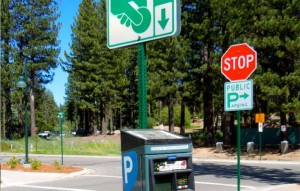
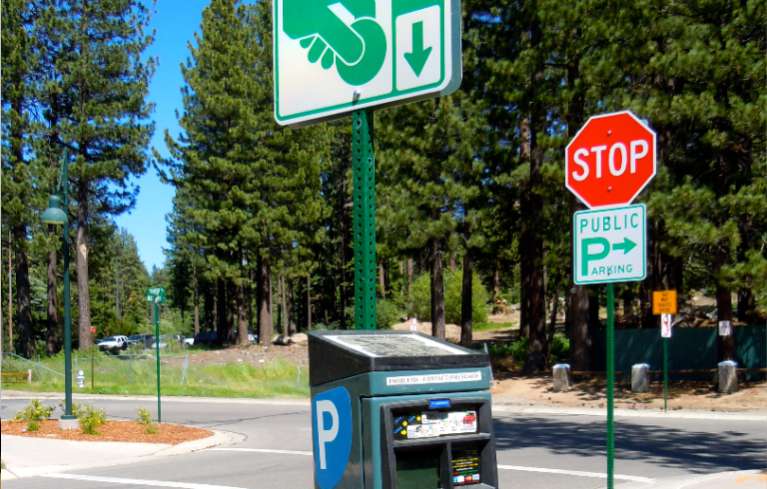
A pilot parking meter program started in 2011 on Bellamy Court. Photo/LTN file

A pilot parking meter program started in 2011 on Bellamy Court. Photo/LTN file

“(The council) can enact the initiative without it going to the people, they could put it on the ballot, or they could have staff review the financial and legal impacts of what the initiative says,” City Attorney Tom Watson said. If the latter position were taken, the city staff has 30 days to do so and then present their findings to the council.

The legal work can be done in house, but it’s undetermined if the fiscal impact would have to be hired out.

Peggy Bourland, spokeswoman for Tahoe4Tahoe, deferred comment on the legal documents to Grego.

It was the City Attorney’s Office that provided the documents to the anti-paid parking group.

“It was simply legal research that my office performed anticipating the initiative may be moving forward,” Watson told Lake Tahoe News.

The case out of Ventura parallels what is going on in South Lake Tahoe. Residents didn’t want parking meters and drew up an initiative to ban them, and had the paperwork all set for the ballot.

Ventura went to court seeking its removal from the ballot and won.

Parking meter jurisdiction has been covered by the state Vehicle Code and upheld by the courts since the 1960s – including the California Court of Appeal.

The court said, “… since the subject of traffic regulation on the public streets and highways of the state is a matter of statewide concern, it is not a ‘municipal affair’ unless the state shall completely abandon all or some part of that field. Under the constitutional and statutory provision here applicable, the initiative can come into play only through its use by all the people of the state, and not by some local segment thereof.”

Courts have ruled that parking programs are an administrative function of a city that does not require voters to have a say.

Grego, though, said, “This paid parking, is it really about traffic regulations or tax revenue? I think that is an important issue.”

Court docs repeatedly say all paid parking comes under the Vehicle Code, so it is a state rule, not a city regulation.

The way the local group – and others – could have legally tried to stop the process is through the referendum process. But the deadline to do so has long since passed. There is a 30-day window after ordinances are passed before they become law so challengers may file a referendum. They could have also asked to repeal the ordinance.

The last clause of Vehicle Code 22508 reads, “Any ordinance adopted pursuant to this section establishing a parking meter zone or fixing rates of fees for such a zone shall be subject to local referendum processes in the same manner as if such ordinance dealt with a matter of purely local concern.”

Paid parking has been discussed as a revenue generator for South Lake Tahoe since 2010. It wasn’t until after the council had adopted previous budgets that included parking revenue that the public became super engaged and enraged.

The first parking meters were installed in summer 2011 – 20 spaces on Bellamy Court near the state line. Last summer parking kiosks were put in on Venice Drive, near Lakeview Commons and by Lakeside Beach.

The council has not changed its mind – to date – about paid parking. Councilman Tom Davis has always been against it and the others for it. The five will discuss the matter again on Feb. 18. A scenario being floated is to abandon the program on Sept. 30 – the end of the fiscal year. This would not impact the current budget. However, $144,000 is projected to be needed to dismantle the program. That money would come from the 2014-15 budget.

Watson said, “The city obviously would like to listen to the community and I think the council has been doing that. On Feb. 18 we are going to bring back a comprehensive review of the program and make appropriate adjustments that folks here think or feel are necessary or appropriate.”

Grego said, “I hope this gets resolved in a more amicable fashion. We don’t need confrontation.”

Grego said when he was on the council he voted in November 2012 against paid parking. He was voted off the council that month and therefore did not have an opportunity to vote at the second reading. (He is planning to run for council again in November.)


Study: Adolescent obesity tied to economic status

By Melissa Healy, Los Angeles Times

From many corners of the United States — Los Angeles, Philadelphia, Mississippi — recent years have brought heartening news about the relentless rise in obesity among American children: Several years into a campaign to get kids to eat better and exercise more, child obesity rates have appeared to stabilize, and might be poised for a reversal.

But a study published Monday in the journal PNAS suggests that among adolescents, the hopeful signs are limited to those from better-educated, more affluent families. Among teens from poorer, less well-educated families, obesity has continued to rise.

Nationally, rates of obesity among adolescents 12 to 19 did not rise between 2003-04 and 2009-10. But during that period, obesity rates among adolescents whose parents have no more than a high-school education rose from about 20 percent to 25 percent. At the same time, the teenage children of parents with a four-year college degree or more saw their obesity rates decline from 14 percent to about 7 percent.

Read the whole story


Arts-culture-publishing contribute more to economy in U.S. than travel-tourism

By Dan Gorenstein, Marketplace

For the first time the federal government has tallied up the arts and culture contribution to the nation’s economy. It turns out that sector, movies, painting, publishing, cable and more, was worth half a trillion dollars — 3 percent to the gross domestic product in 2011. That’s more than the travel and tourism industry.

“Here you have for the first time, comprehensive empirical evidence from the point of view of economists that the arts play a substantial role in the nation’s economy,” says Sunil Iyengar who runs the Office of Research and Analysis for the National Endowment for the Arts.

In an instant, writers, app designers, publishers and painters just got a bunch of “street cred.” Nearly 2 million people work in the arts and culture industry which exported about $40 billion in goods and services in 2011. Some economists say ideas, innovation, and creativity are essential to growing the United States economy.

Read the whole story


No snow: S. Lake Tahoe roads in better shape

Publisher’s note: This is one of a series of blurbs about how the lack of winter is impacting businesses in the Lake Tahoe Basin. If you have an idea, please email it to info@LakeTahoeNews.net.

Lack of snow means South Lake Tahoe officials are able to repair roads.

“Our crews do crack sealing and minor patching of the roads, as well as sign maintenance and sweeping and cleaning of the drainage system,” Jim Marino, the city’s capital improvement program manager, told Lake Tahoe News. “We concentrate the crack filling on roads that have been paved within the last 10 years in order for us to extend useful life. Any cracks over 3-inches wide need to be dealt with by other methods.”

A cold patch is used this time of year. It’s a temporary fix using an oil blend. In the summer a more permanent hot mix method will be used.

“This season we are seeing many potholes and cracks getting larger due to the freeze thaw that we have been having,” Marino said.

The city to date has used about 8,000 pounds of cold patch, which can repair about 320 potholes that are 2-square-feet and 2-inches deep. To fill the approximately 37,000 lineal feet of cracks, 6,000 pounds – or 645 gallons – of crack seal have been used.

“As of right now we are a bit ahead of the normal winter street maintenance compared to heavier snow years, mainly because we are not tied up removing snow. We have utilized the dry spell to begin re-striping roadways and concentrating on sediment pick up. We don’t typically get these long dry spells to do the striping, so that is where we think we are ahead of the game at this stage,” Marino said.

— Lake Tahoe News staff report


No buyer yet, but people interested in KMS

STATELINE – While there were no bids for the former Kingsbury Middle School to the Douglas County school board to discuss Jan. 14, that could change.

Douglas County School District Superintendent Lisa Noonan asked the board to put the item on the agenda monthly instead of quarterly. Which they agreed to do. The next meeting is Feb. 11 in Minden.

The asking price is $4 million.

“There is enough activity to bring it back to the board monthly,” Noonan told the board.

The Stateline school has been on the market for two years. It was closed because of declining enrollment.

Brian Rippet, president of Douglas County Professional Education Association, pointed out to the board that one of the overriding reasons to close KMS and consolidate the two other schools at the lake was so there would be shared staff at Zephyr Cove Elementary and Whittell High schools. Now there is no shared staff. He said it might be time to rethink which schools are used at the lake because Kingsbury has better amenities than Zephyr Cove.

However, deed restrictions prevent ZCES from being sold.

— Lake Tahoe News staff report


S. Lake Tahoe budget flush with ‘extra’ money

By Kathryn Reed

South Lake Tahoe is in the unique position of having about $1.2 million to spend mid-year.

While the numbers are not astronomical, it is a change from the austerity and deficit modes the city has been faced with in recent years. The “extra” money is carry-over from the last fiscal year that ended Sept. 30. It takes time for fund balances to be known based on bills to be paid and money coming in so a dollar figure is not known when the current budget is passed. (This is essentially money that was budgeted but not spent or revenues that came in above what was projected.)

It was known when the current budget was approved last fall that there would be $349,473 in excess. That was immediately put toward the recreation master plan, a police vehicle, actuarial study, computer hardware, improvements at the city pool and few other things.

What was decided Jan. 14 was for $250,000 to be used for a one-time 2 percent salary adjustment for all permanent full-time employees. The city manager and city attorney have declined to be included. Most part-time and seasonal employees will receive $250.

Another $250,000 was allocated for the Harrison Avenue project. That bid will be awarded Feb. 18 and the project will break ground in the late spring.

The council approved this on a 5-0 vote without any discussion. However, all have been meeting with city staff individually. And Mayor Hal Cole and Councilwoman Brooke Laine are the fiscal sustainability committee members and therefore are most active in financial matters.

What isn’t determined yet is how another $534,122 will be spent. Of that amount, $334,122 is in the bank – also from year-end balance excesses. The remaining $200,000 is from anticipated sales tax increases based on what the state has told the city.

City Manager Nancy Kerry pointed out that if the council wants to eliminate the paid parking program, the $534,122 would almost cover the cost of doing so. Eliminating the controversial program mid-fiscal year would create a budget hole of about $600,000. Included in that is the $191,000 to pay off the kiosks.

There will be a public workshop on Feb. 10 at 8am at Lake Tahoe Airport at which time the council is expected to make a decision about where the money goes and to potentially create a policy about how to spend money when there are unanticipated revenues.

Cole said after the council meeting he hopes in February a policy will be set to guide this and future councils about how to allocate surpluses.

“I still think it’s infrastructure. I know that is broad, but without infrastructure improvements people get frustrated,” Cole told Lake Tahoe News.

Kerry suggested some of the money could be put aside to deal with the fluctuating state retirement system.

Much of Kerry’s presentation on Tuesday was about the historical financial situation of the city and how the city has achieved positive cash flow. She stressed the cyclical hiring in flush times, firing in lean times is not an effective way to run a city because is ruins lives and doesn’t help the public.

The turn around from 2010 when the city was facing systemic $3 million annual deficits in part is because one-third of the staff was laid off, employees are paying for some of their benefits, reserves were created in 2003, transient occupancy tax is being collected from vacation rentals and other changes were made to how the city does business.

“Now we have a city that is living within its means,” Kerry told the council. “We’ve fixed the fiscal problem now, but I’m still nervous.”

The local economy is still on shaky ground. While hotel tax numbers have been going up for the past two years, Councilman Tom Davis who is in the lodging business, said with no snow on the ground room nights could come to a screeching halt and cautioned his colleagues to be reserved with expectations.


Flu death in El Dorado County

An El Dorado County resident has died from the flu.

Officials are not releasing the age, gender or hometown of the individual even though counties throughout California provide that information to the media. The person is not a Lake Tahoe resident.

“Due to patient privacy laws we cannot provide that level of information regarding the fatality. However, I can share with you that we received the report late (Monday) afternoon and we confirmed the fatality as flu-related (Tuesday),” Margaret Williams, spokeswoman for the El Dorado County Health & Human Services Agency, told Lake Tahoe News.

The H1N1 strain is what is striking most of the country. It is still possible to be vaccinated.

— Lake Tahoe News staff report


Bomb threat closes Sierra-at-Tahoe

Updated Jan. 14 7:55pm:

By Kathryn Reed

Sierra-at-Tahoe was evacuated Tuesday afternoon after someone phoned in a bomb threat.

The call came in about 3pm Jan. 14 to the season pass office. Resort and law enforcement officials were not releasing any details about the caller, what was said or potential motive.

El Dorado County sheriff’s Lt. Pete Van Arnum said the scene has been cleared before 8pm and no device was found. Two bomb sniffing dogs from the California Highway Patrol were used.

Steve Hemphill, spokesman for the resort, said he did not know of any other time when a bomb threat had been placed to Sierra. He also said there have been no layoffs and would not speculate on a reason for the threat.

Van Arnum told Lake Tahoe News, “(We’ll be) checking with the phone company and looking at persons who may be disgruntled with Sierra.”

The base lodge was immediately evacuated. Then systematically the lifts were cleared of skiers. Guests were not told why the resort was closing at 3:30pm. Access to the mountain was cut off at 4:30pm.

West Bowl is only open from 10am-2pm, so no one was over there who had to be evacuated.

About 300 people were evacuated, according to Van Arnum.

“In this day and age it’s not worth taking any chances so we are allowing them to do their thing,” Sierra General Manager John Rice told Lake Tahoe News.

Resort officials plan to open as normal on Jan. 15.