Olympic fears growing among families, athletes

By Sarah Lyall, New York Times

Athletes and their families are becoming increasingly anxious about possible terrorist attacks at the Winter Olympics in Sochi, so much so that some families have decided not to attend and others plan to curtail their activities once they get to the Games in Russia.

No American athletes have yet canceled plans to compete because of terrorist threats. But with increasing talk about unrest in the region and threats from would-be suicide bombers, some family members say they are reconsidering long-held plans to support the athletes at the Games.

In the most recent in a series of unnerving incidents, the Olympic teams from the United States and some European countries received emails last week warning them that they would be attacked if they took part in the Games. The messages were determined to be hoaxes, but the episode added to the skittishness that is permeating the mood as the Feb. 7 opening ceremony approaches. Members of Congress have recently expressed concern about the safety of the 10,000 or so Americans planning to travel to Sochi.

Read the whole story


Scientists: Solar vortex could trigger ‘Little Ice Age’

By Macrina Cooper-White, Huffington Post

If you thought the polar vortex was bad, get a load of a new climate phenomenon that just might be coming our way.

Scientists say we could be headed for another “Little Ice Age,” given how eerily calm the sun has been in recent years.

First, a bit of background. The sun goes through cycles that last roughly 11 years, marked by the ebb and flow of sunspots on its surface. At peak sunspot activity, the so-called solar maximum, the sun sports lots of sunspots and is steadily unleashing solar flares and coronal mass ejections (CMEs). Since our current solar cycle, Number 24, kicked off in 2008, the number of sunspots observed has been half of what heliophysicists expected.

Read the whole story


Neighbors perplexed about dead coyote

By Kathryn Reed

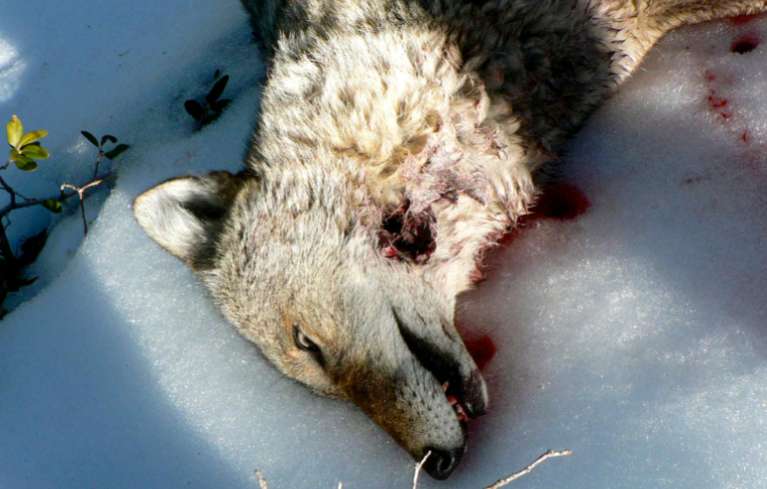
MEYERS – Where is the carcass of the coyote that was shot in Meyers and who shot it? Those are the questions that are still not answered.

Jeff Morales discovered the dead animal Jan. 22 on his routine walk with his dog.

“The blood trail intersects my existing trail,” Morales told Lake Tahoe News.

At first he thought it might have been a Husky that was killed because he just saw a pile of fur. He took his dog home and came back with a camera to document what he saw. This was after he made a series of phone calls to El Dorado County Sheriff’s Department, El Dorado County Animal Control, California Department of Fish Wildlife and Lake Tahoe Wildlife Care.
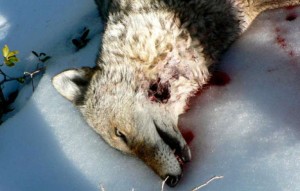
Who killed a coyote in Meyers and took the carcass a day later is a mystery. Photo/Provided

Who killed a coyote in Meyers and took the carcass a day later is a mystery. Photo/Provided

Lt. Robert Gerat with Animal Control looked around a little that afternoon according to Lynn and John Setnor whose house is the closest to the trail of blood, but reportedly didn’t find anything. Gerat told Lake Tahoe News his agency has no jurisdiction over this incident. “No laws were broken that we enforce,” he said.

Blood was visible Jan. 27 beginning about 100 feet near the Setnor property on Ottawa Drive, with it becoming more prominent where the animal likely ran farther into the forest from its aggressor before eventually collapsing and dying.

The Setnor property is surrounded by California Tahoe Conservancy land on both sides and national forest in the back. It is not fenced, so it looks like acres of open space.

John Setnor and Morales had a conversation last Wednesday, with Morales telling him about the coyote. Their recollections of the dialog as told to Lake Tahoe News are similar. They live in the same neighborhood. What is different is how well they say they know each other. Morales says they wave and are cordial. Setnor said he didn’t know who Morales was when he was behind his house.

They agree Setnor was on his back deck with a gun. Setnor says the only gun he owns is a BB gun. He’s not a hunter. He offered to let sheriff’s officials search his home for weapons, though they declined to do so. Setnor said he had the gun because there had been suspicious people on his street.

Morales said from his vantage point he could not tell what kind of gun Setnor had.

Neither John nor Lynn Setnor have ventured to see the bloody trail. Walking on the slick area is not something they want to chance, especially with John Setnor having a surgically repaired leg. They vehemently deny having anything to do with killing the coyote, professing their love of wildlife.

When Morales was going back to the area the morning of Jan. 23 he ran into sheriff’s Lt. Pete Van Arnum so he offered to show the lieutenant the body. But when they got to the spot the coyote was not there.

Morales said there was no evidence of it being dragged off. Only large bootprints were left in the snow – and the animal’s blood.

“It appears someone with boots removed the coyote,” Van Arnum told Lake Tahoe News. “If someone had taken the coyote legally, they could be entitled to the pelts. There is no evidence Mr. Setnor took it.”

Van Arnum also does not believe Setnor killed the animal.

It is presumed a gun left the large hole in the side of the coyote’s neck. But what type is hard to say because no official has looked at the carcass.

As for the legalities, coyotes may be hunted in the Lake Tahoe Basin with a permit and a shotgun, Van Arnum said. However, U.S. Forest Service regulations prohibit discharging a firearm of any kind within 150 yards of a house or building. This would have been that close.

Van Arnum said the odds of finding the culprit are not very good.

“If nothing else, all this uproar about the incident will probably keep someone from doing it again in that area,” Van Arnum said. “Obviously, it was very close to a residential area. We don’t want people shooting guns in residential areas.”


No snow: Bark beetle threat increases

Publisher’s note: This is one of a series of blurbs about how the lack of winter is impacting the Lake Tahoe Basin. If you have an idea, please email it to info@LakeTahoeNews.net.

More dry weather is likely to mean more bark beetles destroying pine trees in the Sierra.

“There typically is a one- to two-year lag between when drought starts and when we start seeing increased bark beetle activity. While beetle activity started to increase in 2013, aerial surveys still recorded a fairly normal amount of tree mortality,” CalFire said in a statement. “There was significant mortality in certain areas, but overall mortality was not high. In contrast, tree mortality in 2014 is likely to be much higher. When the drought does end, there too will be a lag time before beetle activity dies down.”

California’s driest year on record was 2013, as well as the second consecutive year of below normal precipitation for the state. Without adequate precipitation, trees do not have enough water for normal growth and may be severely drought stressed by the end of the summer. For pines, true firs and some other conifers, bark beetles are the pest that typically kills drought-stressed trees. As bark beetle numbers increase, tree mortality increases. By the end of 2013 there was clear evidence that bark beetle numbers were increasing.

For individual, high value trees, supplemental watering and application of pesticide sprays (registered for use on pines) to prevent bark beetle attack are viable options and have been met with limited success, according to CalFire. For trees in forest stands and plantations, these treatments are not practical

— Lake Tahoe News staff report


Drought exposing forgotten towns

By Jim Carlton, Wall Street Journal

EL DORADO HILLS — A severe drought plaguing much of the West is also bringing bits of its past back to life, as long-submerged historic artifacts and natural features are exposed by receding lake levels.

Near this Sacramento suburb, man-made Folsom Lake has receded to less than one-fifth of its capacity amid bone-dry conditions in California, recently revealing outskirts of a ghost town called Mormon Island founded during the mid-19th century gold rush. On an unseasonably warm winter day recently, throngs of visitors descended on the cracked mud flats of the reservoir to inspect hand-forged nails, rusted hinges and other vestiges of frontier life that were inundated when the lake was created in 1955.

California is entering its third year of drought, while much of the West has been abnormally dry for more than a decade.

In Utah, the decline of Lake Powell on the Colorado River to less than half its capacity in the past decade has uncovered artifacts including Native American ruins known as Fort Moki by 19th century pioneers. It has also restored some natural features, such as a towering waterfall called Cathedral in the Desert, that had been buried when the federal government dammed the river to create the giant reservoir in the 1960s.

Read the whole story


Prepaid slot cards worry problem gambling advocates

By Richard N. Velotta, Las Vegas Sun

For years, gaming regulators have created barriers between debit or credit cards and slot machines so that gamblers wouldn’t drain their bank accounts or ruin their credit ratings.

While they’ve allowed automated teller machines at casino properties, regulators have never crossed the line of enabling players to put their cards into a slot machine to access money directly.

But now, a Las Vegas company is proposing a change in state gaming regulations that would allow the use of a prepaid card for slots that puts casinos one step closer to a player’s bank account.

Read the whole story


2013 one of the hottest years on record

By Deborah Netburn, Los Angeles Times

Never mind the current cold snap in the East or the polar vortex that swept through much of the U.S. in early 2014 — scientists from NASA and NOAA report that 2013 was one of the 10 hottest years on record, and there is a good chance 2014 will be even warmer.

According to the National Aeronautics and Space Administration’s calculations, 2013 is tied with 2009 and 2006 as the seventh hottest year since global temperature record keeping began in 1880. The National Oceanic and Atmospheric Administration’s slightly different calculations say 2013 tied with 2003 as the fourth hottest year on record.

According to NASA, the average surface temperature of our planet in 2013 was 58.6 degrees Fahrenheit, which is 1.1 degrees warmer than the mid-20th century base line. That makes 2013 the 37th consecutive year that the annual global temperature was above average.

Read the whole story


No snow: Bike trails being built

Publisher’s note: This is one of a series of blurbs about how the lack of winter is impacting businesses in the Lake Tahoe Basin. If you have an idea, please email it to info@LakeTahoeNews.net.

Lack of snow means the ability to do trail work.

In honor of Martin Luther King Jr.’s birthday 36 people showed up to a joint TAMBA and Poedunks trail day at Peavine Mountain in Reno.

One of the three projects that got done included manually moving more than 4 tons of rock. This was for erosion control.

“Gravity also helped quite a bit since a good quarry location was found right above the trail,” TAMBA officials said.

— Lake Tahoe News staff report


Calif. drought has long-term implications

By Gloria Goodale, Christian Science Monitor

As California faces the worst drought in its 163-year history with no hint of relief in sight, some scientists are calling the event a red flag for the future of the nation.

Gov. Jerry Brown raised the issue in his State of the State address Wednesday, saying “we do not know how much our current problem derives from the build-up of heat-trapping gasses, but we can take this drought as a stark warning of things to come.”

Water shortages have widespread impacts. Agriculture and energy generation account for 80 percent of the nation’s clean water use, says David Dzombak, head of Carnegie Mellon University’s Civil and Environmental Engineering Department. And even when cities meet their water demands during a drought, the costs can leave them “exposed to significant risk of financial failures,” says Patrick Reed, a professor of civil and environmental engineering at Cornell University, in an email.

In that way, crises can led to new policies and new attitudes, and some say the California drought could be just such a catalyst.

“At the state, regional, and federal level, and across the country, people are just starting to come to grips with the fact that our climate is not stationary,” says Dzombak. “We are in a dynamic, changing climate situation that will affect all parts of the country in different ways,” he says, led by the West and Southwest so impacted by drought.

Read the whole story


Lawsuit takes on California teachers’ job protections

By Stephen Ceasar, Los Angeles Times

Local school districts, state legislators and even a California governor have tried to limit teachers’ job protections, among the most generous in the country. Efforts have all failed to rid public schools of ineffective teachers by making it easier to fire them and tougher for them to gain tenure and by stripping them of seniority rights.

Now proponents are taking their fight to another venue: the courtroom. A Los Angeles County Superior Court judge will hear arguments this week over the constitutionality of laws that govern California’s teacher tenure rules, seniority policies and the dismissal process — an overhaul of which could upend controversial job security for instructors.

The lawsuit, filed by the nonprofit, advocacy group Students Matter, contends that these education laws are a violation of the Constitution’s equal protection guarantee because they do not ensure that all students have access to an adequate education.

Read the whole story