Mental health patients are increasingly younger

By Jocelyn Wiener and Phillip Reese, Sacramento Bee

In recent years, Dr. Jason Bynum has seen the churn: teens in crisis cycling through his south Sacramento psychiatric hospital, admitted, released, and just a few months down the road, back with another breakdown. Increasingly, he lives with a deathly fear that his young patients are going to commit suicide after he sends them home. He worries even more about the ones who are violent toward others.

“One of these kids that I’m discharging is going to go home and kill somebody,” said Bynum, a psychiatrist at Sierra Vista Hospital who is also president-elect of the Sierra Sacramento Valley Medical Society.

A majority of the children and adolescents he treats are suicidal or self-harming – the rest are violent, homicidal or deeply delusional. He sometimes holds onto the sickest of them for weeks or months, trying to keep them safe while he searches for intensive follow-up services.

Around the state, the picture is much the same: Mental health hospitalizations of California’s youngest residents – those 21 and under – increased 38 percent between 2007 and 2012, jumping from 34,000 to 47,000, according to an analysis of state data by The Sacramento Bee and the Center for Health Reporting. Child hospitalizations also rose nationally, but not as quickly as in California, federal data show.
Read the whole story


Colleges contending with shift in demographics

By Eric Hoover, Chronicle of Higher Education

Demographic projections have inspired doomsayers and daydreamers alike. The sky-is-falling contingent says the declining number of white, affluent high-school graduates will sink many tuition-dependent colleges. Meanwhile, optimistic observers predict that population shifts will compel institutions to transform themselves by embracing underrepresented students like never before.

As any admissions officer could tell you, the number of high school graduates in several Midwestern and Northeastern states will drop sharply over the next decade, according to the Western Interstate Commission for Higher Education.

Nationally, the number of black and white students will decline, and the number of Hispanic and Asian-American graduates will increase significantly. The nation’s already seeing a sharp rise in first-generation and low-income graduates—the very students whom selective four-year institutions have long struggled to serve.

Read the whole story


Study: Pesticide linked to Alzheimer’s

By Robin Lally, EcoWatch

Scientists have known for more than 40 years that the synthetic pesticide DDT is harmful to bird habitats and a threat to the environment.

Now researchers at Rutgers University say exposure to DDT — banned in the U.S. since 1972 but still used as a pesticide in other countries — may also increase the risk and severity of Alzheimer’s disease in some people, particularly those over the age of 60.

In a study published online last week in JAMA Neurology, Rutgers scientists discuss their findings in which levels of DDE — the chemical compound left when DDT breaks down — were higher in the blood of late-onset Alzheimer’s disease patients compared to those without the disease.

Read the whole story


Nev. farmers, ranchers contend with drought

By Sean Whaley, Las Vegas Review Journal

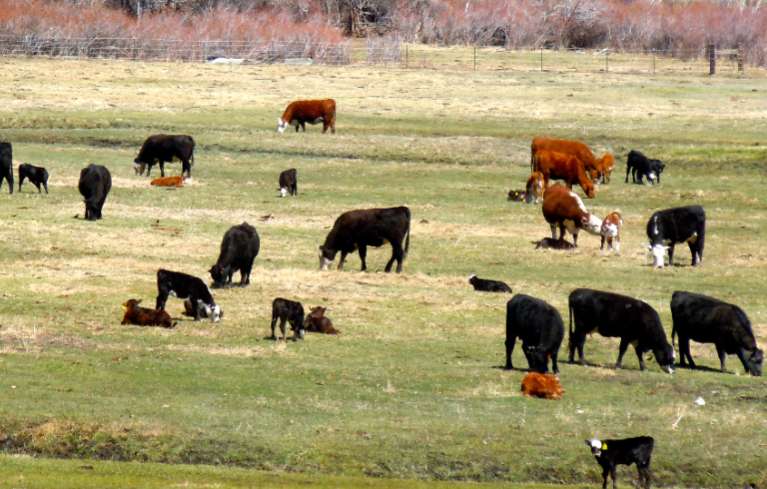
FALLON — Nevada’s severe drought is a tragedy unfolding in slow motion. But its effects will be far reaching — from rural communities that depend on ranching and agriculture for their existence to the prices we all pay for food at the grocery store.

Carson Valley cows had more to eat a year ago. Photo/LTN file

Carson Valley cows had more natural grass to eat two years ago. Photo/LTN file

Nevada’s wildlife will suffer as food supplies disappear and springs dependent on runoff from snowfall fail. Wild horses will suffer from a lack of forage.

Wildfires could become a major problem throughout the state, from the dry rangelands to the drought-crippled forests of the Sierra Nevada.

But most of all it will be felt by the ranchers and farmers and their families, those eternal optimists who prepare the fields and grow their cattle herds every year with fingers crossed that the rain and snow will come on time.

Read the whole story


Survey: Businesses expect to raise prices in 2014

By Ben Leubsdorf, Wall Street Journal

A growing number of U.S. businesses expect to raise prices in the coming months, according to a survey by the National Association for Business Economics.

About 43 percent of companies plan to raise prices in the first three months of 2014, far more than the 20 percent that said they actually did raise prices in last year’s fourth quarter. Just over half — 56 percent — expect prices to stay flat and about 2 percent expect them to fall.

Read the whole story


Calif. prepping for nasty fire season

By Carmen George, Fresno Bee

Firefighters are bracing for a hot year as California’s drought has forests primed for early wildfires.

CalFire spokesman Daniel Berlant said firefighters already have responded to over 400 wildfires statewide this year. By comparison, there were no wildfires in the first 3 1/2 weeks of last year, he said.

“The conditions we are experiencing right now are similar to what we would be seeing in August — that’s how dry it is,” Berlant said. “Even though the calendar says it’s February and it’s winter, conditions are primed for wildfires.”

In response to the drought, CalFire staffing increased statewide last week. Last year, CalFire declared the official start of fire season on May 1. This year, it’s likely to be much earlier, Berlant said.

Read the whole story


Patient dumping to be topic of national commission

By Karoun Demirjian, Las Vegas Sun

WASHINGTON — The U.S. Commission on Civil Rights is holding a Valentine’s Day hearing on the practice known as patient dumping, which could put a federal spotlight on a Nevada scandal involving the practice.

The commission announced the hearing last week, expressing concern about the “extent to which patients with a psychiatric disability are denied adequate care and whether there has been systematic neglect of this group.”

Read the whole story


2013 best year for Nevada gaming since 2008

By Howard Stutz, Las Vegas Review-Journal

Nevada’s casino industry cracked the $11 billion gaming revenue figure during 2013, the first time the benchmark had been reached since 2008.

The Gaming Control Board released the state’s calendar year-end and December gaming revenue totals Friday.

Statewide, casinos collected $11.14 billion during 2013, a 2.6 percent increase over 2012. The all-time state single-year record remains $12.8 billion in 2007.

Baccarat — a card game favored by high-end customers who travel to Las Vegas predominately from Asia — figured heavily into the numbers.

Read the whole story


12 people object to USFS plan for Tahoe

The U.S. Forest Service Lake Tahoe Basin Management Unit received 12 letters of objection to its Forest Plan.

During the 90-day objection resolution period the Forest Service will work with those objecting to try to resolve their concerns. After the objection resolution period, the regional forester will sign a record of decision and the revised Forest Plan will take effect.

The Forest Plan is the planning document for the local USFS office for the next 15 years.

The objection letters are online.


Amador residents lose Indian casino challenge

By Peter Hecht, Sacramento Bee

A federal appeals court on Jan. 29 rebuffed an Amador County citizens group challenging federal recognition of a tribe seeking to build a casino near Ione.

In a nine-page memorandum, the 9th U.S. Circuit Court of Appeals upheld a lower court ruling affirming that the Buena Vista Rancheria of Me-Wuk Indians is a federally recognized tribe.

The citizens group is trying to stop the small tribe from building a casino with 950 slot machines and 20 table games on a 67.5-acre parcel near Ione.

Read the whole story