Shots fired near Ski Run, 1 person arrested

Updated Feb. 20 1:15pm:

A 22-year-old South Lake Tahoe man is behind bars on charges of assault with a deadly weapon and shooting into an inhabited vehicle.

Bail for Angelo Anderson has been set at $100,000. More charges are possible.

The incident started Feb. 19 at 4:42pm on Fawn Way one block south of Highway 50 in South Lake Tahoe.

Officers said when Dennis McQuitty, 57, of South Lake Tahoe was leaving a friend’s home Anderson approached him. The two used to work together. Anderson allegedly began making inflammatory remarks toward the victim. McQuitty closed his door to avoid a conflict and started to drive away.

Several witnesses then reported to police that they saw Anderson raise a handgun and fire approximately three rounds at McQuitty’s truck as he drove on Fawn Avenue. At least one bullet struck the truck. Anderson then went back into his residence, a room at the A&A Lake Tahoe Inn with his girlfriend, Leslie Monroy.

She was detained, but later released without charges. Anderson was arrested. Officers recovered the firearm used by Anderson.

Witnesses should call Detective Jeff Roberson at (530) 542.6100 or Secret Witness at (530) 541.6800.

— Lake Tahoe News staff report


Group tries to slow government’s move from paper to Web

By Lisa Rein, Washington Post

As the Obama administration pushes to do more business over the Internet, finally seeking to close the technology gap with the private sector, the digital makeover is running into a dogged opponent called Consumers for Paper Options.

The group is working the halls of Congress in closed-door meetings, underwriting research favorable to its position and mounting a news media campaign in an effort to preserve Washington as the capital of paper — and slow the move away from printed checks, forms and other paper communication.

The lobbying group has had some recent victories, including language tucked into last month’s budget deal that requires the government to plan for resuming paper delivery of annual Social Security earnings statements to some of the nation’s 150 million future retirees. And it’s been claiming these wins in the name of the elderly and low-income Americans the Internet has left behind.

Except Consumers for Paper Options is a creation of the paper industry.

Read the whole story


Homeland Security wants to track drivers

By Josh Hicks, Washington Post

The Department of Homeland Security plans to build a national database that would gather information from license-plate readers that scan every vehicle crossing their paths, according to a solicitation last week from the agency.

U.S. Immigration and Customs Enforcement would use the technology to help locate and arrest “absconders and criminal aliens,” reducing surveillance hours and enhancing officer safety, according to the request.

License-plate readers, which automatically record information on all vehicles that cross their paths instead of just suspect vehicles, are controversial among privacy advocates. The American Civil Liberties Union issued a report last year criticizing the increased use of such devices, saying they collect vast amounts of data on innocent individuals and could be used for abusive tracking and targeting.

Read the whole story


Report: Community colleges good for taxpayers

By Katherine Mangan, Chronicle of Higher Education

Community-college graduates receive nearly $5 in benefits for every dollar they spend on their education, while the return to taxpayers is almost six to one, according to a report released on Tuesday that measures not only graduates’ higher earning power but also their healthier lifestyles.

The report, “Where Value Meets Values: The Economic Impact of Community Colleges,” seeks to quantify what happens when community colleges provide employers with skilled workers, the economy with consumers, and graduates with jobs along with better health and well-being.

The 88-page report was prepared by Economic Modeling Specialists International for the American Association of Community Colleges.

Read the whole story


S. Tahoe to finance Harrison Avenue upgrades

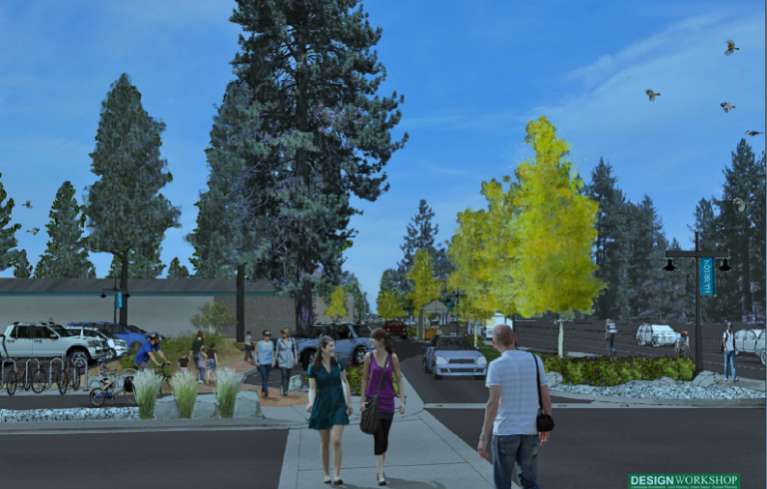
This is what Harrison Avenue at Modesto Avenue will look like by the end of the year. Artists rendering/Design Workshop

This is what Harrison Avenue at Modesto Avenue will look like by the end of the year. Artists rendering/Design Workshop

By Kathryn Reed

Funky, hodgepodge, outdated. Those are just some of the descriptions people use to describe the architecture along Harrison Avenue in South Lake Tahoe.

And while it’s not a mandate that the 19 property owners spruce up their Highway 50 frontage buildings, some are in the planning stages to do just that. With the Feb. 18 approval by the City Council to go forward with the Harrison Avenue project after 19 years of planning, property owners are getting more serious.

John Cefalu, who owns the Globin Building that houses the Al Tahoe Laundry Center, told Lake Tahoe News after the meeting that he has preliminary designs done. He was waiting for the council to stop talking and act on Harrison’s future before he committed more resources. That building is more than 50 years old.

Cefalu’s goal is to coordinate the improvements to his structure to coincide with the street improvements.

On Tuesday the council agreed to finance $3 million over 15 years to compensate for the funding gap that was created when the lowest bid of $4,806,307 came in 13 percent higher than the engineer’s estimates. One of the reasons estimates were so off is that they were more than a year old.

When construction support and contingency funds are added, the actual total cost comes to $5,688,920. That doesn’t include the $720,074 that has been spent on design and engineering.

Sierra Nevada Construction out of Sparks was the low bidder. Because federal dollars are in part funding the project the city’s rule to give preference to local contractors was superseded.

The city has $2,878,115 in cash to go forward. That comes primarily from a $1.5 million certificate of participation bond the city took out in 2012. (The total bond was $5 million; with $1.5 million allocated to Harrison.) The rest is from federal agencies and $79,000 from South Tahoe Public Utility District. (STPUD can pay to have utilities relocated or do the work itself.)

This leaves a gap of $2,810,805. The city is seeking to finance slightly more than that amount to build in a cushion or in case add-ons are sought.
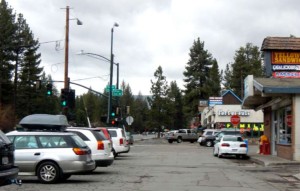
Harrison Avenue will get a multi-million dollar face lift this summer. Photo/LTN file

Harrison Avenue will get a multi-million dollar face lift this summer. Photo/LTN file

The council members on Tuesday approved going into debt for Harrison, saying the project will never get less expensive, they don’t want to tie up reserves, and it’s time to spend money to improve the city.

Property owners in the area have created a special district and will be paying $971,000 of the total project. A handful of property owners have paid the first installment that is now overdue. Some were waiting to give the city money after the city committed in earnest to do the project.

To pay back the estimated $294,000 annual debt on the bond the city could use the $100,000 a year it will be getting from property owners for the next 20 years. There is also an estimated $970,000 budget surplus that has not been allocated that could be used. There is also parking revenue, assuming there is a parking program. Ironically, the parking program brings in about the same amount of money the bond debt will be.

The one thing the council could not do Tuesday was award the contract to Sierra Nevada Construction. This is because legally the city must have the cash in hand to do so. That should occur within a month.

Mitch Grayson, superintendent with SNC, said his firm is willing to go forward with the assumption it has the job and funding will be secured.

The goal is to start May 1 and be done by the end of the construction season. Minor improvements may carry over into 2015.

The plans call for a complete overhaul along Harrison Avenue between Los Angeles and San Jose avenues, going back to Riverside Avenue.

A class 1 bike trail will go along Harrison from Los Angeles, down Modesto Avenue, along Riverside, up San Jose and connect to the trail at Lakeview Commons.

Improvements will be made at the triangular parking lot near the boat launch. A new parking lot will go in along Modesto Avenue at the vacant lot across from Sno-Flake Drive-In.

Councilwoman JoAnn Conner asked whether that lot would be paid or free.

City Manager Nancy Kerry said free. She added the area will need a parking management plan so people are limited to how long they park. This will lessen the likelihood of people using those spaces for beach parking and taking spots away from customers of area businesses.

Some of the streets will be one-way to improve traffic flow and better accommodate parking. All of the streets will be completely redone. Right now they all are rated an F.

Landscaping will also be incorporated.

Overhead lights will be installed along Harrison Avenue and the side streets to complement what is already on Highway 50 and Pioneer Trail. On Riverside the lights will be closer to the ground so as not to bother residents.

A future expense is the operating and maintenance costs. Sarah Hussong-Johnson, deputy public works director, said lighting, parking lot upkeep and snow removal of the bike trail will cost the city. Councilwoman Brooke Laine asked her to come back with what those annual expenses are estimated to be.


Parents not always choosing vaccinations for kids

By Tasneem Raja and Chris Mooney, Mother Jones

It’s easy to find bad information about the safety of vaccines on the Internet. That’s, well, the Internet. But what’s scarier is that in many states, parents who buy into those myths can easily opt out of immunizing their children. In some cases, it’s no harder than checking a box on a school form saying that vaccines are against their “personal beliefs.”

In a 2012 study of vaccine exemption policies across the country, a team of researchers led by Saad Omer, a professor of public health at Emory University, found that of the 20 states that allowed personal belief exemptions for enrollment in a public school or child-care program, less than a third made it “difficult” to do so (for instance, by making parents re-apply for one each year, explain their beliefs in writing, or get a notarized letter of approval from a health care provider).

In the nine “easy” states identified in the study, the rules required only signing a form. Indeed, Omer suspects that some parents sign vaccine exemption forms not because they actually hold anti-vaccine beliefs, but simply because it’s easier than juggling the doctors’ appointments, missed work, and other inconveniences of getting kids vaccinated.

Read the whole story


Brown puts deep imprint on California judiciary

By Howard Mintz, San Jose Mercury News

As he prepares to fill a surprise opening on the California Supreme Court, Gov. Jerry Brown’s track record of appointing judges strongly points toward a consistent theme — scouring the legal ranks for candidates with some intellectual firepower who might add diversity to the nation’s largest judiciary.

Justice Joyce Kennard’s unexpected announcement this month that she will retire in April has given Brown a chance to name his second Supreme Court justice in his latest go-round as governor, a clear opportunity to heavily influence a court that has tilted conservative since he left office in 1983.

A review of Brown’s 164 judicial appointments since 2011 paints a portrait of a Democratic governor trying to break new ground on the bench without taking the risks he took back in his first tenure, notably his ill-fated appointment of former Chief Justice Rose Bird, ousted by voters in 1986.

Read the whole story


Spike in Calif. students seeking financial aid

By Loretta Kalb, Sacramento Bee

After years of rising tuition and pressure on household budgets, a record number of students across California are applying for college financial aid.

Over the last six school years, the number of California residents filing the federal financial aid application jumped nearly 74 percent, according to the U.S. Department of Education. Some local colleges saw even higher increases, such as an 81 percent rise among California State University, Sacramento, applicants.

It’s the latest sign that college families have grown akin to mall shoppers when it comes to price: fewer and fewer expect to pay sticker price.

Read the whole story


SLT parking to include reduced fines, locals pass

By Kathryn Reed

Paid parking is going to remain in South Lake Tahoe – for now. But it’s going to look different than it did last summer.

The South Lake Tahoe City Council on Feb. 18 had a two-part session – morning and evening – so the public could hear where the program is, learn about proposed changes, and give their input.

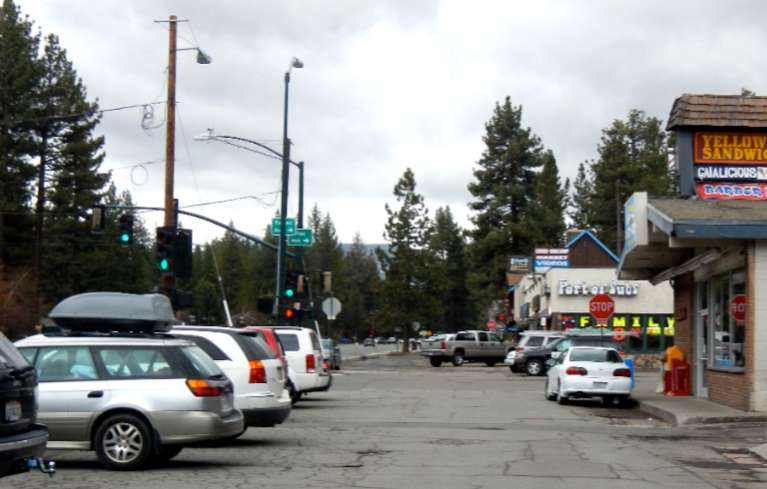
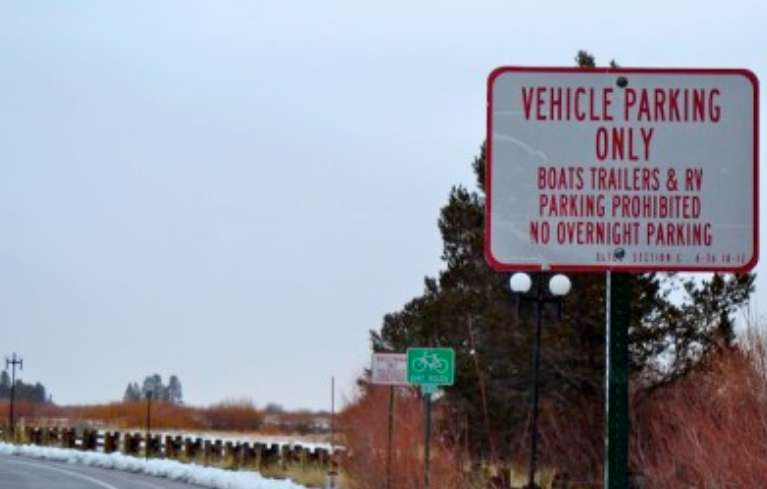
Venice Drive in South Lake Tahoe will not have paid parking, and the future of boat trailers will be decided later. Photo/LTN file

Venice Drive in South Lake Tahoe will not have paid parking, and the future of boat trailers will be decided later. Photo/LTN file

Changes include:

• A $35 fine for violations at kiosks. It has been $55. (There are now times when warnings are issued.)

• The city will have no paid parking on Venice Drive. The issue of boat/trailer parking will be addressed at a future meeting.

• Annual passes for locals will be $40. A local is defined as anyone living full time on the South Shore in ZIP codes including South Lake Tahoe, Meyers, Stateline and Zephyr Cove. The passes will be valid Monday-Friday.

• The hours of enforcement will be from 8am to 8pm. It had been until 10pm.

Exactly when these changes take place has yet to be decided.

Because the council on Tuesday morning opted to put a question before the voters in June asking if they want the paid parking program to remain, improvements that require money will not take place this summer. The thinking is that it would not be fiscally prudent to make improvements that may turn out to be temporary. (If voters say no, it will not change Bellamy Court, Transit Way or the Heavenly Village parking garage.)

This means the dirt at Lakeside used for parking would not be paved in May as was the original plan. The street was going to be realigned, along with the possibility of creating an employee parking area.

Striping, lighting and signage improvements are also on hold anywhere there are kiosks.

If the entire program were to be scrapped today it would cost about $620,000. This includes $191,000 to pay off the kiosks and losing projected revenues that have already been allocated.

The manufacturer of the kiosks has told the city it would not buy them back. They city could on its own try to sell them.

That $620,000 includes getting rid of Transit Way and Bellamy Court. Revenue there is about $85,000 a year. And if the city were to get rid of those kiosks, it would have a ripple effect involving the Heavenly Village parking garage. This is because people who purchased the bonds were told there would not be competing free parking nearby.

“Termination of the program is based on what is budgeted,” City Manager Nancy Kerry said. “These are estimates.”

She added that estimates are on track. For the first three months of the fiscal year that began Oct. 1 $28,000 has been collected from parking.

Some of the new kiosks were installed in June, others in July. This means the city has not had a full year to know if its projected revenues are accurate. There have been about 63,000 transactions since the inception.

“If parking stays, it’s a real opportunity to see what kind of revenue is generated over the long run and where those funds could be spent,” Kerry said.

Besides using the parking revenue for operations and maintenance in the areas where the kiosks are located, other ideas for spending that cash include a bike path from Lakeview Commons to Ski Run Boulevard and improvements at Lakeside Beach area. But those ideas will not be fully explored until after the June election.

If parking stays, there is talk of having the neighborhoods with kiosks form groups to have input on how revenues are spent.

—-

In other news:

• There will be a special council meeting Feb. 24 at 5:30pm to iron out the ballot arguments for the parking question.

• Tahoe Prosperity Center’s board is meeting Friday with the goal of hiring an executive director.

• In April the council will hear from the fire chief about how prepared the city is when it comes to dealing with a dry summer.

• Lakeview Commons is officially closed because when there has been snow people were riding the rails and sledding. The city would be liable if anyone got injured.


Skiers die at Sugar Bowl, Northstar

By Gus Thomson, Auburn Journal

A Sugar Bowl resort employee from Brazil and a 43-year-old Belmont man skiing at Lake Tahoe have died after crashing into trees while skiing.

On Thursday, the body of 18-year-old Santos Constantine Martins Bezerra of Sao Bernardo, Brazil, was found by a snowshoer at the Sugar Bowl resort. His body was found in the late morning in an area off the resort’s trail system, said John Monson, Sugar Bowl spokesman.

On Friday, Belmont resident Lindsay Allen Van Why died after hitting a tree while skiing at Northstar.

Read the whole story