Dog shot, S. Tahoe man arrested on pot charges

About three dozen marijuana plants were seized from a South Lake Tahoe residence this week, one person was arrested and a dog was shot.

The Rottweiler-pit bull mix seized the arm of an officer, but did not wound him. The dog ran off after being shot. It was eventually caught and taken to a vet to be treated for a wound he is expected to recover from.

Arrested was Joseph C. Parenteau, 26, of South Lake Tahoe. He is accused of illegal cultivation of marijuana and other drug charges. He has since posted bail.

Parenteau is not the owner of the two dogs at the residence. He was dog sitting the mix and a pit bull.

South Lake El Dorado Narcotics Enforcement Team members executed the search warrant Feb. 25.

Matt Underhill, SLEDNET commander, told Lake Tahoe News that Parenteau did not have a permit to cultivate marijuana, but he does have a medical marijuana card.

The investigation is ongoing.

— Lake Tahoe News staff report


Stateline casino win continues to decline

Little snow equated to declining revenues for Stateline casinos in January.

The Nevada Gaming Control Board on Friday released the revenue numbers for the first month of the year. Statewide revenues dropped 2.76 percent to $884.2 million compare to 2013.

Stateline revenues fell 12 percent to $15 million. Washoe County numbers were up 1 percent at $38 million.

It’s likely February numbers will be better because of the Super Bowl.

— Lake Tahoe News staff report


S. Tahoe embarks — again — on a plan for the Y

The cover of the draft Tahoe Valley Community Plan from March 2007. The area of study is largely the same today. Photo/LTN

The cover of the draft Tahoe Valley Community Plan from March 2007. The area of study is largely the same today. Photo/LTN

By Kathryn Reed

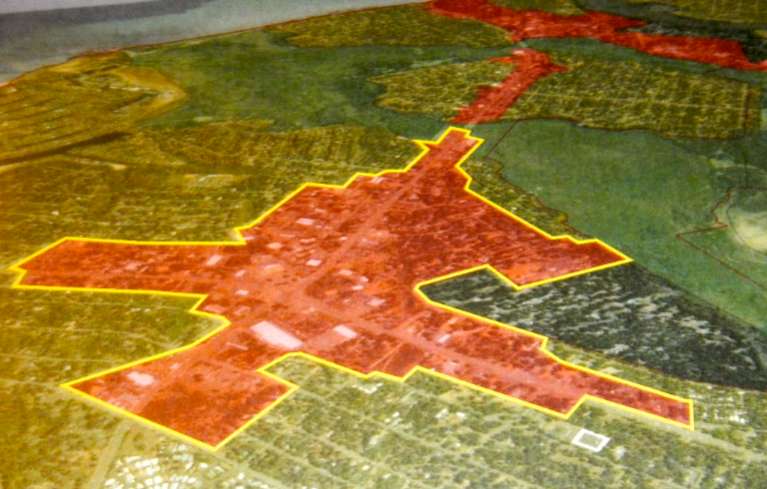
A greenbelt going behind McDonald’s and CVS at the Y in South Lake Tahoe. Another on the other side of Highway 50. Both being multidimensional by being stormwater basins, greenways and recreation conduits.

Those are ideas being floated in the Tahoe Valley Area Plan.

More than 60 people interested in what South Lake Tahoe is going to do with the Y attended a meeting Feb. 27 to offer input and hear what the city is thinking. Area plans are the Tahoe Regional Planning Agency’s latest planning tool for jurisdictions.

The city for years has tried to come up with a plan for what is considered the locals’ side of town. It has never happened.

A team of community members in 2007 came up with a plan only to have the city wrestle it from their grip.

In a September 2009 Lake Tahoe News story Pat Frega, who served as a city planning commissioner and a Tahoe Valley Community Plan committee member, said at the time that even after two years, a majority of the dozen citizens who served on the community group still felt the project “was hijacked” by a council subcommittee because “we were going on a different course than what they wanted.”

The city took over and came up with a plan. It, too, went nowhere.

City officials say they are determined to have a plan approved, with the goal of it being completed by the end of the year.

Another idea is to have a health care campus concept for Barton Health.

“We are encouraging the hospital to create a master plan for the whole district,” John Hitchcock, city planner, said. “It would integrate all of their facilities.”

The original plan talked about having a mountain feel. But it was acknowledged that could mean different things to different people.

Paul Brusso, owner of Ernie’s restaurant, and Dan Passaretti of Passaretti’s restaurant both voiced concern about whether their businesses would conform to whatever zoning rules the city implements. “Yes” was the answer.

People had the opportunity to place sticky dots on pictures of mountain architecture they liked. The Cedar House Sport Hotel in Truckee had the most dots.

One person expressed a desire to have mountain architecture, but hoped that there would still be room for originality so everything did not look the same.

Architect Keith Klein said it’s important to take into consideration what people see at eye level, especially if eye level is from the seat of a vehicle.

“You can put up a 3-foot fence and hide cars,” Klein said in a veiled reference to Runnels Automotive.

John Runnels said he has wanted to make improvements since the 1980s. Interest rates stopped him in 1981 and then the city said wait until the 1993 plan was done. But no plan has ever been approved for the Y.

While people embraced connecting the areas of town, several said they never see the Y area as someplace that will be pedestrian oriented, especially when it comes to locals going to stores via foot from their residences.

Height of buildings has been an issue with other area plans in the basin. On Thursday it did not present a huge dilemma. People wanted to understand what 56 feet would look like. That is what the TRPA Regional Plan allows for in town centers.

Embassy Suites is 80 feet, the parking garage is about 50 feet.

Chuck Nelson had a handout of an elevated circular bypass for cyclists that Holland has built that he could see being put in at the Y.

Jerome Evans, who worked on community plan, told Lake Tahoe News, “There is no reason to believe any of this will happen. They are making everyone feel good and nothing is happening.”

The area plan is not a project, but instead a blueprint for what the Y could evolve into. It will be up to the city and private individuals to devise projects that will go through a separate approval process.

Notes:

• The South Lake Tahoe Planning Commission will discuss the area plan March 13.

• The City Council will talk about it April 1.

• Another public workshop is set for late April.


Greenpeace co-founder sounds off on climate change

By Philip Ross, International Business Times

Canadian ecologist Patrick Moore, known as one of the co-founders of the activist group Greenpeace, has a history of sharply dissenting from policies supported by major environmental groups, including the one he helped create. Moore’s latest departure is to assert that climate change, particularly the gradual warming of Earth’s surface temperature over the last century, is not caused by humans.

“There is no scientific proof that human emissions of carbon dioxide are the dominant cause of the minor warming of the Earth’s atmosphere over the past 100 years,” Moore said during an appearance before the Senate Environment and Public Works Committee on Tuesday. “If there were such a proof it would be written down for all to see. No actual proof, as it is understood in science, exists.”

The ecologist, who worked with Greenpeace from 1971 to 1986 and left “not necessarily by his own choice,” went on to found Greenspirit Strategies, an environmental and sustainability consulting firm in Vancouver.

Read the whole story


No one hurt in avalanche at Kirkwood

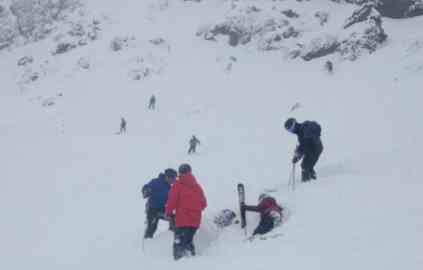
A person caught in an avalanche Feb. 27 at Kirkwood is freed from the snow. Photo/Corrina M. Strauss

A person caught in an avalanche Feb. 27 at Kirkwood is freed from the snow. Photo/Corrina M. Strauss

Updated Feb. 27 10pm:

No one was injured when an avalanche struck Kirkwood Mountain Resort on Thursday.

Resort officials said the avalanche was 50-yards-long and about as wide.

It happened in the Eagle Bowl area in the late morning Feb. 27. Four people were in the area, but no one was injured, according to the resort. But it wasn’t as mundane as the resort made it sound.

“Crazy day at Kirkwood! First lines in Eagle Bowl with about 150 others,” Corrina M. Strauss said. “White room, people yelling, ‘Wait! Wait!’ Then when the snow settles I came around a comer to see for the first time someone head deep in the snow with four others digging her out! About a half an hour later they closed Eagle Bowl again due to a major avalanche.”

— Lake Tahoe News staff report


Snowpack improving, but not fast enough

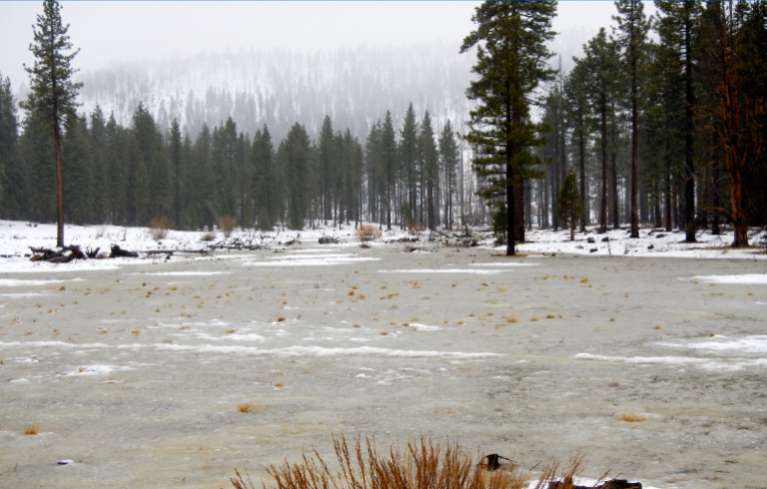
A wet February in Lake Tahoe has improved the overall water picture, but not enough to end the drought. Photo/LTN

A wet February in Lake Tahoe has improved the overall water picture, but not enough to end the drought. Photo/LTN

By Kathryn Reed

Maybe the Department of Water Resources ought to schedule snow surveys more often because snow fell each of the last two times.

While every drop of moisture helps, California is not likely to get out of its drought this season. Still, things are slightly improved, but still worrisome.

Statewide, the water content on Feb. 27 was 24 percent of average for the date. On Echo Summit near the entrance of Sierra-at-Tahoe the story was a little better. The 25.7 inches of snow have a water content of 8.1 inches, which is 33 percent of normal.

A month ago, statewide the water content was 12 percent of normal and the Echo reading was 7 percent.

“We welcome the late storms, but they are not enough to end the drought,” DWR Director Mark Cowin said in a statement. “We can’t control the weather, but we can control the amount of water we use. This drought is a wake-up call that we all have to take water conservation seriously and make it a way of life.”

This is the third consecutive dry winter for California. The snowpack normally provides about a third of the water used by cities and farms as it melts into streams and reservoirs in spring and early summer. The reservoirs store the water for famers and municipalities. But without snow there is nothing to store.

Lake Oroville, the State Water Project’s principal reservoir, is at 39 percent of its 3.5 million acre-foot capacity. Normally it is at 57 percent this time of year. Shasta Lake, California and the federal Central Valley Project’s largest reservoir, is at 38 percent when it should be at 52 percent.

And with the lack of storage, the end users are not getting what they expect or need. Some cities in California have invoked water restrictions. Farmers are leaving fields fallow. Only water for health and safety reasons will be delivered from the State Water Project.

January and February are typically the wet months in the Sierra. While a Miracle March could happen, it can’t make up for three years of below normal snow and rain.

February will end on a wet note. The National Weather Service in Reno is calling for a 100 percent chance of snow in Lake Tahoe.

Also on Thursday, the Legislature sent Gov. Jerry Brown a $687 million drought relief package. Much of the money would come from bond money that has not been spent. Most of the money — $500 million – would be allocated for communities to build systems to capture stormwater and then use the grey water. Money is also available for communities if they run out of potable water.


South Tahoe adds ladder truck to fire fleet

South Lake Tahoe's ladder truck is the fire department's newest piece of equipment. Photo/Provided

South Lake Tahoe’s ladder truck is the fire department’s newest piece of equipment. Photo/Provided

By Kathryn Reed

A million dollar truck is rolling around South Lake Tahoe. It’s the fire department’s ladder truck.

The old ladder truck was so decrepit it was taken out of service in 2012. The city has possession of the new one, but a few things still need to be done before it hits the streets.

“There will be extensive training, installation of radios and equipment and fire station 2 needs to be remodeled to account for its size; it’s a bit over 48-feet-long,” Fire Chief Jeff Meston told Lake Tahoe News. “Our folks will get lots of drivers training before she goes into service.”

South Tahoe has been able to rely on neighboring agencies in the interim. It was Tahoe Douglas Fire that supplied the ladder truck when the house went up in flames on Pioneer Trail in April 2012.

One of the conditions in the original contract for the Chateau project near Stateline was to be able to provide adequate fire protection. This meant the city had to have a ladder truck. It did when the contract was signed.

Ladder trucks tend to have a lifespan of 15 years. South Tahoe doubled that number with its last truck. But it was also costing the city about $100,000 in annual maintenance costs. And then it got to the point where parts were no longer available.

It’s possible with better equipment and improvements being made to South Tahoe Public Utility District and Lukins Brothers Water District water lines that the city’s ISO rating could improve.

ISO provides advisory services and information to many insurance companies.

In March 2012, the city received an ISO rating of four. This is out of nine, with one being the best.

“For a city our size, four is very good. This rate has little affect on homeowners insurance. It’s more about commercial rates for businesses,” Meston said. “We could add staff to improve the rating, but that is costly.”

Ratings are done about every six years.


Membership airline headed for Truckee

Surf Air, the nation’s first all-you-can-fly private membership airline, will expand its service to Truckee beginning May 2, pending government approval.

Service to Truckee from San Carlos will be available on weekends only. Connecting flights will be available for members traveling to and from Burbank, Hawthorne and Santa Barbara airports.

Surf Air started last year as a way to fly between the Los Angeles metro area, San Francisco Bay Area and Santa Barbara. This year Las Vegas and Truckee have been added.

For a monthly fee starting at $1,350, members have access to unlimited flights on executive aircraft departing from private air terminals with free parking and no lines or additional fees.

For more info, go online.


Zephyr, Whittell closed; more snow in forecast

A snow on rain event overnight is making for slushy conditions on roads.

It also means Zephyr Cove and Whittell High schools are closed for the day.

A winter weather advisory remains in effect for the Lake Tahoe Basin until 10 Thursday morning. Another 2 to 4 inches could fall in the basin, with 6 inches at higher elevations.

A couple inches fell overnight in South Lake Tahoe. Kirkwood says it got a foot, Squaw Valley 10 inches, and Sierra-at-Tahoe 10 inches.

The Sierra Avalanche Center has issued a “considerable” warning for today in the backcountry.

Another storm will be rolling into the area on Friday that could bring 5 to 9 inches of snow.

There is a chance of rain and/or snow in the forecast into Monday.

Road information may be obtained by clicking on the state icons on the home page of Lake Tahoe News.

— Lake Tahoe News staff report


Catalyst project gone; Meyers’ future undecided

By Kathryn Reed

MEYERS – “The catalyst project is dead. You have my word on it. If you want, I’ll put it in writing.”

That’s how El Dorado County Supervisor Norma Santiago started Wednesday night’s meeting about the Meyers Area Plan.

It ended with local resident Steve Bannar pointing out the good aspects of Meyers, that the policymakers are not the enemies, and that it is time to concentrate on the positives and for people to get involved. His words were met with the loudest round of applause during the two-hour meeting at the CCC offices.

El Dorado County Supervisor Norma Santiago pulls the plug on the catalyst project. for Meyers. Photo/Kathryn Reed

El Dorado County Supervisor Norma Santiago pulls the plug on the catalyst project for Meyers. Photo/Kathryn Reed

In between those two speakers was an hour of Q&A where about 30 of the nearly 150 people in attendance spoke. At times it was contentious, but mostly it was passion that came through.

In the audience were South Tahoe High students getting extra credit for their AP environmental studies class.

The first hour of the Feb. 26 meeting was county and Tahoe Regional Planning Agency officials comparing the 1993 community plan to the draft area plan.

Catalyst project shelved

The so-called catalyst project was something Santiago spearheaded. She is the one who directed Kim Kerr, assistant county administrative officer, to process the contract that was then signed by CAO Terri Daly.

It was $25,000 worth of taxpayer money that is now in the trash.

“I caused a lot of angst, anxiety, fear and all kinds of things in this community, even divisiveness. I am sorry for that,” Santiago said in her apology for having pushed the catalyst project through.

Symbolically, she then crossed the project off the board.

While One Globe’s idea is off the table, the draft Meyers Area Plan as it stands today would allow anyone to come forward with a similar idea. Santiago only has the power to nix this particular idea because she was the driving force behind it.

Santiago later said it’s possible to add to the area plan that the community does not support a large development.

Differences between 1993 and 2014

Adam Lewandowski with TRPA went over the basics:

• Meyers has about 33,000-square-feet of commercial floor area.

• There are 17 leftover tourist accommodation units from a former hotel. Ten new TAUs are available.

• Eight residential units may be built.

“Those numbers are not set in stone. You can transfer development rights,” Lewandowski said.

He said the TRPA Regional Plan update did not change the density and height for Meyers, but instead allows Meyers to have a say in what the rules will be.

The old plan had five special districts. The new plan condenses them. The old plan allowed lodging in specific areas. The new one allows it in more areas.

The draft plan includes a recreation district that encompasses the campground and golf courses. New residences would not be allowed in that zone, whereas the old plan would allow that use.

The draft plan adds 357 acres of conservation land that includes land for hiking, trails and other recreation.

A big change from 21 years ago is the two-tiered incentive program.

“It’s definitely the most controversial part of the area plan based on comments and the petition that is circulating,” Lewandowski said.

If developers met certain criteria, they would be allowed to build a taller, denser building than the baseline regulations.

Meyers used the TRPA standard for height in the community plan. The range is 24 to 42 feet, with a slew of factors determining what can go where.

The draft plan calls for 35 feet to be the maximum, but 45 feet if incentives are met.

The CCC building is 35-feet tall and Lira’s is 36 feet.

The existing plan calls for motels to allow 40 units per acre, apartments 15 per acre.

The draft calls for 30 hotel units per acre or 40 if incentives are met. Apartments would be 20 per acre or 25 with incentives.

Going forward

Scenic issues are a big concern for residents that go beyond the typical TRPA definition.

While the view corridor will be protected so a building does not obscure the mountain vistas, the whole look of the area could be improved through the area plan. This includes landscaping and signs.

No matter what plan is approved, Caltrans this summer will be putting in major water quality improvements. Included in this is a crosswalk on Highway 50 at Apache Avenue.

The county has money to improve the Pat Lowe bike trail.

Grants are being sought for other projects.

Brendan Ferry, chief planner for the county, said implementation is a huge component of the area plan. That is one reason he is actively seeking grant money to make Meyers a more walkable, bikeable community.

A couple people questioned whether there could be wriggle room with the height in case a unique project came forward that would need more space, such as a climbing wall or ski ramp like Woodward at Boreal has.

Some want to keep the old plan as the law of the land.

John Friedrich asked who is going to decide whose ideas eventually end up in the final document. Santiago did not have a concise answer, but instead said it will be based on general consensus.

Bruce Grego proposed the voters have final say. Santiago told him he was free to do just that, adding that she would not bring it to the Board of Supervisors to consider placing it on the ballot.

—-

Notes:

• The next meeting on the draft area plan is March 19 at 6pm at the CCC building.

• No deadline has been set for when comments will end.

• Comments and responses will be posted on the county’s website.

• Comments may be emailed to MeyersAreaPlan@edcgov.us.