Poll: Californians dislike Congress

By Josh Richman, San Jose Mercury News

Six times as many California voters disapprove of how Congress is doing its job compared with those who approve, a new Field Poll finds.

But as dismal as that sounds, it isn’t even a record. The 13 percent approval rating Congress now boasts is better than the 9 percent all-time low it cratered to in September 2011 and mirrors the 13 percent approval rating that Gallup found nationwide this month.

As usua, Californians feel better about their trees than about the forest: More voters approve (44 percent) than disapprove (33 percent) of the job their own representatives are doing.

“If there’s one thing that unites members of Congress, it’s the message that they send out to their own constituents: ’I’m great, and the problem is with all those other clowns,’” said Jack Pitney, a Claremont McKenna College professor and an expert on Congress.

Read the whole story


Study: Casually smoking pot can change your brain

By Terrence McCoy, Washington Post

The days when people thought only heavy Cheech-and-Chong pot smokers suffered cognitive consequences may be over. A study in the Journal of Neuroscience says even casual marijuana smokers showed significant abnormalities in two vital brain regions important in motivation and emotion.

“Some of these people only used marijuana to get high once or twice a week,” said co-author Hans Breiter, quoted in Northwestern University’s Science Newsline. Breiter hailed the study as the first to analyze the effects of light marijuana use. “People think a little recreational use shouldn’t cause a problem, if someone is doing OK with work or school,” he said. “Our data directly says this is not the case.

“This study raises a strong challenge to the idea that casual marijuana use isn’t associated with bad consequences,” he added.

Read the whole story


Recession impacts community college completion rate

By Sacramento Bee

Completion rates at the California Community Colleges have fallen steadily over the past four years, according to the first update of the system’s Student Success Scorecard.

The accountability report released Tuesday, which tracks key performance measurements across the state’s 112 community colleges, shows that the six-year completion rate for students seeking to earn a degree or transfer to a four-year institution fell to 48.1 percent last year.

Read the whole story


Californians split on drought response

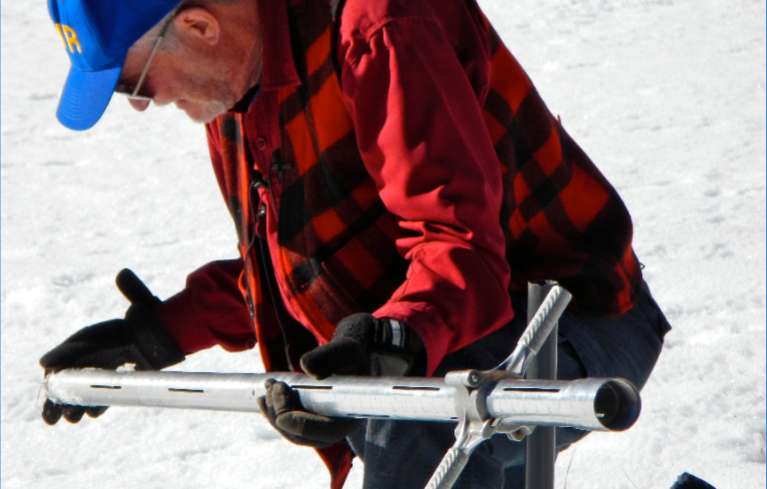
Frank Gehrke with the Department of Water Resources measures the water content of snow at Phillips Station earlier this year. Photo/LTN file

Frank Gehrke with the Department of Water Resources measures the water content of snow at Phillips Station earlier this year. Photo/LTN file

By Jeremy B. White, Sacramento Bee

Californians agree their state is parched, but they diverge by region on how supplies dried up and what should be done about the drought.

“There’s clearly a consensus that the state has a serious water shortage,” Field Poll director Mark DiCamillo said of a survey on the subject released Tuesday. “There, however, is no consensus to what got us into this situation.”

Most voters told the Field Poll the state is grappling with a serious water shortage, and nearly two-thirds described the shortfall as “extremely serious.” While recent rains have somewhat replenished snowpack and reservoirs, the current drought remains one of the state’s worst.

Read the whole story


5 significant projects on SLT’s to-do list


Tahoe’s other season — construction — is already starting. South Lake Tahoe is soon going to into the act.

Project

Category

Estimated Cost

Harrison Avenue Streetscape Project Water/Air Quality $5 million
Bijou Erosion Control Project Water Quality $10M to $11.5M
Class 1 Bike Trail Rehabilitation

Air Quality

$550 to $650K
City Facility ADA Improvements Regulatory $100K
Fire Station No. 2 Vehicle Bay Addition Facility $75K

                                                                                                                              Source: South Lake Tahoe

Jim Marino, assistant director of public works, on April 15 gave the council an update on what to expect this construction season. The above chart outlines the capital improvement projects for this summer.

Part of the Harrison Avenue will be the creation of Champions Plaza at the corner of Highway 50 and Lakeview Avenue. It will be a combo of community art and recognition of local athletes.


Calif. colleges work to improve transfer process

By Alexei Koseff, Sacramento Bee

More than 50 years ago, California’s revered Master Plan for Higher Education established public community colleges as a means to educate the state’s lower-division students and prepare them for transfer to a higher institution.

Today, the sprawling system of 112 colleges and more than 2.1 million students transfers only about 40 percent of those seeking to continue on to a university where they can finish a bachelor’s degree, according to the California Community Colleges Chancellor’s Office.

The poor transfer rate stems in part from a conundrum of varying requirements and confusing pathways between schools that finally resulted in a 2010 bill, SB 1440, creating the Associate Degree for Transfer. The two-year degree guarantees admission into the California State University system as a junior and sets students up to complete their studies in four years – an increasing challenge at CSU campuses where high enrollment creates heavy demand for mandatory classes.

Read the whole story


S. Tahoe nips annual pot shop event in the bud

By Kathryn Reed

One day Julian Marley might write a song about South Lake Tahoe, or maybe Reno, since that is where he will end up playing on Sunday.

Marley, son of the legendary Bob Marley, along with the Uprising Band were slated to be the headliner of the 4th annual TWC Cannabis Cup on April 20. The South Lake Tahoe City Council on Tuesday quashed that idea.

Cody Bass, who runs Tahoe Wellness Cooperative, appealed the city’s denial for a special activity permit. Bass has had such a permit for the last three years to put on a one-day event in the parking lot in the portion of Bijou Center that his landlord owns.

As with most events, his has grown over the years. This year it was to include Marley playing in the parking lot to anyone over 18 who paid for a ticket, and the cannabis cup that would have been inside the collective and for members only.

The City Council on a 5-0 vote after about two hours of discussing the matter said no way. That was staff’s recommendation.

“It’s a bummer for us,” Bass told Lake Tahoe News after the decision. “It’s mind blowing to me that in the end they didn’t make it happen.”

For permits like this on private property the applicant needs to apply no less than two weeks in advance. Bass did that. He also said the city never presented him with any complaints from the prior year.

What the city took issue with is that the original permit filed on April 4 did not resemble the promotional material that was being circulated for the event. This raised concerns about parking, noise and disturbance to neighboring businesses, as well as possible traffic issues along Highway 50.

“He was informed it violated the dispensary permit,” Hilary Roverud, with the city’s planning department, told the council.

Bass said the cannabis cup is allowed under state and local law because only people with medical marijuana cards are allowed to participate. He also pointed out how a number of cities in the state allow these and in some ways are partners by having them on city owned property.

Bass submitted another proposal that eliminated the cannabis cup and only had the music portion. Staff denied this as well, primarily citing that without consent from the adjacent property owner to allow parking that there was no plan in place to accommodate people. Security and transportation were other concerns of the city’s.

Bass said he could make it all work.

Collectively the council believed Bass should have been working with the city sooner. He repeatedly said he worked within the city’s guidelines.

The city offered to help him to move the event to Bijou Community Park, but Bass did not want to go there. He said it wouldn’t work for the stage and didn’t want to be the test case for such an event of this magnitude there.

It’s estimated about 1,300 would have attended the concert.

Bass asked the city to allow him to use Lakeview Commons, saying the concert would be open to everyone for free. The city said no; it did not want to have to revise its rules about the use of that venue at this late date.

Bass told Lake Tahoe News the concert will go on. Now it will be at the Knitting Factory in Reno on Sunday.

As for what will happen in the future, Bass predicts with Nevada getting into the medical marijuana business and Reno allowing 11 shops, that a cannabis cup will be in the Biggest Little City’s future and South Lake Tahoe will let this opportunity go up in smoke.


N. Nevada casinos see a resurrection of sorts

By Dale Kasler, Sacramento Bee

RENO — The signs of decay linger on Virginia Street, the main casino corridor in “The Biggest Little City in the World.”

Pawn shops and cut-rate motels line up alongside the high-end hotel towers. The strip is still pocked with shuttered casinos, victims of the recession and burgeoning competition from Northern California’s Indian tribes.

Reno casinos are seeing an uptick in business and are reinvesting in their product. Photo/LTN file

Reno casinos are seeing an uptick in business and are reinvesting in their product. Photo/LTN file

But signs of comeback – slow and steady – are evident as well. Construction crews are turning the old Fitzgeralds casino, closed since 2008, into the outdoor-themed Whitney Peak Hotel. A small slot-machine parlor called Siri’s Casino soon will open next door.

In nearby Sparks, the Grand Sierra Resort is pouring $30 million into new amenities, including a chic $15 million nightclub. The new owners of the venerable John Ascuaga’s Nugget are spending $50 million on a honky-tonk entertainment venue, a new sports-betting operation and other upgrades. Closer to the California border, Boomtown Casino is putting $20 million into an overhaul.

Even among casino executives, the optimism is growing. Many say they think Reno has withstood the worst that the California tribes can dish out. With the overall economy improving, combined casino revenue in Washoe County, including the North Shore of Lake Tahoe, rose almost 4 percent last year. That was the first increase since 2006.

Ken Adams, a Reno gambling consultant, said California’s casinos remain a potent threat to Northern Nevada. That’s especially true at Tahoe, which is more at the mercy of the weather than Reno and has taken a bigger hit in recent years. In the main casino corridor at the South Shore, gambling revenue has fallen one-third in the past decade and, unlike Reno, hasn’t bottomed out yet. Hotel occupancy at the South Shore, on both sides of the state line, also has dropped by one-third since 2003, although overnight stays have improved slightly the past two years.

Read the whole story


Drought spawns well drilling boom

By Scott Smith, AP

CHOWCHILLA — The scarcity of irrigation water in drought-stricken California has created such a demand for well drilling services that Central Valley farmer Bob Smittcamp is taking matters into his own hands.

He’s buying a drilling rig for $1 million to make certain he has enough water this summer for thousands of acres of fruit and vegetable crops.

“It’s like an insurance policy,” said Smittcamp, who knows two other farmers doing the same thing. “You have to do something to protect your investment.”

With California in a third dry year, well drilling is booming across the nation’s most productive agricultural region, and some drilling companies are booked for months or a year. In some counties, requests for permits to dig new wells have soared, more than doubling over this time last year.

Farmers expect to get only a fraction — if any — of the water they need from vast government-controlled systems of canals and reservoirs interlacing the state. In an effort to make up the difference, they are drilling hundreds of feet deep to tap underground water supplies.

Smittcamp said a licensed driller he often hires approached him, saying the demand for drillers is so high that Smittcamp needs his own full-scale drilling rig.

Smittcamp, whose Wawona Packing Co. farms thousands of acres, said he has written a $150,000 check as a deposit and the rest is due upon delivery of the $1 million rig, which he expects to happen soon.

He estimates that he spends $4,000 an acre tending his peach and grape crops before the harvest. If a well were to run dry mid-season with nobody to call, Smittcamp said he could lose that investment — and perhaps entire orchards or vineyards.

When the rig isn’t being used on Smittcamp’s land, he said the driller will put it to work on neighboring farms to recoup the investment.

The boom driving farmers to such lengths is a result of drought and a steadily improving economy, said John Hofer, an underground water consultant and executive director of the California Groundwater Association. Hofer said his consulting firm started receiving more calls last year, and that’s when he predicted the rising demand for drillers would follow.

“I kept telling my friends and associates to look out, that it was going to get crazy, and it has,” he said. “Drilling is up big-time.”

The figures prove it. In Fresno County, which leads the nation in agricultural production, officials issued 256 permits to dig new wells in the first three months of 2014, more than twice the number compared to the same time last year. That includes all types of water wells used for agriculture and homes.

In Tulare County, the number of permits issued to dig farm wells alone has tripled to 245. In Kern County, farmers took out 63 new well permits in the first quarter of the year, more than quadrupling last year’s number.

The price to dig a well depends on the depth and ground composition, drillers say, costing a farmer anywhere from $50,000 to $500,000 before installing the pumps.

Tapping groundwater has other costs. The water that was deposited underground naturally over thousands of years isn’t being replaced as rapidly as it’s being drawn, causing the ground in the Central Valley to sink in a process called subsidence. In California, there is little if any regulation of groundwater pumping by the state.

In most years, Central Valley farmers draw one-third of their water from wells, while the remaining two-thirds comes from California’s State Water Project and the federal Central Valley Project. Most farmers expect to receive no water from either this summer, and that ratio is dramatically shifting to underground water supplies, which could eventually run dry.

Matt Rottman, president of Rottman Drilling Co. based in Lancaster, said his mid-sized firm of three rigs is backlogged 15 months. For a recent job near Bakersfield, his crew dug a 1,840-foot well. Three wells coming up later this year in the Central Valley will hit depths of 2,000 feet.

Farmers calling Rottman tell him they’re in a pinch. They don’t expect any water from the state and federal water projects this summer, and Rottman said the market price of buying irrigation water elsewhere has shot up three or four times.

“They’re shut off,” he said. “They’ll be looking at crop damage if they don’t get wells in.”

Mike Maggiora, owner of Gillroy-based Maggiora Bros. Drilling Inc. and president of the California Groundwater Association, said he suspects that some drillers are backlogged because farmers are calling several firms to see who responds first. He’s booked for the next three months.

His eight crews work 24 hours a day for weeks drilling each well, which Maggiora said is a nice change from two years ago when the economy was bad and work was hard to find.

Now, Maggiora said he has trouble finding workers willing to put in the grueling hours. He also fears today’s boom will cause a run on supplies, such as the steel casings used to keep the walls from caving in. So he’s ordering them by the truckload.

Smittcamp said he worries that so much drilling could cause underground water supplies to run dry in little more than a decade. He blames politicians for failing to give farmers any other options, leaving them to fend for themselves.

This summer, Smittcamp said he has to come up with two-thirds of his water that would normally come from the state and federal water deliveries.

“This year, we get none out of the projects,” he said. “So we’ve got to pump the whole enchilada.”


Novasel: ‘Economic vitality is the most important issue’

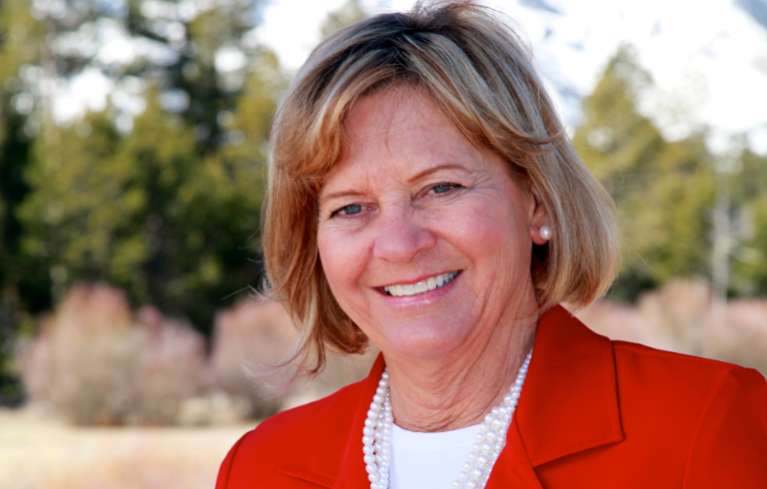
Sue Novasel

Sue Novasel

Publisher’s note: Lake Tahoe News asked the six El Dorado County supervisor candidates a series of questions. All are the same except for one that is specific to each candidate. The responses are being run in the order they were received by LTN. One candidate chose not to answer the questions.

Name: Sue Novasel

Age: 58

Occupation: Business owner – Tahoe Dream Events (wedding and event planning), wedding and event coordinator

Education: High school – graduate of Salinas High School – Salinas; AA degree from Lake Tahoe Community College; bachelor degree – University of Nevada, Reno. Other certifications: A+ Certified (IT) and public notary.

What elected, civic, nonprofit boards or groups are or have you been affiliated with and in what capacity?: Current: 11 years – school board member (president in 2008; clerk for three years) – Lake Tahoe Unified School District; president – Soroptimist International of South Lake Tahoe; vice president – Lake Tahoe Wildlife Care; secretary – South Lake Tahoe Wedding & Honeymoon Association; board member – Tahoe Chamber of Commerce; board member – Barton Foundation Community Advisory Committee.

Past: Chair – Meyers Community Roundtable Committee; member – Meyers Community Plan Team; member of the 56 Acre (Lakeview Commons) Community Advisory Committee and TRPA’s Pathway 2007; president – Lake Tahoe Community College Foundation; president – South Tahoe Swim Team; president – Temple Bat Yam Board of Directors

Traffic is horrible on Fridays and Sundays throughout the county. Will you commit to not voting for any big subdivisions unless there is a plan to widen Highway 50? Why or why not?: No. Traffic affected by “big subdivisions” is commuter traffic Monday through Friday, not weekend traffic. In fact, HOV lanes that have been built to address commuter traffic are to some extent a Friday afternoon benefit for South Lake Tahoe weekend traffic, as our tourism customers will generally have two or more persons in their car, and qualify to use them. On Sundays, the traffic flow on Highway 50 west of Placerville seems to move reasonably well.

Heavy traffic that generally occurs Fridays and Sundays is mainly through Placerville, from the Y to Meyers (especially during chain-up requirements and holidays), the Sierra-at-Tahoe intersection, and at the end of passing lanes in the American River Canyon. Those areas are not likely to be widened, but it is possible that the traffic could be alleviated by exploring operational changes. For example, stoplights in Placerville might be changed during the weekend so as to be timed with the direction traffic is flowing – east on Friday, west on Sunday. A designated chain-up lane and rest area in Meyers is a need that we addressed in the Meyers Community Plan that I hope will be accomplished in the future. This would allow travelers to move to the side of the road, creating better local access. Also, a traffic alert system (similar to those in large cities) installed throughout the city of South Lake Tahoe, Meyers and along the West Slope could warn motorists of impending traffic jams, helping to mitigate the log-jam of cars waiting for hours during peak periods and after serious accidents.

As to approval or not of a subdivision proposal, the responsible thing to do is to look at each individual situation as opposed to a blanket yes or no position. For examples: Will the new development bring needed housing to El Dorado County? Will it increase our local government revenues without raising taxes? Will it attract large employers in clean industries that will provide more local jobs? Will it increase retail opportunities for residents? Each proposal should be studied for its overall impact to our county.

What is your position on a proposed November initiative to control growth?: Fundamentally, I oppose ballot box planning, as it is counterproductive to consensus-based setting of community direction. It is far better to work together identifying problems, goals, and objectives and work out a plan that solves as many of them as possible, as what we have done in Meyers.

It is my understanding that there are possibly four proposed November initiatives which affect the West Slope of our county. If the measures are approved by county voters, there is little doubt that protracted litigation will ensue. If the last two decades of El Dorado County history are any guide, it will take many years to resolve and at considerable county legal expense. The county doesn’t have millions of dollars for court fights. The Board of Supervisors is the agency tasked with developing, adopting and implementing the General Plan. That’s one of their most important jobs, and I look forward to working with all stakeholders in guiding the future of the county. TRPA will still govern virtually all planning matters within the Tahoe Basin, with opportunities that the District V supervisor can directly affect since the county has a seat on TRPA’s Governing Board.

What are your thoughts of making Lake Tahoe its own county?: It is not economically or politically feasible. The concept was briefly studied around 1980. At that time, it was seen as marginally feasible, based on the El Dorado County portion of Lake Tahoe being a city-county, and getting unique city-county revenues, like San Francisco. In the years since, more Proposition 13 type statewide initiatives, plus diminished population, have made the economic prospects worse. Politically, it would have to be approved by majorities both here and on the West Slope, which I consider unlikely.

What entities would you not take money from?: I will not accept campaign contributions from any organization or business whose integrity is questionable, or anyone whose activities bring harm to District V or our quality of life, or threaten the safety and well-being of our children, neighborhoods, schools, or businesses. I expect to receive support from a wide variety of individuals and entities. Anyone providing financial support must understand that supporting my candidacy does not mean having the expectation of getting my vote on an issue.

What would you do to boost the economy?: The environmental restoration incentives developed by the Tahoe Regional Planning Agency in its new Regional Plan must be encouraged and made to work. We should improve our recreational business relationships with West Slope recreation providers. The City-County Recreation Master Plan currently in the planning process must also be implemented, but would need voter approval to do so. We should continue support for the El Dorado County and Tahoe chambers of commerce. The newly organized El Dorado County Community Development Agency must be successful in removing barriers and facilitating business formation and expansion.

What is the No. 1 issue facing District 5 and how do you propose to resolve it?: Economic vitality is the most important issue. TRPA’s new Regional Plan update includes incentives and processes that can spur businesses to redevelop run-down properties or add new businesses to our communities while improving our environment. In addition, a huge issue in all of District V is the fire risk resulting from poor forest health. We must be sure we are organized for rapid response by CalFire, the U.S. Forest Service, and local fire agencies so that effective coordinated action by all can occur the instant a fire starts. Effective early action is critical to minimize the damage that occurs. Fire agencies did significant reorganization as a result of the Angora Fire. In addition, many regulatory obstacles to improved forest health and defensible space were removed or reduced as a result of the Angora Fire. We must be sure they stay that way.

Supervisors meet only once a year in Lake Tahoe. Do you believe this is fair representation? Why or why not?: I am convinced that once per year is all that is feasible, as the board also has to meet once per year in the other four districts (except for District III, where the county office is located). In addition, much of the county board business requires work with employees and should be conducted where the county’s main offices are located for feasibility.

Having said that, the duty of the District V supervisor is to be sure the maximum benefit for fair representation is achieved when a meeting is held in other districts. For our district, that includes joint meetings with the City Council where the city and county both present their major issues and discuss items where joint effort is needed. They should also take tours of city and county projects and major issue areas. Meeting with representatives of Tahoe basin agencies such as the school and utility districts, Tahoe Conservancy, U.S. Forest Service, and Lake Valley Fire District, their achievements, issues, and challenges can be understood by the entire Board of Supervisors.

Would you have voted for Red Hawk to be built and to divert Caltrans funds for interchanges? Those decisions are still negatively impacting the South Shore. Is there anything you would do to change the status quo?: To clarify, the Board of Supervisors never voted “for” Red Hawk, they voted to end the litigation that continued to obstruct it. By that point, state legislation and voter approved initiatives had created a situation where the construction of Red Hawk could not ultimately be stopped. In exchange for no longer obstructing it, the county received annual revenues to offset the facility’s impact upon county services. If by “status quo”, you mean the distribution and uses of funds that the county receives, then, yes, I believe there is a need to evaluate the extent to which District 5 benefits from those funds and whether District V is receiving benefits that were intended and/or promised under the agreements.

Would you support having more tax dollars from the county coming to the South Shore? Currently, more dollars leave the basin than come back.: I want to be sure that District V is getting its fair share and will fight to be sure it happens. However, I don’t know of any study or analysis showing that more dollars leave the basin than come back, and have doubts that this is correct. For example, the basin, with about 20 percent of the county population, has its own set of secondary offices for more general fund departments than any other district, plus is the only district having its own juvenile hall and jail facilities. Those facilities are located in the basin because they are needed so that basin residents have equal access to county services.

To address getting the facts on this issue, my first step would be to appoint a committee of knowledgeable local citizen volunteers to do a study of the county portion of taxes collected and compare them with the costs of the general fund services they fund.

The county and the city of South Lake Tahoe have a long history of not getting along. How would you propose to improve the relationship?: The two principal facets of the relationship are (1) staff to staff and (2) board to City Council. To improve staff relationships, I would have the principal counterpart positions – county chief administrative officer and city manager, county counsel and city attorney – meet after I have facilitated development of a discussion agenda, then meet on a regular basis thereafter.

To improve the elected officials relationship, I would meet periodically with the mayor, and with the mayor’s knowledge and approval, other members of the City Council.

These meetings would be in addition to being sure that my office did a very good job of setting up the annual “Board meets in South Lake Tahoe” meeting, as discussed previously. This would include setting joint meetings between City Council and county supervisors, taking tours of city and county projects with emphasis on major project areas, and meeting with representatives of other Tahoe basin agencies such as the TRPA, Tahoe Conservancy, Tahoe chambers, U.S. Forest Service and Lake Valley Fire District.

What is your vision for Meyers and how will you make it a reality?: I have lived in Meyers (Christmas Valley) for over 30 years. As a member of the original Meyers Community Plan team, I helped develop a plan for the future of Meyers. After nearly four years of work on the plan, we succeeded in having the power lines lining Highway 50 buried, thereby improving the scenic corridor of the area. We worked on other ideas to improve the corridor that included: adding a chain-up/rest area to help relieve Sunday congestion; creating a new “Welcome to Meyers” sign to give travelers a sense of arrival; using an incentive program to create new town centers; and adding design elements to give our community a rustic, alpine appearance.

The new Meyers plan is similar to our original plan. But there is still work to be done on the plan – there are differences that need to be discussed and either approved by our community or changed. Meetings need to include all stakeholders and be properly noticed so that the Meyers community can have a proper voice in planning the future of their community. The most important part of planning is implementation. I will make sure that the new Meyers Area Plan, along with all community plans throughout District V, have the ability to be implemented properly by having county staff available and willing to help our residents create the vision that they see for their communities.

Why should someone vote for you over someone else?: My varied experiences and over 35 years as a basin resident have given me a broad-ranging set of connections with community residents, and broad-ranging understanding of community issues. They have taught me that good decisions result from reaching out to get information from those affected; listening carefully more than talking; seeking win-win outcomes; and achieving the greatest good for those I represent. I will increase citizen involvement in decisions by increasing local community meetings and improving communication throughout all portions of District V. I have a demonstrated strong work ethic and the high energy demanded of a county supervisor. If elected, I will be your full time supervisor, fighting to be sure District V receives its fair share of county benefits based on the needs of its citizens, not proportionate finances.

You have been absent more than any Lake Tahoe Unified School District board member and that board meets once or twice a month. How can the public believe you will show up every day as a county supervisor?: In 2013, I missed three out of 20 meetings, while two other board members missed two, another one, and the other none. Already scheduled to miss one meeting while being out of town for two weeks, another special meeting was called when the district staff realized that actions to ensure the construction season staying on schedule had not been agendized for the meeting I was at. A poll of board members was taken, and while only three members could attend the special meeting, it was enough for a quorum – thereby causing me to miss two meetings. The other meeting I missed in 2013 was when I had the flu. I am a hard worker and have a serious work ethic. As county supervisor, I pledge to attend as many meetings as possible.

What do you do for fun?: I ski, hike, swim, mountain bike, kayak, golf and try to stay fit by going to the gym as much as possible. As a family, we travel and go to the beach on a warm summer afternoons. I also get a great deal of enjoyment out of giving back to our community by volunteering, especially at Lake Tahoe Wildlife Center where I help care for injured and orphaned wild animals and birds.

Tell us something about yourself that people might not know: Many people don’t know that I was an Olympic torch runner when it came through town in 1984 (on its way to the Summer Games in Los Angeles). I was the student representative to Lake Tahoe Community College’s board of trustees at the time and they asked me to represent the college by running the torch for the school. It was such a great honor that I decided to donate the torch back to the college and it still resides in their gym today.