Dozen illegal pot grows uprooted in El Dorado County

El Dorado County sheriff’s deputies have been making a concerted effort to rid neighborhoods of illegal marijuana grows. In the last four months deputies have closed down a dozen commercial cultivation operations in the Lake Tahoe Basin. They were primarily housed in rental houses.

Complaints from neighbors is how most of them were located.

“These grows also use a great deal of electricity, far more than the residential power grid was designed to deliver to a single residential consumer. Within these houses substandard wiring is the norm, as is extensive damage due to moisture and mold,” Sgt. Michael Seligsohn said in a press release. “Frequently structural modifications to the house itself are found in order to accommodate more plants and deliver more water to these plants. The extensive use of chemicals in these grows creates an environmental hazard and in many instances excess chemicals are disposed of through the public utility sewage system creating an added public expense and degrading the water supply. In other instances chemical infused soils have been found dumped in back yards where it runs off onto neighboring properties and it leaches into the ground water creating an environmental hazard.”

Proposition 215 allows medicinal marijuana patients to grow for their own needs or people they directly and physically care for. It does not allow growing marijuana as a business.

The fire marshal is also brought out to inspect structures for substandard wiring, water damage, mold, or structural degradation. If there is an issue, power is cut off to the house and the building department will red tag the structure.

In the 12 raids, deputies have seized thousands of plants, several dozen pounds of processed marijuana, tens of thousands of dollars, and several drug processing laboratories. These grows of 100 to several hundred plants have consumed as much 40 percent of the floor space of a single-family home. In every case the fire marshal’s inspection revealed that wiring installed to support the grow was substandard and dangerous.

— Lake Tahoe News staff report


Prosecution, defense paint differing pictures of Nutting

By Peter Hecht, Sacramento Bee

A state prosecutor today opened the trial of El Dorado County Supervisor Ray Nutting by blasting him as a dishonest figure with “trouble following laws” routinely honored by other public officials.

Nutting faces allegations that he improperly hid state income for brush clearing on his family ranch, and Deputy Attorney General Pete Williams railed against the supervisor for casting himself as an advocate for taxpayers while failing to disclose that he is a recipient of public money.

“Mr. Nutting says one thing to the public and does another thing in private,” Williams said. “He talks against taxes. He is against government. But he takes state taxpayer money to improve his property and he does it privately without other people knowing.”

Nutting’s attorney, David Weiner, responded that the supervisor is an honest public official and a dutiful landowner who applied for state grants to reduce fire danger at the encouragement of the California Department of Forestry and Fire Protection.

“When it became clear that CalFire was going to use that money to reduce the dangers of fires, he became an advocate. He used it. He encouraged other people it use it,” said Weiner, who said the supervisor broke no laws. “I guess that’s why they call him a hypocrite.”

Read the whole story


Swanson: ‘Jobs and economic development are my top priority’

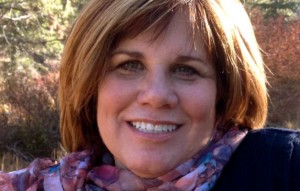
Angela Swanson

Angela Swanson

Publisher’s note: Lake Tahoe News asked the six El Dorado County supervisor candidates a series of questions. All are the same except for one that is specific to each candidate. This is the final installment.

Name: Angela Swanson

Age: 53

Occupation: City councilwoman, school facilities planning consultant, and grant writer

Education: B.A. political science, University of California, Berkeley

Post graduate coursework

What elected, civic, nonprofit boards or groups are or have you been affiliated with and in what capacity?: Councilmember, city of South Lake Tahoe 2010-14

• Vice chair and board member, Tahoe Transportation District 2011-14

• Board member, California Tahoe Conservancy, 2011-12

• Board member, CalTahoe Emergency Services Authority, 2011-14

• Board member, South Lake Tahoe Basin Waste Management Authority, 2010-11

• Board member, Tahoe Prosperity Center

Board member, Lake Tahoe Unified School District 2005-09

• Clerk of the board

• Approved two-way immersion program

• Protected class-size reduction

Member, Lake Tahoe Collaborative

Board member, Lake Tahoe Educational Foundation

Board member, Boys & Girls Club of Lake Tahoe

Member, Rotary Club of South Lake Tahoe

Member, Zawadisha

Steering Committee, 56-Acre Project (Lakeview Commons) 2008-10

Co-chair, Measure A/G Steering Committee, a $64.5M school bond

PTA president, Sierra House Elementary and South Tahoe Middle schools

Site Council member, Sierra House and South Tahoe Middle schools

“Team Mom” for numerous Little League and football teams

“Dance Mom” for 14 years with Academy of Dance Arts

Lifetime member, Ladies Auxiliary, Veterans of Foreign Wars

Traffic is horrible on Fridays and Sundays throughout the county. Will you commit to not voting for any big subdivisions unless there is a plan to widen Highway 50? Why or why not?: El Dorado County has traffic congestion caused by population centers along the 50 corridor compounded by tourists trekking to Lake Tahoe and Apple Hill. I’ve driven that route for 20 years and have watched the traffic increase. I am an advocate for a multi-pronged approach reducing congestion that includes expanding light rail rapid transit westward from El Dorado Hills, improving public transit to tourist centers, and tying residential growth to traffic mitigation.

I think it is oversimplifying to tie all future residential development decisions to the plans of a behemoth state agency, Caltrans. There needs to be a strategy to develop a transportation capable of handling resident and tourist needs that is state-funded without adding miles of highway lanes.

What is your opinion on a proposed November initiative to control growth?: There are currently several competing initiatives gather signatures to qualify for the November ballot. Years of high-density residential development along the Highway 50 corridor have led to gridlock. We must fix traffic first. I support the efforts to limit residential growth in favor of business and commercial growth.

What are your thoughts of making Lake Tahoe its own county?: I haven’t seen a groundswell of support for the region seceding from El Dorado and Placer counties to form a new Lake Tahoe County. What problems do we solve and how many more do we trade for?

After years of neglect, we recognize that we are not going to settle for mediocrity. This beautiful region is stepping into a new generation, and is already redefining a more robust economic base, rebuilding a sense of local pride and becoming an active and engaged community. We can demand more from and give more to county government.

What entities would you not take money from?: I would not take money from an individual or organization whose values or behavior I consider illegal or unethical. Due to the controversial nature of development politics on the West Slope I will not take funds from large developers.

What would you do to boost the economy?: Local job opportunities need to be broad-based and offer long-term viability. Thoughtful and effective government can help ensure our community can invest in its families, education and future. We begin, first, by stabilizing and expanding existing business. Second, we need to develop the infrastructure necessary to draw new economic growth. That infrastructure begins with adequate cell and broadband coverage, continues into infrastructure renewal. This includes private property both commercial and residential. Why would anyone invest in the South Shore if we don’t ourselves? The investment moves on to recreational facilities including bike paths. Third, we utilize the resources of the county’s Economic Development Division and jobs creation network, Sierra Economic Development Corporation, to partner with local business and community leaders to recruit new business. It’s time to harness county resources to build a vibrant, viable community.

What is the No. 1 issue facing District 5 and how do you propose to resolve it?: Jobs and economic development are my top priority, as I just discussed. Just as important is my commitment to return our fair share of the county’s budget and resources to District 5. The county is the primary provider of all human services, including senior services, child protection services, public health, corrections, and bus service. Our community deserves more return for its tax dollars.

For example, we talk about restoring bus service to Meyers. That can be done through social service program funding intended to support transporting those in need. A second example, the newly reformed recreation department only recently catalogued the recreation facilities on the East Slope. We’ve lost thousands of dollars in maintenance and equipment funding because they didn’t know what’s here. It’s time for parity in spending.

Supervisors meet only once a year in Lake Tahoe. Do you believe this is fair representation? Why or why not?: The Board of Supervisors needs to meet more frequently in South Lake Tahoe. I’ve already spoken to two supervisors about meeting in South Lake Tahoe quarterly. There is support, particularly if we also hold town hall meetings in other supervisorial districts as appropriate. The board needs to be accessible to the citizens it serves.

However, it takes more than holding the Board of Supervisors meetings in Tahoe to make District 5 truly present in county decision-making. I would immediately begin holding regular meetings with the county’s chief administrative officer, Terri Daly, and South Lake Tahoe’s city manager and mayor of South Lake Tahoe. These meetings build commonality and shared goals that will benefit families and build just representation.

Would you have voted for Red Hawk to be built and to divert Caltrans funds for interchanges? Those decisions are still negatively affecting the South Shore. Is there anything you would do to change the status quo?: I would have voted against the Red Hawk project as it was not in the best interests of my constituents. Moreover, the county failed to secure the compensation for first costs, long-term maintenance of the new infrastructure and community services. As for status quo changes. I think the ship has essentially sailed but the lesson must be remembered.

Would you support having more tax dollars from the county coming to the South Shore? Currently, more dollars leave the basin than come back.: Tax dollar leakage impacts all of District 5 and is a top priority. For instance, the majority of TOT in the county comes from the South Shore, but is primarily spent on the West Slope. The same is true of specialized funds for parks and recreation, transportation, etc. Getting these dollars back into our district will require prioritizing opportunities for recapture with staff, and then negotiation with my fellow supervisors during budget discussions. One example: The South Shore accounts for about 40 percent of the District Attorney’s Office caseload, yet the staffing has been reduced from five to just two assistant DA’s.

The county and city of South Lake Tahoe have a long history of not getting along. How would you propose to improve the relationship?: I am uniquely qualified to bridge the relationship gap as I am presently a member of the City Council and have an excellent relationship with the city manager and my fellow council members. We now have a council built on local collaboration and problem solving. We developed a local government which listens to, engages the community and encourages participation. I am ready to bring that same level of collaboration and cooperation to the Board of Supervisors.

Having served on numerous board (TTD and Conservancy, etc.) I understand the perspectives of both agencies in major policy areas. I know where we have areas of agreement and disagreement. I’ve also had a close history with the 56-acre (Lakeview Commons/campground) property and am part of its emergence as our community’s gathering place. It is the cornerstone for our shared recreation vision and an opportunity to shed old ill-will .

What is your vision for Meyers and how will you make it a reality?: It is the collective vision of the residents that matters. Meyers has a heart and soul; never more evident than at area plan meetings or when cheering locals welcomed home our Golden Girls. I have listened to many residents and understand the local pride, the local values.

Making those values real starts with a ZIP code. Meyers, CA 96155. Beneath the arguments over the area plan and Caltrans signal lights and the future of the Tveten property is an underlying hunger to be recognized as a community with places to gather and decision-making authority. Meyers, California, should be identified as an independent place. We would also look at creating a reasonable governance structure, such as a Meyers Community Services District, which would the local control issues such as bike paths, recreation and programs facilities and weigh in on development issues.

Why should someone vote for you over someone else?: I get the job done. My entire history in South Lake Tahoe has been about improving our community for the families that live and work here. From my first efforts at the Sierra House playground to the school bond to Lakeview Commons, I deliver. Second, I have the skills and experience to be effective from Day 1. I know the issues, have the relationships and the experience to negotiate with the four other supervisors from the Wet Slope. Third, I understand that making District 5 and El Dorado County successful requires relationships in Sacramento and Washington, D.C. They control the purse strings and we have to meet them head on.

How do you overcome a possible credibility issue when you gave up the seat you had on the Lake Tahoe Unified School District board, have spent the most taxpayer money of any City Council member on travel and took money for a nonprofit from a man now serving time in federal prison?: There is no credibility issue. The voters have elected me twice into office, proof of their confidence in my abilities. They understood that I stepped down from the school board a few months early because I was pursuing employment opportunities that could have taken me out of the region. By putting the needs of the community before my own and stepping down a few months early, I ensured that my seat could be filled and the school board would function properly with five members. Having served on the school board with only four members and more recently in the same position on the City Council, I know that was the right choice.

My travel reimbursements are for council approved activities. I believe, as does the council, that it is important to be educated on policy issues and to build relationships with our elected representatives and agency heads in Sacramento. I cannot answer why other electeds decide not to. The last item deserves no additional follow up, as the county district attorney has declared there was “no wrongdoing.”

What do you do for fun?: My latest passion is standup paddleboarding. Anything that gets me on or in the water is my idea of fun. I also enjoy biking and puttering in my garden.

Tell us something about yourself that people might not know: I rafted the Tana River in Kenya and rode a camel in the Sahara Desert.


Expect delays traveling through Tahoe

By Lake Tahoe News staff

It’s not just Kingsbury Grade that will be torn up this year. Caltrans will be working on six water-quality improvement projects on the California side of the Lake Tahoe Basin.

Plus, work in the center of South Lake Tahoe will tie up traffic now that the Harrison Avenue project has begun. This project will include making some of the side streets one way.

The Kingsbury Grade project is more about fixing that stretch of state highway that links Lake Tahoe and the Carson Valley than it is water quality.

The grade will always be open to residents and all businesses will be open. What will be off limits from May 1-23 is the ability to drive from the basin to the valley and vice versa. People on either side will only be able to get to the top of the summit, not over it during that time frame. The same limitations will be in effect after Labor Day until the end of construction season.

Work will continue at night in June, July and August. Delays are expected. But through traffic will be allowed during those months.

More info is online.

Caltrans projects are designed to improve safety and traffic flow by encouraging walking and bicycling with wider shoulders, left-turn pockets, repaving the highway, the installation of sidewalks, crosswalks and traffic signals.

Caltrans projects:

Highway 50

• From Lake Tahoe Airport to the Y

• May 5-Oct. 15; should be done in one season

• Estimated cost: $12.1 million

• Anticipated closures: Off-peak season: from 7pm-11am, Monday through Friday; peak season: from 7pm-9am,Monday through Friday. Up to 20-minute delays.

• From Johnson Pass Road through Meyers to Incline Road

• May 1-Oct. 15; should be done in one season

• Estimated cost: $15.3 million

• Anticipated closures: Monday through Thursday from 6am-6pm, off the road by noon Friday. Daytime closures are scheduled throughout the project unless traffic impacts necessitate switching to night work.

Highway 89

• From one-tenth mile north of Eagle Falls sidehill viaduct No. 5 to Meeks Creek Bridge

• Now-Oct. 15; project expected to finish in fall 2015

• Estimated cost: $20 million

• Anticipated closures: Off-peak season: daytime Monday through Thursday, 6am-6pm, No lane closures after 1am Friday. Peak season: nighttime Monday through Friday, 6pm-6am. Up to 20-minute delays.

• From Wilson Street in Tahoma to Tahoe City (to Cherry Street this season)

• May 1-Oct. 15; project is expected to finish in fall 2016

• Estimated cost: $41 million

• Anticipated closures: Off-peak season (Memorial Day-June 15): around the clock from midnight Sunday until noon Friday. Peak season (June 15-Labor Day): around the clock from midnight Sunday until 10am Friday. Up to 20-minute delays.

• Note: In conjunction with this project, Southwest Gas is in its final season of gas line relocations along the highway from Ward Avenue to Granlibakken Road. Anticipated lane closures for the gas work are: off-peak: midnight Sunday to 1pm Monday; and daily from 6pm to 1pm Monday through Friday. Peak season: midnight Sunday to noon Monday; daily from 7pm to noon Monday through Thursday; and 7pm Thursday to 10am Friday. Up to 20-minute delays.

• From Tahoe City to Squaw Valley

• Late May-Oct. 15; project expected to be completed this season

• Estimated cost: $4 million

• Anticipated closures: Off-peak season: Nighttime closures, 6pm-10am Sunday through Saturday. Peak season: Nighttime closures, 6pm-10am Sunday through Friday. Up to 20-minute delays.

Highway 28

• From Chipmunk Street to the junction of Highway 267 in Kings Beach

• Now-June 30 and Sept. 7-Oct. 15 (no work on highway in July and August); project is expected to be completed in fall 2015

• Estimated cost: $36 million

• Anticipated closures: 7am-10pm, Monday through Thursday, off the road by noon Friday.

In addition to the Caltrans projects, Placer County’s Kings Beach Commercial Core Improvement Program is already under construction. The streetscape project includes reducing Highway 28 from four lanes to three and installing drainage facilities for water-quality improvements.

Here is a Caltrans construction map.


Bill would allow LTCC to offer 4-year degree

By Kathryn Reed

Lake Tahoe Community College needs to find ways to make money. Offering four-year degrees is one way to do so.

The University of California and California State University systems need to find ways to accommodate more students. Allowing community colleges to offer four-year degrees would do that.

Today the state is not in a position to educate all of the people who are seeking bachelor’s degrees because programs and schools are impacted. And more jobs are requiring a bachelor’s. The Public Policy Institute of California earlier this year reported that by 2025, 41 percent of jobs will require at least a bachelor’s degree, but only 35 percent of working-age adults will meet that qualification.

A bill circulating in the Legislature could solve the problem for the three public education institutions. Senate Bill 850 would allow each of the 112 community colleges to offer one applied baccalaureate degree in an eight-year pilot program. The Senate Education Committee on April 24 will discuss the item.

It’s a bill Kindred Murillo, president of LTCC, is completely behind. One of her goals when she was hired nearly three years ago was to offer baccalaureate degrees at the South Lake Tahoe institution.

What the degree or degrees would be in remain to be seen. There have been discussions on campus of having an accelerated teaching credential program where students would earn their bachelor’s and credential in four years. There could also be a special bilingual component to it.

Public safety, environmental studies and fire are other possibilities.

Part of the thinking at the state level is not to allow community colleges to duplicate what the UC and CSU offers.

Already the California Community College system with its 2.4 million students is the largest postsecondary education system in the United States.

This is hardly groundbreaking legislation. Twenty-one states currently allow community colleges to offer four-year degrees.

The price structure would still need to be worked out. CSUs cost $5,970 a year in tuition, while community colleges charge $1,300 a year.

The last major change to higher education in California was in 2005 when CSUs were granted the right to offer doctorate degrees.


Economic stability a new challenge for Brown

By Chris Megerian, Los Angeles Times

SACRAMENTO — Soon after Jerry Brown was elected governor in 2010, he invited the state’s top budget official, Ana Matosantos, to lunch at his office. He had just two months to prepare his first plan for tackling California’s $26 billion deficit.

He asked his assistant to fetch the budget director a sandwich. Then, Matosantos said, the incoming governor of one of the world’s largest economies ate a single hard-boiled egg, sprinkled with salt.

Brown’s dietary discipline was a hint of the regimented approach he would take to California’s staggering financial problems, which he had promised to fix by pushing the state back into the black.

“I don’t go to the theater. I don’t golf. This is what I do,” Brown told Matosantos.

For previous governors, California’s budget was quicksand. Gray Davis, a fellow Democrat, was recalled by voters as state finances imploded following an energy crisis. Republican Arnold Schwarzenegger limped out of office with rock-bottom poll numbers, leaving a pile of debt.

But on Brown’s watch, deficits have become surpluses, helped along by tax hikes the governor persuaded voters to approve. More money is being pumped into schools.

Read the whole story


Peanut-allergy death at Camp Sacramento prompts lawsuit

By Andy Furillo, Sacramento Bee

The parents of a 13-year-old girl with a peanut allergy who went into shock and died after eating a night-time snack at Camp Sacramento have filed a wrongful death lawsuit against the city.

Louis Giorgi and his wife, Joanne, charged in the suit, filed Friday in Sacramento Superior Court, that information had been conveyed “in writing and in person numerous times” to camp operators about their daughter Natalie’s peanut allergy. The girl was “conscientious about avoiding foods that contained peanuts or peanut by-products” and there were other children at the camp who shared the same allergy – a fact known to camp personnel, according to the lawsuit.

“Obviously it’s something we find no joy in pursuing,” Louis Giorgi said of the lawsuit, “but it is consistent with our approach to accomplish the goal to help raise awareness of people, to pay attention to this and know it can be fatal. We need to take simple steps to protect all of our children. There can never be another Natalie. And there should never be another Natalie. It can be prevented.”

Natalie Giorgi went into an anaphylactic shock July 26 after eating a Rice Krispie treat during a hula hoop contest on her family’s last night of a four-day vacation at the popular, city-owned Camp Sacramento facility near Lake Tahoe that has been visited by untold thousands of families since it was founded in the 1930s.

Read the whole story


UC admission rates fall, foreign students increase

By Alexei Koseff, Sacramento Bee

When Marcela Sosa opened her email last month and saw the “congratulations” message from the University of California, Berkeley, she was so shocked that she jumped out of her chair.

“I didn’t even think I was going to get in,” the St. Francis High School senior said. “I had always placed it above me. … It makes me proud that I put in the hard work.”

Sosa is one of the lucky few to be accepted in the most exclusive admissions class ever at one of the state’s most elite colleges.

Even as the University of California accepted a record number of freshman for fall 2014, admission rates at its most selective campuses reached new lows. Huge increases in the number of applicants, changing admissions processes and a growing emphasis on out-of-state and international students are driving them down.

Preliminary UC admission data released Friday morning showed a record 86,865 freshmen accepted this year, an increase of 4.8 percent from 2013. The overall admission rate dropped slightly, but rates plunged at the Berkeley and Los Angeles campuses, long the system’s most selective, dipping below 20 percent for the first time.

Read the whole story


Mental, physical toll of bullying persists for decades

By Linda Poon, NPR

What doesn’t kill us only makes us stronger, right? Well, not when it comes to bullying.

Some may still consider bullying a harmless part of growing up, but mounting evidence suggests that the adverse effects of being bullied aren’t something kids can just shake off. The psychological and physical tolls, like anxiety and depression, can follow a person into early adulthood.

In fact, the damage doesn’t stop there, a British study published this week in the American Journal of Psychiatry suggests. It actually lasts well into the adults’ 40s and 50s.

“Midlife … is an important stage in life because that sets in place the process of aging,” says Louise Arseneault, a developmental psychologist at King’s College London and the study’s senior author. “At age 50, if you have physical [and] mental health problems, it could be downhill from here.”

And health isn’t the only thing to worry about. Chronic bullying’s effect on a person’s socioeconomic status, social life and even cognitive function can persist decades later, too, Arseneault’s research suggests.

Read the whole story


FBI: Fugitive could be in greater Sierra Nevada

By Rick Montanez, KFSN-TV

The FBI is on a manhunt for a suspected killer who could be hiding in the Sierra Nevada or the Central Valley’s backyard.

A $100,000 reward is out for a man the FBI says bludgeoned his entire family — then burned their bodies 38 years ago.

The FBI released a bust, on what William Bradford Bishop Junior may look like today. The bust, molded by a world renowned artist, is an age progression based on an image of Bishop taken in the 1970’s.

Agents say in 1976, Bishop used a sledgehammer to kill his mother, wife and their three young sons. The killings happened in Bethesda, Maryland. Agents say the family murders rocked the community — and still haunt the agents on the case today.

Agents say he has family in California and a huge affinity for the Sierra Nevada.

Read the whole story