Millions in Calif. fail to register to vote

By Jim Miller, Sacramento Bee

Zyler Hartman of Sacramento was too young to participate, but he closely followed the campaigns of November 2012, especially the debate over Proposition 37, the ballot measure that would have imposed new labeling requirements on genetically engineered foods.

Hartman is 19 now and could vote in next month’s primary election. But taking the first step – registering to vote – “is just the furthest thing from my mind at the moment,” he said last week near Sacramento City College, where he is taking a full load of classes.

When polls close next month, voter turnout will be the main benchmark of Californians’ election engagement. But missing from the calculation will be millions of Californians who could have voted but did not register.

In a chronic phenomenon of under-enfranchisement in the Golden State, there are at least 6.4 million residents who are eligible to vote but were not on the registration rolls as of early April. California’s registration rate is close to last in the United States, and its legions of eligible but unregistered voters make up a disproportionate share of the nationwide total.

Experts say there are multiple reasons for the shortfall, such as residents here moving more often, bureaucratic hurdles and uncompetitive statewide contests that fail to capture the public’s attention. Whatever the causes, the result is the same: an electorate that is whiter, older and wealthier than the state as a whole and a large share of the population disengaged from the laws and representatives chosen in its name.

Read the whole story


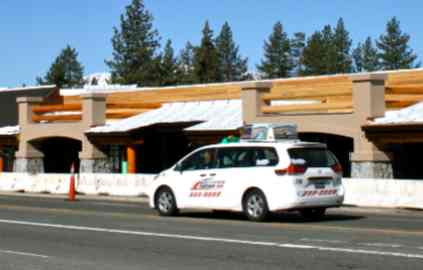
Fence down, Chateau retail nearing completion

The fence in front of the Chateau project is gone. Photo/Provided

The fence in front of the Chateau project is gone. Photo/Provided

While the Chateau project has been inching above the fence line, finally there is less obstruction. The fence along Highway 50 near the state line on the South Shore came down May 12.

Still, who the retail tenants will be has not been released. The only known business is McP’s Pub. The bar will be moving from its current location on the west side of the project area into the far end on the corner of the highway and Stateline Avenue. This was the plan from the get-go. The bi-level building has one story below ground, one above ground. Outdoor seating, fire pits and a kitchen that would be capable of producing real meals are part of the nightclub-bar-restaurant.

Owner Pete Joseph was ready to move seven years ago, and is ready to do so this year. The nightclub-restaurant is 8,988 square feet.

The retail is 18,800 square feet on one level. A definitive opening date for shops has not been set.

It remains to be seen what the rest of the 11.4-acre site will become. Originally it was to have two hotels and a convention center. That was before bankruptcy and ownership changes.

— Lake Tahoe News staff report


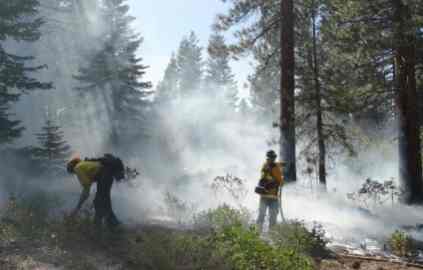
Suspicious fire quickly put out on South Shore

Fire crews May 12 extinguish a blaze near residences on the South Shore. Photo/Les Wright

Fire crews May 12 extinguish a blaze near residences on the South Shore. Photo/Les Wright

A fire of about 1 acre in size burned near Cold Creek Trail on the South Shore on May 12.

The fire was reported about 3pm Monday.

The U.S. Forest Service was the lead agency, but no one was available for comment.

There were two burn areas above Alice Lake Road about 50 yards apart. The cause of the fire is under investigation.

— Lake Tahoe News staff report


How high is too high to drive?

By Rob Hotakainen, McClatchy Washington Bureau

WASHINGTON — Josephine Drum says her daughter was “cheated out of life” when she was killed while driving to work in downtown Seattle in 2012, hit by a man in a Jeep whose blood tested positive for marijuana.

“I feel if you smoke marijuana and you have to smoke it, that you should not be able to drive under the influence,” said Drum of Stockton. “I’m 84 years old. To have lost my daughter is something hard for me to accept.”

With the push to legalize marijuana surging in popularity, states want to assure the public that roads will be safe. But they face a perplexing question: How stoned is too stoned to drive?

With no conclusive research, states are all over the map as they try to assess intoxication by measuring blood levels of THC, the main ingredient in marijuana.

There’s no easy way to do it, with marijuana stored in fat cells and detectable in blood long after it’s smoked or consumed, for days or weeks, depending on individual tolerance and level of use.

Read the whole story


Drug-sniffing dog finds nothing at Truckee High

Trax, Truckee Police Department’s narcotics detection canine, made his first unannounced search last week at Truckee High.

Nothing was found.

“I am very happy that nothing was found. Our goal is not to catch kids, but to help our students make smart and healthy choices,” TTUSD Superintendent Robert Leri said in a statement.

Thursday’s unannounced visit at Truckee High was part of ongoing collaboration between law enforcement, school and district administration to ensure students are in compliance. TTUSD has been doing these types of searches for years at North Tahoe High School in cooperation with Placer County Sherriff’s Office. North Tahoe High School searches this year have also turned up nothing.

Trax, a 2-year-old black Lab, joined the force last November, working with Officer Andrew Holbrook.

Trax is trained to detect heroin, cocaine, marijuana, methamphetamine and ecstasy. On his first night on patrol in Truckee last November, Trax detected a suspect with methamphetamine in his car. Trax and Holbrook have assisted in 15 drug arrests resulting in the seizure of 220 pounds of marijuana, 9 pounds of methamphetamine, 500 prescription pills, four firearms, and nearly $75,000 in drug money.

— Lake Tahoe News staff report


Federal agents seek to loosen rules on hacking computers

By Chris Strohm, Bloomberg

The top U.S. law-enforcement agency wants to give investigators greater leeway to secretly access suspected criminals’ computers in bunches, not simply one at a time.

The Justice Department says the proposal, made public last week, is an attempt to keep up with technology that lets people hide identities online. Privacy advocates contend the more aggressive hacking powers may violate rights of the innocent.

The proposal arrives at a precipitous time for a government still managing backlash to electronic-spying practices by the National Security Agency that were exposed last year by former contractor Edward Snowden.

“I don’t think many Americans would be comfortable with the government sending code onto their computers without their knowledge or consent,” Nathan Freed Wessler, a lawyer with the American Civil Liberties Union, said in a telephone interview. “The power they’re seeking is certainly a broad one.”

A committee of judges that sets national policy governing criminal investigations will have to sort it out, taking rules written for searching property and modernizing them for the Internet age.

Read the whole story


Homeless man found dead in S. Tahoe

Updated May 12, 3:45pm:

A homeless man was found dead the afternoon of May 10 behind the Factory Stores at the Y.

A South Lake Tahoe police officer told Lake Tahoe News there was no sign of foul play and that the man had a history of medical conditions.

El Dorado County sheriff’s Lt. Pete Van Arnum told Lake Tahoe News that the man lived in that area and slept in a small camp in the bushes behind the factory stores.

“He was found deceased in his bed,” Van Arnum said.

The name of the man, who was in his late 50s, has yet to be released. An autopsy is pending.

— Lake Tahoe News staff report


South Tahoe, Lake Valley fire on heightened alert

By Jeff Meston

The South Lake Tahoe Fire Department and Lake Valley Fire Protection District have joined in developing a Community Wildfire Protection Plan (CWPP) for South Lake Tahoe.

A CWPP enables a community to plan how it will reduce the risk of wildfire. The plan identifies strategic sites and methods for fuel reduction projects across the landscape and jurisdictional boundaries.

We are asking the community to participate in a survey for developing the CWPP. Please complete the following survey.

A CWPP is a vehicle for incorporating the fire adapted community recommendations into community design and maintenance, and for taking communities to the next step in wildfire preparedness. CWPP planning assists communities in establishing priorities for protecting life, property and infrastructure. The plans can take a variety of forms, but at a minimum must:

• Be developed collaboratively.

• Identify and prioritize areas and methods for hazardous fuel-reduction treatments.

• Recommend measures to reduce the ignitability of structures throughout the community.

For more opportunities to learn about CWPP development, consider attending one of the following events:

• May 20 9am, South Lake Tahoe City Council meeting at 1901 Airport Road, South Lake Tahoe

• May 22 5-7pm,CWPP public input meeting at 1901 Airport Road, South Lake Tahoe, airport conference room.

In addition, South Lake Tahoe Fire Department will implement a program this year to help inform and educate citizens on when the weather adds to our existing fire danger. The 2014 fire season could be catastrophic with our drought conditions and we need our citizens’ help. Fire crews will monitor the National Weather Service and when the weather reaches a red flag warning, we will implement the following procedures.

We will raise a red flag at each fire station to inform the public.

We will add extra personnel to staff a Type 3 (brush) engine for an aggressive fire attack. The personnel assigned to the engine will patrol our highest fire danger areas. The staffed engine will have a red flag banner to help alert the community. The banner will say “Red Flag Day- Critical Fire Weather”.

When citizens see these indicators of the additional fire danger within our community they should be especially mindful of the following:

• Avoid outdoor burning, such as campfires, or any other open flame. Even grilling is not advised when red flag days exist.

• Dispose of cigarettes and other smoking materials into fire safe containers. Tossing smoldering cigarettes onto the ground should never occur.

• Properly store flammable materials such as gasoline, alcohol, paint, lighter, and matches. These materials may reach their critical points during hot weather and can possibly result in fire.

• Be extremely careful when using and fueling chain saws, lawn mowers, weed eaters and other lawn care equipment. High heat conditions make ignition of the fuel vapors more likely. Find shade if possible and allow the machinery to cool if it has been running. Also avoid welding in dangerously dry conditions, as the sparks can easily ignite the dry vegetation around you.

• Be careful where you park your vehicles. The hot underside of a car or truck filled with gasoline parked over dead grass or leaves is an explosion waiting to happen. Be sure to park on concrete or solid dirt or gravel, especially during red flag days. Do not park where vegetation touches the vehicle.

Jeff Meston is fire chief of South Lake Tahoe. Martin Goldberg, with Lake Valley Fire, contributed to this story.


Employer-provided health plans may disappear

By Neil Irwin, New York Times

The days of Americans getting health insurance through their employers may be numbered — and the change could be just as profound as the shift of employers forcing employees to manage their own retirement savings.

As the Affordable Care Act goes from thousands of pages of legalese to actual, real-life public policy, the future of employer-provided health insurance is one of the most fascinating questions. Will employers call for — and their workers accept — the practice of buying health insurance through government exchanges? How much will companies save, and will they pass those savings onto employees? Will it make workers more mobile and ready to shift jobs, or will employer-paid health insurance become a sought-after perk?

The answers go to the heart of how things work in a sector that is one-eighth of the American economy. A new report gives some hints of how large the impact might be.

By 2020, about 90 percent of American workers who now receive health insurance through their employers will be shifted to government exchanges created by the health law, according to a projection by S&P Capital IQ, a research firm serving the financial industry.

Read the whole story


Employers eye moving sickest workers to insurance exchanges

By Jay Hancock, NPR

Can corporations shift workers with high medical costs from the company health plan into online insurance exchanges created by the Affordable Care Act? Some employers are considering it, say benefits consultants.

“It’s all over the marketplace,” said Todd Yates, a managing partner at Hill, Chesson & Woody, a North Carolina benefits consulting firm. “Employers are inquiring about it, and brokers and consultants are advocating for it.”

Health spending is driven largely by a few patients with chronic illnesses, such as diabetes, and those who need expensive treatments, such as organ transplants. Since most big corporations are self-insured, shifting even one high-cost worker out of the company plan could save the employer hundreds of thousands of dollars a year — while increasing the cost of claims absorbed by the marketplace policy by a similar amount.

And the health law might not prohibit it, opening a door to potential erosion of employer-based coverage.

Read the whole story