CTC to improve old Meyers campground

California Tahoe Conservancy is ready to go forward with improving access to the former Tahoe Pines Campground and improving the grounds along the Upper Truckee River on Highway 50 in Meyers.

The Conservancy plans to restore and protect the natural floodplain and riparian habitat of the 8.5-acre site, while providing picnic tables, benches, hiking trails or other compatible amenities.

Comments on the draft environmental document are being taken until June 13.

More info is online.


Lahontan working to curtail invasive weeds in Keys

Lahontan Regional Water Quality Control Board is looking to find ways to contain the aquatic weeds that are so prolific in the Tahoe Keys.

The state agency this week released a draft permit for public review, which aims to reduce and prevent the aquatic weed infestation in the 372-acre waterway in South Lake Tahoe.

Milfoil and curlyleaf pondweed compete with native species and present persistent navigation and swimming nuisances.

If the permit were awarded, it would allow the Tahoe Keys Property Owners Association to perform various land-based tasks to prevent nutrients and sediment from entering the waterways. Beyond outreach and education, it would include fertilizer and irrigation management, and promoting the retrofit of all properties with best management practices. The draft permit also will allow the homeowners’ association to lay bottom barriers over the invasive aquatic weeds to suffocate them.

People have until July 3 at noon comment.

For more information or questions about the proposed permit, contact Doug Smith at DFSmith@waterboards.ca.gov or 530.542.5453.

The board will discuss the issue at its July 16-17 meeting in South Lake Tahoe.


STPUD ups rates; salary increases not decided

By Lesia Witkowsky

Water and sewer bills for South Tahoe Public Utility District customers will be going up July 1.

The board on a 5-0 vote made it official June 5.

Water rates will increase 6.5 percent for each of the next four years, with the fifth year being 5 percent. The base pay for people on water meters becomes 80 percent of the bill, with 15 percent being based on use. Sewer rates will be 6 percent higher each of the next five years.

About 20 people were in the room Thursday, with a few speaking from their seats. Many spoke about water meters and their legitimacy.

Residents are concerned that a lot of people in this town are on fixed wages and it is not easy for them to start spending more money for basics like water and sewer. A few also discussed the fact that meters will cost money to implement and were concerned with the fairness of everyone having to pay more money for water even if they barely use any, for example people who own homes here, but live full time in other cities.

Eric Schafer, board president, said how in a global sense meters encourage conservation by showing water consumption and therefore there are valid reasons for using them. Because meters are state mandated, the board has no choice but to ensure they are installed. They are also the best way to reduce water consumption because flat rates are hard to leverage pressure on customers to reduce water consumption, Schafer added.

He also reminded people that the staff recommendation was for higher water and sewer rate increases.

“We carry the burden of responsibility on whether or not we do the right thing. It’s a brutal cost, but if you’re trying to make sure of maintaining the system as it is or better, and make sure we don’t have something that causes more significant increases down the road, then do the 9.5 percent,” Schafer said. “If we’re not doing enough, I think you need to relook at it and think about doing what’s right and not what the notice say. I’m going to vote for this not because I believe it, but because I want my vote to at least be what is called for. It’s not my recommended approach, but that’s what I’m going to do.”

The notice he refers to is Proposition 218, which required a 45-day protest period. If 50 percent plus one ratepayers were to have filed a protest to the proposed rate increases, the district would not have been able to go forward no matter what the board wanted to do.

Water rate received 305 protests, or 2.17 percent of customers; sewer 342, or 1.88 percent of customers; and metered rate structure 260, or 1.85 percent.

The board has been discussing the possibility of raising rates since last fall. And the five have never been on the same page as to what the district should be asking of its ratepayers.

It’s been a case of does aging infrastructure get replaced now or sooner versus can ratepayers afford to pay more when so many still have not recovered from the economic downturn.

Board member Jim Jones agreed with Schafer that not enough money is being collected, especially when it comes to long-term equipment replacement.

Member Kelly Sheehan said, “Perhaps had there been smaller consistent rate increases, we wouldn’t be faced with the thought of a 9 percent increase or a 6 percent increase.”

Randy Vogelgesang, another board member, said, “It is our duty to carry out the wishes of the ratepayers to the extent that we can and still have a functioning district. In an ideal world we’d go with constant rates forever, but that includes capital improvement.”

Besides rate increases, the board approved the 2014-15 budget that takes effect July 1.

There are no cost of living increases for employees, but raises are not out of the question.

“Negotiations are under way with our union represented employees for a new MOU, since the current two-year contract expires in July of this year,” General Manager Richard Solbrig told Lake Tahoe News.

The board discussed the latest proposal from the union in closed session at the end of the meeting, but no decision came from it. It’s likely the salary question won’t be resolved until July.

Regular step increases for employees who are not at the top of the pay scale will be given.

No changes have been made to other employee benefits.

Kathryn Reed contributed to this story.


Nissensohn sentenced to death

Joseph Nissensohn was sentenced to death June 5 for the murder of a South Lake Tahoe teenager and two others.

El Dorado County Superior Court Judge Suzanne Kingsbury upheld the December recommendation of the jury.

Nissensohn, 62, was convicted in October in the first-degree murders of Kathy Graves, 15, of South Lake Tahoe in 1989, and Seaside residents Tammy Jarschke, 13, and Tanya Jones, 14. Graves was killed in 1989 and the others in 1981.

It is more likely Nissensohn will spend the rest of his life in San Quentin. California has more than 700 inmates on Death Row. Clarence Ray Allen on Jan. 17, 2007, was the last person executed. The controversy of using lethal injection is creating the logjam.

— Lake Tahoe News staff report


Carson City leads nation in warming trend

By Sandra Chereb, AP

CARSON CITY — Don Quilici has snookered a few Carson City newcomers with bets that it would snow the week of his birthday in early May.

Unsuspecting gamblers often don’t know that a sliver of the western Nevada city’s boundaries extend to Lake Tahoe and encompass Snow Valley Peak at a towering 9,214 feet.

“As an average, I’d win eight out of 10 years,” said Quilici, 80, a Carson City native.
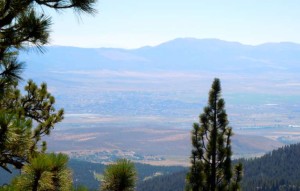
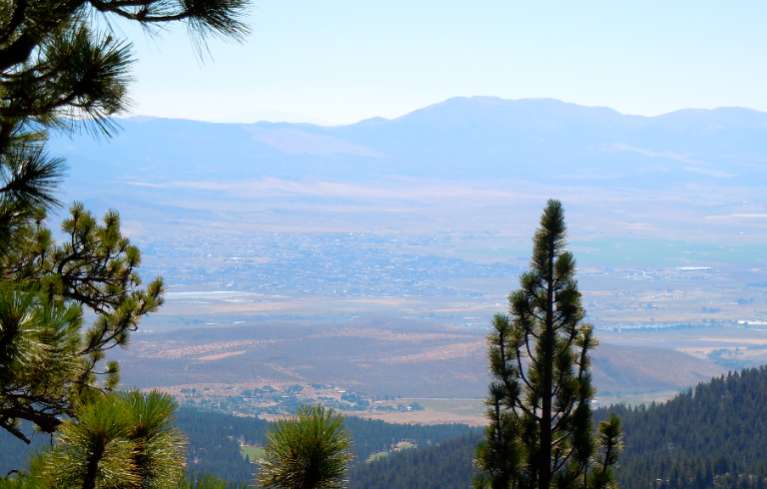
Looking down on the Carson area from Snow Valley Peak. Photo/LTN file

Looking down on the Carson area from Snow Valley Peak. Photo/LTN file

Lately, though, he hasn’t been so lucky. That’s because Nevada’s capital city is getting hotter.

An Associated Press analysis of federal temperature records shows Carson City has warmed the most than any other city in the nation in the last 30 years.

The average temperature in Carson City has risen 4.1 degrees since 1984. Boise, Idaho, came in second, posting a rise of 4 degrees. Las Vegas, known for its sweltering summers, was sixth, with an increase of 3.4 degrees.

But it’s the boost in summertime heat that really makes Carson City stand out.

The average temperature for June, July and August has soared 6.8 degrees over the last three decades, 2.2 degrees warmer than second-place Boise and 2.4 degrees higher than third-place Las Vegas.

The summertime average temperature is up from about 68 degrees to nearly 75.

Because the data on cities are based on one weather station and readings can be affected by urban heating and development, trends are not as scientifically robust as those of states or regions within states, but they do have value, said National Climatic Data Center monitoring chief Derek Arndt.

The change in Carson City is becoming noticeable in subtle ways.

Plants and trees are prone to bloom earlier, and more people are installing air conditioners. The systems were a rarity even a decade ago, when many residents didn’t want to spend the money when only a couple of weeks in August seemed insufferable.

Justin Anderson, owner of Anderson Heating & Air Conditioning, in operation for 32 years, said he “never knew that so many people didn’t have air conditioning before.”

David Ruf of Greenhouse Garden Center was surprised by the amount of warming that’s taken place but not by the warming itself.

Ruf, whose father started the business 40 years ago, keeps meticulous weather records.

“When we started here, usually there was a temperature swing between night and day of 45 degrees,” Ruf said. “Now we seem to be 35 degrees.”

He and other long-time residents note Carson City’s geography. Nestled in a valley at the base of the Carson Range, the city is ringed by hills and mountains.

And as the city has grown, more roads, asphalt, homes and commercial development have cropped up — ingredients for heat absorption and urban warming.

In 1984, about 35,000 people lived here, government data say, and today the population is 55,000. Instead of fields and meadows, there are houses and commercial complexes.

Sam Lompa, who lives on a ranch in the heart of Carson City, feels the warming effects.

“When I was a kid, we never had any air conditioners,” said Lompa, 71, who grew up on the ranch. Now he uses fans and a swamp cooler but doesn’t fret much about the temperature.

“If it’s hot, it’s hot, and if it’s cold, it’s cold,” he said.

Ruf, too, is skeptical of putting too much emphasis on temperature shifts, even though this May seemed unusually warm, with temperatures in the 80s.

“Every time I say it’s getting hotter, the next year gets colder,” Ruf said. “Mother Nature can still pack a wallop.”

Burglary turns into discovery of illegal grow house

South Lake Tahoe police officers on Tuesday chased down a suspect who reportedly was breaking into a residence on Bonanza Avenue.

Officers said the suspect was carrying bags of stolen items from the residence. Officers chased him through yards and over a fence to the meadow near D Street and Highway 50, where he allegedly attempted to pull a gun from his waistband.

“The suspect lost control of his gun, a semiautomatic pistol with a high capacity magazine loaded with 9mm ammunition, and was apprehended without any shots fired,” cops said in a press release.

An officer, whose name has not been released, was hurt in the scuffle. The extent of injuries is not being released either. The officer was taken to Barton Memorial Hospital.

The identity of the suspect was not immediately know because officers said he provided false information upon his arrest. The suspect was arrested of charges of illegal possession of a firearm, armed burglary and robbery.

The house being robbed had an illegal marijuana grow, according to officers.

— Lake Tahoe News staff report


Truckee ups sales tax to build trails

Truckee voters say yes to recreation. Photo/Lesia Witkowsky

Truckee voters say yes to recreation. Photo/Lesia Witkowsky

Truckee residents unquestionably want more trails.

Measure R won with 74.99 percent of the votes or 1,367 votes. Voting no were 456 people or 25.01 percent of the voters.

The decision means Truckee’s sales tax will grow by one-quarter cent to 8.375 percent. Nevada County’s sales tax is 7.625 percent, while the state average is 8.38 percent. It will be in effect for 10 years.

Officials estimate $10 million will be collected in that time. The bulk of it — $8 million – will be spent on new bike/walking trails, while the remainder will be dedicated for maintenance.

— Lake Tahoe News staff report


Incumbents fare well in El Dorado County

By Susan Wood and Kathryn Reed

While some longtime El Dorado County officeholders faced opposition for the first time in years, they all retained their seats.

The challenges had a lot more to do with political sparring on the West Slope and less about how well the incumbents were doing their job.

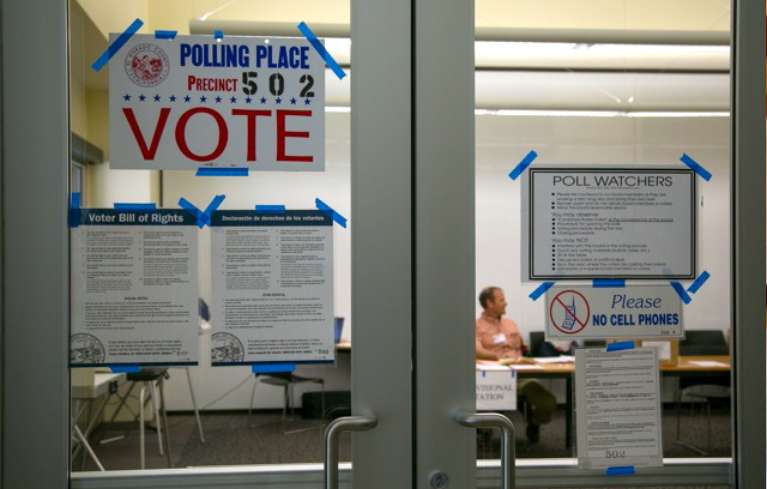
It was a slow start to voting at the Lake Tahoe Community College precinct. Photo/Lesia Witkowsky

It was a slow start to voting at the Lake Tahoe Community College precinct. Photo/Lesia Witkowsky

The heads of the four offices that were challenged were not leading departments that received unfavorable reviews by employees in a recent county survey.

Retaining their seats are: Auditor-Controller Joe Harn, District Attorney Vern Pierson, Recorder-Clerk Bill Schultz and Treasurer C.L. Raffety.

“I’ve lived in the county for 40 years. I’ve been doing a pretty good job for 20 years. I’m not surprised I got re-elected,” Harn told Lake Tahoe News.

Schultz found himself in the position of working election night and being on the ballot.

“You know, I do everything the same each time. I don’t touch anything,” he said shortly after posting the first wave of results about 8pm when 70.24 percent of mostly absentees had been counted.

Absentee ballots are a notable distinction of county voter behavior year after year. Of the 106,944 registered voters in El Dorado, 72,251 cast their ballots by mail. The whopping 67.56 percent of registered voters can help some call or predict election results before all the precincts report in.

Schultz and staff have worked to increase the trend with new ideas and funding to support that effort. El Dorado County not only received a $1 million grant to fund a special website for military personnel to plug in their votes overseas. Now 13 other California counties are doing the same.

“We’ve heard nothing but good things about it,” the registrar said.

Call it tradition that El Dorado County voters may boast a better turnout than the dismal one predicted up and down California in this primary election – with some estimates as low as 25 percent.

“We’re doing a little better, and I hope it stays that way. We’re usually ahead of the pack on that. I was hoping for 40 percent, but I think I way overestimated,” Schultz said.


Novasel, Brown to vie for District 5 supe seat

By Kathryn Reed

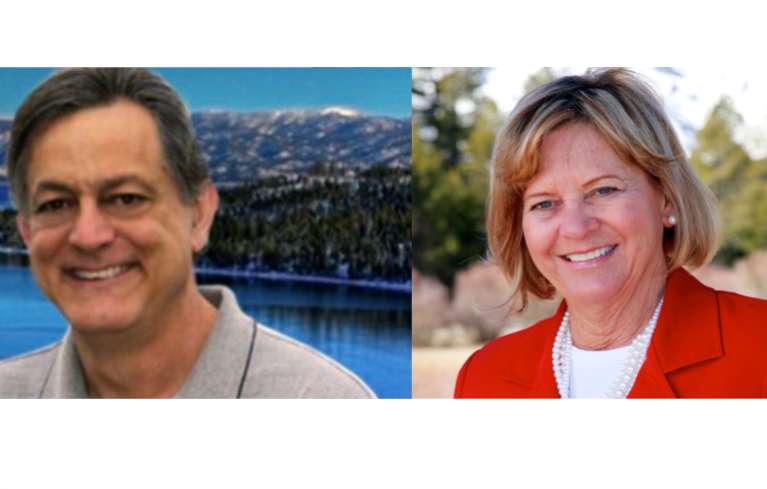
Sue Novasel and Kevin Brown, as the top two vote getters for El Dorado County District 5 supervisor, will be squaring off in November.

They never relinquished their lead as numbers started coming in just after 8pm June 3.

With all precincts reporting, Novasel garnered 27.46 percent of the vote (1,135 votes), Brown 19.06 percent (788), Angela Swanson 17.83 percent (737), Kenny Curtzwiler 17.68 percent (731), Gerri Grego 12.07 percent (499), and Teresa Piper 5.68 percent (235).

Either Kevin Brown and Sue Novasel will be the next District 5 supervisor.

Either Kevin Brown or Sue Novasel will be the next District 5 supervisor.

Certification of the vote usually takes about a month so provisional ballots can be counted, which means the numbers are unofficial at this point and could change.

Norma Santiago was termed out, thus creating the opening.

“I want to say how honored I am to have our community’s support. I will continue to work hard during this campaign for District V and I promise to be a strong voice for all of our communities throughout the district,” Novasel told Lake Tahoe News.

She and her husband were out until after midnight picking up campaign signs.

Brown said Novasel was one of the two people he thought he might be facing five months from now.

One thing he is alarmed about is the low voter turnout in this particular race compared to other races in the county. Getting people to the polls, he said, will be a big goal in November.

“We did knock on doors. We made phone calls, but the money was scarce with six running for the spot,” Brown told Lake Tahoe News.

This seat is no longer a Tahoe-only district. It now stretches to Pollock Pines, where Brown resides.

Novasel is a longtime Meyers resident.

One thing they have in common is both are school board members.

What remains to be seen is if Swanson will run for City Council to retain her seat on that body. Swanson said she would only speak through her campaign manager, but provided no contact information for him.

There will also be a runoff for the District 4 supervisorial seat. Howard Penn finished with 1,737 votes or 21.87 percent, while Michael Ranalli tallied 1,708 votes for 21.5 percent.


Library closes campaign book with resounding win

By Susan Wood

South Lake Tahoe voters spoke loudly when they turned funding support of the El Dorado County Library into a no brainer during Tuesday’s primary election.

With its funding to operate teetering, citizens overwhelmingly passed the $20-to-$28 a year parcel fee with 2,552 votes at 78.52 percent. Measure L needed two thirds of the vote to pass.

Measure L supporters celebrate election night. Photo/Susan Wood

Measure L supporters celebrate election night. Photo/Susan Wood

Friends of the Library and the institution’s staff reminded themselves at a gathering Tuesday night that this isn’t the first time the library dodged a bullet to keep the doors open and services offered. In 1995 and 2005, library supporters have gone to the voters to keep the operation intact.

And what a necessary component these votes have been. At least 83 percent of the library’s budget comes from taxes raised.

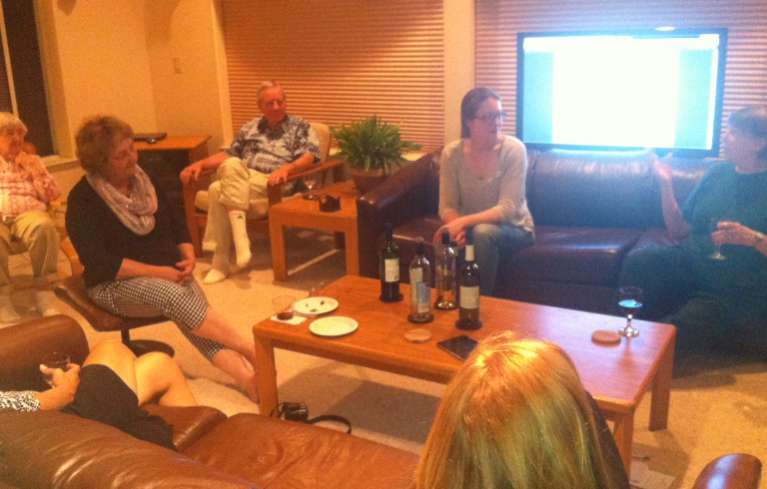
“I’ve long felt what makes our community special is the library and the (Lake Tahoe Community) college,” said John Henderson at a gathering to watch and talk about election results at his home with Kay. (Kay Henderson is president of Friends of the Library.) Within earshot, founding college board member Roberta Mason listened.

The Hendersons erected a retractable television behind the sofa to entertain the attentive guests.

Librarian and branch Manager Katherine Miller told Lake Tahoe News that she’s noticed people walking into the library asking: “Why wouldn’t we vote for the library?”

She would shrug. Staff is not allowed to use time and resources to campaign for a political endeavor.

However, it helps to have Friends, among other supporters.

“We owe everything to this PAC,” Miller said of the library political action committee.

In turn, Henderson broadened her acknowledgement to a large group of supporters.

“We were fortunate to have a lot of committed people to Measure L. For me, the real bottom line is I want to live in a community with a library,” she said.

The El Dorado County Library has long been a venue for community functions, a creative outlet for gatherings such as the appy hour for those trying to master their computer technology and a resource for audio books, published works to read and tools to conduct professional projects.

As the Lakeview Commons project across Highway 50 comes into full fruition, the library location becomes all the more pertinent in steering visitors and locals to a world of words and vision. And one might catch a glimpse of Mark Twain’s character in MacEvoy Lane.