S. Tahoe delays expanding plastic bag ban

By Kathryn Reed

The South Lake Tahoe City Council remains confused regarding its vision about the use of plastic bags in town.

On Tuesday the council on a 3-2 vote decided to delay implementation of the plastic bag ban for retailers. It was supposed to go into effect Oct. 15. It has been delayed for a year.

Restaurants were never included in that group. But it did include dry cleaners, in addition to clothing outlets, hardware stores and other businesses deemed retail.

Of the more than 3,000 business licenses in the city, 800 are considered retail.

Councilmembers Brooke Laine and Angela Swanson wanted to go forward with the ban this year – as has been their stance from the get-go. Councilmembers Tom Davis and JoAnn Conner have been against the ban all along. Mayor Hal Cole has consistently been the swing vote. On June 17 he cast the deciding vote to delay the ban.

While Cole said his big issue is the number of plastic bags ending up in landfills, he is also concerned with mandating what he called “mom and pop businesses” to eliminate plastic as an option to bag goods.

Paper bags cost retailers more to buy than plastic. But plastic is said to be worse environmentally, which is an overriding reason why cities are banning those bags.

Earlier this year grocery stores in South Lake Tahoe had to stop handing out the single-use bags.

Six people spoke at the meeting – most in support of going forward with expanding the bag ban to other businesses. Of the five letters the city received, three favored the ban.

Not a single business owner — small or large – was at the meeting asking the council to rescind or delay the expanded bag ban, or change what is in place now.

In July, the council will officially revise the current ordinance to reflect the delayed implementation for retail establishments. There is always the possibility there could be another delay or some other change to the use of plastic bags in South Lake Tahoe – especially since there will be a new council in a matter of months.

In other action:

• A consultant told the council at this time it is safe to stick with not having district elections. This is not the route Lake Tahoe Community College and Lake Tahoe Unified School District took. In November the education entities will switch to district elections. But their boundaries are different than the city’s.


Alpine County bucks trend with nearly 70% voting

By Seema Mehta, Los Angeles Times

MARKLEEVILLE — Tess Castle, drinking a mid-afternoon pint at the Wolf Creek Restaurant & Bar on a recent afternoon, admitted something she had never told anyone before: She doesn’t vote.

“Shame on you. I didn’t know that,” said bartender Danea McAvoy, 51, after selling lottery tickets to tourists passing through this bucolic town of 210 residents. “Shame on you.”

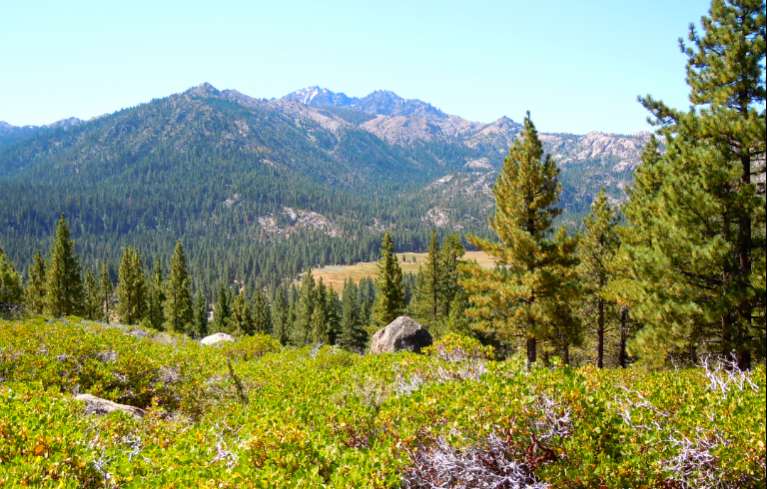
There is more wilderness than people in Alpine County. Photo/LTN

There is more wilderness than people in Alpine County. Photo/LTN

The reaction may seem sharp, but it’s because Castle, 28, is in a distinct minority in this picturesque county seat of tiny Alpine County.

Nearly everyone in this community makes their mark on election day. On June 3, in one of the least compelling gubernatorial primary elections in memory, nearly 70 percent of voters cast ballots, the largest turnout per capita in the state.

California as a whole is on track to hit a record of a more dubious nature — 18.3 percent of voters cast ballots through election day on June 3. Absentee and provisional ballots are still being counted, but voting experts expect the state to end up with a turnout of 22 percent to 23 percent — far less than any in recent history — when the tally is finalized in early July.

That’s a roughly 10-point drop from the last gubernatorial primary, part of a long-term trend in California, where fewer voters are casting ballots in primary elections as more choose not to affiliate with a political party.

Read the whole story


Special election set to fill Nutting’s seat

There will be a special election Sept. 9 to fill the seat of Ray Nutting; the El Dorado County supervisor ousted from office because of his conviction related how he raised bail money.

A judge on June 6 ruled Nutting should be removed from office. On June 17 the Board of Supervisors set the special election.

Estimated cost for the special election is between $80,000 and $100,000.

Candidates for supervisor must be registered voters of district two for at least 30 days immediately preceding the July 29 filing deadline. The nomination period will open June 30.

— Lake Tahoe News staff report


Whooping cough reaches epidemic levels in Calif.

By CBS News

The number of whooping cough cases throughout California has reached epidemic proportions, state health officials said Friday.

The California Department of Public Health said in a statement released Friday that more than 800 cases of whooping cough, also known as pertussis, have been reported over the past two weeks. As of June 10, there have been 3,458 cases — more than in all of 2013.

CBS Los Angeles and KNX 1070 news radio report health officials say more than 85 percent of those who have contracted pertussis had preventative shots.

“The vaccine, while it’s very effective when it’s obtained following the first year, each year thereafter, the effectiveness decreases,” said Dr. Wilma Wooten with San Diego County Health and Human Services. “That’s why we’re seeing the infections.”

Read the whole story


Study: Teens more apt to text and drive than drink, smoke and fight

By Mike Stobbe, Washington Post

NEW YORK — American teens are smoking less, drinking less and fighting less. But they’re texting behind the wheel and spending a lot of time on video games and computers, according to the government’s latest study of worrisome behavior.

Generally speaking, the news is good. Most forms of drug use, weapons use and risky sex have been decreasing since the government started doing the biennial survey in 1991. Teens are wearing bicycle helmets and seat belts more, too.

“Overall, young people have more healthy behaviors than they did 20 years ago,” said Stephanie Zaza, who oversees the risky-behavior study at the Centers for Disease Control and Prevention.

The results come from a study of 13,000 U.S. high school students last spring. Participation was voluntary and required parental permission, but the responses were anonymous.

Read the whole story


Calif. lawmakers pass $156 billion budget

By David Siders and Jeremy B. White, Sacramento Bee

California lawmakers approved a $156.4 billion state budget Sunday, rushing to pass legislation less than six hours before the constitutional deadline.

The spending plan, a compromise between Gov. Jerry Brown and the Legislature’s Democratic majority, includes more money for high-speed rail, Medi-Cal and welfare-to-work, and an expansion of child care and preschool for poor children.

It also begins to pay down an estimated shortfall of more than $74 billion in the teachers’ pension fund and puts about $1.6 billion into a special rainy-day account.

The budget’s passage resolves months of budget negotiations at the Capitol, a process that has become less rancorous as the state’s financial condition has improved. The Father’s Day vote came just before the midnight deadline by which lawmakers must pass a budget to avoid losing pay.

Read the whole story


Pressure, potential for federal shield law

By Cora Currier, Columbia Journalism Review

Though earlier this month the Supreme Court refused New York Times journalist James Risen’s appeal that he should not be made to testify in a government leak prosecution, efforts to pass a federal media shield law are gathering steam.

On Wednesday, more than 70 media organizations sent a letter to Senate leadership demanding a vote on a law that’s been sitting around since it passed the Judiciary Committee since last September. And late last month, the House approved an amendment proposed by Rep. Alan Grayson of Florida that forbids the Justice Department from spending money to force a journalist to testify about a source.

“I think we’re really close, and the Risen situation really highlights the need for the law,” said David Cuillier, president of the Society of Professional Journalists, one of the signatories on the letter to the Senate. “There might be some senators who are still undecided and still on the fence, but I hope that they’ll now realize this is long overdue.”

There is still contention over the definition of the word journalist, and concerns that any attempt to enshrine reporters’ privilege could make those that don’t fit precisely even more vulnerable. Republican Sen. John Cornyn and many conservative pundits have opposed the bill on the basis it could disadvantage bloggers and other non-traditional journalists. It also has an exception for situations involving future threats to national security.

Read the whole story


Wildland firefighting takes funds from other programs

By Jodi Peterson, High Country News

A federal report this week shows how dollars meant for forest restoration and wildfire preparedness often get diverted to fighting wildfires. It’s been that way for years, and as fires get bigger and more expensive to fight, the problem only gets worse.

As we reported last summer: “Just a few days before (the Rim Fire scorched Yosemite), U.S. Department of Agriculture Chief Tom Tidwell had ordered an immediate Forest Service spending freeze for restoration programs, employee travel, and other personnel costs to help funnel an additional $600 million into the agency’s suppression account, which had been bled down to a mere $50 million, about half of what’s typically needed to cover a single week at Level 5, reports E&E News. Such borrowing has happened six other times in the last decade, totaling $2.7 billion. Of that Congress eventually restored $2.3 billion, ‘but not without disruptions to important agency programs’ – many of them the kind that could help lessen fire risks in the future. The FLAME Act of 2009 was supposed to help head off that dynamic by creating a reserve fund for firefighting, but it doesn’t appear to be working, perhaps because of fluctuating appropriations.”

The Forest Service now spends 40 percent of its budget on firefighting, compared to 15 percent in the early 1990s.

This year, it expects to spend about $1.5 billion on suppression, and will probably overrun the fire budget by close to $500 million, according to a May report from Interior.

To keep up, the agency transfers funding from other forest management programs – which means that all kinds of important projects, including those meant to reduce fire danger, go begging.

Read the whole story


El Dorado County boy drowns in American River

An El Dorado County teenager drowned in the American River on Friday.

Ronald Stewart, 15, of Garden Valley was pulled from the Middle Fork of the river near Cherokee Bar about 11am June 13. He was not about to be resuscitated.

He had been swimming in that area earlier.

An autopsy is pending.

— Lake Tahoe News staff report


Long history of select Lake Tahoe Basin gas stations contaminating soil, groundwater

By Lauri Kemper

The Lahontan Water Board is considering closing a groundwater pollution cleanup case at the USA gas station in South Lake Tahoe after years of cleanup work following fuel spills and leaks at the site. The site is now considered a low threat to the environment and drinking water supplies.

The USA gas station is one of five Lake Tahoe Basin gas stations named in a recent lawsuit filed by the attorney general on behalf of the State Water Resources Control Board. In the past, the five sites all caused significant groundwater contamination and threatened or shut down community water supplies.

The lawsuit filed in May, alleges that Azad Amiri, Sarbjit S. Kang, and their affiliates committed numerous leak prevention violations at 10 underground storage tank facilities in Contra Costa, El Dorado, Placer, Sacramento and Yolo counties. The facilities are fueling and convenience stores that operate under several brand names. The lawsuit addresses current and ongoing violations at the sites.

Lahontan Water Board staff efforts have resulted in the restoration of water quality and protection of drinking water at the five locations in the Tahoe basin that are named in the lawsuit.

Below is a summary of the Lahontan Board’s regulatory activities at those five stations:

Former USA Gas Station No. 7, 1140 Emerald Bay Road, South Lake Tahoe

In 1983, fuel was observed leaking from an underground storage tank following excavation work at the site. The tanks and some contaminated soil were removed and new tanks installed. From 1986 through 1993, some groundwater monitoring was conducted, but the responsible party failed to meet Water Board orders.

By 1996, Water Board staff determined an additional release of petroleum occurred at the site based on high concentrations of MTBE in groundwater. In 1997, the Water Board issued its third cleanup and abatement order to the owners.

From 1997-2013 significant cleanup efforts were conducted. At its maximum, the contaminated groundwater plume extended approximately 2,000 feet north, west, and northwest of the source area, and affected or threatened private and community drinking water supply wells in the area. Currently, the residual petroleum plume is about 150 feet long, and MTBE has been removed except for a small area surrounding one monitoring well.

The responsible party has requested case closure under the State Water Board’s Low-threat Underground Storage Tank Case Closure Policy. Water Board initiated a 60-day comment period. In response to comments by the South Tahoe Public Utility District, the Water Board has requested additional information from the responsible party to support case closure.

Former Beacon Station, 8070 North Lake Blvd., Kings Beach

In 1998, North Tahoe Public Utility District staff notified the Water Board of gasoline sheen on Lake Tahoe, near its drinking water intake pipeline. Gasoline discovered in monitoring wells between the lake and gas station confirmed leaks in the underground storage tanks.

With the station within 100 feet of the lake, the North Tahoe PUD ceased pumping lake water at Secline Avenue for municipal water supply. Over the next 10 years, the Tesoro Company, which owned the gas station operated by Kang and Amiri, spent hundreds of thousands of dollars to clean up soil and groundwater pollution (funds reimbursed by the State Underground Storage Tank Cleanup Fund). When cleanup was completed in 2010, the Water Board closed the case. The North Tahoe PUD resumed pumping the Secline Avenue intake pipeline for municipal water supply.

The site now operates as a Mobil Gas Station.

Former Beacon Station, 3208 Highway 50, Meyers

In 1997, South Tahoe Public Utility District shared with the Water Board sampling results of MTBE (a fuel additive) in two municipal supply wells in Meyers. The Lahontan Water Board issued orders to five businesses in Meyers requiring all to conduct groundwater sampling. The results showed extensive contamination at the Beacon station at the west end of Meyers. Further investigations showed gasoline had moved through the porous granitic soils from leaking pipelines, dispenser pumps, and tank sumps at the gas station.

The station was owned by Tveten Corporation and operated by Sarbjit Singh Kang.

STPUD ceased operating the affected municipal supply wells along with a third supply well located farther away. The loss of these wells created a burden on STPUD to provide enough drinking water to its customers.

Upon the death of the property owner, the Water Board took on cleanup of the site using special State funds earmarked for emergency, abandoned, and recalcitrant sites. A contractor hired by the Water Board spent the next six years investigating the extent of groundwater contamination and conducting cleanup actions. When the drinking water aquifer had been restored in 2005, the Water Board closed the case.

Slightly more than $1 million was spent to investigate and cleanup the contamination. The Water Board issued a fine in 1999 to Kang, the estate of Joe Tveten, and the J.E. Tveten Corporation in the amount of $112,500, which was never paid.

Swiss Mart Gas Station, 913 Emerald Bay Road, South Lake Tahoe

State mandated tank upgrades resulted in the identification of soil and groundwater contamination at the Swiss Mart gas station in 1998 from leaking tanks, pipelines and dispensers. The business was owned by the Amiri Oil Company and operated by Sarbjit Singh Kang.

Gasoline and diesel impacted one of the Lukins Brothers Water Company’s municipal supply wells located one block away and two private domestic wells two blocks away. The municipal well was taken out of service. Under Water Board orders, some groundwater cleanup, with off and on operations of the system occurred over 10 years. Failure to comply with cleanup and abatement orders resulted in the Water Board levying fines in 1999 and 2009, of which $256,000 are still unpaid.

The Water Board also pursued injunctive relief in El Dorado County Superior Court to require Kang and Amiri to keep operating the remediation system in order to protect nearby water supply wells. The site was cleaned up in 2010 and the case was closed.

Former Beacon 3688, 2304 Lake Tahoe Blvd., South Lake Tahoe

In 1988, a site assessment by Beacon indicated petroleum vapors in the subsurface. The Water Board required groundwater investigation and by 1991, soil and ground water cleanup began. In 1992, the underground storage tanks were replaced and approximately 1,500 cubic yards of contaminated soil was removed.

In 1998, a leaking gas dispenser was observed, and monitoring showed MTBE in groundwater at previously clean locations. In response to these detections, South Tahoe Public Utility District preemptively shut down their Helen supply wells.

Because of this new release Beacon increased the pumping rate of their groundwater treatment system. By 2002, more than 22 million gallons of contaminated groundwater was pumped and treated at the site. The site was closed in 2004 with groundwater contaminant levels at or near laboratory detection limits.

The Lahontan Regional Water Quality Control Board’s mission is to preserve, protect, enhance and restore the quality of California’s water resources for the benefit of present and future generations. For more info about contaminated sites, go online.  Here is a link to the gas station maps.

Lauri Kemper is assistant executive officer of Lahontan Regional Water Quality Control Board.