BMPs may become issue when selling property

By Kathryn Reed

STATELINE – Lake Tahoe homebuyers and sellers beware because the Tahoe Regional Planning Agency is looking to crackdown on erosion control measures at private residences.

There is a good chance that a year after escrow closes BMPs will have to be completed. And when it comes time for disclosure about BMPs, sellers may be asked to pony up the money to have them completed or for the selling price to be reduced.

On July 8 a room of about 70 people, most of whom are in the real estate business, gathered to hear what the future of best management practices will be as well as to give the nine-member committee their opinions.
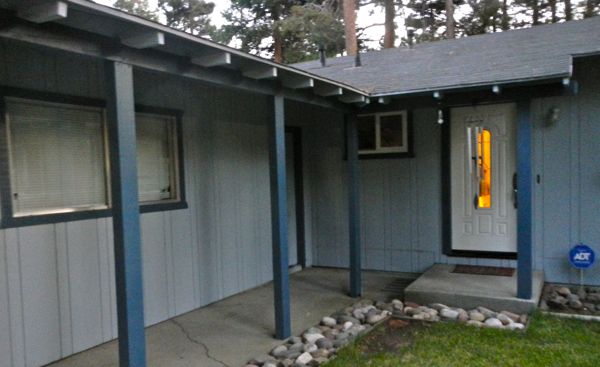
Rocks in front of this residence are a drip line so runoff from the roof doesn't pound the ground. Photo/LTN

Rocks in front of this residence are a drip line so runoff from the roof doesn’t pound the ground. Photo/LTN

A working group was convened earlier this year to address the BMP issue because the Regional Plan committee could not find a resolution prior to the update being adopted in December 2012. The group first met in March.

What has the real estate community up in arms is the possibility of requiring BMPs be done at the point of sale. Collectively, they said this would hurt their industry and is not the best way to achieve the main goal – which is to reduce sediment from reaching Lake Tahoe.

Even though it was pointed out in the staff report that primary roads are the overwhelming transporter of runoff, that was barely touched upon. Jason Kuchnicki with Nevada Department of Environmental Protection and Jason Burke with South Lake Tahoe brought it up, but the conversation went nowhere. (They are on the working group.) Of the five categories, single-family residences carry the least debris to the lake. In fact, those parcels along with multi-family residences, secondary roads and “land use category” don’t collectively total the amount of sediment of primary roads.

It is Clem Schute, California’s rep on the TRPA Governing Board, and Dan Siegel with the California Attorney General’s Office (both working group members) who are pushing for the point of sale BMP requirement. They are willing to delay the discussion for two years when the Regional Plan will be updated. (That document is now being looked at every four years.)

But what they want now is any residence that is sold to have its BMPs within a year. The fine per day would be $5,000 – or nearly $2 million a year. It was pointed out how this practice is equivalent to having a point of sale mandate.

Shelly Aldean, Nevada Governing Board member who is on the working group, said the fine is already part of the TRPA Compact and is not something new.

Agents for years have chosen to have sellers disclose and buyers acknowledge whether BMPs existed. Now, they say, the market is dictating that BMPs are becoming a negotiating point without TRPA intervention.

All residences were supposed to have put in BMPs by now, but the TRPA has been lax about enforcement. (However, about 60 letters are going out soon to Al Tahoe residents.) Part of the lack of enforcement has to do with staffing, and part with the evolution of science since 1987 when the first Regional Plan was adopted.
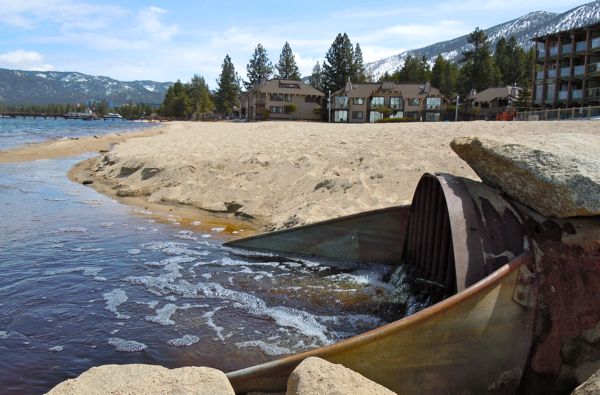
Water from the Bijou area drains from a large pipe right into Lake Tahoe. Photo/LTN file

Water from the Bijou area drains from a large pipe right into Lake Tahoe. Photo/LTN file

Plus, the passage of the total maximum daily load protocols calls for jurisdictions to reduce fine sediment in order to be in compliance with state agencies. Working on roads and larger erosion control projects is how they will achieve this.

It was stated at the meeting that even if all the residences in the basin did their BMPs, it would not add up to enough credits to satisfy the larger state goals. (Half of the residents in the basin have completed their BMPs.)

Many who spoke – including working group members – said the big picture is what should be looked at instead of going parcel by parcel. This includes putting together assessment districts like South Lake Tahoe has done with the Bijou properties. That is a multi-year project that is under way now that involves commercial and residential parcels.

But things like that take time. The Bijou process started in 2007. And when some property owners balked, the city and TRPA teamed up and threatened them with a lawsuit.

There was talk of looking at the areas in the basin that are the biggest contributors to sediment runoff and working to get those parcels into a stormwater district so it would have a greater environmental impact and likely cost less because of the economies of scale.

“The rest of the country is far ahead of us on this,” Joanne Marchetta, TRPA executive director, said.

At the Aug. 20 meeting the group is expected to finalize the TRPA document real estate agents use in regards to BMP disclosure.

In the meantime, security deposit forfeitures will be a topic for the Legal Committee to tackle. The discussion would cover the use of those funds and the possibility of targeting additional funds for BMP enforcement.

For next month’s meeting staff will also bring back a detailed document for how enforcement could be handled.

The group meets from 9am-noon (or longer as the case was Tuesday) at the TRPA offices in Stateline.

Other working group members are Karin Staggs (Nevada Tahoe Conservation District), Sara Ellis (Nevada Realtors), Shannon Eckmeyer (League to Save Lake Tahoe), and Woody Loftin (Natural Resources Conservation Services).




Ex-League leader to be on Bay Area city council

By Damin Esper, Contra Costa Times

ALBANY — Rochelle Nason has been named to the Albany City Council to finish out the term of Peggy Thomsen.

The vacancy was created when Thomsen, who was serving her fourth term as mayor, died June 8 at age 74.

Rochelle Nason

Rochelle Nason

Nason, who has lived most of her life in Albany, was chosen by the City Council at its July 7 meeting, beating out Nick Pilch and Peggy McQuaid, the other two who applied to fill the seat.

Her environmental experience with the League to Save Lake Tahoe was cited by one council member as a reason for the choice.

“I’m happy, I’m looking forward to the challenges, I’m flattered because the other two candidates were both extremely strong and I share Mayor (Joanne) Wile’s view that they would be strong candidates in November,” Nason said. “I’m looking forward to serving on the council.”

Read the whole story


Climate-driven wildfires consume USFS budget

By Alan Bjerga, Bloomberg

Wildfires blamed in part on climate change are consuming timber in the U.S. West at such a furious pace that half the Forest Service’s budget is now spent fighting them — up from 21 percent in 2000.

Add in the firefighting of other agencies, as well as state governments, and the bill to taxpayers runs in the billions of dollars each year. And it’s growing fast, driven by an urbanizing West as well as warmer and drier summers.

The cost has touched off a debate about whether the rush to quench blazes is obscuring the need to prevent fires by thinning deadwood and controlling insects or limit their impact by discouraging home-building in danger-prone areas.

“We don’t always necessarily need more money,” said Kim Rodrigues, a wildfire expert with the University of California’s agricultural and natural resources department in Davis. “But we need more proactive efforts.”

President Obama, citing a National Climate Assessment in May that mentioned wildfires 200 times, is proposing a shift in the way firefighting is funded and put blazes on par with hurricanes and earthquakes. That would boost funding and end the practice of taking money from mitigation and prevention to pay for disaster response.

Federal firefighting costs passed $1 billion for the first time in 2000 and have exceeded that mark every year but two. Together, the Forest Service and Interior Department have averaged $1.54 billion in fire suppression in the past decade. States pay another $1 billion to $2 billion annually, according to Headwaters Economics, a Bozeman, Mont.-based research group. Fires affected about 7.3 million acres a year in the most recent decade, up 66 percent from the previous 10 years.

Read the whole story


Injured paraglider rescued from 8,000-foot peak

It took precision work of Washoe County sheriff’s deputies to rescue a downed paraglider from Herlon Peak above Sand Harbor.

The victim, whose name has not been released, went down about 6:30pm July 5 in a rugged area.

Approximately 20 sheriff’s search and rescue volunteers responded, along with units from the North Lake Tahoe Fire Protection District. The location was not easily accessible by foot, so the Raven helicopter was called in.

The helicopter crew made cell phone contact with the victim and locates him between two sharp peaks at 8,000 feet.

The Raven team then brought the paraglider to the Ponderosa Ranch parking area, where Careflight took him to Renown Medical Center in Reno.

Here is video of the rescue.

— Lake Tahoe News staff report


Residents tested when car bursts into flames

Living in a remote location sometimes requires being self-reliant and not being able to wait for authorities to handle the emergency.

Such was the case July 6 for the residents of Sciot’s Tract along Highway 50.

Several people ran to the highway when they heard a loud explosion. A car towing a trailer was engulfed in flames, and the threat of the fire spreading to the forest was real.

“We jumped on it like a trained team,” Bob Cole told Lake Tahoe News. “We had to pry the hood open to get in there. The car was totaled. There was no paint, no tires.”

No one was hurt.

But that didn’t mean Cole didn’t feel a sense of panic. When he first arrived he didn’t know if anyone was trapped in the vehicle. He admitted his adrenaline was pumping.

The irony is this housing community had never had a fire drill until earlier in the day. About 40 people got out the old fire hoses, practiced how to use the equipment.

No one expected it would be a matter of hours before the training would be tested.

They passed the test. The fire was nearly out when the first official – a California Highway Patrol officer – arrived. And it was out when Lake Valley firefighters arrived.

— Kathryn Reed


Man arrested after stabbing at Stateline casino

A skirmish between friends in a Stateline hotel room ended with one person being stabbed and another taken to jail.

Christopher Calder

Christopher Calder

Douglas County sheriff’s deputies on July 4 at 7:40am found Timon Sung, 29, of Novato stabbed in the abdomen in a room at Harveys. He was taken to Renown Medical Center in Reno.

Christopher Calder, 30, of San Francisco was arrested on charges of battery with a deadly weapon.

Deputies said four adults and one juvenile were staying in the room. Sung and his girlfriend were sleeping when Calder, his daughter and his friend Eugene Nnodim returned to the room and caused a disturbance. An argument ensued, which escalated.

“Calder armed himself with a knife and pushed Sung into the hallway. Sung attempted to re-enter the room and Calder stabbed Sung in the abdomen with the knife,” deputies said in a press release.

 — Lake Tahoe News staff report


As drought persists, frustration mounts over secrecy of California’s well drilling logs

By Tom Knudson, Sacramento Bee

Inside a government warehouse along a noisy freeway in West Sacramento is a set of metal shelves holding more than 100 carefully labeled cardboard boxes.

Inside those boxes are tens of thousands of state records that could help scientists and water policy specialists better understand and protect California groundwater.

But while all other Western states make such records – known as well completion reports, or well logs, for short – open to the public, California does not.

Lake Tahoe is so low little sand bars are being created at Cove East on the South Shore. Photo/Kathryn Reed

Lake Tahoe is so low sand bars are being created at Cove East on the South Shore. Photo/Kathryn Reed

Here, access to the documents is restricted. While some government agencies and researchers can view them, many scientists and the public at large cannot, a barrier many say reins in knowledge about groundwater supplies as the state struggles with one of the worst droughts in recorded history.

“We’re basically blindfolding ourselves,” said Laurel Firestone, co-director of the Community Water Center, a Visalia-based nonprofit, who argues that access to the records could help improve water quality. “If California is going to be serious about managing its groundwater, it can’t possibly do that without accessible and transparent data.”

By now, the contours of California’s groundwater crisis are familiar: the dried-up wells, sinking farmland, over-tapped aquifers and growing push for more state oversight. But on the edges of that drama is a back story that’s been largely overlooked about groundwater data, government secrecy and scientific opportunities lost.

Groundwater is critical to California. Without it, agriculture collapses, cities shrink, ecosystems die. Yet while our knowledge of rivers and reservoirs is exhaustive, we know far less about water stored inside the earth, including how much can be safely pumped without depleting aquifers and sowing long-term harm.

“Imagine trying to manage a reservoir where you’re not sure what the boundaries of the reservoir are. You’re not sure how much water gets in, how much water gets out, or what the level is,” said Graham Fogg, a professor of hydrogeology at UC Davis.

“Groundwater management is kind of like that,” Fogg said. “You are trying to manage systems that are ill-defined and ill-understood.”

Well completion reports help chart that underworld. Like medical charts, they are filled with data and notes that help researchers and water managers understand a complex system they can’t actually see.

In all other Western states, such records are accessible to whomever wants to see them – from university professors to civil engineers, real estate agents to the media. But in California, well logs are barred from public inspection by a 63-year-old law written to keep data gathered by well-drilling companies from falling into the hands of competitors.

Read the whole story


18 arrests in SLT during holiday weekend; 3 beach fires

Throngs of people line the beaches of Lake Tahoe on July 4. Photo/Howie Nave

Throngs of people line the beaches of Lake Tahoe on July 4. Photo/Howie Nave

The U.S. Forest Service is investigating three fires that occurred at Round Hill Pines Beach on July 4.

USFS spokeswoman Cheva Heck told Lake Tahoe News they were the result of illegal fireworks. The investigation is ongoing

There were a lot of sirens over the holiday weekend on the South Shore. South Lake Tahoe police officers made 18 arrests in the 24-hour period starting at 5am July 4. Seven were for public intoxication, three for driving under the influence, two drug related arrests, and six miscellaneous arrests.

Fire and ambulances responded to 40 calls.

While the Forest Service was busy July 4, beach-goers were better behaved over the weekend, according to officials.

— Lake Tahoe News staff report


Tahoe Keys Marina’s troubles keep growing

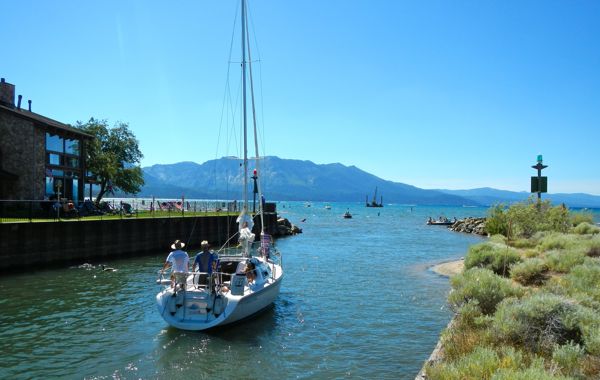
This sailboat on July 4 had to go out on the left to have enough clearance in the water. Photos/Kathryn Reed

This sailboat on July 4 had to go out on the left to have enough clearance in the water. Photos/Kathryn Reed

By Kathryn Reed

Tahoe Keys Marina is in a bit of turmoil. Lawsuits, OSHA investigations and financial troubles have been issues since the ownership change.

Donna and Robert Krilich bought the Tahoe Keys Marina in early 2009 for more than $20 million. South Shore real estate agent Jean Merkelbach has a minority interest in the marina.

But the Krilichs and Merkelbach are now fighting each other in court. Neither party was available for comment.

In early 2013, the Krilichs bought the Fresh Ketch restaurant at the marina from longtime owner Bob Hassett. At the time, the El Dorado County Assessor’s Office listed the value of the property and business at $1,224,913.

Speculation among those dealing the marina is the owners will default on their financial obligations.

“I don’t think we have filed bankruptcy. There has been some talks about it because of some of the litigation,” Robert Krilich Jr. told Lake Tahoe News. Krilich runs his parents’ Krilich Companies, which is based in Illinois.

The marina’s attorney, Bob Anderson, said at this time bankruptcy is not going to happen.

The Safari Rose charter boat just left the Keys because of the low water level. It is now operating out of Round Hill Pines, which for the first season is run by Hassett.

Tahoe Keys Marina has been in trouble since the ownership changed five years ago.

Tahoe Keys Marina has been in trouble since the ownership changed five years ago.

The Tahoe Keys Marina never applied for a dredging permit from the Lahontan Regional Water Quality Control Board. Lake Tahoe’s water level continues to drop because of the prolonged drought. This means some boats won’t be able to get out of or into the marina.

The U.S. Coast Guard, which has a station in Tahoe City, has not yet told the marina operators to warn boaters of the low water level.

Boats besides the Safari Rose are abandoning the marina because the channel is getting too precarious to navigate. On Fourth of July the marina had someone at the entrance of the channel into the docks warning people how to navigate the water. People in the condos were also helping, including directing some boats to stay on the left side to get out because that is where the deepest waters are. (New this year, the marina closed the launch at 9pm instead of midnight on July 4. A worker had no reason for the change.)

Vendors are also complaining they are not getting paid by the marina.

Anderson, the marina’s attorney, has his hands full with legal issues involving the marina. A 21-page 1991 agreement between the marina, Tahoe Keys Property Owners Association, and Tahoe Keys Beach and Harbor Association is at the center of one dispute. The document dictates how the three organizations work together, who pays what to whom and for what. Potable water and water quality are two key issues.

The disagreements have only arisen since the Krilichs took over the marina.

The Krilichs are familiar with the court system – civil and criminal. In 2013, they won a multimillion-dollar lawsuit over a land deal.

Locally, the problem is the marina owners are accused of not paying the bills TKPOA has submitted.

Scott Brooke, the attorney representing TKPOA, deferred comment to the association. However, interim General Manager Dan Moore did not return multiple phone calls.

Anderson also did not want to speak about the disagreements.

These aren’t the only troubles for the marina. The Cal-OSHA investigation is continuing. The state Occupational Safety and Health Administration opened the investigation earlier this year regarding how equipment is maintained and other safety issues.

South Lake Tahoe building officials have also been on site.

“We didn’t find anything of imminent danger,” Dave Walker with the city’s building department told Lake Tahoe News. “There were some minor things.” He said nothing was so egregious to warrant needing to shut down any business.

But Walker admitted it is hard to completely match up all the permits the city has issued and the work that was done.

“They have pulled quite a few permits over the years. When you go back 25, 30 years the description on the permits is limited so it is hard to see how much is permitted (compared to the) scope of work,” Walker said. “It would be very tough to nail down every little change. There are lots of plans, lots of permits. That’s why we kept mainly to life and safety issues. We didn’t see anything that would jeopardize anybody.”

One business practice Walker said has to stop is the marina has been using two of three residential units as vacation rentals. This is illegal.


NTPUD helping customers conserve water

In response to the governor’s drought declaration, North Tahoe Public Utility District board of directors voted to put into effect the Stage 1 conservation measures for voluntary water reduction.

California adopted the 20 by 2020 Plan which requires all water purveyors achieve a 20 percent reduction in water use per-capita by 2020. The district has been working toward this requirement with changes such as low flow nozzles on sewer line cleaning trucks, replacing a washing machine with a low flow version, adding sensors to mains to detect leaks more quickly, all new water meters that are installed also help detect leaks on the customer’s side of the service, and staff has been reviewing irrigation settings at park facilities.

Early this year, the district’s water production was tracking in the correct direction. However, May 2014 water use was higher than May 2013.

“The district is required to report monthly to the state of California on our progress,” NTPUD officials said in a statement. “Remember, no matter how much you water your driveway, it still won’t grow. So, please check the spray direction on your irrigation and eliminate excess run-off.”

The district is providing conservation supplies for residents to help save water. Items such as a moisture meter for indoor and outdoor plants, shower timer, dish squeegee, water wheel with conservation tips, hose nozzle, drip counter, shower/faucet flow meter, and leak detection dye tabs are all available to help find ways around to conserve water.

All North Tahoe Public Utility District customers are welcome to pick up these items free of charge at the district offices.