Calif. on edge as peak fire season looms

By Sam Stanton, Sacramento Bee

In recent months, as California officials started to calculate the fire danger posed by the state’s prolonged and historic drought, they tucked an extra $23 million into the CalFire emergency wildfire budget for the fiscal year that began July 1, bringing its total to $209 million.

By July 6 – just days into the fiscal year – the agency already had spent $13.9 million battling two major blazes, and is now bracing for one of the longest and most difficult fire seasons in memory.

“That’s just the first week, and we still have 51 more weeks to go,” said Daniel Berlant, spokesman for CalFire. “We’re not even to the peak of the fire season yet.”

Berlant and top fire officials have been warning for months that the state faces serious peril from wildland fires this year, as the drought – stretching into a third year – has sucked dry much of the state’s brush lands and forests more quickly than in years with more normal precipitation levels.

After it became evident over the winter that California was facing its worst drought in a generation, officials began taking extraordinary steps to prepare for the fire season. Even as Gov. Jerry Brown declared a drought emergency in mid-January, Cal Fire was hiring seasonal firefighters in the north state, a move that typically occurs in May.

Normally, CalFire would hire 2,400 seasonal firefighters to handle blazes statewide, but this year increased that staffing to 2,700. The department also took a number of other steps to prepare for a potentially catastrophic fire season, including awarding a $5.4 million contract for a DC-7 air tanker that already has been deployed to the Monticello and Butts fires and augments CalFire’s fleet of 50 aircraft.

President Obama on Tuesday sent a letter to Congress seeking a $615 million emergency appropriation request to fund firefighting efforts; California is expected to ask for the bulk of the federal reimbursements, given predictions for where wildland fires are most likely in coming months.

The latest map from the National Interagency Fire Center in Boise shows that forecasters believe California, Nevada and Oregon face the gravest threats.
Read the whole story


Caesars hires law firm to deal with reorganization

By Laura J. Keller, Bloomberg

Caesars Entertainment Corp.’s largest unit hired law firm Kirkland & Ellis LLP to advise the casino operator on how to reorganize its $17.4 billion of debt, according to a person with knowledge of the appointment.

Caesars Entertainment Operating Co. selected the New York-based company after taking pitches from restructuring firms this week, said the person, who asked not to be named because the matter is private. Blackstone Group LP (BX) has been working as the parent company’s adviser, the person said.

The gaming company, which was taken private in 2008 by Apollo Global Management LLC and TPG Capital for $30.7 billion, has been in a battle with its bondholders that may result in a broad restructuring of its debt load.

Caesars, which is the parent company of Harrah’s Lake Tahoe and Harveys, is fighting with creditors over a March deal that moved the Bally’s, Quad and Cromwell casino-hotels in Las Vegas and Harrah’s New Orleans from its operating unit to affiliate Caesars Acquisition Co. (CACQ), out of reach of the bondholders. The parent company created Caesars Acquisition, owner of the World Series of Poker, in October with two casinos it split from the operating company.

Read the whole story


Nev. panel discusses allowing ride-share companies

By Richard N. Velotta, Las Vegas Review-Journal

The Nevada Transportation Authority later this month will consider a smartphone transportation hailing system from a local company similar to technology used by ride-share companies such as Uber.

Transportation Authority Commissioner Keith Sakelhide conducted a two-hour investigative hearing Tuesday on Integrity Vehicle Solutions’ Ride Genie app. The three-member board will consider adopting tariff rates and fees for charter limousine services at its July 18 meeting.

If approved by the board, company officials say they would start offering the service immediately.

Two other commissioners asked questions and made comments during the hearing. There appear to be no roadblocks to approval.

Here’s how the system works: Customers download the free app from Apple and Android stores and register a credit card for ride payments. Meanwhile, limousine companies that contract with Integrity Vehicle Solutions would be tied into the system.

When a ride is requested, the driver closest to the pickup point is dispatched. The customer can view the driver’s progress on a map. When the ride is completed, payment is made through an on-file credit card, with a receipt emailed to the customer.

Read the whole story


Gambling has an impact on seniors

By Michael De Groote, Deseret News

WENDOVER — Deep inside the perpetual twilight of a windowless casino in this border town, a sudden noise rises above the background of buzzes, gongs, bells and music riffs. Somewhere behind this or that row of slot machines, an insistent, staccato “ding, ding, ding, ding” accompanies a flashing light signaling someone has won.

The winner is a dark-haired older woman. She sits in front of the gleaming metal and vibrant dancing colors of a video slot machine, leaning forward, shoulders slumped. She seems to be almost in a trance. A yellow cord attached to her clothes links her to a card in the machine — a plastic card called a “players card” that helps the casino keep track of all her betting, winning and losing.

This woman, playing on a recent Tuesday afternoon, is like many other seniors who visit casinos in America. According to a 2013 report by the American Gaming Association, one-third of Americans (34 percent) visited a casino in the past 12 months. Twenty-eight percent of people aged 65 and older visited a casino in the past 12 months. An article in Psychology Today, however, puts the percentage much higher: David Oslin at the University of Pennsylvania claims that 70 percent of people 65 years and older “had gambled in the previous year and that one in 11 had bet more than he or she could comfortably afford to lose.”

A measly 6 percent of senior casino visitors go because they want to win and like to gamble, according to a 2002 study by Janet Hope and Linda Havir in the Journal of Aging Studies; rather, most say gaming gives them something to do (24 percent) or they participate for fun and socialization (35 percent). Yet, when they do frequent a casino, they enter a carefully constructed world that is less social than it is primarily solitary.

Read the whole story


Southwest Gas buys its headquarters

By Eli Segall, Las Vegas Sun

After spending millions a year on rent, Southwest Gas Corp. has cut a hefty check to become its own landlord.

The Las Vegas-based natural-gas provider bought the bulk of its Chinatown corporate headquarters this month for $16.5 million cash.

The property consists of three main office buildings. Southwest Gas has owned one since it opened in 1988 but had been leasing the others since they opened in 1982.

The purchase should save Southwest Gas money in the long run, as the company had been spending about $2 million a year in rent for the buildings since 2008, said Ken Kenny, vice president of finance and treasury.

Read the whole story


Calif. parks short on water, including D.L. Bliss

By Tom Verdin, AP

SACRAMENTO — California’s drought is beginning to dry up the water supplies for some state parks, including some of the system’s most popular places.

Restrooms with flush toilets have been closed at D.L. Bliss State Park, the Hearst Castle Visitor Center and Hearst San Simeon State Park, replaced with portable toilets. The showers at D.L. Bliss, San Simeon and Portola Redwoods State Park also are shut down.

Each park relies on a local water supply, and in some cases, that’s a creek or spring. D.L. Bliss, which gets more than 12,000 campers a year, relies on a spring that dropped noticeably just before Fourth of July weekend.

What water remains at the affected parks is being reserved for potable water at individual campsites and for firefighting, California Department of Parks and Recreation spokeswoman Vicky Waters told the Associated Press on Friday.

Some of the closures, such as at D.L. Bliss, are coming at the height of camping season. She said the Lake Tahoe campers who have reservations are being notified through automated phone calls and will be allowed to cancel without penalty.

“We’re really trying to minimize the impact to our visitors because we know how important it is … but we’re in this situation across the state,” Waters said.

The Hearst Castle Visitor Center receives 660,000 visitors a year, while the nearby San Simeon campground receives 83,000.

Waters said many parks, especially those in remote areas, have limited control over their water supplies. She said the department has taken steps to reduce consumption at all its parks and is monitoring the water supplies throughout the system.

At D.L. Bliss, popular for its sandy beach, crystal clear water and proximity to Emerald Bay, it is the first time the park has ever had to close bathrooms or showers because of a lack of water, District Superintendent Marilyn Linkem said.

She was notified July 2, just ahead of the holiday weekend, that the amount of water coming in from the spring that supplies the park was not keeping up with the demand. That prompted the closure of the showers and flush toilets in a park that typically swarms with families throughout summer.

Some visitors were upset, she said, but others understood because they’re already aware of the severity of the state’s drought.

If the spring runs completely dry, she said the park is considering trucking in water to maintain potable sources at the campsites through Labor Day weekend. Meanwhile, the portable toilets are costing $1,200 a week, according to the state parks department.

Linkem said the park staff realizes the inconvenience to campers who made reservations months ago expecting flush toilets and showers.

“It’s hard for us, too. We’re used to providing quality customer services,” she said. “We’re doing the best we can.”


ACT test now mandatory in Nevada

By Brian Nordli, Las Vegas Sun

High school juniors will have a new required exam waiting for them in April that could help them prepare for college.

The Nevada State Board of Education unanimously approved a plan this week to administer the ACT exam to all high school juniors. The decision will allow the Department of Education to begin negotiating a contract with ACT to distribute its test.

While the exam is mandatory for all students, it will not affect whether a student will graduate. Instead, it gives high school juniors a free exam that is required to apply to many colleges.

The decision to adopt the ACT with writing comes after a law was passed during the 2013 Legislature that mandated all Nevada high schools to administer a “college and readiness” exam to juniors. An Education Department committee had ranked the ACT above the SAT and the McGraw Hill exam.

Read the whole story


Placer County deputy accused of having sex with minor

By Kim Minugh and Bill Lindelof, Sacramento Bee

A decorated Placer County sheriff’s deputy has been arrested on suspicion of having sex with a teen who was volunteering at his department, according to authorities.

Deputy Ken Skogen, a seven-year veteran most recently assigned to patrol, was arrested Thursday on suspicion of four felony counts, including unlawful sex with a minor and oral copulation with a minor, according to the District Attorney’s Office.

Skogen, 35, is suspected of having a sexual relationship in 2011 with a 17-year-old girl who was a volunteer at the time with the Placer County Sheriff’s Office.

Read the whole story


Al Tahoe residents jittery over marsh plans

By Kathryn Reed

Proposed work by South Tahoe Public Utility District in the Upper Truckee Marsh has raised the awareness of Al Tahoe residents to the larger project the California Tahoe Conservancy is likely to undertake.

While the two are not related, they do involve the same area.

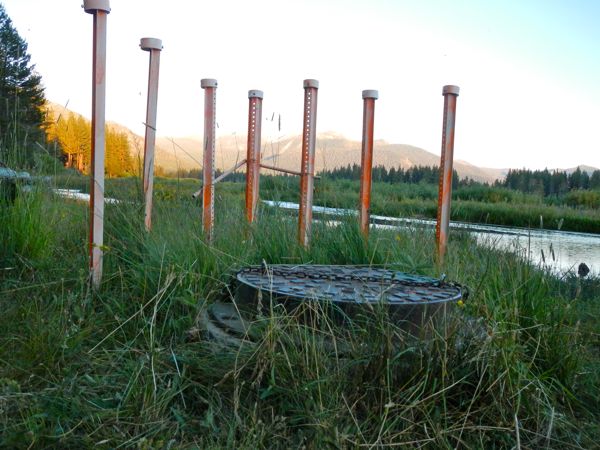
Trout Creek now runs close to STPUD infrastructure. Photos/Kathryn Reed

Trout Creek now runs close to STPUD infrastructure. Photos/Kathryn Reed

South Tahoe PUD’s project is on the Conservancy board’s July 17 agenda.

The heavy winter of 2011 saw Trout Creek flood its banks and the channel has been changed ever since. The problem with this is that is brings the stream close to the district’s facilities at the end of Bellevue Avenue. A manhole cover is now just feet from the water.

“The district is planning to do a smaller type project to nudge water to the other side of the channel,” Scott Carroll with CTC told Lake Tahoe News. “They want to redirect the water to the left so their site dries out.”

The work to be done is on CTC property.

Members of the Al Tahoe neighborhood are planning to be at the CTC meeting to talk about this project and the final environment documents that are in the works.

While the comment period closed a year ago regarding restoring the 600-acres in the middle of South Lake Tahoe, there is a group of residents who now wants to have a say on what the preferred alternative is when the final environmental impact report/environmental impact statement is released.

Residents have had two meetings, with the latest being July 9. They are crafting a letter to present to the CTC board.

“We feel that the plan for the recreation component of the environmental impact report is beyond what really needs to be done in the marsh. It is going to have a negative impact on the welfare and nesting habitats of wildlife,” Greg Poseley, an Al Tahoe resident, told Lake Tahoe News.

Today, this eastern side of the marsh has user-created trails that go to Barton Beach. May through July the Conservancy bans dogs from the area. This property is also where the Tahoe Yellow Cress grows. It doesn’t exist anyplace outside the Lake Tahoe Basin.

Upper Truckee Marsh is one of the most sensitive areas in the basin.

Upper Truckee Marsh is one of the most sensitive areas in the Lake Tahoe Basin.

Several of the proposals in the draft EIR/EIS call for boardwalks into the marsh. Some would be viewing areas, others would be bike trails. And some of those bike trails would link to Cove East on the west side of the marsh that is accessed via Tahoe Keys.

The only way to make that link feasible for all cyclists would be to pave the Cove East trail. It is currently an earthen trail that is not conducive to road bikes.

“[The proposals] seem opposed to the principal vision of the Conservancy, which is restoration, conservancy and preservation of habitat. Somewhere along the line the pressure of a recreation component has been introduced to the Conservancy,” Poseley said. “They are more on board for helping with public access into this habitat as opposed to the preservation and conservation side of it. We feel they have lost sight of their original mission.”

Another concern is that this would bring more people to the neighborhood which does not have public parking, other than in front of residences. At Wednesday’s meeting neighbors voiced concern that the CTC lots in the area could be paved to solve that problem. They also brought up the Al Tahoe Plan Area Statement that says, “Access to and parking for the Barton Beach area should not be improved.”

The Conservancy is working on a preferred alternative for the entire marsh restoration, which could be a combination of the initial four as well as include components from comments submitted last year.

It’s possible the board will take action at the Sept. 18 meeting.

Notes:

• California Tahoe Conservancy meets July 17, 9:30am in the board room at Lake Tahoe Community College.

• Info about the draft Upper Truckee River restoration project in online.


Pesticide blamed for bee deaths linked to bird declines

By Geoffrey Mohan, Los Angeles Times

A class of pesticides linked to the catastrophic collapse of bee colonies has now been linked to declines in bird populations, according to a Dutch study.

The researchers found a strong correlation between pesticide concentrations measured in surface freshwater and lower or negative local population growth rates of 14 species of birds since the introduction of the pesticide imidacloprid in the Netherlands in the 1990s, according to a study published online Wednesday in the journal Nature.

The chemical belongs to the neonicotinoid family of pesticides, which have been associated with the sudden collapse of colonies of domesticated honeybees, used to pollinate food crops worldwide.

Read the whole story