Calif. marks warmest winter, spring on record

By Sharon Bernstein, Reuters

SACRAMENTO — California had its warmest winter and spring on record this year, leading to stresses on water resources and agriculture, as well as increased risk of wildfire in the most populous U.S. state, the National Weather Service said Monday.

In an overview of the nation’s weather released on the agency’s website, meteorologists said temperatures in California were about 5 degrees Fahrenheit above normal during the first six months of 2014, and just over 1 degree hotter than the previous record.

“Despite short-term drought relief in the Central and Southern Plains, long-term drought conditions will continue to impact water resources and agriculture,” the report said. “Long-term and short-term drought conditions in the West will also increase wildfire risk.”

Read the whole story


Storms leave mounds of mud in Carson Valley

By Associated Press

Douglas County residents are digging out after flash flooding left up to 3 feet of mud and debris in some neighborhood streets south of Carson City over the weekend.

The Sierra storm that dumped more than an inch of rain in less than a half an hour also triggered the first tornado warning in the Reno area in six years. A series of funnel clouds were spotted Monday afternoon near Virginia City, near Interstate 80 east of Reno and northeast of Sparks, but none touched down and no serious damage was reported, the National Weather Service said.

Significant hail in South Lake Tahoe on July 18. Photo/LTN

Significant hail in South Lake Tahoe on July 18. Photo/LTN

Flooding closed several major roadways in the eastern Carson Valley on Sunday, including Fish Springs, East Valley and Johnson Lane.

“We never had a tornado. It has to touch down to be a tornado,” said Wendell Hohmann, a service meteorologist in Reno.

Carson City public works manager Darren Schulz said that although some roads were covered with mud, they didn’t appear to suffer infrastructure damage.

“There were a number of garages dealing with some water and mud, but I don’t know of any homes where it actually got into the home,” Schulz said. “For the vast majority, it ripped through their yards, tore out all their landscaping.”

Since early last week, monsoon-fueled thunderheads have swelled in the afternoon skies daily, bringing lightning, rain and hail throughout the region.

“We do get tornadoes here in Northern Nevada, but they’re not very common,” meteorologist Scott McGuire said. “The last time we issued a tornado warning was July 21, 2008.”

Heavy rain and hail the size of a half dollar was reported Monday evening in Palomino Valley north of Reno, and 0.21 inches of rain fell in less than 10 minutes to the east in Lyon County.

On Sunday, the largest rainfall totals were 2.90 inches at Glenbrook, with Incline Village receiving more than 2 inches. In a little more than two hours, Incline Creek went from being basically dry to rising just below flood stage, McGuire said.

At Fish Springs in southern Douglas County, 1.35 inches of rain fell in 30 minutes, causing flash floods of the type that also hit the Johnson Lane and Indian Hills areas. Lightning strikes caused power outages affecting more than 12,000 customers in Douglas County.

“The rain would have been better if spread out over a couple of days as opposed to an inch in an hour,” Fire Chief Stacey Giomi said.


Toxic Alpine County sulfur mine settlement near

By Kathryn Reed

Ponds oozing toxic chemicals sitting in what looks like a wasteland. That is what the long defunct Leviathan Mine in Alpine County is today.

For decades the old sulfur mine has been in litigation. A settlement between Lahontan Regional Water Quality Control Board and ARCO should be signed any day.

It is such a nasty situation that in 2000 the federal government deemed it a Superfund site. It doesn’t get worse than that.

“The high sulfur content in the waste rocks and fractures at the 250-acre mine site turns snowmelt, rain and groundwater into sulfuric acid, which leaches contaminants from the native minerals such as arsenic, copper, nickel, zinc, chromium along with aluminum and iron,” the Environmental Protection Agency website says. “This acid mine drainage then flows into the creek system at a number of points, devastating aquatic life until the creeks join the East Fork of the Carson River, a much larger flow.”

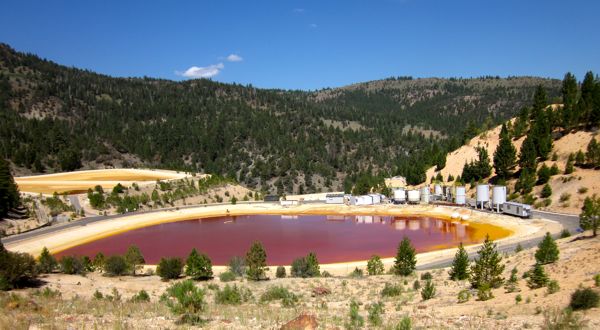
Leviathan holding ponds and treatment system used by the Water Board at the site.  Please identify the source of the picture(s) as the Lahontan Water Board.

Leviathan holding ponds and treatment system used by the water board at the site. Photo/Lahontan Water Board

Millions of dollars have been spent to curtail the environmental damage from the mine that is six miles from Markleeville. Hundreds of millions of dollars is likely to be needed to create a system that will better treat the contaminants.

Today, ARCO and Lahontan have separate systems. The settlement would bring them all under Lahontan’s purview. ARCO would pay 75 percent of the cost to construct a more robust treatment system, the state would pay the remainder. Operation and maintenance costs will be split 70-30, with taxpayers getting saddled with the lesser amount.

The litigation expense has been covered by an insurance policy the state had. But taxpayers have already been billed $25 million. The ongoing operation and maintenance could be $5 million a year total. Lahontan expects to be saddled with this chore forever.

While there are treatment systems in place, they are not comprehensive. The settlement will address what gets done when and who pays for it.

A feasibility study will consider if the current diesel generators are the route to go or if bringing power to the site is better in the long run. Whether the area should be fenced is also a consideration.

Chuck Curtis, who has been overseeing the mine for Lahontan for years, told the board at the July 16 meeting, “Protecting human health and the environment are the bottom line.”

As a CERCLA site, there are certain parameters that must be followed. And there is also a certain amount of risk that is allowed. This site will presumably always be toxic, just not to the degree that it is today.

And even today it is better than what it was.

In 1999, there were no rainbow, brook or brown trout in Lower Leviathan Creek, according to the U.S. Fish & Wildlife Service. In 2013, there were 72 rainbows, 521 brooks and zero browns.

In Bryant Creek in 1998, there were 64 rainbows, 16 brooks and zero browns. By 2013 the numbers were 728 rainbows, 528 brooks and 1,657 browns.

Anaconda Copper Mining Company used the mine from 1951-62. It was sold in 1963 to William Mann, who was Alpine County’s clerk, for $100.

Eventually officials discovered acid mine drainage was contaminating Leviathan Creek. There was no way Mann was going to be able to write the checks for the cleanup.

California stepped in in 1983 and bought the land. A lawsuit was filed against Atlantic Richfield Co. , which had bought Anaconda. A settlement of just more than $2 million allowed clean up to start.

But then the Washoe tribe asked the EPA to get involved because the pollutants were creating a thick layer of orange precipitate along the streambed that ended up in the East Fork of the Carson River.

The EPA went after ARCO, and in turn ARCO filed a suit against Lahontan. It is that second lawsuit that is near resolution and will ultimately lead to better clean up of Leviathan Mine.



Loan ensures Kirkwood will be on grid in Nov.

Kirkwood power house being built after the 2010 fire. Photo/Provided

Kirkwood power house being built after the 2010 fire. Photo/Provided

By Kathryn Reed

Another federal loan will finalize Kirkwood’s push to be on the grid by Nov. 1.

The remote enclave off Highway 88 that borders El Dorado, Alpine and Amador counties has had a problem keeping the lights on and lifts spinning. There are about 700 mostly part-time residents in Kirkwood, with the ski resort being the main commercial entity.

The $8 million from the U.S. Department of Agriculture is in addition to the $50 million federal loan that was secured in 2012. The USDA is investing $263 million in projects in eight states to modernize electric systems. Kirkwood is the only California recipient of the cash.

Kirkwood Meadows Public Utility District, which in 2011 acquired Mountain Utilities, supplies the power to this resort area. KMPUD is separate from the ski resort, but supplies the electricity and water. The resort has been owned by Vail Resorts since February 2012.

Coop Cooper with the ski resort told Lake Tahoe News upgrading to the grid — “It’s a great thing.”

Michael Sharp, general manager of KMPUD, was not available for comment.

What KMPUD will soon have is a 34.5-kilovolt power line that ties into PG&E lines. Much of it goes through U.S. Forest Service land.

Kathy Hardy, then forest supervisor for Eldorado National Forest, signed the record of decision in March 2012 allowing the project to go forward.

The line ties into a PG&E source at Salt Springs Reservoir in Amador County, then goes above ground for 3.1 miles to Bear River Reservoir. The Bear River to Kirkwood line will be underground. Two substations are part of the plans.

A bit of irony, though, is when the entire South Shore of Lake Tahoe was without power on Sunday Kirkwood’s lights were on.

Kirkwood had a powerhouse with six diesel generators that were sketchy at best. That facility burned to the ground New Year’s Day 2010, leaving people in the dark and without power for a couple days.

The powerhouse that was built after the fire will act as a backup once KMPUD is on the grid.


Consumers padding their checking accounts

By E. Scott Reckard, Los Angeles Times

With wounds from the Great Recession still fresh, chastened Americans are hoarding more cash in their checking accounts than at any time in the last 25 years.

The defensive stance, uncharacteristic of previous periods of low inflation and an improving economy, reflects how debt-burdened Americans have striven to clean up their personal finances since the recession ended five years ago.

The lack of attractive investment alternatives, with savings accounts paying next to nothing and the stock market already at lofty heights, is another factor, financial analysts said.

A report released this month by bank consulting firm Moebs Services Inc. calculated the average balance for U.S. checking accounts at $4,436 at the end of last year — more than double the average of $2,100 over the 25 years of the annual survey.

Read the whole story


Scientists linking wildfire soot, climate change

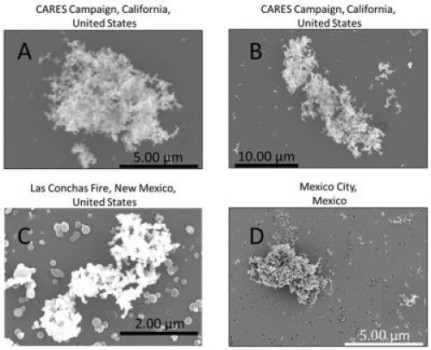
These images show typical soot superagregattes observed with an electron microscope in wildfire smoke samples collected from three fires in Northern California, New Mexico and Mexico City. Credit: Desert Research Institute

These images show typical soot superagregattes observed with an electron microscope in wildfire smoke samples collected from three fires in Northern California, New Mexico and Mexico City. Photos/Desert Research Institute

By Science Daily

Every year, wildfires clear millions of hectares of land and emit about 34 percent of global soot mass into the atmosphere. In certain regions, such as Southeast Asia and Russia, these fires can contribute as much as 63 percent of regional soot mass.

In a paper published in Nature Scientific Reports, a team of scientists led by Rajan Chakrabarty from Reno’s Desert Research Institute report the observation of a previously unrecognized form of soot particle, identified by the authors as “superaggregates,” from wildfire emissions.

These newly identified particles were detected in smoke plumes from wildfires in Northern California, New Mexico, Mexico City, and India.

For several decades, scientists have been trying to quantitatively assess the impacts of wildfire soot particles on climate change and human health. However, due to the unpredictability of wildfire occurrences and the extreme difficulty in sampling smoke plumes in real-time, accurate knowledge of wildfire-emitted soot physical and optical properties has eluded the scientific community.

Read the whole story


Money missing from EDC Animal Services

Placerville police are looking into what happened to $3,800 that went missing from the El Dorado County Animal Services.

The Board of Supervisors on July 22 will be discussing the missing money.

On May 28 staff from Animal Services discovered a deposit envelope with $3,800 wasn’t where it was supposed to be. And it was never found.

The board report says, “It was determined staff who were handling receipts were not following proper procedures, and since the incident a corrective action plan has been implemented. The corrective action includes staff following appropriate procedures, and having a fiscal staff member pick up the deposits daily from Animal Services to ensure timely deposits are made. Additional corrective actions may be taken depending on the outcome of the criminal investigation by the Placerville Police Department.”

Letters have been sent to the people who wrote checks asking them to send another one.

It is a board item because the department is asking “the board [to] forgive the loss of revenue and discharge (Health and Human Services Agency) from accountability for the lost revenue.”

— Lake Tahoe News staff report


Experts: Calif. drought will only get worse

By Veronica Rocha, Los Angeles Times

California is probably headed into a deeper drought this summer, making it harder to escape in the future, an expert says.

With more than 80 percent of the state in an extreme drought, dry conditions will probably continue and won’t improve much in the next few months, said climatologist Brian Fuchs of the National Drought Mitigation Center at the University of Nebraska.

New National Weather Service data show that more than 80 percent of California is now in an extreme drought.

The prolonged statewide drought means it will be “harder to break the cycle,” much like some thirsty regions in Oklahoma and the entire state of Texas, which have been struggling with drought since 2010, he said.

A U.S. Drought Monitor map released Thursday showed 81 percent of California in the category of extreme drought or worse, up from 78 percent. Three months ago, it was 68 percent.

Read the whole story


Woman rescued in ATV accident at Donner Summit

By Ben Deci, Fox-40

“Take up slack,” directs the voice over the radio. “OK. Clear to lift.”

These are the words of Officer Paramedic Matt Calcutt of CHP Helicopter H-20 stationed at Auburn airport.

It’s Sunday about 2pm, and Calcutt is attempting to pluck a woman off Donner Summit.

The 47-year-old woman in the basket at the end of his rope is from Fair Oaks, and she’s hurt. Her ATV slipped off-trail and she tumbled 50 to 100 feet downhill.

Read the whole story


Lightning ignites 4 small forest fires in Tahoe

Lightning on Sunday caused four small fires in the Lake Tahoe Basin.

U.S. Forest Service crews are responding this morning.

“They all either involve a single tree or a small fire on the ground,” USFS spokeswoman Lisa Herron told Lake Tahoe News.

None is larger than 10 feet by 10 feet.

One is at the top of Gunbarrel at Heavenly Mountain Resort, one is in the Gondola Fire scar area and two are in the roadless area near Logan Creek.

 — Lake Tahoe News staff report