5 houses destroyed in Sand Fire

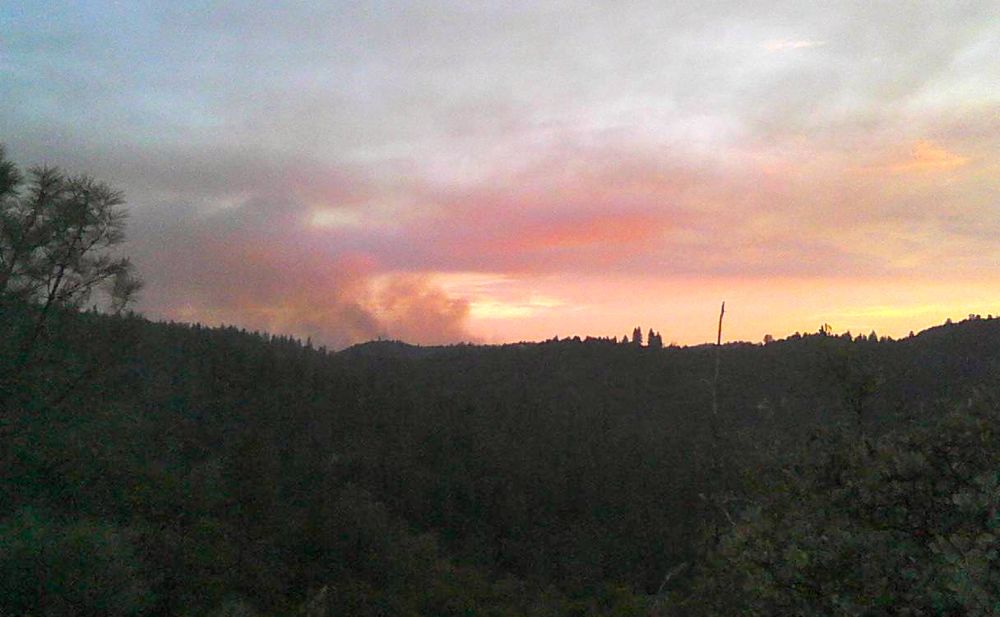
Smoke clouds the sunset July 26 from Snows Road looking toward Somerset and Fair Play. Photo/Bill Kingman

Smoke clouds the sunset July 26 from Snows Road looking toward Somerset and Fair Play. Photo/Bill Kingman

Five houses and seven out buildings have been consumed by the fast moving Sand Fire that is burning in the wine region of El Dorado and Amador counties.

Smoke from the 4,000-acre blaze is infiltrating the Truckee area, and the smell of smoke is strong through the American River canyon into Placerville from Lake Tahoe. As of Saturday evening the fire was 20 percent contained. Authorities as warning people that smoke could be an issue for the next few days.

The fire is east of Highway 49 and five miles north of Plymouth.

More than 450 people have been evacuated in the Fair Play, Somerset and Outingdale communities. This area is home to vineyards and ranches. Several horse trailers were seen fleeing the area.

CalFire said the fire started July 25 when a vehicle drove over dry vegetation.

— Lake Tahoe News staff report


Election to replace Nutting stirs up EDC

By Peter Hecht, Sacramento Bee

At the Cielo Estate winery in Shingle Springs, political upheaval in El Dorado County seemed to drift away momentarily Wednesday evening as a gentle breeze faintly ruffled leaves of heritage oaks.

Inside a reception room, as guests sipped Sierra foothills Pinot Grigio, five of the six special election candidates for District 2 supervisor politely discussed pointed matters of development, traffic and water.

A 45-minute drive away in Fair Play, guests at the hacienda-style Perry Creek Winery listened to soft guitar music, nibbled finger foods and raised glasses of Zinfandel in a fundraiser for the other District 2 candidate, Jennifer Nutting.

Yet such pastoral settings are ultimately unable to obscure the bitterness, dysfunction and strangeness of the supervisorial special election that roil El Dorado County these days.

After a politically charged prosecution, visiting Superior Court Judge Timothy S. Buckley on June 6 ordered four-term Supervisor Ray Nutting ousted from office over misdemeanor convictions for improperly raising bail money. Nutting’s wife, Jennifer, is now running for his seat, even as he seeks to halt the Sept. 9 special election.

Last week, Nutting sought a judicial stay of the vote in a writ that claimed his rights were violated by his removal. He charged that the judge wrongfully “excluded me from my office, withheld my salary … and prohibited me from performing my duties” based on an unproven allegation of official misconduct.

The state’s 3rd District Court of Appeal is not required to rule before the special election. If the court fails to act by Sept. 9, the winner will fill the District 2 seat. And even if he prevails on appeal, Nutting won’t be able to reclaim the office – though can sue the county for damages.

So as the legal challenges fester, and with no guarantee of a vote, five special-election candidates met at the Cielo Estate forum. Before about 100 people, they weighed in on proposed subdivision developments and traffic-inducing projects and sparred over who best could protect the county’s rustic flavor.

Read the whole story


Major California reservoirs below 50% capacity

By Veronica Rocha, Los Angeles Times

Most of California’s major reservoirs are now less than half-full — or at what officials call a “seriously low” level — but that’s still nowhere near the historic lows set in 1977, the state’s driest year on record.

The latest report released Wednesday by the California Department of Water Resources shows 10 of the state’s 12 major reservoirs below 50 percent of their total capacity, with some nearing just 20 percent.

“They are not historical levels, but they are seriously low,” department spokesman Ted Thomas said.

But when all 12 of the major reservoirs are combined, the average is at 60 percent, Thomas said. That’s puts the state in a far better position than it was 37 years ago, when a crippling drought brought the statewide reservoir average down to 41 percent.

As of Wednesday, the largest federal reservoir in California at Lake Shasta was only at 36 percent capacity, which is 4.5 million acre-feet of water, he added.

Read the whole story


Plane strikes truck on Pyramid Highway

Engine trouble forced a small plane to try to land on Pyramid Highway on Saturday morning.

It struck a moving truck. The two occupants of the truck were not injured. The two people in the plane sustained cuts from broken glass, according to the Nevada Highway Patrol

Part of the highway was closed after the 9am July 26 accident.

The plane was headed to South Dakota from Stead Airport.

The National Transportation Safety Board and FAA are on scene.— Lake Tahoe News staff report


SLT hotel dumps pool water into storm drain

Lake Tahoe Vacation Resort in South Lake Tahoe admitted it dumped thousands of gallons of pool water inappropriately.

The hotel reported the month-old incident to Lahontan Regional Water Quality Control Board.

“Nothing got to the lake. [It] entered a city storm drain and then to the ground. They have since developed a pool draining plan and trained staff,” Lauri Kemper with Lahontan told Lake Tahoe News.

South Lake Tahoe ordinances prohibit this type of water from being discharged into storm drains.

The proper way for hotels to get rid of pool or hot tub water is to direct it to the sewer system or use it on landscaping, according to Kemper.

— Lake Tahoe News staff report


Tahoe Keys Marina creates illegal parking lot

By Kathryn Reed

Tahoe Keys Marina staff illegally removed vegetation to create a dirt parking lot close to the water.

“It’s fairly significant. Eleven thousand square feet is the size of an entire lot,” Julie Regan, spokeswoman for the Tahoe Regional Planning Agency, told Lake Tahoe News. “It’s a serious matter and we will want to look into it thoroughly.”

TRPA issued a cease and desist order July 25. If would be up to the Governing Board if punitive action would be taken.

Tahoe Keys Marina turned vegetated state land into a dirt parking lot. Photo/Kathryn Reed

Tahoe Keys Marina turned vegetated state land into a dirt parking lot. Photo/Kathryn Reed

The grading occurred July 24. TRPA, South Lake Tahoe and California Tahoe Conservancy started investigating Friday. The Conservancy owns the land that was dug up.

“We cannot change what has happened. We have to decide how best to move forward … if it’s only remediation or if it’s something compensatory,” Ray Lacey, CTC deputy director, told Lake Tahoe News.

State officials were at the marina at 10am Friday giving people until 5pm to remove their vehicles from the illegal dirt parking area.

The marina is accused of violating two state Penal Code sections. One was trespassing by taking down a fence to get heavy equipment in to do the work; the other is unauthorized removal of plants and soil.

This is an area where the Conservancy spent significant money to restore the site.

The marina owns the paved area. The Conservancy owns the dirt area. A fence separates the two.

The vegetation that was removed is next to the South Lake Tahoe launch ramp.

It’s also against TRPA code to park on dirt. The fine sediment is an issue when it comes to erosion, and in particular for reaching Lake Tahoe and degrading its clarity.

No one from the marina returned calls, and their attorney was not available for comment.

Marina officials, including their attorney, had met with Conservancy staff July 24 about using the 1-acre lot the Conservancy owns off Venice Drive for parking for this weekend’s wooden boat show. This is a lot the two entities have long agreed to could be used for boat storage. Parking for the show was not a problem, the Conservancy said.

Lacey said Robert Spinnato, marina manager, apologized for digging where they didn’t have permission. And the marina, according to Lacey, agreed to keep people from parking on the dirt.

South Lake Tahoe sent police and building inspectors to the site on July 25.

“It’s a violation of TRPA code and they have been noticed. They also violated the city’s grading ordinance,” City Manager Nancy Kerry told Lake Tahoe News. “The police department is interviewing and may file a complaint for improper removal of vegetation.”

A bit of irony is that one day the disturbed land, including the Conservancy section up to the cul de sac area of Venice Drive, is slated to be paved. The Conservancy board in December 2013 OK’d 60,000 square feet for additional parking that would be used for people accessing Cove East and for the marina. Marina attorney Bob Henderson had earlier told Lake Tahoe News that would not happen this building season.

Even so, all the permitting still needs to be secured before any new parking lot in the basin is ever created.

Lacey said a meeting has been set up for Monday between Conservancy staff and marina officials.


Nev. needs Congress’ OK to do anything with its land

By Amber Phillips, Las Vegas Sun

WASHINGTON — With one week to go before a five-week summer break, Nevada’s lawmakers are doing what they can do to push through agendas they’ve been working on all year.

Rep. Mark Amodei claimed one of the delegation’s first victories of the week when the House of Representatives passed the Northern Nevada Republican’s bill signaling the end of a decade-old water dispute near Reno between the the Pyramid Lake Paiute Tribe and a ranch that wants to expand.

The details are wonky, but it underscores the fact Nevadans need congressional approval to do pretty much anything with the state’s land. The bill is expected to pass the Senate and become law.

Nevada’s House delegation also teamed up with Florida lawmakers — two states with economies that rely heavily on tourism — to support a bill that passed the House to encourage tourism to America. The bill has the support of Senate Majority Leader Harry Reid, D-Nev., so it may have a chance of actually becoming law.

Read the whole story


Cause of Deerfield Lodge fire still unknown

By Kathryn Reed

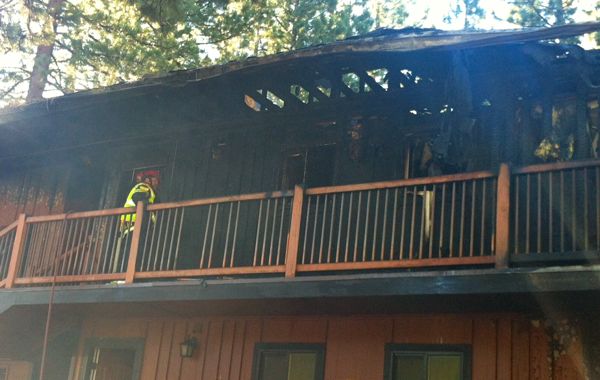
Investigators are still trying to determine the cause of the fire that has shuttered the Deerfield Lodge indefinitely and displaced three dozen visitors.

South Lake Tahoe Fire Chief Jeff Meston told Lake Tahoe News, “We know it started at the end of the hotel itself.”

He said nothing has been found yet to conclusively say the July 23 blaze was accidental or arson. Meston added that investigators are waiting on results to help determine the cause.

Investigators have not determined the cause of the July 23 fire at Deerfield Lodge. Photo/Susan Wood

Investigators have not determined the cause of the July 23 fire at Deerfield Lodge. Photo/Susan Wood

There was a transformer in the area that failed, but that was the result of power lines falling on it. Meston said the transformer was not the cause of the fire.

A person answering the phone at the Ski Run Boulevard boutique hotel said there is no date when it might reopen. People who live out of state own the Deerfield.

The back section is a total loss. The estimated damage is more than $2 million.

The hotel guests spent the first night at Lakeside Inn. Since then some have gone home, while others are scattered about the South Shore. Some lost everything and only got out with a sheet wrapped around them. And some will need to replace airline tickets and passports to get home.

Local businesses that have helped include: Belfor Property Restoration, Freshies Restaurant, Hard Rock Café, KRLT, Lakeland Village, Lakeshore Lodge and Spa, Lake Tahoe Visitors Authority, Stardust Lodge Lake Tahoe, and Lake Tahoe South Shore Chamber of Commerce. Anyone who can assist with clothing, lodging or other amenities should call 530.542.6016.


Profits increase for El Dorado Savings

El Dorado Savings Bank reported second quarter profits of $2,782,107, which represents a 28 percent increase compared to the Second Quarter of 2013.

Earnings for the first six months of 2014 totaled $5,901,573, compared to $3,836,217 in 2013.
“The higher rates on new loans and investments improved the bank’s profit margin while the strong performance of the loan portfolio allowed for a reduction in reserves for potential losses during the first quarter of 2014,” CEO George L. Cook Jr. said in a statement.

El Dorado ended the quarter with $1.86 billion in total assets and savings deposits of $1.67 billion.

— Lake Tahoe News staff report


Drought is not just California’s problem

By Katharine Mieszkowski, Center of Investigative Reporting

Gov. Jerry Brown has asked restaurants not to serve water unless diners ask for it. He’s letting lawns at the state Capitol turn brown. Farmers in the Central Valley are getting just a trickle of the water they usually do. Conspicuous water wasters – commercial and residential – face fines of $500 a day.

Even Lady Gaga is pleading with Californians to conserve.

All of California is in a state of emergency because of the prolonged drought, now in its third year. And it’s more than just Californians who are feeling the impact – the state uses its scarce water to provide the nation with more food than any other state.

Here’s a guide to what’s causing the drought and what it means for all of us.

Drought is part of life in California.

In the last century, the state suffered seven multiyear droughts.

This drought is particularly bad.

By this spring, California had experienced its driest three-year stretch since 1895.

San Francisco, Los Angeles, Sacramento and Fresno logged their driest year ever recorded in 2013.

California’s climate varies tremendously, from temperate rainforests on the North Coast to the extreme aridity of Death Valley. Conditions now are so dry that all of the state is considered to be in a drought. More than 80 percent of the state is in extreme or exceptional drought, according to the United States Drought Monitor.

An extreme drought happens once every 20 to 50 years and wreaks havoc on crops. An exceptional drought, meanwhile, comes every 50 to 100 years, causing true water emergencies by draining reservoirs, streams and wells.

Blame the severity of the drought on the “Ridiculously Resilient Ridge.”

That’s the cheeky nickname for a high-pressure area – think of it as a mountain of air – that sat for months over the eastern Pacific Ocean. The name was coined by Daniel Swain, a doctoral student at Stanford University who writes the California Weather Blog.

The ridge sent storms that normally would hit California up over the Alaskan panhandle and the Yukon, leaving California unusually dry. The ridge extended from British Columbia down the coast of California, blocking storms from making their way to the Golden State.

The state saw low rainfall last winter and during the latter part of the previous winter, which has left the already thirsty state parched.

Aside from being ridiculously resilient, the ridge is also a bit of a mystery. Such high-pressure areas commonly develop in the winter, but they usually break down, allowing storms to get to California. Climatologists don’t know why this ridge persisted so long.

Many farmers are getting walloped.

California farms, which guzzle 80 percent of the water used by humans in the state, are feeling the heat. Farmers in the dry Central Valley alone may stand to lose $810 million this year from keeping their fields idle, according to the UC Davis Center for Watershed Sciences. They’ll also spend an extra $453 million on pumping water out of the ground. The state likely will lose 17,100 agricultural jobs because of the drought.

California moves vast quantities of water around the state, but some of it just isn’t available this year. The Central Valley Project usually sends water from the northern half of the state to the dry San Joaquin Valley. Many farmers who depend on it are getting none of that water this year.

The State Water Project, which is a significant source of water for 750,000 acres of farmland, is delivering 5 percent of the water that farmers have requested.

About 428,000 acres, or 5 percent of the irrigated cropland in the Central Valley, Central Coast and Southern California, won’t be planted this year, researchers at UC Davis predict.

This has started to affect the price of fruits and vegetables in the United States.

California produces nearly half of the fruits, vegetables and nuts grown in the United States.

That means the drought already is starting to hit our pocketbooks as farmers idle land, driving up prices. The U.S. Department of Agriculture predicts fruit prices may rise as much as 6 percent this year, while vegetables may go up as much as 3 percent nationwide.

For instance, the majority of the nation’s lettuce is grown in California. Between April and May, prices for the leafy green went up 1.9 percent.

The popularity of almonds has only compounded the problem.

Some farmers in these areas have invested in lucrative crops that have to be watered year-round or they die.

In the past 20 years, nut trees, like almonds, have become more popular to plant because the crops are lucrative. In a dry year, a nut tree still needs water to survive, while an annual crop, like rice or tomatoes, could not be planted that year and the field left fallow.

Some farmers now are uprooting nut trees before they’re past their prime because they don’t have the water to keep them alive.

With water a scarcity, there’s a drilling frenzy to scoop up groundwater, causing the ground to sink in the Central Valley.

In some areas of the state, the groundwater has become so overtaxed that the earth is literally sinking. Between 2008 and 2011, parts of the Central Valley subsided more than 2 feet, as this startling visualization by NASA’s Jet Propulsion Laboratory shows.

Groundwater is an important source of water for the state in wet years and dry years, accounting for about 40 percent of water used in normal years and up to 60 percent in drought years, according to the California Water Foundation.

Some 75 percent of Californians rely on groundwater for at least a portion of their drinking water. Yet, California lacks a comprehensive groundwater management plan, which all other dry Western states already have.

Two bills in the Legislature right now seek to move the state toward local management of groundwater.

The drought is also causing fish evacuations and wildfires.

The ecologically important Sacramento-San Joaquin River Delta also is feeling the drought.

In June, rainbow trout and steelhead trout had to be released from two hatcheries at a much younger age and smaller size than usual. The reason: Scientists predicted that by midsummer, the water in the hatcheries would be too warm for the fish to survive, because there is so little mountain runoff. Chinook salmon have been trucked to San Pablo Bay so they won’t have to navigate parched rivers and streams on their way to the ocean.

Wildfire risk also is up statewide. This year, there had been 3,400 wildfires as of July 19, according to the California Department of Forestry and Fire Protection. That’s an increase of 36 percent over the five-year average.

In May, more than a dozen wildfires raged in San Diego County. The wildfire season there is usually in the fall following the hot, dry summer.

The state and federal governments have put hundreds of millions of dollars into aid.

In March, Brown signed drought relief legislation worth $687 million. It included $25.3 million for food and $21 million for housing for those like farmworkers who are out of work thanks to fallow fields. In February, President Barack Obama announced the federal government would chip in $183 million to the parched state.

When will the drought end?

When El Niño shows up, maybe.

That’s when warm waters develop in the Pacific Ocean, which often bring wet winters to California. The National Oceanic and Atmospheric Administration now puts the odds of El Niño at 80 percent.

But there’s a big catch.

California needs a strong El Niño to reliably deliver that rain. Right now, it’s shaping up to be weak or moderate.

In search of El Niño, meteorologists scrutinize current sea surface temperatures, air patterns and ocean currents around the globe, using computer models to analyze how all those factors interact.

They’re trying to forecast what the sea surface temperature will be for a large expanse of ocean along the equator south of Hawaii, known as the east-central Equatorial Pacific. If that water is warmer than usual for a solid three-month stretch, it’s El Niño – the warmer it is, the stronger the El Niño.

Get used to these droughts.

It’s difficult to link any one weather event – like the current drought – to climate change.

Whatever happens this winter, it is highly likely that Californians can expect even more extreme droughts in the future, thanks to climate change.

Southern California will get drier, climate scientists predict. Northern California will get hotter. Some snow won’t fall as snow anymore – it’d become rain. The snow that does fall will melt faster. That could shrink the Sierra Nevada spring snowpack by as much as 90 percent.

The loss of snow doesn’t affect just the annual family snowball fight. When the snowpack – often called California’s largest reservoir – melts in the spring, it is an essential source of water for farms and cities.

That means less water for all of us.