Will traffic deaths rise as states legalize pot?

By Joan Lowy, AP

WASHINGTON — As states liberalize their marijuana laws, public officials and safety advocates worry that more drivers high on pot will lead to a big increase in traffic deaths. Researchers who have studied the issue, though, are divided on the question.

Studies of marijuana’s effects show that the drug can slow decision-making, decrease peripheral vision and impede multitasking, all of which are critical driving skills. But unlike with alcohol, drivers high on pot tend to be aware that they are impaired and they try to compensate by driving slowly, avoiding risky actions such as passing other cars, and allowing extra room between vehicles.

On the other hand, combining marijuana with alcohol appears to eliminate the pot smoker’s exaggerated caution and it seems to increase driving impairment beyond the effects of either substance alone.

“We see the legalization of marijuana in Colorado and Washington as a wake-up call for all of us in highway safety,” said Jonathan Adkins, executive director of Governors Highway Safety Association, which represents state highway safety offices.

“We don’t know enough about the scope of marijuana-impaired driving to call it a big or small problem. But anytime a driver has their ability impaired, it is a problem.”

Colorado and Washington are the only states that allow retail sales of marijuana for recreational use. Efforts to legalize recreational marijuana are underway in Alaska, Massachusetts, New York, Oregon and the District of Columbia. Twenty-three states and the nation’s capital permit marijuana use for medical purposes.

It is illegal in all states to drive while impaired by marijuana.

Colorado, Washington and Montana have set an intoxication threshold of 5 parts per billion of THC, the psychoactive ingredient in pot, in the blood. A few other states have set intoxication thresholds, but most have not set a specific level. In Washington, there was a jump of nearly 25 percent in drivers testing positive for marijuana in 2013 — the first full year after legalization — but no corresponding increase in car accidents or fatalities.

What worries highway safety experts are cases like that of New York teenager Joseph Beer, who in October 2012 smoked marijuana, climbed into a Subaru Impreza with four friends and drove more than 100 mph before losing control. The car crashed into trees with such force that the vehicle split in half, killing his friends.

Beer pleaded guilty to aggravated vehicular homicide and was sentenced this past week to 5 years to 15 years in prison.

A prosecutor blamed the crash on “speed and weed,” but a Yale University Medical School expert on drug abuse who testified at the trial said studies of marijuana and crash risk are “highly inconclusive.” Some studies show a two- or three-fold increase, while others show none, said Dr. Mehmet Sofuoglu. Some studies even showed less risk if someone was marijuana positive, he testified.

Teenage boys and young men are the most likely drivers to smoke pot and the most likely drivers to have an accident regardless of whether they’re high, he said.

“Being a teenager, a male teenager, and being involved in reckless behavior could explain both at the same time — not necessarily marijuana causing getting into accidents, but a general reckless behavior leading to both conditions at the same time,” he told jurors.

In 2012, just over 10 percent of high school seniors said they had smoked pot before driving at least once in the prior two weeks, according to Monitoring the Future, an annual University of Michigan survey of 50,000 middle and high school students. Nearly twice as many male students as female students said they had smoked marijuana before driving.

A roadside survey by the National Highway Traffic Safety Administration in 2007 found 8.6 percent of drivers tested positive for THC, but it’s not possible to say how many were high at the time because drivers were tested only for the presence of drugs, not the amount.

A marijuana high generally peaks within a half hour and dissipates within three hours, but THC can linger for days in the bodies of habitual smokers.

Inexperienced pot smokers are likely to be more impaired than habitual smokers, who develop a tolerance. Some studies show virtually no driving impairment in habitual smokers.

Two recent studies that used similar data to assess crash risk came to opposite conclusions.

Columbia University researchers compared drivers who tested positive for marijuana in the roadside survey with state drug and alcohol tests of drivers killed in crashes. They found that marijuana alone increased the likelihood of being involved in a fatal crash by 80 percent.

But because the study included states where not all drivers are tested for alcohol and drugs, a majority of drivers in fatal crashes were excluded, possibly skewing the results. Also, the use of urine tests rather than blood tests in some cases may overestimate marijuana use and impairment.

A Pacific Institute for Research and Evaluation study used the roadside survey and data from nine states that test more than 80 percent of drivers killed in crashes. When adjusted for alcohol and driver demographics, the study found that otherwise sober drivers who tested positive for marijuana were slightly less likely to have been involved in a crash than drivers who tested negative for all drugs.

“We were expecting a huge impact,” said Eduardo Romano, lead author of the study, “and when we looked at the data from crashes we’re not seeing that much.” But Romano said his study may slightly underestimate the risk and that marijuana may lead to accidents caused by distraction.

Many states do not test drivers involved in a fatal crash for drugs unless there is reason to suspect impairment. Even if impairment is suspected, if the driver tests positive for alcohol, there may be no further testing because alcohol alone may be enough to bring criminal charges. Testing procedures also vary from state to state.

“If states legalize marijuana, they must set clear limits for impairment behind the wheel and require mandatory drug testing following a crash,” said Deborah Hersman, former chairman of the National Transportation Safety Board. “Right now we have a patchwork system across the nation regarding mandatory drug testing following highway crashes.”


Palacio: ‘It’s time for a new generation’

Publisher’s note: Lake Tahoe News asked the seven South Lake Tahoe City Council candidates a series of questions. All are the same except for one that is specific to each candidate. The responses are being run in the order LTN received them.

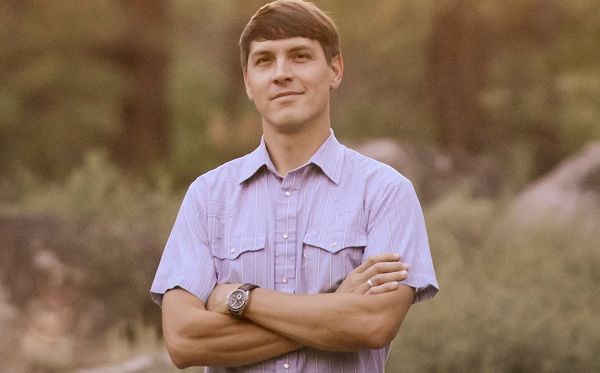
matt palacioName: Matt Palacio

Profession/work experience: Did not respond.

Age: 34 (35 later this month)

What organizations, committees or groups are you or have you been involved with?: I’m a member of the Tahoe Regional Young Professionals, South Lake Tahoe Economic Development Task Force, and the 2014 Leadership Lake Tahoe class.

Why are you running for City Council?: It’s time for a new generation to be represented in City Council. I’m running to be a voice for everyone in South Lake Tahoe, including the young homeowners, business owners and professionals who see a future in South Lake Tahoe.

Why should people vote for you over the other candidates?: South Lake Tahoe needs new ideas and a new perspective in its leadership. Folks can vote for three City Council candidates in the upcoming election and a vote for me is a vote for a new voice and diversified representation within the council.

What do you think is the most pressing issue in South Lake Tahoe and how will you deal with it?: Lack of vision plagues this town. It’s as if we can’t get out of our own way and any opportunity we have to improve our town is botched due to infighting. I’d like to help build consensus by balancing facts with feedback and having City Council be more present in creating public-private partnerships and work together. This town is at a crossroads; we can have “more of the same” or we can put our differences aside and move forward with improvements that make South Lake Tahoe a better place to live, work and play.

If the city cannot reach an agreement with its bargaining units, are you willing to go to impasse? Why or why not?: This is an issue for the city manager to handle, and it’s something I look forward to being debriefed on. The City Council will vote on bargaining units, but they aren’t necessarily at the bargaining table.

How would you resolve the CalPERS and health care issues in the city?: Did not respond.

What is your opinion about term limits for the council?: I stand behind term limits as a way to help the council from getting stale. It allows new council members to bring in fresh ideas to move the city forward.

If the city has positive cash flow, where should the money be spent?: Positive cash flow should be reinvested in the community by way of infrastructure that supports our environment like gutters and streets, and enhances public safety like sidewalks and bike paths. But we should also consider shovel-ready projects that provide immediate improvements in our built environment, access to recreation and create jobs.

What are your ideas for increasing the city’s revenues?: I have a sales and marketing background, so I can tell you that to increase revenue, you have to increase business. How do you increase business? By developing your product and reaching new markets. By improving South Lake Tahoe’s built environment and offering new amenities we’ll attract better spending visitors and stand out against the competition. Let’s not just go for “more” business – let’s go for “smarter” business to drive revenue from our tourism industry.

What is your vision for the 56-acre project?: The 56-acre project is an opportunity for South Lake Tahoe to positively position itself as a recreation destination. Improving the recreation center’s facility and programs will help residents and visitors alike. Highway 50 is the main corridor through South Lake Tahoe, but only a short stretch runs along the lake. We need to capitalize on this portion and make this into a community hub for both residents and visitors.

What would you do to improve relations with El Dorado County?: Are you referencing the El Dorado County government or the unincorporated area of Meyers within El Dorado County? I think the answer is the same for both: we need to have two-way communication with the government and citizens. Citizens of Meyers cannot vote in the city, but they are a part of our South Lake community, with the same schools, roads, and businesses. I look forward to working with El Dorado County as well; I’ve had brief conversations with both Kenny Curtzwiler and Sue Novasel regarding our mutual campaigns and what it would mean to work together. By listening to their needs and having them listen to the city’s needs a mutual understanding should be reached. We may not always agree, but at least we’ll understand where each other is coming from.

Is the city on the right course with restructuring debt and focusing on recreation? Why or why not?: The city is on track for focusing on recreation, with the Planning Commission and recreation plan building momentum. The city is maintaining transparency and giving residents the opportunity to give their feedback by conducting email surveys and public workshops. There seems to be a high level of collaboration, too, with recent projects like the Tahoe Valley Area Plan integrating bike paths and parks to continue in the direction of recreation. I think the OpenGov.com website that the city is now a part of is a huge step forward in transparency. If you want to see the money that comes into and out of the city coffers, this is the best place to start.

Name one vote the City Council made in the last four years you are proud of and one you are disappointed in – and why?: Proud of: I commend the City Council for voting for the Harrison Avenue Project, and working to implement this public-private partnership that helps our town visually, economically and environmentally.

Disappointed in: I was disappointed to see our elected officials vote to delay the plastic bag ban’s second phase despite overwhelming support for the initiative from shoppers and businesses alike.

What is working in the city and what isn’t; and how would you go about changing what isn’t working?: I think we have a movement in the younger generation with people who are ready for change. Some of us moved here for the recreation lifestyle and have become involved as change agents (myself), and others have come home after starting successful careers elsewhere to help their hometown flourish (Scott Fair, Darcie Collins). I’m the face of this movement; we’re ready to lead South Lake Tahoe in the present and future.

I think what is lacking is community engagement. I think our citizens don’t feel connected to their local government for a number of reasons, it could be the transiency that is natural in a resort community, but I also think a lack of representation on the council plays into this as well. It’s hard to feel a connection to council members who say they want improved recreation and a cleaner environment when as council members they are not recreating nor voting to improve our environment. I hope to be a council member that is approachable for people of all ages, I am someone deeply committed to our environmental sustainability as this is our biggest asset, and as someone who moved here for a management position at a ski resort and the recreation opportunities in our community I feel I have a better understanding of where we need to invest in first to make life better for residents and visitors alike. I want to connect with the community by making myself available at community events like Live at Lakeview, the Stand Up Paddleboard Series, or chats at local coffee shops in the winter. I may not always agree with every opinion I hear, but making yourself available is key to an inclusive government.

Being on the council requires working with four others. Give readers an example of how you work well others in difficult situations with differing opinions: Leadership Lake Tahoe’s class of 2014 was tasked with putting on a summit as our class project. There were no real parameters given, no budget to start with, only a hierarchal framework. I was elected to be the co-chair of our summit and we set our sights on pulling off a large-scale summit. There were lots of differing opinions on what type of event to put on, how to raise funds, and who to invite as speakers for our panels and keynotes. These decisions were all made through consensus building and getting the class to buy-in to the vision so they felt they were a part of the overall decision making process.

I define leadership as someone who knows the way, shows the way, and goes the way. John Rice at Sierra-at-Tahoe is the best leader I’ve ever worked for and I use him as my leadership model. We believe in his leadership skills, he invites us to share his vision for the future, and then John actively leads us to our destination.

What is your opinion about the following topics:

• Ferry service on Lake Tahoe?: Ferry service on Lake Tahoe would decrease pollution by reducing emissions, and would allow us to increase visitation to the South Shore. A ferry system would create new, high paying jobs as well. So long as the boats had a moderate impact on the environment, I support a ferry service on Lake Tahoe.

• Loop road?: The Loop Road is a sensitive subject for many people in our city due to the issues arising from other development projects such as the Chateau project. The city has lost trust with some citizens in our community because of how past projects were handled. Yet I believe that we need to create a walkable downtown area for our residents and visitors. The majority of the city’s budget comes from TOT and visitors’ sales tax revenue. Our tourism economy needs to adapt to what visitors want and we also need to embrace a future that doesn’t rely on the automobile for your shopping experience. We are a ways off with green-lighting a project like the Loop Road due to many issues outside of the city’s control (Caltrans, an environmental impact report, etc.) but I hope to be on the council to bring in all sides the Loop Road conversation and hopefully we’ll move forward in a sensible fashion.

• Future of Lake Tahoe Airport?: The Lake Tahoe Airport is South Lake Tahoe’s largest polluter, next to the Tahoe Keys. If it’s going to exist, it should be to serve the greater good of the community. I’d like to see the airport redeveloped to bring in revenue to fund infrastructure and public safety.

• Increasing the transient occupancy tax?: I’m staunchly against increasing South Lake Tahoe’s transient occupancy tax. Our TOT rates are higher than San Diego, Monterey and Palm Springs – all of which are thriving destinations with higher occupancy rates and a more vibrant tourism economy. A failing hotel doesn’t raise rates to bring in more revenue; they work on improving the property to generate the traffic necessary for a successful business. Instead of increasing TOT, let’s grow our cash flow by improving South Lake Tahoe’s recreation offerings and bringing in better spending visitors.

Changing the vacation rental ordinance to reduce the number of such units in neighborhoods?: A balance needs to be struck in the amount of vacation rentals and non-primary residences and the number of full-time residents that live, work and play in South Lake Tahoe. Vacation rentals are a reality of South Lake Tahoe and generate transient occupancy tax that benefits the city of South Lake Tahoe. But when our town is made up of mostly non-permanent residents, vacation rentals can quickly take over a neighborhood. I look forward to reviewing the ordinance to see if a sensible balance can be achieved.

Your civic involvement is lacking, why should the public believe you have what it takes to step onto the City Council?: Civic engagement is defined as individual and collective actions designed to identify and address issues of public concern. My life in Tahoe is dedicated to addressing public concern – whether working to bring more skiers to our slopes and putting heads in beds, volunteer at community clean ups or lead the charge in the creation of the Elevate Your View summit last spring, which addressed community apathy. My lack of experience as an elected politician is exactly why people should vote for me – our town needs new blood and fresh ideas within City Council. I’m not a career politician; I’m a homeowner who wants to create a future here for my family and everyone else.

Tell the voters something about yourself that they may not know: I came to South Lake Tahoe as a child once every winter to toboggan and saucer on the local hills and those trips to my aunt’s cabin are the foundation for my love of South Lake Tahoe. My wife and I left Tahoe for two years and were eager to return to South Lake Tahoe to help this community move forward. Service also runs deep in my family. My two male role models growing up served their communities in different ways. My maternal grandfather was a CTA representative who helped his fellow teachers negotiate for fair wages and compensation, sometimes working past midnight on projects after putting his five children to bed. My father was a union representative at a paint factory in the Bay Area representing over 50 coworkers. I come from humble roots, my father’s side of the family is from Mexico, and I’m proud of my grandparents for coming to the California to make a better life for themselves and their family. I think of myself at the epitome of the American Dream when seen through their eyes, I’ve achieved more than I ever thought I could in my life and I look forward to a progressive future for South Lake Tahoe.


Nev. land market continues to recover

By Doresa Banning, Nevada Business

Demand for land in Nevada has resembled a roller coaster pattern this decade. During the real estate boom in the first half of the 2000s, both residential and commercial developers hungrily purchased land, driving up prices. With the recession, the opposite happened; development nearly ceased, land demand decreased and so did the price.

Again, the pendulum has begun to swing in the other direction as the post-recession restart of residential construction has heated up the state’s land market.

“The land market has been in recovery since 2010, and homebuilders have been driving that,” said Bill Lenhart, managing partner of Sunbelt Development & Realty Partners LLC, a real estate brokerage company specializing in land.

Nevada is a state whose land is primarily owned by the federal government — 87 percent, in fact. The state itself owns less than 1 percent of its land; about 12 percent is privately owned, according to the Nevada Division of State Lands. This agency provides land and land use planning services to the state, its agencies and its people. For instance, it secures, disposes, leases and authorizes use of state land. Of the Silver State’s state-owned land, most consists of wildlife management areas (158,345 acres), parks (120,471 acres) and prisons (6,692 acres), said Charles Donohue, NDSL’s acting administrator.

Other Nevada-owned sites include 500 Lake Tahoe lots managed as conservation areas, parcels housing state facilities and undeveloped and/or vacant properties that the NDSL plans to hold until land prices rise.

Read the whole story


Ex-SLT firefighter files lawsuit saying deputy told employer he was in a gang

By Stephen Baxter, Santa Cruz Sentinel

WATSONVILLE — A 24-year-old Watsonville man is suing Santa Cruz County law enforcement agencies after he was pulled over on his motorcycle and later lost his job because a deputy called his employer.

Kristopher Klay was riding his motorcycle on Highway 1 near Watsonville in May 2013 when he was stopped by members of the Santa Cruz County Gang Task Force. A South Lake Tahoe firefighter at the time, Klay was wearing a “cut,” or leather vest with a patch of the Guerillas Motorcycle Club — a group that rides together and raises money for youth organizations.

Deputies who pulled him over and stopped another rider who was riding with him on a second motorcycle. Authorities asked Klay for his registration, which was current, and Klay and the other rider were let go without being ticketed or arrested.

Four weeks later, about May 30, 2013, Sgt. Stefan Fish of the task force called Klay’s boss at South Lake Tahoe Fire and told him about the traffic stop, according to court documents.

It’s not clear exactly what was said in the phone call, but a few days later, Klay was called in to meet with his fire chief. He was then fired from his job, which was as a probationary firefighter because he recently started.

Read the whole story


2 cyclists hit by pickup on East Shore

Updated Sept. 5 4:50pm:

A pickup driver kept driving after hitting two cyclists on Highway 28 on Aug. 30, according to the Nevada Highway Patrol

The cyclists were treated and released from the hospital after sustaining non-life threatening injuries. Jerry Hitchcock, 59, of Santa Clara was CareFlighted to Renown Medical Center in Reno and Robert Shorey, 59, of Stillwater, Minn., was taken by ambulance.

The  accident occurred Saturday about 2:40pm near Skunk Harbor.

— Lake Tahoe News staff report


More workers claiming ‘wage theft’

By Steven Greenhouse, New York Times

MIRA LOMA — Week after week, Guadalupe Rangel worked seven days straight, sometimes 11 hours a day, unloading dining room sets, trampolines, television stands and other imports from Asia that would soon be shipped to Walmart stores.

Even though he often clocked 70 hours a week at the Schneider warehouse here, he was never paid time-and-a-half overtime, he said. And now, having joined a lawsuit involving hundreds of warehouse workers, Rangel stands to receive more than $20,000 in back pay as part of a recent $21 million legal settlement with Schneider, a national trucking company.

“Sometimes I’d work 60, even 90 days in a row,” said Rangel, a soft-spoken immigrant from Mexico. “They never paid overtime.”

The lawsuit is part of a flood of recent cases — brought in California and across the nation — that accuse employers of violating minimum wage and overtime laws, erasing work hours and wrongfully taking employees’ tips. Worker advocates call these practices “wage theft,” insisting it has become far too prevalent.

Some federal and state officials agree. They assert that more companies are violating wage laws than ever before, pointing to the record number of enforcement actions they have pursued. They complain that more employers — perhaps motivated by fierce competition or a desire for higher profits — are flouting wage laws.

Many business groups counter that government officials have drummed up a flurry of wage enforcement actions, largely to score points with union allies. If anything, employers have become more scrupulous in complying with wage laws, the groups say, in response to the much publicized lawsuits about so-called off-the-clock work that were filed against Walmart and other large companies a decade ago.

Read the whole story


No uniform water conservation in Calif.

By Matt Weiser, Sacramento Bee

Drive across city limits in virtually any part of California, and you will also cross another kind of frontier, one gaining more attention during the worst drought in a generation: The borders between cities also define different ideas about water. One city may have gutters coursing with wasted water, while its neighbor lives by the highest conservation standards.

The differences can be glaring, according to a Bee review of data submitted by water agencies, and they highlight some of the challenges in achieving broad conservation goals during the ongoing drought. In a hypothetical tour of the state, according to the data, the well-informed traveler would encounter the following disparities:

• In the tony hillside mansions of Los Altos, residents in 2012 consumed an average of 197 gallons of water per person each day. Step across the city limits into Mountain View, and consumption drops to 139 gallons per day.

• In Anaheim, the home of Disneyland, per capita consumption is 163 gallons per day. Next door in Garden Grove, the average is only 128 gallons each per day.

• In the state capital’s metro region, Folsom residents consume 329 gallons each per day. Their neighbors in adjacent Orangevale consume significantly less, 225 gallons per day.

Read the whole story


Gambling continues to fail in Atlantic City

By Josh Dawsey, Wall Street Journal

ATLANTIC CITY — Early Tuesday morning, gamblers at the Revel Casino Hotel will be asked to leave, and security guards will take over at the gleaming, 47-story building on the north end of the boardwalk.

The sudden closing of the two-year-old Revel, plus two other casinos shutting their doors in the next few weeks, marks the end of Atlantic City’s decades-long reliance on gambling to stay afloat.

When Atlantic City opened its first casino in 1978, state and local officials talked up gambling as the path to revival for a shore resort plagued by high unemployment and white flight to the suburbs. While the city had its moments—even surpassing the Las Vegas Strip in gambling revenue for much of the 1980s and 1990s—many politicians, residents and business people are giving up on the dream.

The city is bracing itself for the loss of more than 6,000 jobs at the Revel, Showboat and Trump Plaza, and collateral damage as businesses and the city itself cope with the aftermath. In January, the Atlantic Club Casino Hotel, with about 800 rooms, closed.

Read the whole story


Nev. commission adopts fracking rules

By Associated Press

ELKO — A state panel has approved regulations guiding oil and gas exploration companies’ use of hydraulic fracturing, better known as fracking, in Nevada.

The Commission on Mineral Resources’ unanimous decision Thursday in Elko drew criticism from opponents, who say fracking could lead to water contamination, excessive water consumption and earthquake activity.

But supporters say the concerns are exaggerated, and they add that oil and gas development resulting from fracking will provide a boost to Nevada’s economy.

The 2013 Legislature passed legislation requiring adoption of fracking regulations by January 2015.

Kate Fay, a representative of Houston-based Noble Energy Inc., praised the regulations. Her company is searching for oil in northeastern Nevada.

“Noble Energy believes these regulations are tough but they’re workable, that they will help ensure that all oil and gas operators in Nevada follow best practices to protect public health and the environment,” she said, according to the Elko Daily Free Press. “We think it will ensure the state has a strong role in enforcing these rules.”

But Bob Fulkerson of the Progressive Leadership Alliance of Nevada said the governor-appointed commission was stacked with members with ties to “extractive industries” including oil and mining. The process to review the regulations was rushed, he said, and did not allow adequate public input.

“We know we’re playing in a game that’s been rigged from the get-go,” he said, according to the Reno Gazette-Journal. “It does appear the foxes have been put in charge of guarding the hen house. Nevada is simply not ready for this.”

Dawn Harris of Frack Free Nevada said substantial evidence from scientists links fracking to problems in human health, while opponent Steve Fisher said “water in this state should trump oil.”

Some tribal members and farmers also voiced opposition to fracking, which involves extracting oil and gas from rock by injecting high-pressure mixtures of water, sand or gravel and chemicals.

Among other things, the new regulations require the monitoring of well casings for quality, the disclosure of all chemicals used, the notification of land owners and county commissioners and the collection of multiple water samples for testing.

Resident Bob St. Louis, a hydrologist, said the regulations were well-vetted and would not endanger the land.

“I believe these regulations haven’t been rushed,” he said. “I believe best practices have been adopted from numerous states with a long history of fracking — both good and bad experiences. I think these are practical and thorough.”

Pam Borda, executive director of the Northeastern Nevada Regional Development Authority, said oil and gas development was needed to help diversify the economy in rural Nevada.


GOP-backed fake news sites target Dems

By Anna Clark, Columbia Journalism Review

DETROIT — Deceptive political ads are one thing. But how about deceptive ads that trade on the credibility of journalism?

That’s what a Republican political group is trying out. This month, the National Republican Congressional Committee debuted at least 20 websites in key congressional districts—from Central Valley, California, to Augusta, Georgia—that are designed, albeit amateurishly, to look like news sites. One of them, “South Michigan Update,” sports the headline “Byrnes Struggles to Escape Her Record,” referring to Democrat Pamela Byrnes in Michigan’s 7th District. Like the other NRCC sites, the featured post attacks the Democratic candidate in the race. The piece has a byline credit to “Geoff,” though, as The Washington Post pointed out, most of “Geoff’s” posts are rewrites of content from the NRCC site. The spare South Michigan site has one other item: a video ad for the 7th District’s Republican incumbent, Tim Walberg, that is featured under the header, “Most Viewed.”

As Lester Graham, an investigative reporter with Michigan Radio, described it in a story that drew attention to South Michigan Update, the casual observer might easily mistake the fake news site for a real one. Because the NRCC is promoting the sites through localized Google search ads, according to the National Journal, readers may well stumble on them unwittingly: It’s the first item that comes up when you search for the Democratic candidates’ name. The NRCC did put a box at the very bottom of the sites indicating that they are paid political ads. But the sites seem designed for social sharing and email-forwarding—exactly the kind of delivery where readers are likely to read only the headline or first few paragraphs of the story. They wouldn’t even see the bottom of the page.

Read the whole story