Publisher’s note: Lake Tahoe News asked the two Lake Tahoe Community College District 5 candidates a series of questions. The responses are being run in the order LTN received them.
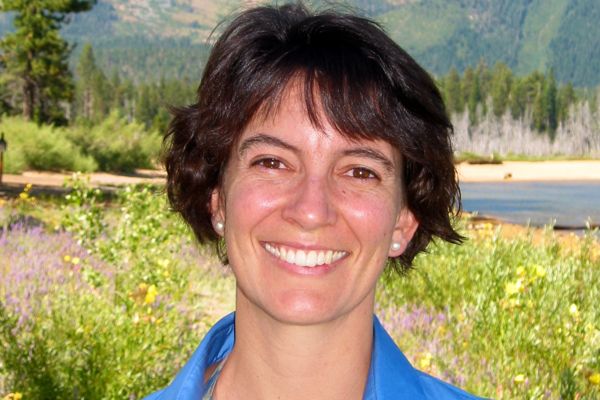
 Name: Michelle Sweeney
Profession/work experience: Please see my resume following:
Strategic Planning | Policy Development | Knowledge-building
High-integrity, energetic, listening leader building management structure and culture for high performance and productivity
· Organizational development
· Leadership development
· Strategic planning
· Fundraising and collaboration building
· Policy and program development
· Communication strategy development
PROFESSIONAL EXPERIENCE
TAHOE PROJECT, INC. a 501(c)3
Facilitating critical thinking about people and nature in the twenty-first century
Executive Officer / Founder (February 2011 – present)
The objective of Tahoe Project is to steer attention and capital to enterprises adept at creating environmental, social and economic resilience and prosperity. Toward this end our writers and speakers engage diverse audiences in discourse about 21st century environmental issues. Through this discourse we seek to contextualize claims, technologies and policy approaches. We explain environmental science findings, integrate social science into discourse and convene and facilitate discussion among diverse experts, advocates and publics.
ALLEGRO COMMUNICATION CONSULTING
Developing organizations and leaders
President and Principal Consultant (2004 – present) Projects have included:
The Clarity Challenge | Author
Authored The Clarity Challenge (2013), a policymaker’s handbook of prioritized solutions to Lake Tahoe clarity decline.
Lake Tahoe Aquatic Invasive Species Program | Communication Consultant (2010-2011)
Conducted institutional and policy assessment of the Lake Tahoe Aquatic Invasive Species program resulting in a comprehensive suite of strategic planning recommendations including: performance indicators, a communication plan and toolbox, and policy and strategic alliance guidance.
CA Governor appointee to TRPA Governing Board | Governmental and Public Affairs Consultant (2009-2011)
Conducted institutional and policy assessment of Lake Tahoe interagency management of aquatic invasive species, land use planning, water quality and transportation. Provided strategic recommendations for streamlining operations, utilizing existing resources to better result, transforming leadership culture and building capacity.
Lake Tahoe Crediting Program | Editor, Communication Consultant, Facilitator (2008-2009)
Facilitated the inter-agency design and deployment of the bi-state program to address fine sediment—the primary cause of lake clarity decline. Edited The Lake Tahoe Crediting Program Handbook (2009), the management framework for connecting on-the-ground actions to the goal of restoring lake clarity.
Large-Cost Fire Independent Review to Congress | Editor (2008-2009)
Edited the Large-Cost Fire Independent Review to Congress (2009) regarding the fires of fiscal year 2008 with suppression costs exceeding $10 million. Conducted a review of fiscal diligence. Participated in the collaborative development of recommendations for managing major wildland fire.
Lake Tahoe Total Maximum Daily Load | Facilitator, Communication Consultant, Editor (2006-2009)
Facilitated inter-agency and public meetings in the design of the Integrated Water Quality Management System that highlights pollutant reduction opportunities to inform the design of regional plans and management strategies. Designed the community outreach and communication process.
Edited Charting the Course to Clarity (versions 2008 and 2009).
Sierra Nevada Yard & Garden | Author and Presenter (2007-2008)
Authored Sierra Nevada Yard & Garden (2008), a homeowner’s guide to property management that integrates best practices for erosion control, wildfire prevention, water quality improvement and wildlife habitat conservation. Led workshops featuring pragmatic solutions to the complex interplay of these mountain issues at the 2008 Sierra Nevada Alliance conference.
ADDITIONAL ENGAGEMENTS
Nevada Tahoe Conservation District | Watershed Program Manager, Fundraiser (2001-2004)
Santa Monica Pier Aquarium/UCLA Ocean Discovery Center | Educator, Fundraiser (1999-2001)
Conservation Department, New England Aquarium | Editor, Facilitator (1998-1999)
Centre d’Echanges Culturels Internationaux, Lyon, France | Program Administrator (1996-1997)
The Berkeley Guides | Travel Writer, France (1994-1996)
EDUCATION, BOARD MEMBERSHIPS, COMMUNITY AFFILIATIONS
University of California Berkeley, BA English
Lake Tahoe Basin Federal Advisory Committee Member (2009-2012)
University of California Berkeley, Oral History Institute
Stanford University, Gould Center for Dispute Resolution, Dispute Resolution Systems Design
Harvard / MIT Program on Negotiation, Mediation and Conflict Management
Sierra Business Council, Sierra Leadership Institute (2005-2006)
U.S. Environmental Protection Agency, Mediation and Meeting Facilitation Training
Lincoln Institute of Land Policy, Mediating Land Disputes, Advanced Course
Women’s Health Leadership, California Policy and Advocacy Institute
Alliance Francaise, Diplôme de Langue
Age: 41
What organizations, committees or groups are you or have you been involved with?: As a mother I value giving all children a strong foundation in reading, math, science and foreign language. Presently I help first- and fourth-grade students learn to read in English and Spanish at Bijou School where I am in my fifth year as a parent volunteer. In the period 2008-2011 I volunteered at Tahoe Parents Nursery School teaching preschool children how to be well rounded, composed, courageous and courteous lifelong learners. Meanwhile, I am the founder of the nonprofit Tahoe Project where I host interviews about the present and future of Lake Tahoe. In addition, I’ve recently entered into collaboration with Mountain Yoga where I am developing the Happy Series — a course that invites students to craft unique approaches to the “pursuit of happiness”, that core ambition of the U.S. Declaration of Independence.
What is your educational background?: I earned a B.A. in English from the University of California at Berkeley. I strive to learn continuously. Among the themes I have emphasized are facilitation and conflict resolution, particularly in the context of land use planning and water resources management. The following are courses and certificate programs I’ve completed in this domain
· Harvard / MIT Program on Negotiation, Mediation and Conflict Management
· Sierra Business Council, Sierra Leadership Institute
· U.S. Environmental Protection Agency, Mediation and Meeting Facilitation Training
· Lincoln Institute of Land Policy, Mediating Land Disputes, Advanced Course
· Stanford University, Gould Center for Dispute Resolution, Dispute Resolution Systems Design
Additionally I have a longstanding interest in women’s health and participated in the yearlong Women’s Health Leadership course of the California Policy and Advocacy Institute. In support of the sound reporting I do in the context of Tahoe Project I graduated from the UC Berkeley Oral History Institute. I speak French fluently, am proficient in Spanish and enjoy maintaining basic Italian. I have been a student of parenting since my son’s birth in 2005.
Why do you want to serve on the college board?: In 2011 I was asked the question, “What is the best thing that can be done for Tahoe?” Our economy was in the dumps, tourism trends were (and are) in dramatic flux, the housing market was host to bankruptcy and the outfall of instability in our families and civic institutions and we were in dire need of a new perspective on future prospects for the Lake Tahoe region. In pursuit of the answer to this question I have interviewed business, agency and academic leaders throughout the Tahoe region and elsewhere. I have read extensively on the subjects of education, current affairs, leadership, conflict resolution and environmental policy. My conclusion: Striving for a four-year institution of higher learning focused on educating future regional and global leaders is one of the best things that I can do for Lake Tahoe. This is why I want to serve on the college board. I can make a difference at the college. The college can make a difference in the lives of students, among them our children. These students will make Tahoe in our 21st century world. The best thing that can be done for Tahoe is to nurture a classically educated, critical-thinking, thoughtful and nature-oriented generation of leaders.
Why should people vote for you over the other candidate?: As a forty-something female entrepreneur, mother of children born in 2005 and 2008, student of environmental policy and practitioner of facilitation and conflict resolution, by virtue of identity and experience I have a vision for the college and an approach to implementation distinct from that of the other candidate. I think voters in District 5 have in this election a great opportunity to choose between different futures for the college. “Exceptional energy” is a character trait others have noted in me consistently throughout my career. I’m asking voters to give me the opportunity to contribute this energy to a prosperous, globally oriented, 21st century college for Lake Tahoe.
What do you think is the most pressing issue facing Lake Tahoe Community College and how will you deal with it?: The most pressing issue facing LTCC is revenue generation. The best way to generate revenue is to enroll more students. Leadership at the college is employing good strategies to address this issue. For my part I would encourage the following:
Strategic planning
· Data supported
· Stabilizing cost while increasing revenue always providing high quality educational experience
· Emphasis on success realized in the classic Core Curriculum
Community partnership
· Especially internships and work experience
· Close collaboration with LTUSD
Collaborative program development
· Articulation programs (e.g., South Bay Regional Public Training Consortium)
· Build relationships with other educational institutions outside of Tahoe where Tahoe has a unique contribution to offer
Targeted recruitment
· Targeting specific communities we would like to recruit from and building relationships there
· Building programs in coordination with communities with like interests whose students value the unique offerings of a Tahoe education.
How will you be voting for the bond the college has on the ballot and why?: I believe a “yes” vote on Measure F is a vote for higher education. Measure F will enable three things critical to the future viability of the college. Measure F will fund the technological revamp of the college — giving our faculty, students and community the technological tools essential to success in our contemporary world. Measure F will fund maintenance of existing infrastructure, ensuring maintenance of the community’s infrastructure investments to-date. New boilers, repairs to rooftops and other maintenance would compete with teaching students for college general fund dollars if Measure F funds were not secured. Finally, Measure F is the mechanism by which our community will provide matching funds to state and other monies for new educational infrastructure such as the proposed Public Safety Training Center — a place to house not only existing successful programs like the Fire Academy, but also envisioned future programs consistent with the promising partnership with the South Bay Regional Public Training Consortium. I support Measure F.
What is working well at the college and what isn’t; and how would you go about changing what isn’t working?: I am enthusiastic about running for trustee of the college in part because I have seen the college leadership take on the task of creating a new vision and updating the mission with considerable success. This vision, mission and the bylaws and procedures that govern the college form the foundation of the institution’s prospects for success. I can look forward to a positive and productive working relationship with fellow trustees and with the ever-evolving leadership team at the college. As a trustee I will advocate for student success, strong core curriculum offerings, data-and-experience-driven strategy development with faculty. I will think critically about opportunities to increase enrollment and revenue. I will advocate that we focus effort on a focused, strategic set of actions. All of these approaches are consistent with what I see leadership at the college doing in 2014.
What programs are not offered that should be?: In terms of programs I would emphasize investment and growth in those areas where the college has existing strengths: the core math, science and humanities curriculum (in-person and online), the Fire Academy and public safety training, Community Connect programs and foreign language (especially the Intensive Spanish Summer Institute). I think we should invest in enhancement and expansion of the programs we already have. I do think that the college can do better at integrating existing regional assets into existing programs. In particular, there is opportunity to integrate Lake Tahoe’s unique natural and socio-political environment into the higher learning experience. I believe this will not only intensify our students’ learning but also make our college an attractive partner for other higher learning institutions that lack these unique real-world assets.
What classes have you taken at LTCC?:
· Accounting
· Algebra
· Ballroom dance
· Calculus for Business
· Geometry
· Italian Conversation
· P.E.
· Intensive Spanish Summer Institute
· Statistics
· Tahoe Parents Nursery School Parenting Courses
· Yoga.
What other involvement have you had with LTCC?: In addition to being a student at the college I have been on campus on a regular basis in the past decade in these capacities: My children attended the Child Development Center. I am a regular in the campus library where I often work, research and meet for community projects. In my capacity as journalist at Tahoe Project I interviewed Kindred Murillo in her first and third years as president of the college inquiring about her vision for the college and the strengths and weaknesses of the institution as she took the helm. I have also over the years interviewed faculty, staff and students at LTCC to periodically gauge enthusiasm for and criticism of the college. Some of these interviews are published, others are not. This has informed my understanding of the dynamics at the college as has attendance at events like the 40th anniversary celebration and the Taste of Gold fundraiser. I should mention I’m a fan of the drama department productions and the chorus, which also bring me to college events. Suffice to say, given all of this interaction I am so enthusiastic about the trajectory I see the college on that I would like to proactively contribute by becoming a trustee.
What should be the role of higher education in South Lake Tahoe?: The role of higher education in South Lake Tahoe should be to teach the next generation to think critically. Critical thinking is marked by the ability to choose an informed course of action based on listening, research and application of standards based on the core disciplines of math, science, language and history. Critical thinking is necessary for performing the functions of an informed electorate and an inspired workforce.
Critical thinking is taught by:
· Teaching the core disciplines — math, science, language, writing, history, art (including dramatic art)
· Modeling standards and stamina
· And then, by demonstrating how to evaluate disciplinary evidence.
Those that excel in the 21st century will have more knowledge, ask better questions and exercise independent thinking. The college’s role in developing workforce readiness is to teach our students, among them our children, to be critical thinkers and leaders. Chief among our tasks is teaching them how to discern a future course for themselves and society.
What do you believe should be the financial priorities of the college?: The financial priority of the college should be to invest in high-quality, in-person core curriculum courses in math, science and the humanities.
The college needs a technology overhaul including the modernization of labs and classrooms.
The college needs facilities better suited to collaborative learning and hosting community events. I envision bigger classrooms with more open space and technology integrated as well as meeting and small conference space.
In terms of programs I would emphasize investment in those areas where the College has existing strengths: the core math, science and humanities curriculum (in-person and online), the Fire Academy and public safety training, Community Connect programs and foreign language, especially the Intensive Spanish Summer Institute.
Being on the board requires working with four others. Give readers an example of how you work well others in difficult situations with differing opinions: I served as the at-large representative of the South Shore on the Lake Tahoe Federal Advisory Committee in the years 2008-2012. It was a privilege to serve. I learned a great deal and am proud of the contributions I was able to make. In particular I was able to build a coalition around the proposal to double the funding amount allocated toward the prevention and control of aquatic invasive species. The monies allocated during those negotiations are still the mainstay of the important work happening on this front today. I am a facilitator by training, having studied facilitation at the Lincoln Institute of Land Policy at the Harvard Program on Negotiation and at the Stanford Gould Center for Conflict Resolution. During my second term on the LTFAC I offered criticism of the decision-making structure and operating procedures of the federal advisory process at Tahoe. While I was not successful in creating change in these aspects of the SNPLMA process I earned the respect of many in the group who appreciated the courage I demonstrated in advocating for procedural change they agreed was needed. I learned a great deal about advocacy and coalition building from both my successes and my failures on the LTFAC. One of my peers on the LTFAC approached me in 2010 to ask me to consider becoming a Trustee of the Community College lauding the ability I had demonstrated to articulate independent and strategic thought.
How much time can you commit to carry out trustee duties?: In addition to preparing for and participating in semi-monthly trustee meetings and the regular business and extracurricular activities (fundraisers, community events, professional development) of the board I would like to work collaboratively with college leadership and the foundation in the pursuit of targeted grants and strategic partnerships with other educational institutions and communities (from which we aim to recruit new student populations). I anticipate this will amount to approximately 200-250 hours a year for the duration of my term.
What do you think is the most important mission of LTCC?: The mission of LTCC is to maximize college accessibility; to facilitate students’ learning, support success and the timely completion of their educational goals; to support the development of a sustainable and prosperous community; and finally to ensure college financial, human, technology and facilities resources are sufficient to meet the evolving educational needs of the community.
Tell the voters something about yourself that they may not know: I am a community leader insofar as I am an entrepreneur, a professional, a wife, a mother, a community organizer and a friend. To these roles I would now like to add the role of trustee of Lake Tahoe Community College.
I would like to underscore what I believe are the most important leadership actions I have taken in my 13 years at Lake Tahoe. First, I established Allegro Communication Consulting, the sole proprietorship in which I as a communication consultant have played a role in facilitating the development of Lake Tahoe environmental policy while demonstrating to my peers that one can have a professional, entrepreneurial career while being a parent and partner in Lake Tahoe. Second, I helped my husband at the completion of his Stanford MBA start his company at Lake Tahoe. Environmental Incentives LLC now employs 10 professionals at its headquarters in Lake Tahoe and eight in Washington D.C. Finally, I founded the nonprofit Tahoe Project in 2011 as a means to research and host dialogue about the future of Lake Tahoe. Thanks to the work I have undertaken at Tahoe Project including interviews with a wide array of professionals and business leaders I have come to the conclusion that I can be an instrumental contributor to a positive future for Lake Tahoe by becoming a trustee of the college. The future of the Lake Tahoe region is in the foundation this generation creates in our institutions — none more than our families and our educational institutions. As a trustee my energy will be committed to helping our students and Lake Tahoe’s public institution of higher learning realize their considerable potential in a 21st century paradigm.