Publisher’s note: Lake Tahoe News asked the two candidates running for District 2 of the South Tahoe Public Utility District board the same questions. The answers are running in the order received by LTN.
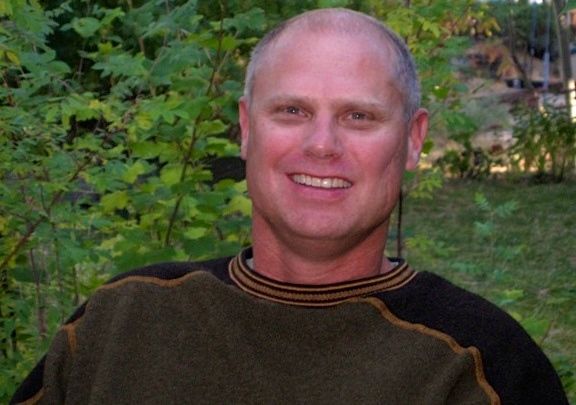
 Name: Jeffrey “Shane” Romsos
Profession/work experience: I’m currently a research scientist for Spatial Informatics Group – an environmental think tank specializing in landscape analysis to inform good natural resource policy and management. I was formerly the science, monitoring, and evaluation program manager for Tahoe Regional Planning Agency (total 12 years), and wildlife program manager, and on the Forest Plan Revision Team for U.S. Forest Service – Lake Tahoe Basin Management Unit (total 5.5 years).
I hold a bachelor of science in wildlife, and master’s of science in natural resources from Humboldt State University.
Age: 47
What organizations, committees or groups are you or have you been involved with?: Professionally, I was involved the 2012 TRPA Regional Plan update, the 2001, 2006 and 2011 Environmental Threshold Evaluations, the 2000 Lake Tahoe Watershed Assessment, Pathway Planning process, and served as the U.S. Forest Service’s alternate representative on the TRPA Advisory Planning Commission. As a volunteer, I’ve participated in Bijou School Beautification Committee workdays and St. Theresa School fund raising events, and other community events, such as Forest Stewardship days. I’m a 2014 graduate of the South Tahoe Chamber of Commerce’s Leadership Lake Tahoe program. I participated in the Lake Tahoe Community College Vision 2020 Forum. I’ve recently committed to participating on the South Tahoe Economic Development Task Force.
Why are you running for the South Tahoe PUD board?: Personally, I want to be a more active participant in our community. As a STPUD board director, I’d like to explore where and how the district can do more to support prosperity and quality of life in South Lake Tahoe. I’d like to change the district motto from “Silently Serving South Lake Tahoe” to “Doing More to Serve the South Lake Tahoe Community.”
Why should people vote for you over the other candidate?: I’ll bring new energy and fresh ideas to the board. I’m committed to representing the perspectives of the various district customers and continuing the delivery of affordable, cost-effective and high quality water and wastewater services. I believe the district has tremendous opportunities to utilize its many diverse resources and talented staff for the benefit of our community – I will be a resource for making positive changes.
What do you think is the most pressing issue facing the district and how will you deal with it?: The district has and always will have a wide range of recurrent issues related to water, wastewater, fire hydrant flows, metering, acquisition of private water utilities, and water reclamation systems – all of these recurring issues are addressed in various management plans and are already the focal-point of the district board and staff. A greater challenge to the board and district’s management is to control costs so those costs are not passed on to the customer. To control costs, the district needs to make sure it is spending money on the right projects at the right time. I believe there are many important projects but they do not all need to be done immediately and proper asset management can effectively prolong the life of critical infrastructure, and decrease real costs over time. Also, the district should do more to make its operations more energy efficient and to fuel operations with renewable energy sources. This move would also reduce greenhouse gas emissions. The district could also save customers money by increasing the utilization of existing staff or using local contractors and consultants to do needed work instead of contracting with more expensive off-the-hill consultants that are not necessarily in tune with our community, local regulations, issues and ways of doing business. Spending district money locally will help fuel our local economy. Additionally, I think the District can do more to create and genuinely embrace partnerships with local, regional, state and federal agencies – leveraging resources would reduce costs.
Would you consider merging administrative services with the city of South Lake Tahoe so there would be a reduction in cost to ratepayers? Why or why not?: I think there are a number of jurisdictional boundary, political and legal issues that need to be worked out before a merger could take place. Instead, I believe a more cost-effective solution is for the city and district to enter into and embrace a partnership to get things done. For example, the city and district could share and combine resources. In the winter, the city struggles to keep up with snow removal for example. This is typically when the district is not as busy due to a decline in construction activities – perhaps staff could be shared. The district has heavy duty vacuum trucks (and other heavy equipment) which often sit idle and could be used to assist the city in cleaning out stormwater treatment facilities – in doing so, the district would be protecting drinking water and Lake Tahoe. The district similarly employs people with technical knowledge of pumping systems – the city could benefit from this know-how for its maintenance and operation of other stormwater facilities (e.g., the Bijou stormwater treatment facility). The district could also do more to support community facilities – many utility districts provide play areas and recreational facilities for their customers (e.g., IVGID and North Tahoe Public Utility District). Why couldn’t the district provide play areas for our kids on their lands in South Tahoe or otherwise creatively support the upkeep of existing community recreation amenities? In doing so, the district would be given notoriety for providing our local and visiting customers recreation opportunities that are important to supporting our quality of life and attractiveness as a resort destination.
The district is seen by some as a cog in the wheel for economic development. Recent examples are charging $50,000 to add a small bathroom to a business and $500,000 for a Laundromat to move. What are your opinions about the district’s fees?: I believe there is an opportunity to review the current hook-up fees in order to better facilitate projects that are needed to improve our community. We need new responsible development which provides for stormwater treatment and other projects which protect the lake — our community needs affordable housing, and to redevelop antiquated and outdated development. It seems reasonable to me that the district take an active role in helping developers and businesses further transform our community into a place we can be proud of by reducing certain fees or finding alternative financing mechanisms associated with water and sewer hook-ups. Connection fees have been an impediment to community improvement projects including new and improved business developments, residential construction, low-income housing, improvements along Highway 50, greenways, linear parks, Lakeview Commons, and others. Similarly, I believe the district should take the opportunity to review and potentially revise the rate structure for residential units now that metering is being implemented. The current rate schedule is based on the size of pipe entering the property, and with metering, this no longer seems equitable or reasonable to the typical ratepayer. I believe your rates should primarily be based on the water you use, not the size of the pipe at the property line.
Being on the board requires working with four others. Give readers an example of how you work well others in difficult situations with differing opinions: Having worked at TRPA and the U.S. Forest Service on planning matters for greater than 16 years combined, I’ve frequently dealt with divergent views. In my experience, it’s important to be a good listener and genuinely attempt to understand different viewpoints. And from my perspective, it’s also important that each board member apply due diligence in researching issues before coming to any concrete conclusions. From there, I believe common ground can be found to move forward on issues and decisions.
What needs fixing at the district and how would you go about fixing it?: From my perspective, it seems like the district is somewhat fixated on finding ways to be exempted from state and federal policies and regulations designed to improve efficiency, conserve water, or otherwise benefit the environment. That is, it appears the district prefers to do things like they always have. It costs consumers money to hire lawyers and lobbyists to fight such policies and regulations. Rather, I’d like to see the district adopt a more progressive, forward-thinking philosophy and get out in front of such policies and regulations. For example, California has adopted ambitious greenhouse gas reduction targets that right now do not affect the district’s operation, but eventually will. Let’s invest in doing those things to make the district a model of sustainability now, instead of spending customers’ money on lawyers and lobbyists to fight good policy.
How many board meetings in the last year have you attended?: I have reviewed dozens of board meetings in the past year via the website and attended a handful of meetings in person. I have also toured the district wastewater operations twice.
Do you know what a special district is and how familiar are you with the governance of a special district?: Special districts are a form of local government created to meet a specific need such as providing water and wastewater services. Special districts are accountable to the customers who use their services. The state of California provides oversight over special district operations, and special districts are required to follow state laws pertaining to public meetings, debt management, environmental compliance, record keeping and elections, and must submit annual financial report to the state controller. Professionally, I’ve worked with STPUD in a planning and regulatory role on various projects, such as the wastewater export line over Luther Pass.
With a constrained budget, how would you prioritize projects involving the delivery of potable water, the collection and treatment of wastewater, and the export and reuse of treated wastewater?: The district maintains five- and an ongoing 10-year priority capital improvement program (CIP) lists and a less specific 20-year CIP list for develops a longer term budget forecast. So in many ways, priorities have been set and are based on established criteria related to age and condition of infrastructure and needs associated with improving fire hydrant flows. As discussed above, I would look at how these projects are prioritized and make sure we are spending money at the right time and in the right place, and develop strategic partnerships with other agencies to maximize the return on our investment in personnel, equipment, technology, and resources. As a board member, I’d like to prioritize moving the district toward implementing more energy-efficient technologies and retrofitting operations with renewable energy systems to save customers money and to reduce the district’s greenhouse gas emissions. There are alternative revenue sources, such as state and federal grants and potentially carbon offsets that could help pay for such upgrades. Today the district spends about a million dollars per year on non-renewable energy to pump wastewater to Alpine County – wouldn’t it be great if we could reduce that bill by half through the utilization of renewable energy sources? I’d also like additional focus on the operations of lands in Alpine County. I believe there is incredible opportunity to better utilize recycled wastewater and district owned land to create wetland habitat for wildlife (and natural areas for people) and still provide water to ranchers that are dependent on those waters. Funds to support such a project could come from creating a habitat mitigation bank as well as from selling carbon offsets and charging for the use of recycled water (which is currently given to ranchers at no cost).
In order to reduce water and sewer rates would you be a proponent of a reduced level of service by the district? Why or why not?: According to district financial reports, the district’s water and sewer rates are the lowest in the Lake Tahoe basin and track well with the consumer price index. I would not support a reduced level of service in order to reduce rates. The Lake Tahoe environment is too fragile to be frugal – the system needs to be appropriately monitored and maintained to ensure no harm is done to our drinking water and our Lake. The quality of our environment is critical to maintaining our quality of life and economic prosperity.
The district has been criticized for providing a higher compensation package than other entities in Lake Tahoe. Do you believe this package is justified? Why or why not? If not, what is fair and what will you do to change things?: I believe our community needs more opportunities similar to those provided by the district — good paying jobs attract and retain talented people, and ultimately contribute to a prosperous south shore economy. The district assumes a significant amount of responsibility to manage these systems, to ensure they reliably deliver high quality water and treat wastewater, and do no harm to Lake Tahoe’s fragile environment. The district’s compensation package is justified considering the high level of skill needed to operate and maintain the complex water and wastewater systems at South Tahoe. As a director, I would support the continued development and promotion of staff, recognizing the value of institutional history. I’d support district wage policies that are based on an individual’s skill sets, level of responsibilities and performance, and be against policies that automatically allow for wage increases. The district does pay its employees well and we must demand very high performance in return. As a director, I would set the bar high, and help provide the energy, ideas, contacts, and resources to get it done.
As a board member how would you represent all district customers and not just the small percentage of people who comment or complain to you?: Through my experience in regional planning, research and monitoring, I have a keen familiarity with local issues and people’s concerns. I appreciate the diverse nature of our town, the needs of stay-at-home and working parents, their children, people trying to find good work and good homes, the challenges of the contractor, realtor, and other small business owners, young seasonal workers to retirees. I am an involved member of the community and know a diverse group of people through my work, volunteer efforts and family life. I will use the relationships I’ve created professionally and personally here at South Tahoe to actively ask people how the district is doing and note their responses. Additionally, I believe the district should conduct regular customer satisfaction surveys which include the opinions of businesses to get a broader sense of how the district is doing. This input should be used to improve the district’s services. I also believe the district has a responsibility to more effectively communicate their decisions and activities in order to inspire better public participation at Board meetings and support from customers. I’d support moving the time of board meeting’s to later in the day when it is more convenient for customers to participate.
Tell the voters something about yourself that they may not know: I moved to South Lake Tahoe with my family in 1972, and attended Meyers Elementary School. I lived here off and on through middle school, and I permanently settled here in 1997 after finishing my graduate program. I’m married with two children. In my free time, I enjoy spending time with my family and friends, woodworking, playing hockey, and the many recreational opportunities that South Tahoe has to offer. I am fully dedicated to our community and to help it become a better place to raise a family, earn a good living, start and run a profitable business, and enjoy the great outdoors.