Report: Nevadans’ personal finances not good

By Eli Segall, Las Vegas Sun

Nevadans may not be on the edge of financial disaster anymore, but their personal finances remain among the worst in the country, with many residents unable to “build a secure economic future,” a new report says.

The state is racked by some of the highest rates of lousy consumer credit, bankruptcies, foreclosures, underemployment, mortgage delinquencies and uninsured residents.

That’s on top of Nevada’s many education woes, including a near-bottom high-school graduation rate, one of lowest shares of residents with college degrees, and below-average rates of middle-school math and reading skills.

That’s all according to the nonprofit Corporation for Enterprise Development, a Washington, D.C., advocacy group for lower-income Americans.

Read the whole story


El Dorado County fighting for funding source

El Dorado County Board of Supervisors are urging Congress to reauthorize and fund the Secure Rural Schools and Community Self-Determination Act of 2000.

SRS expired Sept. 30, 2013, resulting in a loss of funding in 2014 and future years to support programs in schools and counties across the United States. California’s forested counties and the schools located within these counties have been dependent upon federal revenue-sharing programs such as SRS for maintaining local roads, and for providing local services and programs.

SRS funding mitigates the impact to county governments from the reduction of allowable timber harvesting production on federal forest lands. California’s rural counties have come to rely on SRS funding – more than $33 million statewide – to support public schools and critical county road programs.

— Lake Tahoe News staff report


Stateline casinos end ’14 on up note

While gaming revenue declined throughout Nevada in 2014, local casinos ended the year on an up note.

The statewide and December numbers were released Jan. 30 by the Gaming Control Board.

Statewide the casinos took in just more than $11 billion in 2014, a 1.1 percent decline from 2013. The numbers had been increasing the previous years since the end of the recession. In December, the state was down 8.06 percent from the previous year.

For December, the Stateline casinos were up 1.05 percent to nearly $16 million. And for the entire year, those casinos were up 2.6 percent compared to 2013, for a win of more than $124 million.

— Lake Tahoe News staff report


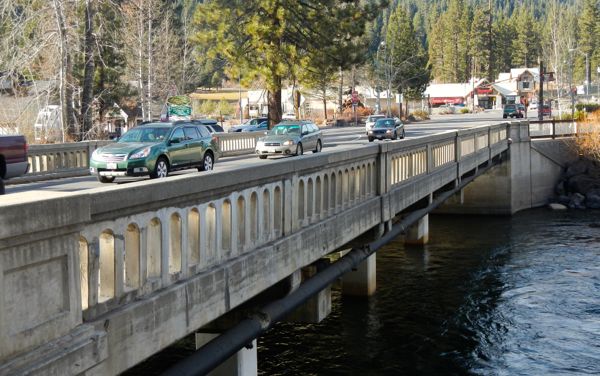
Fate of historic bridge in Tahoe City, choked up highway intersection coming down to wire

The future of Tahoe City's Fanny Bridge is still being decided. Photo/LTN file

The future of Tahoe City’s Fanny Bridge is still being decided. Photo/LTN file

By Kathryn Reed

INCLINE VILLAGE – Unclogging the congestion at Tahoe City’s Y, dealing with a seismically unfit bridge and providing more access points to the West Shore are the reasons the Tahoe Transportation District and others want to realign Highway 89.

Three public hearings this month, the last one on Jan. 28 before the Tahoe Regional Planning Agency Governing Board, were opportunities for the public to give input. It also gave those who will ultimately make the decision on the final project to get a preview of the alternatives.

Alfred Knotts with TTD said at this time there is no preferred alternative.

The four ideas TTD brought forward call for realigning the highway so it goes through the 64-acre parcel owned by the U.S. Forest Service near the transit center. The differences between them have to do with if there is a roundabout, if from where the bypass starts to the intersection of highways 89 and 28 becomes a city street, if that section would be pedestrian-bikes only, or if a cul-de-sac would be put in south of the bridge.

Now under consideration are two other alternatives that have come about from public input. They call for rehabbing, replacing or widening Fanny Bridge, and reconfiguring the intersection of highway 89 and 28 or putting in a roundabout at the Y.

The bridge is nearly 90 years old and no longer meets Caltrans’ roadway standards. The dam also needs improvements, but that is not part of this project.

Twelve people spoke at Wednesday’s meeting; many who are less than thrilled with the prospect of creating another road – mostly for environmental reasons. They don’t want businesses displaced or have cars no longer drive in front of their property, and some wondered why more of TRPA’s thresholds are not being addressed.

Representatives from the Chevron and Shell stations were in lockstep in opposition to the bypass, saying their businesses would suffer dramatically if people coming to and from the area no longer had to drive by their fuel tanks. They said it would mean less tax revenue for the area and employees would have to be let go. And they said the economic impact study that was done never looked at the businesses in what is called the “kill zone” – those located on Highway 89 that would be bypassed with a highway realignment.

Nancy McDermid, Douglas County commissioner and TRPA board member, said this bypass would not allow for development along the route, so there would not be competing businesses.

“If they need service, they still need to go into your area of Tahoe City,” McDermid said.

Two other board members foresee more people in the Tahoe City area using an improved intersection to get to the South Shore because it will speed up the drive. But they question where the traffic studies have taken into account how locals may change their habits.

Doing something with this intersection has been talked about since 1986. Safety is a large component of why people want to make improvements.

John Pang, retired Meeks Bay fire chief, said, “From a public safety standpoint we need multiple entry points. During the Washoe Fire (in 2007) we had access problems. Multiple escape routes are vital to community safety.”

—–

Notes:

• Comments on the environmental documents are being taken until Feb. 17. They may be sent to Brian Judge, TRPA, P.O. Box 5310, Stateline, NV 89449; faxed to 775.588.4527; or emailed to bjudge@trpa.org.

• The environmental documents are available online.

• The final document with the preferred alternative is expected to be before the TRPA Governing Board in March.


Bill would raise Calif. smoking age to 21

By Alexei Koseff, Sacramento Bee

In an effort to keep cigarettes out of the hands of teenagers, state Sen. Ed Hernandez, D-Azusa, announced legislation Thursday that would raise the legal smoking age in California from 18 to 21.

“Tobacco companies know that people are more likely to become addicted to smoking if they start at a young age” Hernandez said in a statement. “We can no longer afford to sit on the sidelines while big tobacco markets to our kids and gets another generation of young people hooked on a product that will ultimately kill them.”

Nine in ten smokers take up the habit by the age of 18, according to the American Lung Association in California, and 36,000 California kids start smoking each year.

Read the whole story


SLT fire captain arrested on child porn charges

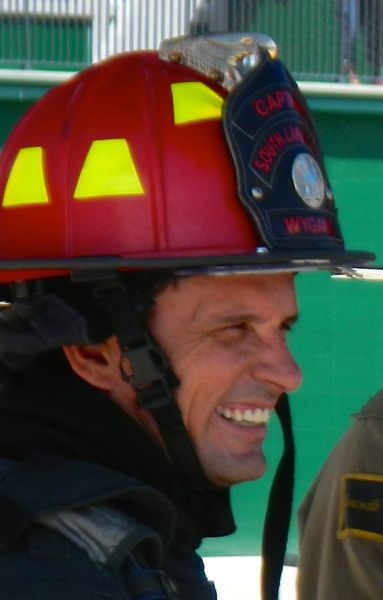
Mark WyGant

Mark WyGant

By Lake Tahoe News and News 10

South Lake Tahoe fire Capt. Mark WyGant has been charged with receipt of child pornography.

The investigation began when a computer flash drive was found in an unassigned locker at a city fire station, according to the federal criminal complaint. A search warrant had been obtained by local police to view the contents of the flash drive.

The criminal complaint stated more than 5,000 images of children engaged in sexually explicit conduct were on the drive. Additionally, there were more than 50 video files depicting child pornography on the drive. Several of the videos showed a minor known to WyGant. WyGant admitted in an interview with law enforcement on Thursday to recording those videos, the complaint said.

WyGant has been placed on paid administrative leave.

“We will not make any further comment other than the press release which was just approved by the FBI,” City Manager Nancy Kerry told Lake Tahoe News.

WyGant was promoted to captain in 2010. He was instrumental with the mass casualty training drill at the airport in August.

Court documents show that the alleged crimes began in March 2011 and were ongoing until at least December 2014.

He did not enter a plea at his hearing Jan. 30 in federal court in Sacramento.

If convicted of possession of child pornography, WyGant faces five to 20 years in prison. He is being held without bail.

His preliminary hearing was scheduled for Feb. 13.


Charter phone system out of service

Updated 2:10pm: Service to the Tahoe area is coming back, including at Blue Angel.

Charter Communications is having a global outage that is affecting phone service.

For businesses like Blue Angel Café in South Lake Tahoe it also means not being able to process credit cards, so it is a cash-only dining experience today.

The Glenbrook office for Charter has a recording that says, “Technicians are currently looking into a service interruption.”

The problem started about 9am Jan. 30. Two hours later Charter posted this on its Twitter feed, “We are aware of the interruption in services and apologize for the inconvenience. We are working diligently to resolve the issue.”

Internet service is still working.


— Lake Tahoe News staff report


Calif. declares electronic cigarettes a health threat

By Fenit Nirappil, AP

SACRAMENTO — California health officials Wednesday declared electronic cigarettes a health threat that should be strictly regulated like tobacco products, joining other states and health advocates across the U.S. in seeking tighter controls as “vaping” grows in popularity.

The California Department of Public Health released a report saying e-cigarettes emit cancer-causing chemicals and get users hooked on nicotine but acknowledging that more research needs to be done to determine the immediate and long-term health effects.

“E-cigarettes are not as harmful as conventional cigarettes, but e-cigarettes are not harmless” said California Health Officer Ron Chapman. “They are not safe.”

New generations of young people will become nicotine addicts if the products remain largely unregulated, Chapman said. Last year, 17 percent of high school seniors reported using e-cigarettes, known as vaping, according to the report.

“Without action, it is likely that California’s more than two decades of progress to prevent and reduce traditional tobacco use will erode as e-cigarettes re-normalize smoking behavior,” the report says.

E-cigarettes heat liquid nicotine into inhalable vapor without the tar and other chemicals found in traditional cigarettes. A cartridge of nicotine can cost anywhere from $5 to $20 and can be reused.

California banned the sale of e-cigarettes to minors in 2010, but the report raises concerns about children consuming liquid nicotine with flavors such as cotton candy and gummy bear. Reports of children under 5 with e-cigarette poisoning jumped from seven in 2012 to 154 last year.

The California report says e-cigarettes emit as many as 10 toxic chemicals, but advocates say there is no evidence those substances are released at dangerous levels.

“Despite the health officer’s false claims, there is ample evidence that vaping helps smokers quit and is far less hazardous than smoking,” Gregory Conley, president of the e-cigarette advocacy group American Vaping Association, said in an email. “Smokers deserve truthful and accurate information about the relative risks of different nicotine products, not hype and conjecture based on cherry-picked reports.”

The U.S. Food and Drug Administration is also proposing regulations that include warning labels and ingredient lists on e-cigarettes, although enactment could take years. California health officials are calling for restrictions on the marketing and sale of e-cigarettes and protections against accidental ingestion of liquid nicotine.

A state senator introduced legislation this week that would regulate e-cigarettes as tobacco products and ban their use in public places such as hospitals, bars and schools. A similar bill was defeated last year over opposition from tobacco companies.

Chapman, the health official, would not take a position on specific legislation, but said his department would be rolling out an e-cigarette awareness campaign with possible television and radio advertisements.

E-cigarettes have become more visible as they grow in popularity and commercials for the products air in places where traditional cigarette ads have been banned. Businesses related to e-cigarettes, including vaping lounges, are rapidly popping up in cities across California.

Geoff Braithwaite, co-owner of an Oakland store that sells liquid nicotine for e-cigarettes, said he understands the need to restrict vaping in public and prevent sales to minors. He says his customers are longtime smokers who should be able to get a nicotine buzz without the harshness of a regular cigarette.

“Nicotine has all this stigma attached solely to the medium we used to use,” Braithwaite said. “When you try to outright ban e-cigarettes, you’re lumping in the solution with the problem.”

Other states, including Oklahoma, Tennessee and Arkansas, already have issued advisories cautioning the use of e-cigarettes. Legislatures have been exploring restrictions on e-cigarette marketing, adding childproof packaging requirements and imposing taxes to discourage use.

“Health officials want to be proactive on this important public health issue,” said Lisa Waddell, who leads community health and prevention at the Association of State and Territorial Health Officials. “The issue of real concern here is we really don’t know everything that’s in these products, and you are seeing the rise of the use of these products in our children as well as our adults.”


Placer County moving forward with buying SLT hotel

By Mark Anderson, Sacramento Business Journal

Placer County officials have backed away from a land-use battle with South Lake Tahoe, but they’re moving ahead with the larger effort aimed at allowing development of a hotel on the north side of the lake for the first time since 1959.

The county had planned to pay private owners about $3.7 million for two hotels in South Lake Tahoe. It planned to demolish them, getting credits for doing so from the Tahoe Regional Planning Agency. Those credits would help the county entice developers to create a larger project in the north shore’s populated areas.

Placer County dropped its interest in the Howard Johnson, but is moving ahead with the other property, the 34-unit Lake Tahoe Inn at 3520 Lake Tahoe Blvd.

Read the whole story


Cheap parking makes life more expensive

By Emily Badger, Washington Post

Geof Glass, a doctorate student at Simon Frasier University, makes an interesting point in a blog post that’s been circulating for the last two days among people online fascinated by the economics of parking: The purchases you make at a store surrounded by free customer parking are effectively taxed to make that parking possible.

Glass puts this “invisible sales tax” at about 1 percent, given estimates that parking makes up about 10 percent of the cost of developing a store, while rents make up around 10 percent of a retailer’s costs of operating it.

That 1 percent, Glass argues, is then passed on to consumers in the cost of goods you buy at said store (which was built with, well, parking). These numbers would obviously shift depending on whether we’re talking about a surface parking lot or a more expensive parking garage, whether we’re talking about free parking, subsidized parking or pay parking. They would also change depending on the local cost of land beneath that parking. Here’s Glass:

This subsidy is like a tax, as governments require developers to build parking. For consumers the effect is the same as if the government collected the tax and built the parking itself. This is effectively a privately administered sales tax.

Read the whole story