Court grants arson suspect’s attorney more time

The attorney for suspected arsonist Wayne Allen Huntsman continues to ask the court for more time.

Huntsman, who is accused of starting last fall’s devastating King Fire near Pollock Pines, was in court Monday. The readiness and settlement hearing March 16 in El Dorado County Superior Court in Placerville has been continued to April 17. It’s possible a trial date could be set then.

Wayne Allen Huntsman

Wayne Allen Huntsman

The defense on Monday told the court more time was needed to investigate matters pertaining to the case. The District Attorney’s Office is ready to proceed.

A grand jury handed down an indictment Dec. 3, accusing Huntsman of arson of forestland with five special allegations of arson with aggravating factors. This includes causing great bodily injury because a firefighter was hurt, and an enhancement because of the 12 houses and 68 outbuildings that were destroyed at a loss of $6.5 million.

Huntsman’s bail remains set at $10 million.

The fire took nearly one month to contain. It burned 97,717 acres northeast of Pollock Pines, mostly in the Eldorado National Forest.

— Lake Tahoe News staff report


Seasons dramatically changing at Tahoe

By Julia Prodis Sulek, San Jose Mercury News

TAHOE CITY — There’s something disconcerting about life at Lake Tahoe these days.

It’s still winter, but visitors are renting bikes instead of snowshoes and kayaks instead of skis. Come summer — without last-ditch torrential rains — the lake level is expected to be at such a historic low that some marinas will have to dredge for boats to launch. Jumping off the end of a pier could result in a rock-hard landing.

California’s epic drought, entering its perilous fourth year, has combined with a pattern of warming temperatures to cast a “Twilight Zone” quality on one of the state’s most popular winter destinations and iconic landmarks.

“It’s bizarre what people are doing now. It’s so out of season,” said Geoffrey Schladow, director of the Tahoe Environmental Research Center and a UC Davis professor. “Years like this are going to become more common.”

In many ways, Lake Tahoe is California’s canary in the coal mine — at 6,200 feet. While our weather can quickly swing from one extreme to the other, the twin realities of the current relentless drought and steady warming over the past century are converging to create a remarkably different experience at the venerable — and vulnerable — lake. Everyone, from environmental agencies to businesses to tourists, is scrambling to adapt.

Long-term predictions by Lake Tahoe scientists warn that by the end of the century, summers could be two months longer and temperatures 8 degrees hotter than when Squaw Valley hosted the 1960 Winter Olympics. The dire effects of climate change present daunting challenges to local government officials, who have been patting themselves on the back for their efforts to Keep Tahoe Blue and reverse some of the damage caused by rampant lakeside development in the 1960s and ’70s.

But there’s nothing they can do to guarantee winter.

Read the whole story


South Tahoe man killed in suspected DUI crash

Updated: March 16, 1:40pm

A 28-year-old South Lake Tahoe man died Friday in a two-vehicle accident in Meyers.

David Earl Baker was riding in a vehicle that was struck by a man who was arrested on driving under the influence charges. Jonathan Hooker, 35, of El Dorado Hills was driving west on Highway 50 near Chiapa Drive in Meyers on March 13 at 10: 28pm when he swerved into oncoming traffic, according to a California Highway Patrol report.

Hooker’s vehicle struck a vehicle driven by Ginger Baker, 43, of South Lake Tahoe, sister of the deceased..

“The passenger of Baker’s vehicle was transported to Renown Hospital in Reno, via air ambulance, where he succumbed to his injuries, having taken the impact of the collision on the right front end and passenger side compartment,” the report says.

Hooker sustained major injuries and Baker had moderate injuries. Both were taken to Barton Memorial Hospital.

— Lake Tahoe News staff report


S. Tahoe identifies 12 acres for concert venue

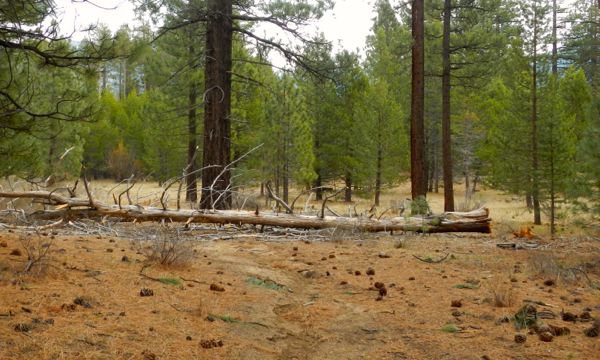
The clearing in the distance could be an area for a stage. Photos/Kathryn Reed

The clearing in the distance could be an area for a stage. Photos/Kathryn Reed

By Kathryn Reed

An outdoor concert venue that isn’t a parking lot. A setting that embraces the natural environment. A site that could be used year-round. A place that would have limited impact to residents.

It does exist in South Lake Tahoe.

City officials are looking at the possibility of turning 12 acres at Lake Tahoe Airport into an event center.

The Federal Aviation Administration has already given the OK to have special events there on a case-by-case basis. Through the airport master plan process the city is seeking to designate this area non-aviation. If that goes through, then the city can do what it wants with the land without permission from the FAA.

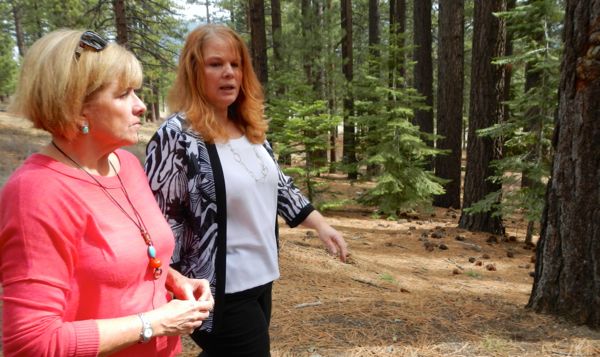
“It’s common sense this is non-aviation,” City Manager Nancy Kerry said while walking the property with Councilwoman Wendy David.

The City Council has approved a cost benefit study to be done. Engineers will be brought out to assess the site.

Much of the property sits a few hundred feet below Highway 50, paralleling Kyburz Avenue. This means little road noise for attendees and less chance of concert sounds drifting to residences.

Plus, the density of trees will help absorb the sound.

South Lake Tahoe City Manager Nancy Kerry, right, gives Councilwoman Wendy David a tour March 14 of the proposed event center site.

South Lake Tahoe City Manager Nancy Kerry, right, gives Councilwoman Wendy David a tour March 14 of the proposed event center site.

Walking farther into the space the quieter it gets. It’s like being in the wilderness even though civilization is so close.

Kerry said people are looking for an experience beyond listening to music. This setting would be designed to provide just that.

“They don’t want to bother your environment, they want to be in your environment,” she said.

South Lake Tahoe has been looking for a site to stage music festivals ever since SnowGlobe came to town in 2011. It brings more than 10,000 people each night to what is a three-day music festival at the ball field at Lake Tahoe Community College, and millions of dollars to the local economy. But it also brings wear-and-tear to the synthetic field, and noise complaints from neighbors.

The airport parcel is larger than the area used at the college for SnowGlobe.

The idea is not to build large structures or lots of permanent seating. Limited terraced seating would be created. At most multi-day outdoor festivals everyone is standing – often dancing.

Some infrastructure is in place – like a concrete slab from when this site was a summer boys and girls camp, and sewer capacity. A segment of a paved road from the corner of Kyburz Avenue and Melba Road remains and could be the route where vendors would access the facility.

Electricity would need to be brought to the area, fencing installed, some trees removed and one storm drain would need to be put underground.

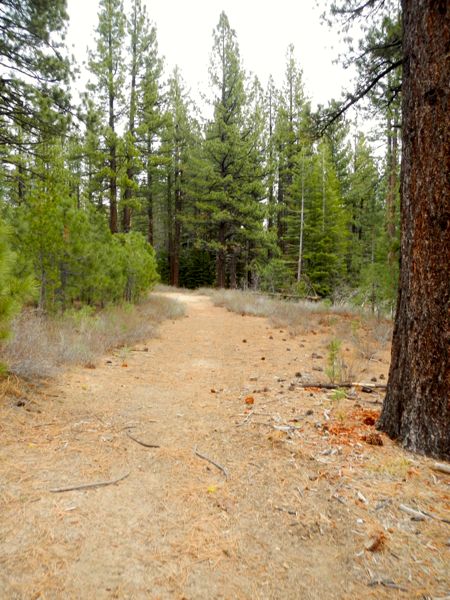
Part of the trail that exists is wide enough for vehicles.

Part of the existing trail is wide enough for vehicles.

A future bike trail through this area is already on the books. That is the route that would likely be developed for attendees to use. It’s already a distinct path that is well used by cyclists. Interpretive signs could be erected to educate the public about the forest, what being a steward of the land is about and other Tahoe-centric things.

Kerry said she envisions the entrance being at the defunct airport control tower. Parking would be at the airport, along with shuttles from other parts of town to the venue. People would then walk into the forest, a bridge going over the creek would be built and then multiple tents might be erected – like SnowGlobe – so various acts could be playing at the same time.

It’s also possible this site would be used for more than music events.

Originally, this parcel was slated to be commercial development to complement airport needs. With the city deciding to forgo trying to establish this as a commercial airport again, the need for ancillary businesses is a moot point.


Novasel unable to participate in Meyers plan

El Dorado County Supervisor Sue Novasel, who as a candidate for office said she would be the voice for Meyers when it came to the area plan, has been silenced.

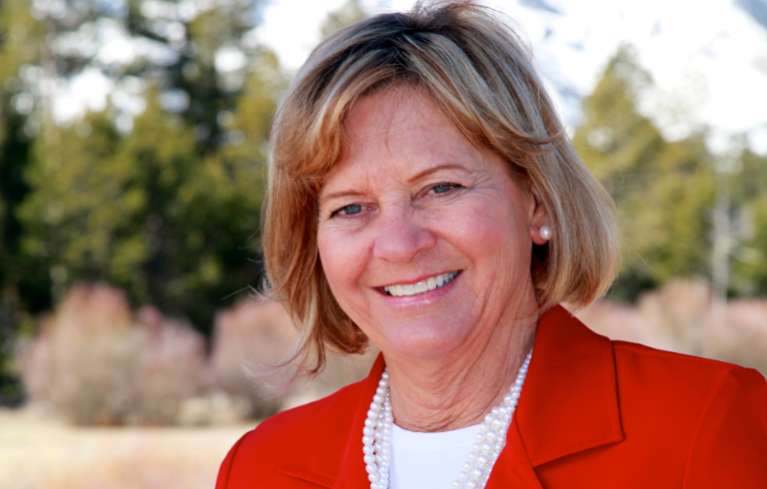
Sue Novasel

Sue Novasel

This is because she has a conflict of interest. Her 11.5 percent share of a parcel within the commercial core in Meyers is the stumbling block.

This means Novasel will have to recuse herself anytime the supervisors discuss the issue and she will not be able to vote on the plan. She can, however, still talk to residents and others about it.

Robyn Drivon, county counsel, also determined there is no conflict for Novasel to continue serving on the Tahoe Paradise Resort Improvement District board.

— Lake Tahoe News staff report


STHS grad stabbed to death in Sparks

By KOLO-TV

Police have released the name of a man stabbed to death Monday morning.

Police were called about 3am March 9 to Vista de Lago Drive in Sparks on a report of a medical problem. They found three people, one unresponsive after being stabbed in the chest. He was taken to Renown Regional Medical Center, where he died. He has been identified as Mark Allen Smith, a 1982 graduate of South Tahoe High School.

Read the whole story


Cost, confusion plague Nevada public records

By Ken Ritter, AP

Cost and confusion can be obstacles to obtaining public records in Nevada, where reporters are sometimes quoted high fees for research, redaction and copying.

Sure, the Silver State has open record and open meeting laws. But it might be unique in the U.S. for not defining what a public record actually is, officials said.

“There is no single definition that can be found within Nevada Revised Statutes,” said Colby Williams, a Las Vegas attorney who has handled access-to-records cases for the Associated Press, the Las Vegas Review-Journal and National Review.

State law section 239 lets agencies at all levels charge 50 cents per printed page for “extraordinary use of personnel or technological resources.” But Barry Smith, executive director of the Nevada Press Association, said he thinks some entities use the rule as a moneymaker — or a barrier.

“The trouble comes when some agencies see it as an opportunity to discourage people from obtaining public documents by jacking up fees as much as possible,” Smith said. “I hear from newspapers and reporters that they want to charge for redaction by an attorney at $100 an hour. That can easily run into thousands of dollars.”

The Nevada System of Higher Education told the Las Vegas Sun that agency staff members spent 54 hours, at a cost of $5,579, to compile 844 pages of documents sought for a story, said Ric Anderson, managing editor of the newspaper.

University administrators eventually agreed to limit the overall cost to 50 cents per page, or $422. Anderson said the Sun arranged to have a reporter review the documents at the system office in Las Vegas to avoid the cost.

Clark County charged $150 — tallying three hours of work at $50 per hour — to produce 125 emails by seven Clark County commissioners after a reporter asked last May for communications relating to medical marijuana licensing, Anderson said.

“We believe documents should be readily obtainable and available at minimum cost,” Anderson said. “We understand there are instances where frivolous requests tie up peoples’ time. Our requests are reasonable. We’re working on behalf of the public.”

Sparks police charged AP in Reno $67 for 1,300 pages of records relating to an October 2013 school shooting, or a little less than 20 cents a page. Reno police charged $50.95 for a compact disc with 1,168 pages of documents about a December 2013 shooting at Renown Regional Medical Center, just less than 23 cents per page.

Wes Henderson, executive director of the Nevada Association of Cities and Municipalities, denied that government officials try to gouge people who make freedom of information requests.

“The argument that the intent is to limit public access or to make money is a red herring,” Henderson told a state Legislature panel taking up a bill to let public agencies begin charging 50 cents per page for electronic documents. The association supports the bill.

“Most requests for copies or records, people ask for it; they get it. No charge,” Henderson said in an interview. “We want to be able to recoup some of the cost for the requests that take more time and effort.”

The measure, Senate Bill 28, would let agencies collect an additional fee for a record requiring more than 30 minutes of staff time, or totaling more than 25 pages.

Henderson said the intent was to clarify confusion about the “extraordinary use” clause.

He acknowledged the proposal is unpopular with the media. He pointed to a Las Vegas Review-Journal editorial calling it the worst bill of the 2015 state Legislature.

Stanton Tang, news director at KOLO-TV, the ABC affiliate in Reno, said reporters and editors understand that it takes time for staff members to make physical printouts.

“But to drag-and-drop a file takes moments,” Tang said. “What’s the need for them to increase expenses for these files other than to discourage people from asking?”

Agencies that field open-record requests counter that turning over email records is nothing like pulling a piece of paper from a file and making a copy.

Police employees have to review the entire record to remove birthdates, Social Security numbers and other personal identifiers, said Charlotte Bible, a Las Vegas Metropolitan Police Department lawyer.

“We always have to be concerned that the records that are produced … may be posted on the Internet,” Bible told the state Senate Committee on Government Affairs.

Smith said another impediment to openness and transparency is the lack of any entity with authority to enforce open-record laws.

“In Nevada, the only recourse we have when someone denies a record or tries to charge us is to go to court,” the press association chief said. “That, in itself, can be a barrier.”

But Williams said that once a civil complaint is filed, state judges and the Nevada Supreme Court usually order a record to be released.

“I’d give the courts an ‘A’ in the way they interpret the statute,” he said.



Oversight of bottled water firms lacking

By Ian James, Desert Sun 

Some lawmakers are raising questions about the impacts of bottled water companies on water supplies in California after a Desert Sun investigation found little government oversight of the amounts of water being tapped or the effects on the environment.

Despite the drought, no state agency has been tracking exactly how much water is used by industries such as the state’s 108 bottled water plants. The Desert Sun also found that the U.S. Forest Service has been allowing Nestle Waters North America to keep using a pipeline to transport spring water out of the San Bernardino National Forest even though its permit expired in 1988.

Sen. Barbara Boxer, D-Calif., said the Desert Sun’s report raised important issues that should be addressed.

Read the whole story


Judge rejects Nevadans’ bid to dispose of excess mustangs

By Scott Sonner, AP

A federal judge on Thursday threw out a lawsuit filed by a coalition of rural Nevada counties that wanted to force the government to sell or otherwise dispose of tens of thousands of mustangs in U.S. holding facilities.

U.S. District Judge Miranda Du in Reno ruled in favor of wild horse advocates who said the effort backed by the Nevada Farm Bureau Federation was organized by ranchers who want a bigger share of forage for their livestock. They said it would have forced the sale of federally protected mustangs for slaughter.

Du said in a nine-page opinion dismissing the lawsuit that it was an unsubstantiated, broad attack on the Bureau of Land Management’s overall wild horse policy effective in 10 western states. She said the suit lacks specifics needed to order BLM to round up more horses and get rid of the ones the agency says it already has gathered in compliance with the Wild Free-Roaming Horses and Burros Act.

The Nevada Association of Counties filed the suit against the U.S. Interior Department in December 2013 and asked for an injunction to force BLM to immediately roundup excess horses on public lands, determine statewide population levels every two months, “sell or dispose of” excess animals in government holding, and “stop interfering with Nevadans’ water rights,” Du wrote.

“Plaintiffs essentially ask the court to compel compliance with the act and refashion the federal defendants’ management of wild horses and burros in Nevada,” she said. She cited a 1990 U.S. Supreme Court ruling in a Utah case that she said established they “cannot seek wholesale improvement of this program by court decree.”

BLM also had asked the judge to dismiss the case. Du said that motion was moot now that she’s granted the dismissal sought by the American Wild Horse Preservation Campaign, Reno-based author Terri Farley and wild-horse photographer Mark Terrell of Dayton, Nevada.

“The frivolous bid by cattlemen to roundup and slaughter America’s iconic wild horses to clear the public lands for commercial livestock grazing has now been soundly rejected by the federal court,” said Suzanne Roy, director of the American Wild Horse Preservation Campaign.

The case had made the BLM and horse advocates rare allies in a larger, ongoing legal battle over the mustang roundups that the horse advocates argue are illegal and should be stopped. Nevada Bighorns Unlimited had sided with the Farm Bureau and the rural counties.

Lawyers for the BLM said in their motion to dismiss the case in January that they agreed with the ranchers’ contention that current herds are overpopulated and threaten the ecological integrity of the range, much of it suffering from multiple years of drought. But they said the agency is hamstrung by budget cuts, and a congressional ban on the sale of excess horses for slaughter has pushed their holding facilities to the brink of capacity.

BLM estimated that as of March 3 there were 40,815 horses roaming BLM lands from Colorado to California — nearly twice as many as the agency maintains the range can sustain. More than 47,000 mustangs that have been gathered in recent years remain in holding facilities — an estimated 31,250 in long-term pastures and 16,203 horses in short-term corals, according to the BLM’s website.


Pollen in Tahoe triggering allergic reactions

By Kathryn Reed

That runny nose and cough may not be a lingering cold. It could be allergies.

There is no “allergy season” per se, just peak times for certain allergies. With plants beginning to bloom sooner than normal in the basin, people are experiencing allergic reactions to them. How this affects an individual all depends on what one is allergic to.

The pollen count in the Lake Tahoe Basin has been on the rise with the arrival of an early spring. According to Pollen.com, South Lake Tahoe is expected to have a pollen count of 8.8 today, which puts it in the medium-high zone. Sunday it could hit 10 and Monday 11.3 – both in the high category.

The Centers for Disease Control and Prevention says 8 percent of the people in the United States suffer from seasonal allergies – that is about 40 million people.

“The most common plant allergy in South Lake Tahoe is pine pollen. Other common allergies are dust and pet dander,” Ronald Roth, a board-certified otolaryngologist at Barton Ear, Nose, & Throat, told Lake Tahoe News.

Plants, flowers and trees are blossoming and blooming in Lake Tahoe. Photo/LTN

Plants, flowers and trees are blossoming and blooming in Lake Tahoe. Photo/LTN

Pollen is the main allergen of hay fever.

One way to help curb the problem is to stay inside and try not to bring pollen indoors. But this can make people feel like a shut-in. It also means not opening windows to have a fresh breeze.

While plant allergies are seasonal, dust allergies can be a year-round problem. However, dust and fungus allergies are more common in winter, according to Roth.

“If you experience allergies, try an over the counter medication. Decongestants such as Claritin or Zyrtec, or nasal spray, including Nasacort, can relieve allergy symptoms for some people,” Roth said.

He offered these tips:

• Wash your pets.

• Change your air filters.

• Buy down-proof pillowcases and protectors.

• A HEPA air filter can also make it easier to breathe.

• If you’re seeing persistent symptoms, contact your primary care provider for a prescription medication or for other treatment options.

Symptoms include:

• Runny nose

• Congestion

• Headaches

• Cough

•Throat irritation

• Post nasal drip

• Ear itching

• Ear fullness or congestion.

Allergies treat everyone equally. Men and women of all ages are susceptible to being allergic to something.