Kings Beach roadwork to start this month

Work on Highway 28 in Kings Beach will begin in April and continue in May and June.

During July and August, work will shift off of the highway and into the adjacent neighborhood grid. Then in September and October, work will resume on Highway 28.

Barring any major unforeseen delays, it is anticipated that the first phase of the project will be completed this fall.

The plan is for construction crews to work from 7am-5pm.

Crews will begin work just east of Coon Street along the north side of Highway 28 and work toward the Minnow Street parking lot. Concurrently, crews will begin work just west of Bear Street along the north side of Highway 28 and construct improvements to Deer Street. Another crew will begin the remaining underground drainage work near Secline Street. Although crews will be working in three areas at once, two of the crews will be focused on curb, gutter and sidewalk improvements along the shoulder area of Highway 28.

Three parking lots will be constructed as part of the first phase of construction. Two permanent bus shelters which will be constructed to replace the two temporary bus shelters erected last season at the Chevron Station and in front of the Kings Beach State Recreation Area.

Tahoe Public Art received 38 proposals in response to a call to artists for public art at the two new Kings Beach roundabouts. Two juries have selected five finalists.


Calif. drought makes wildfires year-round threat

By Ellen Knickmeyer, AP

Big wildfires have burned almost four times as many California acres as usual so far this winter, a sign of wildfire danger growing higher still as the state moves into its fourth year of drought.

The high fire risk from the drought means the California Department of Forestry and Fire Protection is maintaining its highest level ever of seasonal firefighters straight through the winter, statewide. The department also will go up to peak summertime staffing as soon as early June, four to six weeks earlier than normal, fire chief Ken Pimlott said.

“It’s changing the dynamic, absolutely,” Pimlott said by telephone, referring to the near-statewide drought. “The conditions are absolutely ripe” for a big year for wildfires.

California, with its Mediterranean climate of winter rain and snow and dry summers, normally experiences winter as the offseason for fighting firefighters. A normal year lays down a blanket of snow in the Sierra Nevada that melts through the spring, helping keep grass and shrubs too wet to burn. In a normal year, winter wildfires will burn no more than a dozen acres or so before flickering out, department spokesman Daniel Berlant said.

This year, fires keep burning, due to tinder-dry fuel, Berlant said. In a normal year, large wildfires in areas under his department’s jurisdiction will have burned 800 acres by this time of year. This winter, it’s 3,200 acres, and counting.

Southern California long has had winter wildfires. This year, so has Northern California, including even foggy, forested Humboldt County, which gets more than 4 feet of rain in a non-drought year. “In some of the wettest places in the country, we were having 300-, 400-acre fires,” Pimlott said.

And in Central California, a wildfire burning entirely above what would have been the Sierra Nevada snowline burned 7,000 acres and 40 homes — in early February.

“It pretty much burned the same at 4,000 feet all the way up to 8,000 feet,” said Bennet Milloy, a department firefighter paramedic, and spokesman, who was at the scene of that fire, which broke out Feb. 6 in the eastern Sierras.

At the scene of that winter wildfire, “there was almost no snowpack, just a light dusting of snow,” Milloy recalled. With no grass, given the drought, the wildfire jumped from bush to bush, which were “pre-cured and dried and ready to burn,” Milloy said.

The drought, and a warming climate here, has had firefighters battling larger-than-usual wildfires for years now. Half of the state’s largest wildfires on record occurred since 2000, Berlant said.

At peak staffing later this year, the state forestry department will have more than 300 fire engines stationed around the state. With the drought, the state also has added a fourth person to each fire-engine’s normal three-person crew. The state will bring additional firefighters and aircraft on line as well, Pimlott said.
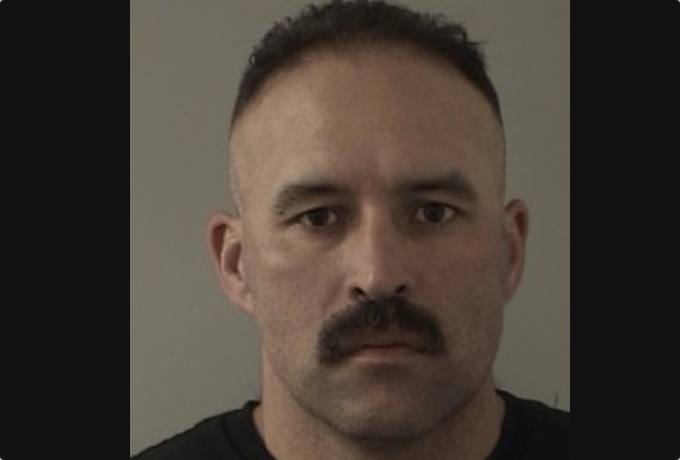



EDSO deputy accused of domestic violence

An El Dorado County sheriff’s deputy was arrested March 19 on felony domestic violence charges.

Shane Humbird

Shane Humbird

Shane Humbird, 36, was taken into custody that day after his colleagues responded to the 4000 block of Oak Leaf Circle in Placerville for a report of domestic violence.

Humbird has been with the department for 10 years. In 2012, he received the silver and bronze life saving award from the department.

He posted the $10,000 bail.

It is not known if he is on paid or unpaid administrative leave.

— Lake Tahoe News staff report


TRPA to fine SLT hotel for illegal tree cutting

By Kathryn Reed

The Landing Resort & Spa got caught illegally cutting down trees after much speculation that such activity had occurred from the onset of renovation at the South Lake Tahoe site.

The Tahoe Regional Planning Agency Governing Board on Thursday is set to approve a settlement agreement that calls for a $40,000 fine and planting of four mature 15- to 20-foot Jeffery pines in the location where the ones that were removed were located.

The staff report for the March 26 meeting says, “The four planted trees shall be inspected after two years for survival and may not be removed without TRPA approval. If any of the trees die within the first two years, a new tree shall be planted and monitored for two years after planting. The four trees shall be planted no later than May 31, 2015.”

TRPA staff in July received a complaint that the South Lake Tahoe hotel had illegally removed the trees. The trees that were removed were 14 to 24 inches around at breast height, according to TRPA. Per TRPA rules, all trees more than 14 inches in diameter must have a permit for removal.

“… TRPA staff found that the previous general manager directed a tree service from out of the area to remove the trees in order to improve the view from the resort. Multiple permits for tree removal have been issued to the Landing over the past few years and TRPA staff therefore believes that the Landing representative did this work with full knowledge of TRPA’s permit requirements,” the staff report says.

In 2013, the year the hotel – which had been the Royal Valhalla – opened, there was speculation that trees had been poisoned at the property so then a permit could be obtained for their removal.

Jim Demetriades, owner of the hotel, is the one being fined. He will have 30 days to pay it after the board approves the agreement. He has already signed the agreement.

—–

Other newsworthy items on the TRPA agenda:

• A briefing on California Pacific Electric Company 625 and 650 Electrical Line Upgrade Project. CalPECO is the parent company of Liberty Utilities, which is seeking to upgrade electric lines on the North Shore and Truckee. No action is expected. This will be heard March 25, no earlier than 1pm when the board meets at the Chateau in Incline Village.

• Expected approval of amending Heavenly Mountain Resort’s master plan to accommodate summer activities like Epic Discovery. To be heard March 26, 9:30am at the Stateline TRPA office.

• Aquatic invasive species update – March 26.

• Boat inspection fee schedule – March 26.


Placer County spending money at Lake Tahoe

Placer County supervisors this month went on a bit of a spending spree that will affect Lake Tahoe.

Working with the North Lake Tahoe Resort Association in how to spend money collected from the hotel tax in the region, the supervisors allocated $1.48 million.

The transient occupancy tax money will be doled out starting July 1 for the following projects and others:

• Truckee River Trail Restoration between 64 Acres Park in Tahoe City and the entrance to Squaw Valley.

• Design and construction of Martis Valley Trail segment 3A.

• Improving the Squaw Valley Bike Trail surfaces.

•Wayfinding sign at North Tahoe Regional Park trail.

• Art in the Kings Beach roundabouts.


SLT taking stab at enforcing sign ordinance

South Lake Tahoe is on a beautification quest of sorts. This means it is going to start enforcing rules on the books so the city looks better. Officials are going to start with the sign ordinance.

This means actually not allowing the illegal signs.

Businesses with a permitted sign do not need to do anything. Businesses with unpermitted signs should contact the city’s planning division to determine if their signs require a permit or not.

Unpermitted signs typically include signs added to the sides of buildings, sandwich boards displayed during times when they are not allowed, temporary signs, and various miscellaneous signs on buildings may not be permitted.

“Too many signs on buildings adds to the clutter of Highway 50 and detracts from the natural environment. With the new Fix-Up 50 Initiative, the City’s Code Enforcement Officers will initiate a community outreach and education effort requesting voluntary compliance to remove unpermitted signs. By the end of April 2015, unpermitted signs not removed will be citied,” Police Chief Brian Uhler said in a statement.

This code enforcement falls under the purview of the police department. Non-sworn personnel are used for this work.

This is what code enforcement officers plan to do:

• March: Community outreach – Explorer Scouts handing out informational brochures to all businesses on Highway 50.

• April 1-12: Code enforcement officers and planning officials to confirm/document all unpermitted signs.

• April 13-24: Code enforcement officers will visit all businesses with non-compliant signs. Notice will be given to remove signs within two weeks.

• April 27-May 11: Code enforcement staff will issue citations to violators who have not acted upon the warning. City staff will remove all signs that were not removed voluntarily to retain as evidence of the violation.

Businesses may call 530.542.6010 for more info.


Brown unveils emergency drought legislation

By Chris Megerian and Melanie Mason, Los Angeles Times

Gov. Jerry Brown and top lawmakers from both parties announced Thursday a $1-billion plan to deal with California’s persistent drought, describing the legislation as a mix of short-term relief and support for long-term water projects.

“This is a struggle,” Brown said at a Capitol news conference. “Something we’re going to have to live with. For how long, we’re not sure.”

Millions of dollars would be spent faster than previously scheduled to provide food assistance and emergency drinking water in hard-hit communities. Additional money would go to wildlife preservation.

The bulk of the legislation would fund infrastructure initiatives that might not be completed for years. The proposal includes $272.7 million from the $7.5 billion water bond approved by voters last year for projects such as water recycling and desalination.

Read the whole story


Derby rejoins Barton for 1-year CFO stint

Dick Derby didn’t stay retired long.

Dick Derby

Dick Derby

He has been rehired by Barton Memorial Hospital to be the interim chief financial officer. A one-year contract has been signed. His first day will be March 23.

The need to rehire Derby, or someone else, was needed after the South Lake Tahoe healthcare system fired Steve Neff on March 11. Neff had been employed since August, the same month Derby initially retired. Derby was CFO for 14 years.

“He will be resuming chief financial officer duties in the interim while the executive team conducts a search to fill the position,” Barton Health spokeswoman Mindi Befu told Lake Tahoe News.

— Lake Tahoe News staff report


Calif.’s power solution could be solar

By Puneet Kollipara, Washington Post

Deserts and remote fields are popular spots for building vast arrays of solar panels, which generate dramatically more energy than individual homeowner rooftop installations. These areas are rich in sunlight while offering plenty of clear, flat land to work with. But what if we didn’t always have to go all the way out to these remote and potentially ecologically fragile areas? What if we could simply drive down the street and make use of the buildings and lands in areas we’ve already developed?

A new study suggests that such a strategy could work in a state like California, which is working aggressively to boost its renewable energy use. And it could provide a lot of power. There’s enough space suitable for solar power on or near land that humans occupy in the state to power three to five of today’s Californias, researchers report in Nature Climate Change.

California is a clean energy trailblazer on a number of fronts. It’s a part of a carbon emissions trading program with other Pacific states, and has also set a goal of supplying one-third of its electricity from renewable sources such as solar and wind by 2020, and cutting its carbon dioxide emissions 80 percent by 2050.

Read the whole story


Nev. bill would OK medical marijuana for pets

By Michelle Rindels, AP

CARSON CITY — Pets might soon be able to use pot under a bill introduced Tuesday in the Nevada Legislature.

Democratic state Sen. Tick Segerblom is sponsoring the measure that would allow animal owners to get marijuana for their pet if a veterinarian certifies the animal has an illness that might be alleviated by the drug.

Segerblom said he’s concerned that some animals might have adverse reactions, but “you don’t know until you try,” he said.

Some veterinarians who have given cannabis to sick and dying pets say it has relieved their symptoms, although the substance hasn’t been proven as a painkiller for animals.

Los Angeles veterinarian Doug Kramer told the Associated Press in 2013 that pot helped ease his Siberian husky’s pain during her final weeks, after she had surgery to remove tumors. Kramer said cannabis helped his dog, Nikita, gain weight and live an extra six weeks before she was euthanized.

“I grew tired of euthanizing pets when I wasn’t doing everything I could to make their lives better,” Kramer told the AP. “I felt like I was letting them down.”

The proposal is in its earliest stages and faces several legislative hurdles before it could become law. The pot-for-pets provision of SB372 is part of a larger bill that would overhaul the state’s medical marijuana law, removing penalties for drivers who have marijuana in their blood and requiring training for pot-shop owners.

Segerblom said he added the provision after being approached by a constituent.

State Sen. Mark Manendo, a fellow Democrat and animal rights advocate, said he hadn’t heard of the practice of giving marijuana to animals and is concerned about its safety.

“That gives me pause,” he said. “Alcohol is bad, chocolate is bad for dogs.”

His own dog died in his arms at age 15, and the experience was difficult and emotional, he said.

But “I don’t know if I would’ve given him marijuana,” Manendo said.