RENO — The fourth consecutive year of drought in and around Lake Tahoe is shaping up to be the worst by far.
Snowpack in the Lake Tahoe Basin is down to 3 percent of normal, said Nevada State Climatologist Doug Boyle, during a presentation on the drought at the UNR on Tuesday.
Nearby basins are faring little better. The Truckee River Basin stands at 14 percent, while the Carson River Basin is at 5 percent and the Walker River Basin, south of Lake Tahoe, is at 21 percent.
Boyle said Nevada has so far received less than 3 inches of precipitation, about 60 percent of normal and a three-year trend.
Idle snowplows is becoming the norm as the drought persists. Photo/LTN file
“If you include the year before that, over an entire year of precipitation is missing in many parts of the state,” he said.
Boyle said the forecast through June shows no relief, with higher than average temperatures and, at best, normal precipitation expected.
Separately, Truckee Meadows Water Authority announced it was asking customers to voluntarily cut back water consumption by 10 percent in order for the water purveyor to save and store up to 5,000 acre-feet, or 1.6 billion gallons, of water for next year.
TMWA outlined guidelines for watering lawns, including watering 4-6 minutes three times on assigned watering days.
John Cobourn, water resource specialist with UNR Cooperative Extension, who was part of the drought presentation at UNR, told Lake Tahoe News homeowners should test sprinkler systems for efficiency.
“It’s not uncommon for lawns to get five times the amount of water they need,” said Cobourn.
He said a simple test is to place empty soup cans, about 20 per 1,000 square-foot lawn, and run the sprinkler system to check for volume and consistency.
If the cans capture varying amounts of water, the sprinklers need to be fixed to ensure even application rather than increasing the water overall.
He said to also check the cans for volume. Lawns should be watered three times a week and the total should not exceed 1.5 inches in the summer.
Boyle and Cobourn were joined by about a dozen other water experts from UNR and the Desert Research Institute discussing various programs and efforts to monitor and forecast the ongoing drought and to find better, more efficient ways to use water.
Water for the Seasons, for example, is a four-year program started about six months ago and staffed by UNR, Cooperative Extension and DRI. Funded by the U.S. Department of Agriculture and the National Science Foundation, the program is taking a more holistic approach to water usage.
“How do you integrate data with very specific human behaviors? How do you enhance resiliency?” asked Maureen McCarthy, interim director of Academy for the Environment at UNR.
The program focuses on the Truckee Carson river system, but McCarthy said solutions could be applied to any snowpack-based water system. The program’s staff of 10 is talking to water managers including TMWA, Tahoe Regional Planning Agency, Carson Water Subconservancy District and the Truckee Carson Irrigation District.
Next, the group will work with water rights holders such as the Fallon and Fernley farmers served by TCID.
Eventually, a Stakeholder Advisory Group consisting of managers and rights holders will be formed to come up with ideas to more flexibly use water, such as creating consortiums of water users who share rights.
McCarthy is also executive director of the Tahoe Science Consortium, which is finishing up eight years of research funded by the Southern Nevada Public Land Management Act. That research includes lake clarity, fuels management, air quality, aquatic invasive species and snowpack and snow dynamics. The research is, in part, attempting to address the question on many peoples’ minds.
“What do we do in the basin if this is the new normal?” said McCarthy.
Stateline casinos do better than state
The Super Bowl often makes that month’s gaming numbers in Nevada in the positive. Not so this February.
Losses on the Strip helped bring down the entire state, according to the Nevada Gaming Control Board. Casinos won $916.1 million in February, a drop of 1.08 percent compared to 2014.
Stateline properties, though, fared better. They were up 5.66 percent year-over-year to more than $15.57 million.
— Lake Tahoe News staff report
Ordinance would redefine lodging in SLT
By Kathryn Reed
South Lake Tahoe has an overabundance of lodging units. With 26 percent of the more than 5,000 rooms within the 120 hotels-motels being used for long-term rentals, the city is on a quest to change the rental market landscape.
In doing so, it could help the hotel market so the less desirable rooms are off the market and are not dragging down the average daily rate.
Average daily rate for South Lake Tahoe hotels in fiscal year 2013-14 was $127.65, according to the Lake Tahoe Visitors Authority. Those are the most current statistics. That number has been rising since 2009-10, but is still off the peak of $137.11 in 2008-09.
Occupancy in 2013-14 was at 25 percent. Since 2003-04, occupancy has ranged from 20 to 28 percent. Hotel occupancy in a tourist destination should be double those numbers, according to officials. City officials would like an occupancy rate of 60 to 70 percent.
“As far as single occupancy motels, I think any destination is served well with a mix of property types, but we just have more than we need from a demand perspective. And from a visitor perspective, we think he/she is looking for more amenities than that typical property would be able to provide,” Carol Chaplin, LTVA executive director, told Lake Tahoe News.
The single room occupancy ordinance will essentially legalize long-term rentals, even though city officials say that is not the case.
“We are working with TRPA because these are still in essence short-term housing. They are not intended for long term,” City Manager Nancy Kerry told Lake Tahoe News. “They are transient occupancy.”
The city is calling this change a hybrid model.
Property owners will still get to keep their transient occupancy units, which in the Lake Tahoe Basin are a commodity. The Tahoe Regional Planning Agency decades ago created them as a way to control growth. Mission accomplished. However, the unintended consequence is that these properties have a higher value than they would if left to the free market.
What the ordinance is intended to do is address the quality of life for people in these units. Many people are cooking in them, stressing electrical systems that were not designed for this use, and they don’t have laundry facilities.
Rent at some of these places is $900 a month. People are in them because they can’t save enough for first, last month’s rent and a deposit.
Val McClay, 17, lived in the Elizabeth Lodge with her dad and younger brother when they first arrived to town last year. The room had a mini refrigerator and microwave. It was small, pretty clean and didn’t have laundry.
“The best thing about it was it was a place to live. The worst were the neighbors and the people there were not good. They were loud and disruptive,” McClay told Lake Tahoe News.
Current code does not allow inspections of hotels. The proposed ordinance would allow inspections similar to what is done with multi-family residential housing.
One of the problems is the city doesn’t have many places for short- or long-term rentals. That is how the hotels got into the business of providing residential housing instead of tourist accommodations.
“I think the city is creating an opportunity for people such as myself to provide better quality moderate income housing,” Dave Kurtzman, who owns 20 units that would be affected by the ordinance, told Lake Tahoe News. “I am not sure how I will go about doing it. It will depend on what the regulations are.”
His goal, as well as the city’s, is for tenants to have better accommodations.
It will be up to the property owners if they act more like a traditional motel, where paying transient occupancy tax is required, or if they comply with the ordinance to essentially act as a long-term rental.
Kerry hopes the changes will attract capital investors to the area; as well as better align the supply-demand of tourists-hotels and residents-living quarters.
“Government can create policy to help incentivize change. The ordinance is intended to do that,” Kerry said.
Neither Lake Tahoe South Shore Chamber of Commerce’s board nor its Government Affairs Committee hacw taken an official position on this topic.
“There are numerous perspectives in addition to intended and unintended consequences to be discussed and addressed during the process,” B Gorman, CEO of the chamber, told Lake Tahoe News. “There are questions that need to be answered related to the impacts on lodging such as the direct impact these properties have or could have on lodging rates and property values. There are additional community and societal concerns related to the aesthetic impact these properties currently have on the community versus the potential improvements as well as crime, health and safety issues.”
—–
Notes:
• Single room occupancy ordinance workshop on April 22 at 5pm at South Lake Tahoe Senior Center, 3050 Lake Tahoe Blvd.
• The ordinance should be voted on this spring by the City Council.
• Property owners would have one year from July to become compliant.
Little oversight with El Dorado County contracts
By Kathryn Reed
El Dorado County does not require a no compete clause for most employees. This proved to be a profitable turn of events for Alliant Insurance Services and York Risk Services.
When Kim Kerr started with El Dorado County as assistant county administrative officer on June 30, 2011, the contract with Alliant was for $375,000.
In November 2012, Kerr became the county’s contract administer. This meant she was in control of the Alliant contract. The compensation was increased to $470,000.
In January 2014, the compensation was increased to $510,000. By the time Kerr left in December the compensation was increased to $610,000.
Kerr now works for Alliant.
“The prior Board of Supervisors had a bad weakness of not doing background checks on high level managers that they hired. It appears that Alliant Insurance Services has the same serious weakness,” Joe Harn, county auditor-controller, told Lake Tahoe News.
For fiscal year ending June 30, 2014, the state controller’s office in its field review report of the county’s cost allocation plan found that employees were overbilled by more than $5.2 million for the health benefit plan.
Kerr was responsible for managing this program.
“A refund must be processed and refund given to all funds or departments, employees and retirees that contributed to the excess in the Health Benefit Program,” the state report says.
That refund has further contributed to the county’s fiscal woes.
The county in November 2011, under Kerr’s watch, signed a two-year contract with York for $21,750 per month. In November 2013, the county signed a three-year contract with York for a slightly higher rate. It increases every month.
On June 30, 2012, Kerr hired Sherri Adams. The two knew each other from working on California State Association Counties Excess Insurance Authority committees.
Adams left El Dorado County on Oct. 24, 2014. Her last title was principal risk management analyst, making $40.73/hour at step three. She now works for York.
El Dorado County faces suit from pot club
By Peter Hecht, Sacrament Bee
The former operator and members of a Diamond Springs marijuana dispensary are suing El Dorado County to recover seized marijuana, medical records and financial documents taken in a Sheriff’s Department raid last year.
The Pure Life Collective has been shuttered since the Nov. 17, 2014, raid, which resulted in the arrest of dispensary operator Kelly Chiusano. No charges have been filed.
The dispensary’s lawsuit, filed by a prominent Bay Area lawyer specializing in medical marijuana, charges that the El Dorado County Sheriff’s Department wrongly raided Pure Life, which had been granted a permit to operate by the county’s Community Development Agency.
The lawsuit, filed last week by Sausalito lawyer Zenia Gilg and law partner Heather Burke, charges that the Sheriff’s Department “wasted public resources” by having undercover officers with physicians’ recommendations purchase medical marijuana at the dispensary and through its delivery service.
Cathy Egan has been supporting herself since she was 18, when she worked as a waitress in Minneapolis. Her 23-year-old son lives at home and relies on his single mother for transportation, food, and other expenses. Egan, now 50, only began putting money aside for retirement five years ago, after she started working as a licensed practical nurse for the Veterans Health Administration — her first job with benefits.
Although she also has a son in high school, the single mother can’t bring herself to cut off her eldest, who earns $8.50 an hour plus tips delivering takeout orders part time for a restaurant in St. Paul. “Right now, I’m still the supporter,” she says.
Baby boomers are putting their retirements at risk by spending too much on their adult children. With real wages stagnant and unemployment among those age 16 to 24 running above 12 percent, large numbers of households continue to dole out cash to children no longer in school, covering rent, cell phones, cars, and vacations.
A July 2014 survey by American Consumer Credit Counseling, a Boston nonprofit, found that a higher proportion of U.S. households (1 in 3) provide financial assistance to adult children than support for elderly parents (1 in 5).
Kirkwood real estate officials are confident the market has turned and are beginning to build. Photo/Jessie Marchesseau
By Jessie Marchesseau
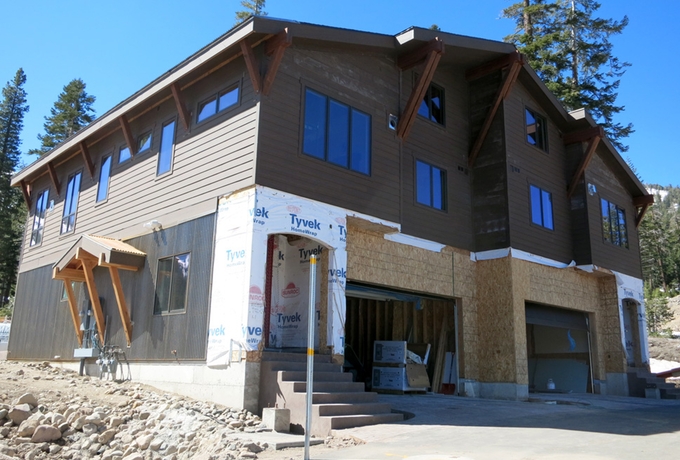
KIRKWOOD – By the time Kirkwood closes its lifts for the season, the new townhome building under construction near the Timber Creek Village should be completed. This building, the first in the development, houses two townhomes in what is slated to become a 21-unit complex.
Situated right at the base of Timber Creek, the Timber Creek Townhomes will be eight buildings of ski-in, ski-out residences. The development will eventually take over what is currently the Timber Creek parking lot, with parking spaces being relocated to across the street.
The Timber Creek Townhomes are the first multi-family residential development at Kirkwood in more than five years and the first one by Kirkwood Resort Development in more than 15. Sentinels West, directly across the street from the TC Townhomes, was built by a private developer between 2006 and 2009. Though Kirkwood Resort Development did a series of single-family projects in the early 2000s, the group hasn’t taken on a large multi-family project since the Mountain Club in 1999.
So why did KRD decide now was the time to get back into the residential real estate game? According to Peter Forsch, chief executive officer of Kirkwood Resort Development, now is the ideal part of the market cycle for them to step in. Real estate prices have been climbing in the Bay Area for the last few years. Historically, Kirkwood and Lake Tahoe real estate lags behind the Bay Area market by a couple years. So Kirkwood is experiencing what Forsch predicts is just the beginning of a market upswing.
Though relatively new to Kirkwood, having joined KRD in January 2014, Forsch has been in resort development for decades working in areas such as Aspen, Jackson Hole and Big Sky. In his experience, the developments that position themselves at the beginning of the market cycle have more successful outcomes than those that wait until the market peaks. With this in mind, KRD started this project last summer in anticipation of market improvements.
Real estate at Kirkwood has been holding steady for the last year or so, but Kathy Walters who has been selling real estate at Kirkwood Mountain Realty for 18 years said she expected to see the rebound a little sooner. The majority of Kirkwood homebuyers come from the Bay Area, and as the economy there improved, she expected to see that affect Kirkwood as well. But this year’s drought and below average snowfall kept a lot of skiers and would-be buyers away. The real estate market at a winter resort like Kirkwood is directly related to the amount of snowfall. Walters told Lake Tahoe News she believes the market is stronger overall than it has been in past years, but could be a lot better if there were more snow.
This is what the townhouse will look like when completed. Rendering/Provided
However, market conditions were not the only aspect driving KRD’s decision to break ground on the TC Townhomes. Nate Whaley, chief financial officer for KRD, explained they believed this particular project was perfect for what consumers want right now. The townhomes are moderately sized with three and four bedrooms between 2,000- and 2,400-square-feet. This represents a downsizing from the huge houses of the boom and is more manageable for families.
“People are still willing to pay for what they want,” Whaley told Lake Tahoe News, “just not willing to pay for more than what they want.”
KRD is also taking cues about what consumers want from other nearby resort developments such as Northstar and Martis Camp, and considering where the majority of buyers are coming from right now, specifically the South Bay and Silicon Valley, and what is important to residents of those locales. The result is a residential project which boasts energy efficiency, sustainability, advanced technology, low maintenance materials, ski-in ski-out amenities and an overall mountain contemporary design. And they’re doing it for a fraction of the price their contemporaries on the North Shore are.
But Forsch acknowledges that the people buying at Kirkwood are not necessarily the same ones wanting to buy at Northstar or Lake Tahoe. Kirkwood does not offer world-class shopping or five-star dining. There is little night life and no bright city lights to speak of. People who buy here are looking for a more authentic, outdoor, away-from-it-all experience.
Until recently Kirkwood was not even connected to the electrical grid, but generated power for the entire community with diesel generators. It may seem that being connected to a reliable and consistent power supply might be a big deal to potential buyers, but Walters said she has not seen that to be the case. In her experience, Kirkwood buyers never seemed to be concerned about electricity issues in the past, and that hasn’t changed.
Vail Resorts moving in and taking over ski area operations has not had much of an affect on Kirkwood’s real estate sales either. Walters said she believes knowing Vail’s positive track record gives people added confidence in the resort on the long-term and has brought in new potential buyers who were passholders at Heavenly or Northstar, but has by no means caused a buying frenzy. The Kirkwood buyer is still someone who is in it for what the mountain itself has to offer, which is some of the most challenging terrain and deepest snow in the Sierra.
“The Kirkwood buyer is a really special person,” Walters told Lake Tahoe News. “They know a good thing when they see it.”
—–
Notes:
The Timber Creek Townhomes will be open for viewing on April 4 and April 11 from noon to 5pm.
Contact Kirkwood Realty at 888.593.7767 or info@kirkwoodrealestate.com for more information.
Calif. leaders routinely use private email
By Michael R. Blood and Juliet Williams, AP
Gov. Jerry Brown, Lt. Gov. Gavin Newsom and other top elected officials in California acknowledge using personal email accounts to conduct government business, and it’s not clear if their private exchanges are retained as public records or subject to disclosure.
An Associated Press survey of email use by the state’s four legislative leaders and eight top elected officers found a loose patchwork of practices under which private electronic conversations while on the job are alternately commonplace, infrequent or discouraged.
Brown’s office says the governor occasionally uses private email to contact staffers, while Superintendent of Public Instruction Tom Torlakson conducts most of his state business on a personal email account.
The use of private emails by public officials has come under increased scrutiny as former Secretary of State Hillary Rodham Clinton faces sharp criticism for using a private email account while at the State Department and acknowledging she deleted thousands of messages.
California has no blanket policy restricting the use of personal email for government-related activities. Advocates warn that the gap in the law gives officials the opportunity to hold private electronic discussions on state matters — with lobbyists or political donors, for example — that could be erased or edited with the push of a computer key or tap of a cellphone.
“There is always a cloud hanging over a public official who is not using an official email to conduct the public’s business,” said Kathay Feng, executive director of California Common Cause, which promotes government transparency. “That hurts public confidence.”
The Democratic governor, who carries an iPhone, uses a private email account for what his office described as “informal communication” with his staff, such as distributing news stories or brief messages such as “please call.”
Controller Betty Yee, a Democrat, said she does not use a personal account for official matters because “the public’s business should be conducted through state resources, and that includes using government email accounts for government work.” Attorney General Kamala Harris, a Democrat running for U.S. Senate, told AP earlier this month she uses private email to communicate with top staffers, but only rarely.
By comparison, Torlakson said he conducts most of his state business on private email because it’s more convenient.
“As an elected official, I am legally obligated to use private email for all campaign-related communications and find it both practical and convenient to use the same email for most state issues,” he wrote.
Treasurer John Chiang has used personal emails for state matters, but after being queried by the AP his office said he will impose a new policy to ensure that communications involving state business are “conducted using official mediums, where there is an official public record.”
“The state Treasurer’s Office has never had a policy addressing this particular matter. At a time when technology can quickly outpace law, policy and practice, government agencies have to work harder to catch up,” a statement from his office said.
California Secretary of State Alex Padilla was the only official who did not respond to the AP’s questions.
Most state transparency laws, including open records laws that apply to California state government and the Legislature, were written before electronic communications were common and they vary significantly.
In California, each agency is charged with developing its own policy for retaining records and can set rules for email policy. The state Justice Department email policy does not prohibit the use of private messages to conduct state-related business. However, it bans employees from sending files with confidential or personal information to private email accounts outside the department’s system.
Last year, the California Supreme Court said it will decide if private emails and other electronic communications of government officials are public records in a case involving the San Jose mayor and city council.
Public disclosure can present tricky issues when it comes to government officials using personal email accounts, said Jessica Levinson, an attorney and member of the Los Angeles Ethics Commission. In general, the public should be able to see email exchanges involving government business, but it’s not always simple, she said.
“Their salaries are paid by taxpayers. It is appropriate to ask them to give up some amount of privacy,” said Levinson, who teaches at Loyola Law School. But “we don’t get to listen into public officials’ phone calls every time they are conducting official business.”
When asked if he retains private emails, Torlakson said they would go into the state email system if one is sent to an agency employee. It wasn’t clear what would become of an email sent outside government. He said he would make his private emails available “when an appropriate request has been made.”
The four Assembly and Senate leaders did not respond directly about their use of private email to conduct legislative business, instead pointing to strict rules governing the use of state-issued email accounts.
“The Assembly does not have a policy on non-state emails used for state purposes, as the focus has always been to make sure state resources are not being used for private purposes,” said John Casey, deputy chief of staff for Assembly Speaker Toni Atkins, D-San Diego.
There also is apparently no policy in the Legislature to retain records pertaining to legislative business sent from private accounts.
Three of the leaders declined to give their view on whether such exchanges should be public records, while Assembly Minority Leader Kristin Olsen, R-Riverbank, said the Assembly should consider such questions given the changes in technology.
Technology
EXCHANGE: Peoria museum offers look at engineering
US treasury secretary presses Beijing on technology curbs
Clinton email dustup latest in ‘delete, erase’ era of gov’t
AP Exclusive: California leaders routinely use private email
Officials: Iran nuke talks solving some issues, not others
Technology
The Sacramento Bee | Sacbee.com
SUBSCRIPTIONS
Subscribe
Customer Service
e-Edition
Media in Education (MIE)
Newsletters
SITE INFORMATION
Customer Service
About Us
Contact Us
FAQ
Site Map
SOCIAL, MOBILE & MORE
Smartphone and Tablet Apps, e-Edition
Mobile Alerts
Facebook
Twitter
YouTube
Google+
ADVERTISING
Place a Classified Ad
Place a Legal Notice
Place a Digital Ad
Place a Newspaper Ad
Copyright Commenting Policy Privacy Policy Terms of Service
Read more here: http://www.sacbee.com/news/business/technology/article16882760.html#storylink=cpy
Gaming regulators scold Caesars
By J.D. Morris, Las Vegas Sun
To get a sense of just how complicated the bankruptcy of Caesars Entertainment’s main operating division is, picture a Chicago courtroom filled with 200 lawyers, all working on the case.
That’s a real situation Caesars faced recently, general counsel Tim Donovan told gaming regulators on Thursday. Donovan said Caesars was paying for many of those lawyers, who represent the company and creditors.
Since the operating division sought bankruptcy protection in mid-January, hoping to eliminate about $10 billion in debt, the case has mostly played out in Chicago, where it was filed.
But Caesars executives had to appear before the Nevada Gaming Commission for approval of some routine matters last week, and commissioners used it as an opportunity to get a detailed look into the bankruptcy.
So for around two hours, Donovan and his colleague, Caesars Chief Financial Officer Eric Hession, presented information and answered questions related to the financial restructuring of the operating division, Caesars Entertainment Operating Co.
Caesars is the parent company of Stateline’s Harrah’s Lake Tahoe and Harveys.
Not all dreams of South Lake Tahoe founders realized 50 years after incorporation
One of the first things to change in the city was signs. This is Highway 50 near Park Avenue in 1964. Photo/Bill Kingman
Publisher’s note: This is one in a series of stories Lake Tahoe News will be running leading up to the 50th anniversary of South Lake Tahoe on Nov. 30.
By Laurel Ames
Despite the grumbling by South Tahoe residents about the county seat located in Placerville, 60 miles away, and the difficulty of getting to El Dorado Board of Supervisors meetings, emotions did not coalesce about various irritations until it was revealed that El Dorado County was largely financing the West Slope county government with funds they collected in the Tahoe basin.
Those funds were primarily the locals’ property taxes, and the taxes and fees paid by the developers of new subdivisions that were exploding around the communities. The new subdivision projects were clear-cutting trees, gouging out flat home sites, and installing sub-par roads, with only a thin layer of asphalt. Because the decisions about how large, how many and where the subdivisions would be built and what level of engineering they needed were made in Placerville, they received only a very cursory review.
In addition, developers were throwing up poorly-designed shoddily-built buildings on Highway 50, damaging or filling wetlands and shoving streams into ditches, plus building on the beaches and had already dredged the Upper Truckee Marsh for the Tahoe Keys – all of it approved by the county Board of Supervisors.
But the worst evidence of our powerlessness was the indefensible proliferation of ugly signs along the highway, each competing to be larger and more gaudy in color, with a fast increase in every kind of lighting, moving lights blinking, flashing and bursting across the signs.
“We’ve become incorporated five years too late.” — Brad Murphy, first mayor of South Lake Tahoe, the Tahoe Daily Tribune reported Dec. 1, 1965. But he proclaimed the city would now take leadership in protecting the lake’s beauty.
After incorporation, everyone agreed that the sight down the highway at the state line was a horrible vision of our new city. The San Francisco Chronicle described it as “The Market Street of the Sierra.”
With the feeling that we were being ripped off, being surrounded by poor standards of building, by the county’s failure to recognize the special Tahoe environment and the shoddy level of county-provided public services, including poor snowplowing service, slow sheriff response times, and little road repair, plus the failure to even acknowledge the need for a community vision for the South Shore area that recognized the importance of the lake for our community, people began to talk about creating their own local government.
A small core group came together to build a strong organization of dissatisfied residents to figure out how to get ourselves our own locally elected officials, keep our taxes in the basin and under our control, and assure that the former charm of our mountain town was restored, while our lake was protected. Creating a new city was the solution, and incorporation was the legal process. Volunteers soon joined in for the numerous tasks – from typing stencils for the mimeograph machine to organizing fundraisers and everything else in between.
That group was made up of Betty and Tom Mitchell, the Bijou Elementary School principal; Mary and Vaughn Burlingham, a developer; and myself and Wink Ames, an insurance broker and my husband at the time.
“The people of Lake Tahoe’s South Shore formally have taken steps to control and preserve the natural beauty of this area. The overwhelming vote for incorporation proves the people do care what happens to the lake. We now have local government control and do not have to rely on those from other areas to take care of our needs.” –– Wink Ames
With the help of many others, we researched local government law and faced the problems of attaining property owner signatures when 67 percent of the lot and cabin owners were not residents, all in an era when there were no computers, no faxes and no copy machines. It was plain hard work after buying the property owner rolls from the county assessor to sort the thousands of names and addresses by hand (first, we cut the county records into individual strips by name and address and then laid them out, one by one, in a very primitive sorting system) until we could write (again by hand) addresses on envelopes, paste on stamps and mail requests for a signature to residents and out-of-town property owners so we could form our own town.
Betty Mitchell remembered the numerous “addressing parties” that locals came to in order to help the effort. And then the county, which was watching us attack their golden egg, threw up a big hurdle – they interpreted the state law on signatures required for incorporation to be every signature on a property deed. We were dumbfounded, as the county required only one signature for many actions, including paying property taxes. We were looking at properties that individually were owned by up to 18 people. The decree by the county set us back, until a local lawyer volunteered to help. We sued the County (Ames vs. Board of Supervisors) and a judge agreed with us – only one signature per parcel.
Following two years of work by volunteers, our efforts paid off in a wildly successful election, and the city of South Lake Tahoe was born on Nov. 16, 1965 — the date of the vote.
El Dorado County approved development on the South Shore without regard to the environment. Photo/LTN file
How the city has shifted
This past few weeks Betty Mitchell, Wink Ames and I have looked back, reminisced, and thought about what the city was in the beginning, and what it is now. Fifty years is a long time, but our memories came together over highlights and details.
By far the most significant and we hope long-lasting change was from the challenge to the city from the myriad ugly, ugly signs and billboards. It wasn’t easy, and Mitchell remembers her husband, who had been appointed to the first Planning Commission, was irate about a large Harrah’s sign stuck in the ground on property in California next to the highway. That sign, among others of the most gross, was targeted for removal in the first phase of cleaning up the signs. But Harrah’s put pressure on a city councilman, the city manager put pressure on Tom Mitchell, who stood his ground, but the other planning commissioners caved and gave Harrah’s 14 years to remove the sign.
Today, all those signs are gone, much of the gaudiness has gone away, and, except on the Nevada side, signs are now classier, muted from the wild abandonment of the 1960s, but still subject to the whims and senses of the city Planning Commission, as those who read the city agendas can see. The city’s early vision of signs that were not obtrusive was on the road to attainment until this past summer when the city got two new very large very bright-colored lighted signs – Auto Zone orange and BevMo red. Oops. Is this the vision for the city’s future?
The other great success we remembered was the city action to kill the proposed freeway from Meyers to Harrah’s parking lot at Stateline. The route of the four-lane freeway was through every meadow in town, as it further rerouted the Upper Truckee River along the airport, and curved toward Stateline across the river and ran parallel to Barbara Street. Just past the north end of the airport, in the middle of that meadow, a large freeway flyover, with off ramps and on ramps to the flyover to connect to another freeway that would replace Highway 89 up the West Shore. That 89 freeway right-of-way can still be seen in the form of the large lagoon on the town side of Venice Drive in the Tahoe Keys. The roadways would cover up all of the meadow at the intersection of 50 and 89. Another place to see the old proposed freeway is the snow storage yard for Caltrans at the end of Sierra Boulevard.
The freeway then headed toward Stateline across Trout Creek meadow, Bijou Creek meadow, across the drainage above Pioneer Trail, across Ski Run, up the hill, through the houses and down to the Harrah’s parking lot. Caltrans had spent years buying up right-of-way, businesses and houses, as they advanced their plans.
The new City Council got wind of the enormity of the road and how it would affect the town, and called Caltrans (at that time the Department of Highways) to meet with the community at a meeting in the new high school auditorium – and the city turned out. The Caltrans engineers were there with their presentation, and the freeway opponents brought in experts and organized local speakers. South Tahoe was passionately opposed to the freeway.
The highlight of the event was when the head Caltrans engineer was asked if they had prepared mock-ups (models) of the freeway, and he said “no”. But Bill Ledbetter, CEO of Harveys, had managed to obtain a full-color picture of the mock-up of the exit into Harrah’s parking lot, had made 400 8 x 10 color glossies and had them handed out to the audience as the question was being asked. The Caltrans rep slunk back to his seat and the City Council took up the issue of signing an agreement with Caltrans to proceed with the project. The vote was 4-1 against.
When the city went off the rails
Several years later, a different group was formed by Ed McCarthy (later the founder of the Council for Logic and mentor of Terry Trupp, later the mayor of the city who was arrested for drug dealing) that announced that the freeway was desperately needed and campaigned for a vote of the people to approve the freeway. His ads said, in full caps, “THE STATE OF CALIF WILL BUILD AND PAY FOR ANY KIND OF ROAD WE WANT.” By that time the time-share developers were building time-shares and they signed up their new owners to support a new parkway. People voted for it, even though “parkway” was just a nice name for a freeway. But it was too late, and a combination of Caltrans harboring a grudge against the city, and the later advent of CEQA and new environmental rules that would have prevented the super-sized road in the wet meadows, ended the idea of splitting the city into two sides and destroying parts of large wetlands of the largest river in the Tahoe basin.
While later the city hungered for the two loop roads at the state line, one above and one to connect to the road near the Edgewood golf course, and even today wants a larger loop road above the existing loop road, it has not attempted to reignite any effort to build a freeway through the city’s meadows. The early city had its head on straight, and the town held a vision of protecting the meadows. Wink Ames noted that he ran for the second City Council on a platform to protect the environment and the communities, and that local control would be brought to us by thoughtful and responsible representatives. Ames got the most votes.
At the beginning, the new city quickly hired a land use planner, and citizens got to work in a yearlong process called 14,000 Planners. As Ames remembers, the planner told the groups that they could have any kind of community it wanted, provided they could articulate and agree on a picture of what that vision was. They met for a year and turned out the city’s first General Plan, which was aimed at creating a true mountain village style community, protecting the remaining open spaces, limiting sizes of building to be compatible with the small communities of Stateline in California, Bijou, Al Tahoe and Tahoe Valley. And protecting the large pine trees for their significant role along the highway for the scenic values of the communities was important to the residents.
“I really believed it would work,” Ames said of the 14,000 Planners plan. “But the vision is gone. It doesn’t look any better now.”
Mitchell noted that the community wanted local control and they thought that, in addition to snowplowing that was better than the hit-or-miss of the county, road repairs and a city police department, they would see their town start to look better. But it never happened.
BevMo’s sign lacks a mountain feel. Photo/LTN
My thought is the city lost its vision of being a series of mountain villages and has not replaced that with a cohesive new vision, as demonstrated by the new BevMo and Auto Zone. The Chateau at Stateline is seen as an improvement over the Hole in the Ground (brought to us by city approval) but lacking an architecturally pleasing exterior reminding us all that when the beautiful Outdoorsman building was remodeled into a drug store, the best building South Shore ever had was lost forever.
And worst of all, the water at the lake’s edge in the summer, which was astoundingly clear in 1965, is now lost to streaming algae, milfoil mats and a shoreline that is no longer the “pristine purity and crystal clarity” that the politicians used to brag about in 1965. Instead, the city, when faced with state and federal rules to protect the lake, took umbrage at the concept that the locals would be stewards, and led the fight against a regional agency, fought the legislation that required new development rules, and did not accept fiscal responsibility for protecting the lake – garnering the city its moniker in out-of basin government offices as “welfare queens” in that the city wanted the state and feds to pay for protecting the lake, but to reap the benefits from living at Tahoe.
Today, as you drive down Highway 50, try to imagine the highway lined with tall pine trees, with the Y a real Y with a hundred old Ponderosa pines in the center – an area that is now all pavement. Fifty years from now, will the remnants of tall pine trees still exist, or will the highway run past a solid wall of 42-foot tall buildings, side by side?
The city of South Lake Tahoe can try again for a new vision for the town and embrace protecting the meadows, the lake, and the big trees, emphasizing the natural values of the surroundings in their decisions.
Based on the last 50 years, it looks like a long shot.
Laurel Ames was one of the key players in getting South Lake Tahoe to incorporate. She still lives in the city.