Arrest made in death of SLT couple’s daughter

reno caseBy Marcella Corona, Reno Gazette-Journal

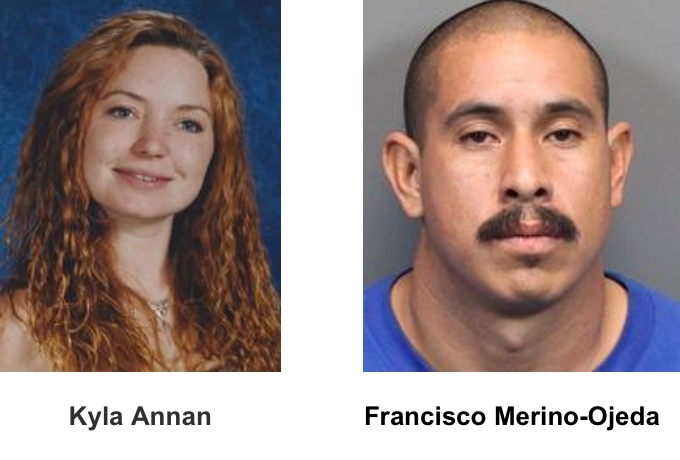
It’s been 10 years since 28-year-old preschool teacher Kyla Annan was found strangled to death at her home in Reno.

“It’s a pretty hard time,” Kyla’s father, Steven Annan, said Friday afternoon. “In 10 years you can bury a lot.”

Annan and his wife, Cheryl, of South Lake Tahoe, sat unmoving at a press conference Friday, with their hands clasped on their laps and solemn expressions on their faces in a corner of a briefing room at the Reno Police Department.

They had recently learned police arrested the man believed to have slain their daughter.

Read the whole story


Settlement in Alpine County toxic mine case

Even though over the course of decades more than $100 million has been spent on cleanup activities at an old sulfur mine in Alpine County, a settlement agreement between disagreeing parties was just reached.

In July, at the Lahontan Regional Water Quality Control Board meeting officials said the settlement could happen any day. It took another eight months.

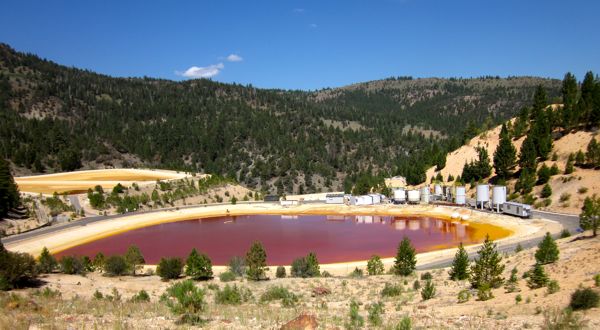
The Leviathan Mine is considered a superfund site, making it one of the most toxic areas based on Environmental Protection Agency standards. As a CERCLA site, there are certain parameters that must be followed. And there is also a certain amount of risk that is allowed. This site will presumably always be toxic, just not to the degree that it is today.

Leviathan holding ponds and treatment system used by Lahontan. Photo/Lahontan Water Board

Leviathan holding ponds and treatment system used by Lahontan. Photo/Lahontan Water Board

It is better than what it was. In 1999, there were no rainbow, brook or brown trout in Lower Leviathan Creek, according to the U.S. Fish & Wildlife Service. In 2013, there were 72 rainbows, 521 brooks and zero browns.

Anaconda Copper Mining Company used the mine from 1951-62. It was sold in 1963 to William Mann, who was Alpine County’s clerk, for $100. Eventually officials discovered acid mine drainage was contaminating Leviathan Creek. There was no way Mann was going to be able to write the checks for the cleanup. California stepped in in 1983 and bought the land.

A lawsuit was filed against Atlantic Richfield Co., which had bought Anaconda. A settlement of just more than $2 million allowed clean up to start. But then the Washoe tribe asked the EPA to get involved because the pollutants were creating a thick layer of orange precipitate along the streambed that ended up in the East Fork of the Carson River. The EPA went after ARCO, and in turn ARCO filed a suit against Lahontan.

It is that second lawsuit that was just settled.

The settlement details what work ARCO and Lahontan will conduct at the site going forward, and lays out the cost-sharing formulas. The settlement also secures long-term funding for a cleanup project that could take decades, if not centuries to complete, according to officials. Lahontan will design and construct the remedy, and ARCO will pay 75 percent of the cost to complete it. ARCO will also pay 70 percent of Lahontan’s expense to operate and maintain the remedy over the long term.

Today, Lahontan and ARCO have separate treatment systems. The settlement allows for just one.

— Lake Tahoe News staff report


Big rig overturns in Truckee

Traffic is snarled in Truckee because of a truck accident.

A big rig on Friday afternoon overturned in the roundabout on Highway 89. It is blocking the northbound lane. Expect delays.

No other information was immediately available April 3.

— Lake Tahoe News staff report


International tourist arrivals rapidly increasing

By Dan Peltier, Skift

The World Travel & Tourism Council projects the world will welcome nearly 1.8 billion international visitor arrivals per year by 2025, a 58 percent increase from the 1.1 billion international arrivals who crossed borders in 2014.

These international tourists will certainly contribute to a travel industry experiencing faster growth than the wider global economy but the money tourists spend in their own countries continues dwarfing that of international tourists traveling abroad. This reality has long defined visitor spending in destinations and the status quo won’t see significant changes in the near future, the World Travel & Tourism Council projects.

Considering global domestic travel spending made up 72 percent of travel and tourism’s contribution to global GDP last year, the organization released forecasts this week which point to domestic travel spending growing slightly faster than foreign visitor spending in 2015, 3.7 percent vs. 2.8 percent and accounting for $3.7 trillion and $1.4 trillion, respectively, of the world’s total GDP.

Read the whole story


Remains of man missing 8 years found in EDC

By Bill Lindelof, Sacramento Bee

The remains of a man missing more than eight years – and whose suspected killer sits in jail awaiting trial for his murder – have been found in El Dorado County.

Cold case homicide investigators on Friday unearthed the remains of Tobias Kaiser, an El Dorado County man who was reported missing from his Somerset home in November 2006.

Kaiser, 47, was last seen Nov. 30, 2006, at his residence near the 7400 block of Perry Creek Road in Somerset. He reportedly was in the process of moving to Modesto.

Earlier this year, based on information gathered by investigators, arrest warrants were issued for Eric Todd Mehlmauer, 47, of Placerville and Ronald Anthony Garcia, 53, of Sacramento in connection with Kaiser’s death. The two men were taken into custody Jan. 15.

Read the whole story


Bikes being stolen off car racks in S. Tahoe

Two high-end bicycles were stolen off bicycle racks on the back of parked vehicles in public parking lots in South Lake Tahoe.

The crimes occurred in the day and at night in the last week.

Police have no suspects. However, each of the victims had smaller, thinner bicycle locks securing the bikes to the racks. The suspect was able to easily cut through the cables and steal the bikes.

The following are tips from South Lake Tahoe police officers:

· Always lock your bike’s frame and wheels with a high-quality, modern U-lock (with a disc/flat key).

· Remove all detachable items like lights, bags and quick release parts and take them with you.

· Lock to a bike rack, or firmly affixed (bolts covered in concrete) parking meter or sign pole – these are the most secure places.

· Record your bike’s serial number. Take a photo of you and your unlocked bike. Keep the receipt.

· Always lock your bike, even if you’re just leaving it for a moment.

· Always lock through the frame and a wheel. Add a cable, cable lock, or second U-lock to lock the second wheel.

· Buy the most expensive lock you can afford. U-locks are strong and better ones come with theft warranties. Only buy a U-lock with a flat or disc key. Cylindrical keyed locks are more easily picked.

· Beware of locking to “sucker poles” that are loosely bolted down and can easily be removed.

· Avoid locking to private property. Store your bike inside if space is available.

· Lock your bike when keeping it in a garage or on a porch.

· Learn about the lock manufacturer’s warranty and product replacement policy.

— Lake Tahoe News staff report


Nevada entertainment tax could soon expand

By Sean Whaley, Las Vegas Review-Journal

CARSON CITY — Fans of NASCAR, the Electric Daisy Carnival or the Burning Man countercultural event held every year in the Black Rock Desert in far Northern Nevada could soon have to pay a bit more to get their groove on.

Casino nightclubs, performances by disc jockeys and events staged around a hotel pool would also be taxed under the long-awaited measures from Assembly Minority Leader Marilyn Kirkpatrick to simplify and expand the live entertainment tax.

If Assembly Bills 392 and 393 win approval and take effect July 1, many events that have been exempted from the levy will soon be included under her proposed Luxury Discretionary Spending Tax. The tax rate would be 8 percent, or about $60 for a $700 VIP Tier 1 ticket to the 2015 Electric Daisy Carnival or $31 for a $390 ticket to Burning Man.

Many events already impose the tax. The levy brings in about $140 million a year, most from the gaming side from the major entertainment venues.

But Kirkpatrick has been working for years to close off loopholes in the tax, including outdoor concerts. She also wants to simplify the tax. There are now two different tax rates of 5 percent or 10 percent based on the size of the venue.

Read the whole story


USFS quick to contain fire in Desolation Wilderness

Firefighters were able to quickly extinguish a blaze started by an illegal campfire at Granite Lake in Desolation Wilderness.

Despite the high winds on March 31, the fire did not spread.

Illegal and unattended campfires cause more 90 percent of wildfires in the Lake Tahoe Basin, according to the U.S. Forest Service.

“While we realize the warm weather, combined with lack of snow has given folks early access to recreation areas, people need to remember that campfires are only allowed in designated campgrounds and are not allowed on National Forest beaches or in the Desolation Wilderness,” Fire Management Officer Steve Burns said in a statement. “We need the public to be mindful of the current fire danger and help prevent human-caused wildfires by not building illegal campfires.”

For information on campfire safety, go online.

— Lake Tahoe News staff report


CVS wants to become people’s doctor’s office

By Eliza Gray, Time

In the fifth season of “Curb your Enthusiasm”, Larry David visits a pharmacist to fill his father’s blood-thinner prescription. “You know, there’s another drug on the market that I personally like a lot better,” the pharmacist tells Larry. “But the doctor prefers this one?” Larry says. He holds up his hands like a scale and weighs his options. “Doctor,” he says, holding up one hand, then “pharmacist,” holding up the other. He decides: “I’ll go with the pharmacist.”

You may too if Larry Merlo has his way. Merlo, 59, is the CEO of drugstore giant CVS Health. Trained as a pharmacist himself, Merlo has ambitions to play a much bigger role in your health care. He’s already pretty involved. Last year at 7,800 stores, CVS, the second largest drugstore chain in the U.S., filled more than 700 million prescriptions and administered 5 million flu shots – all while selling customers everything from groceries to gift wrap.

Now Merlo says the drugstore can do more. In his vision, CVS will leverage its sizable MinuteClinic business – which already has 970 locations – to diagnose patients, decide on treatments and then sell them the pills they need to get well. In its role as the pharmacy-benefits manager for some 65 million people, CVS also negotiates the price of those pills and helps decide which ones get reimbursed under various insurance plans. Merlo would also like America to stop smoking: he roiled the tobacco industry last year by dropping the sale of cigarettes in CVS stores. And if that causes some customers to have withdrawal pains, the CVS pharmacy can fill a prescription for a drug that helps them quit.

By taking on more of the role of your doctor as well as that of your druggist, CVS looks to grow beyond its already considerable size ($4.6 billion in earnings for 2014). But Merlo argues that the stakes are far higher. He thinks CVS can save lives–and hundreds of billions of dollars in unnecessary health care costs annually–by efficiently treating Americans’ routine sniffles and aches, nudging them to take better care of themselves and making sure they take their medications when they’re supposed to.

Read the whole story


No denying drought — barren ground at 7,000 feet

By Susan Wood

PHILLIPS STATION –The state isn’t fooling around anymore.

In an apparent precursor to Mark Twain’s theory, Gov. Jerry Brown issued a mandate April 1 for South Lake Tahoe residents along with the 38 million other Californians to reduce water use by 25 percent. He did so while attending the water year’s last and only recorded bare snow survey. There was nothing to register at the foot of Sierra-at-Tahoe ski resort. This has never happened before at this time of year.

If people don’t comply with the state Department of Water Resources’ order, it could ultimately lead to fines. The executive order will be monitored closely through metering by water districts.

Beyond incentives and other restrictions, this means significant cuts to large users such as golf courses, campuses and the mass collective of state residents — signaling “a new era” commanding shared responsibility, Brown indicated.

When asked by Lake Tahoe News how Tahoe residents should handle the dilemma of watering their yards versus choosing responsible water conservation in what may turn out to be a historic fire season, Brown was sympathetic. He was standing less than 10 miles from the hallowed ground of this region’s worst wildland fire – Angora 2007. Many wildland fires start close to concentrated residential areas. Flames can ignite from hot power tools left in brittle brush or from a vehicle or careless smokers tossing a cigarette onto dry terrain.

“What I would tell the residents is now we are embarking on an experiment no one has tried. This will require adjustment. It will require learning. But this is our new normal. It will take heart. It will take instruction. We have the technology. All we need is the political will. It’s somewhat of a burden. And agriculture is already undergoing major cutbacks. But we can do a lot better,” Brown told Lake Tahoe News, while joined by the state’s Water Resources chief Mark Cowin, snow survey monitor Frank Gehrke and a flood of media.

Frank Gehrke with the state Department of Water Resources, left, tells Gov. Jerry Brown, on April 1 how his tool would be used in a normal snow year. Photo/Susan Wood

Frank Gehrke with the state Department of Water Resources, left, tells Gov. Jerry Brown, on April 1 how his measuring tool would be used in a normal snow year. Photo/Susan Wood

Is it time for cisterns to be installed in yards? — Lake Tahoe News asked Cowin.

Cowin replied there’s financial assistance and incentives for programs that encourage more stormwater management and those that replace grass lawns with more natural habitat. The state also suggested funding of rebates for low water-use appliances.

Water districts’ role in monitoring resident and commercial water use is critical.

“If they don’t perform, there will be repercussions – maybe fines,” Cowin pointed out. “It’s as bad as it’s ever been.”

To South Lake Tahoe Public Utility District General Manager Richard Solbrig, a head start was definitely in order. Since 2007, the district has implemented odd-even restrictions on when residents can water, he reminded Lake Tahoe News on a phone call. The turf buy-back program has much demand. And the district stands at about halfway complete on installing its water meters for 14,000 customers. At least 2,000 more are scheduled to go in this summer.

If the state wants to truly do some good – more money for the incentives already put into place would represent a welcome mat to Solbrig.

“(The state executive order) really came with no surprises. If the state wants to make a real dent, they’ll put a few more thousand dollars into our turf buyback program,” he said. There’s a waiting list to get on it because the demand is so high.

And agencies such as STPUD, Tahoe Regional Planning Agency and the city of South Lake Tahoe have hired a Sacramento lobbyist to closely monitor the situation to maximize the benefit for our region.

The one additional requirement Solbrig noticed is the restriction on watering during a rainfall event and within 48 hours afterward.

“That could be a challenge to enforce, obviously,” he said.

The specifics will be discussed at the district’s board meeting on May 7.

Restaurants will also be asked to only deliver water to tables when requested. Hotels will need to implement new laundry frequency programs to guests.

Change. Change. Change. Indeed, the state is entering year four of the drought.

Gehrke illustrated the seriousness of the lack of snowfall by showing the marks on the survey measuring stick that records the water content of the Sierra snowpack. The maximum measurement recorded in 1983 – an El Nino year — sat at the top of the pole with 150 inches. The average is 63 inches. The lowest recorded before this year was 27 inches set in 1977. Last year’s measured 33 inches at the meadow located where Highway 50 and Sierra-at-Tahoe Road meet.

The ski resort up the hill closed March 17; its second earliest shutdown. Resort general manager, John Rice, stood in attendance in tennis shoes – not normal attire for the ski season.

Gehrke characterized the latest condition of the drought as “distressing” – especially since in all his years of measuring the state snowpack’s water content, Wednesday went down as a first to have bare ground on April 1. At least 5 feet of snow should be covering the ground.

“I think the governor here expresses the seriousness of it,” he said.

Are the state’s residents in denial? Have we done enough?

The impression from California’s leaders is yes and no.

“We’re always in denial. But we want to think about the good, and that’s good. But we’re making the climate worse at a rapid pace. Steps take more steps,” the governor added.

In other words, there’s “rationing” now through the various water districts. And now there’s a definitive strategy across a vast state. Brown outlined this order as a proposal in the overall strategy the state has to combat climate change symptoms facilitated by “billions of tons of chemicals released into the atmosphere” where greenhouse gases are trapped.

“That’s why we have cap and trade and electric cars. This is all not easy,” Brown said. And perhaps not smooth-sailing in the words of Tahoe’s most famous writer Twain: “Whiskey’s for drinking, water’s for fightin’ over.”