Lawyer for Placerville grandmother calls husband’s killing an accident

By Peter Hecht, Sacramento Bee

The murder defense of Placerville grandmother Colleen Harris came down today to a drop of blood and a terrible accident.

“I’d like to talk to you about a drop of blood,” defense lawyer David Weiner began as laid out his closing argument that Colleen, 73, is not guilty of the brutal shotgun slaying of her husband, Robert Edward “Bob” Harris, 72, in their rustic home on Wilderness Court.

That drop of blood was found on the hand of Bob Harris in a gruesome crime scene in which the retired U.S. Forest Service supervisor was found dead in his marital bed Jan. 5, 2013 from a shotgun blast that violently exploded out his face.

Arguing that his client didn’t kill her husband, Weiner said the blood on Bob Harris’ hand underscored the defense’s argument that Bob was holding the shotgun and that blood spattered on his hand as it went off.

The prosecution has argued that Colleen Harris, a Placerville land surveyor known to extended family as “Grandma Cokie,” killed her husband in an act of premediated murder because she believed he had just made a phone call to his extramarital lover.

Read the whole story


Bills renew California’s anti-smoking effort

By Patrick McGreevey, Los Angeles Times

California has become a battleground between the tobacco industry and health groups as lawmakers push proposals that include increasing cigarette taxes by $2 a pack and raising the legal smoking age from 18 to 21.

The state once led the nation in snuffing out smoking, but health activists say a strong tobacco lobby and a lack of political will have blocked new efforts in recent years.

“We used to be leaders, and we are not anymore,” said Stanton A. Glantz, a professor of medicine at UC San Francisco.

California lawmakers have responded to such criticism with a flood of legislation on the issue.

In addition to making California the first state to raise the smoking age, the measures would bar electronic cigarettes from public places where smoking is prohibited, ban single-use filters on cigarettes and prohibit the use of chewing tobacco in pro baseball stadiums and recreational league games.

Read the whole story


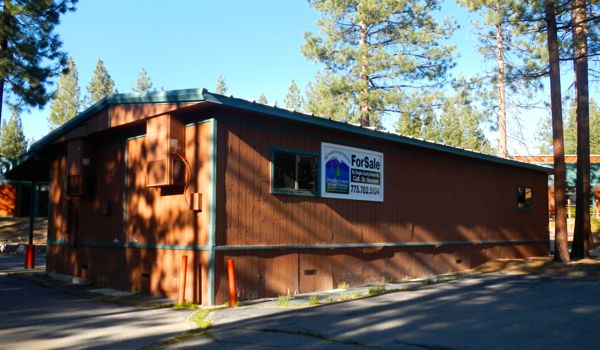
Former Stateline school may be rented

No signs indicate this was once a school; on a for sale sign exists at the property. Photo/LTN school

No signs indicate this was once a school; only a for sale sign exists at the property. Photo/LTN

STATELINE — A local government agency is interested in leasing the former Kingsbury Middle School in Stateline.

Lisa Noonan, superintendent of Douglas County School District, told the board on April 14 that an entity has expressed interest in potentially taking over the site for 30 years. The school and accompanying acreage have been on the market for a number of years; ever since it closed because of declining enrollment.

While people have expressed interest in buying the property, no one has made an offer.

Noonan on Tuesday said a potential buyer is still in the wings.

The board on Tuesday (Tom Moore was absent) agreed to open the process to potential renters. What a contract like that would mean remains to be seen. The structure needs a new roof and other upgrades that a potential tenant is likely to pay for in lieu of rent, at least at the get-go.

Noonan is not releasing names of any of the interested parties.

July is the next time the board meets at Tahoe, which is when the bidders are likely to be made public; this is assuming they make an offer.

— Lake Tahoe News staff report


USFS: Expired Nestle water permit a priority

By Ian James, Desert Sun

U.S. Forest Service officials on Friday said they are making it a priority to examine a long-expired permit that Nestle has been using to pipe water out of a national forest to use for bottled water.

Nestle Waters North America has long drawn water from wells that tap into springs in Strawberry Canyon north of San Bernardino. The water flows through a pipeline across the national forest and is hauled by trucks to a plant to be bottled as Arrowhead 100 percent Mountain Spring Water.

In an investigation last month, The Desert Sun found that Nestle’s permit to transport water across the San Bernardino National Forest expired in 1988 and that the Forest Service hasn’t assessed the impacts of the bottled water business on streams in two watersheds that sustain sensitive habitats.

“Since this issue was raised and I became aware of how long that permit has been expired, I have made it a priority to work on this reissuance project,” San Bernardino National Forest Supervisor Jody Noiron said in a telephone interview.

Forest Service officials recently announced plans to take up the issue and carry out an environmental analysis after a group of critics raised concerns in emails and letters, and after the Desert Sun inquired about the expired permit.

Read the whole story


Truckee controlled burn becomes uncontrolled fire

What started as a controlled burn in Truckee on Monday caused some concern when it got out of control.

Truckee firefighters along with U.S. Forest Service, Calfire, and Northstar Fire responded to a controlled burn that got away with the approaching winds. High winds threatened one structure after fanning the flames. No structures were lost or damaged and the April 13 fire was limited to 2 acres, according to fire officials on scene.

“Please be vigilant in watching the weather changes while conducting any burning activities. Severe drought conditions will limit burning this spring,” Truckee fire officials said in a statement.

— Lake Tahoe News staff report


S. Lake Tahoe’s midyear budget shows promise

Unfunded liabilities are not unique to South Lake Tahoe. Graphic/California Common Sense

Unfunded health care liabilities are not unique to South Lake Tahoe. Graphic/California Common Sense

By Kathryn Reed

Two budgets in one year. That is essentially what South Lake Tahoe will have.

While the City Council will go over the midyear budget a week from today, the reality is that what will be presented by staff is more like a brand new budget. This is because timing of events did not allow inclusion of the employee contracts when the 2014-15 budget was adopted last fall.

The contracts with the six employee groups include a complete overhaul of health care benefits and raises.

Those changes along with adjustments to the expense and revenue columns have created a midyear surplus of approximately $890,000. The council on April 21 will be tasked with allocating that pot of cash.

Staff is recommending $600,000 be set aside for year three of the employee contracts to pay for the raises. About $50,000 will be used for the city’s 50th birthday bash. The remainder is expected to be set aside to see how the fiscal year ends. This in part has to do with the drought and not knowing if projected revenues will be forthcoming if tourists don’t make Tahoe their vacation spot of choice.

However, hotel taxes through January, the last numbers available, are up 5 percent for the fiscal year.

“Last year the drought brought people up (here),” City Manager Nancy Kerry said. “This year could be different. It may be hard to get a boat in the water.”

Another concern of the city is property values because they are declining. Property taxes, along with transient occupancy tax and sales tax are the three main revenue sources for South Lake Tahoe.

The county tax collector has advised the city to expect $1 million less in property taxes from the redevelopment area, Kerry said. This is because values have been adjusted. Numbers for the rest of town remain unknown. The city will cover that shortfall with money that has been set aside in the TOT trust fund for redevelopment.

Refinancing redevelopment bonds is a way the city is cutting its expenses. That should occur later this spring.

A sign the economy is doing better is the robust number of building permits being issued; with revenues up $250,000 beyond what was forecasted.

With three key changes, Kerry practically revolutionized how the budget is done and the council’s role. One change is to only put in the budget what the true needs are, second is to bring more one-time expenses to the council, and the biggest change was to tackle the unfunded health care liability. One-time expenses include buying defibrillators for most public buildings, additional containers for marijuana evidence, and money to invest in economic development. When Kerry took the helm less than three years ago, the employee unfunded liability expense in the city was about $45 million. Had changes not taken place last fall, that number would now be $53 million. An actuarial last month found that the liability has been reduced by 73 percent and that in 11 years the liability will be nearly non-existent.

By changing the health care plan, eliminating retiree health benefits for employees not yet retired, and modifying coverage the city will see a cost savings of $1.5 million a year for three fiscal years starting with the current one.

“Now resources will be able to be spent on residents’ needs,” Kerry told Lake Tahoe News.

—–

Notes:

• South Lake Tahoe City Council meets April 21 at 9am at Lake Tahoe Airport.


Guests try to decipher what’s in a hotel brand name

By Scott Mayerowitz, AP

Today’s traveler faces a bewildering choice of hotel brands with similar-sounding and confusing names. Want to stay at a Hyatt? Take your pick. There’s Hyatt Regency, Park Hyatt, Grand Hyatt, Hyatt House, Hyatt Place and, coming soon, Hyatt Centric.

Vacationers once relied on big-name hotel brands to signal the kind of experience they could expect. People knew what Holiday Inn, Hilton, Hyatt or Marriott meant. Familiarity bred a sense of comfort.

No longer.

The world’s 10 largest hotel chains now offer a combined 113 brands at various price points, 31 of which didn’t exist a decade ago. And there’s no sign of this proliferation slowing down.

Thanks to high occupancy levels and cheap interest rates, developers are scrambling to build new properties. At the same time, hotels are trying to lure a new generation of travelers in search of authenticity. They want unique and hip places to sleep, not cookie-cutter facsimiles of hundreds of other hotels.

These so-called lifestyle hotels are the hot, new area for growth. They are designed to attract millennials: travelers between the ages of 18 and 34 who hotels say aren’t interested in marble bathtubs but might enjoy beanbag chairs.

“The big hotel chains are in the business of pretending they aren’t big chains. They want you to think they are boutiques,” says Pauline Frommer, editorial director for Frommer’s, the travel guide company founded by her father, Arthur Frommer. “This dizzying array of brand names is a good way for them to hide. The vast majority of the public is not going to keep track.”

In the past year, Marriott International Inc. launched Moxy, Hilton Worldwide Holdings Inc. created Canopy, Best Western International Inc. came up with Vib and InterContinental Hotels Group PLC — the parent company of Holiday Inn — purchased Kimpton, adding its boutique hotels to the larger chain.

And hotel executives say more brands are on the way.

“The Internet has driven people to more niches. Everything is more segmented,” says Best Western CEO David Kong. “Our six brands are actually six different needs.”

This is a good time to own a hotel.

U.S. hotels are now selling 65 percent of their room nights, up from 55 percent five years ago, according to travel-research company STR Inc. Guests are also paying more: $115.72 on average a night, up from $97.31.

That’s why there are 128,874 additional hotel rooms already under construction in the U.S., up 32 percent from last year, according to STR. Another 306,644 rooms are in various planning stages, all of which will be added to the exiting supply of 5 million rooms.

Hotel companies typically don’t build or own individual properties but collect management or franchise fees from the owners. Those developers need to decide if their building is going to be a Hilton, Comfort Inn, Sheraton or something else. Competition is fierce from the hotel chains to ensure that new properties falls under their brand. But a city can support only so many Marriott hotels. That’s why Marriott International offers 19 different brands, including Courtyard, Residence Inn, Ritz-Carlton and TownePlace Suites.

Several hotel executives acknowledge an excess of brands, although each blames their competitors, not themselves.

“With very few exceptions, brands are probably overdone,” says Steve Joyce, CEO of Choice Hotels, whose 11 brands include Comfort Inn, EconoLodge, MainStay Suites and Cambria Suites. “I don’t see a consumer demand.”

But with developers eager to break ground while financing remains cheap, hotel companies are willing to do anything to sign on new properties. Many of the new developments are in tight urban spaces that couldn’t fit traditional, boxy hotels, let alone their ballrooms. In the next four years, a quarter of Marriott’s growth will come from brands that didn’t exist five years ago.

“It’s not a question of how many brands. It is a question of the right brands,” says Anthony Capuano, global chief development officer for Marriott. “We may need more.”

The last time the hotel industry saw this many new brands introduced was in 2006 and 2007, in the boom just before the Great Recession, says Adam Weissenberg, the global leader of Deloitte & Touche’s travel consulting business.

Despite what hotels are saying, Weissenberg says this isn’t being driven by the guests’ desires.

“Are there that many different customers out there?” he says. “Or are you really catering to the developers who are looking for more ways to build hotels and you can collect more fees?”

Will most of these brands still be around in five years? Some experts doubt it. You can’t design a brand with just millennials in mind, says Mark Lunt of Ernst and Young’s real estate transaction advisory business.

“Tastes will ultimately change,” Lunt says.

After all, most guests are just looking for a clean room, comfortable bed and perhaps free Wi-Fi and breakfast.

Maybe the key question for guests is: Which brand is it that promises to leave a light on?


Truckee making life better for pedestrians, cyclists

By Barbara Osborne, Sacramento Bee

Bicyclists and pedestrians who have braved Truckee’s infamous “mouse hole” tunnel on Highway 89, the busy route between Interstate 80 and Tahoe City, soon will have safer passage.

The 25-foot-wide, concrete arch beneath Union Pacific railroad tracks was constructed in 1928. It has no shoulders or space to accommodate more than two vehicles on Highway 89, which narrows from four lanes to two at the tunnel’s southbound entrance.

Despite a lighted “peds in tunnel when flashing” sign, it’s a treacherous spot for pedestrians and bicyclists. With a mobile-home park, college and shopping center nearby, the tunnel receives heavy use.

Read the whole story


Mom, daughter lose appeal in bear trap tampering case

By Associated Press

A Reno woman and her mother have lost an appeal after becoming the first people prosecuted in Nevada for interfering with the capture of troublesome bears at Lake Tahoe.

Season Morrison and her mother, Cheryl Morrison, of Truckee, admitted they deliberately tripped a culvert bear trap state wildlife officials set in October 2013 in Incline Village but maintained the trap had been set illegally.

They were convicted last May of interfering with a wildlife officer and tampering with a motor vehicle.

Justice of the Peace E. Alan Tiras later ordered both to complete community service and pay $1,000 fines, and sentenced Season Morrison to 30 days in jail.

Washoe County District Judge Janet Berry on March 26 denied their appeals, saying Tiras’ decision was supported by evidence and free of error.

Their lawyer says it’s unlikely Berry’s ruling will be appealed.


Middle class, but feeling economically insecure

By Patricia Cohen, New York Times

It’s not only what you have, but how you feel.

When it comes to membership in the middle class, earnings and assets are just part of the definition. Nearly nine out of 10 people consider themselves middle class, as a recent survey by the Pew Research Center found, regardless of whether their incomes languish near the poverty line or skim the top stratum of earners.

“Middle income is not necessarily the same thing as middle class,” said Rakesh Kochhar, a senior research associate at Pew. Even as the proportion of households in the middle-income brackets has narrowed, people’s identification with the middle class remains broad.

That’s because the middle-class label is as much about aspirations among Americans as it is about economics. But a perspective that was once characterized by comfort and optimism has increasingly been overlaid with stress and anxiety.

Read the whole story