No federal protection for Sierra sage grouse

By Scott Sonner, AP

Interior Secretary Sally Jewell reversed the government’s proposed federal protection for a type of sage grouse specific to California and Nevada, and said it shows it’s still possible to head off a bigger, looming listing decision for the greater sage grouse across 11 Western states.

Jewell joined Nevada Gov. Brian Sandoval and others in announcing she’s withdrawing the government’s 2013 proposal to declare the bistate, Mono Basin sage grouse a threatened species along the California-Nevada line.

The bird found only along the Sierra’s eastern front no longer faces the threat of extinction thanks to voluntary conservation efforts and range improvements initiated by ranchers, local governments, private land owners and public land managers, she said.

“What this has shown is that despite the stresses we feel on the landscape here — particularly around drought and wildfire and other stresses that impact this part of the world — we can still create and find habitat that supports sage grouse,” Jewell said in a speech outside Nevada Department of Wildlife headquarters in Reno on Tuesday.

“There’s no reason you can’t have a healthy state with a healthy economy and a healthy ecosystem. By working together, you can have it all,” she said.

The bistate bird is a genetically distinct population of the greater sage grouse species, which is under consideration for protection in Nevada, California and nine other states stretching from Oregon to the Dakotas.

“This is welcome news for all Nevadans,” said Sandoval, a Republican. “Working together, I’m hopeful we can preclude the need to list the greater sage grouse just as we have done with the bistate.”

The U.S. Fish and Wildlife Service is under a court order to make a listing decision on the greater sage grouse by Sept. 30 in a legal battle with conservationists that spans more than 15 years.

“I think it is very possible not to list that species,” Jewell told reporters after her bistate announcement.

Conservationists who petitioned to protect both populations accused Jewell of caving to pressure from Western conservatives who fear federal protection would mean dramatic restrictions on livestock grazing, energy exploration and other development of public lands.

Michael Connor, California director of the nonprofit Western Watersheds Project, said that as recently as last December federal officials had assigned the bistate grouse the “maximum priority for listing” based on the magnitude of threats facing the isolated population across more than 7,000 square miles Carson City to near Yosemite National Park.

“The service’s backpedalling in claiming that unfinished management plans and voluntary, cooperative agreements will protect the species is untrue and smacks of political expediency,” Connor said Tuesday.

Randi Spivak, public lands director for the Center for Biological Diversity, agreed. “Half measures may delay extinction but it won’t prevent it,” Spivak said.

Jewell said the decision not to list the bistate grouse should be “real encouraging” for other western states pursuing similar voluntary measures to ward off listing of the greater sage grouse.

“I think if it had been listed after all the hard work and effort after 15 years, it would make people discouraged — ‘Gosh, we’ve worked together so hard and maybe there isn’t a way to protect these ecosystems,’ ” Jewell told reporters.

She said Tuesday’s decision should “give the scientists and the land managers and the private land owners and the ranchers and the state and governors all encouragement that we need to stay the course on the greater sage course and we’ll be able to achieve a similar outcome if we work together.”

Mary Grim, the U.S. Fish and Wildlife Service’s regional sage grouse coordinator, said the agency was concerned about the rate of habitat loss when it proposed listing the bistate bird as threatened two years ago. Since then, ranchers, conservationists and government agencies have committed more than $45 million to restoration efforts over the next 15 years, making the listing unnecessary, she said.

“If you look at the science, look at the commitments we have, clearly in comparison to 2010, the future looks very bright for bistate sage grouse,” Grim told the Associated Press. “There’s no reason to think the subspecies is at risk now or in the future of going extinct.”


Man threatens to jump from Hard Rock

Douglas County sheriff’s deputies were able to talk a man out of jumping from an eighth floor balcony at the Lake Tahoe Hard Rock in Stateline.

Tahoe Douglas fire crews as well as the CalStar medical helicopter were on standby.

The incident started about 2pm April 24 and was resolved by 4:55pm.

— Lake Tahoe News staff report


America: Too fat to fight

By Carol Costello, CNN

In a few years, the military will be unable to recruit enough qualified soldiers because of America’s obesity problem.

Forget about rampant diabetes, heart attacks and joint problems — the scariest consequence arising out of our losing battle with the bulge is the safety of our country.

In about five years, so many young Americans will be grossly overweight that the military will be unable to recruit enough qualified soldiers. That alarming forecast comes from Maj, Gen. Allen Batschelet, who is in charge of U.S. Army Recruiting Command.

Obesity, he said, “is becoming a national security issue.”

Read the whole story


Bill calls for inventory of Nev. water rights

By Sandra Chereb, Las Vegas Review-Journal

CARSON CITY — With drought gripping Nevada and much of the West, the state’s top water official and a state senator said it’s time to inventory how much water there is and who owns what by tidying up the books on water rights that pre-date state law.

“Clearly if we’re going to establish a water inventory … we have to understand what water is available, what is permitted,” state Sen. Pete Goicoechea, R-Eureka, told members of the Assembly Government Affairs Committee during a hearing Wednesday.

At issue are so-called “vested” rights initiated by putting water to beneficial use before state law was enacted setting regulations for surface water use in 1905, artesian groundwater in 1913 and percolating groundwater in 1939.

Read the whole story


New boom ahead for Boomtown area

By Bill O’Driscoll, Reno Gazette-Journal

Nearly 800 acres of open land along Interstate 80 near Verdi have new owners who are targeting much of it for development to meet demand anticipated with the region’s resurgent economy.

Reno Land Development Company LLC recently closed on a $13.1 million purchase of 780 acres from Las Vegas-based Pinnacle Entertainment, which sold the nearby Boomtown Casino and Hotel in 2012.

Chuck Reeves, a Reno Land Development Company partner, said the timing is right given the parade of new businesses coming to Reno-Sparks, led by Tesla Motors’ $5 billion battery gigafactory, bringing thousands of new jobs.

Read the whole story


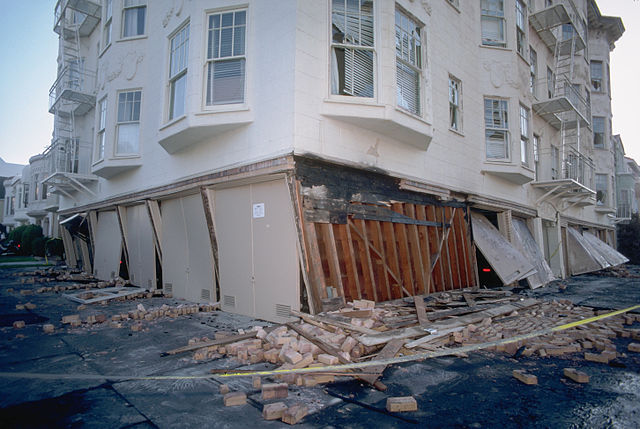
Study: The Big One could trigger series of large quakes

"LomaPrieta-Marina" by J.K. Nakata, United States Geological Survey - http://pubs.usgs.gov/dds/dds-29/web_pages/sf.html, http://pubs.usgs.gov/dds/dds-29/tif/img0007.tif. Licensed under Public Domain via Wikimedia Commons - http://commons.wikimedia.org/wiki/File:LomaPrieta-Marina.jpeg#/media/File:LomaPrieta-Marina.jpeg

The San Francisco Marin District after the 1989 Loma Prieta earthquake. Photo/J.K. Nakata, U.S. Geological Survey

By Rong-Gong Lin II, Los Angeles Times

Research released Wednesday suggests the shaking from “the Big One,” the long-predicted major earthquake on the San Andreas fault, could trigger additional large temblors on nearby faults, intensifying the overall seismic impact.

The study suggests that such a quake “could presage a flurry of ‘other Big Ones’ on other faults,” said USC earth sciences Professor James Dolan, “as stresses related to the original San Andreas fault earthquake are redistributed on other faults throughout Southern California.”

The study, presented by Dolan at a meeting of the Seismological Society of America in Pasadena, focuses on whether earthquakes are generated in “super cycles.” A super cycle refers to when a large number of quakes rupture on a single fault system in a relatively short period of time in seismic terms, over a matter of decades or a few centuries.

Read the whole story


Truckee among the top polluting mountain towns

By Teton Gravity  Research

When we set out on our quest to find the mountain towns with the largest carbon footprint, it was not an easy task. The hardest factor was to find a common denominator for all of these different areas. That’s when we discovered an interactive map of the United States created by researchers at UC Berkeley, who weighed over 37 variables, including household energy use, consumer expenditures, and transportation to provide the average metric tons of carbon pollution produced by each household in every county in the United States.

We used this data to rank over 30 mountain towns and, as a jumping-off point, to discover what is going on in these mountain communities.

What we discovered is that the two factors that lead to pollution in most mountain towns are housing and transportation. This usually stems from an inadequate public transit system or large vacation homes that are not occupied for the entire year.

Truckee came in at No. 9.

Read the whole story


Cold, wet weather headed for Tahoe

Expect the temperatures to drop and the snow to fall in Lake Tahoe on April 24.

A cold front will descend upon the basin Friday night and into Saturday. Six to 12 inches is expected at 6,500 feet, with several inches possible down to  5,000 feet, according to the National Weather Service in Reno. Precipitation will start as rain and then change to snow.

A lake wind advisory is in effect for Friday from 11am-8pm. Waves could be 2 to 3 feet.

By Sunday it’s supposed to be in the mid-50s, however overnight lows will be in the 20s through Monday.

— Lake Tahoe News staff report


TRPA approves Liberty electrical line upgrade

By Kathryn Reed

KINGS BEACH – Construction on a multi-million electrical upgrade of Liberty Utilities lines in the North Shore-Truckee area is expected to start this summer.

There was a brief tense moment Thursday morning at the Tahoe Regional Planning Agency Governing Board when it looked like the project was not going to be approved.

Board member Clem Shute said there was no way he could approve the environmental documents that included phase three of the project because there was too much ambiguity in the language. Liberty reluctantly agreed issues regarding that phase could be handled at a later date.

With that compromise, the board unanimously approved the environmental document that affected phases one and two.

The U.S. Forest Service was waiting for the TRPA decision before the final record of decision was signed. That will be the last hurdle before the project can break ground.

“The poles and wiring are on order,” Kathy Carter, spokeswoman for the utility company, told Lake Tahoe News. The request for proposal is out and a contract will soon be signed with a contractor. Phase one is estimated to cost $18 million.

Three people spoke at the April 23 meeting at the North Tahoe Events Center in Kings Beach. All live near where some of the construction will take place. Two of the three seemed to recently become aware of the project even though it has been discussed for four years and there have been multiple public meetings.

Neal Carney, representing the North Tahoe Citizens Action Alliance, questioned why undergrounding was not occurring – especially near neighborhoods.

Mike Smart, president of Liberty Utilities, told the board, “The thing with undergrounding is that it is more reliable, but it’s about eight times as expensive.”

He also explained how having a high voltage facility underground is problematic in snow country because it can be hard to get to the infrastructure needing repairs. Plus, it takes specialized crews to work on that type of equipment; crews Liberty does not employ.

Smart also acknowledged that all ratepayers will be paying for the improvements. Liberty will go the California Public Utility Commission upon completion of the project and ask for a rate increase. Liberty provides power to the entire California side of the Lake Tahoe Basin, Truckee, Alpine County and other places in Northern California.

The first phase is designed to have enough infrastructure in place that it could be used this winter even if all the work is not finished, according to Carter.

“This is for winter peaking issues,” Smart explained. Snowmaking at ski resorts and the influx of people to the basin make winter demand higher than any other time of year.

The last time Liberty hit its peak was the evening of Dec. 30, 2012. Smart said had more resorts being making snow or if the proposed gondola linking Squaw Valley and Alpine Meadows were a reality, the peak would have been hit this past winter.

At peak times the diesel generators at the Kings Beach substation kick in. It’s also possible for the power to go out because the system is stressed.

According to Liberty, the 625 and 650 power lines are some of the oldest in California, built in 1971 and 1959, respectively.

Upgrading the 650 line that runs along Highway 267 from Truckee to Kings Beach and several substations will occur in phase one. Phase two is upgrading the Northstar and Kings Beach substations. That will begin based on when the demand triggers this to be done. Phase three involves the 625 power line along Highway 28 from Tahoe City to Kings Beach. The start date is also contingent upon loads. The CPUC must approve the initiation of phases two and three even though it has already signed off on the entire project.

When all the work is done the lines and substations will have been upgraded from 60 kilovolt to 120kV.


El Niño forming off California coast

By Kurtis Alexander, San Francisco Chronicle

El Niño has been a sore subject for Californians lately.

The event, which involves the warming of tropical waters in the Pacific and can hold the promise of rain for the West Coast, was predicted to take hold last fall — possibly in great force. That forecast fizzled, however, along with the hopes of many who believed, perhaps a bit too eagerly, that a powerful El Niño would break the California drought.

With federal forecasters again saying El Niño conditions are ripe for this fall, few on the West Coast are listening. In fact, many seem to be dismissive of any potential for an El Niño to help deliver a wet winter in 2015-16.

Read the whole story