Drought tests California tourism

By Elizabeth Zach, New York Times

Disneyland is anything but underwhelming. Its deluxe fountains constantly spout, water rides regularly douse patrons, and plush gardens all lead children, and sometimes adults, to both squeal with delight and break down in tears.

So you may suspect that a Southern California theme park that relies on evoking a fantastical world of grandeur would view the water restrictions in the wake of the state’s drought as onerous. That would be wrong.

The drought has already changed the habits of a tourism industry that includes the state’s signature theme parks, world-renowned golf courses, extensively manicured hotel and spa grounds and the abundance of natural wonders that make up a $57 billion tourism industry and employ nearly 5 percent of the state’s workers.

But new limitations calling for people, governments and businesses to reduce water use by as much as 36 percent compared with 2013 mean different things to different attractions. The large-scale destinations say that they’ll continue to cut use, so the restrictions will in some ways mean business as usual.

At Pebble Beach golf resort in Northern California, the 454 guest rooms are also equipped with low-flow shower heads and guests can choose to have linens changed less often. The links are watered with reclaimed waste water, a $67 million project that the Pebble Beach Company says has also reduced discharge into Carmel Bay.

At another popular tourist destination, away from the coast and into the Sierra Nevada, ski operators around Lake Tahoe are seeking to boost their warm weather attractions on the heels of a weak winter season. Seven resorts in the Lake Tahoe area closed early this season because of limited snow.

Andy Wirth, president and chief executive of Squaw Valley Ski Holdings, said that although the number of winter visitors the last four years has been between 20 and 25 percent fewer than before the drought, he is cautiously hopeful that other area attractions will draw them.
Read the whole story


Golf course scheme lands S. Tahoe man in prison

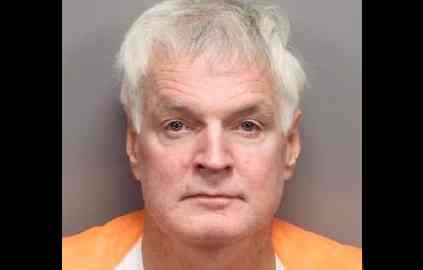
A South Lake Tahoe man is going to prison for 19½ years for bilking 11 investors out of $3.6 million in a fraudulent scheme to buy a Douglas County golf course.

Scott Summerhays

Scott Summerhays

In February 2014, Scott Hummerhays, 56, pleaded guilty to 24 federal charges, including wire fraud and money laundering. On May 18, he was sentenced by U.S. District Judge Larry Hicks in Reno to prison as well as to pay $1.4 million in restitution.

According to court records, between 2008 and 2010, Summerhays represented to potential investors that he was purchasing the Genoa Lakes Golf Club for $17 million and needed a short term loan to complete the deal because his money was tied up in a trust. Summerhays also represented to the potential investors that he solicited funds for oil and gas investments in Texas and owned more than $30 million in Berkshire, Las Vegas Sands and MGM stocks. Summerhays showed some of the investors a fraudulent investment account statement. Summerhays also claimed that he was in partnership with Las Vegas Sands owner Sheldon Adelson, and showed potential investors a partnership agreement containing the forged signature of Adelson.

In reality, Summerhays had no investment portfolio, and Adelson never heard of Summerhays or had any partnerships with him. None of the investors was repaid and they lost all of the money they loaned Summerhays.

— Lake Tahoe News staff report


Local police to get less military-style assault gear

By David Nakamura, Washington Post

The Obama administration announced Monday it will ban federal transfers of certain types of military-style gear to local police departments, as the president seeks to respond to a spate of incidents that has frayed trust in communities across the country.

The banned items are tracked armored vehicles, bayonets, grenade launchers, ammunition of .50-caliber or higher and some types of camouflage uniforms, according to a report released by a White House working group that made the recommendations. Other equipment, including tactical vehicles, explosives and riot equipment, will be transferred only if local police provide additional certification and assurances that the gear will be used responsibly, according to the report.

Community members “have voiced concerns about what has been described as the ‘militarization’ of law enforcement due to the types of equipment” that is deployed, the report stated.

The ban on items will take effect immediately, officials said, while the restrictions on other gear will be phased in so that local law enforcement agencies can be briefed about the new requirements.

Read the whole story


Calif. wells keep drying up

By Matt Stevens, Los Angeles Times

Just a few months ago, the state’s top water officials said they had reason for optimism. Rain was cascading down on California in December and water conservation passed 20%.

“I, for one, had high hopes,” Mark Cowin, director of the state Department of Water Resources, told a California Senate joint oversight hearing on the drought last week.

Cowin and his colleagues sat before lawmakers and took turns delivering a series of sobering facts and figures about the state’s persistent drought: The mountain snowpack was dismal; conservation is falling far short of Gov. Jerry Brown’s 25 percent mandate; officials are curtailing water rights.

One fact in particular caught senators’ attention, though. About 1,900 wells have gone dry, Cowin said.

Read the whole story


Liberty may raise rates more than 17%

Liberty Utilities customers may find their bills going up 17.34 percent starting Jan. 1.

The electric company that serves the California side of the Lake Tahoe Basin, Truckee, Alpine County and other areas of the state has filed for a rate increase with the California Public Utilities Commission.

Liberty wants to increase its revenue by $13.571 million to recover costs associated with the distribution of power to its 49,000 customers.

“The increase is necessary to continue Liberty’s focus on delivering safe and reliable electric service to its customers. Components of the increase include vegetation management (trimming trees and branches from infrastructure that may cause outages), compliance with California’s requirements related to drought-related fire prevention along utility power lines, additional funding for the existing energy efficiency programs/incentives and funding to implement a new solar incentive program, as well as maintenance and upgrades to the existing electrical system,” Liberty said in a statement.

The last general rate case increase was 4.97 percent, which took effect Jan. 1, 2013.

The CPUC filing is online.

— Lake Tahoe News staff report


Federal water bill mired in secrecy

By Michael Doyle, McClatchy News Service

WASHINGTON — Five months into a new Congress, and deep into a lasting drought, California water legislation still stymies and splits the state’s lawmakers.

Draft copies are tightly held, as if stamped Top Secret. Myriad details are in flux. The legislative timing, though a June 2 Senate hearing could yet happen, remains unsettled. Democrats are divided; some are distinctly unhappy.

It all sounds so familiar, and yet there’s still no telling how this movie ends.

“Right now, I don’t know,” a gloomy sounding California Democratic Sen. Dianne Feinstein said Thursday, when asked about the prospects for a bill. “It’s very difficult to put something together. Obviously change is controversial, so to propose something and then not to be able to do it makes no sense.”

Read the whole story


Pay raises approved for Brown, Calif. legislators

By Patrick McGreevy, Los Angeles Times

SACRAMENTO — A state panel appointed by Gov. Jerry Brown voted Monday to give the governor, state legislators and many other officials a 3% pay raise, saying it would make their salaries more competitive with leaders elsewhere.

The increases will take effect Dec. 7.

Thomas Dalzell, chairman of the state Citizens Compensation Commission, said the 2.5 percent raises taking effect July 1 for many rank-and-file state workers also were a basis for the new salaries.

Brown’s pay will go from $177,466 a year to $182,789; the base salary for lawmakers will go from $97,196 to $100,111. Leadership posts in the Legislature pay up to 15 percent more.

Read the whole story


How the Browns have ruled California

By Adam Nagourney, New York Times

LOS ANGELES — When Edmund G. Brown Sr. was governor of California, people were moving in at a pace of 1,000 a day. With a jubilant Brown officiating, California commemorated the moment it became the nation’s largest state, in 1962, with a church-bell-ringing, four-day celebration. He was the boom-boom governor for a boom-boom time: championing highways, universities and, most consequential, a sprawling water network to feed the explosion of agriculture and development in the dry reaches of central and Southern California.

Nearly 50 years later, it has fallen to Brown’s only son, Gov. Jerry Brown, to manage the modern-day California that his father helped to create. The state is prospering, with a population of more than double the 15.5 million it had when Brown, known as Pat, became governor in 1959. But California, the seventh-largest economy in the world, is confronting fundamental questions about its limits and growth, fed by the collision of the severe drought dominating Jerry Brown’s final years as governor and the water and energy demands — from homes, industries and farms, not to mention pools, gardens and golf courses — driven by the aggressive growth policies advocated by his father during his two terms in office.

The stark challenge that confronts this state is putting a spotlight on a father and son who, as much as any two people, define modern-day California. They are strikingly different symbols of different eras, with divergent styles and distinct views of government, growth and the nature of California itself.

Read the whole story


Transportation officials interested in KMS site

By Kathryn Reed

Kingsbury Middle School may be turned into a transportation hub of sorts.

“For that location to work definitely the buildings would have to be modified,” Carl Hasty, executive director of Tahoe Transportation District, told Lake Tahoe News. “One thing we are getting into is some facilities planning for the bus yard. We want to know what options are out there.”

The fleet of 40 BlueGo buses that are all owned by TTD are stored on property that is rented from South Lake Tahoe in the industrial area. This location is too small to keep all the vehicles inside and it requires some upgrades, according to Hasty. The ventilation system needs to be revamped to handle the compressed natural gas vehicles (CMG), plus buses are getting taller. There is no fueling station at the city yard nor is there a bus washing facility.

TTD owns the CMG fueling station at Lake Tahoe Airport and then contracts for diesel service.

Talks are at the initial stages between TTD and Douglas County School District for a potential 30-year lease.

Douglas County School District in January 2012 voted to put the 10-acre school on the market with an asking price is $4 million. To date no one has made a formal offer, though there have been multiple inquiries. The buildings encompass 36,000-square-feet.

The district consolidated its three lake schools into two starting with the 2008-09 school year because of declining enrollment. It has sat empty since then.

At the board’s April meeting it was determined that renting the site could be an option instead of only selling it. For what price remains a huge unknown. Tenant improvements would be part of the equation.

TTD is hoping to have its facilities plan done by the end of the year. What is likely to be a document that looks at needs for the next 20 years will be designed to address at short- and long-term issues. Until that time, Hasty said it would be premature to enter an agreement with DCSD.

Hasty said facilities dollars are hard to find, but it’s easier to do so with a plan in hand.

Part of the equation is if the basin goes to a regional transportation system, what would that look like. The East Shore Express based in Incline Village is growing in popularity and may become permanent. That would make having a transportation site there be logical as well. TART is the North Shore transit agency. That entire fleet is CMG. The facility is at Cabin Creek on Highway 89 outside of the Lake Tahoe Basin.

Another component is that TTD offices are currently inside of the Tahoe Regional Planning Agency offices in Stateline. If the bus garage were to move down the road to the KMS site, so could the employees.


Calif. Senate approves vaccination bill

By Alexei Koseff, Sacramento Bee

After a lengthy and contentious debate, the California Senate on Thursday approved a controversial proposal requiring vaccinations for nearly all California schoolchildren.

Senate Bill 277, which would make California only the third state in the country without religious and personal belief exemptions from vaccinations, passed 25-10. The vote followed mostly partisan lines, with the majority of support coming from Democrats. It now heads to a new round of hearings in the Assembly.

“Together we are turning the tide to stop communicable diseases before any more families are hurt,” Sen. Richard Pan, D-Sacramento, said after the vote. “By passing this bill, the Senate, in a bipartisan manner, has sent a strong message: Vaccines save lives. Every child has a right to a safe school.”

Read the whole story