Food, beverage firms wake up to water risks

By Sandra Postel, National Geographic

Earlier this month, Starbucks announced that it would stop sourcing and producing its bottled water brand, Ethos Water, in California and shift production from the Golden State to Pennsylvania.

In explaining its decision, the beverage maker cited “the serious drought conditions and necessary water conservation efforts.”

With California in its fourth year of a historic drought, Starbucks has been called out for tapping springs in severely drought-stricken Placer County, which last month declared a water-shortage emergency.

The company faced not only the risk that its water supply might shrink, but that its reputation could be badly tarnished if it did not act.

Starbucks is by no means alone. Drought and water stress are affecting the decisions and bottom lines of a growing number of companies.

Read the whole story


Nev. teachers may be reimbursed for supplies

By Associated Press

Nevada senators have approved a bill that would reimburse teachers who buy classroom supplies with their own money.

The Nevada Senate voted unanimously Monday to approve SB133, which is sponsored by Senate Majority Leader Michael Roberson and other Republicans. It would allow teachers a reimbursement of up to $250 per year if they request money for qualified classroom expenses.

The bill calls for $5 million in state money for the program over the next two years. The measure now moves to the Assembly.

Lawmakers still need to approve a tax plan to provide money for the school supply program and other new spending items proposed this session.


Possible government credit card ban at casinos alarms gaming group

By J.D. Morris, Las Vegas Sun

A recent report that found federal employees improperly used government credit cards at casinos could have unnecessary consequences for the gaming industry, the American Gaming Association warned today.

In a May 19 report, the Department of Defense Inspector General’s Office said it discovered hundreds of thousands of dollars in transactions where department credit card holders probably used their cards for personal purposes at casinos and “adult entertainment establishments.”

The report made several recommendations, including that the government consider blocking cards from being used at specific casinos or adult entertainment businesses. The gaming association is taking issue with that recommendation.

Read the whole story


Obama takes executive action on environment

By William Yardley, Los Angeles Times

In April 1989, a Michigan developer named John Rapanos dumped fill on 54 acres of wetlands he owned to make way for a shopping center. He did not have a permit, and when the state told him to stop, he refused. Courts found him in violation of the federal Clean Water Act. Prosecutors wanted to send him to prison.

Rapanos took his case all the way to the U.S. Supreme Court, which found that the wetlands on his property, about 20 miles from a river that drained into Lake Huron, did not fall under the Clean Water Act’s jurisdiction over discharges into “navigable waters.”

Rapanos became something of a celebrity among property rights advocates, but the ruling raised as many questions as it answered. Although the court upheld federal protections for wetlands and streams when they connected with navigable waters, it left unclear what constituted a connection.

Now, nearly a decade later, the Obama administration is seeking to clarify those ambiguities, and the effort is causing controversy of its own. This week, the Environmental Protection Agency is expected to release a new rule to protect a significantly larger percentage of streams and wetlands that provide habitat for wildlife and sources of drinking water.

Read the whole story


Taxes top Nev. Legislature’s to-do list

By Ray Hagar, Reno Gazette-Journal

Last week, state lawmakers passed what will be a $7.2 billion general fund budget, complete with new programs for education and $8 million for a new medical school at the University of Nevada, Las Vegas.

As the 2015 Nevada Legislature enters its final week, Job One for legislators will be passing a tax plan to fund the budget.

Lawmakers cannot go home until the state budget is balanced for the next two years. And the only way to balance this budget is to find a tax plan that will produce $1.1 billion in new and extended taxes.

Most lawmakers see the need. The issue is finding a plan that can get the required two-thirds votes for new taxes in both houses.

Read the whole story


Nev. considers incentives to attract teachers

By Riley Snyder and Michelle Rindels, AP

CARSON CITY — Gov. Brian Sandoval announced Friday that he wants to launch a teacher training scholarship program and a series of bonuses aimed at tackling Nevada’s severe teacher shortage.

Lawmakers have expressed concerns that a workforce shortage will hamper some of the Republican governor’s ambitious education reform initiatives, and groups including the Latino Leadership Council have recommended bonuses to combat high turnover and teacher inexperience in some of Nevada’s toughest schools.

“Attracting and preparing educators for success in the classroom (is a) key component to changing Nevada’s education system for the better,” Sandoval said in a statement, saying the program was “an idea prompted by the ongoing struggle across Nevada to recruit and retain high-quality teachers in our public education system.”

The measure was introduced as SB511, and was expected to be up for a hearing before the full Senate in coming days.

Sandoval is seeking $5 million over the next two years to launch the Teach Nevada Scholarship. Funds would go to Nevada’s public and private colleges and entities that provide alternative routes to licensure programs, and would help future teachers complete their degrees.

A second program would offer $5,000 bonuses for 1,000 new teachers each year. The incentive program, which is expected to end after two years, aims to fill teaching positions in at-risk schools and make Nevada more competitive relative to other states that are also struggling with shortages.

“We really decided that the best way to do this was to provide as much financial assistance as we could,” said state Superintendent Dale Erquiaga. “Five thousand dollars per individual per year is a substantial increase. That’ll get those salaries to almost California levels.”

Clark County School District alone is trying to hire about 2,600 new teachers for the upcoming school year. Nevada’s public colleges are only expected to graduate about 800 teacher candidates this year, while the Teach for America program is expected to provide fewer teachers than planned, and enrollment in teacher preparation programs in California — Nevada’s main supplier — is about half what it was five years ago.

Lawmakers expressed concerns that the teacher shortage and lack of a teacher pipeline could unravel the progress Sandoval hopes to make by investing millions in Zoom Schools for English language learners and Victory Schools for students in poverty. Many of those initiatives require additional teachers to provide intensive reading instruction or to staff kindergarten and pre-kindergarten programs.

Joyce Haldeman, a lobbyist for Clark County School District, said she thinks incentives and scholarships are a step in the right direction.

“This is another piece of the puzzle that we think is part of a long-term solution,” she said.


Fox News hurts GOP, Bush official says

By Alana Horowitz, Huffington Post

Fox News is hurting the Republican Party,according to a study conducted by a top official in the first Bush administration.

The study, authored by Bruce Bartlett, who worked in the Treasury Department under George H. W. Bush and was also a domestic policy adviser to Ronald Reagan, found that Fox viewers tended to be less informed about current affairs than people who watch mainstream news — and even people who don’t watch the news at all.

“Republican voters get so much of their news from Fox, which cheerleads whatever their candidates are doing or saying, that they suffer from wishful thinking and fail to see that they may not be doing as well as they imagine, or that their ideas are not connecting outside the narrow party base,” Bartlett said.

Read the whole story


Sierra lakes drop as needs to the west take toll

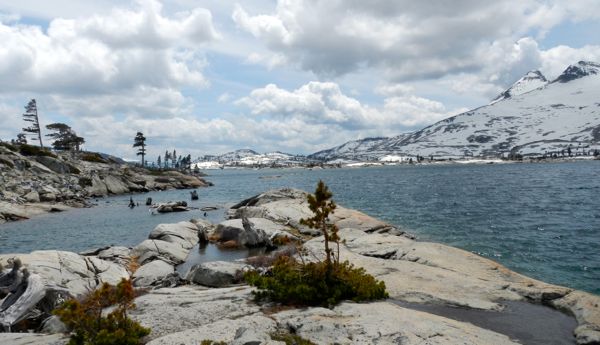
Lake Aloha in Desolation Wilderness is at 50 percent capacity and is expected to continue to be drained for use downstream. Photo/Kathryn Reed

Lake Aloha in Desolation Wilderness is at 50 percent capacity and will continue to be drained for use downstream. Photos/Kathryn Reed

By Kathryn Reed

The water level of so many Sierra lakes is anything but natural. That’s because of dams and the needs of water users downstream. This in turn affects those who use these water bodies for recreation.

As the fourth year of one of the worst droughts in California’s history drags on, the impact will become more pronounced as spring turns into summer.

There was significant legislation in 1914 that established rights that are still in effect today and have been brought to light because of the drought.

It was in 1925 that the El Dorado Irrigation District was formed. The voters did so “to protect water filings, ensure a secure water supply, keep irrigation rates reasonable, and increase the value of agricultural lands,” according to EID’s website.

Today, EID has 39,775 water customers, 21,498 sewer and 4,678 recycled water. The number of actual people, as opposed to households or businesses being served, is about 118,000.
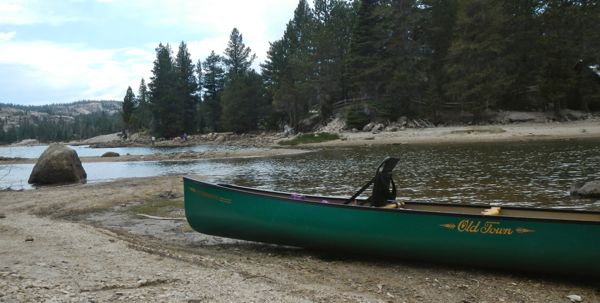
Silver Lake is almost full thanks to the rain in May.

Silver Lake is almost full thanks to the rain in May.

Balancing needs

While those customers are on the West Slope, much of the water they use is from the Sierra – Lake Aloha, Echo Lake, Caples Lake and Silver Lake. They are storage facilities for EID for water consumption as well as the hydroelectric plant.

Water from these lakes goes into the South Fork of the American River, is diverted at Kyburz and then at Pollock Pines is rerouted again to the hydroelectric plant or for drinking water customers.

EID, though, doesn’t have complete control over its water. Rules are in place that mandate minimum stream flow into the South Fork of the American River. However, EID received a one-time variance that goes through the end of this month to limit that flow.

“This measure was to help us to ensure we can deliver our drinking water supply. We want to have water in the reservoirs so we have stream releases throughout the year,” Brian Deason, EID hydroelectric analyst, told Lake Tahoe News. “We want water next year, with enough storage in the event we have another drought year. We are positioning to respond to that.”

These four lakes are also popular recreation destinations for those who live in the Lake Tahoe Basin and visit the region.

“Drinking water needs take precedence over recreation needs by far,” Greg Hawkins, EID parks and recreation manager, told Lake Tahoe News. He is also in charge of Jenkinson Lake at Sly Park.

Still, Hawkins predicts the waterways EID oversees will be in better shape than reservoirs down stream, much like what occurred last year when Folsom Lake was so low and people headed east to EID’s lakes.

Saving water for human consumption outweighs all other needs – even making money off the hydroelectric operations, which in some years generates $14 million for EID. That is why Jenkinson Lake at Sly Park has fared well during the drought. EID is diverting water there for consumption and having less go to the South Fork for the 20-megawatt hydroelectric plant.

EID bought Jenkinson from the Bureau of Reclamation in 2003. Had it not done so, the state would be able to tap that water at will.
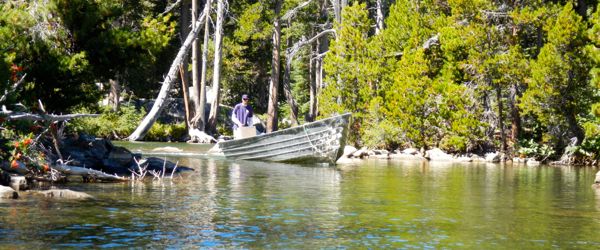
The boat shuttle at Echo Lake is operating now, but may have to stop if levels drop again.

The boat shuttle at Echo Lake is operating now, but may have to stop if levels drop again.

Tahoe area lakes

“At Silver, Caples and Echo the outlook is a lot better than it previously was. Some of these recent storms really helped,” Deason said.

He said Silver is near capacity and that Caples is a few thousand acre-feet from full. (An acre-foot covers an acre with water to a depth of 1 foot.)

Recreation sites at these two lakes off Highway 88 opened May 1. EID regulates the day-use areas and campgrounds, has rights to the water, but does not regulate those lakes. In other words, if unsafe conditions were to exist, it would be up to Alpine County officials for Caples and Amador County officials for Silver to make those decisions.

At Echo Lake the use of water by EID is much less – usually three weeks after Labor Day water is diverted into the South Fork.

EID has no say over any recreation activities at Echo. Operators of the boat shuttle are on a storm-by-storm watch in regards to whether the upper lake will be reached. Today the boat can make it through the channel, whereas earlier this month it couldn’t. Smaller boats, and human powered vessels, have not been hindered by the flow.

Lake Aloha is a different animal than Caples, Silver and Echo lakes because it is governed by post-1914 rules. Aloha spills forth and is what makes Horsetail Falls. It then goes to the South Fork for EID purposes. Deason said Aloha is at 50 percent capacity and will only keep getting lower.

The four Sierra lakes fall under Project 184 of the Federal Energy Regulatory Commission. The first 50-year license was issued to PG&E in 1922. EID took over the system in 1999. Until that time, EID bought water from PG&E. EID has a FERC lease that expires Oct. 1, 2046.

EID, like all water districts in the state, must curtail its use. Twenty-eight percent from 2013 totals is the magic number. Officials believe this will be met by reducing outdoor use. Last year EID cut its use by 24 percent.

The EID board meets May 26  to consider the staff recommendation to continue the restricted irrigation to two days per week. As of April 22, the most recent figures available, the district was at a 15 percent savings this year.

“This will limit customer confusion by conveying to customers that instead of changing to odd/even starting June 1, they simply must continue their current irrigation practices of watering no more than two days per week throughout the summer and fall. We went to twice a week water schedule on April 16 and if the board does not change the published schedule, it will go to the odd/even schedule on June 1, three days a week,” Mary Lynn Carlton, district spokeswoman, said.


Military, civilians are increasingly divided

By David Zucchino and David S. Cloud, Los Angeles Times

Jovano Graves’ parents begged him not to join the Army right out of high school in 2003, when U.S. troops were fighting in Iraq and Afghanistan.

But their son refused his parents’ pleas to try college. He followed them both into the Army instead.

Last June, 11 years later, Staff Sgt. Jovano Graves returned home from Afghanistan, joining his mother, Chief Warrant Officer 4 Sonia Graves-Rivers, for duty here at Ft. Bragg.

“My family, going way, way back, has always felt so proud to be Americans,” said Graves-Rivers, who comes from a family in which military service spans six generations, starting with her great-great-grandfather, Pfc. Marion Peeples, who served in a segregated black unit during World War I.

Her father, Cpl. Harvey Lee Peeples, fought in the Vietnam War. Her uncle, Henry Jones, was career Air Force. Another uncle, Sgt. 1st Class Robert Graves, spent 22 years in the Army. Her sister, Janice, served 24 years.

“In our family, there’s a deep sense that being American means serving — showing gratitude by giving back to your country,” Graves-Rivers said.

Multi-generational military families like the Graveses form the heart of the all-volunteer Army, which increasingly is drawing its ranks from the relatively small pool of Americans with historic family, cultural or geographic connections to military service.


Surveys suggest that as many as 80 percent of those who serve come from a family in which a parent or sibling is also in the military. They often live in relative isolation — behind the gates of military installations such as Ft. Bragg or in the deeply military communities like Fayetteville, N.C., that surround them.

The segregation is so pronounced that it can be traced on a map: About 49 percent of the 1.3 million active-duty service members in the U.S. are concentrated in just five states — California, Virginia, Texas, North Carolina and Georgia.

The U.S. military today is gradually becoming a separate warrior class, many analysts say, that is becoming increasingly distinct from the public it is charged with protecting.

Read the whole story


Major changes coming to Calif. electricity rates

By Sammy Roth, Desert Sun

How much you pay for electricity could soon depend on when you use it — and Coachella Valley residents could see their summer bills go up substantially.

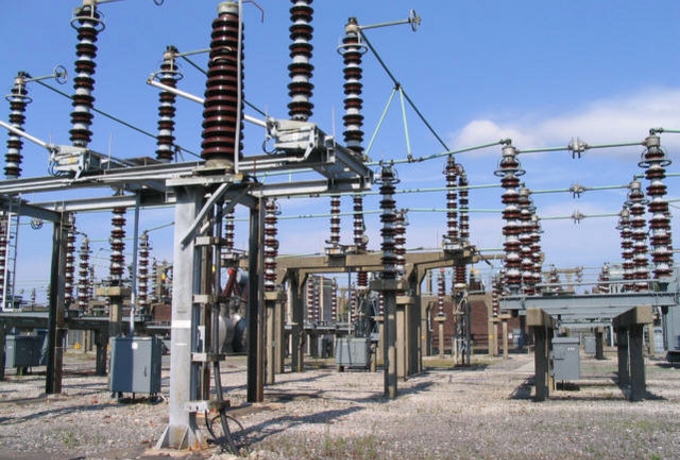
Electric prices may fluctuate based on peak use. Photo/Peter Craine

California electric prices may fluctuate based on peak use. Photo/Peter Craine

The California Public Utilities Commission could soon ask Southern California Edison and other utility companies to start designing “time-of-use” residential electricity rates, to take effect in 2019. The rates would make electricity more expensive when demand is high, and less expensive when demand is low.

Some ratepayer advocates and environmental groups support time-varying rates, which they say would help reduce dependence on climate-altering fossil fuels. But at least one consumer watchdog group is worried the rates would have unintended consequences. For instance, the new rates could make electricity much more expensive during the summer, hitting desert residents hard during the many months of air conditioning season.

Read the whole story