Lack of supply hurts Tahoe real estate sales

By Ben van der Meer, Sacramento Business Journal

The major force holding back Lake Tahoe-area real estate through the first half of 2015 is the same as elsewhere: lack of inventory.

And though many experts think a lot of new construction could solve the situation elsewhere, that’s not likely for Tahoe.

Sue Lowe, corporate broker and senior vice president at Chase International in Tahoe, said the lack of supply is because improving economic conditions means no one feels compelled to sell.

Read the whole story


El Dorado County spending taxpayer money on PR agency for grand jury damage control        

By Kathryn Reed

El Dorado County has hired a public relations firm to primarily focus on getting out a positive message about the latest grand jury report.

The scope of work with Endicott Communications out of Roseville says the primary objectives are:

“1. County more favorably perceived by residents and other key regional stakeholders.

“2. Media coverage and other external communications regarding grand jury reports reflect county key messaging.”

Pamela Knorr, when she was acting CAO, signed the contract on June 15. Lake Tahoe News has been trying to get a copy of it since June 17 when the unfamiliar contact information appeared on a press release. Knorr never responded to the request. Auditor-Controller Joe Harn provided a copy of the public document on July 8, the same day he received it. As of Wednesday he had not received an invoice from the firm.

The $40,000 contract is below the threshold in which the Board of Supervisors would have to approve the expenditure.

The contract goes on to say the flacks are to develop talking points for county staff to use in regards to the grand jury, write and distribute press releases, develop content about the grand jury report for the county’s website and social media, and monitor and report on grand jury related media coverage.

One of the more highly charged grand jury reports was about the Human Resources Department, of which Knorr is head of. She was also acting CAO from December 2014 until June 29.

This isn’t the first time the county has sought outside help instead of relying on staff which it had done up until about three years ago.

Then CAO Terri Daly hired Stephanie McCorkle on May 13, 2014, to do public relations work. The one-year contract was not to exceed $25,000. She left before half the year’s term was up, but billed for nearly the entire amount of the contract.

There was also Kittelson and Associates, which entered a $516,995 three-year contract with the county in December to provide public outreach for a five-year capital improvement program and traffic impact mitigation fee program updates. In the document is a $44,720 contract with Flint Strategies to be a subcontractor of Kittleson’s for PR work.


Nev. firms get OK to use drones for photography

By Daniel Rothberg, Las Vegas Sun

Most Nevada companies that have received permission from the federal government this year to fly drones will be using their unmanned aircraft to take photos and video.

That’s according to data released last week from the Center for the Study of the Drone at Bard College, which compiled a database of the FAA’s progress in granting waivers to fly small drones in national airspace.


Nevada is one of six designated drone test sites the FAA is using for research before drones are fully integrated into the airspace.

Read the whole story


Truckee tackling climate change

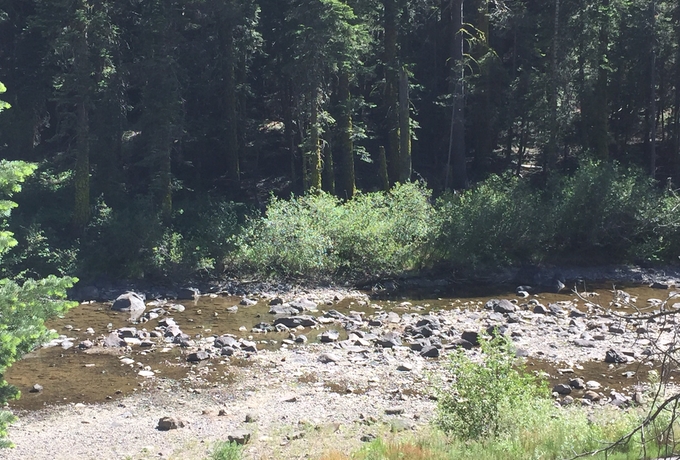
The Truckee River is a trickle between Tahoe City and Truckee. Photo/LTN

The Truckee River is a trickle between Tahoe City and Truckee. Photo/LTN

By Linda Fine Conaboy

TRUCKEE – Whether to jump aboard the global warming freight train or to simply remain at the station as the issue continues to heat up was the question posed last week at a Truckee climate planning workshop.

Town Manager Tony Lashbrook explained that the mission, moving forward, is to scope out, process and budget a greenhouse gas inventory and how the town might pursue a climate action plan.

The meeting, though fairly well represented by interested and seemingly supportive stakeholders, among them Truckee Donner Public Utilities District, a parks and recreation manager, a representative from the Truckee River Watershed Council and several interested citizens, did not, according to Lashbrook, include all of those who could have been there.

“I’m happy with the way the meeting went, though,” Lashbrook said July 7. “The objective was a workshop to educate community members, the town council and others on climate change. We wanted to point the compass to define the purpose and benefits of doing climate planning in California.”

To that end, Sierra Business Council and a group called the Local Government Commission, both nonprofit organizations, led the workshop they dubbed Climate Policy 101, starting with a presentation followed by public comment, and a question-and-answer session.

According to its website, SBC works closely with Sierra Nevada cities, providing training to staff and assisting them in preparing greenhouse gas emissions inventories, a first step in a jurisdiction’s climate protection initiative.

The carbon cycle, explained SBC President Steve Frisch, is a simple biochemical process where carbon is exchanged. It’s a series of processes by which carbon compounds are interconverted in the environment, chiefly involving the incorporation of carbon dioxide into living tissue by photosynthesis and its return to the atmosphere through respiration, the decay of dead organisms, and the burning of fossil fuels.

Carbon dioxide makes up 1 percent of the world’s atmosphere. Frisch said his agency’s goal is to figure out how to advance California’s policy, which demands that carbon be reduced to 1990 levels by 2020.

“When we burn fossil fuel, we return it to the atmosphere. The recent fire in Yosemite emitted as much carbon dioxide as all of the emissions recorded in Southern California in a year,” Frisch said.

Reducing these emissions is Frisch’s passion. What’s happening, he said, is that across the board, state policy is driving reduction, and California is meeting its goals.

Cap and trade plays a role. However, according to Frisch, who presented an extremely simplified definition, those who reduce their greenhouse emissions can sell them and those who don’t, can buy them, with all money from this project funneled into greenhouse emission reduction.

The Environmental Protection Agency, on its website, explained that successful cap and trade programs reward innovation, efficiency and early action and provide strict environmental accountability without inhibiting economic growth.

According to Frisch, this is important because the revenue side of the equation is driving a bunch of state programs — by 2020 the fund will total $5 billion, portions of which can be accessed by local entities meeting their pre-established goals.

Lashbrook said because of its location Truckee is not required to do climate planning. However, there are definitely big incentives and benefits to developing such a plan, not to mention the residual good to be gained from efforts to reduce global warming.

Greg Jones, vice president of SBC, cited a litany of positive reasons to embark on these kinds of programs: cleaner air leading to a reduction of asthma and obesity; reduction in the probability of catastrophic wildfires, green building benefits, wiser water usage, advances in land use and big pluses on the business side of things.

While the reasons to actively seek to reduce our carbon footprints are compelling, the looming question is, how to do this?

Kate Meis, executive director of Local Government Commission, led that charge. By way of explanation, LGC is a nonprofit, fostering innovation in environmental sustainability, economic prosperity and social equity.

Since the majority of carbon emissions come from private vehicles, Meis discussed the need to make alternatives to driving cars more attractive and then how to optimize that driving. She also talked about the need for in-fill projects, more efficient vehicles, mixed-use neighborhoods, flood protection projects, green infrastructure, “cool” roofs and water recycling.

And when funds finally do become available, it’s important to be pro-active in how to spend the money. Meis discussed municipal leadership, regulations and community engagement. And most important to advocates is how to actively engage the public in these programs, should they finally come to fruition.

Meis said Truckee has done a good job in meeting the goals it now has in place, such as its low-impact development standards and green building policies. But the belief more needs to be done and this is the charge of Truckee’s community leaders. Now they must discern if the area’s citizens have the fire in their bellies to climb on board this quickly moving freight, and then they must determine how to get it done.

Meis said it’s important to have goals, even little ones that are easily measured and then to demonstrate a method as to how to get there. “There needs to be a broad and deep collaborative process among departments and the public to develop a plan for combatting climate change.”



Tahoe woman nods off, crashes vehicle

Chemicals from a vehicle were cleaned up before they reached Lake Tahoe after a single-car crash on July 8 in Tahoe Vista.

Placer County Office of Emergency Services reported cleaning up 55 gallons of isocyanate,

Jessie Fidler, 24, of Tahoe City was going east on Highway 28 about 3:50pm Wednesday when she dozed off, according to the California Highway Patrol. Her vehicle ran into the back of a parked trailer, which then caused the chemicals to leak.

Fidler sustained minor injuries, but declined going to the hospital.

— Lake Tahoe News staff report


Senators lobby for dollars to protect Lake Tahoe

The Lake Tahoe Restoration Act of 2015 was introduced today by the four senators representing California and Nevada.

The bipartisan legislation was crafted to protect the Lake Tahoe region by improving water clarity, reducing wildfire threat, jumpstarting innovative transportation and infrastructure projects, and combating invasive species.

The federal legislation would bring $415 million to the basin over the next 10 years. The money would be spent on:

·         Wildfire prevention – Provides $150 million for fire risk reduction and forest management.

·         Environmental improvement program – Provides $80 million to jumpstart projects spanning from new bike trails to creek restoration and fire treatment.

·         Invasive species management program – Provides $45 million to prevent the introduction of the quagga mussel and manage other harmful invasive species like the Asian clam.

·         Storm water projects – Sets aside $113 million to implement storm water management, erosion control, and watershed restoration projects.

·         Lahontan cutthroat trout recovery program – Allocates $20 million to recover the Lahontan cutthroat trout – a federally threatened species and Nevada’s state fish.

·         Increases accountability and oversight – Provides $5 million to ensure projects will have monitoring and assessment in order to determine the most cost-effective projects and ensure dollars are properly utilized.

·         Overall management improvement – Sets aside $2 million to cover the cost of land exchanges and sales on the California and Nevada sides of the Tahoe basin that will improve efficiencies of public land management.


What would minimum wage hike mean to Nev?

By Megan Messerly, Las Vegas Sun

Hot on the heels of San Francisco and Seattle, Los Angeles became the most recent city on the West Coast to pass a $15-an-hour minimum wage.

Los Angeles’ increase, which won’t be fully instituted until 2020, is the latest in a trend of minimum wage increases across the nation. In 2014, lawmakers in 10 states and Washington, D.C., raised the minimum wage, and voters in four more states approved increases through ballot measures.

Now, some are wondering: Is Nevada next? The minimum wage here is $8.25 an hour for employees who aren’t offered employer-sponsored health insurance and $7.25 for those who are.

This year’s legislative session saw various pushes to change the state minimum wage.

Read the whole story


Questions surround swallow nests at Hard Rock

What appears to be swallow nests at Lake Tahoe Hard Rock. Photo/Elias Klaich

What appears to be swallow nests at Lake Tahoe Hard Rock. Photo/Elias Klaich

By Kathryn Reed

Swallow nests at Hard Rock Lake Tahoe were there one day and essentially gone the next, according to South Shore residents who documented it with photos.

This could be a big deal because federal law protects swallows.

“If there are eggs or young in those nests, it is illegal to bring down a nest,” Chris Nicolai, regional migratory bird biologist for the U.S. Fish and Wildlife Service in Reno, told Lake Tahoe News. “Right now there is no way to get a permit of removal (of birds) or nests unless for human safety. Depredation permits for swallows would be pretty tough.”

In Nevada, it’s possible to get a permit to take down an inactive nest. This differs from California law where even inactive nests are protected.

“No one is aware of any swallow nests being removed,” Jen Eastwood, spokeswoman for Hard Rock Lake Tahoe, told Lake Tahoe News.

However, a group of friends who had been golfing at Edgewood Tahoe saw what they say is the destruction of swallow nests. This spring they first saw about 80 swallows from the sixth hole.

“I watched the swallows then fly to the exterior of the Hard Rock Hotel and build their nests,” Ed Bellow told Lake Tahoe News. Two weeks later “I saw two Hard Rock Hotel employees using a power washer to wash down the swallow nests in the area of Hard Rock’s valet parking. Keep in mind they were not old nests from last year, as the Hard Rock Hotel repainted to a different color this year. At the time we were there, the swallows were rebuilding those nests that were removed.”

While Bellow is a law enforcement officer in California, he does not have jurisdiction in Nevada. He reported the incident to California officials.

Elias Klaich took pictures of what he and Bellow saw.

“I saw them rebuilding nests. I saw (nest) debris on the ground and I saw debris on the side of the building that was freshly painted,” Klaich told Lake Tahoe News. “Maybe (the Hard Rock) told the contractor to tell their people to do it so they didn’t have to be directly involved.”

Swallows fall under the federal Migratory Bird Treaty Act.

“The law basically is to protect declining populations mostly due to hunting,” Nicolai said. “The interpretation is expanding and expanding, so no taking (of these animals) is authorized without a permit.”


Couples lose thousands on Tahoe wedding deposits

By Sage Sauerbrey, Moonshine Ink 

At least 10 couples lost their wedding deposits this March when the man who had claimed to own and reside on the property they booked was evicted following a five-year legal battle. The couples will follow through with their weddings under the new owners of the property, but are not hopeful about getting their deposits back.

Christian Steele, a former physician, author of “Mastering the Power of Life”, an ascension teacher, and a Tahoe City resident, had been misrepresenting his ownership of Bear Paw Lodge for five years, profiting from weddings on a property he has not owned since 2010.

According to a deed of sale in the name of Bank of America, Steele lost the Tahoe City lodge in a 2010 foreclosure after defaulting on a $4 million loan, but Steele said he continued to live on the property until 2015. When four to five years of serial bankruptcy filings finally culminated in his eviction by the Placer County Sheriff’s Office on March 17, Steele contacted the couples to inform them he could not honor their reservations. The deposits have not been returned as of April 23, and total somewhere in the range of $20,000 to around $60,000, judging from Steele’s estimate of $2,000 to $6,000 per deposit.

Read the whole story


El Nino gets reinforced by cyclones

By Phoebe Sedgman, BloombergBusiness

The El Nino forming across the Pacific has been turbocharged by a series of tropical cyclones that helped to shift the direction of trade winds, potentially adding to warming that’s evoking parallels with the record 1997-98 event.

Several cyclones, including a rare storm in the Southern Hemisphere this month, resulted in a strong reversal of trade winds near the equator, Australia’s Bureau of Meteorology said on its website on Tuesday. That’s set to increase temperatures below the surface, which then may raise sea-surface temperatures further in the coming months, it said in a fortnightly update.

Read the whole story