Wildland fire closes Highway 50

Updated 9:40pm:

The Kyburz wildland fire has jumped across the American River heading east and prompted mandatory evacuations from Whitehall to Sand Flat Campground, according to U.S. Forest Service reports.

The federal agency has beefed up its personnel working the fire to 350. The blaze that started this afternoon shortly before 2pm is 5 percent contained and under investigation.

CVS Pharmacy worker Tracy Nasca told Lake Tahoe News the air outside her Pollock Pines store is not enshrouded in smoke and there are no signs of the fire from the Sly Park Road exit aside from Highway 50 being closed. However, store personnel has been forced to deal with some confused customers needing to be diverted along Route 49 to Interstate 80 to go east.

__________________

Updated 9:05pm:

The Kyburz fire has grown to 100 acres and deployed 224 personnel working 21 engines and six water tankers among five hand crews, the U.S. Forest Service’s Incident Command site reported.

Voluntary evacuations are underway from Sand Flat to Strawberry, with centers established at the Pollock Pines Community Center at 2675 Sanders Dr. in Pollock Pines.

The fire is burning in steep terrain on both sides of Highway 50, which closed earlier this afternoon.

Still, the Forest Service indicated “making good progress,” despite the threat of structures.
_____________

A wildland fire has Highway 50 closed between Ice House Road and Strawberry.

At about 3pm the fire was at 20 acres.

“It’s burning on the north side toward the 2013 Kyburz burn. Structures are threatened,” Kristi Schroeder with the Eldorado National Forest told Lake Tahoe News.

It is not known how the July 23 fire started. However, reports are that a broken axle from a truck may have ignited the blaze.

The U.S. Forest Service is attacking the fire by air, including using the Super Scooper airplane that arrived at Lake Tahoe Airport this week.

— Lake Tahoe News staff report


Reno man ID’d in wilderness remains case

Remains found near Spooner Summit in June 2014 have been identified as Ryan Wallace Osburn, 32, of Reno.

The investigation by Douglas County sheriff’s investigators concluded Osburn died of a self-inflicted gunshot wound to the head.

The remains were found in King Canyon. Investigators also recovered personal property, a handgun, projectile and shell.

Prior to residing in Reno, Osburn lived in Ocala, Fla. He was a professional gambler.

— Lake Tahoe News staff report


Lake Tahoe clarity improves with drought

By Kathryn Reed

Drought is proving to be a good thing for the waters of Lake Tahoe, at least when it comes to clarity.

With less sediment reaching the lake mostly because the spring runoff was dismal, lake clarity is the best it has been in a decade. The Secchi disk – which resembles a white dinner plate – could be seen by the naked eye at a depth of 77.8 feet in 2014. The 2013 reading was 70.2 feet.

Those numbers come from averaging 28 readings during the year. Last year the deepest the 10-inch disk could be seen was 93.5 feet on July 7, while the shallowest was 57.4 on Sept. 16.

The data comes from the UC Davis Tahoe Environmental Research Center’s “Tahoe: State of the Lake Report 2015” that was released today.

Scientists have discovered Lake Tahoe's clarity and blueness are not one in the same. Photo/LTN

Scientists have discovered Lake Tahoe’s clarity and blueness are not one in the same. Photo/LTN

“While these latest data are very reassuring, they should not be interpreted as victory in our joint restoration efforts,” Geoff Schladow, director of TERC, said in a statement. “Complete restoration is still decades away, and some of the greatest challenges still lie ahead of us. We are enduring drier and warmer conditions than we have ever encountered, and the restoration consequences of that are still far from understood.”

Climate change is a concern for scientists as they study the health of the lake and try to analyze how various factors affect the ecosystem.

At 29, the winter 2013-14 had the least number of freezing days in the last century; precipitation was 61 percent of the long-term average; snowpack was the lowest in 100 years; the annual-averaged surface temperatures were at an all-time high in 2014 at 53 degrees.

“Other consequences of climate change could also be seen in the rising temperature of the deep waters of the lake. In the last 38 years bottom temperatures have increased by over 1 degree,” the report says. “Lake Tahoe did not mix to its full depth in 2014, the third consecutive year in which this has not happened. Instead, the maximum depth of mixing was only 440 feet, reached in March. The lack of mixing was due to a third year of above average lake stability, driven by the generally warmer weather.”

New in this year’s annual document was a study about what factors make the lake blue. The conclusion is less algal concentration means a bluer Lake Tahoe.

The blue study was a collaboration between UC Davis postdoctoral researcher Shohei Watanabe and the NASA-Jet Propulsion Laboratory and Laval University. A blueness index was created using data from a NASA-JPL research buoy at the lake and hyperspectral radiometers that measure the amount of light leaving the lake at each waveband.

The conclusion was that blueness and clarity measurements went in opposite directions. In other words, when clarity improves, the blueness declines and vice versa.

“This does not mean that clarity should be dismissed,” Watanabe said in a statement. “Rather, it shows that algae concentrations and nutrient input should be managed more closely to truly keep Tahoe blue and clear.”

Evaporation is the main source of water loss. In 2014, 52 inches of water evaporated from the lake. One inch of evaporation is equal to 3.5 billion gallons of water.

It has just been in the last couple years that a concerted effort has been made to study water near the shoreline, aka the near shore. The study found that periphyton, or attached algae, on rocks decreased from 2013 to 2014.

“The two most urbanized sites, Tahoe City and Pineland, were one-half to one-sixth of their values in 2013. This decrease is not believed to be part of a long-term trend, but linked to the low water levels and the reduced nutrient input,” the report says.

TERC is creating a link between near shore water quality and measured meteorology, stream flow and storm water flow to provide a scientific basis for near shore restoration.

—–

Notes:

  • Geoff Schladow will give a presentation about the report on July 23 at 6pm at TERC (on the campus of Sierra Nevada College in Incline Village).


Truckee man dies in car crash

A 19-year-old Truckee resident died in a single-vehicle accident on July 21.

Giovanni Arellano was believed to be on his way home from work when the accident occurred at about 11:30pm.

Truckee police officers said Arellano’s vehicle left the road and hit a large tree. This was in the area of Jeffery Pine Road and Alpine Fir Road in Truckee.

Alcohol does not appear to be a factor.

— Lake Tahoe News staff report


Man wanted for multiple robberies

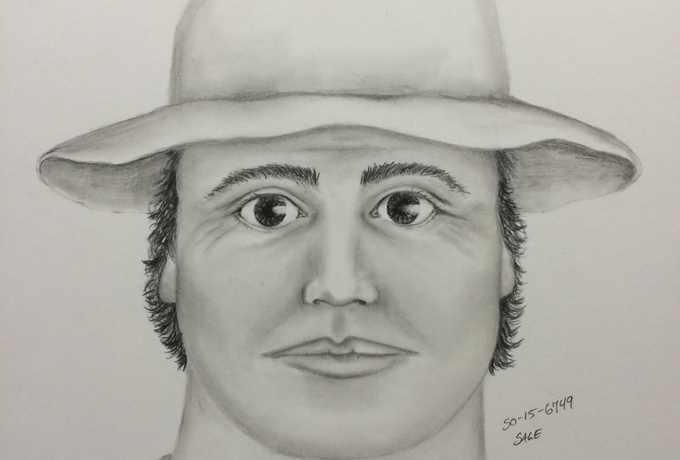
This man is wanted in the connection with a series of pharmacy robberies.

This man is wanted in the connection with a series of pharmacy robberies.

The man who may be responsible for committing five recent armed pharmacy robberies struck for the sixth time in Kings Beach on July 16.

This is the same pharmacy that was robbed two months ago.

On May 16, the suspect robbed the Rite-Aid in Kings Beach while wearing a surgical mask. On July 16, his face was exposed. Colfax, Reno and Incline Village pharmacies have also been robbed.

He is described as Caucasian with olive skin; clear complexion; black or dark brown hair with some gray, which flipped up behind his ears and around his neck; 5-feet-6-inches to 5-feet-10-inches tall; with a thick build; brown eyes;  30 to 45 years of age; clean shaven; and speaks without an accent.

He has worn different clothing during robberies, but he has always worn either a ball cap or a “boonie” or fishing-type hat.

In all of the robberies, the suspect concealed a handgun in his pocket and partially displayed it to the employee. The suspect was said to be calm and talked normally as he asked for Methadone and other drugs. After he was given the medication, he quickly walked out of the store and fled.

— Lake Tahoe News staff report


Zephyr Cove man dies in Stateline crash

The driver of this truck died hours after being extricated. Photo/Bill Kingman

The driver of this truck died hours after being extricated. Photo/Bill Kingman

A 93-year-old Zephyr Cove man died Monday in a single-vehicle accident.

The driver, whose name has not been released pending notification of next of kin, was going west on Kingsbury Grade near Katherine Drive on July 20 about 2:44pm when his pickup drifted off the road onto dirt and struck a tree.

He was transported to Renown Medical Center in Reno where he later died.

The driver was wearing his seatbelt and impairment does not appear to be a factor, according to the Nevada Highway Patrol.

— Lake Tahoe News staff report


World breaks temperature record

By Stefan Nicola, BloombergBusiness

Earth warmed to a record in the first half of the year, putting new pressure on nations from the U.S. to China to try to curb climate change at a United Nations summit in Paris this December.

Global land and sea surface temperatures from January through June were 1.53 degrees Fahrenheit above the 20th century average, the highest since recordings started in 1880, the National Oceanic and Atmospheric Administration said in a report. The previous record was in 2010.

Read the whole story


Fire-detection camera locations added in Nev.

Four remote mountain peaks in central and northeastern Nevada are home to a real-time camera fire-detection system.

A Bureau of Land Management Nevada grant awarded to the UNR to develop, install, and maintain a remote camera system, is in the initial phase of a five-year planned comprehensive network to cover vast areas of the state for early fire detection and response.

Soon after being installed, using the camera system’s near-infrared detection capability, the camera on Midas Peak spotted a large lightning-strike fire 104 miles away near Jordan Valley, Ore. Shortly thereafter, the BLM and their firefighting partners responded to another fire north of Interstate 80 between Winnemucca and Elko. The Midas Peak camera provided valuable information for BLM’s incident command center in responding to that fire as well.

The BLM has funded the mountaintop cameras to keep watch over sagebrush and forests in sensitive habitats from 10,000-foot-high Jacks Peak between Elko and Owyhee; 6,500-foot-elevation Midas Peak, about 40 miles north of Battle Mountain; 7,500-foot Callaghan Peak north of Austin near the Iowa Canyon Reservoir, and Fairview Peak south of Highway 50 and about 30 miles southeast of Fallon near Sand Mountain.

Lightning strikes from thunderstorm systems that recently drenched Northern Nevada ignited several fires in the Tahoe basin as well. The fires were identified with the camera system that rings Lake Tahoe.

“The recent thunderstorms and lightning strikes that have blanketed the area put our Tahoe system to the test, and we’ve found the equipment to work extremely well,” Graham Kent, director of the University’s Nevada Seismological Laboratory, said in a press release.

The fire-camera system is built on the backbone of the University’s Seismological Lab’s earthquake monitoring communications network, which features private high-speed internet connectivity capable of transmitting seismic, environmental and climate data, in addition to the live-streaming high-definition images.

Fire agencies can move the cameras with active pan-tilt-zoom functionality, the public can observe the real-time views as well as the time-lapse functions with a 15-minute, 30-minute and 12-hour time-lapse utility built into the webpage viewer.


The Seismological Lab uses Axis HD cameras, with 32x, pan-tilt-zoom capability, providing 360-degree panoramic views from high mountain towers. With the communications in place, these sites easily adapt to earthquake early warning detection systems that can provide public notification of expected potentially damaging ground shaking.

The expanded network also allows the university to expand the seismic detection system in Nevada, and improve earthquake monitoring in rural counties.

Live camera views, maps and information about the system are online.


SLT revamps vacation home rental ordinance

By Kathryn Reed

After hours of talk Tuesday by South Lake Tahoe staff and electeds, plus comments from 22 members of the public, the politicians went forward with a new vacation home rental ordinance.

Prior to that, during the temporary arts and crafts show discussion, Councilman Tom Davis said it was important to enforce the rules on the books before making changes. Members of the audience smiled and said “right on”. Enforcement – or the lack of it – has been a recurring theme in the VHR debate.

Davis, though, could not be part of the VHR discussion July 21 because he is part owner of Tahoe Keys rental agency. And therefore he could not be asked to apply the same line of thinking to the VHR issue.

The ordinance becomes the law 30 days after the second reading; so, most likely in early September.

The real estate community and vacation rental agencies believe the new rules will hurt the industry. They claim people are not buying houses in the city limits because it will become more cumbersome and expensive to obtain a VHR permit. Agency reps say the turnover in the VHR market is excessive and with the process more onerous it will send business across the state line or into the county, or even to the North Shore.

Agencies collect more than $20 million a year in revenue in the city limits off vacation home rentals.

The trickle down effect on ancillary businesses like house cleaning and home repairs could also be affected, according to opponents of the ordinance.

Jim Morris with Lake Tahoe Accommodations has already filed a lawsuit against the city regarding the current ordinance.

For those who support stricter regulations, they said without them it is possible lawsuits will be filed and the issue taken to the voters. They contend neighborhoods are being ruined and that these are businesses that have no right to be in residential areas.

Two-thirds of the vacation rentals in South Lake Tahoe are in residential neighborhoods. Prior to the city’s contemplating the ordinance changes there were 1,600 VHR permits. That number is now closer to 2,000.

Many asked the city to enforce the current rules and wait until the city-initiated socio-economic study is done next year before making changes. The council said no to those requests, instead voting 4-0 to adopt the ordinance as presented.

The ordinance changes how occupancy is counted, pools must comply with county rules (spas are not included), people in a 300-foot radius will be notified of pending applications, properties must be inspected, and marketing material must be truthful.

The community development department will be in charge of permits. Today the police department handles them.

In addition to the permit fee that is on the books and ranges from $150-$800 based on maximum occupancy, there will be a $544 fee. If someone wants to challenge a denied permit, it will cost $3,400 for a hearing before the Planning Commission.

All current VHRs will also have to go through a one-time building inspection upon renewal of the permit. A checklist will be devised so people will know what will be looked at. However, if inspectors see some other violation, then they legally must note it. The applicant will have the opportunity to correct the issue and continue the process.

—–

      In other action:

·      A Verizon cell tower is going in at Bijou Golf Course. The city will make $18,000 per year off of it. The fee could go up based on the consumer price index. There is a possibility of contract extensions for a total contract of 20 years.

·      The city is looking at revising the sign permit. It will come back to the council in September. This would dramatically reduce the cost of the permit.

·      SnowGlobe, the three-day outdoor music festival at Lake Tahoe Community College, will be allowed to have amplified music until 11pm in the Sierra tent on Dec. 29-30 and until 1am Jan. 1. This is to better disperse the crowd so everyone doesn’t leave at once and have to stand in the cold for an inordinate period of time waiting for a bus.


More kids in poverty now than during recession

By Jennifer Calfas, USA Today

A higher percentage of children live in poverty now than did during the Great Recession, according to anew report from the Annie E. Casey Foundation released Tuesday.

About 22 percent of children in the U.S. lived below the poverty line in 2013, compared with 18 percent in 2008, the foundation’s 2015 Kids Count Data Book reported. In 2013, the U.S. Department of Human and Health Service’s official poverty line was $23,624 for a family with two adults and two children.

“The fact that it’s happening is disturbing on lots of levels,” said Laura Speer, the associate director for policy reform and advocacy at the Casey Foundation, a non-profit based in Baltimore. “Those kids often don’t have the access to the things they need to thrive.” The foundation says its mission is to help low-income children in the U.S. by providing grants and advocating for policies that promote economic opportunity.

Read the whole story